---
title: "[Wood, Steel, RC, SRC] The Truth About Soundproofing by Structure: Professional Wall-Tapping, Floor Systems & L-Value Inspection Techniques to Prevent Noise Issues | Sorai Tokyo"
description: Learn the truth about apartment soundproofing across Wood, Steel, RC, and SRC structures. Discover professional wall-tapping and floor inspection tips in Tokyo.
image: https://soraitokyo.jp/hubfs/blog-eyecatches/batch12_09_evening_indirect_cove_living.jpg
---
[ SORAI TOKYO](https://soraitokyo.jp/en/)
- [Home](https://soraitokyo.jp/en/)
- [SorAi Suite](https://soraitokyo.jp/en/quote)
[SorAi Initial Cost Simulator Instant breakdown of move-in costs](https://soraitokyo.jp/en/quote) [SorAi Inspection Report Objective property & hazard diagnosis](https://soraitokyo.jp/en/inspection) [SorAi Request AI-powered rental home recommendations](https://soraitokyo.jp/en/request) [SorAi Phone Consultation 24/7 AI voice response (03-6161-8484)](tel:0361618484)
- [Property Search](https://soraitokyo.jp/en/properties/plegio-kitaayase-asian)
[Featured New (Plegio Kita-Ayase) 2 min from Chiyoda Line starting station](https://soraitokyo.jp/en/properties/plegio-kitaayase-asian) [Furnished Monthly Apartments Short-term rentals for business & temporary stays](https://soraitokyo.jp/en/short-term-rental) [Online Licensed Agent Consultation Camera-off OK • 30–45 min neutral advice](https://soraitokyo.jp/en/consultation) [Client & Resident My Page Check application status & saved documents](https://resident.soraitokyo.jp)
- [Area Guides & Journal](https://soraitokyo.jp/en/area-guide-chiyoda-line)
[Chiyoda Line Living Guide Direct access to Otemachi & Omotesando](https://soraitokyo.jp/en/area-guide-chiyoda-line) [Sorai Journal Expert rental advice & Tokyo insights](https://soraitokyo.jp/en/blog)
- [About Sorai Tokyo](https://soraitokyo.jp/en/about-us)
[Company & Leadership Our story, mission & commitment to trust](https://soraitokyo.jp/en/about-us) [Client Testimonials Real tenant experiences & proven track record](https://soraitokyo.jp/en/testimonials) [FAQs Clear answers on leasing, guarantors & visas](https://soraitokyo.jp/en/faqs) [Privacy & Security Zero paper, zero AI training & encrypted safety](https://soraitokyo.jp/en/security)
EN
[JP 日本語](https://soraitokyo.jp/ja/blog/apartment-soundproof-structure-comparison?hsLang=ja) [EN English](https://soraitokyo.jp/en/blog/apartment-soundproof-structure-comparison?hsLang=en) [VN Tiếng Việt](https://soraitokyo.jp/vi/blog/apartment-soundproof-structure-comparison?hsLang=vi) [RU Русский](https://soraitokyo.jp/ru/blog/apartment-soundproof-structure-comparison?hsLang=ru) [ID Indonesia](https://soraitokyo.jp/id/blog/apartment-soundproof-structure-comparison?hsLang=id)
[Online Consultation](https://soraitokyo.jp/en/consultation) [Contact](https://soraitokyo.jp/en/contact)
SORAI TOKYO Real Estate & Living
[Cost Simulator Instant Fee Breakdown](https://soraitokyo.jp/en/quote) [Area Guide 20 Stations & Living](https://soraitokyo.jp/en/area-guide-chiyoda-line) [About Us Stance & Commitments](https://soraitokyo.jp/en/about-us) [Contact Us Viewing & Booking](https://soraitokyo.jp/en/contact)
SorAi Suite
- [SorAi Initial Cost Simulator Instant Breakdown](https://soraitokyo.jp/en/quote)
- [SorAi Inspection Report Property & Hazard](https://soraitokyo.jp/en/inspection)
- [SorAi Request AI Matcher](https://soraitokyo.jp/en/request)
- [SorAi Phone Consultation 03-6161-8484](tel:0361618484)
Property Search
- [Featured Property: Plegio Kita-Ayase 2 min walk](https://soraitokyo.jp/en/properties/plegio-kitaayase-asian)
- [Furnished Monthly Apartments Short-Term Rentals](https://soraitokyo.jp/en/short-term-rental)
Area Guides & Journal
- [Chiyoda Line Guide Direct Access to Central Tokyo](https://soraitokyo.jp/en/area-guide-chiyoda-line)
- [Sorai Journal & Insights Expert Advice](https://soraitokyo.jp/en/blog)
About Sorai Tokyo
- [Home](https://soraitokyo.jp/en/)
- [Company Profile Story & Trust](https://soraitokyo.jp/en/about-us)
- [Customer Reviews Real Voice](https://soraitokyo.jp/en/testimonials)
- [Frequently Asked Questions Answers](https://soraitokyo.jp/en/faqs)
- [Privacy & Security Zero Paper & AI Training](https://soraitokyo.jp/en/security)
Consultation & Contact
- [Online Consultation Video call](https://soraitokyo.jp/en/consultation)
- [Contact Form Inquiry](https://soraitokyo.jp/en/contact)
- [Official LINE Consultation URL intake](https://page.line.me/soraitokyo)
Language / 言語
[JP 日本語](https://soraitokyo.jp/ja/blog/apartment-soundproof-structure-comparison?hsLang=ja) [EN English](https://soraitokyo.jp/en/blog/apartment-soundproof-structure-comparison?hsLang=en) [VN Tiếng Việt](https://soraitokyo.jp/vi/blog/apartment-soundproof-structure-comparison?hsLang=vi) [RU Русский](https://soraitokyo.jp/ru/blog/apartment-soundproof-structure-comparison?hsLang=ru) [ID Indonesia](https://soraitokyo.jp/id/blog/apartment-soundproof-structure-comparison?hsLang=id)
Hours: 10:00 AM - 6:00 PM
Closed: Tuesday & Wednesday
[LINE](https://page.line.me/soraitokyo) [Facebook](https://www.facebook.com/1168140463045963) [Map](https://maps.google.com/?q=%E3%82%BD%E3%83%A9%E3%82%A4%E6%9D%B1%E4%BA%AC)
株式会社ソライ東京 | 宅地建物取引業者 東京都知事免許
[Home](https://soraitokyo.jp/en/) [Area](https://soraitokyo.jp/en/area-guide-chiyoda-line)
Tools
TOC
[LINE](https://page.line.me/soraitokyo?oat_content=url&openQrModal=true&utm_source=soraitokyo_website&utm_medium=bottom_nav&utm_campaign=mobile_bottom)
Select Language
×
[JP 日本語](https://soraitokyo.jp/ja/blog/apartment-soundproof-structure-comparison?hsLang=ja) [EN English](https://soraitokyo.jp/en/blog/apartment-soundproof-structure-comparison?hsLang=en) [VN Tiếng Việt](https://soraitokyo.jp/vi/blog/apartment-soundproof-structure-comparison?hsLang=vi) [RU Русский](https://soraitokyo.jp/ru/blog/apartment-soundproof-structure-comparison?hsLang=ru) [ID Indonesia](https://soraitokyo.jp/id/blog/apartment-soundproof-structure-comparison?hsLang=id)
SorAi Tools
×
[Initial Cost Simulator Agent Verified / Free 10-second automatic cost estimation from portal URLs or manual input](https://soraitokyo.jp/en/quote) [SorAi Inspection Report Objective Audit Upload floor plan to objectively diagnose earthquake resistance, structure & fair rent](https://soraitokyo.jp/en/inspection) [SorAi Room Hunting Request 100% Online / No Calls Zero unwanted sales calls. Simply send your ideal conditions and relax](https://soraitokyo.jp/en/request)
SORAI SUITE
[SorAi Cost Simulator](https://soraitokyo.jp/en/quote) [SorAi Inspection Report](https://soraitokyo.jp/en/inspection) [SorAi Request](https://soraitokyo.jp/en/request) [Online Consultation](https://soraitokyo.jp/en/consultation) [SorAi Phone Call](tel:0361618484)
MENU
[Area Guide](https://soraitokyo.jp/en/area-guide-chiyoda-line) [Journal](https://soraitokyo.jp/en/blog) [About Us](https://soraitokyo.jp/en/about-us) [Contact](https://soraitokyo.jp/en/contact)
[Free LINE Consultation](https://page.line.me/soraitokyo?oat_content=url&openQrModal=true&utm_source=soraitokyo_website&utm_medium=left_sidebar&utm_campaign=persistent_rail)
1. [Home](https://soraitokyo.jp/en/)
2. /
3. [Area Guide](https://soraitokyo.jp/en/area-guide-chiyoda-line)
4. /
5. \[Wood, Steel, RC, SRC\] The Truth About Soundproofing by Structure: Professional Wall-Tapping, Floor Systems & L-Value Inspection Techniques to Prevent Noise Issues
Area & Station Guide
[Back to Area Guide](https://soraitokyo.jp/en/area-guide-chiyoda-line)
# \[Wood, Steel, RC, SRC\] The Truth About Soundproofing by Structure: Professional Wall-Tapping, Floor Systems & L-Value Inspection Techniques to Prevent Noise Issues
Published: Sep 2, 2026 Updated: Oct 8, 2026 [Sorai Tokyo Editorial (Licensed Agent)](https://soraitokyo.jp/en/about-us)
 SORAI TOKYO | Chat with AI "SorAi" Anytime on LINE
## Exploring Tokyo Neighborhoods or Apartments? Ask Our AI "SorAi" Anytime on LINE
No property URL needed yet. From area safety, commute tips, and rent trends to instant initial-cost audits for listings you found—chat with SorAi 24/7 on LINE with zero sales calls.
[Chat with AI "SorAi" on LINE (Free) 24/7 Instant / Most Popular Ask about areas, rent, vacancy, or upfront fees anytime →](https://lin.ee/VE8fd8b?utm_source=soraitokyo_blog&utm_medium=cta&utm_campaign=fv_cta&utm_content=line) [SorAi Property Report Web Audit Already have a URL or floor plan? Check fair value ↗](https://inspection.soraitokyo.jp/?ref=blog_top_cta) [SorAi Housing Needs Organize your budget & preferred stations online →](https://soraitokyo.jp/en/request?ref=blog_top_cta&hsLang=en) [SorAi Move-in Estimator Quickly estimate standard upfront costs from rent →](https://soraitokyo.jp/en/quote?ref=blog_top_cta&hsLang=en)
※ Consultations are 100% free. No phone number required, zero pushy calls—everything is completed smoothly on LINE.
Table of Contents
Table of Contents
Collapse
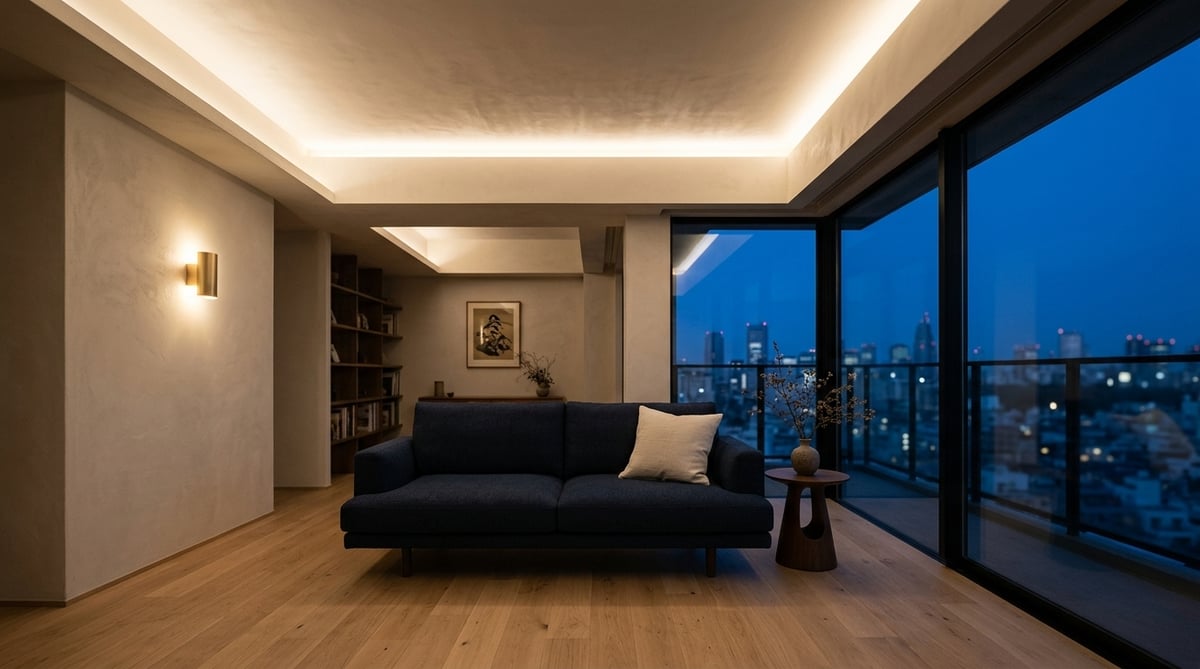
When searching for an ideal home in Tokyo, most apartment hunters carefully compare visible criteria such as rent, location, floor plan, and building age. However, after signing the contract and actually moving in, the invisible factor that most frequently leads to deep regret and persistent stress is sound insulation and acoustic privacy.
The quiet moments spent savoring freshly brewed coffee in the soft morning light. The tranquil evening unwinding with a favorite book after a long day. The true serenity we seek in a home depends on a calm, refined quiet that shields us from external commotion and neighbors' daily presence. Yet in the Tokyo rental market, real estate professionals constantly hear candid grievances: "I chose a reinforced concrete (RC) building assuming it would be dead silent, but I can hear the neighbor's TV and conversations clearly," or "Even though it is a newer building with a double-floor structure, heavy footsteps from upstairs echo loudly and wake me up at night."
As a licensed real estate broker who has guided viewings across Tokyo for over a decade, I can tell you that soundproofing cannot be judged simply by whether a building is labeled wood-frame, steel-frame, or reinforced concrete. Daily tranquility is shaped by a nuanced interplay of architectural elements: concrete floor slab thickness, the interior construction of party walls separating adjacent units, window sash airtightness, air vent positioning, and overall floor plan layout.
In this guide, to help you select a truly restful home free from noise disputes, we cover everything from the physics of acoustic transmission and the reality of sound insulation across building types, to Architectural Institute of Japan standards (D-values and L-values) and practical viewing inspection techniques used by seasoned brokers.
High Risk
#### The Danger of Relying Solely on Structural Labels
Assuming an apartment is soundproof simply because the listing says "RC" without inspecting on-site details drastically increases the risk of unexpected noise trouble after moving in.
- Assuming "reinforced concrete equals total soundproofing" without verifying whether party walls are solid concrete or drywall
- Suffering from upstairs footsteps due to overlooking slab thickness or the specific acoustics of raised versus direct flooring
- Overlooking window sash sound ratings and ventilation sleeves, allowing outdoor traffic noise to penetrate the living room
- Regretting layout interference when plumbing fixtures or bedrooms directly back onto adjacent living areas
Recommended
#### Professional Room Selection: Assessing Walls, Slabs & Openings
By understanding sound transmission pathways scientifically and combining physical tapping tests, acoustic resonance checks, and floor plan analysis during viewing, you can identify truly serene living spaces.
- Distinguishing airborne sound from structure-borne impact sound, evaluating wall mass and floor isolation separately
- Performing gentle wall-tapping at the center of party walls and checking palm vibrations to verify structural density
- Testing airtight sash pull upon closing windows and confirming soundproofing acoustic sleeves inside ventilation inlets
- Verifying buffer layouts with closets positioned against adjacent walls and scrutinizing shared entrance notice boards
30-Second Key Takeaways & SummarySorAi Summary
- High-quality rental and condominium grade. Reliable partition sound insulation where normal conversations and living sounds are rarely audible.
- Concrete thickness that substantially dampens heavy impact shocks such as heel walking and jumping from upstairs.
- JIS window sash sound insulation rating. Airtight sashes that cut external vehicular and passing train noise by 30 to 35 dB.
## Airborne vs. Structure-Borne Noise: Understanding How Sound Travels
The first step in evaluating a home's acoustic comfort is understanding the physical pathways through which daily living sounds reach our ears. In architectural acoustics, noise is fundamentally classified into two categories: "airborne sound" and "structure-borne sound." Because these two types travel through entirely different media, the architectural strategies required to block them are also distinct.
### Airborne Sound: Voices, TV Audio, and the Law of Mass
Airborne sound refers to sound waves that radiate through the air from a source, striking walls, windows, and ceilings to enter a room. Classic examples include neighboring conversations, audio from televisions and smartphone speakers, barking pets, and vehicle engine noise from the street outside.
The fundamental physical principle governing the reduction of airborne sound is the "Mass Law." According to this law, the greater the surface density (mass per unit area) of a barrier material, the higher its sound transmission loss (insulation performance). Acoustically, doubling the mass of a partition increases its sound insulation by approximately 5 to 6 decibels (dB).
For example, a thick cast-in-place concrete wall weighs hundreds of kilograms per square meter, firmly reflecting airborne acoustic energy. Conversely, a thin wall assembled from a single layer of gypsum plasterboard or lightweight panels has very little mass, allowing sound wave vibrations to pass straight through. When you can clearly hear a neighbor's sneeze or phone call, insufficient surface mass under the Mass Law is almost always the root cause.
### Structure-Borne Sound: Heel Walking, Slamming Doors, and Vibration Isolation
The issue that most frequently escalates into severe neighbor disputes in rental housing is structure-borne sound. This phenomenon occurs when physical impacts or mechanical vibrations directly shake the building frame—such as concrete floor slabs, beams, columns, and structural walls—radiating into adjacent rooms as airborne sound waves from ceilings and partitions.
Common examples include heavy heel strikes from people walking upstairs, children running or jumping, dropping spoons or hard objects on hardwood floors, doors and sliding partitions being shut forcefully, water rushing down plumbing shafts, and low-frequency vibrations from water heater pumps.
The challenging aspect of structure-borne sound is that sound waves travel long distances through solid concrete or steel structures at high speeds with minimal attenuation. Sound travels through concrete at approximately 3,000 to 4,000 meters per second—more than ten times faster than through air (around 340 m/s). As a result, impact vibrations from not just the unit directly above, but two floors up, diagonally adjacent units, or even next-door structures can resonate as a low-frequency rumble across your walls.
Mitigating structure-borne noise requires far more than simply adding mass to walls; it necessitates vibration isolation and structural decoupling. Effective solutions include installing specialized acoustic rubber dampeners beneath flooring, introducing decoupling layers between the structural frame and interior finishes, and ensuring sufficient concrete slab thickness to provide structural stiffness against physical impacts.
Broker Perspective: Why Footstep Complaints Are Difficult to Resolve
Airborne noise such as speech or television volume can usually be moderated through simple courtesies, like lowering the volume or drawing curtains. However, structure-borne sounds like heel walking or closing doors are unconscious, routine motions. The resident rarely acts with ill intent, yet because impact vibrations travel and amplify through the building skeleton, downstairs neighbors experience it as disruptive low-end thuds, frequently leading to intractable emotional conflicts.
Comprehensive Area Guide Sorai Tokyo Official
[【Chiyoda Line Area Guide】Direct Access to Otemachi! Station Comparison](https://soraitokyo.jp/area-guide-chiyoda-line?hsLang=en)
Complete rental and living guide for all stations on the Tokyo Metro Chiyoda Line, from Kita-Ayase and Kita-Senju to downtown Otemachi.
[Explore Chiyoda Line Guide →](https://soraitokyo.jp/area-guide-chiyoda-line?hsLang=en)
## Soundproofing by Building Structure: Hierarchies and Reality
Real estate listings in Japan always specify the building structure. In general, soundproofing capabilities are ranked as follows:
**SRC (Steel Reinforced Concrete) ≥ RC (Reinforced Concrete) \> Heavy Steel Frame \> Light Steel Frame ≥ Wood-Frame**
While this hierarchy serves as a solid general rule of thumb, construction techniques and engineering innovations in recent years have created subtle gradations beyond simple structural categories. Here is a closer look at each structural category and how it performs in actual rental living.
### Wood-Frame and Light Steel: Characteristics and Modern Acoustic Systems
Wood-frame construction utilizes timber posts, beams, and joists. It offers excellent breathability, lower construction costs, and consequently more accessible rents. However, timber has a lower density and mass than concrete. In conventional apartments built without specialized acoustic treatments, both airborne and structure-borne sounds transfer relatively easily to adjacent and lower units.
Light gauge steel (LGS) construction uses cold-formed steel sections under 6mm in thickness for structural framing, often seen in prefabricated apartments. While providing reliable seismic resilience and consistent manufacturing quality, the partition walls and floor assemblies are commonly composed of gypsum board, plywood, and insulation, similar to wood-frame buildings. Tenants who expect "steel" to deliver heavy soundproofing are often surprised by the audible transmission. In practical terms, standard light steel buildings perform comparably to conventional wood-frame properties.
However, newer apartments built by major Japanese housing manufacturers (such as Sekisui House, Asahi Kasei Homes, Daiwa House, and Daito Kentaku) actively incorporate proprietary high-performance acoustic floor and wall assemblies. For instance, Sekisui House's "Shaidd 55 / Shaidd 50" systems and Asahi Kasei Homes' "Hebel floor (autoclaved lightweight concrete panels) paired with vibration-damping raised floors" combine multi-layered acoustic damping mats and specialized rubber isolators to achieve quietness far superior to traditional timber or steel apartments. When touring recently built manufacturer-developed properties, acoustic performance often rivals that of standard RC buildings.
### Heavy Steel Frame: Structural Rigidity and Drywall Dependence
Heavy steel frame construction utilizes hot-rolled structural steel sections with a thickness of 6mm or greater to form rigid-frame (Rahmen) structures. It is commonly used for mid-rise rental buildings of three to five stories. Compared to light steel, its columns and beams possess vastly superior structural stiffness, providing exceptional resistance against sway and structural deformation.
From an acoustic perspective, however, it is crucial to recognize that heavy steel framing does not automatically guarantee cast concrete walls or floors. If concrete deck slabs or thick autoclaved lightweight concrete (ALC) panels are installed beneath the floors, vertical sound insulation can be quite good. However, if party walls between units consist of lightweight steel studs faced with gypsum board (drywall), acoustic performance depends entirely on the density of internal glass wool insulation and the number of board layers. Even with heavy steel, on-site wall inspections remain indispensable.
### Reinforced Concrete (RC) and Steel Reinforced Concrete (SRC): Premium Acoustic Performance
Reinforced Concrete (RC) structures are formed by pouring ready-mixed wet concrete into formwork assembled around steel rebar cages. The substantial mass and density of cured concrete maximize the benefits of the Mass Law. In properties where party walls are cast-in-place concrete (wet walls), neighbor voices and television audio rarely penetrate, establishing a tranquil, secluded living space.
Steel Reinforced Concrete (SRC) embeds structural steel shapes within rebar cages before pouring concrete, creating an exceptionally strong and rigid composite frame. Generally utilized in high-rise condominiums of ten stories or more and premium branded residences, SRC represents the gold standard of acoustic isolation. It acts as an acoustic fortress, shutting out street noise and neighboring activity to deliver an uncompromising level of domestic peace.
Scroll horizontally to see full table →
| Structural Type | Framing & Wall Construction | Airborne Sound (Approx. D-Value) | Heavy Floor Impact (Approx. LH-Value) | Rent Level | Overall Acoustic Summary |
| --- | --- | --- | --- | --- | --- |
| **Wood-Frame** | Timber posts and beams / Gypsum board + glass wool | D-35 to D-40 | LH-65 to LH-70 | Most Affordable | Voices and footsteps transmit easily. Acoustic mindfulness is required, except in newer major-builder properties with advanced acoustic systems (e.g., Shaidd). |
| **Light Gauge Steel** | Light gauge steel (\<6mm) / Gypsum board walls | D-40 to D-45 | LH-65 to LH-70 | Affordable to Moderate | Framing is steel, but walls and floors often perform similarly to wood-frame. Look for proprietary acoustic assemblies from major homebuilders. |
| **Heavy Steel Frame** | Heavy steel (≥6mm) / ALC panels & drywall | D-45 to D-50 | LH-55 to LH-60 | Moderate | High structural stiffness, though sound isolation varies depending on party wall specs. Verifying floor construction is essential. |
| **Reinforced Concrete (RC)** | Rebar + cast-in-place concrete (predominantly wet walls) | D-50 to D-55 | LH-50 to LH-55 | Moderately High | Excellent resistance to airborne sound. Slab thickness and the presence of drywall party walls are decisive factors. |
| **Steel Reinforced Concrete (SRC)** | Structural steel core + reinforced concrete composite | D-55 to D-60+ | LH-45 to LH-50 | High to Luxury | Highest tier in both rigidity and acoustic isolation. Common in high-rise luxury residences, ensuring exceptional quiet. |
Related Recommendation
[Cost of Living in Kita-Senju for Singles: Rent, Food, Utilities Breakdown & Salary Simulations](https://soraitokyo.jp/en/blog/kita-senju-single-living-costs-guide?hsLang=en)
[Read Article →](https://soraitokyo.jp/en/blog/kita-senju-single-living-costs-guide?hsLang=en)
## Hidden Pitfalls Behind the "RC Condos Are Always Quiet" Myth
In real estate practice, many apartment hunters operate under the assumption that selecting an RC building guarantees zero noise from next door. However, noise complaints in reinforced concrete apartments are far from rare. This stems from two frequently overlooked vulnerabilities in modern construction methods.
### Drywall Partitions in Tower Condominiums: Acoustic Leakage and Workmanship
An RC classification does not mean that every party wall dividing adjoining units is solid cast concrete. In many contemporary high-rise towers and budget-conscious rental condominiums, party walls are built without pouring concrete, utilizing prefabricated assemblies known as "drywall fire-rated acoustic partitions."
Drywall fire-rated acoustic partitions consist of lightweight steel studs (LGS) framed on both sides with two layers of approximately 12.5mm gypsum plasterboard or reinforced gypsum board, with the internal void tightly filled with acoustic insulation such as glass wool or rock wool. While this modern engineering approach significantly reduces building weight and improves seismic flexibility, it presents two distinct acoustic vulnerabilities.
First, the acoustic integrity of drywall depends heavily on construction workmanship. If microscopic gaps (pinholes) exist at the junctions with structural concrete beams and floor slabs, or behind recessed electrical outlets and junction boxes, acoustic leakage and flank transmission (sound bypassing the wall through surrounding structural pathways) will occur. Second, because drywall has lower mass than cast-in-place concrete, it may fail to achieve expected transmission loss at specific frequencies that human hearing readily detects.
### The Drum Effect: Low-Frequency Resonance and Audible Voices
Another physical phenomenon observed in drywall partitions and hollow floor assemblies is the "drum effect" (cavity resonance). Similar to how air resonates between two drumheads, an air cavity trapped between two gypsum boards can cause sound waves at specific frequencies to bounce back and forth, creating acoustic resonance.
When this resonance occurs, the wall vibrates like a speaker cone, amplifying rather than attenuating certain low-frequency sounds—such as deep male voices, television drama bass lines, or movie sound effects—and transmitting them into the adjacent room. Even when laboratory data demonstrates a respectable "D-50" rating, in daily life this resonance can cause a neighbor's low, mumbled speech to sound as if they are speaking right beside your ear.
Broker Perspective: Telling Wet Walls Apart from Drywall
Looking at a listing sheet alone will not reveal whether a party wall is cast-in-place solid concrete (wet wall) or a drywall partition. While the most definitive way is checking the architectural specifications in the building's blueprints, an experienced agent can instantly detect the difference on-site simply by lightly tapping the wall during a viewing.
SORAI SIMULATOR / Online in 10 Sec
### \[SorAi Initial Cost Simulator\] Calculate Estimated Move-in Costs in 10 Seconds
Simply enter the rent and deposit to calculate a transparent move-in cost breakdown including brokerage and guarantor fees without hidden markups.
[Open in Fullscreen / New Tab](https://soraitokyo.jp/en/quote?ref=blog_embed_ext&utm_source=blog_mid_cta&utm_medium=cta&utm_campaign=unified_cta_simulator&hsLang=en) [Chat on Official LINE](https://line.me/R/ti/p/@soraitokyo)
Explore other free SorAi tools: [SorAi Inspection Report →](https://soraitokyo.jp/inspection?ref=blog_mid_cta_aux&lang=en&utm_source=blog_mid_cta&utm_medium=aux_link&utm_campaign=unified_cta_inspection&hsLang=en) [SorAi Request →](https://hearing.soraitokyo.jp/?start=true&ref=blog_mid_cta_aux&lang=en&utm_source=blog_mid_cta&utm_medium=aux_link&utm_campaign=unified_cta_request)
※ 100% Free ・ Online completed.
## Decoding Sound Insulation Ratings: Architectural Institute of Japan D-Values and Floor L-Values
To evaluate acoustic performance objectively, the Japanese construction industry relies on established metrics defined by academic standards and Japanese Industrial Standards (JIS). Understanding these numerical metrics allows you to evaluate property specifications logically rather than relying on guesswork.
Architectural Institute of Japan Standard
D-50 or higher
High-quality rental and condominium grade. Reliable partition sound insulation where normal conversations and living sounds are rarely audible.
Benchmark Floor Slab Thickness
200 mm or more
Concrete thickness that substantially dampens heavy impact shocks such as heel walking and jumping from upstairs.
Recommended Windows for Major Roads & Tracks
T-2 to T-3 Rating
JIS window sash sound insulation rating. Airtight sashes that cut external vehicular and passing train noise by 30 to 35 dB.
Standard Party Wall Board Thickness
12.5×2 mm Double Layer
Standard specification for fire-rated acoustic drywall. Double-layered on both sides with glass wool cavity fill to ensure mass and damping.
### Transmission Loss D-Values: Wall Sound Ratings and Everyday Perception
In the "Acoustic Performance Standards for Buildings" set by the Architectural Institute of Japan (AIJ), the "D-value" (Sound Pressure Level Difference) measures airborne sound insulation between adjacent rooms. The higher the number following the "D-", the greater the sound insulation, making neighbor noise harder to hear.
The AIJ provides the following benchmark grades for multi-family residential buildings:
- **D-40 (Typical Apartment Level)**: Daily conversation content is largely intelligible. Television audio and phone conversations are clearly discernible, and neighbors' presence is consistently felt at night.
- **D-45 (Standard Rental Condominium Level)**: Loud speech is audible as vocal sounds, though specific words remain unclear. Normal TV volume is generally unobtrusive, but muffled presence may be sensed during quiet late-night hours.
- **D-50 (High-Quality Rental & Standard Condominium Level)**: Everyday living noises and conversations are virtually inaudible. Voices are only faintly detected if someone shouts loudly next door, serving as a dependable, practical benchmark for acoustic privacy.
- **D-55 or Higher (High-End Condominium & Premium Tier)**: A deeply quiet environment where living sounds from adjacent units are effectively shut out. Up to reasonable hours and levels, musical instruments such as pianos or home stereos can be enjoyed without disturbance.
### Heavy Floor Impact (LH) vs. Light Floor Impact (LL)
The metric used to evaluate structure-borne sound transmitting through floors between levels is the "L-value" (Floor Impact Sound Level). Unlike wall D-values, the L-value measures the level of noise that penetrates into the room below; therefore, **a lower number indicates superior sound insulation (a quieter room)**. Floor impacts are strictly divided into "LH" and "LL" based on impact characteristics.
**Heavy Floor Impact Sound (LH / Heavy)** refers to low-frequency, dull impact thuds generated by adult heel strikes or children jumping from furniture. Rich in low frequencies (63 Hz to 125 Hz), it forcefully vibrates the structural frame. The ultimate deciding factor in attenuating this sound is the physical mass of the concrete floor slab. LH-45 is classified as exceptional (premium), LH-50 as good (recommended benchmark), LH-55 as standard, and LH-60 as minimally permissible.
**Light Floor Impact Sound (LL / Light)** refers to high-frequency, sharp clicks and clatters, such as walking in hard slippers, dropping a spoon, coin, or pen onto flooring, or sliding a chair. This type of noise can be mitigated relatively easily by choosing flooring with cushioned underlayment, high-performance acoustic mats, or area rugs. LL-40 is rated exceptional, LL-45 good, and LL-50 standard.
### How Floor Slab Thickness Governs Footstep Noise: The Void Slab Caveat
The primary physical defense against heavy floor impact sound (LH) to avoid living in dread of upstairs footsteps is the thickness of the reinforced concrete floor slab.
In low-cost rental apartments, slab thickness is often only 100mm to 150mm. This minimal mass cannot absorb the kinetic energy of an adult walking with heavy heels, causing the downstairs ceiling to resonate like a drum. Standard rental condominiums typically feature 150mm to 180mm. However, to reliably dampen adult footsteps and maintain peaceful domestic tranquility, a slab thickness of **200mm or more**—matching high-end condominium specifications—serves as the ideal benchmark.
Here is an essential architectural detail to bear in mind when evaluating modern residences: the nuance surrounding "void slab" construction.
A void slab is a lightweight concrete floor embedded with hollow cylindrical pipes (void tubes or foam inserts), designed to eliminate protruding ceiling beams and create expansive, open living spaces. While this method produces higher ceilings and clean aesthetics, the hollow internal structure means it possesses lower rigidity and mass than a solid concrete slab of identical thickness. In acoustic engineering, achieving sound insulation equivalent to a solid slab requires a void slab to be **1.2 to 1.3 times thicker**. In other words, to match the acoustic performance of a 200mm solid slab, a void slab must measure at least 250mm to 270mm in depth.
### Direct vs. Raised Flooring: The Risk of Drum-Effect Low-Frequency Amplification
Residential floor construction in Japan generally falls into two categories: "direct flooring" (jikayuka), where acoustic-backed flooring is glued directly onto the concrete slab, and "raised double flooring" (nijuyuka), where pedestal legs fitted with vibration-damping rubber support an underlayment board beneath the finished floor.
In the past, real estate marketing often claimed that raised double flooring was inherently superior and quieter than direct flooring. However, comprehensive laboratory testing and research by the Architectural Institute of Japan have proven that this assumption is not universally true.
Raised flooring offers distinct advantages: it conceals plumbing and wiring beneath the floor to facilitate future renovations, and it provides a natural underfoot cushion while effectively dampening light floor impact sound (LL). However, when it comes to heavy floor impact sound (LH, such as heel strikes), the air cavity trapped between the subfloor and the concrete slab can act as a pneumatic spring, causing acoustic resonance. In some cases, this **low-frequency drum effect can amplify footstep impact noise to the floor below even more than direct flooring**.
For raised flooring to deliver genuine quietness, it must be paired with a substantial slab thickness of 200mm to 250mm or more, along with meticulous acoustic details such as air-release relief vents and strategically positioned vibration-damping pedestals. It is unwise to blindly assume that raised flooring automatically guarantees silence.
Scroll horizontally to see full table →
| Floor Impact Type | Primary Sources | Performance Benchmark | Required Slab Thickness | Key Structural Measures |
| --- | --- | --- | --- | --- |
| **Heavy Floor Impact (LH)** | Adult heel walking, children jumping, heavy falling objects | LH-45 (Premium) LH-50 (Good) LH-55 (Standard) | 180mm to 200mm+ (≥250mm for void slabs) | Absolute concrete mass is paramount. Securing sufficient slab thickness and structural stiffness via sub-beams is key. |
| **Light Floor Impact (LL)** | Slipper footsteps, dropped spoons or pens, dragging chairs | LL-40 (Premium) LL-45 (Good) LL-50 (Standard) | Manageable around 150mm via surface materials | Surface cushioning is key. Substantially improved with acoustic-backed cushioning flooring, underlayments, or carpeting. |
## Window Sash T-Ratings and Acoustic Air Vents: Blocking External Noise
Indoor peace can be threatened not only by adjacent or upstairs neighbors, but also by external street sounds. Heavy trucks rumbling down major thoroughfares, ambulance sirens, passing trains, and railroad crossings all test a building's acoustic envelope. The primary gateways for external noise intrusion are window openings and ventilation penetrations.
### JIS Window Sash Ratings (T-1 to T-4) and Choosing for Main Roads or Train Tracks
Residential window sashes in Japan are classified under Japanese Industrial Standards (JIS A 4706) by their sound insulation grade (T-rating). This metric defines how many decibels of external noise the sash assembly can attenuate.
- **Grade T-1 (25 dB Reduction)**: Standard specification suited for inherently peaceful neighborhoods, such as Category 1 Exclusively Low-Rise Residential Zones.
- **Grade T-2 (30 dB Reduction)**: Appropriate along secondary urban streets, commercial districts, and near neighborhood stations. Widely adopted as the standard airtight sash in quality rental condominiums.
- **Grade T-3 (35 dB Reduction)**: High-performance specification indispensable for residences bordering major arterial roads (such as Kan-nana, Kan-pachi, or Route 246) or active railway lines and elevated tracks. Incorporates thick acoustic laminated glass and multi-point perimeter rubber seals.
- **Grade T-4 (40 dB Reduction)**: The highest tier of residential acoustic insulation, typically achieved using double-sash assemblies (an exterior window paired with an interior secondary sash) matching recording studio specifications. Even right beside high-traffic train tracks, shutting both windows creates a serene atmosphere akin to a quiet library.
When considering an apartment on a busy road, do not look only at window size or scenic views; ensure the sash specifications match the environmental sound levels of the neighborhood.
### Fresh Air Intake Registers: The Hidden Acoustic Leak and Soundproof Sleeves
A puzzling situation that apartment hunters sometimes encounter is: "The apartment has high-grade double windows, yet passing motorcycles and pedestrian voices sound as if they are right inside the room." In most cases, the culprit is the 24-hour fresh air intake vent (ventilation register) pierced through the exterior wall.
Under the Building Standards Act of Japan, modern residences are mandated to have 24-hour mechanical ventilation systems. Consequently, living rooms and bedrooms feature circular openings 100mm to 150mm in diameter penetrating exterior walls to draw in fresh air. In cost-cutting rental construction, this opening is often just a straight PVC pipe running directly from the exterior facade into the room, capped inside by a thin plastic cover. In effect, it acts like an acoustic megaphone pointing straight outside, rendering high-performance soundproof windows futile.
In well-engineered condominiums, these ventilation sleeves are lined with cylindrical sound-absorbing glass wool inserts (acoustic sleeves), and the exterior facade is fitted with specialized noise-reducing vent hoods (acoustic vent caps). When inspecting a property, be sure to inspect the wall air vents as carefully as the windows.
## Practical Soundproofing Inspection Techniques for Viewings
Once you understand structural specifications and acoustic ratings, the next stage is on-site testing during property viewings. An unfurnished, vacant apartment amplifies sound reverberation, making it an ideal testing ground for evaluating a building's true acoustic potential. Here is a step-by-step walkthrough of the four-step soundproofing inspection routine I share with clients in my brokerage practice.
Step 01
Around the Property & Notice Boards
Identify external neighborhood noise sources and carefully inspect the entrance bulletin board for resident noise advisories.
Step 02
Window Sashes & Ventilation Intake
Open and close windows to evaluate external sound drop, check crescent latch clamping feel, and confirm vent acoustic sleeves.
Step 03
Party Wall Tapping & Floor Check
Lightly knock the center of party walls to gauge mass and acoustic density, then step firmly with heels to evaluate floor vibration.
Step 04
Layout Flow & Plumbing Alignment
Scrutinize floor plans to ensure your bed placement does not back directly onto adjacent plumbing stacks or neighboring living rooms.
### Proper Wall-Tapping Etiquette and Sound Interpretation
While tapping the wall during a viewing is widely known, it is also the technique most frequently executed incorrectly.
The single biggest mistake is knocking near structural columns or right beneath ceiling beams. The perimeter corners and beam edges contain solid concrete framing and heavy structural blocking. Even in a paper-thin wood-frame apartment, knocking there will produce a hard, solid thud, giving a completely misleading impression. When testing a wall, always knock lightly with your knuckles **near the center of the party wall separating you from the neighbor, at adult chest height**.
Interpret the resulting acoustic feedback as follows:
- **A muffled, solid, dull "thud" or "click" (Passing Grade)**: Indicates that solid concrete is directly behind the finish or that high-density acoustic drywall has been installed with tight double layers. If you feel firm resistance in your knuckles and the sound is absorbed on the spot without echoing into the room, the wall's airborne sound insulation is exceptionally high.
- **A hollow, reverberant, high-pitched "clack" or "pop" (Cautionary Grade)**: Indicates a large hollow air cavity behind gypsum board, likely with sparse insulation fill or only a single layer of plasterboard. The resulting "drum effect" carries a high risk of transmitting neighbor speech and television audio.
In addition to knocking, another insider technique is **pressing your open palm flat against the party wall**. Feel whether footstep impacts or door closures from the common hallway transfer through the wall as faint vibrations into your hand. A partition that remains motionless indicates effective structural isolation.
### The Handclap Test: Evaluating Room Airtightness and Acoustic Resonance
With the entrance door and all windows securely shut, stand in the dead center of the main room and clap your hands once sharply at chest height.
In a well-insulated, airtight concrete condominium, the clap will bounce cleanly off walls and ceiling, leaving a crisp, subtle, dry reverberation in your ears for a fraction of a second. This confirms that acoustic energy does not leak through gaps, demonstrating a securely sealed, airtight envelope.
Conversely, if the sound vanishes without reverberation, feeling as though it escapes through drafty seams, or if it produces a flimsy, tinny flutter, the windows and doors may lack proper seals or the wall mass may be insufficient. It is an intuitive method to assess how well the room holds air and sound.
### Window Latch Airtightness and Crescent Lock Compression
When testing window acoustics, first open the sash completely and tune your ear to street traffic and ambient city noise. Then, slide the sash shut smoothly.
Observe whether external commotion drops instantly into a serene, muffled quiet as the sash closes. Equally important is the physical sensation when engaging the rotating central crescent latch. High-grade acoustic sashes are engineered so that turning the latch pulls the sash firmly against the frame, physically compressing the perimeter rubber gaskets to seal out air and sound. A latch that provides firm, reassuring mechanical resistance and a snug draw confirms outstanding acoustic airtightness.
### Reading Common Hallways, Mailboxes, Trash Areas, and Notice Boards
A home's quietness depends not only on hardware (building structure) but also on software (resident etiquette and manners). Even in a robustly built RC condominium, peaceful living is impossible if an adjacent tenant hosts loud late-night gatherings. The most transparent reflection of resident consideration can be found in the building's common areas.
Before stepping into the apartment, scrutinize the **management bulletin board** in the entrance lobby or beside the elevator. Discovering notices like the following is a clear warning sign:
- "\[Important\] Request Regarding Late-Night Footsteps and Door Closing Sounds"
- "Complaints Received Regarding Balcony Smoking and Loud Phone Calls"
- "Please Be Mindful of Television and Audio Bass Frequencies"
- "Advisory on Pet Noise and Footsteps"
Such notices are tangible evidence that actual residents have submitted noise grievances to building management. If a notice is recently dated, active noise friction is likely ongoing, warranting serious caution.
Additionally, check whether discarded flyers are strewn around the mailboxes and whether the shared trash area is clean and well-ordered. Neglected common areas often correlate with careless resident behavior and a lack of mutual consideration regarding noise.
Scroll horizontally to see full table →
| Inspection Point | Items to Verify & On-Site Steps | Passing Standard (Reassuring) | Cautionary Threshold (Noise Risk) | Professional Advice |
| --- | --- | --- | --- | --- |
| **Party Wall to Adjacent Unit** | Lightly tap the center of the wall away from columns and beams with knuckles | A solid, dull, dense "thud" with no hollow ring | A hollow, high-pitched, echoing cavity sound | Place your palm flat against the wall to confirm whether external hallway vibrations transfer through. |
| **Flooring (Between Floors)** | Step lightly with dropped heels near the center of the room | Floor feels solid without flexing, absorbing impact directly underfoot | Footsteps boom like a drum beneath the floor, vibrating the room | Remove slippers and walk in socks to accurately gauge footstep impact feel. |
| **Window Sashes** | Compare outdoor ambient noise with window fully open versus closed | Outside noise drops dramatically upon closing; latch pulls tightly | Street voices and vehicle traffic leak through even when closed | Feel for the tactile gasket compression as the crescent latch locks shut. |
| **Fresh Air Intake Vents** | Remove the vent register cover on the wall and inspect inside the pipe | Interior is lined with sound-absorbing material (acoustic sleeve) | A bare, hollow PVC pipe running straight to the exterior facade | Bare pipes serve as sound leaks; consider aftermarket acoustic inserts or caps. |
| **Common Notice Board** | Read property management notices in the entrance lobby and elevator | Routine notices only (cleaning schedules, periodic maintenance) | Warning notices posted regarding late-night footsteps or noise disturbances | Check the date on the notice; recent postings indicate active resident friction. |
## Preventing Noise Issues Through Floor Plan Analysis
Even before stepping into an apartment for a viewing, studying the floor plan on the property flyer allows you to screen out significant acoustic risks. Here are three critical layout perspectives seasoned rental brokers always examine.
### Closets and Storage as Natural Acoustic Buffers
When reviewing a floor plan, the first feature to locate is where storage spaces—such as closets, walk-in closets, and shoe cupboards—are positioned.
The ideal layout is **where your closets run continuously along the entire party wall shared with the adjacent unit**. Storage spaces are filled with dense personal items: clothing, bedding, and storage bins. Fabrics and apparel act as exceptional acoustic absorbers. The combination of partition wall thickness, the air pocket of the closet, and the sound-absorbing clothing creates a three-tier defense that dramatically dampens airborne noise from next door.
Conversely, layouts where the neighbor's living room and your bed placement sit back-to-back separated by only a single shared wall without any closet buffering require extreme caution, as daily living sounds will transfer directly.
### Aligning Plumbing Fixtures: Bathrooms, Toilets, and Neighbor Bedrooms
The most overlooked layout hazard during floor plan screening is plumbing interference between adjoining apartments. While standard listing flyers only display your own unit, asking your agent for the overall floor plate or deducing the mirrored layout next door is crucial.
The layout pattern you must avoid at all costs is **where your prefabricated bathroom, toilet drain stack, washing machine space, or water heater pump directly adjoins the wall behind your neighbor's bed**.
If you take a late-night shower, flush the toilet, or run a late laundry cycle, the sound of rushing water and pump vibrations will resonate directly behind your sleeping neighbor's head. Regardless of how considerate both parties try to be, structural acoustic isolation here is inherently difficult, making this layout a primary trigger for contentious noise complaints.
### Top Floors, Corner Units, and Ground Floors: Acoustic Trade-Offs
A unit's floor level and position within the building also dictate its acoustic character. Understanding these trade-offs helps you choose the right home for your lifestyle.
- **Top-Floor Units**: The paramount benefit is that the risk of upstairs footstep noise is completely eliminated. For those sensitive to ceiling thuds, top-floor living offers unmatched peace of mind. However, footsteps from your own home can still disturb downstairs neighbors, requiring ongoing mindfulness. Additionally, being directly beneath the roof may slightly increase summer cooling requirements.
- **Corner Units (End Units)**: Because you share a party wall with only one neighbor, the statistical risk of party wall noise issues is effectively halved. This is an advantageous position for protecting privacy. The trade-off is an increased exterior wall surface and more windows, making the interior more susceptible to ambient street noise, train sounds, and wind gusts.
- **Ground-Floor (First-Floor) Units**: The distinctive strength is complete freedom from worrying about disturbing downstairs occupants. For families with active young children or professionals working late shifts who walk around late at night, ground-floor living provides a stress-free sanctuary where you never have to fear footstep complaints. Conversely, you will bear the brunt of upstairs footstep impacts and may hear outdoor pedestrian activity and street vehicles more closely.
## Finding a Quiet, Reassuring Home with Sorai Tokyo
A home's acoustic comfort is a decisive factor that shapes the quality of your nightly rest, your emotional well-being, and your overall daily satisfaction. Once you move in, you cannot easily alter building construction or change your neighbors. That is why evaluating architectural characteristics and acoustic pathways before signing a lease is vital to preventing regrets.
At Sorai Tokyo (SorAi), our dedicated team of licensed real estate brokers—each with over a decade of brokerage experience in Tokyo—carefully investigates prospective properties using professional wholesale databases (such as REINS) and detailed architectural drawings. We scrutinize structural framing, party wall specifications, floor slab thicknesses, and surrounding traffic noise levels. Moving beyond automated algorithms, we provide empathetic, expert guidance rooted in on-the-ground reality to help you secure a genuinely tranquil sanctuary.
Unlike traditional Japanese real estate agencies, Sorai Tokyo never subjects clients to lengthy in-store waits or aggressive sales calls. If you find a listing that interests you, we arrange smart on-site viewings with direct meet-and-part convenience. During the viewing, your dedicated broker joins you in conducting wall-tapping tests, handclap resonance checks, and notice board inspections to objectively assess the property's acoustic environment.
Furthermore, to provide complete peace of mind, Sorai Tokyo offers a transparent brokerage fee capped at **half price (0.55 months' rent including tax)**. We can represent virtually any residential rental listing published online across Tokyo. Let us help you discover an elevated, whisper-quiet home while thoughtfully optimizing your initial move-in costs.
Smartphone users can access our instant Move-in Cost Simulator and other smart SorAi tools anytime via the floating navigation bar below, while desktop users will find them conveniently situated in the footer. We also provide completely free second-opinion reviews of initial quotes from other agencies. Feel free to reach out and let us help you find your ideal, truly restful Tokyo residence.

SorAi Real-Time Rental Concierge Online 24/7
Official AI answers your questions 24/7
[Continue on Official LINE (24/7 Free)](https://page.line.me/soraitokyo?oat_content=url&openQrModal=true&utm_source=soraitokyo_website&utm_medium=blog_inline_chat&utm_campaign=line_btn) [Privacy Policy](https://soraitokyo.jp/en/privacy-policy)

Thank you for reading this guide. I am SorAi, your official real estate AI concierge.
Feel free to ask any questions about apartment viewing checkpoints, layout comparisons, soundproofing, or natural lighting in Tokyo.
Quick questions:
Summarize apartment viewing points
Viewing measurements and soundproofing
Comparing layouts and living flows
Sunlight, humidity, and neighborhood
[Continue on Official LINE (Free)](https://page.line.me/soraitokyo?oat_content=url&openQrModal=true&utm_source=soraitokyo_website&utm_medium=blog_inline_chat&utm_campaign=line_btn)
Send
No phone number required. Feel free to consult at your own pace 24/7.
### Featured Tokyo Living Guides
SorAi Editorial
Swipe
#### [ Pet Friendly / Rental Contracts Tokyo Pet-Friendly Apartment Rental Contract Guide: Deposits & Soundproof Tips | Sorai Tokyo Read Guide →](https://soraitokyo.jp/en/blog/tokyo-pet-friendly-apartment-contract-guide?hsLang=en)
#### [ Chiyoda Line / Redevelopment Kitasenju Redevelopment & Livability 2026: 5 Train Lines, Shopping & Housing | Sorai Tokyo Read Guide →](https://soraitokyo.jp/en/blog/area-guide-kitasenju-redevelopment-trend-2026?hsLang=en)
#### [ Tenant Screening / Checklist Tokyo Rental Screening Guide 2026: Why Applications Fail and How to Pass | Sorai Tokyo Read Guide →](https://soraitokyo.jp/en/blog/apartment-screening-checklist-guide?hsLang=en)
## Frequently Asked Questions About Soundproof Apartment Selection
### QDoes living in an RC condominium mean you will never hear sounds from next door or above?
AIt does not guarantee complete silence. Reinforced concrete (RC) effectively blocks airborne noise like speech through its heavy concrete mass. However, structure-borne sound—such as upstairs heel strikes or door closures that directly vibrate the building skeleton—can still travel through the concrete matrix. Moreover, in apartments utilizing drywall fire-rated partitions (common in modern high-rises), microscopic construction gaps or low-frequency resonance can allow bass sounds to penetrate. Rather than relying solely on the "RC" label, it is prudent to evaluate floor slab thickness, party wall construction, and window sash airtightness comprehensively.
### QAre there wood-frame or light steel apartments where you can live quietly?
AAbsolutely. In particular, newer apartments built by major housing manufacturers (such as Sekisui House's "Shaidd" series or Asahi Kasei Homes' "Hebel floor" properties) incorporate specialized vibration-damping rubber and multi-layered acoustic mats, delivering sound insulation comparable to standard RC buildings. Furthermore, selecting a top-floor corner unit and choosing a floor plan where closets buffer the shared party wall can effectively minimize everyday noise stress.
### QIs it true that raised double flooring is always quieter than direct flooring?
ANot necessarily. While raised flooring excels at dampening light floor impact sound (LL) like dropped utensils and makes plumbing maintenance easier, the trapped air cavity beneath the floor can act like a drum. This "drum effect" can sometimes amplify heavy impact sound (LH) from adult heel strikes and children jumping even more than direct flooring. For raised flooring to achieve genuine quietness, a solid concrete slab thickness of 200mm to 250mm or more and specialized vibration-isolating pedestal supports are essential prerequisites.
### QIf the neighbors are away during my viewing, how can I evaluate actual living noise?
AEven if neighbors are out, there are several reliable ways to assess acoustic performance. First, lightly tap the center of the party wall with your knuckles to confirm whether it returns a solid, dull thud, and clap your hands sharply in the center of the room to test acoustic airtightness. Equally important is inspecting common areas: check the entrance bulletin board for advisory notices regarding footsteps or late-night noise, glance at adjacent balconies for clutter, and observe whether unwanted flyers are abandoned around mailboxes. These cues accurately reflect resident consideration. Whenever feasible, scheduling a viewing on a weekday evening or weekend when neighbors are at home is also highly effective.

Author: Sorai Tokyo Editorial Team (Supervised by Licensed Real Estate Agents)
A real estate consulting team specializing in assisting foreign nationals find rooms and explaining initial costs in Tokyo. We break down language barriers and differences in customs, offering dedicated support in Japanese, English, and Vietnamese for a safe and secure start to your new life.
 SORAI TOKYO | Chat with AI "SorAi" Anytime on LINE
### Exploring Tokyo Neighborhoods or Apartments? Ask Our AI "SorAi" Anytime on LINE
No property URL needed yet. From area safety, commute tips, and rent trends to instant initial-cost audits for listings you found—chat with SorAi 24/7 on LINE with zero sales calls.
STEP 1
Ask Anything on LINE
Ask about areas & rent, or send a listing URL anytime
→
STEP 2
24/7 Instant Reply by SorAi
Objective area data, live vacancy & fee breakdown
→
STEP 3
Explore at Your Own Pace
Zero sales calls. Meet on-site only when ready to view
24/7 Instant / Most Popular
#### ① Chat with AI "SorAi" on LINE (Free)
Ask about neighborhoods, rent trends, or share any listing URL on LINE. SorAi & our bilingual concierge check live vacancy and upfront fee breakdowns with zero sales pressure.
[Chat with SorAi on LINE (Free) ➔](https://lin.ee/VE8fd8b?utm_source=soraitokyo_blog&utm_medium=cta&utm_campaign=bottom_cta&utm_content=line)
Web Audit
#### ② SorAi Property Report
Already found a listing? Submit the URL or floor plan on the web for an instant objective breakdown of move-in costs and neighborhood data.
[View Report (Free) ↗](https://inspection.soraitokyo.jp/?ref=blog_bottom_cta)
Wait for New Listings
#### ③ SorAi Housing Needs
Select your budget, layout, and must-have conditions in 30 seconds to receive matching listings at your own pace.
[Organize Criteria (Free) ➔](https://soraitokyo.jp/en/request?ref=blog_bottom_cta&hsLang=en)
Instant Move-in Estimate
#### ④ SorAi Move-in Estimator
Enter rent and management fees to quickly estimate standard upfront contract costs and potential savings.
[Check Estimates (Free) ➔](https://soraitokyo.jp/en/quote?ref=blog_bottom_cta&hsLang=en)
※ Consultations are 100% free. No phone number required, zero pushy calls—everything is completed smoothly on LINE.
この記事をシェアする
\# エリアガイド
[ SORAI TOKYO](https://soraitokyo.jp/en/)
Sorai Tokyo Co., Ltd.
Room 102, 1-7-14 Yanaka, Adachi-ku, Tokyo, 120-0006
03-6161-8484
[contact@soraitokyo.jp](mailto:contact@soraitokyo.jp)
Tokyo Metropolitan Governor (1) No. 113297
(License Date: December 20, 2025)
### Sitemap
- [About Us](https://soraitokyo.jp/en/about-us)
- [Testimonials](https://soraitokyo.jp/en/testimonials)
- [Chiyoda Line Guide](https://soraitokyo.jp/en/area-guide-chiyoda-line)
- [Sorai Journal](https://soraitokyo.jp/en/blog)
- [FAQs](https://soraitokyo.jp/en/faqs)
- [Contact](https://soraitokyo.jp/en/contact)
- [SorAi Request](https://soraitokyo.jp/en/request)
### Business Hours
**10:00 〜 18:00**
Closed: **Tuesday & Wednesday**
Inquiries via LINE, SNS, and email are accepted 24/7.
[View on Google Maps](https://maps.google.com/?q=%E6%9D%B1%E4%BA%AC%E9%83%BD%E8%B6%B3%E7%AB%8B%E5%8C%BA%E8%B0%B7%E4%B8%AD1-7-14) [Book Online Meeting](https://soraitokyo.jp/en/consultation?hsLang=en)
### Multilingual Services
Our professional staff are fluent in Japanese, English, Vietnamese, Russian, and Indonesian to support you from room hunting to contract signing.
[🇯🇵 日本語](https://soraitokyo.jp/ja/blog/apartment-soundproof-structure-comparison?hsLang=ja) [🇺🇸 English](https://soraitokyo.jp/en/blog/apartment-soundproof-structure-comparison?hsLang=en) [🇻🇳 Tiếng Việt](https://soraitokyo.jp/vi/blog/apartment-soundproof-structure-comparison?hsLang=vi) [🇷🇺 Русский](https://soraitokyo.jp/ru/blog/apartment-soundproof-structure-comparison?hsLang=ru) [🇮🇩 Indonesia](https://soraitokyo.jp/id/blog/apartment-soundproof-structure-comparison?hsLang=id)
### Inquire via Social Media
[Privacy Policy](https://soraitokyo.jp/en/privacy-policy) | [Privacy & Security](https://soraitokyo.jp/en/security)
Copyright © 2026 株式会社ソライ東京 (Sorai Tokyo Co., Ltd.) All Rights Reserved.
[Chat with SorAi](https://page.line.me/soraitokyo?oat_content=url&openQrModal=true&utm_source=soraitokyo_website&utm_medium=line_button&utm_campaign=chatbot_popover)
SorAi Chat

#### SorAi
Online (Multilingual Support)
×
[Chat with SorAi](https://page.line.me/soraitokyo?oat_content=url&openQrModal=true&utm_source=soraitokyo_website&utm_medium=chatbot_header&utm_campaign=line_btn) [Email Us](https://soraitokyo.jp/en/contact?hsLang=en)
[Get "SorAi" on LINE (24/7 Free)](https://page.line.me/soraitokyo?oat_content=url&openQrModal=true&utm_source=soraitokyo_website&utm_medium=line_button&utm_campaign=floating_btn)
 SorAi | 24/7 AI Rental Chat No signup・100% online
TOC
### Table of Contents
×
```json
{
"@context" : "https://schema.org",
"@type" : "BlogPosting",
"author" : {
"@type" : "Person",
"name" : "ソライ東京編集部",
"url" : "https://soraitokyo.jp/en/blog/author/ソライ東京編集部"
},
"datePublished" : "2026-09-02T03:50:47.000Z",
"headline" : "[Wood, Steel, RC, SRC] The Truth About Soundproofing by Structure: Professional Wall-Tapping, Floor Systems & L-Value Inspection Techniques to Prevent Noise Issues | Sorai Tokyo",
"image" : [ "https://soraitokyo.jp/hubfs/blog-eyecatches/batch4_renovated_living.jpg" ],
"mainEntityOfPage" : {
"@id" : "https://soraitokyo.jp/en/blog/apartment-soundproof-structure-comparison",
"@type" : "WebPage"
},
"publisher" : {
"@type" : "Organization",
"logo" : {
"@type" : "ImageObject",
"url" : "https://soraitokyo.jp/hubfs/small_logo(color)%20(2)-1.png"
},
"name" : "株式会社ソライ東京"
}
}
```
```json
{
"@context" : "https://schema.org",
"@type" : "FAQPage",
"mainEntity" : [ {
"@type" : "Question",
"acceptedAnswer" : {
"@type" : "Answer",
"text" : "It does not guarantee complete silence. Reinforced concrete (RC) effectively blocks airborne noise like speech through its heavy concrete mass. However, structure-borne sound—such as upstairs heel strikes or door closures that directly vibrate the building skeleton—can still travel through the concrete matrix. Moreover, in apartments utilizing drywall fire-rated partitions (common in modern high-rises), microscopic construction gaps or low-frequency resonance can allow bass sounds to penetrate. Rather than relying solely on the \"RC\" label, it is prudent to evaluate floor slab thickness, party wall construction, and window sash airtightness comprehensively."
},
"name" : "Does living in an RC condominium mean you will never hear sounds from next door or above?"
}, {
"@type" : "Question",
"acceptedAnswer" : {
"@type" : "Answer",
"text" : "Absolutely. In particular, newer apartments built by major housing manufacturers (such as Sekisui House's \"Shaidd\" series or Asahi Kasei Homes' \"Hebel floor\" properties) incorporate specialized vibration-damping rubber and multi-layered acoustic mats, delivering sound insulation comparable to standard RC buildings. Furthermore, selecting a top-floor corner unit and choosing a floor plan where closets buffer the shared party wall can effectively minimize everyday noise stress."
},
"name" : "Are there wood-frame or light steel apartments where you can live quietly?"
}, {
"@type" : "Question",
"acceptedAnswer" : {
"@type" : "Answer",
"text" : "Not necessarily. While raised flooring excels at dampening light floor impact sound (LL) like dropped utensils and makes plumbing maintenance easier, the trapped air cavity beneath the floor can act like a drum. This \"drum effect\" can sometimes amplify heavy impact sound (LH) from adult heel strikes and children jumping even more than direct flooring. For raised flooring to achieve genuine quietness, a solid concrete slab thickness of 200mm to 250mm or more and specialized vibration-isolating pedestal supports are essential prerequisites."
},
"name" : "Is it true that raised double flooring is always quieter than direct flooring?"
}, {
"@type" : "Question",
"acceptedAnswer" : {
"@type" : "Answer",
"text" : "Even if neighbors are out, there are several reliable ways to assess acoustic performance. First, lightly tap the center of the party wall with your knuckles to confirm whether it returns a solid, dull thud, and clap your hands sharply in the center of the room to test acoustic airtightness. Equally important is inspecting common areas: check the entrance bulletin board for advisory notices regarding footsteps or late-night noise, glance at adjacent balconies for clutter, and observe whether unwanted flyers are abandoned around mailboxes. These cues accurately reflect resident consideration. Whenever feasible, scheduling a viewing on a weekday evening or weekend when neighbors are at home is also highly effective."
},
"name" : "If the neighbors are away during my viewing, how can I evaluate actual living noise?"
} ]
}
```
```json
{
"@context" : "https://schema.org",
"@type" : "BlogPosting",
"author" : {
"@type" : "Person",
"name" : "Author: Sorai Tokyo Editorial Team (Supervised by Licensed Real Estate Agents)"
},
"dateModified" : "2026-10-03T05:59:54Z",
"datePublished" : "2026-10-03T05:59:54Z",
"description" : "Learn the truth about apartment soundproofing across Wood, Steel, RC, and SRC structures. Discover professional wall-tapping and floor inspection tips in Tokyo.",
"headline" : "[Wood, Steel, RC, SRC] The Truth About Soundproofing by Structure: Professional Wall-Tapping, Floor Systems & L-Value Inspection Techniques to Prevent Noise Issues",
"inLanguage" : "en",
"publisher" : {
"@type" : "Organization",
"name" : "Sorai Tokyo",
"url" : "https://soraitokyo.jp"
}
}
```
```json
{
"@context" : "https://schema.org",
"@type" : "BlogPosting",
"author" : {
"@type" : "Organization",
"knowsAbout" : [ "東京メトロ千代田線", "賃貸不動産仲介", "宅地建物取引業", "初期費用適正化", "重要事項説明(IT重説)" ],
"name" : "Sorai Tokyo Editorial Team (Supervised by Licensed Real Estate Agents)",
"url" : "https://soraitokyo.jp/en/about-us"
},
"dateModified" : "2026-10-07T18:00:48+0000",
"datePublished" : "2026-09-02T03:50:47+0000",
"description" : "Learn the truth about apartment soundproofing across Wood, Steel, RC, and SRC structures. Discover professional wall-tapping and floor inspection tips in Tokyo.",
"headline" : "[Wood, Steel, RC, SRC] The Truth About Soundproofing by Structure: Professional Wall-Tapping, Floor Systems & L-Value Inspection Techniques to Prevent Noise Issues",
"image" : "https://soraitokyo.jp/hubfs/blog-eyecatches/batch12_09_evening_indirect_cove_living.jpg",
"inLanguage" : "en",
"mainEntityOfPage" : {
"@id" : "https://soraitokyo.jp/en/blog/apartment-soundproof-structure-comparison",
"@type" : "WebPage"
},
"publisher" : {
"@type" : "Organization",
"logo" : {
"@type" : "ImageObject",
"url" : "https://soraitokyo.jp/hubfs/raw_assets/public/soraitokyo-theme/assets/logo.png"
},
"name" : "Sorai Tokyo Co., Ltd.",
"url" : "https://soraitokyo.jp/en/"
},
"url" : "https://soraitokyo.jp/en/blog/apartment-soundproof-structure-comparison"
}
```
```json
{
"@context" : "https://schema.org",
"@type" : "BreadcrumbList",
"itemListElement" : [ {
"@type" : "ListItem",
"item" : "https://soraitokyo.jp/en/",
"name" : "Home",
"position" : 1
}, {
"@type" : "ListItem",
"item" : "https://soraitokyo.jp/en/blog",
"name" : "Blog",
"position" : 2
}, {
"@type" : "ListItem",
"item" : "https://soraitokyo.jp/en/blog/apartment-soundproof-structure-comparison",
"name" : "[Wood, Steel, RC, SRC] The Truth About Soundproofing by Structure: Professional Wall-Tapping, Floor Systems & L-Value Inspection Techniques to Prevent Noise Issues",
"position" : 3
} ]
}
```