---
title: "Direct 25-Min Access to Otemachi: Rent a 55㎡+ 2LDK or Renovated 3DK for ¥110k–¥140k in Kameari & Kanamachi | High-Value Living for Remote-Working Couples | Sorai Tokyo"
description: Discover how couples working from home can secure a spacious 55㎡+ 2LDK or renovated 3DK in Kameari & Kanamachi for ¥110k–¥140k with direct Otemachi access.
image: https://soraitokyo.jp/hubfs/blog-eyecatches/batch3_urban_smart_1ldk.jpg
---
[ SORAI TOKYO](https://soraitokyo.jp/en/)
- [Home](https://soraitokyo.jp/en/)
- [SorAi Suite](https://soraitokyo.jp/en/quote)
[SorAi Initial Cost Simulator Instant breakdown of move-in costs](https://soraitokyo.jp/en/quote) [SorAi Inspection Report Objective property & hazard diagnosis](https://soraitokyo.jp/en/inspection) [SorAi Request AI-powered rental home recommendations](https://soraitokyo.jp/en/request) [SorAi Phone Consultation 24/7 AI voice response (03-6161-8484)](tel:0361618484)
- [Property Search](https://soraitokyo.jp/en/properties/plegio-kitaayase-asian)
[Featured New (Plegio Kita-Ayase) 2 min from Chiyoda Line starting station](https://soraitokyo.jp/en/properties/plegio-kitaayase-asian) [Furnished Monthly Apartments Short-term rentals for business & temporary stays](https://soraitokyo.jp/en/short-term-rental) [Online Licensed Agent Consultation Camera-off OK • 30–45 min neutral advice](https://soraitokyo.jp/en/consultation) [Client & Resident My Page Check application status & saved documents](https://resident.soraitokyo.jp)
- [Area Guides & Journal](https://soraitokyo.jp/en/area-guide-chiyoda-line)
[Chiyoda Line Living Guide Direct access to Otemachi & Omotesando](https://soraitokyo.jp/en/area-guide-chiyoda-line) [Sorai Journal Expert rental advice & Tokyo insights](https://soraitokyo.jp/en/blog)
- [About Sorai Tokyo](https://soraitokyo.jp/en/about-us)
[Company & Leadership Our story, mission & commitment to trust](https://soraitokyo.jp/en/about-us) [Client Testimonials Real tenant experiences & proven track record](https://soraitokyo.jp/en/testimonials) [FAQs Clear answers on leasing, guarantors & visas](https://soraitokyo.jp/en/faqs) [Privacy & Security Zero paper, zero AI training & encrypted safety](https://soraitokyo.jp/en/security)
EN
[JP 日本語](https://soraitokyo.jp/ja/blog/kameari-kanamachi-spacious-2ldk-cohabitation-cost-guide?hsLang=ja) [EN English](https://soraitokyo.jp/en/blog/kameari-kanamachi-spacious-2ldk-cohabitation-cost-guide?hsLang=en) [VN Tiếng Việt](https://soraitokyo.jp/vi/blog/kameari-kanamachi-spacious-2ldk-cohabitation-cost-guide?hsLang=vi) [RU Русский](https://soraitokyo.jp/ru/blog/kameari-kanamachi-spacious-2ldk-cohabitation-cost-guide?hsLang=ru) [ID Indonesia](https://soraitokyo.jp/id/blog/kameari-kanamachi-spacious-2ldk-cohabitation-cost-guide?hsLang=id)
EN
[JP 日本語](https://soraitokyo.jp/ja/blog/kameari-kanamachi-spacious-2ldk-cohabitation-cost-guide?hsLang=ja) [EN English](https://soraitokyo.jp/en/blog/kameari-kanamachi-spacious-2ldk-cohabitation-cost-guide?hsLang=en) [VN Tiếng Việt](https://soraitokyo.jp/vi/blog/kameari-kanamachi-spacious-2ldk-cohabitation-cost-guide?hsLang=vi) [RU Русский](https://soraitokyo.jp/ru/blog/kameari-kanamachi-spacious-2ldk-cohabitation-cost-guide?hsLang=ru) [ID Indonesia](https://soraitokyo.jp/id/blog/kameari-kanamachi-spacious-2ldk-cohabitation-cost-guide?hsLang=id)
[Online Consultation](https://soraitokyo.jp/en/consultation) [Contact](https://soraitokyo.jp/en/contact)
SORAI TOKYO Real Estate & Living
[Cost Simulator Instant Fee Breakdown](https://soraitokyo.jp/en/quote) [Area Guide 20 Stations & Living](https://soraitokyo.jp/en/area-guide-chiyoda-line) [About Us Stance & Commitments](https://soraitokyo.jp/en/about-us) [Contact Us Viewing & Booking](https://soraitokyo.jp/en/contact)
SorAi Suite
- [SorAi Initial Cost Simulator Instant Breakdown](https://soraitokyo.jp/en/quote)
- [SorAi Inspection Report Property & Hazard](https://soraitokyo.jp/en/inspection)
- [SorAi Request AI Matcher](https://soraitokyo.jp/en/request)
- [SorAi Phone Consultation 03-6161-8484](tel:0361618484)
Property Search
- [Featured Property: Plegio Kita-Ayase 2 min walk](https://soraitokyo.jp/en/properties/plegio-kitaayase-asian)
- [Furnished Monthly Apartments Short-Term Rentals](https://soraitokyo.jp/en/short-term-rental)
Area Guides & Journal
- [Chiyoda Line Guide Direct Access to Central Tokyo](https://soraitokyo.jp/en/area-guide-chiyoda-line)
- [Sorai Journal & Insights Expert Advice](https://soraitokyo.jp/en/blog)
About Sorai Tokyo
- [Home](https://soraitokyo.jp/en/)
- [Company Profile Story & Trust](https://soraitokyo.jp/en/about-us)
- [Customer Reviews Real Voice](https://soraitokyo.jp/en/testimonials)
- [Frequently Asked Questions Answers](https://soraitokyo.jp/en/faqs)
- [Privacy & Security Zero Paper & AI Training](https://soraitokyo.jp/en/security)
Consultation & Contact
- [Online Consultation Video call](https://soraitokyo.jp/en/consultation)
- [Contact Form Inquiry](https://soraitokyo.jp/en/contact)
- [Official LINE Consultation URL intake](https://page.line.me/soraitokyo)
Language / 言語
[JP 日本語](https://soraitokyo.jp/ja/blog/kameari-kanamachi-spacious-2ldk-cohabitation-cost-guide?hsLang=ja) [EN English](https://soraitokyo.jp/en/blog/kameari-kanamachi-spacious-2ldk-cohabitation-cost-guide?hsLang=en) [VN Tiếng Việt](https://soraitokyo.jp/vi/blog/kameari-kanamachi-spacious-2ldk-cohabitation-cost-guide?hsLang=vi) [RU Русский](https://soraitokyo.jp/ru/blog/kameari-kanamachi-spacious-2ldk-cohabitation-cost-guide?hsLang=ru) [ID Indonesia](https://soraitokyo.jp/id/blog/kameari-kanamachi-spacious-2ldk-cohabitation-cost-guide?hsLang=id)
Hours: 10:00 AM - 6:00 PM
Closed: Tuesday & Wednesday
[LINE](https://page.line.me/soraitokyo) [Facebook](https://www.facebook.com/1168140463045963) [Map](https://maps.google.com/?q=%E3%82%BD%E3%83%A9%E3%82%A4%E6%9D%B1%E4%BA%AC)
株式会社ソライ東京 | 宅地建物取引業者 東京都知事免許
[Home](https://soraitokyo.jp/en/) [Area](https://soraitokyo.jp/en/area-guide-chiyoda-line)
Tools
TOC
[LINE](https://page.line.me/soraitokyo?oat_content=url&openQrModal=true&utm_source=soraitokyo_website&utm_medium=bottom_nav&utm_campaign=mobile_bottom)
Select Language
×
[JP 日本語](https://soraitokyo.jp/ja/blog/kameari-kanamachi-spacious-2ldk-cohabitation-cost-guide?hsLang=ja) [EN English](https://soraitokyo.jp/en/blog/kameari-kanamachi-spacious-2ldk-cohabitation-cost-guide?hsLang=en) [VN Tiếng Việt](https://soraitokyo.jp/vi/blog/kameari-kanamachi-spacious-2ldk-cohabitation-cost-guide?hsLang=vi) [RU Русский](https://soraitokyo.jp/ru/blog/kameari-kanamachi-spacious-2ldk-cohabitation-cost-guide?hsLang=ru) [ID Indonesia](https://soraitokyo.jp/id/blog/kameari-kanamachi-spacious-2ldk-cohabitation-cost-guide?hsLang=id)
SorAi Tools
×
[Initial Cost Simulator Agent Verified / Free 10-second automatic cost estimation from portal URLs or manual input](https://soraitokyo.jp/en/quote) [SorAi Inspection Report Objective Audit Upload floor plan to objectively diagnose earthquake resistance, structure & fair rent](https://soraitokyo.jp/en/inspection) [SorAi Room Hunting Request 100% Online / No Calls Zero unwanted sales calls. Simply send your ideal conditions and relax](https://soraitokyo.jp/en/request)
SORAI SUITE
[SorAi Cost Simulator](https://soraitokyo.jp/en/quote) [SorAi Inspection Report](https://soraitokyo.jp/en/inspection) [SorAi Request](https://soraitokyo.jp/en/request) [Online Consultation](https://soraitokyo.jp/en/consultation) [SorAi Phone Call](tel:0361618484)
MENU
[Area Guide](https://soraitokyo.jp/en/area-guide-chiyoda-line) [Journal](https://soraitokyo.jp/en/blog) [About Us](https://soraitokyo.jp/en/about-us) [Contact](https://soraitokyo.jp/en/contact)
[Free LINE Consultation](https://page.line.me/soraitokyo?oat_content=url&openQrModal=true&utm_source=soraitokyo_website&utm_medium=left_sidebar&utm_campaign=persistent_rail)
1. [Home](https://soraitokyo.jp/en/)
2. /
3. [Area Guide](https://soraitokyo.jp/en/area-guide-chiyoda-line)
4. /
5. Direct 25-Min Access to Otemachi: Rent a 55㎡+ 2LDK or Renovated 3DK for ¥110k–¥140k in Kameari & Kanamachi | High-Value Living for Remote-Working Couples
Area & Station Guide
[Back to Area Guide](https://soraitokyo.jp/en/area-guide-chiyoda-line)
# Direct 25-Min Access to Otemachi: Rent a 55㎡+ 2LDK or Renovated 3DK for ¥110k–¥140k in Kameari & Kanamachi | High-Value Living for Remote-Working Couples
Published: Sep 6, 2026 Updated: Oct 8, 2026 [Sorai Tokyo Editorial (Licensed Agent)](https://soraitokyo.jp/en/about-us)
 SORAI TOKYO | Chat with AI "SorAi" Anytime on LINE
## Exploring Tokyo Neighborhoods or Apartments? Ask Our AI "SorAi" Anytime on LINE
No property URL needed yet. From area safety, commute tips, and rent trends to instant initial-cost audits for listings you found—chat with SorAi 24/7 on LINE with zero sales calls.
[Chat with AI "SorAi" on LINE (Free) 24/7 Instant / Most Popular Ask about areas, rent, vacancy, or upfront fees anytime →](https://lin.ee/VE8fd8b?utm_source=soraitokyo_blog&utm_medium=cta&utm_campaign=fv_cta&utm_content=line) [SorAi Property Report Web Audit Already have a URL or floor plan? Check fair value ↗](https://inspection.soraitokyo.jp/?ref=blog_top_cta) [SorAi Housing Needs Organize your budget & preferred stations online →](https://soraitokyo.jp/en/request?ref=blog_top_cta&hsLang=en) [SorAi Move-in Estimator Quickly estimate standard upfront costs from rent →](https://soraitokyo.jp/en/quote?ref=blog_top_cta&hsLang=en)
※ Consultations are 100% free. No phone number required, zero pushy calls—everything is completed smoothly on LINE.
Table of Contents
Table of Contents
Collapse
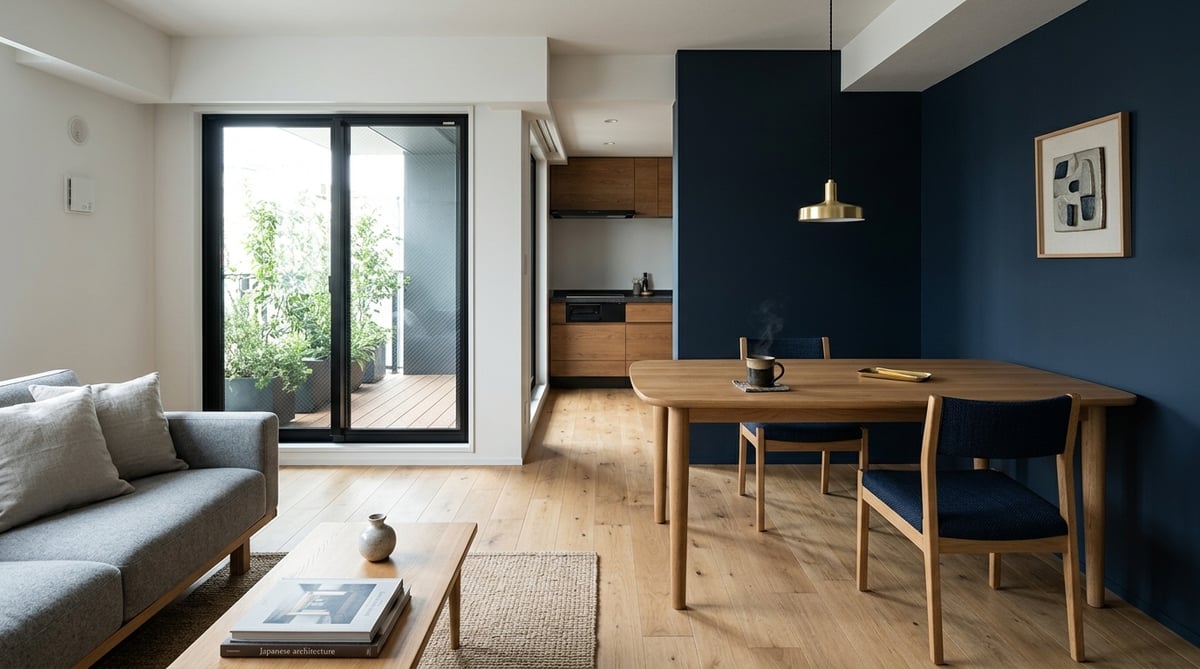
As working from home becomes the norm for both partners, sharing a compact 1LDK often leads to competing video calls, ambient distractions, and mounting frustration. While upgrading to an expansive 2LDK in central Tokyo routinely exceeds ¥250,000 per month—making long-term savings difficult—the neighboring districts of Kameari and Kanamachi, offering direct 25-minute access to Otemachi, present a welcome oasis. Here, within an accessible budget of ¥110,000 to ¥140,000 per month, comfortable 55㎡+ 2LDK residences and immaculate renovated 3DK layouts become a practical reality.
In the morning, soft natural light fills the living room as the subtle aroma of freshly brewed coffee drifts through the air. Even as 9:00 AM approaches, there is no need to worry about overlapping conference schedules. Moving across the hallway into separate, independent rooms and quietly closing the doors transforms each space into a private executive office. The sound of rapid typing and live client discussions never cross paths. At dusk, wrapping up the workday and opening the living room door welcomes you back to a warm, shared sanctuary.
Drawing on over a decade of hands-on experience guiding tenants and executing lease agreements in Tokyo, a licensed real estate transaction specialist examines why Kameari and Kanamachi deliver exceptional cost performance for dual-remote working couples. From tangible rent differentials and direct Chiyoda Line connectivity to neighborhood infrastructure, soundproof floor plan design, Katsushika flood safeguards, and practical tips for lowering initial move-in expenses, this guide covers everything you need to know.
2LDK Rent for Couples
¥110k–¥140k
Spacious 2LDK within a central 1LDK budget
Recommended Floor Area
55㎡+
Balances personal privacy and dual workspaces
Dedicated Work Rooms
2 Separate Rooms
Zero stress even during simultaneous video calls
Direct Commute to Otemachi
24–26 Mins
Direct Chiyoda Line service for easy city transit
30-Second Summary & Key TakeawaysSorAi Summary
- A licensed real estate broker analyzes the rental market, living environments, and contract strategies for securing 55㎡+ 2LDK or renovated 3DK apartments (¥110k–¥140k/month) in Kameari and Kanamachi with direct 25-minute access to Otemachi.
- Spacious living costs roughly half of equivalent properties in central Tokyo.
- Targeting 55㎡ to 65㎡+ provides an ideal baseline, directly balancing daily comfort with household budget preservation.
## The Remote Work Cohabitation Dilemma: Why Couples Need to Move from a 1LDK to a 55㎡+ 2LDK
Since the widespread adoption of telework, rental inquiries in the Tokyo metropolitan area have surged among working couples struggling with overlapping home offices. While starting life together in a 1LDK often begins harmoniously, full-time remote work frequently turns compact quarters into an unexpected source of daily friction.
### 3 Structural Limitations Faced by Remote-Working Couples in a 1LDK
A standard 1LDK layout comprises a single living-dining-kitchen (LDK) area and one separate bedroom. This spatial arrangement functioned well when at least one partner commuted to an office daily, or for relaxing together on weekends. However, the moment both partners transition to full-time remote work, three structural limitations inevitably surface:
- **Audio Interference During Video Calls and Psychological Stress**: When one partner negotiates at the dining table while the other joins an internal meeting from a compact bedroom desk, vocal projections and sensitive microphones easily pick up background conversation—even through a closed door. Constant mic muting and the perpetual tension of tiptoeing around household noises steadily erode professional focus and peace of mind.
- **Blurring Work and Rest in Shared Sleeping Quarters**: Squeezing a workstation into the bedroom means PC monitors greet you the moment you wake up, keeping workplace tension lingering right until bedtime. Late-night typing sounds and glowing monitors during overtime disrupt the other partner's sleep, causing minor misalignments in daily rhythms to trigger unnecessary conflict.
- **Loss of Personal Solitude**: Maintaining emotional well-being requires moments of genuine solitude free from observation, no matter how close you are to your partner. In a 1LDK, the only places to close a door and be truly alone are the bathroom or toilet; living under constant mutual awareness gradually accumulates subconscious fatigue.
### The MLIT Housing Standard and the Necessity of 55㎡
The Basic Housing Plan established by the Ministry of Land, Infrastructure, Transport and Tourism (MLIT) sets forth targeted housing standards that outline the floor area necessary to support diverse, fulfilling lifestyles. For a two-person household living in an urban apartment building (Urban Targeted Standard), the recommended floor area is calculated using the following formula:
**"20㎡ × Household Size (2 persons) + 15㎡ = 55㎡"**
Even under official Japanese government standards, at least 55㎡ of living space is recommended for two adults to reside with emotional and physical comfort in urban areas. In a typical 40㎡ 1LDK, usable living area becomes severely constrained once furniture is placed, making it physically impossible to accommodate dedicated desks comfortably. Securing a 55㎡+ 2LDK or a renovated 3DK is the essential first step in safeguarding daily well-being for dual-telework households.
Online Consultation (No Store Visit Needed) Sorai Tokyo Official
[\[Instant Calendar Booking\] Online Apartment Search Consultation with a Dedicated Agent](https://soraitokyo.jp/consultation?hsLang=en)
Licensed real estate specialists well-versed in East Tokyo provide personalized video support—from refining your search criteria and accessing off-market listings to auditing upfront moving costs.
[Check Availability & Book →](https://soraitokyo.jp/consultation?hsLang=en)
#### \[Station-by-Station Living Guide\] Neighborhood Livability for Singles and Couples in Kameari & Kanamachi
In addition to the cost performance of spacious 2LDK homes, explore the shopping environments, local atmosphere, and rental markets in our comprehensive guides for each station:
👉 [\[Kanamachi Complete Guide\] Direct Chiyoda Line Access & Science Campus: Evolving Station Redevelopment and Rental Rates](https://soraitokyo.jp/ja/blog/kanamachi-living-guide-chiyoda-direct?hsLang=en)
👉 [\[Kameari Complete Guide\] Outstanding Shopping at Ario & Historic Shotengai: 24 Minutes to Otemachi](https://soraitokyo.jp/ja/blog/kameari-living-guide-chiyoda-direct?hsLang=en)
Comprehensive Area Guide Sorai Tokyo Official
[【Chiyoda Line Area Guide】Direct Access to Otemachi! Station Comparison](https://soraitokyo.jp/area-guide-chiyoda-line?hsLang=en)
Complete rental and living guide for all stations on the Tokyo Metro Chiyoda Line, from Kita-Ayase and Kita-Senju to downtown Otemachi.
[Explore Chiyoda Line Guide →](https://soraitokyo.jp/area-guide-chiyoda-line?hsLang=en)
## Live Comfortably on ¥110k–¥140k/Month: The Secret Behind the Outstanding Space and Value in Kameari & Kanamachi
When searching for a 2LDK of 55㎡ or more, the rent levels in central Tokyo present an immediate hurdle. In prime wards such as Chiyoda, Minato, or Bunkyo, renting a 55㎡ 2LDK typically commands ¥240,000 to ¥320,000 per month. Even around eastern Yamanote hubs like Ueno or Nippori, monthly budgets of ¥180,000 to ¥240,000 are standard. Yet crossing the Arakawa River on the JR Joban Local Line into the Kameari and Kanamachi neighborhoods completely transforms this market reality.
Scroll horizontally to see full table →
| Area Category | Key Stations | 2LDK Rent Average (55㎡ Baseline) | Travel Time to Otemachi | Neighborhood & Housing Characteristics |
| --- | --- | --- | --- | --- |
| **Central Tokyo Core** | Yushima, Hongo-sanchome, Akasaka | ¥240,000–¥320,000 | 5–10 mins | Exceptional transit convenience accompanied by premium rents. Mostly newer condominiums, but carries a heavy fixed monthly burden. |
| **East Yamanote & Adachi** | Nishi-Nippori, Machiya, Kitasenju | ¥180,000–¥240,000 | 11–16 mins | Combines historic charm with central proximity, but spacious 2LDK stock is limited, resulting in high leasing competition. |
| **Katsushika Joban Line Area** | Kameari & Kanamachi | ¥115,000–¥145,000 | Direct approx. 24–26 mins | Rents are nearly half those of central Tokyo despite a direct 25-minute commute to Otemachi. Abundant beautifully renovated 3DKs and quality RC-structure 2LDKs. |
### Two Years of Financial Surplus: The Power of Saving ¥100,000 to ¥150,000 Monthly
Choosing a spacious 55㎡+ 2LDK in Kameari or Kanamachi for ¥130,000 per month rather than stretching your budget for a ¥250,000 apartment downtown saves a substantial **¥120,000 every month**. Let us examine the tangible financial breathing room this creates over a standard two-year (24-month) lease:
- **Total 2-Year Rent Savings**: ¥120,000 × 24 months = **¥2,880,000**
- **Renewal Fee Difference (1 Month's Rent)**: ¥250,000 − ¥130,000 = **¥120,000**
- **Initial Deposit & Key Money Difference (1 Month Each)**: (¥250,000 × 2) − (¥130,000 × 2) = **¥240,000**
- **Cumulative 2-Year Savings**: **Approx. ¥3,240,000**
Retaining over ¥3.2 million in capital over two years opens up profound life possibilities for a dual-income couple. Whether allocated toward a wedding or honeymoon, a future home down payment, long-term asset accumulation via tax-advantaged accounts like Tsumitate NISA, or personal career growth, this surplus builds a resilient foundation for long-term security.
Upfront Move-In Cost Simulation for Couples (Rent Level Comparison)
Central Tokyo 2LDK (Assuming ¥250,000 Rent)
Security Deposit & Key Money (1 mo. each): ¥500,000
Advance Rent & Maintenance Fee (1 mo.): ¥265,000
Brokerage Fee (Standard 1.1 mo. incl. tax): ¥275,000
Guarantor, Insurance, Lock Replacement, etc.: Approx. ¥180,000
Estimated Total Upfront Costs: Approx. ¥1.22M – ¥1.25M
Due to high monthly rent, initial leasing costs exceed ¥1.2 million.
Kameari & Kanamachi 55㎡+ 2LDK (Assuming ¥130,000 Rent)
Security Deposit & Key Money (1 mo. each): ¥260,000
Advance Rent & Maintenance Fee (1 mo.): ¥138,000
Brokerage Fee (50% Off / 0.55 mo. incl. tax): ¥71,500
Guarantor, Insurance, Lock Replacement, etc.: Approx. ¥110,000
Estimated Total Upfront Costs: Approx. ¥579,000 – ¥600,000
Sorai Tokyo's 50% brokerage fee discount reduces upfront move-in expenses by an additional ~¥70,000.
SORAI SIMULATOR / Online in 10 Sec
### \[SorAi Initial Cost Simulator\] Calculate Estimated Move-in Costs in 10 Seconds
Simply enter the rent and deposit to calculate a transparent move-in cost breakdown including brokerage and guarantor fees without hidden markups.
[Open in Fullscreen / New Tab](https://soraitokyo.jp/en/quote?ref=blog_embed_ext&utm_source=blog_mid_cta&utm_medium=cta&utm_campaign=unified_cta_simulator&hsLang=en) [Chat on Official LINE](https://line.me/R/ti/p/@soraitokyo)
Explore other free SorAi tools: [SorAi Inspection Report →](https://soraitokyo.jp/inspection?ref=blog_mid_cta_aux&lang=en&utm_source=blog_mid_cta&utm_medium=aux_link&utm_campaign=unified_cta_inspection&hsLang=en) [SorAi Request →](https://hearing.soraitokyo.jp/?start=true&ref=blog_mid_cta_aux&lang=en&utm_source=blog_mid_cta&utm_medium=aux_link&utm_campaign=unified_cta_request)
※ 100% Free ・ Online completed.
Related Article
[\[2026 Guide\] Chiyoda & Joban Direct Line Rent & Livability Comparison (Kitasenju, Ayase, Kameari, Kanamachi) | Sorai Tokyo](https://soraitokyo.jp/ja/blog/chiyoda-joban-line-rent-comparison-2026?hsLang=en)
[Read Article →](https://soraitokyo.jp/ja/blog/chiyoda-joban-line-rent-comparison-2026?hsLang=en)
Related Recommendation
[Arakawa Ward Chiyoda Line Ground & Flood Guide: Machiya vs Nishi-Nippori Apartments](https://soraitokyo.jp/en/blog/arakawa-ward-chiyoda-hazard-map-plateau-lowland?hsLang=en)
[Read Article →](https://soraitokyo.jp/en/blog/arakawa-ward-chiyoda-hazard-map-plateau-lowland?hsLang=en)
## 25 Minutes Direct to Otemachi: How the Chiyoda Line Connection Elevates Dual-Career Commuting
Regardless of how affordable the rent or how spacious the layout, awkward transit to central business districts creates significant friction on office days and weekend outings. Herein lies the greatest competitive advantage of Kameari and Kanamachi Stations: **mutual through-service between the JR Joban Local Line and the Tokyo Metro Chiyoda Line**.
### Seamless Connectivity: Direct Rail to Otemachi, Kasumigaseki, and Omotesando
Boarding the JR Joban Local Line carries you directly onto the underground tracks of the Tokyo Metro Chiyoda Line at Ayase Station without changing trains. Without passing through a turnstile or navigating crowded transfer staircases, you arrive directly at Otemachi Station in approximately 23 to 25 minutes, Kasumigaseki in 29 minutes, Akasaka in 33 minutes, and Omotesando in 38 minutes.
From financial institutions, trading firms, and tech headquarters in Marunouchi and Otemachi to government ministries in Kasumigaseki, retail hubs around Hibiya and Yurakucho, and creative agencies in Akasaka and Omotesando, this single rail artery connects virtually all of Tokyo's primary commercial hubs—an exceptional transit advantage compared to other suburban lines.
### The Ideal Balance for Remote-First Couples Commuting 1–2 Days a Week
If daily life required enduring packed rush-hour trains five days a week, paying a premium to live closer downtown might seem justified. But under modern hybrid schedules—working from home three to four days and commuting only once or twice weekly—spending over ¥100,000 extra each month simply to shave 10 to 15 minutes off an occasional commute is rarely a sound trade-off.
Even on office days, traveling slightly outside the peak morning rush (around 8:00 AM) softens the commute considerably. After passing the boarding wave at Kitasenju, a substantial crowd disembarks at Nishi-Nippori Station to transfer to the Yamanote and Keihin-Tohoku Lines, visibly freeing up cabin space. With the right timing, you can easily find a seat and read a paperback in comfort. Effortlessly handling occasional commutes while spending 90% of your time in an expansive, tranquil home—this measured rhythm embodies the true essence of comfortable living.
## \[Kameari vs. Kanamachi\] Ario Kameari’s Retail Dominance vs. Science Campus & Redevelopment Elegance
Neighboring stops along the Joban Local Line, Kameari and Kanamachi offer nearly identical rent price points and central access. Yet the moment you step onto their platforms, each neighborhood reveals a distinct character and urban atmosphere.
Kameari Living Highlights
Robust Retail at Ario Kameari × Vibrant Historic Shopping Streets
- **Large-Scale Shopping Mall "Ario Kameari"**: Houses Ito-Yokado supermarket, MOVIX Cinema, and approximately 120 specialty stores
- **Three Thriving Shotengai Streets**: Warm community spirit across "You Road (Kameari Ginza)", "Kameari Chuo Shopping Street", and "Kameari North Exit Shopping Street"
- **Rich Array of Independent Eateries**: Yakitori taverns, cozy bistros, and celebrated ramen shops offer endless post-work culinary discoveries
- **Flat Low-Rise Residential Pockets**: Quiet, pedestrian-friendly neighborhoods extending toward Towa in Adachi and Nakagawa in Katsushika
Kanamachi Living Highlights
Open Science Campus Vistas × Crisp Urban Redevelopment
- **Tokyo University of Science, Katsushika Campus**: Beautifully landscaped academic promenades and generous green open space
- **Katsushika Niijuku Mirai Park**: Expansive lawns and waterside paths, ideal for weekend jogs and picnics
- **Modern Redevelopment Towers**: "Vinacity Kanamachi" (with a 24-hour Maruetsu grocery store) and "Beltore Kanamachi"
- **Two-Line Flexibility**: JR Joban Local Line complemented by Keisei Kanamachi Line connecting directly to Shibamata and Keisei Takasago
### Kameari: Weekend Convenience at Ario and the Warmth of Traditional Shotengai
Walking south from the station, the expansive regional shopping mall "Ario Kameari" comes into view. Spanning three commercial floors, it brings together a large Ito-Yokado supermarket with abundant fresh groceries, the MOVIX Kameari cinema complex, UNIQLO, MUJI, and Loft. Experiencing the latest films, picking up household goods, and gathering dinner ingredients all within an easy walking distance—without needing to travel into Ginza or Yurakucho—is the ultimate everyday privilege of living in Kameari.
At the same time, lively traditional shopping streets flank both the north and south exits, preserving the warm charm of historic Tokyo neighborhoods. Strolling through the south exit's Kameari Ginza Shotengai (You Road) at dusk, you are met with the appetizing aroma of grilling yakitori from delicatessens and displays of fresh, affordable produce at greengrocers. Picking up freshly baked bread from an independent neighborhood bakery on a weekend morning and enjoying brunch with freshly brewed coffee—Kameari provides an inviting home for couples seeking unpretentious, genuine warmth.
### Kanamachi: Expansive Park Greenery and Crisp Urban Redevelopment
Across the way, Kanamachi Station has evolved through sustained redevelopment into a clean, modern urban district. Its defining centerpiece is the Tokyo University of Science Katsushika Campus, located just minutes from the north exit, seamlessly integrated with Katsushika Niijuku Mirai Park—one of the largest urban parks in Katsushika Ward.
This open landscape combines well-kept lawns and waterside terraces, warmly welcoming local residents. Enjoying a morning jog in the crisp air or relaxing with a book under open skies offers an expansive green sanctuary rarely found in central Tokyo.
Daily amenities surrounding the station are equally impressive. On the ground floor of Vinacity Kanamachi at the south exit sits a 24-hour Maruetsu supermarket, while the third floor houses the spacious Katsushika Central Library. Nearby Beltore Kanamachi accommodates healthcare clinics and everyday shops, with Tokyu Store open until 10:00 PM on the north side. For dual-income households prioritizing a harmonious blend of pristine modern surroundings and refreshing greenery, Kanamachi resonates deeply.
Scroll horizontally to see full table →
| Comparison Point | Kameari Area | Kanamachi Area |
| --- | --- | --- |
| **Direct Time to Otemachi Station** | Approx. 24 mins (Local Train, Direct Chiyoda Line) | Approx. 26 mins (Local Train, Direct Chiyoda Line) |
| **Core Commercial Facilities** | Ario Kameari (Cinema, Ito-Yokado, ~120 specialty stores) | Beltore Kanamachi, Vinacity Kanamachi, Tokyu Store Kanamachi |
| **Townscape & Atmosphere** | Vibrant shotengai, approachable independent eateries, lively energy | Open university campus, pristine redevelopment towers, expansive greenery |
| **Weekend Leisure Spots** | Watching movies at MOVIX Ario, food strolls along You Road | Picnicking at Niijuku Mirai Park, reading at Katsushika Central Library |
| **Recommended For** | Couples who prefer all-in-one shopping and entertainment, lovers of authentic dining | Couples who enjoy strolling through open green spaces and appreciate pristine urban planning |
## Sound Isolation for Remote Calls: Optimal 2LDK Floor Layout Strategies for Cohabiting Couples
In seeking an ideal home for remote work, the spatial configuration (topology) of the rooms is just as critical as overall floor area. Even within two properties of the exact same 55㎡ footprint, the positioning of individual rooms creates a decisive difference in acoustic privacy.
### The Superiority of "Split-Wing Layouts": Fully Isolating Rooms Across a Central Living Area
The gold standard for preventing voice crossover during simultaneous video calls is the **split-wing (center living) layout**, where the living-dining-kitchen (LDK) occupies the center of the apartment, flanked by separate bedrooms on opposite sides.
In adjacent-room layouts where two bedrooms share a partition wall, sound easily bleeds through. Even in reinforced concrete (RC) buildings, internal partitions are typically constructed with plasterboard over light-gauge steel (LGS) studs, allowing vocal reverberations from lively meetings to pass through. By contrast, a split layout places a substantial buffer—over 10 tatami mats (approx. 16㎡+) of open living space and two separate solid doors—between Room A and Room B, dramatically dampening acoustic energy. Closing both doors enables each partner to conduct confident, unmuted presentations without holding back.
### The Spatial Magic of Renovated Vintage 3DKs: The Freedom of Three Independent Rooms
When seeking maximum workspace flexibility within an accessible budget of ¥110,000 to ¥130,000, we strongly recommend considering well-renovated 3DK apartments (50–58㎡) built during the late Showa or early Heisei eras.
While a modern 2LDK typically provides a 12-mat LDK and two bedrooms (6 mats and 5 mats), a classic 3DK configures a 7-mat dining-kitchen alongside **three distinct rooms**. Allocating these three spaces establishes an exceptionally comfortable remote work dynamic:
- **Room 1 (6 mats / ~10㎡)**: Dedicated office for Partner A (wide desk, monitor arms, shelving)
- **Room 2 (6 mats / ~10㎡)**: Dedicated office for Partner B (private desk, bookcase, personal hobby nook)
- **Room 3 (6 mats / ~10㎡)**: Quiet master bedroom (accommodating a double or queen bed, built-in storage)
- **Dining Kitchen (7 mats / ~11㎡)**: Communal dining space for shared morning and evening meals
Furthermore, many 3DK units feature sliding partition doors between the dining kitchen and an adjacent room. Keeping these doors fully open during the day transforms the space into an expansive 13-mat integrated living area; sliding them shut provides three private zones for deep work or evening rest. While the building structure may have age, premier renovated units frequently boast completely refreshed interiors—brand-new plumbing, pristine flooring, modern system kitchens, and reheating bath units—delivering a quality of life on par with newly built residences.
Professional Broker Advice: On-Site Checks for Soundproofing and Fiber-Optic Infrastructure
When viewing properties, always attend together as a couple and verify two vital elements in person. First, test door acoustic sealing: have one person enter a room, close the door, and speak in a normal meeting voice while the other listens from the adjoining room. If there is an undercut gap at the bottom of the door for ventilation, installing standard acoustic weatherstripping or door-draft seals can dramatically enhance isolation. Second, verify the high-speed internet wiring method. Even if fiber optic lines reach the building's central distribution board, internal distribution via telephone copper wire (VDSL method, capped at 100 Mbps) can cause bottlenecks during bandwidth-heavy tasks. Confirm in advance with the management company or owner whether direct fiber-to-the-home (FTTH, providing 1 Gbps+) is installed.
## Flood Risk Management in Katsushika: Navigating Hazard Maps and Selecting Second-Floor+ RC Buildings
When considering Kameari and Kanamachi, addressing flood hazard maps objectively is an indispensable duty of any professional broker. Surrounded by major class-one rivers—the Arakawa, Nakagawa, and Edogawa—Katsushika Ward includes low-lying alluvial plains (below-sea-level zones), with official flood projections published for severe downpours and typhoons.
### Objective Facts from the Katsushika Ward Flood Hazard Map
According to Katsushika Ward's flood hazard map (simulating maximum probable precipitation from once-in-a-millennium storms), significant portions of the ward could face flooding in the event of levee breaches along the Arakawa, Nakagawa, or Edogawa Rivers. Around Kameari and Kanamachi Stations, certain pockets show projected inundation depths between 2.0 and 5.0 meters (potentially reaching the second-floor ceiling line).
While such disclosures might initially sound concerning, there is no need for undue alarm. Applying sound architectural criteria to select properties that physically isolate you from potential floodwaters is the most dependable safeguard in urban apartment selection.
### The Essential Rule: Choosing 2nd-Floor+ (Preferably 3rd-Floor+) Reinforced Concrete (RC/SRC)
The golden rule for peaceful, secure living in the Katsushika area is prioritizing properties that satisfy two non-negotiable conditions:
- **Building Structural Type**: Avoid wooden and light-gauge steel frames, opting instead for solid **reinforced concrete (RC)** or **steel-reinforced concrete (SRC)** structures. Concrete buildings act as structural shelters, carrying minimal risk of collapse or displacement from hydrostatic pressure and debris even in extreme flood conditions.
- **Floor Level Selection**: Avoid ground-floor apartments and choose units on the **2nd floor or higher (ideally 3rd floor or above)**. Where estimated inundation is 2–3 meters, a 2nd-floor unit remains safe; in zones projecting 3–5 meters, residing on the 3rd floor (floor height approx. 6m+) physically prevents water from entering your living space.
By living on the third floor or higher of a robust RC building, you eliminate the need to evacuate into perilous outdoor floodwaters, allowing for safe **"vertical evacuation" (sheltering in place)** inside your apartment. Keeping an emergency stock of drinking water (at least 3 liters per person per day for one week), portable toilets, backup mobile batteries, and a portable gas stove ensures absolute peace of mind during unexpected events.
## Smart Apartment Hunting: Eliminating Unnecessary Rental Contract Costs
Once you identify an ideal floor plan and secure location, the final hurdle is navigating initial move-in expenses and protecting against unreasonable restoration fees upon departure. Because Japanese rental transactions involve complex legalities and market customs, arming yourself with precise knowledge and an objective second opinion serves as your strongest financial defense.
STEP 01
Define Remote Work Needs
Determine required separate rooms (2LDK or renovated 3DK) based on meeting schedules
STEP 02
Explore Kameari & Kanamachi
Walk the neighborhoods to experience Ario's retail hub and the open science park firsthand
STEP 03
Precise Measurements & Sound Testing
Verify desk spaces, door acoustics, and 2nd-floor+ RC safety criteria during viewings
STEP 04
Prudent Contracting & Fee Auditing
Eliminate unnecessary markups via 50% off brokerage fees and objective fee audits
REAL ESTATE
Editorial Supervision: Sorai Tokyo Dedicated Real Estate Broker (10 Years Field Experience)
Licensed Real Estate Broker Registration (Tokyo) No. XXXXXX / Rental Property Business Manager
With over a decade of experience in residential leasing and property management across East/North Tokyo and the Chiyoda Line corridor, our specialists are dedicated to designing productive workspaces for dual-income couples and bringing absolute transparency to initial move-in costs. We provide sincere guidance free from exaggerated marketing. Feel free to connect via our official LINE anytime for consultations or quote assessments.

SorAi Real-Time Rental Concierge Online 24/7
Official AI answers your questions 24/7
[Continue on Official LINE (24/7 Free)](https://page.line.me/soraitokyo?oat_content=url&openQrModal=true&utm_source=soraitokyo_website&utm_medium=blog_inline_chat&utm_campaign=line_btn) [Privacy Policy](https://soraitokyo.jp/en/privacy-policy)

Thank you for reading this guide. I am SorAi, your official real estate AI concierge.
Feel free to ask any questions about apartment viewing checkpoints, layout comparisons, soundproofing, or natural lighting in Tokyo.
Quick questions:
Summarize apartment viewing points
Viewing measurements and soundproofing
Comparing layouts and living flows
Sunlight, humidity, and neighborhood
[Continue on Official LINE (Free)](https://page.line.me/soraitokyo?oat_content=url&openQrModal=true&utm_source=soraitokyo_website&utm_medium=blog_inline_chat&utm_campaign=line_btn)
Send
No phone number required. Feel free to consult at your own pace 24/7.
### Featured Tokyo Living Guides
SorAi Editorial
Swipe
#### [ Layout / Room Types 2SLDK vs 2LDK in Tokyo: What is a Service Room (S), Rent Savings & Air Conditioner Pitfalls | Sorai Tokyo Read Guide →](https://soraitokyo.jp/en/blog/2sldk-2ldk-difference-guide?hsLang=en)
#### [![\[H2 2026\] Lucky Daian Moving Calendar: Moving Costs by Rokuyo & 3 Steps to Save Big](https://soraitokyo.jp/hs-fs/hubfs/blog-eyecatches/batch3_realistic_genkan.jpg?width=400&height=225&name=batch3_realistic_genkan.jpg) Moving / Initial Costs \[H2 2026\] Lucky Daian Moving Calendar: Moving Costs by Rokuyo & 3 Steps to Save Big Read Guide →](https://soraitokyo.jp/en/blog/moving-daian-2026?hsLang=en)
#### [ Tenant Screening / Checklist Tokyo Rental Screening Guide 2026: Why Applications Fail and How to Pass | Sorai Tokyo Read Guide →](https://soraitokyo.jp/en/blog/apartment-screening-checklist-guide?hsLang=en)
## Frequently Asked Questions (FAQ): Living Together in Kameari & Kanamachi
### QBetween Kameari and Kanamachi, which station is more livable for a dual-remote working couple?
AThe ideal choice depends on your daily lifestyle and weekend preferences. For couples who value catching weekend movies, running errands in an expansive shopping mall, and exploring independent eateries along historic shopping streets, Kameari with its landmark Ario complex is exceptionally convenient. On the other hand, if you prefer morning walks and jogs through sprawling green parkland (Niijuku Mirai Park) and appreciate the clean, refined streetscape shaped by the Tokyo University of Science campus and modern redevelopment towers, Kanamachi is a natural fit. Because both stations provide direct through-trains to Otemachi in 24 to 26 minutes, taking an afternoon to walk both neighborhoods together is the best way to feel which rhythm suits you.
### QAre renovated 3DK units over 30 years old safe in terms of earthquake resistance and plumbing aging?
AAs long as the building was approved after June 1, 1981, under Japan's "New Anti-Seismic Design Standards" and constructed in reinforced concrete (RC), its structural earthquake resilience is comparable to newer properties. Furthermore, premium renovations involve gutting the interior down to the concrete frame, replacing aging water supply and drainage pipes, and installing brand-new system kitchens, reheating bath units, and flooring. During viewings, review the building association's maintenance history, inspect common areas (trash rooms, mailboxes), and test water pressure and drainage flow in person to ensure long-term comfort and security.
### QCan we truly live safely in an area designated as a potential flood inundation zone on hazard maps?
AFlood risks can be effectively mitigated by carefully choosing the building structure and floor level. The essential approach is to select an apartment in a sturdy reinforced concrete (RC) or steel-reinforced concrete (SRC) building—avoiding wood and light-gauge steel—and to lease a unit on the 2nd floor or higher (ideally 3rd floor or above). Even during severe river flooding, residing on upper floors of a robust concrete building prevents water from entering the living quarters, enabling safe shelter-in-place (vertical evacuation). Keeping standard emergency supplies such as drinking water and portable toilets ready allows you to live with complete confidence without unnecessary anxiety.
### QHow can we identify and eliminate unnecessary optional fees from initial move-in estimates?
AWhen an estimate includes line items such as "indoor sanitization fee (¥15,000–¥30,000)," "deodorization/antibacterial treatment," "24-hour support membership (optional)," "portable fire extinguisher fee," or "document preparation fee," these are almost always discretionary add-ons introduced by brokers or management firms. Unless explicitly mandated by the property owner as a non-negotiable leasing condition, tenants have the right to decline them. If you are uncertain about any line item, you can send an image of your quote to Sorai Tokyo's official LINE; our licensed brokers will cross-reference it against the inter-broker real estate database to provide a complimentary second opinion audit identifying which fees can be eliminated.

Author: Sorai Tokyo Editorial Team (Supervised by Licensed Real Estate Agents)
A real estate consulting team specializing in assisting foreign nationals find rooms and explaining initial costs in Tokyo. We break down language barriers and differences in customs, offering dedicated support in Japanese, English, and Vietnamese for a safe and secure start to your new life.
 SORAI TOKYO | Chat with AI "SorAi" Anytime on LINE
### Exploring Tokyo Neighborhoods or Apartments? Ask Our AI "SorAi" Anytime on LINE
No property URL needed yet. From area safety, commute tips, and rent trends to instant initial-cost audits for listings you found—chat with SorAi 24/7 on LINE with zero sales calls.
STEP 1
Ask Anything on LINE
Ask about areas & rent, or send a listing URL anytime
→
STEP 2
24/7 Instant Reply by SorAi
Objective area data, live vacancy & fee breakdown
→
STEP 3
Explore at Your Own Pace
Zero sales calls. Meet on-site only when ready to view
24/7 Instant / Most Popular
#### ① Chat with AI "SorAi" on LINE (Free)
Ask about neighborhoods, rent trends, or share any listing URL on LINE. SorAi & our bilingual concierge check live vacancy and upfront fee breakdowns with zero sales pressure.
[Chat with SorAi on LINE (Free) ➔](https://lin.ee/VE8fd8b?utm_source=soraitokyo_blog&utm_medium=cta&utm_campaign=bottom_cta&utm_content=line)
Web Audit
#### ② SorAi Property Report
Already found a listing? Submit the URL or floor plan on the web for an instant objective breakdown of move-in costs and neighborhood data.
[View Report (Free) ↗](https://inspection.soraitokyo.jp/?ref=blog_bottom_cta)
Wait for New Listings
#### ③ SorAi Housing Needs
Select your budget, layout, and must-have conditions in 30 seconds to receive matching listings at your own pace.
[Organize Criteria (Free) ➔](https://soraitokyo.jp/en/request?ref=blog_bottom_cta&hsLang=en)
Instant Move-in Estimate
#### ④ SorAi Move-in Estimator
Enter rent and management fees to quickly estimate standard upfront contract costs and potential savings.
[Check Estimates (Free) ➔](https://soraitokyo.jp/en/quote?ref=blog_bottom_cta&hsLang=en)
※ Consultations are 100% free. No phone number required, zero pushy calls—everything is completed smoothly on LINE.
この記事をシェアする
\# エリアガイド
[ SORAI TOKYO](https://soraitokyo.jp/en/)
Sorai Tokyo Co., Ltd.
Room 102, 1-7-14 Yanaka, Adachi-ku, Tokyo, 120-0006
03-6161-8484
[contact@soraitokyo.jp](mailto:contact@soraitokyo.jp)
Tokyo Metropolitan Governor (1) No. 113297
(License Date: December 20, 2025)
### Sitemap
- [About Us](https://soraitokyo.jp/en/about-us)
- [Testimonials](https://soraitokyo.jp/en/testimonials)
- [Chiyoda Line Guide](https://soraitokyo.jp/en/area-guide-chiyoda-line)
- [Sorai Journal](https://soraitokyo.jp/en/blog)
- [FAQs](https://soraitokyo.jp/en/faqs)
- [Contact](https://soraitokyo.jp/en/contact)
- [SorAi Request](https://soraitokyo.jp/en/request)
### Business Hours
**10:00 〜 18:00**
Closed: **Tuesday & Wednesday**
Inquiries via LINE, SNS, and email are accepted 24/7.
[View on Google Maps](https://maps.google.com/?q=%E6%9D%B1%E4%BA%AC%E9%83%BD%E8%B6%B3%E7%AB%8B%E5%8C%BA%E8%B0%B7%E4%B8%AD1-7-14) [Book Online Meeting](https://soraitokyo.jp/en/consultation?hsLang=en)
### Multilingual Services
Our professional staff are fluent in Japanese, English, Vietnamese, Russian, and Indonesian to support you from room hunting to contract signing.
[🇯🇵 日本語](https://soraitokyo.jp/ja/blog/kameari-kanamachi-spacious-2ldk-cohabitation-cost-guide?hsLang=ja) [🇺🇸 English](https://soraitokyo.jp/en/blog/kameari-kanamachi-spacious-2ldk-cohabitation-cost-guide?hsLang=en) [🇻🇳 Tiếng Việt](https://soraitokyo.jp/vi/blog/kameari-kanamachi-spacious-2ldk-cohabitation-cost-guide?hsLang=vi) [🇷🇺 Русский](https://soraitokyo.jp/ru/blog/kameari-kanamachi-spacious-2ldk-cohabitation-cost-guide?hsLang=ru) [🇮🇩 Indonesia](https://soraitokyo.jp/id/blog/kameari-kanamachi-spacious-2ldk-cohabitation-cost-guide?hsLang=id)
### Inquire via Social Media
[Privacy Policy](https://soraitokyo.jp/en/privacy-policy) | [Privacy & Security](https://soraitokyo.jp/en/security)
Copyright © 2026 株式会社ソライ東京 (Sorai Tokyo Co., Ltd.) All Rights Reserved.
[Chat with SorAi](https://page.line.me/soraitokyo?oat_content=url&openQrModal=true&utm_source=soraitokyo_website&utm_medium=line_button&utm_campaign=chatbot_popover)
SorAi Chat

#### SorAi
Online (Multilingual Support)
×
[Chat with SorAi](https://page.line.me/soraitokyo?oat_content=url&openQrModal=true&utm_source=soraitokyo_website&utm_medium=chatbot_header&utm_campaign=line_btn) [Email Us](https://soraitokyo.jp/en/contact?hsLang=en)
[Get "SorAi" on LINE (24/7 Free)](https://page.line.me/soraitokyo?oat_content=url&openQrModal=true&utm_source=soraitokyo_website&utm_medium=line_button&utm_campaign=floating_btn)
 SorAi | 24/7 AI Rental Chat No signup・100% online
TOC
### Table of Contents
×
```json
{
"@context" : "https://schema.org",
"@type" : "BlogPosting",
"author" : {
"@type" : "Person",
"name" : "ソライ東京編集部",
"url" : "https://soraitokyo.jp/en/blog/author/ソライ東京編集部"
},
"datePublished" : "2026-09-05T18:35:14.000Z",
"headline" : "Direct 25-Min Access to Otemachi: Rent a 55㎡+ 2LDK or Renovated 3DK for ¥110k–¥140k in Kameari & Kanamachi | High-Value Living for Remote-Working Couples | Sorai Tokyo",
"image" : [ "https://soraitokyo.jp/hubfs/blog-eyecatches/batch5_concrete_wood_living.jpg" ],
"mainEntityOfPage" : {
"@id" : "https://soraitokyo.jp/en/blog/kameari-kanamachi-spacious-2ldk-cohabitation-cost-guide",
"@type" : "WebPage"
},
"publisher" : {
"@type" : "Organization",
"logo" : {
"@type" : "ImageObject",
"url" : "https://soraitokyo.jp/hubfs/small_logo(color)%20(2)-1.png"
},
"name" : "株式会社ソライ東京"
}
}
```
```json
{
"@context" : "https://schema.org",
"@type" : "FAQPage",
"mainEntity" : [ {
"@type" : "Question",
"acceptedAnswer" : {
"@type" : "Answer",
"text" : "The ideal choice depends on your daily lifestyle and weekend preferences. For couples who value catching weekend movies, running errands in an expansive shopping mall, and exploring independent eateries along historic shopping streets, Kameari with its landmark Ario complex is exceptionally convenient. On the other hand, if you prefer morning walks and jogs through sprawling green parkland (Niijuku Mirai Park) and appreciate the clean, refined streetscape shaped by the Tokyo University of Science campus and modern redevelopment towers, Kanamachi is a natural fit. Because both stations provide direct through-trains to Otemachi in 24 to 26 minutes, taking an afternoon to walk both neighborhoods together is the best way to feel which rhythm suits you."
},
"name" : "Between Kameari and Kanamachi, which station is more livable for a dual-remote working couple?"
}, {
"@type" : "Question",
"acceptedAnswer" : {
"@type" : "Answer",
"text" : "As long as the building was approved after June 1, 1981, under Japan's \"New Anti-Seismic Design Standards\" and constructed in reinforced concrete (RC), its structural earthquake resilience is comparable to newer properties. Furthermore, premium renovations involve gutting the interior down to the concrete frame, replacing aging water supply and drainage pipes, and installing brand-new system kitchens, reheating bath units, and flooring. During viewings, review the building association's maintenance history, inspect common areas (trash rooms, mailboxes), and test water pressure and drainage flow in person to ensure long-term comfort and security."
},
"name" : "Are renovated 3DK units over 30 years old safe in terms of earthquake resistance and plumbing aging?"
}, {
"@type" : "Question",
"acceptedAnswer" : {
"@type" : "Answer",
"text" : "Flood risks can be effectively mitigated by carefully choosing the building structure and floor level. The essential approach is to select an apartment in a sturdy reinforced concrete (RC) or steel-reinforced concrete (SRC) building—avoiding wood and light-gauge steel—and to lease a unit on the 2nd floor or higher (ideally 3rd floor or above). Even during severe river flooding, residing on upper floors of a robust concrete building prevents water from entering the living quarters, enabling safe shelter-in-place (vertical evacuation). Keeping standard emergency supplies such as drinking water and portable toilets ready allows you to live with complete confidence without unnecessary anxiety."
},
"name" : "Can we truly live safely in an area designated as a potential flood inundation zone on hazard maps?"
}, {
"@type" : "Question",
"acceptedAnswer" : {
"@type" : "Answer",
"text" : "When an estimate includes line items such as \"indoor sanitization fee (¥15,000–¥30,000),\" \"deodorization/antibacterial treatment,\" \"24-hour support membership (optional),\" \"portable fire extinguisher fee,\" or \"document preparation fee,\" these are almost always discretionary add-ons introduced by brokers or management firms. Unless explicitly mandated by the property owner as a non-negotiable leasing condition, tenants have the right to decline them. If you are uncertain about any line item, you can send an image of your quote to Sorai Tokyo's official LINE; our licensed brokers will cross-reference it against the inter-broker real estate database to provide a complimentary second opinion audit identifying which fees can be eliminated."
},
"name" : "How can we identify and eliminate unnecessary optional fees from initial move-in estimates?"
} ]
}
```
```json
{
"@context" : "https://schema.org",
"@type" : "BlogPosting",
"author" : {
"@type" : "Person",
"name" : "Author: Sorai Tokyo Editorial Team (Supervised by Licensed Real Estate Agents)"
},
"dateModified" : "2026-10-02T21:09:24Z",
"datePublished" : "2026-10-02T21:09:24Z",
"description" : "Discover how couples working from home can secure a spacious 55㎡+ 2LDK or renovated 3DK in Kameari & Kanamachi for ¥110k–¥140k with direct Otemachi access.",
"headline" : "Direct 25-Min Access to Otemachi: Rent a 55㎡+ 2LDK or Renovated 3DK for ¥110k–¥140k in Kameari & Kanamachi | High-Value Living for Remote-Working Couples",
"inLanguage" : "en",
"publisher" : {
"@type" : "Organization",
"name" : "Sorai Tokyo",
"url" : "https://soraitokyo.jp"
}
}
```
```json
{
"@context" : "https://schema.org",
"@type" : "BlogPosting",
"author" : {
"@type" : "Organization",
"knowsAbout" : [ "東京メトロ千代田線", "賃貸不動産仲介", "宅地建物取引業", "初期費用適正化", "重要事項説明(IT重説)" ],
"name" : "Sorai Tokyo Editorial Team (Supervised by Licensed Real Estate Agents)",
"url" : "https://soraitokyo.jp/en/about-us"
},
"dateModified" : "2026-10-07T18:01:05+0000",
"datePublished" : "2026-09-05T18:35:14+0000",
"description" : "Discover how couples working from home can secure a spacious 55㎡+ 2LDK or renovated 3DK in Kameari & Kanamachi for ¥110k–¥140k with direct Otemachi access.",
"headline" : "Direct 25-Min Access to Otemachi: Rent a 55㎡+ 2LDK or Renovated 3DK for ¥110k–¥140k in Kameari & Kanamachi | High-Value Living for Remote-Working Couples",
"image" : "https://soraitokyo.jp/hubfs/blog-eyecatches/batch3_urban_smart_1ldk.jpg",
"inLanguage" : "en",
"mainEntityOfPage" : {
"@id" : "https://soraitokyo.jp/en/blog/kameari-kanamachi-spacious-2ldk-cohabitation-cost-guide",
"@type" : "WebPage"
},
"publisher" : {
"@type" : "Organization",
"logo" : {
"@type" : "ImageObject",
"url" : "https://soraitokyo.jp/hubfs/raw_assets/public/soraitokyo-theme/assets/logo.png"
},
"name" : "Sorai Tokyo Co., Ltd.",
"url" : "https://soraitokyo.jp/en/"
},
"url" : "https://soraitokyo.jp/en/blog/kameari-kanamachi-spacious-2ldk-cohabitation-cost-guide"
}
```
```json
{
"@context" : "https://schema.org",
"@type" : "BreadcrumbList",
"itemListElement" : [ {
"@type" : "ListItem",
"item" : "https://soraitokyo.jp/en/",
"name" : "Home",
"position" : 1
}, {
"@type" : "ListItem",
"item" : "https://soraitokyo.jp/en/blog",
"name" : "Blog",
"position" : 2
}, {
"@type" : "ListItem",
"item" : "https://soraitokyo.jp/en/blog/kameari-kanamachi-spacious-2ldk-cohabitation-cost-guide",
"name" : "Direct 25-Min Access to Otemachi: Rent a 55㎡+ 2LDK or Renovated 3DK for ¥110k–¥140k in Kameari & Kanamachi | High-Value Living for Remote-Working Couples",
"position" : 3
} ]
}
```