---
title: "Renting for Home Cooks in Kitasenju (2026): Kitchen Layouts, 2-Burner Stoves, 60cm Fridge Space & Viewing Guide | Sorai Tokyo | Sorai Tokyo"
description: "Discover how to choose an apartment in Kitasenju for cooking at home: 2-burner city gas stoves, 60cm fridge clearance, kitchen layouts, and viewing tips."
image: https://soraitokyo.jp/hubfs/blog-eyecatches/batch18_03_galley_kitchen_pass_through_window.jpg
---
[ SORAI TOKYO](https://soraitokyo.jp/en/)
- [Home](https://soraitokyo.jp/en/)
- [SorAi Suite](https://soraitokyo.jp/en/quote)
[SorAi Initial Cost Simulator Instant breakdown of move-in costs](https://soraitokyo.jp/en/quote) [SorAi Inspection Report Objective property & hazard diagnosis](https://soraitokyo.jp/en/inspection) [SorAi Request AI-powered rental home recommendations](https://soraitokyo.jp/en/request) [SorAi Phone Consultation 24/7 AI voice response (03-6161-8484)](tel:0361618484)
- [Property Search](https://soraitokyo.jp/en/properties/plegio-kitaayase-asian)
[Featured New (Plegio Kita-Ayase) 2 min from Chiyoda Line starting station](https://soraitokyo.jp/en/properties/plegio-kitaayase-asian) [Furnished Monthly Apartments Short-term rentals for business & temporary stays](https://soraitokyo.jp/en/short-term-rental) [Online Licensed Agent Consultation Camera-off OK • 30–45 min neutral advice](https://soraitokyo.jp/en/consultation) [Client & Resident My Page Check application status & saved documents](https://resident.soraitokyo.jp)
- [Area Guides & Journal](https://soraitokyo.jp/en/area-guide-chiyoda-line)
[Chiyoda Line Living Guide Direct access to Otemachi & Omotesando](https://soraitokyo.jp/en/area-guide-chiyoda-line) [Sorai Journal Expert rental advice & Tokyo insights](https://soraitokyo.jp/en/blog)
- [About Sorai Tokyo](https://soraitokyo.jp/en/about-us)
[Company & Leadership Our story, mission & commitment to trust](https://soraitokyo.jp/en/about-us) [Client Testimonials Real tenant experiences & proven track record](https://soraitokyo.jp/en/testimonials) [FAQs Clear answers on leasing, guarantors & visas](https://soraitokyo.jp/en/faqs) [Privacy & Security Zero paper, zero AI training & encrypted safety](https://soraitokyo.jp/en/security)
EN
[JP 日本語](https://soraitokyo.jp/ja/blog/kita-senju-kitchen-layout-cooking?hsLang=ja) [EN English](https://soraitokyo.jp/en/blog/kita-senju-kitchen-layout-cooking?hsLang=en) [VN Tiếng Việt](https://soraitokyo.jp/vi/blog/kita-senju-kitchen-layout-cooking?hsLang=vi) [RU Русский](https://soraitokyo.jp/ru/blog/kita-senju-kitchen-layout-cooking?hsLang=ru) [ID Indonesia](https://soraitokyo.jp/id/blog/kita-senju-kitchen-layout-cooking?hsLang=id)
EN
[JP 日本語](https://soraitokyo.jp/ja/blog/kita-senju-kitchen-layout-cooking?hsLang=ja) [EN English](https://soraitokyo.jp/en/blog/kita-senju-kitchen-layout-cooking?hsLang=en) [VN Tiếng Việt](https://soraitokyo.jp/vi/blog/kita-senju-kitchen-layout-cooking?hsLang=vi) [RU Русский](https://soraitokyo.jp/ru/blog/kita-senju-kitchen-layout-cooking?hsLang=ru) [ID Indonesia](https://soraitokyo.jp/id/blog/kita-senju-kitchen-layout-cooking?hsLang=id)
[Online Consultation](https://soraitokyo.jp/en/consultation) [Contact](https://soraitokyo.jp/en/contact)
SORAI TOKYO Real Estate & Living
[Cost Simulator Instant Fee Breakdown](https://soraitokyo.jp/en/quote) [Area Guide 20 Stations & Living](https://soraitokyo.jp/en/area-guide-chiyoda-line) [About Us Stance & Commitments](https://soraitokyo.jp/en/about-us) [Contact Us Viewing & Booking](https://soraitokyo.jp/en/contact)
SorAi Suite
- [SorAi Initial Cost Simulator Instant Breakdown](https://soraitokyo.jp/en/quote)
- [SorAi Inspection Report Property & Hazard](https://soraitokyo.jp/en/inspection)
- [SorAi Request AI Matcher](https://soraitokyo.jp/en/request)
- [SorAi Phone Consultation 03-6161-8484](tel:0361618484)
Property Search
- [Featured Property: Plegio Kita-Ayase 2 min walk](https://soraitokyo.jp/en/properties/plegio-kitaayase-asian)
- [Furnished Monthly Apartments Short-Term Rentals](https://soraitokyo.jp/en/short-term-rental)
Area Guides & Journal
- [Chiyoda Line Guide Direct Access to Central Tokyo](https://soraitokyo.jp/en/area-guide-chiyoda-line)
- [Sorai Journal & Insights Expert Advice](https://soraitokyo.jp/en/blog)
About Sorai Tokyo
- [Home](https://soraitokyo.jp/en/)
- [Company Profile Story & Trust](https://soraitokyo.jp/en/about-us)
- [Customer Reviews Real Voice](https://soraitokyo.jp/en/testimonials)
- [Frequently Asked Questions Answers](https://soraitokyo.jp/en/faqs)
- [Privacy & Security Zero Paper & AI Training](https://soraitokyo.jp/en/security)
Consultation & Contact
- [Online Consultation Video call](https://soraitokyo.jp/en/consultation)
- [Contact Form Inquiry](https://soraitokyo.jp/en/contact)
- [Official LINE Consultation URL intake](https://page.line.me/soraitokyo)
Language / 言語
[JP 日本語](https://soraitokyo.jp/ja/blog/kita-senju-kitchen-layout-cooking?hsLang=ja) [EN English](https://soraitokyo.jp/en/blog/kita-senju-kitchen-layout-cooking?hsLang=en) [VN Tiếng Việt](https://soraitokyo.jp/vi/blog/kita-senju-kitchen-layout-cooking?hsLang=vi) [RU Русский](https://soraitokyo.jp/ru/blog/kita-senju-kitchen-layout-cooking?hsLang=ru) [ID Indonesia](https://soraitokyo.jp/id/blog/kita-senju-kitchen-layout-cooking?hsLang=id)
Hours: 10:00 AM - 6:00 PM
Closed: Tuesday & Wednesday
[LINE](https://page.line.me/soraitokyo) [Facebook](https://www.facebook.com/1168140463045963) [Map](https://maps.google.com/?q=%E3%82%BD%E3%83%A9%E3%82%A4%E6%9D%B1%E4%BA%AC)
株式会社ソライ東京 | 宅地建物取引業者 東京都知事免許
[Home](https://soraitokyo.jp/en/) [Area](https://soraitokyo.jp/en/area-guide-chiyoda-line)
Tools
TOC
[LINE](https://page.line.me/soraitokyo?oat_content=url&openQrModal=true&utm_source=soraitokyo_website&utm_medium=bottom_nav&utm_campaign=mobile_bottom)
Select Language
×
[JP 日本語](https://soraitokyo.jp/ja/blog/kita-senju-kitchen-layout-cooking?hsLang=ja) [EN English](https://soraitokyo.jp/en/blog/kita-senju-kitchen-layout-cooking?hsLang=en) [VN Tiếng Việt](https://soraitokyo.jp/vi/blog/kita-senju-kitchen-layout-cooking?hsLang=vi) [RU Русский](https://soraitokyo.jp/ru/blog/kita-senju-kitchen-layout-cooking?hsLang=ru) [ID Indonesia](https://soraitokyo.jp/id/blog/kita-senju-kitchen-layout-cooking?hsLang=id)
SorAi Tools
×
[Initial Cost Simulator Agent Verified / Free 10-second automatic cost estimation from portal URLs or manual input](https://soraitokyo.jp/en/quote) [SorAi Inspection Report Objective Audit Upload floor plan to objectively diagnose earthquake resistance, structure & fair rent](https://soraitokyo.jp/en/inspection) [SorAi Room Hunting Request 100% Online / No Calls Zero unwanted sales calls. Simply send your ideal conditions and relax](https://soraitokyo.jp/en/request)
SORAI SUITE
[SorAi Cost Simulator](https://soraitokyo.jp/en/quote) [SorAi Inspection Report](https://soraitokyo.jp/en/inspection) [SorAi Request](https://soraitokyo.jp/en/request) [Online Consultation](https://soraitokyo.jp/en/consultation) [SorAi Phone Call](tel:0361618484)
MENU
[Area Guide](https://soraitokyo.jp/en/area-guide-chiyoda-line) [Journal](https://soraitokyo.jp/en/blog) [About Us](https://soraitokyo.jp/en/about-us) [Contact](https://soraitokyo.jp/en/contact)
[Free LINE Consultation](https://page.line.me/soraitokyo?oat_content=url&openQrModal=true&utm_source=soraitokyo_website&utm_medium=left_sidebar&utm_campaign=persistent_rail)
1. [Home](https://soraitokyo.jp/en/)
2. /
3. [Area Guide](https://soraitokyo.jp/en/area-guide)
4. /
5. Renting for Home Cooks in Kitasenju (2026): Kitchen Layouts, 2-Burner Stoves, 60cm Fridge Space & Viewing Guide | Sorai Tokyo
Area & Station Guide
[Back to Area Guide](https://soraitokyo.jp/en/area-guide)
# Renting for Home Cooks in Kitasenju (2026): Kitchen Layouts, 2-Burner Stoves, 60cm Fridge Space & Viewing Guide | Sorai Tokyo
Published: Aug 20, 2026 Updated: Oct 8, 2026 [Sorai Tokyo Editorial (Licensed Agent)](https://soraitokyo.jp/en/about-us)
 SORAI TOKYO | Chat with AI "SorAi" Anytime on LINE
## Exploring Tokyo Neighborhoods or Apartments? Ask Our AI "SorAi" Anytime on LINE
No property URL needed yet. From area safety, commute tips, and rent trends to instant initial-cost audits for listings you found—chat with SorAi 24/7 on LINE with zero sales calls.
[Chat with AI "SorAi" on LINE (Free) 24/7 Instant / Most Popular Ask about areas, rent, vacancy, or upfront fees anytime →](https://lin.ee/VE8fd8b?utm_source=soraitokyo_blog&utm_medium=cta&utm_campaign=fv_cta&utm_content=line) [SorAi Property Report Web Audit Already have a URL or floor plan? Check fair value ↗](https://inspection.soraitokyo.jp/?ref=blog_top_cta) [SorAi Housing Needs Organize your budget & preferred stations online →](https://soraitokyo.jp/en/request?ref=blog_top_cta&hsLang=en) [SorAi Move-in Estimator Quickly estimate standard upfront costs from rent →](https://soraitokyo.jp/en/quote?ref=blog_top_cta&hsLang=en)
※ Consultations are 100% free. No phone number required, zero pushy calls—everything is completed smoothly on LINE.
Table of Contents
Table of Contents
Collapse
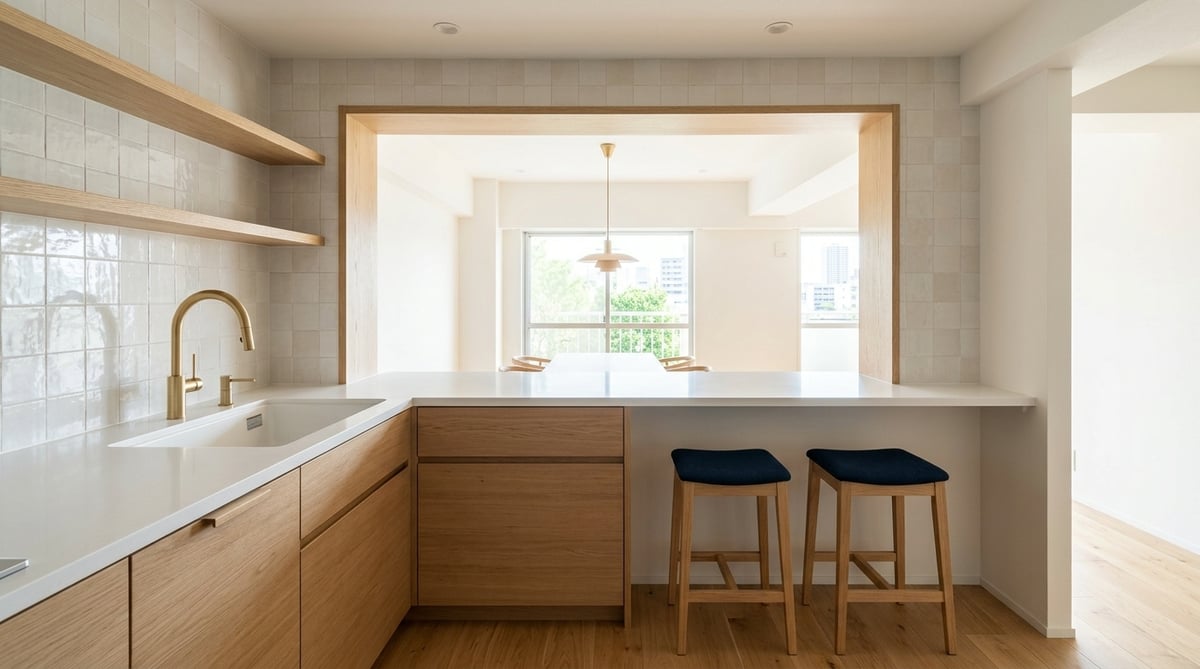
At dusk, stepping through the station ticket gate, you are greeted by the gentle rhythms of residential life and an unmistakably comforting neighborhood warmth. When searching for a home, true value lies not merely in comparing specs and numbers on a listing sheet, but in how effortless, balanced, and fulfilling daily life feels within those walls. Drawing upon a decade of active, on-the-ground experience as a licensed Japanese real estate broker (Takken), we share practical insights to ease your uncertainties and help you choose your home with confidence.
Walking home through the crisp evening breeze with grocery bags in hand. Standing in a sunlit kitchen on a weekend morning, arranging fresh produce across the cutting board. The gentle hiss of boiling water and the savory aroma rising from a pan softly melt away the week's tensions, offering a precious sanctuary to recharge and feel like yourself again.
When stepping away from a routine of convenience store bento and dining out to embrace the warmth of home-cooked meals, kitchen specifications and daily circulation pathways become the most foundational elements of apartment hunting. Yet on conventional rental portals, floor area and walking distance to the station dominate the search criteria, frequently overlooking practical realities: countertop prep space, refrigerator placement, and the minor daily frictions of preparing food.
"I moved in with high hopes of cooking, but the kitchen was so cramped I couldn't even set down a cutting board." "Only a tiny two-door fridge would fit, making meal prep impossible." "Propane gas bills were so exorbitant that utility costs wiped out any savings from cooking." These are genuine, recurring regrets voiced year after year in brokerage consultations by residents eager to cook at home.
Kitasenju is a neighborhood where exceptional metropolitan transit convenience harmonizes naturally with traditional downtown Tokyo charm. While serving as a major hub with five train and subway lines, stepping just outside the station reveals bustling shopping arcades, independent specialty grocers, and well-stocked supermarkets—creating an unmatched foundation for anyone who loves to cook. This comprehensive guide covers Kitasenju's rich grocery infrastructure, dimensional guidelines for comfortably fitting a two-burner stove and a 60cm-wide refrigerator, professional viewing checklists, and practical ways to audit initial move-in costs to safeguard your household budget.
Professional Broker's Perspective
Key Takeaways in 30 SecondsSorAi Summary
- For cooking at home around Kitasenju, prioritizing a side-by-side two-burner city gas stove and an effective refrigerator opening of at least 63cm to 65cm for a 60cm appliance is essential.
- Brokerage fees should be capped at 0.55 months' rent (tax included) as standard, and eliminating unnecessary optional fees keeps initial move-in costs fair.
- Expanding your search to include Ayase and Kita-Ayase allows you to secure spacious 1K or 1DK layouts with superior cooking setups while keeping monthly fixed costs low.
### A Well-Equipped Kitchen Is the Soundest Investment in Health and Financial Peace
When searching for an apartment, the kitchen is far more than a secondary utility space. Saving 30,000 to 40,000 yen per month compared to dining out while nourishing yourself with wholesome, balanced meals forms the bedrock of long-term financial resilience. Rather than relying solely on floor plan diagrams, verifying burner count, prep surface area, refrigerator alcove dimensions, and utility gas type will ensure you enjoy a home without regret for years to come.
## Grocery Infrastructure and Daily Living Routes in Kitasenju
Kitasenju Station is a premier transportation junction served by five distinct lines: JR Joban Line, Tokyo Metro Chiyoda Line, Tokyo Metro Hibiya Line, Tobu Skytree Line (Isesaki Line), and the Tsukuba Express. Offering direct, seamless rides without transfers to central business hubs such as Otemachi, Kasumigaseki, Ginza, and Roppongi, the atmosphere upon stepping outside the station remains remarkably relaxed and rich in daily warmth.
When cooking is central to your routine, neighborhood shopping convenience is just as vital as your kitchen setup. Returning home exhausted from work, taking an extensive detour to a distant supermarket can quickly become unsustainable. Whether quality grocers stocking fresh, affordable ingredients lie naturally along your walk home makes all the difference in sustaining home cooking as an effortless habit.
### West Exit Commercial Centers and Historic Shopping Streets
Kitasenju Station's West Exit features a wide pedestrian deck anchored by LUMINE Kitasenju directly connected to the station, alongside the prominent Kitasenju Marui department store. The basement food halls of these two complexes stand among the finest grocery shopping destinations anywhere in Tokyo.
LUMINE Kitasenju's basement food market (LUMINE Foods Salon) houses specialty produce grocers, Seijo Ishii, and The Garden Jiyugaoka, which offers premium artisanal foods. Convenient for a quick stop before closing at 20:30, it allows you to pick up high-grade seasonings, curated olive oils, and prepped ingredients for a quick, refined dinner.
Across the plaza, Marui Shokuyukan in Kitasenju Marui features dedicated butcher shops, fishmongers, and green grocers, bustling in the evening with local residents planning their evening meals. Offering fresh fillets of fish and direct-from-farm seasonal produce at fair prices, it is an invaluable asset when gathering special ingredients for weekend cooking.
Heading just north from the main station boulevard, Kita-Road 1010, the townscape transitions into the historic Senju Honcho Shopping Street (Shukubamachi-dori), which preserves the heritage of an Edo-period post town. Along the paved road, traditional greengrocers, family butchers, artisan tofu shops, and delicatessens continue their vibrant daily trade. Chatting with local shopkeepers while picking up the day's freshest seasonal vegetables in single-serving portions is a quintessential pleasure of life in Kitasenju.
The West Exit area also hosts York Foods Senju (open until 21:45), built on the historic birthplace of Ito-Yokado, and Life Senju (open until 22:00) along Route 4, both dependable for everyday basics. This layered spectrum—ranging from upscale specialty purveyors to budget-friendly staples—is a defining advantage of the West Exit neighborhood.
### East Exit (Dendai Exit): Calm Residential Surroundings and Student Energy
In contrast to the lively bustle of the West Exit, the East Exit (Dendai Exit) offers a bright, open, and tranquil atmosphere. The spacious campus of Tokyo Denki University extends right in front of the station, where tree-lined streets and orderly urban planning create a pleasant university town feel.
Extending just from the ticket barriers, Gakuen-dori Shopping Street (Asahicho Shopping Street) serves as the primary pathway connecting the station to residential quarters. Along this relaxed street where students and neighborhood families mingle, you will find drugstores, bakeries, traditional croquette and yakitori stands, and homestyle side-dish delis—providing effortless support when you want an extra dish alongside your home-cooked rice.
For supermarket shopping on the East Exit side, neighborhood greengrocers like Tomodachi Ichiba in front of the station, Apuuro Senju a short walk away, and York Foods toward Nikko Kaido provide dependable options. The gentle, flat terrain leading to residential streets, combined with steady pedestrian presence and street lighting after dark, ensures a safe and comfortable walk home with groceries.
Taking a weekend morning stroll toward Senju-Ohashi or the Arakawa riverbank, picking up fresh seasonal fish from an independent fishmonger, and returning to prepare lunch at your own pace reflects the balanced lifestyle unique to the East Exit neighborhood.
### Comparing Nearby Stations: Ayase and Kita-Ayase
Broadening your apartment search slightly along the Chiyoda Line opens up compelling alternatives for home cooks, notably Ayase Station (West and East Exits) and Kita-Ayase Station (North, South, and Central Gates).
Ayase Station is surrounded by highly practical commercial amenities, including the elevated railway shopping arcade M'av Ayase, Tokyu Store Ayase directly connected to the station (open until 22:00), Ito-Yokado Ayase (open until 22:00), and Belx Adachi Kahei (open until 21:00). Ayase also offers originating train services bound for Yoyogi-Uehara departing from Platforms 2 and 3, allowing for a seated morning commute. Rent levels in Ayase typically run 5,000 to 10,000 yen lower than Kitasenju for comparable properties, allowing you to secure a larger kitchen or upgraded 1DK/1LDK floor plans within the same budget.
Meanwhile, Kita-Ayase Station has seen steady enhancements in livability following the introduction of 10-car direct train services in 2019 and the development of M'av Kita-Ayase under the tracks. Living alongside the lush greenery of Shobunuma Park while boarding originating morning trains toward Otemachi and Kasumigaseki provides exceptional comfort. With Y's Mart Kita-Ayase and retail centers along the Kannana Ring Road nearby, Kita-Ayase represents a sensible choice for singles and couples seeking a peaceful environment, lower fixed costs, and ample room to cook.
STEP 01
#### Choose Your Station Exit
West Exit commercial vitality vs. East Exit (Dendai) quiet residential ease
STEP 02
#### Inspect Grocery Access
Confirm supermarkets or local markets lie along your actual commute walk
STEP 03
#### Measure Kitchen Dimensions
Verify clearances for a 2-burner stove and a 60cm refrigerator
STEP 04
#### Verify City Gas & Costs
Audit monthly utilities and strip unnecessary fees from move-in estimates
Online Consultation Desk (No In-Person Visit Required) Sorai Tokyo Official
[\[Instant Calendar Booking\] Online Rental Consultation with a Dedicated Agent](https://soraitokyo.jp/consultation?hsLang=en)
A licensed real estate professional specializing in East Tokyo guides you via video consultation—from clarifying search criteria and checking unlisted vacancies to auditing move-in estimates.
[Check Availability & Book Online →](https://soraitokyo.jp/consultation?hsLang=en)
Free Online Tool • Instant Calculation Sorai Tokyo Official
[【SorAi Initial Cost Simulator】Calculate Transparent Move-in Costs in 10 Seconds](https://soraitokyo.jp/quote?hsLang=en)
Simply enter the rent and deposit from portal listings to calculate a full, itemized breakdown including brokerage and guarantor fees without hidden add-ons.
[Try Initial Cost Simulator →](https://soraitokyo.jp/quote?hsLang=en)
## Essential Kitchen Equipment for Serious Home Cooking
On rental listing sheets, seeing the simple phrase "kitchen included" can conceal drastically different realities. The required equipment differs fundamentally depending on whether you simply boil water for instant meals or chop fresh vegetables to prepare main and side dishes in parallel.
Here are the non-negotiable kitchen criteria essential for sustaining an enjoyable home cooking routine, evaluated through an experienced broker's lens.
### Why Single-Burner Kitchens Undermine Home Cooking
Single-burner kitchenettes are commonplace in studio (1R) and 1K apartments targeted at single professionals. Because they frequently offer lower rent close to train stations, many renters sign leases assuming that cooking for one can easily be managed with a single stove.
In practice, cooking on a single burner creates substantial time loss and daily frustration. If you prepare stew or curry, you cannot warm soup, saute a side vegetable, or steam rice on the stove while the pot is simmering. Boiling pasta requires boiling a large pot of water, draining the pasta into a colander, setting the pot aside, and placing a skillet on the same burner to make the sauce—by which time the pasta turns cold and dry.
After a demanding day at work, being forced into this linear, one-pot-at-a-time cooking doubles preparation time and complicates dishwashing. Inevitably, the motivation to cook during weeknights evaporates. If you genuinely want to cook at home, having at least two burners is an absolute baseline requirement.
### Horizontal vs. Vertical Two-Burner Stoves
Even when a floor plan lists a "two-burner stove," burner placement significantly affects usability. Rental kitchens feature two main configurations: horizontal (side-by-side) and vertical (front-and-back).
The ideal setup is a horizontal, side-by-side two-burner stove. With cookware placed side by side in front of you, heat levels can be monitored intuitively, and your arms have natural freedom of motion when using spatulas or cooking chopsticks. Sauteing a main dish on one burner while gently simmering soup on the other proceeds smoothly and safely.
Conversely, caution is warranted with vertical two-burner stoves (burners aligned front-to-back), often installed to save counter width in compact studios. In a vertical setup, placing a 26cm skillet on the front burner routinely overhangs the rear burner, making it impossible to fit even a small saucepan behind it. Furthermore, reaching over a steaming, hot pan in front to adjust a pot in the back poses burn hazards and awkward handling. During viewings, always measure the burner layout and distance between trivets.
### City Gas vs. LP Propane Gas: The Long-Term Cost Disparity
A frequently overlooked factor that exerts a major recurring impact on your monthly budget is the building's gas supply. Japanese rental housing relies on either underground municipal pipelines (City Gas) or localized outdoor tanks (Propane / LP Gas).
For home cooks, choosing a property with City Gas is strongly recommended. Propane gas distributors frequently amortize exterior piping and installation costs directly into monthly consumer rates. Consequently, both base fees and consumption rates for LP gas are commonly 1.5 to over 2 times higher than regulated municipal city gas.
Cooking daily, boiling water, preparing stews, and washing greasy cookware with warm water naturally increases gas usage. While a single professional's monthly bill on city gas typically ranges from 3,000 to 4,500 yen, the same usage on propane often reaches 7,000 to 9,500 yen. This 4,000 yen monthly gap compounds to roughly 50,000 yen per year, or nearly 100,000 yen over a standard two-year lease. That represents a substantial financial burden.
While urban Kitasenju boasts very high city gas coverage, older wooden apartments or low-rise buildings farther from the station may still run on propane. Checking the gas utility type on the property overview is just as critical as comparing differences in rent.
### Gas Cooktops vs. IH Induction Cooktops
Choosing between gas cooktops and induction (IH) heating is another common consideration. Understanding their distinct characteristics ensures you choose a setup aligned with your personal cooking habits.
The foremost appeal of gas cooktops lies in their intuitive flame control and cookware versatility. Tossing a skillet over an open flame, searing vegetables in a wok, or using an integrated fish grill to broil fish with a crisp finish are pleasures unique to gas. Additionally, you can freely use earthenware donabe pots, round-bottomed pans, and any standard cookware without compatibility restrictions.
Conversely, induction cooktops excel in easy maintenance and indoor climate comfort. With completely flat glass-ceramic surfaces, oil splatters and spills can be cleaned instantly with a microfiber cloth and kitchen wipe. Because there is no open flame, kitchens stay significantly cooler in summer, allowing air conditioning to work more efficiently. However, single-phase 100V IH cooktops commonly found in rentals provide lower heating power and may trip circuit breakers if both burners run at maximum output simultaneously. Serious home cooking on induction requires verifying whether the property provides a dedicated 200V electrical line.
Scroll horizontally to see full table →
| Stove Type | Parallel Cooking Performance | Estimated Monthly Utility Cost | Daily Cleaning Ease | Suitability for Home Cooks |
| --- | --- | --- | --- | --- |
| City Gas: Horizontal 2-Burner | Exceptional (cook main and sides simultaneously) | Approx. 3,000–4,500 JPY (economical) | Trivet cleaning required (weekly recommended) | Highest Recommendation (Golden Standard) |
| City Gas: Vertical 2-Burner | Moderate (cookware may physically interfere) | Approx. 3,000–4,500 JPY (economical) | Trivet cleaning required | Manageable with compact cookware |
| 2-Burner IH (200V) | High (stable heating with built-in timers) | Adds approx. 3,500–5,000 JPY to power bill | Exceptional (wipe-down only) | Recommended for cleanliness-focused cooks |
| Propane Gas: 2-Burner | High (powerful thermal output) | Approx. 7,000–9,500 JPY (significantly higher) | Trivet cleaning required | Not recommended due to recurring costs |
| Single-Burner (Any Source) | Extremely Low (serial cooking only) | Approx. 2,000–3,500 JPY | Cramped space hampers maintenance | Avoid if you plan to cook regularly |
SORAI SIMULATOR / Online in 10 Sec
### \[SorAi Initial Cost Simulator\] Calculate Estimated Move-in Costs in 10 Seconds
Simply enter the rent and deposit to calculate a transparent move-in cost breakdown including brokerage and guarantor fees without hidden markups.
[Open in Fullscreen / New Tab](https://soraitokyo.jp/en/quote?ref=blog_embed_ext&utm_source=blog_mid_cta&utm_medium=cta&utm_campaign=unified_cta_simulator&hsLang=en) [Chat on Official LINE](https://line.me/R/ti/p/@soraitokyo)
Explore other free SorAi tools: [SorAi Inspection Report →](https://soraitokyo.jp/inspection?ref=blog_mid_cta_aux&lang=en&utm_source=blog_mid_cta&utm_medium=aux_link&utm_campaign=unified_cta_inspection&hsLang=en) [SorAi Request →](https://hearing.soraitokyo.jp/?start=true&ref=blog_mid_cta_aux&lang=en&utm_source=blog_mid_cta&utm_medium=aux_link&utm_campaign=unified_cta_request)
※ 100% Free ・ Online completed.
Related Reading
[More Value Than Kitasenju or Ayase? The Benefits of 2DK and 2LDK Rentals in Kita-Ayase for Couples and Families](https://soraitokyo.jp/en/blog/kita-ayase-2dk-2ldk-rental-guide?hsLang=en)
[Read Article →](https://soraitokyo.jp/en/blog/kita-ayase-2dk-2ldk-rental-guide?hsLang=en)
Related Recommendation
[Kita-Ayase Solo Living & Rent Guide: High-Cost-Performance Tokyo Living on the Chiyoda Line](https://soraitokyo.jp/en/blog/kita-ayase-single-rent-budget-simulation?hsLang=en)
[Read Article →](https://soraitokyo.jp/en/blog/kita-ayase-single-rent-budget-simulation?hsLang=en)
## Dimensional Science of Refrigerator Space and Cooking Workflows
In rental kitchens, the most irreversible post-move complication stems from insufficient refrigerator clearance and restrictive moving paths. During the search phase, most renters assume everything will be fine once they see a square marked "R" (Refrigerator) on the floor plan. In reality, the width, depth, and adjacent wall angles demand strict, millimeter-level evaluation.
Below is a systematic breakdown of spatial requirements that elevate your cooking routine.
### Limitations of 2-Door Compact Fridges and the Value of 60cm 3-Door Models
Standard two-door compact refrigerators (120L–150L capacity, 48cm–50cm width) commonly sold in starter appliance packages prove severely inadequate for regular home cooking.
With freezer compartments limited to 30L–40L, storing a few portions of pre-cooked rice and a couple of frozen vegetable packets leaves them completely full. This prevents you from taking advantage of weekend bulk purchases from Kitasenju Marui's market or local butchers to portion and freeze meals ahead of time. Moreover, without a dedicated vegetable compartment, storing larger whole produce like cabbage, daikon radish, or long leeks becomes unfeasible.
The optimal appliance for sustaining a seamless home-cooking routine is a **three-door refrigerator (with an independent vegetable drawer) in the 250L to 350L class, with a body width around 60cm**. This capacity effortlessly stores a week's supply of fresh vegetables, while the organized freezer houses homemade meal-prep containers and lunches. Consolidating your grocery runs saves weekday time, providing substantial mental and temporal freedom.
### Effective Clearance and Heat Dissipation Space
Accommodating a 60cm-wide refrigerator requires more than exactly 60cm of alcove width. Refrigerators dissipate thermal energy from their side and top panels during operation, making manufacturer-specified ventilation clearances mandatory for safety and energy efficiency.
Specifically, a 60cm appliance requires **at least 0.5cm to 1.0cm on each side (1cm to 2cm total clearance)**. In addition, baseboards along the bottom of the wall protrude by approximately 1cm. Consequently, the effective wall-to-wall width between finished surfaces must measure **at least 63cm to 65cm** to safely install a 60cm unit.
Depth demands equal scrutiny. A typical 60cm 3-door model measures 65cm to 70cm deep. If placed along an 80cm-wide narrow hallway kitchen, a 70cm-deep refrigerator leaves an effective walkway of merely 10cm to 20cm, forcing you to squeeze sideways through your own hallway. Visualizing width, depth, and front clearance in three dimensions is vital.
### Door Swing Direction and Drawer Obstructions
During property viewings, one of the most critical checks conducted by experienced brokers is the relationship between the refrigerator door swing and adjacent walls. Overlooking this creates immediate frustration on move-in day.
Refrigerators feature right-hinged, left-hinged, dual-opening, or French door designs. If you place a right-hinged door adjacent to a solid right-side wall, the door will hit the wall and stop at a 90-degree angle.
When a door opens only to 90 degrees, interior shelves and door bins block access, making it difficult to reach items in the back. In the worst scenarios, the door pocket physically prevents **the vegetable crisper or freezer drawers from sliding out all the way**. When reviewing floor plans, always check whether the kitchen wall sits on the left or right, and select an appliance with an appropriate swing direction or an apartment layout that provides adequate clearance from corner walls.
### Measuring Moving Access Routes: Stairs, Elevators, and Entryways
Even if the kitchen alcove has ideal dimensions, a large refrigerator cannot be installed if building passageways are too tight. Having delivery crews determine an item cannot fit on move-in day is among the most frequent and stressful relocation headaches.
To safely navigate moving pathways, an **effective clearance of at least the appliance's minimum dimension (width or depth) plus 10cm** must be maintained continuously along the entire delivery path. For a 60cm refrigerator, an unobstructed clearance of at least 70cm is required throughout.
Pay close attention to these four critical bottlenecks:
- **Stair landings and handrails**: In low-rise buildings without elevators, check the staircase width as well as the ceiling height and turning radius at landings. Always measure the effective width after subtracting handrail protrusions (roughly 8cm–10cm per side).
- **Elevator door opening width and interior depth**: Measure whether the elevator opening exceeds 70cm and whether the ceiling height (at least 200cm) allows two movers and an upright refrigerator to ride inside.
- **Front entryway clear opening**: When opened to a right angle (90 degrees), door handles, mail slots, and door closers protrude into the doorway. Use a tape measure to record the **narrowest effective width between physical protrusions** rather than the outer frame.
- **Interior hallway turns (crank corners)**: If an entryway hallway turns at a sharp right angle toward the kitchen, an item may get stuck along the corner diagonal even if the hallway width itself measures 75cm.
### Balancing Countertop Prep Space, Sink Dimensions, and Electrical Circuits
Cooking comfort depends directly on food preparation space (cutting board room) and effective sink width just as much as on the stovetop itself.
The countertop work surface between the sink and stove requires **a minimum width of 30cm, with 45cm to 60cm being ideal**. In compact kitchenettes with less than 30cm of counter space, placing a standard cutting board (35cm–40cm wide) is impossible without setting a bridge board across the sink bowl.
For the sink, an **interior width of at least 40cm and a depth of 18cm or more** allows a standard 26cm skillet or pot to lie flat inside. An overly narrow sink causes water to splash across walls and floors whenever you wash cookware, turning daily cleanup into a chore.
Equally essential is verifying kitchen electrical outlets and circuit distribution. A home cook's kitchen simultaneously powers high-draw appliances alongside the refrigerator: microwave ovens (1,000W–1,400W), rice cookers (600W–1,200W), electric kettles (1,200W–1,300W), and toasters (1,000W–1,200W). Running these on a single circuit (capped at 15A / 1,500W) will instantly trip breakers. Confirming whether the property features a dedicated grounded outlet for the microwave and whether the total service capacity can support 30A to 40A is essential practical due diligence.
## Optimal Floor Plan Layouts for Home Cooks
An apartment's layout fundamentally shapes daily workflow and emotional ease. Balancing budget and living space, we break down optimal floor plans and their hidden drawbacks for those who cook regularly.
### Structural Pitfalls of Hallway Kitchens in 1K Layouts
In Tokyo's rental market, the 1K layout (a 6-to-7 tatami room separated from a hallway kitchen) represents the highest volume of inventory for single occupants. Because a partition door separates the kitchen from the bedroom, it offers greater privacy than an open studio (1R) at a relatively affordable price point.
However, typical 1K kitchens are built directly into the 80cm-to-90cm hallway corridor leading from the front door. This hallway kitchen setup presents several structural challenges for home cooking.
First is **interference with the entryway circulation path**. Located immediately next to the front door, dirt from outdoor shoes can be a concern, and passing behind someone who is cooking is difficult. If living with a partner or hosting guests, the path becomes completely blocked.
Second is **the absolute lack of storage and appliance space**. Hallway corridors leave no wall space for kitchen carts or cupboards, forcing you to place microwave ovens and rice cookers inside the bedroom. Steam from cooked rice and operational appliance noise right beside your bed disrupt the boundary between living and sleeping areas.
Third are **climate control and lingering cooking odors**. Hallways lack air conditioning, turning stove cooking uncomfortably hot in summer and chilly from front door drafts in winter. Additionally, if the range hood has modest suction, cooking oils and food aromas linger in the corridor, easily drifting onto bedroom curtains and clothing whenever the door opens.
### 1DK and 1LDK Layouts: Cooking Freedom and Separated Living Zones
Where budget permits, the most fulfilling and sustainable layout for cooking at home is a **1DK (25 sqm to 35 sqm) or 1LDK (35 sqm to 45+ sqm)**.
In a 1DK layout, the dining-kitchen area provides a dedicated room of 4.5 to 6+ tatami mats. Alongside the cooking unit, this space comfortably accommodates a 90cm to 120cm kitchen island, storage shelves, and a large refrigerator. Favorite cooking utensils, spice jars, and pantry goods can be neatly displayed and organized in one spot.
Furthermore, setting up a dining table allows cooking, serving, and savoring warm meals to take place entirely outside the bedroom. Sleeping quarters remain free from food aromas and cooking grease, preserving a serene and clean retreat for rest.
In a 1LDK layout, open counter kitchens become common, allowing you to converse with a partner or entertain guests while cooking, fully realizing the comfort of a well-designed home.
### Acoustic Performance and Building Structures (RC/SRC and 180mm Party Walls)
Cooking inevitably generates sound and vibrations: the rhythmic chopping of a knife on a cutting board when preparing late dinners, the low-frequency hum of range hoods, and water running in the sink. Depending on building construction, these sounds can cause unintended friction with neighbors.
To enjoy cooking at any hour without worry, prioritizing **reinforced concrete (RC) or steel-framed reinforced concrete (SRC)** structures is essential. Wood-frame and light-gauge steel buildings, built at lower construction costs, offer significantly lower sound insulation, allowing chopping vibrations and fan hums to transfer through walls into neighboring rooms.
When evaluating RC and SRC properties, key technical specifications include:
- **Demising wall concrete thickness**: At least 180mm (ideally 200mm or more). Ensure the party wall is poured concrete or engineered with an adequate acoustic air cavity rather than standard drywall partition.
- **Floor slab thickness**: 150mm to 200mm or more. Flooring with an acoustic impact rating of LL-45 or better dampens dropped cookware sounds from reaching units below.
- **Window sash acoustic rating**: T-2 grade (30dB sound reduction) or higher, insulating against exterior train or road noise while containing interior sounds.
## Sensible Rent by Take-Home Income and Cost-Saving Simulations
A successful apartment search begins with setting an unshakeable, sustainable rent budget. While popular advice has long suggested that rent should equal one-third of take-home pay, allocating 33% of income to fixed housing costs represents a high-risk financial plan amid rising living expenses and social insurance premiums.
As a sound guideline, keeping housing costs within **25% to 28% of take-home pay for singles, and 22% to 26% for dual-income couples** represents a proven formula for balancing financial security with ongoing savings.
The key factor lies in how you leverage savings generated by home cooking. Dining out, ordering deliveries, and relying on convenience stores routinely drives a single professional's monthly food spending to 60,000–80,000 yen. By shifting to home cooking supported by Kitasenju's supermarkets and shopping streets, monthly food expenses can comfortably settle between 25,000 and 35,000 yen—generating 30,000 to 45,000 yen in monthly savings.
Rather than merely saving this surplus, allocating a modest portion (an extra 5,000 to 10,000 yen in rent) toward an apartment that accommodates a two-burner stove and a 60cm refrigerator is a sensible investment that balances daily comfort with long-term financial health.
Scroll horizontally to see full table →
| Monthly Net Income | Target Rent (Incl. Fees) | Estimated Food Budget | Utilities (City Gas) | Recommended Layouts & Areas |
| --- | --- | --- | --- | --- |
| 200,000 JPY (Single) | 52,000–56,000 JPY (26–28%) | Approx. 25,000–28,000 JPY | Approx. 10,000–12,000 JPY | Older RC 1K within 15 min of Kitasenju, or station-adjacent 2-burner gas 1K in Ayase/Kita-Ayase |
| 250,000 JPY (Single) | 65,000–70,000 JPY (26–28%) | Approx. 28,000–32,000 JPY | Approx. 11,000–13,000 JPY | Well-appointed 2-burner 1K 10–12 min from Kitasenju, or spacious 1DK on the East Exit side |
| 300,000 JPY (Single) | 75,000–84,000 JPY (25–28%) | Approx. 32,000–38,000 JPY | Approx. 12,000–14,000 JPY | Newer RC 1K near Kitasenju (fits 60cm fridge), or comfortable 1DK near Shukubamachi-dori |
| 400,000 JPY (Couple) | 88,000–104,000 JPY (22–26%) | Approx. 45,000–55,000 JPY (2 people) | Approx. 18,000–22,000 JPY | Spacious 1DK–2DK on Kitasenju East Exit, or RC 1LDK along Chiyoda Line (Ayase) |
## The Professional's On-Site Kitchen Viewing Checklist
When the viewing day arrives, visitors are often captivated by natural sunlight and clean wallpapers, causing them to overlook meticulous checks of plumbing and kitchen ergonomics.
Here is the proven viewing protocol our licensed brokers practice when inspecting properties with home cooks. When attending viewings, be sure to bring **a 5m steel measuring tape, a small spirit level (or smartphone app), a notepad, and tissue paper**.
### Range Hood Exhaust Power, Negative Pressure, and Air Supply Vents
When turning on the range hood, do not rely solely on the sound of the fan. Professionals evaluate actual air suction and the room's overall ventilation balance.
First, run the exhaust fan on high and hold a single sheet of tissue paper near the grease filter or intake panel. If the tissue holds firmly in place on its own without falling, adequate suction power is confirmed.
Next, while keeping the fan running and closing all windows and room supply vents, attempt to push open the main front door. If the door feels unusually heavy to open or creates a high-pitched whistling draft through the seals, the room is suffering from negative air pressure due to insufficient incoming air.
Excessive negative pressure prevents range hoods from discharging air smoothly, causing grease and cooking odors to circulate back into the room. Confirming the presence of balanced supply vents or differential pressure wall vents near the kitchen is vital.
### Water Pressure, Drainage Speed, Drain Traps, and Sewer Odor Checks
Turn the kitchen faucet fully on to evaluate water pressure. If a shower-head selector is present, verify that flow remains steady in both straight stream and spray modes.
Next, fill the sink basin briefly and release it to observe the drainage swirl. If gurgling noises occur or water backs up, the drain pipes may have grease buildup or venting flaws.
Crucially, open the cabinet beneath the sink to inspect for sewer odors and water stains. Place your face near the interior to detect any sharp odors. Without a proper P-trap or S-trap water seal, municipal sewer fumes and pests can penetrate directly into your living space. Additionally, touch the junction where the drainage pipe enters the floor to confirm that a rubber deodorizing gasket is properly seated and that no past water damage or soft wood rot is present.
### Floor Water Resistance and Interior Cabinet Depth
Evaluating kitchen flooring material directly impacts long-term maintenance. When real hardwood or plain laminate is laid up to the cooking station, uncleaned oil and water splatters can cause dark discoloration or finish peeling, risking tenant-landlord restoration disputes at move-out. Kitchens finished in moisture-resistant cushion vinyl (CF) or luxury vinyl tiles offer the easiest upkeep.
Finally, measure the interior depth of upper and lower cabinets with your tape. In standard hinged cabinets, bulky protruding drain traps can block standard pot racks or seasoning organizers. Modern slide-out drawers, which offer full visibility and allow heavy cast-iron cookware to be reached without bending over, represent a substantial quality advantage.
## Transparency in Rental Move-In Costs and Removing Unnecessary Fees
After discovering an ideal kitchen and floor plan, applicants are frequently taken aback by move-in cost estimates presented by agencies. Beyond standard items like advance rent, security deposits (shikikin), and key money (reikin), tens of thousands of yen in unfamiliar optional fees are routinely bundled into the total.
To start your life smoothly, learning how to objectively audit initial estimates using legal and regulatory standards is essential self-defense.
### Legal Limits on Brokerage Commissions
Under Article 46 of the Real Estate Brokerage Act and Ministry of Land, Infrastructure, Transport and Tourism (MLIT) notifications, the maximum commission a broker can receive from both parties combined is capped at one month's rent plus consumption tax. Furthermore, the standard statutory limit collectible from either party without explicit prior consent is **0.5 months' rent plus tax (0.55 months total)**. If an invoice lists 1.1 months without prior discussion, you are fully entitled to clarify the terms and negotiate.
### Identifying and Declining Optional Bundled Fees
In addition to commission fees, invoices frequently disguise profitable optional add-ons as mandatory requirements. If the following items appear on your estimate, review them carefully and request their removal before signing:
- **Indoor Disinfection and Deodorizing Fees (15,000–25,000 JPY)**: These rarely involve certified pest control services; in many cases, brokerage staff merely spray an aerosol can for a few minutes prior to handover. Tenants bear no legal obligation to pay for this, and it can be declined.
- **24-Hour Emergency Support Fees (16,500–22,000 JPY)**: Billed as emergency assistance for lost keys or pipe leaks, identical 24-hour response coverage is almost always already bundled into your mandatory fire insurance policy. Paying for this separately creates duplicate billing; unless mandated by building management, ask to remove it.
- **Document Preparation and Administrative Fees (11,000–22,000 JPY)**: Under Japanese real estate law, brokerage compensation is strictly limited to statutory brokerage commissions. Charging separate administrative fees for standard contract preparation is not recognized under standard guidelines.
- **Designated High-Cost Fire Insurance Packages (20,000–25,000 JPY for 2 years)**: Agencies often mandate high-cost insurance packages where they act as sales agents. Tenants hold the legal right to procure their own policy. Arranging direct small-amount, short-term insurance independently typically costs 4,000 to 8,000 yen annually (8,000 to 16,000 yen for 2 years) while securing equal or superior coverage (over 10 million JPY in tenant liability and over 3 million JPY in household contents).
## Personalized Guidance for Your Home-Cooking Lifestyle
Selecting your favorite fresh ingredients, cooking thoughtfully over a familiar skillet, and quietly savoring a wholesome meal: these simple daily moments form the quiet foundation of health and well-being amid Tokyo's fast-paced urban lifestyle.
During apartment searches, verifying whether a listing seen online is truly vacant and whether the quoted move-in costs are fair can be daunting. Persistent information asymmetry in the rental industry often leaves renters feeling uncertain when navigating non-transparent fees and terms.
Sorai Tokyo provides transparent, professional support to assist you. If you share listing URLs from portals like SUUMO, LIFULL HOME'S, or at home, or upload a photo of a move-in estimate provided by another agency to our official LINE, a licensed real estate broker will check real-time availability on inter-broker databases (REINS and ITANDI BB) and conduct an objective second-opinion audit of initial costs completely free of charge. Instead of automated responses, an experienced broker with a decade in the field personally examines the transaction terms with property management.
Furthermore, you can freely use Sorai Tokyo's smart tools (SorAi), including our Move-In Cost Simulator, accessible via the bottom navigation bar on smartphones or the footer menu on desktop. Grasping transparent cost benchmarks in advance empowers you to search for your new home with calm assurance.
We never engage in persistent sales calls or pushy invitations to our office. With disciplined care and quiet hospitality, we stand ready to support your move. We wish you every happiness, health, and culinary joy in your new home in Kitasenju.

SorAi Real-Time Rental Concierge Online 24/7
Official AI answers your questions 24/7
[Continue on Official LINE (24/7 Free)](https://page.line.me/soraitokyo?oat_content=url&openQrModal=true&utm_source=soraitokyo_website&utm_medium=blog_inline_chat&utm_campaign=line_btn) [Privacy Policy](https://soraitokyo.jp/en/privacy-policy)

Thank you for reading this guide. I am SorAi, your official real estate AI concierge.
Feel free to ask any questions about apartment viewing checkpoints, layout comparisons, soundproofing, or natural lighting in Tokyo.
Quick questions:
Summarize apartment viewing points
Viewing measurements and soundproofing
Comparing layouts and living flows
Sunlight, humidity, and neighborhood
[Continue on Official LINE (Free)](https://page.line.me/soraitokyo?oat_content=url&openQrModal=true&utm_source=soraitokyo_website&utm_medium=blog_inline_chat&utm_campaign=line_btn)
Send
No phone number required. Feel free to consult at your own pace 24/7.
### Featured Tokyo Living Guides
SorAi Editorial
Swipe
#### [ Chiyoda Line / Redevelopment Kitasenju Redevelopment & Livability 2026: 5 Train Lines, Shopping & Housing | Sorai Tokyo Read Guide →](https://soraitokyo.jp/en/blog/area-guide-kitasenju-redevelopment-trend-2026?hsLang=en)
#### [ Featured Area / Origin Station Ayase Neighborhood & Safety Guide 2026: North vs South Exit, Rent & Chiyoda Line Commute | Sorai Tokyo Read Guide →](https://soraitokyo.jp/en/blog/area-guide-ayase?hsLang=en)
#### [ Rent Market / Solo Living Kita-Ayase Solo Living Guide: Rent Averages from ¥50,000s & Chiyoda Line Origin Perks | Sorai Tokyo Read Guide →](https://soraitokyo.jp/en/blog/kita-ayase-single-rent-budget-simulation?hsLang=en)
## Frequently Asked Questions for Home Cooks
### QWhat is the typical rent in Kitasenju for an apartment fitting a 2-burner stove and a 60cm fridge?
AWithin a 10-minute walk of Kitasenju Station, a reinforced concrete (RC) 1K apartment (approx. 22–25 sqm) with city gas, a side-by-side 2-burner stove, and dedicated clearance for a 60cm refrigerator typically rents for 75,000 to 85,000 yen per month including management fees. Expanding your radius to a 15-minute walk or looking at adjacent stations like Ayase or Kita-Ayase brings comparable properties into the 65,000 to 72,000 yen range.
### QCan utility costs in a propane gas apartment be managed to match city gas levels?
AIn propane gas properties, heavy gas consumption for both water heating and stovetop cooking can easily drive bills over 10,000 yen per month. Effective mitigations include using electric kettles for boiling water, adopting electric pressure cookers or slow cookers for stews to shift load to electricity, and washing dishes with cold water while wearing rubber gloves. However, because propane base fees remain fundamentally higher, choosing a city gas apartment from the outset is the most dependable financial safeguard.
### QWhat are the most critical kitchen measurements to record during an in-person viewing?
AThe top priorities are the refrigerator alcove width (excluding baseboards) and the remaining hallway clearance in front once the fridge is in place. Fitting a 60cm model requires an effective width of at least 63cm to 65cm. In addition, verifying cutting board prep space between the sink and stove (at least 30cm wide) and measuring the narrowest clear opening at the front door (at least 70cm wide) will prevent almost all major move-in regrets.

Author: Sorai Tokyo Editorial Team (Supervised by Licensed Real Estate Agents)
A real estate consulting team specializing in assisting foreign nationals find rooms and explaining initial costs in Tokyo. We break down language barriers and differences in customs, offering dedicated support in Japanese, English, and Vietnamese for a safe and secure start to your new life.
 SORAI TOKYO | Chat with AI "SorAi" Anytime on LINE
### Exploring Tokyo Neighborhoods or Apartments? Ask Our AI "SorAi" Anytime on LINE
No property URL needed yet. From area safety, commute tips, and rent trends to instant initial-cost audits for listings you found—chat with SorAi 24/7 on LINE with zero sales calls.
STEP 1
Ask Anything on LINE
Ask about areas & rent, or send a listing URL anytime
→
STEP 2
24/7 Instant Reply by SorAi
Objective area data, live vacancy & fee breakdown
→
STEP 3
Explore at Your Own Pace
Zero sales calls. Meet on-site only when ready to view
24/7 Instant / Most Popular
#### ① Chat with AI "SorAi" on LINE (Free)
Ask about neighborhoods, rent trends, or share any listing URL on LINE. SorAi & our bilingual concierge check live vacancy and upfront fee breakdowns with zero sales pressure.
[Chat with SorAi on LINE (Free) ➔](https://lin.ee/VE8fd8b?utm_source=soraitokyo_blog&utm_medium=cta&utm_campaign=bottom_cta&utm_content=line)
Web Audit
#### ② SorAi Property Report
Already found a listing? Submit the URL or floor plan on the web for an instant objective breakdown of move-in costs and neighborhood data.
[View Report (Free) ↗](https://inspection.soraitokyo.jp/?ref=blog_bottom_cta)
Wait for New Listings
#### ③ SorAi Housing Needs
Select your budget, layout, and must-have conditions in 30 seconds to receive matching listings at your own pace.
[Organize Criteria (Free) ➔](https://soraitokyo.jp/en/request?ref=blog_bottom_cta&hsLang=en)
Instant Move-in Estimate
#### ④ SorAi Move-in Estimator
Enter rent and management fees to quickly estimate standard upfront contract costs and potential savings.
[Check Estimates (Free) ➔](https://soraitokyo.jp/en/quote?ref=blog_bottom_cta&hsLang=en)
※ Consultations are 100% free. No phone number required, zero pushy calls—everything is completed smoothly on LINE.
この記事をシェアする
\# エリアガイド# 北千住
[ SORAI TOKYO](https://soraitokyo.jp/en/)
Sorai Tokyo Co., Ltd.
Room 102, 1-7-14 Yanaka, Adachi-ku, Tokyo, 120-0006
03-6161-8484
[contact@soraitokyo.jp](mailto:contact@soraitokyo.jp)
Tokyo Metropolitan Governor (1) No. 113297
(License Date: December 20, 2025)
### Sitemap
- [About Us](https://soraitokyo.jp/en/about-us)
- [Testimonials](https://soraitokyo.jp/en/testimonials)
- [Chiyoda Line Guide](https://soraitokyo.jp/en/area-guide-chiyoda-line)
- [Sorai Journal](https://soraitokyo.jp/en/blog)
- [FAQs](https://soraitokyo.jp/en/faqs)
- [Contact](https://soraitokyo.jp/en/contact)
- [SorAi Request](https://soraitokyo.jp/en/request)
### Business Hours
**10:00 〜 18:00**
Closed: **Tuesday & Wednesday**
Inquiries via LINE, SNS, and email are accepted 24/7.
[View on Google Maps](https://maps.google.com/?q=%E6%9D%B1%E4%BA%AC%E9%83%BD%E8%B6%B3%E7%AB%8B%E5%8C%BA%E8%B0%B7%E4%B8%AD1-7-14) [Book Online Meeting](https://soraitokyo.jp/en/consultation?hsLang=en)
### Multilingual Services
Our professional staff are fluent in Japanese, English, Vietnamese, Russian, and Indonesian to support you from room hunting to contract signing.
[🇯🇵 日本語](https://soraitokyo.jp/ja/blog/kita-senju-kitchen-layout-cooking?hsLang=ja) [🇺🇸 English](https://soraitokyo.jp/en/blog/kita-senju-kitchen-layout-cooking?hsLang=en) [🇻🇳 Tiếng Việt](https://soraitokyo.jp/vi/blog/kita-senju-kitchen-layout-cooking?hsLang=vi) [🇷🇺 Русский](https://soraitokyo.jp/ru/blog/kita-senju-kitchen-layout-cooking?hsLang=ru) [🇮🇩 Indonesia](https://soraitokyo.jp/id/blog/kita-senju-kitchen-layout-cooking?hsLang=id)
### Inquire via Social Media
[Privacy Policy](https://soraitokyo.jp/en/privacy-policy) | [Privacy & Security](https://soraitokyo.jp/en/security)
Copyright © 2026 株式会社ソライ東京 (Sorai Tokyo Co., Ltd.) All Rights Reserved.
[Chat with SorAi](https://page.line.me/soraitokyo?oat_content=url&openQrModal=true&utm_source=soraitokyo_website&utm_medium=line_button&utm_campaign=chatbot_popover)
SorAi Chat

#### SorAi
Online (Multilingual Support)
×
[Chat with SorAi](https://page.line.me/soraitokyo?oat_content=url&openQrModal=true&utm_source=soraitokyo_website&utm_medium=chatbot_header&utm_campaign=line_btn) [Email Us](https://soraitokyo.jp/en/contact?hsLang=en)
[Get "SorAi" on LINE (24/7 Free)](https://page.line.me/soraitokyo?oat_content=url&openQrModal=true&utm_source=soraitokyo_website&utm_medium=line_button&utm_campaign=floating_btn)
 SorAi | 24/7 AI Rental Chat No signup・100% online
TOC
### Table of Contents
×
```json
{
"@context" : "https://schema.org",
"@type" : "BlogPosting",
"author" : {
"@type" : "Person",
"name" : "ソライ東京編集部",
"url" : "https://soraitokyo.jp/en/blog/author/ソライ東京編集部"
},
"datePublished" : "2026-08-20T05:33:45.000Z",
"headline" : "Renting for Home Cooks in Kitasenju (2026): Kitchen Layouts, 2-Burner Stoves, 60cm Fridge Space & Viewing Guide | Sorai Tokyo | Sorai Tokyo",
"image" : [ "https://soraitokyo.jp/hubfs/blog-eyecatches/batch5_concrete_wood_living.jpg" ],
"mainEntityOfPage" : {
"@id" : "https://soraitokyo.jp/en/blog/kita-senju-kitchen-layout-cooking",
"@type" : "WebPage"
},
"publisher" : {
"@type" : "Organization",
"logo" : {
"@type" : "ImageObject",
"url" : "https://soraitokyo.jp/hubfs/small_logo(color)%20(2)-1.png"
},
"name" : "株式会社ソライ東京"
}
}
```
```json
{
"@context" : "https://schema.org",
"@type" : "FAQPage",
"mainEntity" : [ {
"@type" : "Question",
"acceptedAnswer" : {
"@type" : "Answer",
"text" : "Within a 10-minute walk of Kitasenju Station, a reinforced concrete (RC) 1K apartment (approx. 22–25 sqm) with city gas, a side-by-side 2-burner stove, and dedicated clearance for a 60cm refrigerator typically rents for 75,000 to 85,000 yen per month including management fees. Expanding your radius to a 15-minute walk or looking at adjacent stations like Ayase or Kita-Ayase brings comparable properties into the 65,000 to 72,000 yen range."
},
"name" : "What is the typical rent in Kitasenju for an apartment fitting a 2-burner stove and a 60cm fridge?"
}, {
"@type" : "Question",
"acceptedAnswer" : {
"@type" : "Answer",
"text" : "In propane gas properties, heavy gas consumption for both water heating and stovetop cooking can easily drive bills over 10,000 yen per month. Effective mitigations include using electric kettles for boiling water, adopting electric pressure cookers or slow cookers for stews to shift load to electricity, and washing dishes with cold water while wearing rubber gloves. However, because propane base fees remain fundamentally higher, choosing a city gas apartment from the outset is the most dependable financial safeguard."
},
"name" : "Can utility costs in a propane gas apartment be managed to match city gas levels?"
}, {
"@type" : "Question",
"acceptedAnswer" : {
"@type" : "Answer",
"text" : "The top priorities are the refrigerator alcove width (excluding baseboards) and the remaining hallway clearance in front once the fridge is in place. Fitting a 60cm model requires an effective width of at least 63cm to 65cm. In addition, verifying cutting board prep space between the sink and stove (at least 30cm wide) and measuring the narrowest clear opening at the front door (at least 70cm wide) will prevent almost all major move-in regrets."
},
"name" : "What are the most critical kitchen measurements to record during an in-person viewing?"
} ]
}
```
```json
{
"@context" : "https://schema.org",
"@type" : "BlogPosting",
"author" : {
"@type" : "Person",
"name" : "Author: Sorai Tokyo Editorial Team (Supervised by Licensed Real Estate Agents)"
},
"dateModified" : "2026-10-03T11:32:33Z",
"datePublished" : "2026-10-03T11:32:33Z",
"description" : "Discover how to choose an apartment in Kitasenju for cooking at home: 2-burner city gas stoves, 60cm fridge clearance, kitchen layouts, and viewing tips.",
"headline" : "Renting for Home Cooks in Kitasenju (2026): Kitchen Layouts, 2-Burner Stoves, 60cm Fridge Space & Viewing Guide | Sorai Tokyo",
"inLanguage" : "en",
"publisher" : {
"@type" : "Organization",
"name" : "Sorai Tokyo",
"url" : "https://soraitokyo.jp"
}
}
```
```json
{
"@context" : "https://schema.org",
"@type" : "BlogPosting",
"author" : {
"@type" : "Organization",
"knowsAbout" : [ "東京メトロ千代田線", "賃貸不動産仲介", "宅地建物取引業", "初期費用適正化", "重要事項説明(IT重説)" ],
"name" : "Sorai Tokyo Editorial Team (Supervised by Licensed Real Estate Agents)",
"url" : "https://soraitokyo.jp/en/about-us"
},
"dateModified" : "2026-10-07T17:58:46+0000",
"datePublished" : "2026-08-20T05:33:45+0000",
"description" : "Discover how to choose an apartment in Kitasenju for cooking at home: 2-burner city gas stoves, 60cm fridge clearance, kitchen layouts, and viewing tips.",
"headline" : "Renting for Home Cooks in Kitasenju (2026): Kitchen Layouts, 2-Burner Stoves, 60cm Fridge Space & Viewing Guide | Sorai Tokyo",
"image" : "https://soraitokyo.jp/hubfs/blog-eyecatches/batch18_03_galley_kitchen_pass_through_window.jpg",
"inLanguage" : "en",
"mainEntityOfPage" : {
"@id" : "https://soraitokyo.jp/en/blog/kita-senju-kitchen-layout-cooking",
"@type" : "WebPage"
},
"publisher" : {
"@type" : "Organization",
"logo" : {
"@type" : "ImageObject",
"url" : "https://soraitokyo.jp/hubfs/raw_assets/public/soraitokyo-theme/assets/logo.png"
},
"name" : "Sorai Tokyo Co., Ltd.",
"url" : "https://soraitokyo.jp/en/"
},
"url" : "https://soraitokyo.jp/en/blog/kita-senju-kitchen-layout-cooking"
}
```
```json
{
"@context" : "https://schema.org",
"@type" : "BreadcrumbList",
"itemListElement" : [ {
"@type" : "ListItem",
"item" : "https://soraitokyo.jp/en/",
"name" : "Home",
"position" : 1
}, {
"@type" : "ListItem",
"item" : "https://soraitokyo.jp/en/blog",
"name" : "Blog",
"position" : 2
}, {
"@type" : "ListItem",
"item" : "https://soraitokyo.jp/en/blog/kita-senju-kitchen-layout-cooking",
"name" : "Renting for Home Cooks in Kitasenju (2026): Kitchen Layouts, 2-Burner Stoves, 60cm Fridge Space & Viewing Guide | Sorai Tokyo",
"position" : 3
} ]
}
```