---
title: "Kita-Senju at 110,000 Yen Rent: 5-Min Walk Luxury 1R vs. 15-Min Walk Spacious 1LDK | Tokyo Living Guide 2026 | Sorai Tokyo | Sorai Tokyo"
description: Choosing between a 5-minute walk luxury 1R (22-25 sqm) and a 15-minute walk 1LDK (38-45 sqm) at 110,000 yen/month in Kita-Senju. Comprehensive comparison of interior specs (auto-lock, reheating bath), 5-year financial balance, flood hazard risks, and legal lease protections by Tokyo real estate expe
image: https://soraitokyo.jp/hubfs/blog-eyecatches/batch23_09_living_step_up_tatami_stage_drawer.jpg
---
[ SORAI TOKYO](https://soraitokyo.jp/en/)
- [Home](https://soraitokyo.jp/en/)
- [SorAi Suite](https://soraitokyo.jp/en/quote)
[SorAi Initial Cost Simulator Instant breakdown of move-in costs](https://soraitokyo.jp/en/quote) [SorAi Inspection Report Objective property & hazard diagnosis](https://soraitokyo.jp/en/inspection) [SorAi Request AI-powered rental home recommendations](https://soraitokyo.jp/en/request) [SorAi Phone Consultation 24/7 AI voice response (03-6161-8484)](tel:0361618484)
- [Property Search](https://soraitokyo.jp/en/properties/plegio-kitaayase-asian)
[Featured New (Plegio Kita-Ayase) 2 min from Chiyoda Line starting station](https://soraitokyo.jp/en/properties/plegio-kitaayase-asian) [Furnished Monthly Apartments Short-term rentals for business & temporary stays](https://soraitokyo.jp/en/short-term-rental) [Online Licensed Agent Consultation Camera-off OK • 30–45 min neutral advice](https://soraitokyo.jp/en/consultation) [Client & Resident My Page Check application status & saved documents](https://resident.soraitokyo.jp)
- [Area Guides & Journal](https://soraitokyo.jp/en/area-guide-chiyoda-line)
[Chiyoda Line Living Guide Direct access to Otemachi & Omotesando](https://soraitokyo.jp/en/area-guide-chiyoda-line) [Sorai Journal Expert rental advice & Tokyo insights](https://soraitokyo.jp/en/blog)
- [About Sorai Tokyo](https://soraitokyo.jp/en/about-us)
[Company & Leadership Our story, mission & commitment to trust](https://soraitokyo.jp/en/about-us) [Client Testimonials Real tenant experiences & proven track record](https://soraitokyo.jp/en/testimonials) [FAQs Clear answers on leasing, guarantors & visas](https://soraitokyo.jp/en/faqs) [Privacy & Security Zero paper, zero AI training & encrypted safety](https://soraitokyo.jp/en/security)
EN
[JP 日本語](https://soraitokyo.jp/ja/blog/kita-senju-walk5min-vs-walk15min-comparison?hsLang=ja) [EN English](https://soraitokyo.jp/en/blog/kita-senju-walk5min-vs-walk15min-comparison?hsLang=en) [VN Tiếng Việt](https://soraitokyo.jp/vi/blog/kita-senju-walk5min-vs-walk15min-comparison?hsLang=vi) [RU Русский](https://soraitokyo.jp/ru/blog/kita-senju-walk5min-vs-walk15min-comparison?hsLang=ru) [ID Indonesia](https://soraitokyo.jp/id/blog/kita-senju-walk5min-vs-walk15min-comparison?hsLang=id)
EN
[JP 日本語](https://soraitokyo.jp/ja/blog/kita-senju-walk5min-vs-walk15min-comparison?hsLang=ja) [EN English](https://soraitokyo.jp/en/blog/kita-senju-walk5min-vs-walk15min-comparison?hsLang=en) [VN Tiếng Việt](https://soraitokyo.jp/vi/blog/kita-senju-walk5min-vs-walk15min-comparison?hsLang=vi) [RU Русский](https://soraitokyo.jp/ru/blog/kita-senju-walk5min-vs-walk15min-comparison?hsLang=ru) [ID Indonesia](https://soraitokyo.jp/id/blog/kita-senju-walk5min-vs-walk15min-comparison?hsLang=id)
[Online Consultation](https://soraitokyo.jp/en/consultation) [Contact](https://soraitokyo.jp/en/contact)
SORAI TOKYO Real Estate & Living
[Cost Simulator Instant Fee Breakdown](https://soraitokyo.jp/en/quote) [Area Guide 20 Stations & Living](https://soraitokyo.jp/en/area-guide-chiyoda-line) [About Us Stance & Commitments](https://soraitokyo.jp/en/about-us) [Contact Us Viewing & Booking](https://soraitokyo.jp/en/contact)
SorAi Suite
- [SorAi Initial Cost Simulator Instant Breakdown](https://soraitokyo.jp/en/quote)
- [SorAi Inspection Report Property & Hazard](https://soraitokyo.jp/en/inspection)
- [SorAi Request AI Matcher](https://soraitokyo.jp/en/request)
- [SorAi Phone Consultation 03-6161-8484](tel:0361618484)
Property Search
- [Featured Property: Plegio Kita-Ayase 2 min walk](https://soraitokyo.jp/en/properties/plegio-kitaayase-asian)
- [Furnished Monthly Apartments Short-Term Rentals](https://soraitokyo.jp/en/short-term-rental)
Area Guides & Journal
- [Chiyoda Line Guide Direct Access to Central Tokyo](https://soraitokyo.jp/en/area-guide-chiyoda-line)
- [Sorai Journal & Insights Expert Advice](https://soraitokyo.jp/en/blog)
About Sorai Tokyo
- [Home](https://soraitokyo.jp/en/)
- [Company Profile Story & Trust](https://soraitokyo.jp/en/about-us)
- [Customer Reviews Real Voice](https://soraitokyo.jp/en/testimonials)
- [Frequently Asked Questions Answers](https://soraitokyo.jp/en/faqs)
- [Privacy & Security Zero Paper & AI Training](https://soraitokyo.jp/en/security)
Consultation & Contact
- [Online Consultation Video call](https://soraitokyo.jp/en/consultation)
- [Contact Form Inquiry](https://soraitokyo.jp/en/contact)
- [Official LINE Consultation URL intake](https://page.line.me/soraitokyo)
Language / 言語
[JP 日本語](https://soraitokyo.jp/ja/blog/kita-senju-walk5min-vs-walk15min-comparison?hsLang=ja) [EN English](https://soraitokyo.jp/en/blog/kita-senju-walk5min-vs-walk15min-comparison?hsLang=en) [VN Tiếng Việt](https://soraitokyo.jp/vi/blog/kita-senju-walk5min-vs-walk15min-comparison?hsLang=vi) [RU Русский](https://soraitokyo.jp/ru/blog/kita-senju-walk5min-vs-walk15min-comparison?hsLang=ru) [ID Indonesia](https://soraitokyo.jp/id/blog/kita-senju-walk5min-vs-walk15min-comparison?hsLang=id)
Hours: 10:00 AM - 6:00 PM
Closed: Tuesday & Wednesday
[LINE](https://page.line.me/soraitokyo) [Facebook](https://www.facebook.com/1168140463045963) [Map](https://maps.google.com/?q=%E3%82%BD%E3%83%A9%E3%82%A4%E6%9D%B1%E4%BA%AC)
株式会社ソライ東京 | 宅地建物取引業者 東京都知事免許
[Home](https://soraitokyo.jp/en/) [Area](https://soraitokyo.jp/en/area-guide-chiyoda-line)
Tools
TOC
[LINE](https://page.line.me/soraitokyo?oat_content=url&openQrModal=true&utm_source=soraitokyo_website&utm_medium=bottom_nav&utm_campaign=mobile_bottom)
Select Language
×
[JP 日本語](https://soraitokyo.jp/ja/blog/kita-senju-walk5min-vs-walk15min-comparison?hsLang=ja) [EN English](https://soraitokyo.jp/en/blog/kita-senju-walk5min-vs-walk15min-comparison?hsLang=en) [VN Tiếng Việt](https://soraitokyo.jp/vi/blog/kita-senju-walk5min-vs-walk15min-comparison?hsLang=vi) [RU Русский](https://soraitokyo.jp/ru/blog/kita-senju-walk5min-vs-walk15min-comparison?hsLang=ru) [ID Indonesia](https://soraitokyo.jp/id/blog/kita-senju-walk5min-vs-walk15min-comparison?hsLang=id)
SorAi Tools
×
[Initial Cost Simulator Agent Verified / Free 10-second automatic cost estimation from portal URLs or manual input](https://soraitokyo.jp/en/quote) [SorAi Inspection Report Objective Audit Upload floor plan to objectively diagnose earthquake resistance, structure & fair rent](https://soraitokyo.jp/en/inspection) [SorAi Room Hunting Request 100% Online / No Calls Zero unwanted sales calls. Simply send your ideal conditions and relax](https://soraitokyo.jp/en/request)
SORAI SUITE
[SorAi Cost Simulator](https://soraitokyo.jp/en/quote) [SorAi Inspection Report](https://soraitokyo.jp/en/inspection) [SorAi Request](https://soraitokyo.jp/en/request) [Online Consultation](https://soraitokyo.jp/en/consultation) [SorAi Phone Call](tel:0361618484)
MENU
[Area Guide](https://soraitokyo.jp/en/area-guide-chiyoda-line) [Journal](https://soraitokyo.jp/en/blog) [About Us](https://soraitokyo.jp/en/about-us) [Contact](https://soraitokyo.jp/en/contact)
[Free LINE Consultation](https://page.line.me/soraitokyo?oat_content=url&openQrModal=true&utm_source=soraitokyo_website&utm_medium=left_sidebar&utm_campaign=persistent_rail)
1. [Home](https://soraitokyo.jp/en/)
2. /
3. [Area Guide](https://soraitokyo.jp/en/area-guide)
4. /
5. Kita-Senju at 110,000 Yen Rent: 5-Min Walk Luxury 1R vs. 15-Min Walk Spacious 1LDK | Tokyo Living Guide 2026 | Sorai Tokyo
Area & Station Guide
[Back to Area Guide](https://soraitokyo.jp/en/area-guide)
# Kita-Senju at 110,000 Yen Rent: 5-Min Walk Luxury 1R vs. 15-Min Walk Spacious 1LDK | Tokyo Living Guide 2026 | Sorai Tokyo
Published: Sep 13, 2026 Updated: Oct 8, 2026 [Sorai Tokyo Editorial (Licensed Agent)](https://soraitokyo.jp/en/about-us)
 SORAI TOKYO | Chat with AI "SorAi" Anytime on LINE
## Exploring Tokyo Neighborhoods or Apartments? Ask Our AI "SorAi" Anytime on LINE
No property URL needed yet. From area safety, commute tips, and rent trends to instant initial-cost audits for listings you found—chat with SorAi 24/7 on LINE with zero sales calls.
[Chat with AI "SorAi" on LINE (Free) 24/7 Instant / Most Popular Ask about areas, rent, vacancy, or upfront fees anytime →](https://lin.ee/VE8fd8b?utm_source=soraitokyo_blog&utm_medium=cta&utm_campaign=fv_cta&utm_content=line) [SorAi Property Report Web Audit Already have a URL or floor plan? Check fair value ↗](https://inspection.soraitokyo.jp/?ref=blog_top_cta) [SorAi Housing Needs Organize your budget & preferred stations online →](https://soraitokyo.jp/en/request?ref=blog_top_cta&hsLang=en) [SorAi Move-in Estimator Quickly estimate standard upfront costs from rent →](https://soraitokyo.jp/en/quote?ref=blog_top_cta&hsLang=en)
※ Consultations are 100% free. No phone number required, zero pushy calls—everything is completed smoothly on LINE.
Table of Contents
Table of Contents
Collapse
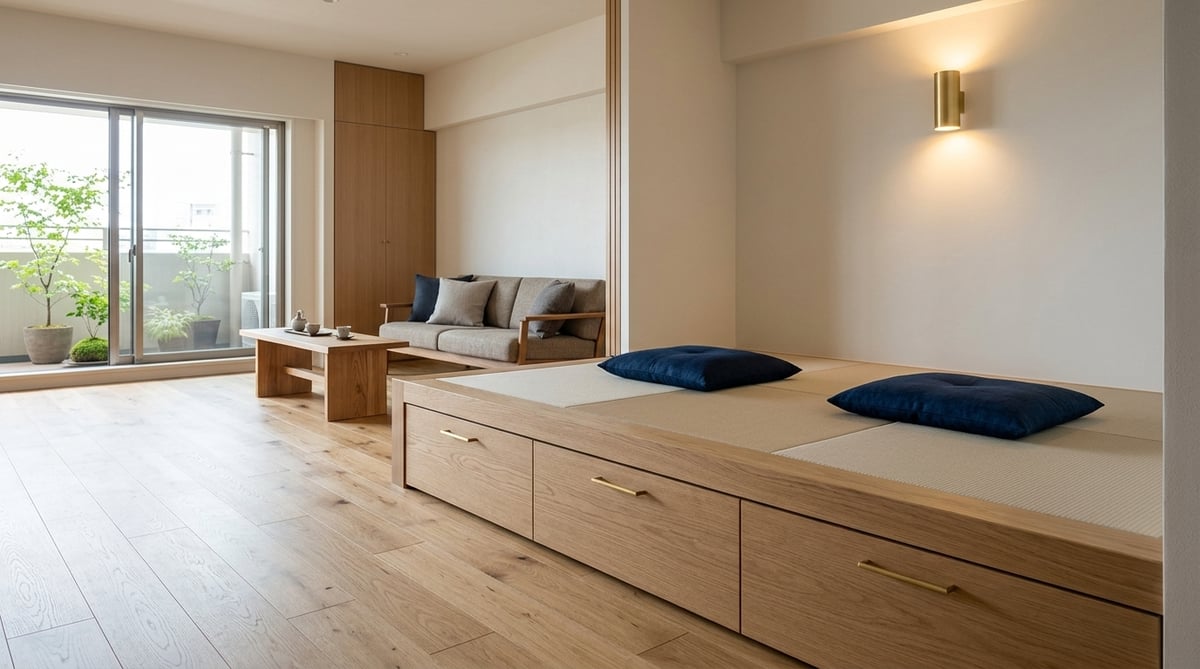
Step out your front door each morning and slip through the ticket gates at Kita-Senju Station in just three minutes, instantly connecting to five major railway and subway lines that whisk you across downtown Tokyo with effortless speed. Or, take a peaceful 15-minute stroll through quiet residential streets in the crisp morning air, feeling the gentle breeze blowing off the Arakawa River as your thoughts settle and prepare for the workday ahead. Given the exact same rental budget of 110,000 yen, would you prefer the unmatched mobility of a compact 22-square-meter studio right next to the station, or the breathing room of a 40-square-meter 1LDK a bit further out, complete with a dedicated workspace and room for your favorite sofa? This choice is far more than a simple comparison of property specifications; it is a fundamental decision about the tempo, rhythm, and lifestyle you want to cultivate while living in Tokyo.
As a licensed real estate broker who has spent over a decade researching neighborhoods and handling rental transactions across Adachi Ward and Tokyo’s historic downtown districts, I have fielded this exact question from countless clients: "If I have 110,000 yen to spend in Kita-Senju, is it smarter to choose a smaller apartment by the station or a larger home further away?" In truth, neither path is inherently superior, and neither represents a wrong turn. By carefully evaluating your work arrangements, time spent at home, and personal wellbeing against objective financial data and day-to-day realities, you can arrive at a confident, satisfying choice that will dramatically elevate your life in Tokyo.
In this guide, we break down everything you need to make an informed decision: the strict walking time calculation rules established by the Real Estate Fair Trade Council, realistic travel times that account for traffic signals and station concourses, bicycle parking costs and commute breakeven points, optimal living area benchmarks tailored to remote work frequencies, and even how to uncover the hidden gem zone between 10 and 12 minutes from the station that most renters overlook. Here is our comprehensive insider analysis and field-tested expertise.
Living Space Difference
Approx. 2.0 x
Floor area ratio comparison between a 5-minute walk (approx. 22 sqm) and a 15-minute walk (approx. 42 sqm)
Annual Time Saved
Approx. 120 Hours
Effective annual discretionary time gained from saving 20 minutes on the daily round-trip walk
15-Min Walk Activity
Approx. 2,400 Steps
Daily step count built naturally into a 30-minute round-trip commute (burning approx. 100 kcal)
Brokerage Fee Savings
Approx. 60,000 Yen
Initial cash optimization through Sorai Tokyo's half-price standard commission fee of 0.55 months' rent
30-Second Key Takeaways & SummarySorAi Summary
- Floor area ratio comparison between a 5-minute walk (approx. 22 sqm) and a 15-minute walk (approx. 42 sqm)
- Effective annual discretionary time gained from saving 20 minutes on the daily round-trip walk
- Daily step count built naturally into a 30-minute round-trip commute (burning approx. 100 kcal)
## The Same 110,000 Yen Rent Dilemma: Prioritize Prime Location (Time-Saving) or Generous Space (Living Comfort)?
In Kita-Senju—one of northeastern Tokyo's premier mega-terminals—a monthly rental budget of 110,000 yen serves as a fascinating tipping point in the local housing market. For single professionals earning around 300,000 to 350,000 yen in net monthly income, or couples establishing their financial footing in Tokyo, 110,000 yen fits comfortably within the recommended one-third income threshold. It represents a financially sound baseline while simultaneously serving as the exact price band where apartment options diverge most dramatically.
A closer look at market pricing around Kita-Senju reveals that an 110,000 yen budget comfortably puts modern, relatively new studio or 1K apartments (roughly 20 to 25 square meters) within a 3- to 5-minute walk from the station directly in your crosshairs. On the other hand, expanding your walking radius to about 15 minutes into the quiet residential backstreets immediately unlocks substantial 38 to 45 square meter 1LDK floor plans—or beautifully renovated older 2DK units—at the exact same monthly rent.
✓ Living in a Station-Front Studio or 1K
#### An Agile Lifestyle Maximizing Location and Time Efficiency
- *✓* Living minutes from the ticket gates gives you effortless, stress-free morning routines
- *✓* Department stores like Lumine and Marui, plus dining arcades, act as your personal pantry
- *✓* Minimal physical fatigue when commuting during torrential rains, summer heatwaves, or late nights
- *✕* A compact 20 to 24 sq meter floor plan makes fitting large furniture or dedicated work desks difficult
- *✕* Direct line of sight into neighboring buildings may limit sunlight, views, and acoustic privacy
Ideal for office-goers who treat their home as an efficient, seamless recharging station
✓ Living in a 15-Minute-Walk 1LDK
#### A Home-Centered Lifestyle Celebrating Spaciousness and Calm
- *✓* Around 40 sq meters of space provides complete physical separation between living room and bedroom
- *✓* Ample room to permanently station a full-sized desk and ergonomic chair for remote work
- *✓* Enjoy the serenity of low-rise neighborhoods and open riverbed parks along the Arakawa as your daily backyard
- *✕* Requires a daily 30-minute round-trip walk on office days (exposing you directly to the weather)
- *✕* Greater physical distance to station-front commercial hubs means grocery trips require conscious planning
Ideal for remote-first workers who prioritize indoor comfort and mental breathing room
When confronted with these two choices, many apartment hunters oscillate between two polar anxieties: "Will a cramped station-front room feel suffocating?" versus "Will a 15-minute walk exhaust me on daily commutes?" However, each layout and location embodies clear practical logic that aligns directly with distinct daily routines. Let us break down their specifications and lifestyle trade-offs using an objective comparative overview.
Scroll horizontally to see full table →
| Comparison Metric | Within 5-Min Walk: Studio / 1K | 15-Min Walk: 1LDK | Licensed Broker Professional Assessment |
| --- | --- | --- | --- |
| Typical Floor Area | 20.0 sq m to 24.5 sq m | 38.0 sq m to 45.0 sq m | Living space at a 15-minute walk offers a commanding 1.8 to 2 times more usable floor area. |
| Room Layout & Zoning | 6 to 8 tatami mat room (Integrated sleep & dine) | 9 to 12 mat living-dining-kitchen + 4.5 to 6 mat bedroom | The greatest advantage of a 1LDK is physically separating your workspace from where you sleep. |
| Annual Commute Walking Time (10-min one-way difference) | Approx. 40 hours (10 min round trip) | Approx. 160 hours (30 min round trip) | Living station-front effectively reclaims roughly 120 hours of personal free time each year. |
| Storage Capacity | Standard single closet (under 1 module width) | Generous walk-in closet or deep storage unit | Creates a decisive gap in storage capacity for seasonal appliances, large luggage, and outdoor gear. |
| Kitchen Amenities | 1 to 2 gas burners (minimal food prep counter) | 2 to 3 gas burners with full modular system counter | If you genuinely enjoy home cooking, the preparation space in a 1LDK is indispensable. |
| Surrounding Environment | Commercial zoning (lively, high-density buildings) | Category 1 residential or quasi-industrial zoning (tranquil) | Residential quarters hold a clear edge in nighttime tranquility, natural ventilation, and daylight. |
| Estimated Move-In Costs (Assuming 1 Mo. Deposit & 1 Mo. Key Money) | Approx. 440,000 to 480,000 yen | Approx. 440,000 to 480,000 yen | When base rent matches, upfront move-in costs remain equivalent. Utilizing half-price brokerage fees can save roughly 60,000 yen. |
Comprehensive Area Guide Sorai Tokyo Official
[【Chiyoda Line Area Guide】Direct Access to Otemachi! Station Comparison](https://soraitokyo.jp/area-guide-chiyoda-line?hsLang=en)
Complete rental and living guide for all stations on the Tokyo Metro Chiyoda Line, from Kita-Ayase and Kita-Senju to downtown Otemachi.
[Explore Chiyoda Line Guide →](https://soraitokyo.jp/area-guide-chiyoda-line?hsLang=en)
## The Reality of a Studio Apartment 5 Minutes from the Station: High-Efficiency Living for Active Lifestyles
Just twenty minutes after your smartphone alarm goes off in the morning, you are dressed, out the door, and passing through the ticket gates at Kita-Senju Station with only a few minutes of walking. Living in a studio apartment within a five-minute walk of the station is truly an experience of reclaiming complete control over your valuable time.
Kita-Senju Station is one of Tokyo's premier railway junctions, served by five distinct lines: the JR Joban Line, Tokyo Metro Chiyoda Line, Tokyo Metro Hibiya Line, Tobu Skytree Line, and the Tsukuba Express. The mobility it offers is invaluable for busy professionals working in central Tokyo—direct access to Otemachi in about 16 minutes via the Chiyoda Line, Kasumigaseki in roughly 21 minutes, Ueno in just 8 minutes via the Joban Line, plus direct, transfer-free connections to Akihabara, Ginza, and Roppongi. When you live just five minutes away on foot, you are free from morning commute anxiety no matter how tight your schedule is, and at the end of the day, you can sink into bed before the exhaustion of crowded rush-hour trains takes a toll.
Furthermore, living so close to the station unlocks a distinctive advantage: the commercial infrastructure of the neighborhood effectively becomes an extension of your living room. The basement grocery and food halls of Lumine Kita-Senju and Kita-Senju Marui (MilDix), which connect directly to the station's West Exit, feature an extensive selection of gourmet delicatessens and fresh produce, allowing you to pick up dinner on your way home right after exiting the ticket gate. In addition, the main thoroughfare of the West Exit, Kita-Road 1010, along with Shukubamachi-dori—a street steeped in the historic charm of the old Nikko Kaido highway—is lined with a dense network of welcoming independent diners, cozy cafes nestled in renovated traditional townhouses, and pharmacies open late into the night. Because there is no need to hoard massive grocery supplies in your refrigerator, smartly blending dining out with prepared take-home meals lets you compress time spent on shopping and cooking to the bare minimum.
When evaluated in concrete numbers, the commuting advantages become even more compelling. The difference between an apartment 5 minutes from the station and one 15 minutes away is 10 minutes one way, or 20 minutes round trip. For an office worker commuting 20 days a month, that amounts to 400 minutes (around 6 hours and 40 minutes) every month; over a 240-day working year, the difference adds up to approximately 1,600 minutes (about 26.6 hours). When you include weekend shopping, dining, and weekday evening outings, you can easily reclaim between 100 and 120 hours of disposable time every single year. Whether you invest those 120 hours into studying for professional certifications, reading, restful sleep and wellness, or personal hobbies—for anyone who views time as their most precious asset, a five-minute walk to the station yields returns far exceeding a monthly rent of 110,000 yen.
However, living in an ultra-convenient station-front studio apartment comes with an undeniable flip side: physical space constraints. In a unit measuring between 20 and 23 square meters (roughly 215 to 247 square feet), the actual living and sleeping area is typically limited to about 6 to 7 tatami mats (around 10 to 11.5 square meters). Once you arrange a single bed, a TV console, and shelving units, very little usable floor space remains. If you also need a large external monitor and ergonomic office chair for remote work—a setup increasingly in demand today—you will often find yourself squeezing through narrow gaps between your desk and bed. On rainy days when you need to dry laundry indoors, your entire field of view can be consumed by hanging clothes, creating a noticeable sense of confinement.
Additionally, within a five-minute radius of both the West and East exits of Kita-Senju Station, the land is designated as commercial or neighborhood commercial zoning, resulting in a dense concentration of mid-to-high-rise commercial buildings, restaurants, bars, and coin-operated parking lots. As a consequence, residents frequently encounter urban living challenges: opening the balcony window only to face the blank concrete wall of an adjacent tenant building mere feet away, needing indoor lighting even at midday due to lack of direct sunlight, or hearing the faint, persistent murmur of patrons outside traditional pubs and the rumble of late-night trains.
Broker's Practical Advice: What to Inspect in a Station-Adjacent Compact Apartment
When viewing apartments within a five-minute walk of the station, do not focus solely on modern interior fixtures and brand-new appliances; always check the clearance distance from the balcony and the sound insulation rating of the window sashes. If the distance to the opposing building is less than three meters (approx. 10 feet), it hampers not only natural sunlight but also airflow, leading to chronic moisture and humidity buildup. Furthermore, for properties near railway tracks, verifying whether windows feature soundproof specifications—such as T-2 or T-3 acoustic ratings or double-pane sashes—is vital. While ambient street noise during daytime viewings might mask these sounds, we strongly recommend pausing in the room, listening closely, and considering whether train traffic near midnight or pre-dawn freight lines could disrupt your sleep.
SORAI REQUEST / Online in 1 Min
### \[SorAi Request\] Organize Your Ideal Rental Criteria in Approx. 1 Minute
Simply select your preferences to quickly clarify your rental search. Zero unwanted phone calls — receive tailored apartment proposals directly on LINE or Web.
[Open in Fullscreen / New Tab](https://hearing.soraitokyo.jp/?start=true&ref=blog_embed_ext&lang=en&v=7&utm_source=blog_mid_cta&utm_medium=cta&utm_campaign=unified_cta_request) [Chat on Official LINE](https://line.me/R/ti/p/@soraitokyo)
Explore other free SorAi tools: [SorAi Cost Simulator →](https://soraitokyo.jp/en/quote?ref=blog_mid_cta_aux&lang=en&utm_source=blog_mid_cta&utm_medium=aux_link&utm_campaign=unified_cta_simulator&hsLang=en) [SorAi Inspection Report →](https://soraitokyo.jp/inspection?ref=blog_mid_cta_aux&lang=en&utm_source=blog_mid_cta&utm_medium=aux_link&utm_campaign=unified_cta_inspection&hsLang=en)
※ 100% Free • Online completed.
## The Reality of a 15-Minute Walk 1LDK: Spacious Living and Serenity Perfect for Remote Work
On a weekend morning, soft daylight pours into the living room through unobstructed south-facing windows. You sink deep into a comfortable sofa, taking in the rich aroma of freshly ground coffee. During weekday work hours, you dial into online conferences from a dedicated workspace set up in a corner of the living room. Once the workday wraps, you shut your laptop and step through the door into a completely separate bedroom to mentally switch off for the evening. Living in a 1LDK apartment of around 40 square meters, located a 15-minute walk from Kita-Senju Station, offers a lifestyle where the generosity of space directly nurtures your peace of mind.
At the exact same monthly rent of 110,000 yen, your usable floor area practically doubles. A layout featuring a 10 to 12 tatami-mat living-dining-kitchen area paired with an independent 4.5 to 6 tatami-mat Western-style bedroom brings a transformative upgrade to the quality of solo life. It completely eliminates the spatial clutter of a studio apartment, where you might eat in bed, watch television in bed, and work right next to your mattress. Instead, your home gains distinct, well-defined zones for dining, unwinding, working, and sleeping. This psychological separation does wonders for sustaining focus and emotional well-being, particularly for anyone working remotely several days a week.
Generous storage capacity is another major advantage unique to a roomy 1LDK. Many properties come equipped with full-sized closets or walk-in closets, floor-to-ceiling shoe cabinets, overhead kitchen cupboards, and underfloor storage compartments. This makes it effortless to stow away seasonal bedding, heavy winter coats, travel suitcases, and bulky outdoor gear like camping kits or golf bags out of sight. Maintaining an uncluttered, well-organized home creates an enduring sense of calm and refinement across the entire living space.
Furthermore, walking roughly 15 minutes away from Kita-Senju Station leaves the hustle and bustle of the station-front commercial district behind, giving way to leafy, peaceful residential neighborhoods with low-rise homes. Heading out from the West Exit toward Senju-Nakacho, Senju-Okawacho, or Senju-Motomachi, or from the East Exit toward Senju-Azuma 2-chome or Senju-Sekiyacho, you will find quiet backstreets with minimal through traffic that settle into astonishing silence after dark. Sirens and late-night restaurant chatter fade away, allowing you to leave your window open at night and drift into a deep sleep lulled by a gentle river breeze.
Perhaps the finest perk of living within a 15-minute walking radius of Kita-Senju is immediate access to the Arakawa Riverbank. Stepping up onto the embankment near Senju-Shinbashi Bridge or Niji no Hiroba reveals panoramic open skies and the sweeping flow of the majestic river. Whether you are jogging through crisp morning air along the levee, taking an evening stroll with the Tokyo Skytree glowing in the distance, or spreading a blanket across the grass on a sunny afternoon with a good book, you can effortlessly enjoy expansive natural open space as your everyday backyard—a privilege impossible to find in a compact apartment next to a major station.
However, the inevitable trade-off for acquiring this spacious comfort and quietude is the daily physical commitment of a 15-minute walk each way. On a pleasant spring or autumn morning, a 15-minute walk serves as an invigorating warm-up. But on days with pouring rain, biting winter winds, or during Tokyo's increasingly brutal midsummer heatwaves, walking 15 minutes between home and the station is no trivial matter. When you step off the train at Kita-Senju Station late at night thoroughly exhausted from work, facing a 1.2-kilometer trek under the streetlights can occasionally present real psychological resistance.
Broker's Practical Advice: Evaluating Neighborhoods to Avoid Regrets in 15-Minute Walk Zones
When considering an apartment further from the station in Kita-Senju, we strongly recommend that you do not evaluate the route solely during broad daylight, but make it a point to physically walk from the station to the property at night between 8:00 PM and 10:00 PM. Streetlight brightness, spacing between lampposts, pedestrian traffic, and sidewalk availability vary drastically depending on the street you choose. Equally essential is checking whether convenient supermarkets like Comodi-iida, Life, or My Basket, alongside convenience stores, sit directly along your walking route. Once you return home at night, heading back out to the station simply because you forgot an ingredient is rarely practical, so make sure your everyday grocery routine flows effortlessly before signing a lease.
## The Reality of "15-Minute Walk = 1.2 km": Traffic Signals, Actual Commute Times, and the Cycling Break-Even Point
When browsing Japanese property listings or rental portals, walking times like "10-minute walk" or "15-minute walk" are ubiquitous. However, very few home seekers know the official legal formula behind these numbers, or how drastically they can diverge from actual day-to-day commute times.
Under Japan's Fair Competition Codes Concerning Real Estate Representations (supervised by the Real Estate Fair Trade Council), walking times are strictly defined: "calculated at a rate of 80 meters of road distance per minute, rounding up any fractional minutes." In other words, a property advertised as a "15-minute walk" means the actual road distance from the station boundary to the property grounds falls between 1,121 and 1,200 meters (roughly 1.2 kilometers or about 0.75 miles).
Herein lies the critical practical trap: this statutory calculation completely excludes waiting at traffic lights, closed railroad crossings, walking speed reductions on hills, climbing over footbridges or stairs, and above all, the time it takes to walk from the train platform and ticket gates to the above-ground station exit.
At massive transit hubs like Kita-Senju Station, this internal transit route makes a substantial difference. Platforms for the Tokyo Metro Chiyoda Line sit deep underground, while navigating from JR lines, the Tobu Skytree Line, or the Tsukuba Express ticket barriers to street level routinely requires 2 to 4 minutes on escalators and stairs alone. Furthermore, heading towards residential quarters 15 minutes west of Kita-Senju (such as Senju-Nakaicho or Okawa-cho) requires crossing major intersections along heavily trafficked Route 4 (Nikko Kaido). Depending on traffic light timing, you may find yourself stopped for up to 2 minutes at a single pedestrian crossing. As a result, that "15-minute walk" on paper frequently translates to an actual door-to-door commute of 18 to 20 minutes from the moment you tap out at the ticket gate.
01
#### Ticket Gates to Ground Exit
Adds 2 to 4 minutes navigating underground platforms and extensive station concourses
02
#### Major Thoroughfares & Lights
Adds 1 to 3 minutes waiting at pedestrian signals along Route 4 (Nikko Kaido)
03
#### Flat Residential Streets
Takes approximately 15 minutes of uninterrupted walking for the 1.2 km distance (80 m/min rule)
04
#### Building Entry to Front Door
Adds 1 to 2 minutes unlocking security gates and waiting for elevators
To eliminate this 20-minute one-way transit burden, many Tokyo residents turn to bicycles, whether a standard city bicycle or an electric pedal-assist e-bike. Situated on the lowlands cradled between the Arakawa and Sumida Rivers, the Kita-Senju area lacks the steep hills characteristic of western Tokyo's Musashino plateau. Thanks to its flat terrain, the neighborhood is exceptionally well-suited for cycling.
Riding at a leisurely cruising pace of around 15 km/h, covering 1.2 kilometers takes a mere 4 to 5 minutes. That 15-minute walk is slashed to a third, giving you mobility on par with living right beside the station. However, before relying entirely on two wheels, you must factor in the tangible economics and availability of station bicycle parking.
Around Kita-Senju Station, several municipal bicycle parking facilities operated by Adachi Ward and private underground facilities are available, such as the West Exit Underground Bicycle Parking Facility and the East Exit Transportation Plaza Underground Facility. Monthly commuter permits generally run between 2,000 and 3,000 yen. In addition to purchasing a bicycle (around 30,000 yen for a standard city bicycle or 80,000 to 120,000 yen for an electric-assist model), you will incur an ongoing maintenance expense of roughly 24,000 to 36,000 yen per year for parking. Moreover, the most convenient station-side lots often have waitlists for monthly contracts, making it essential to verify availability before signing a lease.
Conversely, there is tremendous merit in reframing the daily walk as an investment in personal health. A round-trip walk of 30 minutes translates to approximately 2,400 to 3,000 steps, naturally burning 100 to 120 calories for an adult weighing 60 kilograms. For desk-bound professionals struggling to stay active, this built-in daily routine eliminates the need for an expensive monthly gym membership (typically 8,000 to 12,000 yen). Seen through this lens, a 15-minute walk ceases to be an inconvenience and becomes a restorative daily ritual for mental clarity and physical wellness.
Scroll horizontally to see full table →
| Transportation Mode | Actual One-Way Time | Monthly Running Cost | Key Advantages | Trade-offs & Considerations |
| --- | --- | --- | --- | --- |
| Walking (1.2 km) | Approx. 15 to 18 min | 0 yen (completely free) | Zero ongoing financial cost; naturally incorporates approx. 2,400 daily steps for sustainable health | Physically taxing during summer heatwaves or heavy rain; inconvenient when carrying heavy groceries |
| Bicycle (Flat route) | Approx. 4 to 6 min | Approx. 2,000 to 3,000 yen (parking fee) | Cuts commute time by two-thirds; effortless cargo carrying from station-front supermarkets | Potential waitlists for monthly parking; rain gear required on wet days with slip-and-fall risks |
| Local Bus (Toei / Tobu) | Approx. 6 to 10 min (ride time) | Approx. 8,800 yen (commuter pass equivalent) | Complete protection from inclement weather; allows reading or smartphone use during transit | Subject to road congestion delays during peak rush hours; service frequency limited to 3 to 5 buses per hour |
| Bike Share (HELLO CYCLING, etc.) | Approx. 5 to 7 min | Approx. 3,000 to 5,000 yen (pay-as-you-go) | No fixed parking contract needed; flexible one-way use allows switching to walking or bus if it rains | Risk of docking station shortages (no available bikes at origin or full docks at station destination) |
## Remote Work vs. Office Days: The Blueprint for Finding Your Ideal Balance
Should you choose a compact studio right next to the station, or a spacious one-bedroom farther away? The answer should never be based on generic advice. Instead, it comes down to a simple, practical reality: exactly how many hours of your week are spent inside your home? Let us break down the ideal housing choices across different workstyles from an objective, professional standpoint.
### Full-Time On-Site (5 Days in Office): Station-Front Studio for Ultimate Time Efficiency
If your daily routine involves heading to the office early every morning, working on-site until late, and returning home simply to take a shower and sleep, a compact studio within a five-minute walk from the station holds an overwhelming advantage. When sleep is virtually the only thing you do in your apartment on weekdays, paying a premium for an expansive living room you never use makes little financial sense. Cutting your daily commute to the absolute minimum and giving your exhausted body immediate rest serves as your greatest defense for maintaining peak work performance and long-term health.
### Hybrid Work (2 to 3 Days in Office, 2 to 3 Days at Home): The Decision That Demands the Most Careful Thought
Professionals balancing an even split between remote and office days face the most nuanced decision. You naturally want to eliminate commuting stress on in-office days, yet you equally crave comfort and focus on work-from-home days. In this scenario, the decisive factors are your frequency of virtual meetings and the depth of focus your role requires. If your days involve frequent screen sharing, client calls where you want to keep your personal living space off-camera, or deep-focus analytical tasks, accepting a 15-minute walk to secure a dedicated, separated workspace in a one-bedroom will yield vastly higher satisfaction over the medium to long term.
### Full Remote (Fully at Home or Seldom in Office): A Spacious One-Bedroom Where Living Room Comfort Reigns Supreme
For remote professionals who spend nearly all week at home and only head to the train station for weekend errands or leisure, we unequivocally recommend a one-bedroom set farther back from the tracks. When you spend over 20 hours a day inside a 20-square-meter studio, visual confinement and the blurring of boundaries between work and rest place a subtle, compounding strain on your mental well-being. Having a bright living room flooded with natural light and the freedom to take a refreshing midday walk along nearby riverside pathways will noticeably elevate both your everyday creativity and your quality of life.
## Insider Advice from a 10-Year Broker: Uncovering Hidden Gems at 10 to 12 Minutes from the Station
Up to this point, we have explored the tradeoffs using the extreme contrast between a 5-minute walk and a 15-minute walk. However, as a licensed broker working on the ground in Tokyo rental leasing for over a decade, there is a third option that consistently yields the highest satisfaction among our clients: discovering hidden gem properties nestled in the sweet spot of a 10- to 12-minute walk from the station.
When searching for apartments on major property portals such as SUUMO or LIFULL HOME'S, more than 70% of apartment hunters check either "within 5 minutes" or "within 10 minutes" on the search filters. Due to how these search algorithms operate, the moment a listing is categorized as an 11-minute walk, it instantly vanishes from the radar of the vast majority of prospective tenants.
From a landlord's perspective, Japanese real estate advertising regulations strictly forbid marketing an 11-minute walk property as "within 10 minutes." To prevent prolonged vacancy caused by this steep drop in online search visibility, property owners frequently implement substantial leasing incentives. These include pricing monthly rent 5,000 to 10,000 yen below the neighborhood median, waiving security deposits and key money, or investing heavily in premium amenities such as standalone vanity sinks, bathroom ventilation dryers, and auto-reheating bathtubs.
Scroll horizontally to see full table →
| Walking Distance Zone | Typical Layout and Floor Area | Property Profile at 110,000 Yen/Month | Portal Competition Level |
| --- | --- | --- | --- |
| 1 to 5 Minutes | Studio / 1K (20 to 24 sqm) | Modern construction with transit-hub convenience, but compact interiors and limited natural light or views | Extremely High (Fierce competition; units fill almost instantly) |
| 6 to 9 Minutes | 1K / 1DK (24 to 28 sqm) | A balanced balance between convenience and space, though rent levels tend to remain near peak rates | High (Consistent tenant demand year-round) |
| 10 to 12 Minutes (Recommended) | 1DK / Spacious 1K / Renovated 1LDK (30 to 36 sqm) | The ultimate value sweet spot: well-equipped, lower price per square meter, hidden just outside primary search filters | Moderate (An insider target zone with favorable negotiating conditions) |
| 13 to 15 Minutes | 1LDK / 2DK (38 to 45 sqm) | Generous floor plans and peaceful surroundings; best paired with a bicycle or local bus connection | Relaxed (Ample time to inspect and choose) |
Around Kita-Senju Station, distinct residential pockets maximize the benefits of this 10- to 12-minute perimeter. On the West Exit side, this includes areas just before Senju-Nakamachi and Senju-Nakacho, or heading straight north along the Old Nikko Highway through Senju 4-chome and 5-chome into peaceful residential neighborhoods. Along these corridors, you walk past vibrant local shopping streets with steady foot traffic and reliable street lighting, making the commute feel considerably shorter than the clock suggests. On the East Exit side, also known as the Den-Dai Exit, neighborhoods such as Senju-Higashi 1-chome and the deeper sections of Senju-Asahicho offer quiet, sun-filled low-rise residences accessible via flat, comfortable walkways cutting past the Tokyo Denki University campus.
With an 110,000 yen monthly budget, targeting this 10- to 12-minute radius dramatically increases your chances of securing a spacious 1DK apartment of 32 to 35 square meters or a beautifully updated, fully renovated 1LDK. For renters who find a 22-square-meter studio uncomfortably tight but hesitate at committing to a 15-minute walk every single morning, this intermediate zone delivers the ideal middle ground without compromising on liveability or day-to-day access.
Broker Pro-Tip: Adjusting Your Search Filters for Square Footage and Building Age
The secret to uncovering exceptional rental values is avoiding an exclusive focus on the 1LDK layout filter on property portals. Expand your search to include 1DK and 2DK layouts, and set your floor area filter to at least 30 square meters. Throughout Tokyo, there are numerous solidly constructed reinforced concrete buildings from the late Showa and early Heisei eras that have undergone comprehensive interior renovations. These units effectively function as expansive 1LDK apartments featuring a spacious living-dining-kitchen area of around 20 square meters paired with a private bedroom. They rent for 10,000 to 20,000 yen less per month than newly built 1LDKs while delivering superior sound insulation, generous dimensions, and outstanding value.

SorAi Real-Time Rental Concierge Online 24/7
Official AI answers your questions 24/7
[Continue on Official LINE (24/7 Free)](https://page.line.me/soraitokyo?oat_content=url&openQrModal=true&utm_source=soraitokyo_website&utm_medium=blog_inline_chat&utm_campaign=line_btn) [Privacy Policy](https://soraitokyo.jp/en/privacy-policy)

Thank you for reading this guide. I am SorAi, your official real estate AI concierge.
Feel free to ask any questions about apartment viewing checkpoints, layout comparisons, soundproofing, or natural lighting in Tokyo.
Quick questions:
Summarize apartment viewing points
Viewing measurements and soundproofing
Comparing layouts and living flows
Sunlight, humidity, and neighborhood
[Continue on Official LINE (Free)](https://page.line.me/soraitokyo?oat_content=url&openQrModal=true&utm_source=soraitokyo_website&utm_medium=blog_inline_chat&utm_campaign=line_btn)
Send
No phone number required. Feel free to consult at your own pace 24/7.
### Featured Tokyo Living Guides
SorAi Editorial
Swipe
#### [ Pet Friendly / Rental Contracts Renting with Medium/Large Dogs & Cats in Tokyo: Pet Deposit Surcharges, Restoration Clauses & Soundproof RC Apartments Read Guide →](https://soraitokyo.jp/en/blog/tokyo-pet-friendly-apartment-contract-guide?hsLang=en)
#### [ Chiyoda Line / Redevelopment Kita-Senju Station East Exit Redevelopment & Rental Market Guide: 29-Story Tower Plan & 5-Line Living Value Read Guide →](https://soraitokyo.jp/en/blog/area-guide-kitasenju-redevelopment-trend-2026?hsLang=en)
#### [ Tenant Screening / Checklist Tokyo Rental Screening Guide 2026: Why Applications Fail and How to Pass | Sorai Tokyo Read Guide →](https://soraitokyo.jp/en/blog/apartment-screening-checklist-guide?hsLang=en)
## Frequently Asked Questions (FAQ)
### Q Is it safe to walk alone at night to an apartment located 15 minutes on foot from Kita-Senju Station?
A Thanks to long-standing crime prevention initiatives such as the Beautiful Windows Movement, public safety in Adachi Ward has improved significantly in recent years. In particular, the residential neighborhoods around Senju are home to many multi-generational families where community watchful eyes are well established, keeping violent crime rates exceptionally low. However, narrow alleys branching off Old Nikko Highway or streets running along the river embankments can see sparse foot traffic and dimmer streetlights depending on the hour. For solo female residents or anyone returning home late, we recommend choosing routes along main thoroughfares such as Nikko Highway, Bokutei-dori, or Senju Nakamachi-dori, and taking the time during your property viewing to walk the commute after 8:00 PM to personally gauge the lighting and atmosphere.
### Q If I commute by bicycle from a property 15 minutes away on foot, what are my transit options on rainy days?
A In day-to-day practice, residents generally rely on three alternatives in bad weather: switching to walking, wearing full rainwear while cycling, or taking a local bus. The safest and most realistic option is to wake up slightly earlier and take a comfortable 15 to 18-minute walk with an umbrella. Riding a bicycle in the rain carries slip hazards, and holding an umbrella while cycling is strictly prohibited under Japan's Road Traffic Act. Alternatively, if your property is situated toward Senju Nakai-cho or Moto-machi, you can catch a Toei Bus or Tobu Bus running along nearby main avenues directly to the Kita-Senju Station West Exit Bus Terminal without getting drenched. Checking rainy-day detour routes and nearby bus stop locations in advance will give you complete peace of mind.
### Q t the same rent of 110,000 yen, is there any difference in contract renewal fees or move-out costs between a station-front studio and a 15-minute 1LDK?
A Regarding the biennial lease renewal fee, standard Tokyo rental agreements typically set this at exactly one month of the updated rent, meaning there is no difference at all between the two if both rent for 110,000 yen. However, your move-out restoration costs will differ in direct proportion to floor area. Mandatory move-out cleaning fees stipulated in lease riders are generally calculated by square meter (roughly 1,100 to 1,400 yen per square meter) or by flat layout tiers. A 22-square-meter studio usually incurs around 35,000 to 45,000 yen, whereas a 42-square-meter 1LDK typically ranges from 55,000 to 70,000 yen. Factoring this 20,000 to 30,000 yen difference in departure cleaning into your initial budget plan will prevent any unexpected surprises down the road.
### Q re there really zero 1LDK apartments within a 10-minute walk of Kita-Senju for 110,000 yen per month?
A To be completely transparent from a brokerage standpoint, finding a newer reinforced concrete condominium offering a 1LDK layout within a 10-minute walk for 110,000 yen is virtually impossible, as standard market rates sit between 130,000 and 150,000 yen or higher. That said, viable exceptions occasionally appear under two specific conditions: either timber-frame or lightweight steel-frame apartments, or fully gut-renovated units inside older condominiums over 35 years old. In particular, older renovated units often retain a vintage building exterior while boasting completely updated, modern interiors equipped with brand-new system kitchens and auto-reheating baths. Compact 1LDK layouts around 35 square meters in such properties occasionally surface for 105,000 to 110,000 yen including management fees. If you are open to building structure and exterior age, they represent an outstanding value.

Author: Sorai Tokyo Editorial Team (Supervised by Licensed Real Estate Agents)
A real estate consulting team specializing in assisting foreign nationals find rooms and explaining initial costs in Tokyo. We break down language barriers and differences in customs, offering dedicated support in Japanese, English, and Vietnamese for a safe and secure start to your new life.
 SORAI TOKYO | Chat with AI "SorAi" Anytime on LINE
### Exploring Tokyo Neighborhoods or Apartments? Ask Our AI "SorAi" Anytime on LINE
No property URL needed yet. From area safety, commute tips, and rent trends to instant initial-cost audits for listings you found—chat with SorAi 24/7 on LINE with zero sales calls.
STEP 1
Ask Anything on LINE
Ask about areas & rent, or send a listing URL anytime
→
STEP 2
24/7 Instant Reply by SorAi
Objective area data, live vacancy & fee breakdown
→
STEP 3
Explore at Your Own Pace
Zero sales calls. Meet on-site only when ready to view
24/7 Instant / Most Popular
#### ① Chat with AI "SorAi" on LINE (Free)
Ask about neighborhoods, rent trends, or share any listing URL on LINE. SorAi & our bilingual concierge check live vacancy and upfront fee breakdowns with zero sales pressure.
[Chat with SorAi on LINE (Free) ➔](https://lin.ee/VE8fd8b?utm_source=soraitokyo_blog&utm_medium=cta&utm_campaign=bottom_cta&utm_content=line)
Web Audit
#### ② SorAi Property Report
Already found a listing? Submit the URL or floor plan on the web for an instant objective breakdown of move-in costs and neighborhood data.
[View Report (Free) ↗](https://inspection.soraitokyo.jp/?ref=blog_bottom_cta)
Wait for New Listings
#### ③ SorAi Housing Needs
Select your budget, layout, and must-have conditions in 30 seconds to receive matching listings at your own pace.
[Organize Criteria (Free) ➔](https://soraitokyo.jp/en/request?ref=blog_bottom_cta&hsLang=en)
Instant Move-in Estimate
#### ④ SorAi Move-in Estimator
Enter rent and management fees to quickly estimate standard upfront contract costs and potential savings.
[Check Estimates (Free) ➔](https://soraitokyo.jp/en/quote?ref=blog_bottom_cta&hsLang=en)
※ Consultations are 100% free. No phone number required, zero pushy calls—everything is completed smoothly on LINE.
この記事をシェアする
\# エリアガイド# 北千住
[ SORAI TOKYO](https://soraitokyo.jp/en/)
Sorai Tokyo Co., Ltd.
Room 102, 1-7-14 Yanaka, Adachi-ku, Tokyo, 120-0006
03-6161-8484
[contact@soraitokyo.jp](mailto:contact@soraitokyo.jp)
Tokyo Metropolitan Governor (1) No. 113297
(License Date: December 20, 2025)
### Sitemap
- [About Us](https://soraitokyo.jp/en/about-us)
- [Testimonials](https://soraitokyo.jp/en/testimonials)
- [Chiyoda Line Guide](https://soraitokyo.jp/en/area-guide-chiyoda-line)
- [Sorai Journal](https://soraitokyo.jp/en/blog)
- [FAQs](https://soraitokyo.jp/en/faqs)
- [Contact](https://soraitokyo.jp/en/contact)
- [SorAi Request](https://soraitokyo.jp/en/request)
### Business Hours
**10:00 〜 18:00**
Closed: **Tuesday & Wednesday**
Inquiries via LINE, SNS, and email are accepted 24/7.
[View on Google Maps](https://maps.google.com/?q=%E6%9D%B1%E4%BA%AC%E9%83%BD%E8%B6%B3%E7%AB%8B%E5%8C%BA%E8%B0%B7%E4%B8%AD1-7-14) [Book Online Meeting](https://soraitokyo.jp/en/consultation?hsLang=en)
### Multilingual Services
Our professional staff are fluent in Japanese, English, Vietnamese, Russian, and Indonesian to support you from room hunting to contract signing.
[🇯🇵 日本語](https://soraitokyo.jp/ja/blog/kita-senju-walk5min-vs-walk15min-comparison?hsLang=ja) [🇺🇸 English](https://soraitokyo.jp/en/blog/kita-senju-walk5min-vs-walk15min-comparison?hsLang=en) [🇻🇳 Tiếng Việt](https://soraitokyo.jp/vi/blog/kita-senju-walk5min-vs-walk15min-comparison?hsLang=vi) [🇷🇺 Русский](https://soraitokyo.jp/ru/blog/kita-senju-walk5min-vs-walk15min-comparison?hsLang=ru) [🇮🇩 Indonesia](https://soraitokyo.jp/id/blog/kita-senju-walk5min-vs-walk15min-comparison?hsLang=id)
### Inquire via Social Media
[Privacy Policy](https://soraitokyo.jp/en/privacy-policy) | [Privacy & Security](https://soraitokyo.jp/en/security)
Copyright © 2026 株式会社ソライ東京 (Sorai Tokyo Co., Ltd.) All Rights Reserved.
[Chat with SorAi](https://page.line.me/soraitokyo?oat_content=url&openQrModal=true&utm_source=soraitokyo_website&utm_medium=line_button&utm_campaign=chatbot_popover)
SorAi Chat

#### SorAi
Online (Multilingual Support)
×
[Chat with SorAi](https://page.line.me/soraitokyo?oat_content=url&openQrModal=true&utm_source=soraitokyo_website&utm_medium=chatbot_header&utm_campaign=line_btn) [Email Us](https://soraitokyo.jp/en/contact?hsLang=en)
[Get "SorAi" on LINE (24/7 Free)](https://page.line.me/soraitokyo?oat_content=url&openQrModal=true&utm_source=soraitokyo_website&utm_medium=line_button&utm_campaign=floating_btn)
 SorAi | 24/7 AI Rental Chat No signup・100% online
TOC
### Table of Contents
×
```json
{
"@context" : "https://schema.org",
"@type" : "BlogPosting",
"author" : {
"@type" : "Person",
"name" : "ソライ東京編集部",
"url" : "https://soraitokyo.jp/en/blog/author/ソライ東京編集部"
},
"datePublished" : "2026-09-13T06:26:21.000Z",
"headline" : "Kita-Senju at 110,000 Yen Rent: 5-Min Walk Luxury 1R vs. 15-Min Walk Spacious 1LDK | Tokyo Living Guide 2026 | Sorai Tokyo | Sorai Tokyo",
"image" : [ "https://soraitokyo.jp/hubfs/blog-eyecatches/batch7_counter_kitchen_pendant.jpg" ],
"mainEntityOfPage" : {
"@id" : "https://soraitokyo.jp/en/blog/kita-senju-walk5min-vs-walk15min-comparison",
"@type" : "WebPage"
},
"publisher" : {
"@type" : "Organization",
"logo" : {
"@type" : "ImageObject",
"url" : "https://soraitokyo.jp/hubfs/small_logo(color)%20(2)-1.png"
},
"name" : "株式会社ソライ東京"
}
}
```
```json
{
"@context" : "https://schema.org",
"@type" : "FAQPage",
"mainEntity" : [ {
"@type" : "Question",
"acceptedAnswer" : {
"@type" : "Answer",
"text" : "Thanks to long-standing crime prevention initiatives such as the Beautiful Windows Movement, public safety in Adachi Ward has improved significantly in recent years. In particular, the residential neighborhoods around Senju are home to many multi-generational families where community watchful eyes are well established, keeping violent crime rates exceptionally low. However, narrow alleys branching off Old Nikko Highway or streets running along the river embankments can see sparse foot traffic and dimmer streetlights depending on the hour. For solo female residents or anyone returning home late, we recommend choosing routes along main thoroughfares such as Nikko Highway, Bokutei-dori, or Senju Nakamachi-dori, and taking the time during your property viewing to walk the commute after 8:00 PM to personally gauge the lighting and atmosphere."
},
"name" : "Is it safe to walk alone at night to an apartment located 15 minutes on foot from Kita-Senju Station?"
}, {
"@type" : "Question",
"acceptedAnswer" : {
"@type" : "Answer",
"text" : "In day-to-day practice, residents generally rely on three alternatives in bad weather: switching to walking, wearing full rainwear while cycling, or taking a local bus. The safest and most realistic option is to wake up slightly earlier and take a comfortable 15 to 18-minute walk with an umbrella. Riding a bicycle in the rain carries slip hazards, and holding an umbrella while cycling is strictly prohibited under Japan's Road Traffic Act. Alternatively, if your property is situated toward Senju Nakai-cho or Moto-machi, you can catch a Toei Bus or Tobu Bus running along nearby main avenues directly to the Kita-Senju Station West Exit Bus Terminal without getting drenched. Checking rainy-day detour routes and nearby bus stop locations in advance will give you complete peace of mind."
},
"name" : "If I commute by bicycle from a property 15 minutes away on foot, what are my transit options on rainy days?"
}, {
"@type" : "Question",
"acceptedAnswer" : {
"@type" : "Answer",
"text" : "Regarding the biennial lease renewal fee, standard Tokyo rental agreements typically set this at exactly one month of the updated rent, meaning there is no difference at all between the two if both rent for 110,000 yen. However, your move-out restoration costs will differ in direct proportion to floor area. Mandatory move-out cleaning fees stipulated in lease riders are generally calculated by square meter (roughly 1,100 to 1,400 yen per square meter) or by flat layout tiers. A 22-square-meter studio usually incurs around 35,000 to 45,000 yen, whereas a 42-square-meter 1LDK typically ranges from 55,000 to 70,000 yen. Factoring this 20,000 to 30,000 yen difference in departure cleaning into your initial budget plan will prevent any unexpected surprises down the road."
},
"name" : "At the same rent of 110,000 yen, is there any difference in contract renewal fees or move-out costs between a station-front studio and a 15-minute 1LDK?"
}, {
"@type" : "Question",
"acceptedAnswer" : {
"@type" : "Answer",
"text" : "To be completely transparent from a brokerage standpoint, finding a newer reinforced concrete condominium offering a 1LDK layout within a 10-minute walk for 110,000 yen is virtually impossible, as standard market rates sit between 130,000 and 150,000 yen or higher. That said, viable exceptions occasionally appear under two specific conditions: either timber-frame or lightweight steel-frame apartments, or fully gut-renovated units inside older condominiums over 35 years old. In particular, older renovated units often retain a vintage building exterior while boasting completely updated, modern interiors equipped with brand-new system kitchens and auto-reheating baths. Compact 1LDK layouts around 35 square meters in such properties occasionally surface for 105,000 to 110,000 yen including management fees. If you are open to building structure and exterior age, they represent an outstanding value."
},
"name" : "Are there really zero 1LDK apartments within a 10-minute walk of Kita-Senju for 110,000 yen per month?"
} ]
}
```
```json
{
"@context" : "https://schema.org",
"@type" : "BlogPosting",
"author" : {
"@type" : "Person",
"name" : "Author: Sorai Tokyo Editorial Team (Supervised by Licensed Real Estate Agents)"
},
"dateModified" : "2026-09-27T06:38:49Z",
"datePublished" : "2026-09-27T06:38:49Z",
"description" : "Choosing between a 5-minute walk luxury 1R (22-25 sqm) and a 15-minute walk 1LDK (38-45 sqm) at 110,000 yen/month in Kita-Senju. Comprehensive comparison of interior specs (auto-lock, reheating bath), 5-year financial balance, flood hazard risks, and legal lease protections by Tokyo real estate expe",
"headline" : "Kita-Senju at 110,000 Yen Rent: 5-Min Walk Luxury 1R vs. 15-Min Walk Spacious 1LDK | Tokyo Living Guide 2026 | Sorai Tokyo",
"inLanguage" : "en",
"publisher" : {
"@type" : "Organization",
"name" : "Sorai Tokyo",
"url" : "https://soraitokyo.jp"
}
}
```
```json
{
"@context" : "https://schema.org",
"@type" : "BlogPosting",
"author" : {
"@type" : "Organization",
"knowsAbout" : [ "東京メトロ千代田線", "賃貸不動産仲介", "宅地建物取引業", "初期費用適正化", "重要事項説明(IT重説)" ],
"name" : "Sorai Tokyo Editorial Team (Supervised by Licensed Real Estate Agents)",
"url" : "https://soraitokyo.jp/en/about-us"
},
"dateModified" : "2026-10-07T17:59:53+0000",
"datePublished" : "2026-09-13T06:26:21+0000",
"description" : "Choosing between a 5-minute walk luxury 1R (22-25 sqm) and a 15-minute walk 1LDK (38-45 sqm) at 110,000 yen/month in Kita-Senju. Comprehensive comparison of interior specs (auto-lock, reheating bath), 5-year financial balance, flood hazard risks, and legal lease protections by Tokyo real estate expe",
"headline" : "Kita-Senju at 110,000 Yen Rent: 5-Min Walk Luxury 1R vs. 15-Min Walk Spacious 1LDK | Tokyo Living Guide 2026 | Sorai Tokyo",
"image" : "https://soraitokyo.jp/hubfs/blog-eyecatches/batch23_09_living_step_up_tatami_stage_drawer.jpg",
"inLanguage" : "en",
"mainEntityOfPage" : {
"@id" : "https://soraitokyo.jp/en/blog/kita-senju-walk5min-vs-walk15min-comparison",
"@type" : "WebPage"
},
"publisher" : {
"@type" : "Organization",
"logo" : {
"@type" : "ImageObject",
"url" : "https://soraitokyo.jp/hubfs/raw_assets/public/soraitokyo-theme/assets/logo.png"
},
"name" : "Sorai Tokyo Co., Ltd.",
"url" : "https://soraitokyo.jp/en/"
},
"url" : "https://soraitokyo.jp/en/blog/kita-senju-walk5min-vs-walk15min-comparison"
}
```
```json
{
"@context" : "https://schema.org",
"@type" : "BreadcrumbList",
"itemListElement" : [ {
"@type" : "ListItem",
"item" : "https://soraitokyo.jp/en/",
"name" : "Home",
"position" : 1
}, {
"@type" : "ListItem",
"item" : "https://soraitokyo.jp/en/blog",
"name" : "Blog",
"position" : 2
}, {
"@type" : "ListItem",
"item" : "https://soraitokyo.jp/en/blog/kita-senju-walk5min-vs-walk15min-comparison",
"name" : "Kita-Senju at 110,000 Yen Rent: 5-Min Walk Luxury 1R vs. 15-Min Walk Spacious 1LDK | Tokyo Living Guide 2026 | Sorai Tokyo",
"position" : 3
} ]
}
```