
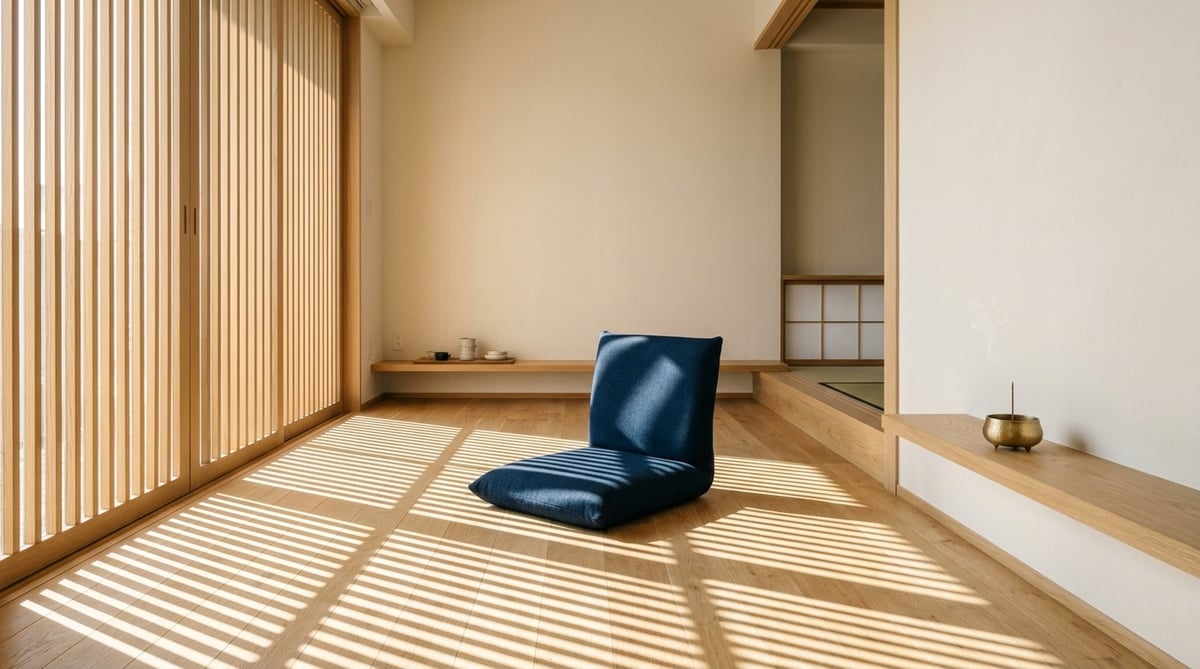
Emerging beneath the Iidabashi pedestrian footbridge at dusk where Mejiro-dori and Sotobori-dori meet, the echoing footsteps of commuters heading for the underground concourse blend seamlessly with the warm glow of lively izakayas and bistros. Yet, take just a few steps from Exit A2 on the west side of Mejiro-dori, pass along the approach to Tokyo Daijingu Shrine, and ascend the gentle slope into Chiyoda Ward's Fujimi 1-chome. Within moments, the hum of passing traffic fades into the background, and the atmosphere shifts into a refined, tranquil residential enclave bathed in the soft amber light of quiet streetlamps. Conversely, walking out of Exit A4 on the east side toward Iidabashi 4-chome reveals an entirely flat, urban cityscape where sleek office buildings, mid-rise rental apartments, and casual eateries stand shoulder-to-shoulder.
When prospective residents consult us about finding a home around Iidabashi Station, this striking duality is precisely what gives them pause. Confronted with central Tokyo rent levels—median rates standing at 140,000 yen for a studio/1K, 242,000 yen for a 1LDK, and 354,000 yen for a 2LDK—many harbor realistic concerns: "While having five train lines at my doorstep offers unmatched mobility, is it truly possible to find a peaceful home where I can close the windows and enjoy deep, quiet rest away from commercial bustle?" and "With Chiyoda, Shinjuku, and Bunkyo Wards converging across the outer moat and Kanda River, which exit and neighborhood block should I choose to live without worrying about urban flooding?"
Even between properties listed with the identical description of "a 5-minute walk from Iidabashi Station," crossing a single avenue or canal can mean the difference between an elevated residential plateau over 20 meters above sea level and a low-lying riverside commercial zone where elevation and flood precautions become vital considerations. In this comprehensive guide, we unpack the decision-making framework from on-the-ground realtor inspections, balancing the time freedom of a 5-line transit hub with the peaceful comfort of home life.
- A premier central interchange combining the east-west axis (Tozai Line & JR Chuo-Sobu Line) with three north-south/loop lines, making it effortless for dual-income couples to equalize commute times.
- Median monthly rent stands at 140,000 yen for a 1K and 242,000 yen for a 1LDK. Compare against walking-distance neighbors like Kagurazaka, Kudanshita, Ichigaya, and Suidobashi to balance connectivity with residential calm.
- Fujimi and Kagurazaka to the southwest sit safely on stable, flood-free plateaus. Eastern and northern blocks like Iidabashi 4-chome and Shin-Ogawamachi lie in the Kanda River basin, where choosing higher floors and checking flood barrier gates is essential.
Five-Line Commuter Mobility at Iidabashi Station and Strategic Exit Navigation
Iidabashi Station serves as a central junction for five distinct train and subway lines: the Tokyo Metro Tozai Line, Yurakucho Line, and Namboku Line, the Toei Oedo Line, and the JR Chuo-Sobu Local Line. On the Tozai Line, every train—including Rapid and Commuter Rapid services—operates as a local train between Toyocho and Nakano stations. This means every single train stops at Iidabashi, allowing you to hop onto whichever train arrives next without checking express schedules.
East-West Mobility Meets Three North-South and Loop Lines in One Single Hub
When evaluating the transportation value of Iidabashi Station, it is helpful to distinguish between the advantages shared with adjacent stations like Kagurazaka or Kudanshita and the unique capabilities exclusive to Iidabashi. For instance, direct Tozai Line access to Takebashi (2 stops), Otemachi (3 stops), and Nihombashi (4 stops) is equally available from Kagurazaka or Kudanshita. If your sole commute is an individual trip to the Otemachi or Marunouchi financial districts, selecting a neighborhood based on streetscape atmosphere rather than a one-stop ride difference is perfectly reasonable.
Where Iidabashi demonstrates its true power is in combining the east-west transit spine formed by the Tozai Line and JR Sobu Line with three north-south and loop lines at the very same station. The Yurakucho Line heads toward Ikebukuro, Yurakucho, and Toyosu; the Namboku Line pierces through Nagatacho, Tameike-sanno, Roppongi-itchome, and Meguro; the Toei Oedo Line loops through Shinjuku-nishiguchi, Roppongi, Shiodome, and Ueno-okachimachi; and the JR Sobu Line runs straight to Yotsuya, Shinjuku, Ochanomizu, and Akihabara. All of these routes connect through walkable transfer passages (note that transfers between the Yurakucho and Namboku lines are within the fare gate area, while transfers between the Tozai Line, other subway lines, JR, and Toei lines pass through ticket gates).
In our day-to-day consultations with international residents and working couples, this hub layout provides immense peace of mind. For couples where one partner commutes to Otemachi or Nihombashi while the other works in Roppongi-itchome, Nagatacho, Ikebukuro, or Shinjuku, neither person has to endure an exhausting multi-transfer journey. Furthermore, if severe weather or track delays affect one route during morning rush hour, you can simply switch ticket gates to access multiple alternate lines, preserving your composure and schedule.
The Daily Walk: Exit A5 Dedicated Gate vs. The Nakano-Side Transfer Concourse
Because Iidabashi is a major transit junction, evaluating an apartment purely by the listed "minutes walk from station" on real estate brochures can lead to post-move surprises. Understanding which specific ticket gate and street exit align with your daily routine is vital. The Tozai Line station features platforms on Basement Level 2 (B2F) and concourses on Basement Level 1 (B1F), split between two ticket gates with very different characteristics.
| Tozai Line Ticket Gate Name | Floor & Concourse Position | Connected Official Exits | Key Destinations & Surrounding Blocks |
|---|---|---|---|
| Iidabashi 1 to 4-chome Gate | B1F (Kudanshita side, serving Track 1 & Track 2) Elevator gate directly connects B2F Track 1 platform to street level | Exit A5 (equipped with street-level elevator) | North of Iidabashi 3-chome intersection, Tokyo Kusei Kaikan, Hotel Metropolitan Edmont, i-Garden Air, Iidabashi 1-4-chome, Kudankita direction |
| Iidabashi Intersection Gate | B1F (Nakano-side main concourse) | Exits A1, A2, A4; Exits B1 to B4b; Exits C1 to C3 | Transfers to Yurakucho, Namboku, Oedo & JR Lines (East/West Gates); Iidabashi Intersection, Tokyo Daijingu, Fujimi 1-2-chome (A1/A2), JR East Exit & Iidabashi 4-chome (A4), Kagurazakashita & RAMLA (B1-B4), Agebacho (C1) |
For daily travel toward Otemachi, Nihombashi, and Nishi-Funabashi, the "Iidabashi 1 to 4-chome Gate" located toward Kudanshita on B1F is exceptionally convenient. This gate connects exclusively to Exit A5 along Mejiro-dori in front of Tokyo Kusei Kaikan. Remarkably, the B2F Track 1 platform (bound for Nishi-Funabashi) features an elevator ticket gate that leads straight up to street level at Exit A5. When walking from Iidabashi 1 to 4-chome, i-Garden Air, or Hotel Metropolitan Edmont toward Otemachi, you can bypass the long transfer passages entirely and drop right onto the platform via Exit A5—an agile, boutique commuter experience rare for a major terminal. Note, however, that this street elevator connects directly only to the Track 1 outbound platform; returning from Otemachi on Track 2 requires using stairs to reach Exit A5. Keeping this nuance in mind makes it an invaluable exit for morning commutes and traveling with heavy luggage.
In contrast, the "Iidabashi Intersection Gate" on the Nakano side of the B1F concourse handles passenger traffic transferring between the Yurakucho, Namboku, Oedo, and JR Lines (East and West Gates). Exits A1 and A2 on the west side of Mejiro-dori lead toward Iidabashi Intersection, Tokyo Daijingu Shrine, and Fujimi 1-2-chome; Exit A4 connects toward the JR East Exit and Iidabashi 4-chome; and Exits B1 through B4 cross under Sotobori-dori toward Central Plaza RAMLA, Kagurazakashita, and Iidabashi Sakura Terrace. Finally, Exits C1 to C3 serve Agebacho. Walking through the underground corridors from Exits B or C to the Tozai Line platform takes several minutes. When viewing rental properties, we strongly advise walking the entire route from the exact subway platform to the apartment entrance to measure true transit times, factoring in traffic lights and underground pedestrian corridors.
Simply enter the rent and deposit from portal listings to calculate a full, itemized breakdown including brokerage and guarantor fees without hidden add-ons.
Iidabashi Rental Price Benchmarks & Comparative Analysis with 4 Neighboring Hubs
Located on the northwestern boundary of Chiyoda Ward where five major transit lines converge, Iidabashi's rental market ranks among the upper tier of central Tokyo, trailing only Otemachi, Takebashi, Nihombashi, and Kudanshita along the Tozai Line corridor. Let us first review median pricing across apartment layouts, then contrast these with neighboring stations sharing overlapping residential spheres.
Market Rental Rates by Layout & What Your Budget Buys
| Apartment Layout | Median Rent | Core Price Range (20th to 80th Percentile) | Per-Sqm Benchmark & Selection Guidance |
|---|---|---|---|
| 1R (Studio) | ¥104,000 | ¥89,000 – ¥124,000 | Station-wide unit benchmark: Approx. ¥5,200 per m². Single units are concentrated along Mejiro-dori, Sotobori-dori, and Shin-Ogawamachi. Larger 1LDK and 2LDK homes are primarily found in Fujimi residential towers and luxury condominiums northeast of the station. |
| 1K (1-Room + Kitchen) | ¥140,000 | ¥124,000 – ¥158,000 | |
| 1DK (1-Bed + Dining Kitchen) | ¥172,000 | ¥155,000 – ¥197,000 | |
| 1LDK (1-Bedroom + Living) | ¥242,000 | ¥214,000 – ¥279,000 | |
| 2LDK (2-Bedroom + Living) | ¥354,000 | ¥303,000 – ¥421,000 |
When searching for single-resident 1R or 1K apartments, older compact properties start around 100,000 yen per month. However, modern mid-grade 1K units featuring separated washrooms, auto-lock security, and delivery parcel boxes typically require a baseline budget of approximately 140,000 yen. Vacancies are relatively plentiful along major commercial thoroughfares, while low-to-mid-rise residential buildings tucked a street back tend to be leased almost immediately upon listing.
For dual-income couples and expatriate families seeking 1LDK to 2LDK floor plans, property character varies substantially depending on which municipal ward and neighborhood block you select. Condominiums and tower residences bearing a prestigious Chiyoda Ward Fujimi address are scarce and command top-of-market premiums. However, expanding your search across Mejiro-dori into Iidabashi 4-chome, past Sotobori-dori into Shinjuku Ward's Shin-Ogawamachi, or across the Kanda River into Bunkyo Ward's Koraku reveals significantly more spacious layouts within the identical budget range of 210,000 to 350,000 yen.
Contrasting Lifestyles: Kagurazaka, Kudanshita, Ichigaya, and Suidobashi
When reviewing floor plans around Iidabashi, you will frequently encounter listings highlighting multi-station access, such as "6 min to Kagurazaka / 9 min to Iidabashi," "8 min to Iidabashi / 7 min to Kudanshita," or "9 min to Ichigaya." Because these neighborhoods overlap within a 7 to 12-minute walk, comparing Iidabashi against its four immediate peers clarifies your optimal priorities.
| Station Name (Ward) | 1K Rent (Core Range) | 1LDK Rent (Core Range) | 2LDK Rent (Core Range) | Transit Lines & District Character |
|---|---|---|---|---|
| Iidabashi (Chiyoda Ward) | ¥140,000 (¥124,000 – ¥158,000) | ¥242,000 (¥214,000 – ¥279,000) | ¥354,000 (¥303,000 – ¥421,000) | Tozai, Yurakucho, Namboku, Oedo & JR Sobu Lines. Premier junction connecting east-west and north-south axes. |
| Kagurazaka (Shinjuku Ward) | ¥137,000 (¥121,000 – ¥155,000) | ¥233,000 (¥206,000 – ¥269,000) | ¥338,000 (¥290,000 – ¥403,000) | Tozai Line (single line). Elevated cobblestone alley culture, independent bistros, and mid-rise residential calm in Yaraicho. |
| Kudanshita (Chiyoda Ward) | ¥143,000 (¥126,000 – ¥161,000) | ¥246,000 (¥218,000 – ¥284,000) | ¥361,000 (¥309,000 – ¥429,000) | Tozai, Hanzomon & Shinjuku Lines. Adjacent to Imperial Palace and government offices; direct to Shibuya, Omotesando & Shinjuku-sanchome. |
| Ichigaya (Chiyoda Ward) | ¥143,000 (¥126,000 – ¥161,000) | ¥246,000 (¥218,000 – ¥284,000) | ¥361,000 (¥309,000 – ¥429,000) | JR Sobu, Yurakucho, Namboku & Shinjuku Lines. Strong academic and aristocratic heritage connecting to Bancho and Fujimi estates. |
| Suidobashi (Chiyoda Ward) | ¥136,000 (¥120,000 – ¥153,000) | ¥233,000 (¥206,000 – ¥269,000) | ¥338,000 (¥290,000 – ¥403,000) | JR Sobu & Toei Mita Lines. Direct Mita Line link to Otemachi/Hibiya with slightly lower rents, though pedestrian surges occur on event days. |
To the west on the Tozai Line, Kagurazaka Station offers a distinct lifestyle. Stepping off the main Waseda-dori shopping street leads into quiet residential heights like Yaraicho, populated by elegant mid-rise condominiums. For singles or couples whose work transit is covered by the Tozai Line (or a short walk to the Oedo Line at Ushigome-kagurazaka Station) and who relish stopping by artisanal bakeries, cozy French bistros, or refined wine bars, Kagurazaka provides a monthly rent savings of several thousand to 10,000 yen alongside an undeniable neighborhood charm.
Eastward neighbor Kudanshita Station and JR Sobu neighbor Ichigaya Station sit at a slightly higher rental tier. Kudanshita features the Hanzomon and Toei Shinjuku Lines, offering seamless direct links to Shibuya, Omotesando, and Shinjuku-sanchome. Ichigaya combines the JR Sobu, Yurakucho, Namboku, and Shinjuku Lines with a notably subdued commercial footprint, leading directly into the historic, leafy, academic residential sanctuary of the Bancho and Ichigaya plateaus. If you prioritize tree-lined residential streets and elite scholastic calm over bustling station plazas, Ichigaya stands out as an exceptional alternative.
Finally, Suidobashi Station to the east has median rents roughly 9,000 yen lower for 1LDKs and 16,000 yen lower for 2LDKs compared to Iidabashi. It provides direct Toei Mita Line access to Otemachi, Hibiya, and Mita. However, during baseball games or major concerts at Tokyo Dome City, pedestrian flows and station restaurants become very crowded. Your choice between Suidobashi and Iidabashi will depend on whether you prioritize weekend peace and quiet or the economic value and Mita Line access of Suidobashi.
Why a ¥5,000 to ¥10,000 Rent Premium Delivers Unrivaled Time Value
Examining these stations side-by-side reveals that the primary reason to choose Iidabashi Station is its complete, multifaceted balance. You are not confined to a single neighborhood identity: leisurely strolls through Kagurazaka's historic lanes, the serene plateau environment of Fujimi and Ichigaya, and five direct rail lines spanning Tokyo's core are all within your daily walking radius. Even if Iidabashi carries a monthly premium of 5,000 to 10,000 yen over Kagurazaka or Suidobashi, saving a daily transfer and being able to navigate home via underground subway links during torrential rain represent an exceptional return on investment for those who value daily time and mental ease.
Micro-Topography Divided by Moat and River: Fujimi Plateau vs. Lowland Plains
When selecting a home in Iidabashi, the physical topography—living atop the plateau versus down along the river—shapes your living experience far more than simple transit maps indicate. Iidabashi Station rests in a low valley where the historical Edo Castle outer moat and the Kanda River merge and curve, creating a natural border where Chiyoda, Shinjuku, and Bunkyo Wards intersect. Depending on which station exit you emerge from, both the geological formation and municipal zoning regulations diverge dramatically.
Fujimi 1 & 2-chome / Kagurazaka (Upland Plateau)
- ✓ Positioned on the stable Musashino loam plateau at 20–30m elevation; completely outside official municipal flood hazard zones.
- ✓ Fujimi 1-chome features Class 1 Residential zoning with minimal night traffic, historic shrines, and esteemed academic institutions.
- ✓ Walking home involves an upward slope, but rewards residents with high structural ground stability and refined residential peace.
Iidabashi 4-chome / Shin-Ogawamachi / Koraku (Lowland Plains)
- ✓ Flat terrain at 4–8m elevation, allowing effortless walking or cycling to Exits A4/A5 and the JR East Exit without climbing hills.
- ✓ High commercial convenience with convenience stores, casual dining, and immediate proximity to office hubs.
- ※ Certain blocks carry simulated flood hazard depths of 0.5–3.0m in Kanda River breach models; choosing 2nd floor or above and reviewing building floodgates is critical.
The Quiet Luxury and Solid Ground of Fujimi Plateau from Tokyo Daijingu
Southwest of the station lies Chiyoda Ward's Fujimi 1 and 2-chome, while to the west sits Shinjuku Ward's Kagurazaka and Yaraicho. Both areas rest comfortably upon the sturdy loam layer of the Musashino Plateau at elevations of 20 to 30 meters. On official municipal hazard maps, these blocks are classified outside flood inundation zones, making them highly sought-after by professionals who prioritize geological security.
Fujimi 1-chome, in particular—stretching south from Tokyo Daijingu Shrine toward Gyosei School—is zoned as a Class 1 Residential district despite its core downtown location. This zoning strictly prohibits pachinko parlors, clubs, and large-scale entertainment facilities. Compared to commercial avenues, the residential architecture is remarkably understated. When walking home late at night from Sakura Terrace or Exit A2 up the gentle slope, street noise melts away under the canopy of warm street lamps. The area falls within the attendance zone for Chiyoda Ward's esteemed Fujimi Elementary School and is close to Kudan Secondary School, attracting long-term foreign executives, diplomats, and multicultural families alongside single professionals.
Flat Daily Access and Water Safety Preparedness in Iidabashi 4-chome & Shin-Ogawamachi
Conversely, heading east and north toward Chiyoda Ward's Iidabashi 4-chome, Shinjuku Ward's Shin-Ogawamachi, and Bunkyo Ward's Koraku across the Kanda River brings you onto flat lowlands at elevations of roughly 4 to 8 meters. Daily navigation here is completely flat and effortless, whether carrying heavy groceries or riding a bicycle. However, portions of this zone are designated under municipal flood hazard maps with simulated flood depths between 0.5 and 3.0 meters during catastrophic torrential rains along the Kanda River.
When considering an apartment in this sector, there is no need for undue alarm, but sound practice dictates avoiding ground-floor or semi-basement apartments. Aiming for the second floor or higher (ideally the third floor and above) provides reliable safety. Furthermore, during viewings, check whether the building's electrical substation and switchgear rooms are elevated above ground level or located on the second floor, and confirm whether waterproof barrier gates are installed at main entrances and basement parking ramps. These physical checks ensure complete peace of mind.
Acoustic Insulation and Future Neighboring Development in Commercial Zones
Neighborhoods like Iidabashi 4-chome and the blocks along Mejiro-dori, Sotobori-dori, and Waseda-dori are zoned primarily for commercial use, where offices, retail storefronts, and residences sit closely intertwined. While these addresses offer unbeatable proximity to stations and well-lit walking paths at night, visiting prospective properties requires careful inspection of two key factors: acoustic insulation and window sightlines.
Grocery Shopping Routes by Station Exit & Conditions When You Should Pass on Iidabashi
When mapping out your day-to-day rhythm in Tokyo, an often-overlooked factor is your grocery shopping route on the journey home from work. While Iidabashi Station is surrounded by supermarkets ranging from gourmet import grocers to late-night mini-marts, they are not housed under one giant department store roof. Instead, they are distributed across specific station exits.
Daily Grocery Shopping: 7 Supermarkets Across Fujimi, Kaguragashi, and Shin-Ogawamachi
| Store Name | Location & Primary Access Route | Business Hours | Key Characteristics & Lifestyle Match |
|---|---|---|---|
| Supermarket Santoku Iidabashi | Chiyoda-ku Fujimi 2-7-1 (Proud Tower Chiyoda Fujimi 1F) | Mon–Sat 09:30–23:00 Sun 09:00–23:00 | Comprehensive full-service supermarket supporting home chefs on the Fujimi plateau. Stays open until 23:00 for late commuters. |
| Miuraya Iidabashi RAMLA | Shinjuku-ku Kaguragashi 1-1 (Central Plaza RAMLA 1F) | 10:00–21:00 | Directly connected to the station inside RAMLA. Premium produce, specialty seasonings, and gourmet deli platters along Exit B and JR West Gate routes. |
| Seijo Ishii Iidabashi Sakura Terrace | Chiyoda-ku Fujimi 2-10-2 (Iidabashi Grand Bloom Sakura Terrace 1F) | Weekdays 08:00–23:00 Weekends 10:00–23:00 | Ground floor of Sakura Terrace near JR West Exit. Opens at 08:00 on weekdays; perfect for wine, imported cheeses, and ready-to-eat gourmet dinners. |
| Inageya Iidabashi | Shinjuku-ku Shin-Ogawamachi 4-11 (Shin-Ogawamachi residential zone) | 09:30–22:00 | Mid-sized standard supermarket in northern Shin-Ogawamachi. Clear aisles and parking make it ideal for weekend bulk grocery stock-ups. |
| Maruetsu Petit Iidabashi | Shinjuku-ku Agebacho 2-20 Shimada Bldg. (Steps from subway Exit C1) | 07:00–01:00 (Next day) | Compact urban grocer right beside Exit C1. Operating from 07:00 until 01:00 late at night; essential for late-shift arrivals. |
| My Basket Iidabashi Station South | Chiyoda-ku Iidabashi 4-5-14 (San Polo Heights) | 07:00–23:00 | Positioned in the mixed office/apartment sector of Iidabashi 4-chome. Great for daily dairy, fresh bread, and quick breakfast items along Exits A4/A5. |
| My Basket Iidabashi Station North | Bunkyo-ku Koraku 2-6-1 (Sumitomo Fudosan Iidabashi First Tower) | 07:00–23:00 | Convenient mini-supermarket situated on the commuter walk toward Bunkyo Ward's Koraku residential towers. Covers everyday groceries and beverages. |
If you reside in Fujimi 1 or 2-chome, "Supermarket Santoku Iidabashi" and "Seijo Ishii Iidabashi Sakura Terrace" function as your neighborhood pantry. In Shin-Ogawamachi, "Inageya Iidabashi" provides complete daily provisions, while residents walking toward Kagurazakashita from Exit B will naturally pass "Miuraya" inside RAMLA. Conversely, for residents living toward Kudanshita in Iidabashi 4-chome or Bunkyo Ward's Koraku, the grocers lying directly on the shortest walking path are primarily compact "My Basket" stores. Reaching a large, full-assortment produce market requires crossing to the opposite side of the station complex. If you enjoy cooking elaborate meals at home, overlaying your walking route with your preferred supermarket on a map will dramatically elevate your day-to-day satisfaction.
Three Scenarios Where You Should Consider Looking Elsewhere
No matter how well-connected a station is, certain lifestyle preferences mean choosing another station or district will result in a more harmonious daily life. If any of the following three conditions match your priorities, we advise expanding your search beyond Iidabashi:
First, if you must avoid crowded trains during morning rush hour at all costs. On weekday mornings, the Tozai Line heading from Nakano and Takadanobaba toward Otemachi and Nihombashi experiences heavy passenger crowding right through the Iidabashi-to-Otemachi leg (although the line's peak crowding occurs further east between Kiba and Monzen-nakacho, this inbound downtown stretch remains densely packed). While the train ride is only a few minutes, if you cannot stand packed trains and work around Marunouchi, Otemachi, or Kanda, living closer toward Takebashi, Kanda, or Ogawamachi to walk or cycle—or conversely, choosing Nakano Station (median 1K ¥118,000, 1LDK ¥197,000) to secure a seat on originating trains—will ensure far calmer mornings.
Second, if living on an elevated, flood-free plateau is an absolute requirement, but you have a strict budget. Limiting your search to flood-free plateaus within walking distance of Iidabashi (such as Fujimi 1-2-chome) pushes rents into the upper tiers due to extreme property scarcity. Rather than compromising on a ground-floor unit in the river lowlands to meet your budget, expanding your horizons two stops west to Waseda Station's elevated residential zones (such as Kikui-cho in Shinjuku Ward, where Waseda medians sit at ¥122,000 for a 1K and ¥205,000 for a 1LDK), or looking across Kagurazaka and Ichigaya plateaus, offers a much healthier balance between ground stability and rental expense.
Third, if you prefer one-stop shopping at massive suburban-style malls with big-box department stores and mega-supermarkets. While RAMLA and Sakura Terrace feature charming boutiques, bakeries, and dining, they are urban lifestyle centers, not sprawling mega-malls. If you prioritize giant grocery hypermarkets, expansive suburban parks, and flat wide avenues designed for strollers, exploring areas further east along the Tozai Line past Monzen-nakacho may align far better with your family's daily lifestyle.
Final Realtor Checklist: Navigating Your Ideal Home in Iidabashi
With five intersecting train lines and the distinct characters of Chiyoda, Shinjuku, and Bunkyo Wards converging around a single terminal, Iidabashi allows you to harmoniously combine lightning-fast downtown access with serene home comfort—provided you select your station exit and neighborhood block with deliberate care.
Matching Neighborhood Blocks to Your Morning and Evening Lifestyle
For those who dream of weekend strolls through Tokyo Daijingu Shrine or the cobblestone alleys of Kagurazaka, paired with quiet evenings reading in an elevated apartment, the upland plateau of Chiyoda Ward's Fujimi 1-2-chome reached via Exits A1, A2, or B offers an exceptional match. On the other hand, if your priority is fast-paced downtown productivity utilizing the direct elevator access of Exit A5 and flat walking paths, residing on the mid-to-high floors of a soundproof residence in Iidabashi 3-4-chome, Shin-Ogawamachi, or Koraku provides an unbeatable urban base. There is no single correct answer—grounding your choice in how you want your mornings to begin and how you want your walk home to feel is the secret to lasting satisfaction.
Checking Vacancy Status and Getting an Unbiased Quote Second Opinion
Rental properties in Iidabashi—especially residential condominiums on the Fujimi plateau and high-spec corporate rentals—move exceptionally fast once published on major Japanese real estate portals. Simultaneously, the very same room is frequently cross-listed by multiple brokerages with wildly differing upfront fee structures. On central Tokyo properties renting for 200,000 to 350,000+ yen per month, variations in key money (reikin), guarantor company fees, and end-of-lease cleaning clauses can swing your move-in costs by hundreds of thousands of yen.
If you find a property online that catches your eye, or if you are weighing a plateau apartment against a lowland listing, feel free to reach out to Sorai Tokyo. By simply sharing the portal listing URL via our official LINE (@soraitokyo / https://line.me/R/ti/p/@soraitokyo), our licensed real estate advisors will cross-reference the official B2B industry database (REINS) to verify true live availability. We also provide a 100% free, transparent quote second opinion to strip away unnecessary broker markups. With no Japanese phone number required, zero sales calls, and fully remote bilingual support, you can explore Tokyo real estate at your own pace. Access our smart digital tools (SorAi) via the bottom menu on mobile or the footer on desktop, and start your apartment search with absolute clarity and peace of mind.
Frequently Asked Questions: Living Around Iidabashi Station
QWhere around Iidabashi Station can I find a peaceful residential setting away from commercial activity?
AThe quietest areas are Chiyoda Ward's Fujimi 1 and 2-chome to the southwest (particularly the Class 1 Residential zones stretching south from Tokyo Daijingu toward Gyosei School) and Shinjuku Ward's Kagurazaka and Yaraicho across Sotobori-dori. Just a single turn off major thoroughfares, nocturnal vehicular traffic drops significantly, offering a peaceful, stable plateau environment.
QWhat should I check regarding flood safety when looking in Iidabashi 4-chome or Shin-Ogawamachi?
AWhile Iidabashi 4-chome, Shin-Ogawamachi, and Koraku offer completely flat walking routes, they sit in the Kanda River lowland basin where certain blocks carry simulated flood risks of 0.5 to 3.0 meters. We recommend selecting units on the second floor or higher (preferably third floor and above) and verifying during your viewing that the building's electrical switchgear rooms are elevated and flood barrier boards are equipped at the entrance.
QHow crowded is the Tozai Line during morning rush hour, and how can I optimize my commute?
AInbound Tozai Line trains traveling from Nakano toward Otemachi remain crowded during weekday peak hours. However, the ride from Iidabashi to Otemachi is only three stops (under 6 minutes). Furthermore, Iidabashi allows you to divert to four alternative lines (Yurakucho, Namboku, Oedo, and JR Sobu). Entering through Exit A5 and the dedicated Iidabashi 1 to 4-chome Gate allows you to bypass the crowded central concourses entirely.
QHow should I choose between Iidabashi and neighboring Kagurazaka or Ichigaya?
AIf your commute is direct on the Tozai Line and you cherish independent restaurants, bakeries, and alleyway charm with slightly lower rent, Kagurazaka (median 1K ¥137,000, 1LDK ¥233,000) is a wonderful match. If you seek an aristocratic academic environment on the Bancho plateau with low commercial noise, Ichigaya (median 1K ¥143,000, 1LDK ¥246,000) is unmatched. For working couples needing 5-line multi-directional transit across Tokyo without compromising on peaceful residential blocks, Iidabashi (median 1K ¥140,000, 1LDK ¥242,000) offers the ultimate balanced lifestyle.



Author: Sorai Tokyo Editorial Team (Supervised by Licensed Real Estate Agents)
A real estate consulting team specializing in assisting foreign nationals find rooms and explaining initial costs in Tokyo. We break down language barriers and differences in customs, offering dedicated support in Japanese, English, and Vietnamese for a safe and secure start to your new life.