
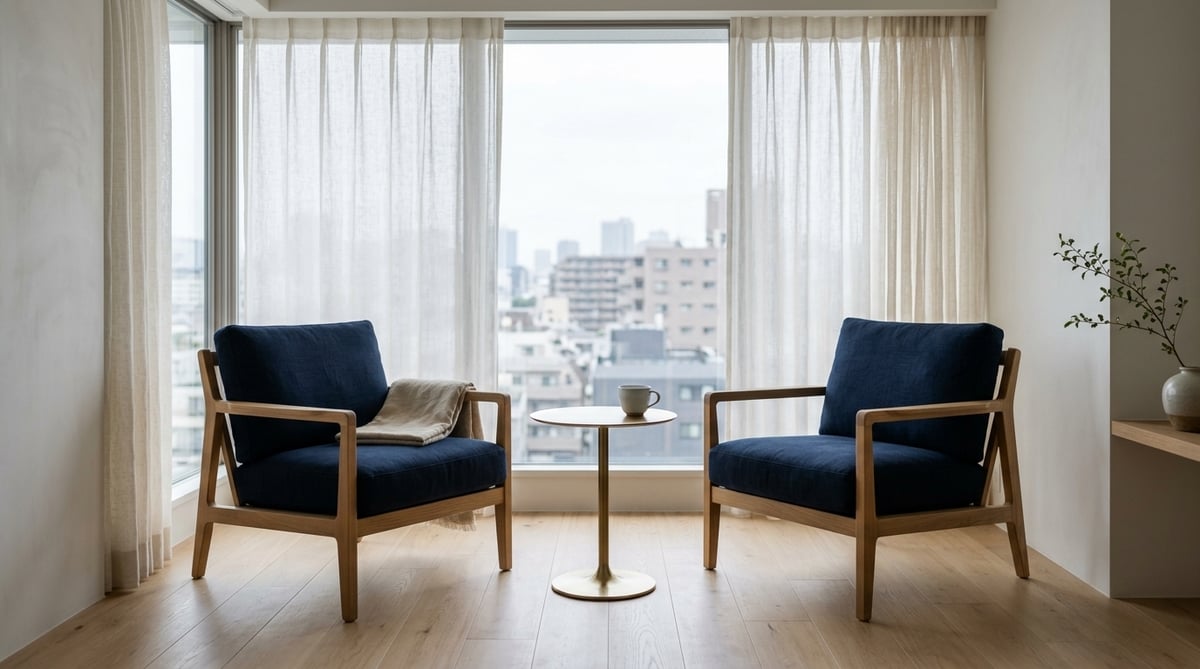
On a pleasant weekend afternoon, as you ascend the stairs of Exit 1a at Kagurazaka Station, the vibrant energy of Waseda-dori Avenue (Kagurazaka-dori Street) immediately envelops you. Cheerful voices echo past lines of patrons waiting outside charming French bakeries, traditional confectionery shops, and cozy bistros. Yet, if you emerge from Exit 2 on the station's western side and walk just three minutes into the residential sanctuary of Yaraicho, commercial signs quietly vanish. Here, soft afternoon sunlight filters through neatly trimmed hedges fronting mid-rise condominiums, transforming the atmosphere into one of serene residential stillness. When guiding foreign residents and international professionals through property viewings, we often see their genuine surprise at how dramatically the ambiance shifts across just a few hundred meters.
Rent benchmarks around Kagurazaka Station on the Tokyo Metro Tozai Line stand at a median of 137,000 yen for 1K units, 233,000 yen for 1LDK apartments, and 338,000 yen for 2LDK residences (averaging approximately 5,100 yen per square meter), placing the area firmly on par with central Tokyo prime districts within Shinjuku Ward. When weighing this premium price tier, prospective tenants frequently encounter real-world lifestyle trade-offs: "While direct subway access to business hubs like Otemachi and Nihombashi is incredibly attractive, will weekend visitor crowds disrupt our daily peace?", "Without a massive station shopping mall, will daily grocery shopping and hilly streets become exhausting?", or "Should we choose Kagurazaka over neighboring Iidabashi, Waseda, or nearby walkable stations like Ushigome-kagurazaka and Edogawabashi?"
Evaluating Kagurazaka solely by its station name can lead to unexpected everyday friction. Depending on which ticket gates you pass through, and whether your home sits atop the historic Ushigome Plateau ridge or down in the northern valley slopes, your daily commute, walking effort, and natural disaster hazard profile will vary significantly. As a uniquely positioned enclave featured in our Tokyo Metro Tozai Line Living Guide, this comprehensive review breaks down the neighborhood layout across each station exit, budget expectations by layout, and practical comparison points against adjacent transit hubs to help you establish a confident framework for choosing your Tokyo home.
- Median monthly rent is 137,000 yen for 1K, 233,000 yen for 1LDK, and 338,000 yen for 2LDK layouts. While Kagurazaka 6-chome east of Exit 1a thrives with vibrant commercial activity, Yaraicho around Exit 2 and Akagi Motomachi near Exit 1b maintain an exceptionally peaceful, high-ground residential character.
- Although there is no massive retail department building above the station, quality supermarkets such as Yoshiya, Kitchen Court, and MyBasket are well-distributed along daily paths. Crucially, street-level elevator access is consolidated exclusively at the "Exit 1b <=> Kagurazaka Gate" route; Exit 1a is stair-access only.
- If you prioritize five-line transit hubs and sprawling commercial complexes, consider Iidabashi. If your priority is lowering monthly rent while keeping direct Tozai Line access, Waseda saves approximately 28,000 yen/month on a 1LDK. For flat terrain at the base of the northern slopes, Edogawabashi on the Yurakucho Line offers a smart alternative, saving around 33,000 yen/month on a 1LDK.
Commute Convenience via the Tozai Line and Daily Flow Across Kagurazaka's Three Exits
Kagurazaka Station (station numbering T05) is an underground station on the Tokyo Metro Tozai Line built beneath Waseda-dori Avenue, where all passenger trains stop, including Rapid and Commuter Rapid services. The line connects directly to central Tokyo's premier business districts: just 4 stops to Otemachi, 5 stops to Nihombashi, and 6 stops to Kayabacho with zero transfers. Heading west, it takes only 2 stops to Takadanobaba and 4 stops to Nakano, where trains interline seamlessly with the JR Chuo-Sobu Local Line, offering effortless transit across central and western Tokyo.
Direct Tozai Line Timetables to Otemachi and the Dual-Level Split Platform Design
An architectural feature of Kagurazaka Station that makes an unexpected practical difference in everyday commuting is its two-tier, single-track stacked platform layout. Platform 2 (bound for Takadanobaba, Nakano, and Mitaka) is situated on the upper subterranean level closer to the ticket barriers, while Platform 1 (bound for Iidabashi, Otemachi, Nihombashi, and Nishi-Funabashi) rests on the deeper, lower level.
Consequently, when heading to Otemachi or Nihombashi in the morning, you must budget an extra minute or two to descend to the lower platform after passing the turnstiles. Conversely, when returning home after work from central Tokyo on westbound trains, you arrive at the shallower upper Platform 2. Stepping off the train and quickly emerging onto street level with minimal stair climbing provides a subtle, welcome comfort at the end of a long workday.
However, morning rush hour congestion warrants realistic expectations. While the western section of the Tozai Line does not experience the intense crowding seen on the eastern section carrying commuters inbound from Monzen-nakacho and Kiba, peak morning trains traveling from Takadanobaba and Waseda through Kagurazaka and Iidabashi toward Otemachi are undeniably packed. Because Otemachi is only four stops away, many foreign residents find the brief ride quite manageable; nonetheless, checking whether your employer supports staggered hours or flexible start times, and learning optimal car boarding positions, will make your morning commute far more comfortable.
Choosing Between Kagurazaka Gate (Exits 1a & 1b) and Yaraicho Gate (Exit 2)
Kagurazaka Station features two distinct ticket concourses situated on opposite ends of the underground platforms, connecting to three official street-level exits. The eastern Kagurazaka Gate (toward Iidabashi) serves Exit 1a and Exit 1b, while the western Yaraicho Gate (toward Waseda) leads to Exit 2. Rental listings noting a "5-minute walk to Kagurazaka Station" rarely specify which exit they measure from, making an understanding of each exit's infrastructure and surroundings vital before signing a lease.
| Official Exit | Connected Ticket Gate | Street Elevator | Primary Districts & Towns | Key Facilities & Shopping Environment |
|---|---|---|---|---|
| Exit 1a | Kagurazaka Gate (East / Iidabashi side) | None (Stairs only) | Kagurazaka-dori Street (Waseda-dori), Kagurazaka 6-chome, Kagurazaka-ue Intersection, Ushigome-kagurazaka Station area | Yoshiya Supermarket (Kagurazaka branch), Kitchen Court (near Ushigome-kagurazaka), Bishamonten Zenkokuji Temple |
| Exit 1b | Kagurazaka Gate (East / Iidabashi side) | Available (Consolidated accessible route) | Akagi Motomachi, Akagishitamachi, Shiroganecho, Tsukudo-hachimacho, Northern lowland slopes (Suidocho, Nishigokencho) | Akagi Shrine, Shinjuku Edogawa Elementary School, Maruetsu Edogawabashi, MyBasket Nishigokencho (walkable lowland area) |
| Exit 2 | Yaraicho Gate (West / Waseda side) | None | Yaraicho, Tenjincho, Enokicho, Yamabukicho area | Yarai Noh Theater, Ushigome Post Office, AKOMEYA TOKYO in la kagu, MyBasket Kagurazaka Station West |
From an everyday practical standpoint, it is critical to note that barrier-free elevator access between the street and ticket barriers is consolidated exclusively at the "Exit 1b <=> Kagurazaka Gate" route. Exit 1a, which opens directly onto the vibrant Kagurazaka-dori shopping street, has stairs only. Parents with baby strollers or travelers with heavy international luggage must route through Exit 1b. Additionally, while residents living near Exit 2 on the west side (Yaraicho and Tenjincho) enjoy quiet, crowd-free access through Yaraicho Gate, using an elevator requires walking along Waseda-dori Avenue to Exit 1b on the eastern side. Keeping these physical distances in mind relative to your lifestyle stage will ensure a seamless experience.
Simply enter the rent and deposit from portal listings to calculate a full, itemized breakdown including brokerage and guarantor fees without hidden add-ons.
Rent Averages and Budget Guidelines Around Kagurazaka Station: Deciphering Central Tokyo Pricing
Viewing rental prices along the central section of the Tozai Line, Kagurazaka's benchmark unit rate (approximately 5,100 yen per square meter) sits just behind Chiyoda Ward's Iidabashi (approx. 5,200 yen/sqm) and Kudanshita (approx. 5,300 yen/sqm). While more accessible than corporate core hubs like Otemachi (approx. 5,800 yen/sqm) or Nihombashi (approx. 5,400 yen/sqm), Kagurazaka commands a clear central Tokyo premium within Shinjuku Ward.
| Layout Type | Median Rent | Core Price Range (P20–P80) | Typical Property Characteristics & Location Trends |
|---|---|---|---|
| Studio (1R) | 102,000 yen | 87,000–121,000 yen | Compact units in Tenjincho and Enokicho behind main avenues or northern lowland slopes; mostly established reinforced concrete (RC) apartments. |
| 1K | 137,000 yen | 121,000–155,000 yen | Modern to mid-career properties with auto-lock security and independent washbasins. Upper 140,000-yen tiers unlock serene plateau residential streets. |
| 1DK | 169,000 yen | 152,000–193,000 yen | Ideal for solo professionals separating sleep from dining and remote work. Typically spacious floor plans around 30 square meters. |
| 1LDK | 233,000 yen | 206,000–269,000 yen | Dual-income corporate couples and singles desiring luxury. Low 200,000s focus on thoroughfares or lowlands; mid-to-high 200,000s access prime high-ground streets. |
| 2LDK | 338,000 yen | 290,000–403,000 yen | Upscale low-rise and mid-rise residences in Yaraicho and Akagi Motomachi for families and couples; floor areas predominantly span 50 to 65+ sqm. |
Single Professionals (1R, 1K, 1DK): Balancing Location and Quiet Neighborhoods
When searching for single-occupancy housing, the first noticeable gap is the 35,000-yen monthly difference between studio units (1R median: 102,000 yen) and 1K apartments (median: 137,000 yen). In Kagurazaka, selecting a standard apartment with a separate kitchen, private bathroom/toilet separation, indoor washing machine space, and auto-lock security brings you into the core 121,000 to 155,000 yen bracket for 1K homes. If your goal is capping monthly rent around 100,000 yen, focusing on 20-sqm studios or extending your walking radius toward Suidocho and Nishigokencho to the north, or Enokicho and Yamabukicho toward Waseda, significantly expands your options for well-maintained properties.
Conversely, for remote workers who want to avoid working right beside their bed, a 1DK apartment (median: 169,000 yen; core range: 152,000 to 193,000 yen) serves as a smart alternative without stretching budgets to 1LDK levels (median: 233,000 yen). Choosing an apartment set one block back from commercial avenues into residential zoning offers much better nighttime quiet and value for money, making it wise to weigh street traffic volume alongside building age.
Couples and Families (1LDK, 2LDK): Space Requirements and District Selection
For working couples and families with young children considering 1LDK and 2LDK layouts, monthly housing costs range from the low 200,000s to mid-300,000s yen (1LDK median: 233,000 yen; 2LDK median: 338,000 yen). Despite these higher price tags, Kagurazaka remains a perennial favorite among corporate couples commuting to Otemachi, Marunouchi, and Nihombashi. The reason is rare and compelling: it pairs a door-to-door commute of just 15 to 20 minutes with the serene, prestigious residential ambiance of the Ushigome Plateau in neighborhoods like Yaraicho and Akagi Motomachi.
However, among 1LDK and 2LDK apartments near the lower end of the core range (such as low 200,000s for 1LDK or around 290,000 yen for 2LDK), many units feature balconies directly facing busy main roads like Waseda-dori, or are located down steep northern slopes in lowland basins. Rather than deciding based solely on square footage and headline rent, verifying the daily walking slope to the station and proximity to neighboring transit hubs will protect you from leasing regrets.
Two-Axis Station Comparisons: Differentiating Iidabashi, Waseda, Ushigome-kagurazaka, and Edogawabashi
To navigate your apartment hunt in Kagurazaka with absolute confidence, it is invaluable to organize your search across two geographic axes: comparing Kagurazaka with its immediate Tozai Line neighbors (Iidabashi and Waseda), and comparing it with cross-town lines within a 6- to 12-minute walk (Ushigome-kagurazaka on the Toei Oedo Line and Edogawabashi on the Tokyo Metro Yurakucho Line). Because several stations cluster within a compact perimeter, expanding your perspective slightly unlocks diverse budget and transit choices.
| Station & Primary Lines | 1K Rent Benchmark (Median / Core Range) | 1LDK Rent Benchmark (Median / Core Range) | 2LDK Rent Benchmark (Median / Core Range) | Key Characteristics & Deciding Factors vs. Kagurazaka |
|---|---|---|---|---|
| Kagurazaka (Tokyo Metro Tozai Line) | 137,000 yen (121,000–155,000) | 233,000 yen (206,000–269,000) | 338,000 yen (290,000–403,000) | Direct to Otemachi and Nihombashi. Combines quiet plateau residential pockets (Yaraicho) with rich artisan dining. |
| Iidabashi (Tozai, JR Sobu, Yurakucho, Namboku, Oedo - 5 lines) | 140,000 yen (124,000–158,000) | 242,000 yen (214,000–279,000) | 354,000 yen (303,000–421,000) | Superb multi-directional hub with JR and major station shopping malls. Station vicinity has higher office bustle and traffic. |
| Waseda (Tokyo Metro Tozai Line) | 122,000 yen (107,000–137,000) | 205,000 yen (181,000–236,000) | 293,000 yen (251,000–348,000) | Shares direct Tozai access to Otemachi and Nihombashi. Saves 28,000 yen/mo on 1LDK, favoring budget compression or extra living space. |
| Edogawabashi (Tokyo Metro Yurakucho Line / Walkable north) | 119,000 yen (105,000–134,000) | 200,000 yen (177,000–231,000) | 286,000 yen (245,000–341,000) | Direct to Ikebukuro, Yurakucho, and Nagatacho. Overlaps with Kagurazaka's northern valley, offering flat grocery access and significant rent savings. |
Deciding Between Kagurazaka and Its Tozai Line Neighbors: Iidabashi vs. Waseda
One stop to the east lies Iidabashi Station, a major transit terminal served by five lines: the Tozai Line, JR Chuo-Sobu Local Line, Yurakucho Line, Namboku Line, and Toei Oedo Line. Rent medians are higher than Kagurazaka (242,000 yen for 1LDK and 354,000 yen for 2LDK), but Iidabashi offers immense convenience for couples commuting on different train networks or those who rely on integrated station shopping complexes. However, Iidabashi is surrounded by high-density commercial towers and multi-lane expressways, and low-lying sectors like Iidabashi 4-chome fall within designated flood advisory zones (please cross-check Chiyoda Ward's official hazard maps for details). If you prefer stepping directly into a calm, tree-shaded residential neighborhood upon exiting the train, Kagurazaka's plateau streets hold a clear advantage.
Looking one stop west to Waseda Station, both stations share the identical benefit of direct, transfer-free commuting to Otemachi and Nihombashi via the Tozai Line. Comparing rents, Waseda's medians are significantly lower: 15,000 yen less for 1K, 28,000 yen less for 1LDK (approx. 336,000 yen saved annually), and 45,000 yen less for 2LDK (540,000 yen saved annually). Waseda also features tranquil highland enclaves such as Kikuicho, representing a highly pragmatic alternative for renters seeking newer construction or larger floor plans on the same budget. However, if you place high value on slipping into quiet, authentic independent bistros after work, or soaking in the mature historic streetscapes of Yaraicho and Akagi Motomachi rather than a university neighborhood vibe, Kagurazaka's ambiance will feel distinctly more satisfying.
Walkable Cross-Town Alternatives: Ushigome-kagurazaka and Edogawabashi
Walking east from Exit 1a along Kagurazaka-dori Street toward the Kagurazaka-ue intersection brings Ushigome-kagurazaka Station on the Toei Oedo Line within comfortable walking distance. Living in high-ground districts on the Ushigome Plateau—such as Kagurazaka 6-chome, Tansumachi, or eastern Yaraicho—allows you to commute smoothly via the Tozai Line to Otemachi and Nihombashi on weekdays, while using the Oedo Line to head directly to Shinjuku or Roppongi on weekends, all with virtually zero hill climbing.
In contrast, during property viewings in the northern valley area of Kagurazaka (Suidocho and Nishigokencho), clients often compare these homes to Edogawabashi Station on the Yurakucho Line. When visiting an apartment marketed as a "9-minute walk to Kagurazaka Station" located at the bottom of the slope, prospective tenants frequently wonder: "If I have to hike up this steep hill to Kagurazaka Station every single morning, wouldn't it be far easier to base my search around flat walking access to Edogawabashi Station?"
Kagurazaka (High Ground) + Ushigome-kagurazaka Dual Walking Access
- ✓ Dual access to Tozai Line (Otemachi/Nihombashi) and Oedo Line (Shinjuku/Roppongi) along mostly flat walking paths.
- ✓ Located on solid volcanic loam plateau ground, outside flood hazard zones with superior ground stability.
- ✓ Enjoy quiet, prestigious surroundings in Yaraicho or Akagi Motomachi while immersing yourself in Kagurazaka's culinary heritage.
Near Edogawabashi Station (Suidocho & Nishigokencho Flat Walking Zone)
- ✓ Direct Yurakucho Line transit to Ikebukuro, Iidabashi, Yurakucho, and Nagatacho without stairs or hill strain.
- ✓ Lower living expenses: 1LDK median is 200,000 yen (saving 33,000 yen/mo vs. Kagurazaka) with greater space.
- ✓ Full-service grocery stores like Maruetsu Edogawabashi sit conveniently along flat walking paths.
In summary, commuting from the northern valley slopes via Kagurazaka Station is only practical if direct Tozai Line access to Otemachi and Nihombashi is an absolute non-negotiable requirement, and you are comfortable hiking uphill each morning in exchange for lower rent than on the plateau. If your daily destinations align with Ikebukuro, Yurakucho, or Nagatacho, choosing Edogawabashi Station from the start offers a far more relaxed, hill-free lifestyle while saving around 30,000 yen per month on a 1LDK.
Everyday Grocery Shopping, Zoning Nuances, and Ground Elevation Boundaries
While Kagurazaka is internationally renowned for its sophisticated French eateries, Michelin-starred establishments, and historic Japanese sweet shops, settling in long-term requires clear answers to two practical questions: "Where will I buy fresh groceries on my way home from work?" and "How do zoning and ground elevations change from one street to the next?"
Navigating Grocery Stores Without a Major Station Mall
Although Kagurazaka lacks a monolithic station-top shopping complex or giant electronics store, quality supermarkets are thoughtfully scattered along the walking routes from each exit.
For residents using Exit 1a on the eastern side, Yoshiya Supermarket (Kagurazaka branch) (6-11-1 Kagurazaka, Shinjuku Ward) is your primary lifeline. Located just steps from the exit along Kagurazaka-dori Street, picking up fresh vegetables, meats, and prepared delicatessen dishes on your evening walk home feels effortless. Continuing past the Kagurazaka-ue intersection toward Ushigome-kagurazaka Station brings you to the upscale, well-stocked Kitchen Court (Kagurazaka branch) (11-1 Tansumachi, Shinjuku Ward) and MyBasket (Ushigome-kagurazaka Station West branch) (3-15 Saikucho, Shinjuku Ward), giving you fantastic variety depending on your menu and mood.
On the western side from Exit 2 toward Yaraicho and Tenjincho, MyBasket (Kagurazaka Station West branch) (14 Tenjincho, Shinjuku Ward) handles everyday staples. Nearby, AKOMEYA TOKYO in la kagu right beside Exit 2 offers curated Japanese specialty rice, artisanal dashi broths, organic seasonings, and elegant tableware, while the adjacent Ushigome Post Office makes handling domestic and international parcel shipments seamless. However, if you reside deep in Yaraicho and prefer doing large weekend grocery hauls, walking a bit further east to Yoshiya or Kitchen Court—or utilizing online grocery delivery—keeps home cooking effortless. For residents living down the northern slope from Exit 1b in Suidocho or Nishigokencho, relying on flat lowland stores like MyBasket (Nishigokencho branch) (8-8 Nishigokencho, Shinjuku Ward) and Maruetsu (Edogawabashi branch) (4-13 Suidocho, Shinjuku Ward) is vastly easier than carrying heavy bags down steep hills from the station.
Zoning and Elevation Contrasts Across Yaraicho, Kagurazaka 6-chome, and Northern Lowlands
Even for properties marketed under the same "Kagurazaka Station" radius, urban planning zoning designations and geological characteristics diverge distinctly into three zones relative to Waseda-dori Avenue.
First is the Yaraicho district, extending southwest from Exit 2. This area is designated as a Category 1 Mid/High-Rise Residential Zone, strictly prohibiting noisy commercial venues and pachinko parlors. The streetscape consists predominantly of low-to-mid-rise residential condominiums and private homes. Topographically, it sits atop the stable Ushigome Plateau (volcanic ash loam plateau), providing solid ground stability that is classified outside flood advisory zones on municipal hazard maps. With the historic Yarai Noh Theater nestled quietly on a street corner, this neighborhood remains astonishingly peaceful, completely removed from the weekend buzz of the main avenue.
Second is Kagurazaka 6-chome (along Waseda-dori Avenue), east of Exit 1a. This area also rests safely on the loam plateau outside flood hazard zones, but falls under high-density Commercial Zoning. Anchored by the historic Bishamonten Zenkokuji Temple, this bustling corridor is lined with boutique shops, international restaurants, and modern residential buildings (school districts vary by street number, so families with school-age children should consult Shinjuku Ward's educational boundary charts). While living close to the station offers vibrant, well-lit nighttime safety, weekend daytime foot traffic and delivery vehicle movement along side streets make window soundproofing and floor level essential checks.
Third is the zone stretching north from Exit 1b through Akagi Motomachi down toward Akagishitamachi, Suidocho, and Nishigokencho. Around Akagi Motomachi—home to the beautifully redesigned Akagi Shrine and Shinjuku Edogawa Elementary School—the tranquil high-ground atmosphere continues. However, proceeding north toward Suidocho and Nishigokencho leads down steep hillsides toward the Kanda River lowland basin. While the lowland area is comfortably flat with easy grocery access, unlike the plateau ridge, renters should carefully verify municipal flood hazard maps and examine building flood-defense measures such as raised electrical switchgear rooms.
Three Scenarios Where Kagurazaka Might Not Fit and Smarter Alternatives
No matter how charming a neighborhood may be, personal lifestyle priorities may mean another station or district serves you better. To ensure you do not sign a lease only to discover daily friction, here are three specific scenarios where looking beyond Kagurazaka is the wiser choice.
When You Need Integrated Station Malls or a Stress-Free Morning Commute
First, if you expect to handle all shopping, fashion, electronics, and household goods under one roof in a large station mall, Kagurazaka will feel lacking. The neighborhood excels in boutique groceries and intimate specialty shops, but lacks a centralized commercial complex. If one-stop shopping on your walk home is essential, basing yourself near Iidabashi or heading west on the Tozai Line toward Takadanobaba or Nakano will prove far more convenient.
Second, if you want to avoid dense morning commuter crowds at all costs, bear in mind that while western Tozai trains are less congested than the inbound rush from Chiba, the segment from Takadanobaba through Kagurazaka, Iidabashi, and Otemachi experiences heavy passenger density during peak hours. If your company lacks flexible work hours and a calm morning commute is paramount, consider living within walking or cycling distance of your office, or test the peak-hour train experience in person before signing.
Navigating Strollers and Bicycles Around Station Elevators and Steep Slopes
Third, if you rely daily on a baby stroller or non-electric bicycle and need completely flat, step-free access, Kagurazaka's physical terrain requires caution. Street-level elevator access is restricted to Exit 1b at Kagurazaka Gate, while Exit 1a relies entirely on stairs. Furthermore, walking north toward Suidocho or southeast toward Iidabashi involves significant changes in elevation. Pushing a stroller or riding a standard bicycle up these hills on rainy or hot summer days demands substantial effort.
If barrier-free navigation is your top priority in Kagurazaka, strictly limit your property search to the flat plateau streets of Akagi Motomachi and Yaraicho near Exit 1b. If budget or layout constraints point you toward northern lowland listings, shifting your search to inherently flat neighborhoods around other subway stations is a far more comfortable, pragmatic decision.
Final Verdict: Finding the Perfect Home in Kagurazaka Aligned with Your Lifestyle
Which Kagurazaka Enclave Matches Your Daily Routine?
Kagurazaka achieves a rare balance in Tokyo: direct, rapid transit to Otemachi and Nihombashi paired with the serene, timeless pace of its historic backstreets. Here is how to match its districts to your lifestyle:
If you cherish peaceful nights and stable plateau ground away from weekend crowds, Yaraicho and Tenjincho around Exit 2 offer an exceptional sanctuary. If you love stopping by artisanal groceries and dining at cozy bistros while enjoying dual-line access to Ushigome-kagurazaka Station on the Oedo Line, Kagurazaka 6-chome and Tansumachi around Exit 1a (especially one block in from main roads) are an ideal match. If you need step-free elevator access paired with quiet residential streets, focus on Akagi Motomachi near Exit 1b. Finally, if maximizing apartment size or minimizing monthly rent is your top priority, comparing options in Waseda on the Tozai Line or Edogawabashi within walking distance to the north will clarify your best path forward.
Objective Lease Analysis and Foreigner-Friendly Support
In a neighborhood like Kagurazaka—where zoning, noise levels, and flood advisories shift dramatically from one street or slope to the next—standard real estate portal sheets rarely reveal the full reality of daily life. At SorAi Tokyo, our smart rental tools are accessible directly from our mobile bottom bar or website footer, completely free and requiring no phone numbers or personal registration.
If you find yourself wondering, "Should I choose this apartment in Yaraicho or one in Waseda?" or "Is this property located on the high plateau or down the steep northern hill?", simply send the listing URL to our official LINE concierge (@soraitokyo). Our licensed real estate advisors will cross-reference nationwide industry databases to verify real-time availability, evaluate your initial move-in costs with transparent second opinions, and support international residents with visa screening and guarantor-free leasing options. Available 24/7 with zero pushy sales calls, feel free to chat with us anytime as casually as enjoying a cup of tea. We are here to ensure your transition to living in Tokyo is smooth, transparent, and truly rewarding.
Frequently Asked Questions About Renting Around Kagurazaka Station
QKagurazaka-dori Street gets crowded with weekend visitors. Are there quiet residential pockets nearby?
AYes, you can easily enjoy a serene home environment by selecting the right exit and neighborhood. While Kagurazaka 6-chome east of Exit 1a is a commercial zone with bustling weekend visitors and diners, Yaraicho near western Exit 2 is a Category 1 Mid/High-Rise Residential Zone on high ground, maintaining remarkable quiet even on weekends. The Akagi Motomachi area near Exit 1b also offers an exceptionally calm and prestigious residential setting.
QWhich exit and ticket gate should I use when traveling with a stroller or heavy luggage?
AStreet-level elevator access is consolidated exclusively between the eastern Kagurazaka Gate and Exit 1b. Exit 1a, which opens directly onto Kagurazaka-dori Street, has stairs only. If you regularly use a stroller or travel with large suitcases, prioritize properties with flat plateau access to Exit 1b, such as those in Akagi Motomachi or along the upper ridge of Waseda-dori Avenue.
QShould I look at northern lowland properties marketed as '10-minute walk to Kagurazaka' or search around Edogawabashi Station instead?
ANorthern lowland districts like Suidocho and Nishigokencho involve a steep uphill climb when walking to Kagurazaka Station's Exit 1b, but offer level walking routes to Edogawabashi Station on the Yurakucho Line and Maruetsu Supermarket. If direct Tozai Line commuting to Otemachi and Nihombashi is an absolute necessity, the climb may be worth the rent savings. However, if your commute aligns with Ikebukuro, Yurakucho, or Nagatacho, or if you want lower monthly rent (1LDK median: 200,000 yen in Edogawabashi vs. 233,000 yen in Kagurazaka) without daily uphill walking, orienting your search around Edogawabashi Station is much more practical.



Author: Sorai Tokyo Editorial Team (Supervised by Licensed Real Estate Agents)
A real estate consulting team specializing in assisting foreign nationals find rooms and explaining initial costs in Tokyo. We break down language barriers and differences in customs, offering dedicated support in Japanese, English, and Vietnamese for a safe and secure start to your new life.