
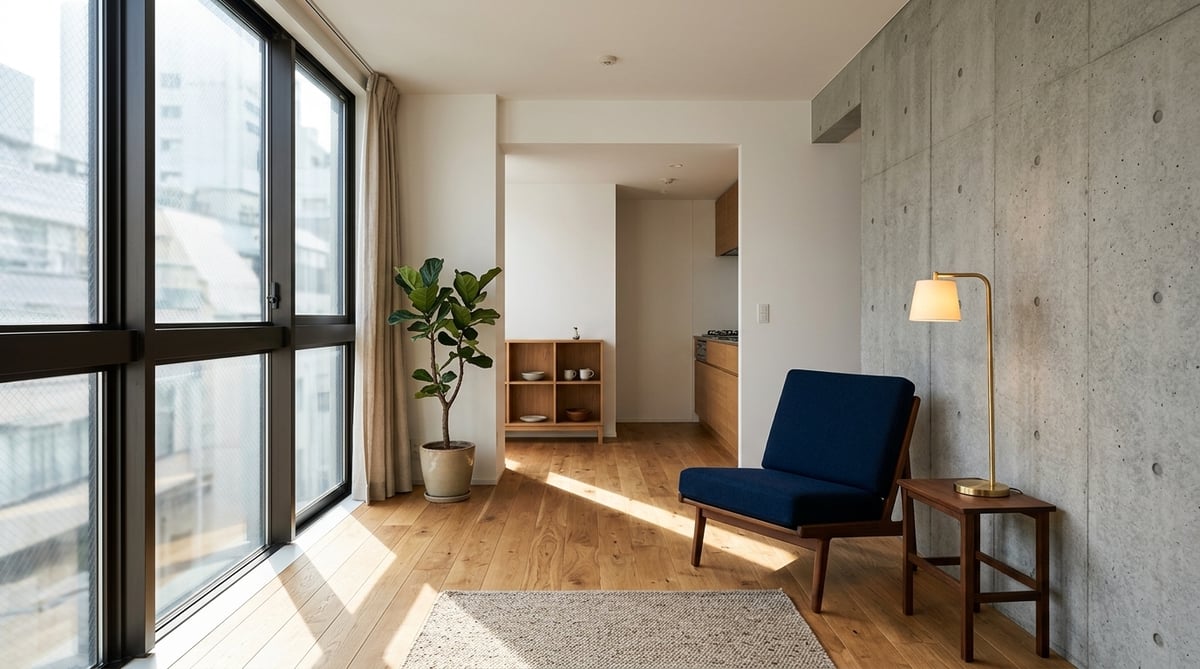
On Gyoko-dori Avenue, which stretches from the historic red-brick facade of Tokyo Station straight toward the central business towers of Marunouchi, the crisp morning air carries the quiet, rhythmic footsteps of professionals on their way to work. For those holding responsible positions across Tokyo's core business districts—such as Ginza, Otemachi, and Kasumigaseki—choosing a home is far more than securing a place to sleep. It is an essential foundation for reclaiming mental calm, freeing oneself from the exhausting strain of packed commuter trains, and savoring tranquil morning routines and restful evenings.
A monthly budget starting from 120,000 yen serves as a major turning point in Tokyo's rental market, presenting a clear lifestyle decision: convenience versus spaciousness. Should you opt for a refined, high-grade 1K studio of 28 to 35 square meters close to your office in Minato or Chuo Ward? Or should you expand your search toward suburban terminal stations or semi-central hubs to secure a modern, spacious 1LDK apartment of 40 to 50 square meters? Both choices offer distinctive qualities that significantly elevate your daily standard of living.
As a certified Japanese real estate broker with a decade of field experience assisting clients—including numerous international professionals, expats, and multicultural residents—I will carefully analyze the operational characteristics, congestion rates, morning seat availability from origin stations, and official market rents across all 9 Tokyo Metro lines to help you discover the ideal home aligned with your lifestyle values.
- The Ginza and Marunouchi Lines operate without shared through-services to private rail lines, minimizing delay risks and ensuring punctual commutes.
- A 120,000 yen budget divides options between refined central 1K units (doorstep convenience) and origin-station 1LDK layouts (generous space and seated morning rides).
- The Namboku Line features Tokyo Metro's mildest peak congestion at 123%, paired with full-screen platform screen doors from Azabu-juban to Akabane-iwabuchi for exceptional quiet and safety.
Apartment Hunting on Tokyo Metro from 120,000 Yen: Refined Central 1K vs. Origin-Station 1LDK
In the Tokyo rental market, the monthly rental benchmark of 120,000 yen marks a dramatic shift in property quality. For single tenants, this tier moves past standard 20-square-meter studio apartments into reinforced concrete buildings engineered for sound insulation, along with condominium-grade amenities such as separate washstands, auto-reheating bathtubs, and floor heating systems.
Here, many home seekers encounter an inspiring dilemma: a compact, urban life within minutes of their workplace, or a serene retreat at an origin station offering room to breathe. Depending on your working schedule and personal recovery rituals, the most fulfilling answer will vary naturally.
The Value of Proximity: Time Freedom in a Central 1K (28–35 sqm)
The primary benefit of residing in prime central locations like Akasaka-mitsuke, Nihombashi, or Ningyocho is the priceless gift of daily time. Placing your residence within a 10-minute subway commute—or even walking or cycling distance—virtually eliminates the physical and emotional fatigue caused by rush-hour crowds.
Imagine brewing fresh coffee at a relaxed pace in the clear morning light, and returning home effortlessly on foot after evening dinners without needing late-night taxis. While your floor plan will typically measure around 28 to 35 square meters, curating a minimalist, hotel-inspired interior allows you to maintain an exceptionally agile, sophisticated city lifestyle.
Space and Comfort: Seated Morning Commutes in an Origin-Station 1LDK (40–50 sqm)
Conversely, selecting an origin or terminal station—such as Kita-ayase on the Chiyoda Line, Honancho or Ogikubo on the Marunouchi Line, or Myoden and Nishi-Funabashi on the Tozai Line—rewards you with generous living space. Within the same budget of 120,000 to 170,000 yen, a stylish 1LDK layout exceeding 40 to 50 square meters becomes entirely achievable.
Having a distinct separation between your private bedroom and living-dining area makes a remarkable difference, especially when designing a focused home office environment. An equally compelling advantage is the seated morning ride: boarding an empty train right at its starting point allows you to sink into a comfortable seat to read or organize your day. Even with a 30 to 35-minute ride to central hubs, commuting transforms from a source of stress into an inspiring preparation window for the day ahead.
Refined Central 1K (28–35 sqm)
- ✓ Door-to-door commute within 15 minutes, maximizing personal time
- ✓ Freedom to focus on work and hobbies without worrying about the last train
- ✓ Hotel-like shared amenities including interior corridors and concierge services
- ✓ Sophisticated central neighborhoods, dining, and cultural venues at your doorstep
Origin-Station 1LDK (40–50 sqm)
- ✓ Guaranteed seated comfort on early morning origin trains
- ✓ Dedicated bedroom and ample room for an ergonomic remote work desk
- ✓ Generous storage including walk-in closets and full-size kitchen counters
- ✓ Quiet residential environment away from main thoroughfares, surrounded by greenery
Simply enter the rent and deposit from portal listings to calculate a full, itemized breakdown including brokerage and guarantor fees without hidden add-ons.
Operational Profiles and Market Rents of All 9 Tokyo Metro Lines (Delays, Congestion, and Origin Stations)
While the Tokyo Metro network weaves seamlessly across the capital, each line features distinct technical infrastructure, through-service partnerships, and peak passenger bottlenecks. Crucial indicators that govern daily commuting peace of mind include whether a line connects to outside suburban railways and the modernization of its signaling technology.
Independent Routes (Ginza and Marunouchi) vs. Wide-Area Mutual Services
Among the 9 Tokyo Metro lines, only two—the Ginza Line and the Marunouchi Line—operate entirely without through-service to other railway companies. Because they utilize a third-rail electrical collection system rooted in early underground engineering, their tracks remain completely self-contained, conferring an exceptional structural advantage: immunity from schedule disruptions on external suburban networks.
The Marunouchi Line in particular employs Communications-Based Train Control (CBTC) radio signaling, maintaining an ultra-dense departure frequency of just 1 minute and 50 seconds while preserving world-class punctuality. For professionals with demanding schedules who cannot afford unexpected delays, this standalone reliability represents an invaluable asset.
By contrast, the Chiyoda, Hibiya, Tozai, Yurakucho, Hanzomon, Namboku, and Fukutoshin Lines link directly to major regional operators including Tobu, Seibu, Odakyu, Tokyu, JR East, and Sotetsu. While this offers extraordinary convenience—allowing you to reach Yokohama, Saitama, or Chiba without a single transfer—weather incidents or technical slowdowns on far-flung suburban sections can ripple through the network, making transit tracking apps an everyday necessity.
Ministry of Land, Infrastructure, Transport and Tourism (MLIT) Congestion Data and Origin Stations
According to official commuter rail congestion reports from the Ministry of Land, Infrastructure, Transport and Tourism (MLIT), widespread remote and hybrid work practices have eased former peak crowding levels of nearly 200%. Nonetheless, bottlenecks on major subway corridors still regularly reach 130% to 142% capacity during morning peak hours.
Taking advantage of origin stations represents one of the most effective strategies for a restorative commute. Across the Tokyo Metro network, key stations dispatch substantial numbers of empty origin trains every morning. Arriving on the platform 10 to 15 minutes before departure reliably guarantees an open seat for reading, catching up on messages, or relaxing.
| Line Name | Code / Color | Terminals / Length | Operating Characteristics & Delay Resistance | Peak Congestion (Busiest Section) | Key Origin Stations (Seated Boarding) |
|---|---|---|---|---|---|
| Ginza Line | G / Orange | Asakusa – Shibuya (14.3 km) | Completely independent (highest delay resistance, shallow tunnels) | Approx. 130% (Akasaka-mitsuke ➔ Tameike-sanno) | Asakusa, Shibuya |
| Marunouchi Line | M / Red | Ikebukuro – Ogikubo / Honancho (27.4 km) | Completely independent (CBTC wireless signaling, high frequency) | Approx. 142% (Shin-otsuka ➔ Myogadani) | Ogikubo, Honancho, Nakano-fujimicho, Ikebukuro |
| Hibiya Line | H / Silver | Kita-Senju – Naka-meguro (20.3 km) | Tobu Line through-service; dedicated origin boarding platforms | Approx. 138% (Minowa ➔ Iriya) | Kita-Senju, Naka-meguro |
| Tozai Line | T / Sky Blue | Nakano – Nishi-Funabashi (30.8 km) | JR Chuo & Toyo Rapid through-services; subway rapid express runs | Approx. 140% (Kiba ➔ Monzen-nakacho) | Nakano, Nishi-Funabashi, Myoden, Toyocho |
| Chiyoda Line | C / Green | Kita-ayase – Yoyogi-uehara (24.0 km) | JR Joban & Odakyu through-services; large passenger drop at Nishi-Nippori | Approx. 140% (Machiya ➔ Nishi-Nippori) | Kita-ayase, Ayase, Yoyogi-uehara |
| Yurakucho Line | Y / Gold | Wakoshi – Shin-kiba (28.3 km) | Tobu & Seibu through-services; Toyosumi Line extension in progress | Approx. 138% (Higashi-ikebukuro ➔ Iidabashi) | Wakoshi, Kotake-mukaihara, Shin-kiba |
| Hanzomon Line | Z / Purple | Shibuya – Oshiage (16.8 km) | Tokyu Den-en-toshi & Tobu through-services; all 10-car train sets | Approx. 132% (Shibuya ➔ Omotesando) | Shibuya, Oshiage, Kiyosumi-shirakawa |
| Namboku Line | N / Emerald | Meguro – Akabane-iwabuchi (21.3 km) | Tokyu, Sotetsu & Saitama Railway through-services; full-screen platform doors (Azabu-juban to Akabane-iwabuchi) | Approx. 123% (Komagome ➔ Hon-komagome) | Meguro, Akabane-iwabuchi, Shirokane-takanawa |
| Fukutoshin Line | F / Brown | Wakoshi – Shibuya (20.2 km) | Tobu, Seibu, Tokyu, Sotetsu & Minatomirai wide-area network | Approx. 132% (Kanamecho ➔ Ikebukuro) | Wakoshi, Kotake-mukaihara, Shibuya |
The 4 Core Arteries Crossing Central Tokyo and Yamanote Districts (Ginza, Marunouchi, Hibiya, and Chiyoda)
Connecting Tokyo's premier business and shopping hubs in every direction, the Ginza, Marunouchi, Hibiya, and Chiyoda Lines enjoy enduring popularity. Because each line offers direct access to key downtown office districts, they represent the first candidates of comparison for those prioritizing commuting speed and convenience.
Ginza & Marunouchi Lines: Independent Punctuality and Historic Residential Appeal
As Japan's oldest subway, the Ginza Line features shallow underground depths. The short vertical distance from street level to ticket gates and platforms makes everyday navigation exceptionally swift—taking just a few steps down to board a train. Stretching from the traditional atmosphere of Asakusa and Ueno directly through Nihombashi, Ginza, Omotesando, and Shibuya, the line condenses Tokyo's vibrant urban energy into a single trajectory.
With a monthly budget of 120,000 yen or more, you can find high-grade 40-square-meter 1LDK apartments near Asakusa Station (median 169,000 yen, core range 150,000 to 195,000 yen). In prestigious quarters such as Omotesando and Akasaka-mitsuke, carefully reviewing building age and floor level uncovers sleek 1K studios around 30 square meters (median 159,000 to 162,000 yen). Balancing minimal commute time against the joy of weekend strolls will reveal which setting best resonates with your lifestyle.
Turning to the Marunouchi Line, its layout spans major governmental and economic centers—including Tokyo Station, Otemachi, Kasumigaseki, and Shinjuku—while connecting to peaceful residential communities in Suginami Ward (Ogikubo, Honancho) and leafy educational districts in Bunkyo Ward (Hongo-sanchome, Korakuen, Myogadani).
In Suginami, stations like Honancho and Nakano-fujimicho operate frequent morning origin trains, making them highly attractive for commuters. The median rent for a 1LDK ranges between 170,000 and 174,000 yen (core range 150,000 to 201,000 yen). Consider this comfortable balance: commuting straight to Otemachi and Tokyo Station on weekdays while spending quiet weekends along the Kanda River greenway.
Hibiya & Chiyoda Lines: Cultural Centers, Business Hubs, and Expanding Origin Terminals
The Hibiya Line directly links trendsetting districts like Roppongi, Ebisu, and Naka-meguro with traditional commercial hubs such as Ningyocho, Kayabacho, and Hatchobori. Many stations along this line have undergone urban renewal, resulting in a rich inventory of stylish residential buildings.
Around Ningyocho and Kayabacho Stations in Chuo Ward, high-spec 1K apartments rent for 136,000 to 140,000 yen (core range 120,000 to 158,000 yen). Here, you can walk to Tokyo Station or Nihombashi while enjoying historic local culinary culture. Venturing north to the origin station of Kita-Senju, the median rent for a 1LDK settles around 162,000 yen (core range 143,000 to 187,000 yen), where empty starting trains on the Hibiya Line make seated commutes an everyday reality.
The Chiyoda Line cuts cleanly across Otemachi, Hibiya, Kasumigaseki, Akasaka, and Omotesando. Although morning peak congestion reaches approximately 140% between Machiya and Nishi-Nippori, around 30% to 40% of passengers transfer to the JR Yamanote and Keihin-Tohoku Lines at Nishi-Nippori Station. From that point onward toward Otemachi, the cars become comfortably spacious—an operational pattern well worth noting.
You can choose the quiet, elevated residential streets of the historic Yanesen area (Sendagi and Nezu, where 1K medians hover around 112,000 to 114,000 yen), known for its literary heritage. Alternatively, the northern terminal at Kita-ayase Station offers remarkable everyday convenience following the launch of 10-car direct train services in 2019 and the opening of the Mitsui Shopping Park LaLaport Terrace Kita-ayase complex right by the station. With a median 1LDK rent of just 127,000 yen (core range 113,000 to 147,000 yen), it provides exceptional value alongside seated, direct commutes into Otemachi.
| Line Name | Representative Station | Ward / Area | 1K Median Rent (Core Range P20–P80) | 1LDK Median Rent (Core Range P20–P80) | 2LDK Median Rent |
|---|---|---|---|---|---|
| Ginza Line | Asakusa | Taito Ward | ¥102,000 (¥90,000–¥114,000) | ¥169,000 (¥150,000–¥195,000) | ¥240,000 |
| Ginza Line | Nihombashi | Chuo Ward | ¥148,000 (¥131,000–¥167,000) | ¥256,000 (¥226,000–¥295,000) | ¥374,000 |
| Ginza Line | Akasaka-mitsuke | Minato Ward | ¥159,000 (¥141,000–¥180,000) | ¥279,000 (¥247,000–¥322,000) | ¥411,000 |
| Marunouchi Line | Honancho | Suginami Ward | ¥102,000 (¥90,000–¥115,000) | ¥170,000 (¥150,000–¥196,000) | ¥236,000 |
| Marunouchi Line | Nakano-fujimicho | Nakano Ward | ¥104,000 (¥92,000–¥118,000) | ¥174,000 (¥154,000–¥201,000) | ¥247,000 |
| Marunouchi Line | Ochanomizu | Bunkyo Ward | ¥132,000 (¥117,000–¥149,000) | ¥224,000 (¥198,000–¥259,000) | ¥323,000 |
| Hibiya Line | Kita-Senju | Adachi Ward | ¥98,000 (¥88,000–¥112,000) | ¥162,000 (¥143,000–¥187,000) | ¥229,000 |
| Hibiya Line | Ningyocho | Chuo Ward | ¥140,000 (¥124,000–¥158,000) | ¥242,000 (¥214,000–¥279,000) | ¥354,000 |
| Hibiya Line | Ebisu | Shibuya Ward | ¥148,000 (¥131,000–¥167,000) | ¥258,000 (¥228,000–¥298,000) | ¥374,000 |
| Chiyoda Line | Kita-ayase | Adachi Ward | ¥78,000 (¥69,000–¥88,000) | ¥127,000 (¥113,000–¥147,000) | ¥177,000 |
| Chiyoda Line | Sendagi | Bunkyo Ward | ¥112,000 (¥99,000–¥126,000) | ¥186,000 (¥165,000–¥215,000) | ¥266,000 |
| Chiyoda Line | Yoyogi-uehara | Shibuya Ward | ¥137,000 (¥121,000–¥155,000) | ¥237,000 (¥210,000–¥274,000) | ¥347,000 |
The 5 Distinctive East-West and North-South Corridors (Tozai, Yurakucho, Hanzomon, Namboku, and Fukutoshin)
Tokyo's metropolitan structure is supported not only by central concentric lines, but also by extensive east-west commuting thoroughfares and modern north-south subterranean routes. The Tozai, Yurakucho, Hanzomon, Namboku, and Fukutoshin Lines each present distinct neighborhood cultures and operational formats.
Tozai & Yurakucho Lines: Rapid Transit, Bayside Expansion, and Northern Arteries
Running from Nishi-Funabashi in Chiba through Otemachi and Nihombashi over to Nakano, the Tozai Line is the only subway route operating high-speed rapid services, significantly cutting travel times from eastern suburbs.
Monzen-nakacho and Kiba in Koto Ward place you just 5 to 10 minutes from Nihombashi and Otemachi, enriched by the historic grounds of Tomioka Hachimangu Shrine and the expansive greenery of Kiba Park. Here, 1LDK apartments average 202,000 yen (core range 179,000 to 234,000 yen). Traveling slightly further east to Nishi-Kasai or Kasai (served by local trains as rapid trains bypass them), the 1LDK median drops to 142,000–149,000 yen (core range 126,000 to 172,000 yen). In this bracket, spacious 50+ square meter apartments ideal for couples or professionals seeking room for home office setups become readily available.
Connecting Wakoshi in Saitama through Ikebukuro, Iidabashi, and Yurakucho to the bayside districts of Toyosu and Shin-kiba, the Yurakucho Line is also undergoing an active extension project—the Toyosumi Line connecting Toyosu and Sumiyoshi—making Koto and Sumida Wards areas of compelling future infrastructure growth.
Around Wakoshi and Chikatetsu-narimasu Stations, median 1LDK rents stand at 131,000 to 142,000 yen (core range 116,000 to 164,000 yen), granting dual connectivity across the Tobu Tojo and Fukutoshin Lines. In particular, choosing the origin terminal of Wakoshi guarantees a seated commute. Further south in the waterfront settings of Toyosu and Tsukishima, modern high-rise tower condominiums offer hotel-grade lounges, concierge desks, and panoramic bay views.
Hanzomon, Namboku & Fukutoshin Lines: Modern Quiet, Cultural Hubs, and Tri-Core Connectivity
The Hanzomon Line unites refined lifestyle epicenters—Shibuya, Omotesando, and Aoyama-itchome—directly with Otemachi, continuing eastward to Kiyosumi-shirakawa and Oshiage. The eastern stretch features charming neighborhoods dotted with specialty coffee roasters and the Museum of Contemporary Art Tokyo.
With morning origin trains departing from Kiyosumi-shirakawa Station, a 1LDK median of 196,000 yen (core range 173,000 to 226,000 yen) and 1K median of 117,000 yen (core range 103,000 to 131,000 yen) allow residents to balance creative lifestyle surroundings with direct access to Tokyo's financial core.
The Namboku Line courses from Meguro through Azabu-juban, Roppongi-itchome, Yotsuya, and Korakuen up to Akabane-iwabuchi. North of Azabu-juban, every station features full-height glass platform screen doors (Shirokane-takanawa, Shirokanedai, and Meguro utilize chest-height gates), drastically reducing train wind and station platform noise while maximizing passenger safety.
With peak morning congestion holding at roughly 123%—the lowest across the entire Tokyo Metro network—and tranquil residential areas in northern wards like Komagome and Oji offering 1LDK medians of 162,000 to 173,000 yen (core range 143,000 to 200,000 yen), the line delivers quiet, low-rise residential living. Meanwhile, the Fukutoshin Line offers the fastest route linking Tokyo's three major commercial sub-centers: Ikebukuro, Shinjuku-sanchome, and Shibuya. Operating express services inside the subway tunnel and connecting seamlessly into Yokohama, it highlights convenient, calm residential options around Zoshigaya and Nishi-waseda.
| Line Name | Representative Station | Ward / Area | 1K Median Rent (Core Range P20–P80) | 1LDK Median Rent (Core Range P20–P80) | 2LDK Median Rent |
|---|---|---|---|---|---|
| Tozai Line | Monzen-nakacho | Koto Ward | ¥119,000 (¥105,000–¥134,000) | ¥202,000 (¥179,000–¥234,000) | ¥292,000 |
| Tozai Line | Nishi-Kasai | Edogawa Ward | ¥89,000 (¥79,000–¥101,000) | ¥149,000 (¥132,000–¥172,000) | ¥212,000 |
| Yurakucho Line | Wakoshi | Wakoshi (Saitama) | ¥80,000 (¥71,000–¥91,000) | ¥131,000 (¥116,000–¥152,000) | ¥186,000 |
| Yurakucho Line | Toyosu | Koto Ward | ¥128,000 (¥113,000–¥144,000) | ¥219,000 (¥194,000–¥253,000) | ¥321,000 |
| Hanzomon Line | Kiyosumi-shirakawa | Koto Ward | ¥117,000 (¥103,000–¥131,000) | ¥196,000 (¥173,000–¥226,000) | ¥280,000 |
| Hanzomon Line | Jimbocho | Chiyoda Ward | ¥136,000 (¥120,000–¥153,000) | ¥233,000 (¥206,000–¥269,000) | ¥338,000 |
| Namboku Line | Shirokane-takanawa | Minato Ward | ¥151,000 (¥133,000–¥170,000) | ¥263,000 (¥232,000–¥303,000) | ¥387,000 |
| Namboku Line | Komagome | Toshima Ward | ¥104,000 (¥92,000–¥117,000) | ¥173,000 (¥153,000–¥200,000) | ¥243,000 |
| Namboku Line | Oji | Kita Ward | ¥97,000 (¥85,000–¥109,000) | ¥162,000 (¥143,000–¥187,000) | ¥229,000 |
| Fukutoshin Line | Zoshigaya | Toshima Ward | ¥112,000 (¥99,000–¥126,000) | ¥190,000 (¥168,000–¥219,000) | ¥269,000 |
| Fukutoshin Line | Shinjuku-sanchome | Shinjuku Ward | ¥148,000 (¥131,000–¥167,000) | ¥258,000 (¥228,000–¥298,000) | ¥374,000 |
| Fukutoshin Line | Kita-sando | Shibuya Ward | ¥148,000 (¥131,000–¥167,000) | ¥258,000 (¥228,000–¥298,000) | ¥374,000 |
3 Crucial Inspection Points for Apartments Above ¥120,000 (A Broker's Checklist)
When searching for premium rental properties priced above 120,000 yen, certain practical nuances cannot be detected solely from digital portal floor plans or advertising flyers. To prevent unexpected disappointments after signing, here are three essential perspectives to evaluate during in-person property viewings.
Usable Floor Area and Room Geometry (Columns, Beams, and Furniture Layout)
Even if two apartment listings state the exact same "30 sqm exclusive area" or "7.0-jo bedroom size" (around 11.5 sqm), the actual perception of living space differs considerably based on structural design. In reinforced concrete condominium buildings, interior pillar construction—where load-bearing structural columns protrude directly into room corners—is very common.
When prominent columns or low ceiling beams exist, fitting a semi-double bed or a 120-cm wide work desk flush against the wall becomes challenging, creating awkward dead zones. We strongly advise bringing a tape measure during property viewings to measure effective wall lengths, outlet positions, and clear ceiling height beneath overhead beams.
Walking Distance vs. Actual Travel Time: Night Lighting and Subway Depths
Under Japanese real estate advertising standards, walking distance is calculated uniformly at 80 meters per minute. However, this statutory formula does not account for pedestrian traffic light wait times or the vertical transit time required inside underground subway stations.
At deep subway stations—such as those on the Oedo, Chiyoda, or Hanzomon Lines—it can take 3 to 5 minutes just to ascend from platform level to ground-level ticket gates via multiple escalators and elevators. Walking the physical route from the station exit to the building entrance at night allows you to inspect street lighting brightness, sidewalk widths, and the availability of late-night grocery stores, directly safeguarding your everyday comfort.
Reviewing Special Lease Clauses and Explanation of Important Matters (Itsetsu)
For rental properties renting at 120,000 yen and above, thoroughly reviewing special contract clauses within the lease agreement and the formal Explanation of Important Matters (Juyo Jiko Setsumeisho) prior to signing is vital for preventing move-out disputes.
Under the Ministry of Land, Infrastructure, Transport and Tourism's Move-Out Restoration Guidelines and the Tokyo Metropolitan Government's Rental Housing Dispute Prevention Ordinance (often called the "Tokyo Rule"), standard wear and tear is fundamentally the financial responsibility of the property owner. However, residential leases commonly include special clauses requiring tenants to pay mandatory move-out cleaning fees (typically around 1,100 to 1,320 yen per square meter, tax included).
According to Japanese Supreme Court precedent (decision of December 16, 2005), enforcing tenant payment for standard wear and tear requires that the special clause be stated with explicit clarity and mutual understanding. Before signing any contract documents, consult directly with your licensed broker during the explanation session to confirm whether fee schedules and stipulations align fairly with prevailing market practices.
Finding Your Personal Rhythm Along the Tokyo Metro Network
Surveying the characteristics and rental benchmarks across all 9 Tokyo Metro lines illustrates that each route and neighborhood carries distinct strengths to enrich daily life. Whether you select a central studio to save commuting minutes and maximize personal free time, or choose an expansive origin-station home where you can relax in a spacious living room on weekends, both paths represent wonderful lifestyle choices in Tokyo.
The most important compass when choosing a home is tuning out external preconceptions and asking yourself: "What kind of morning do I want to wake up to, and what kind of evening brings me genuine rest?" By honoring your personal rhythm and daily priorities, you will discover the living environment where you feel most at ease.
At Sorai Tokyo, our smart web tools (SorAi)—including our transparent Move-In Initial Cost Simulator, automated property inspection reports, and customized search requests—are readily accessible anytime via the bottom navigation bar on mobile and the website footer on desktop. Foreign residents, expats, and newcomers can also connect with our dedicated bilingual AI concierge on LINE (@soraitokyo) 24/7. With no Japanese phone number required, zero sales calls, no store visits, free second opinions on quotes, and smooth guarantor and screening assistance, we are here to support your transition with genuine warmth and professionalism.
Frequently Asked Questions: Renting Along Tokyo Metro Lines
QCan I rent a 1LDK apartment in central Tokyo with a ¥120,000 monthly budget?
AIn central Tokyo's 3 core wards (Minato, Chuo, and Chiyoda), the median rent for a 1LDK ranges between 240,000 and 290,000 yen, making it nearly impossible to find a 1LDK for 120,000 yen. However, by expanding your search slightly toward origin or semi-central stations—such as Kita-ayase on the Chiyoda Line (median 127,000 yen), Kasai or Nishi-Kasai on the Tozai Line (142,000 to 149,000 yen), or Wakoshi on the Yurakucho Line (around 131,000 yen)—you can easily discover modern, well-equipped 1LDK apartments within your budget.
QWhich Tokyo Metro subway lines have the fewest delays?
AThe Ginza Line and the Marunouchi Line boast the highest schedule reliability because neither shares through-service tracks with external private railway networks. Both operate on independent third-rail systems, shielding them from delays caused on suburban lines. The Marunouchi Line also utilizes high-precision CBTC radio train control, ensuring frequent departures and punctuality that busy professionals can count on.
QWhich stations allow commuters to reliably sit down during morning rush hour?
AStations with high numbers of morning origin departures offer the best chance to sit down. Prominent examples include Kita-ayase and Ayase on the Chiyoda Line; Honancho, Nakano-fujimicho, and Ogikubo on the Marunouchi Line; Myoden and Nishi-Funabashi on the Tozai Line; and Kita-Senju on the Hibiya Line. Arriving at the platform 10 to 15 minutes before scheduled departure ensures a relaxed, seated ride into central Tokyo.
QHow can I effectively reduce move-in initial costs for an apartment in Tokyo?
ATargeting zero-key-money properties, requesting free rent periods, and removing unnecessary optional fees (such as tenant emergency support memberships, disinfectant spray charges, or overpriced mini fire extinguishers) are effective practical strategies. At Sorai Tokyo, our standard brokerage fee is halved (0.55 months rent, tax included), and we strictly omit all mandatory add-on fees. If you have received an initial cost quote from another agency, feel free to send it to us on LINE for an objective, complimentary second opinion.



Author: Sorai Tokyo Editorial Team (Supervised by Licensed Real Estate Agents)
A real estate consulting team specializing in assisting foreign nationals find rooms and explaining initial costs in Tokyo. We break down language barriers and differences in customs, offering dedicated support in Japanese, English, and Vietnamese for a safe and secure start to your new life.