
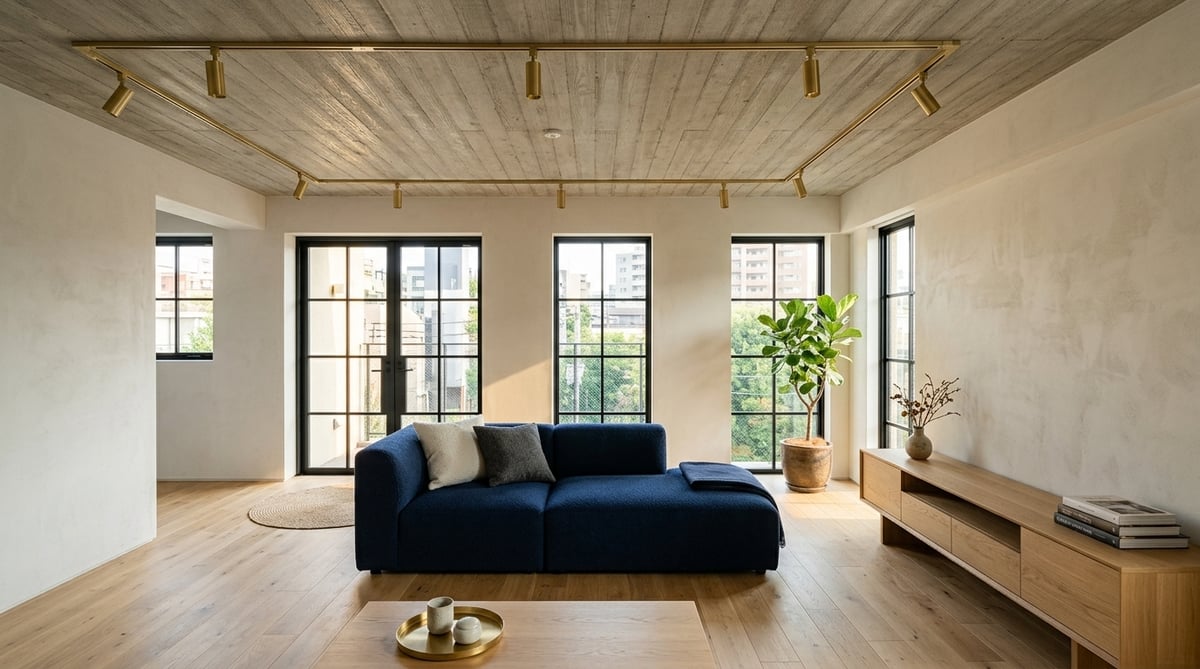
"Why pay the same 250,000 yen range (a median of 258,000 yen for a 1LDK) as Shinjuku-sanchome to choose Kita-sando, a station where only local trains stop?" — When guiding clients through apartment viewings, this is the single most common question we encounter. Just one stop to the north lies Shinjuku-sanchome, a colossal commercial hub where the Marunouchi and Toei Shinjuku Lines intersect; just one stop to the south is Meiji-jingumae, the beating heart of Omotesando and Harajuku. Tucked quietly between these two retail giants, Kita-sando lacks flashy shopping complexes or bustling restaurant alleys right outside the turnstiles. From a visitor's casual glance, its value as an everyday residential base might not be immediately obvious.
However, when you actually walk the neighborhood's daily transit corridors, the reasons why discerning Tokyoites and international residents consistently choose Kita-sando become abundantly clear. There is the effortless efficiency of a single ticket gate on Basement 1 connecting directly to the surface, multi-line rail access with JR Yoyogi and Sendagaya Stations just 7 to 10 minutes away on foot, and a serene residential environment just one block off Meiji-dori Avenue, flanked by the lush sacred forest of Meiji Jingu Shrine to the west and Shinjuku Gyoen National Garden to the northeast. Furthermore, Sendagaya 3-chome is home to OK Store Sendagaya, a beloved high-value discount supermarket that makes cooking fresh, wholesome meals at reasonable prices entirely feasible—even in one of central Tokyo's most coveted prime addresses.
On the other hand, if you require comprehensive department-store shopping right at your station exit or rely on express express train services every morning, settling near an adjacent major hub or Yoyogi Station might be more rational. Below, we break down who benefits most from living in Kita-sando, when you might prefer neighboring areas, and what to look for regarding zoning, elevation, and rental market trends based on real-world transaction data.
- Although served only by local trains on the Tokyo Metro Fukutoshin Line, Kita-sando offers ultra-fast surface access via a single, clutter-free ticket concourse on B1F. With JR Yoyogi Station (Yamanote / Chuo-Sobu / Toei Oedo Lines) and Sendagaya Station just 7–10 minutes away on foot, residents enjoy true multi-line redundant transit.
- Exit 2 leads directly into the Sendagaya Odori shopping street, anchored by OK Store Sendagaya and MyBasket Sendagaya 3-chome for effortless grocery shopping, complemented by boutique bakeries and quiet artisanal cafes.
- The median rent for a 1LDK apartment is ¥258,000, identical to Shinjuku-sanchome. While the eastern plateau of Sendagaya 3-chome sits on the sturdy Musashino Loam ground, low-lying sections along Meiji-dori include minor 0.1–0.5m pluvial flood warning zones, making elevation checks during viewings vital.
Underground Simplicity: Single Ticket Concourse and 3 Exits on Meiji-dori
One of Kita-sando Station's greatest everyday virtues lies in its streamlined structural layout—a refreshing departure from the dizzyingly deep, multi-tiered labyrinths common along the Tokyo Metro Fukutoshin Line. The more complicated an underground station is, the more physical fatigue and transit time you accumulate just getting from the platform to the surface. At Kita-sando, your daily commute remains remarkably light and straightforward.
| Exit Number | Street-Level Location | Barrier-Free Accessibility | Key Destinations & Landmarks |
|---|---|---|---|
| Exit 1 | East side of Meiji-dori (North side of Kita-sando Crossing) | Elevator to street level available | Sendagaya 4-chome, National Noh Theatre, Shinjuku Gyoen (Sendagaya Gate), JR Sendagaya Station, Tokyo Metropolitan Gymnasium, Shibuya City Sendagaya Branch Office, Yoyogi Hospital |
| Exit 2 | East side of Meiji-dori (South side, toward Sendagaya 3-chome) | Stairs only (No street elevator) | Sendagaya 3-chome & 2-chome, Hatomori Hachiman Shrine, Shogi Kaikan, Sendagaya Odori Shopping Street, OK Store Sendagaya, MyBasket Sendagaya 3-chome, Tas Yard, Ron Herman Sendagaya |
| Exit 3 | West side of Meiji-dori (West side of Kita-sando Crossing) | Elevator to street level available | Meiji Jingu Shrine (Kita-sando Entrance), JR Yoyogi Station (Yamanote / Chuo-Sobu / Toei Oedo Lines), CO-OP Kyosai Plaza, Tokai University Tokyo Hospital, Sendagaya 5-chome |
Intuitive Transit Flows via a Single Basement Concourse
Kita-sando Station's ticketing gates are centralized entirely on Basement 1. Ascending from the island platform (1 platform serving 2 tracks) via staircase, escalator, or elevator, the turnstiles open immediately before you. There is zero risk of walking down the wrong corridor or exiting on an unintended concourse. Compared to deep-bore stations along the Fukutoshin Line like Higashi-shinjuku or Zoshigaya, the distance from platform to street is refreshingly short, keeping vertical transit fatigue to a minimum.
While some apartment hunters initially view a local-train-only stop as a transit drawback, in practice it operates smoothly. Shinjuku-sanchome and Meiji-jingumae are both just one stop (about 2 minutes) away, with local departures running every few minutes throughout the day. Crucially, because daily passenger volumes are a fraction of mega-terminals like Shibuya or Shinjuku, morning peak hours rarely bring ticket-gate congestion or elevator queues. Starting your workday without battling suffocating crowds is an invaluable lifestyle luxury.
Choosing Between Exits 1, 2, and 3
Kita-sando features three distinct street exits, and the exit you use as your everyday gateway will largely define your evening commute experience. If you are moving with baby strollers, bicycles, or large luggage, street-level elevators are located at Exit 1 (east side of Meiji-dori, north of Kita-sando Crossing) and Exit 3 (west side of Meiji-dori).
For daily domestic convenience, Exit 2 (on the southeastern side of Meiji-dori) is undeniably the most practical. Stepping onto the street places you directly at the gateway to Sendagaya Odori and the peaceful residential streets of Sendagaya 2-chome and 3-chome. On your walk home from work, you can smoothly drop into OK Store Sendagaya or MyBasket Sendagaya 3-chome without detouring. Note that Exit 2 has stairs only; on days when you return with heavy baggage, taking the Exit 1 elevator across the street is the recommended workaround.
Conversely, Exit 3 on the west side serves as the fastest gateway to the forested paths of Meiji Jingu Shrine's northern entrance and JR Yoyogi Station. However, the immediate vicinity around Exit 3 has almost no grocery stores, drugstores, or chain eateries. If you rent an apartment west of Meiji-dori, plan your grocery shopping either around Yoyogi Station or cross Meiji-dori over to the Sendagaya side to avoid post-move surprises.
Walking Distance to Yoyogi and Sendagaya: True Multi-Line Flexibility
A primary geographic advantage of Kita-sando is its seamless walking connectivity to neighboring rail junctions. While technically a single-line station, residents walk just 7 to 9 minutes north to JR Yoyogi Station (serving the Yamanote Line, Chuo-Sobu Local Line, and Toei Oedo Line) and 8 to 10 minutes east to JR Sendagaya Station and Kokuritsu-kyogijo Station (Toei Oedo Line).
For example, if your destination is Shinjuku-sanchome, the Fukutoshin Line takes you there directly in 2 minutes. But if you are heading to the south entrance of JR Shinjuku Station, walking over to Yoyogi and hopping onto the Yamanote Line delivers you straight to the platform in minutes. Heading to Roppongi, Shiodome, or Tokyo Tower in the morning? Walk to Kokuritsu-kyogijo Station for the Toei Oedo Line. Traveling toward Ochanomizu or Akihabara? Take the Chuo-Sobu Line from Sendagaya.
Furthermore, if subway services on the Fukutoshin Line ever experience weather delays or operational suspensions, you have immediate walking detours to multiple JR and municipal subway arteries. This transit redundancy provides enormous peace of mind for international professionals working demanding schedules in central Tokyo.
Simply enter the rent and deposit from portal listings to calculate a full, itemized breakdown including brokerage and guarantor fees without hidden add-ons.
Sendagaya Neighborhood Character & Practical Grocery Infrastructure
To understand what everyday life feels like around Kita-sando, one must explore the distinct cultural atmosphere of Sendagaya, stretching immediately east of the station. Though officially located inside Shibuya Ward, Sendagaya maintains a cultured, relaxed, and community-centric ambiance that stands in stark contrast to the tourist-heavy frenzy of Harajuku or the commercial density of Omotesando.
Historic Shinto Groves and Shogi Heritage
Wandering into the gentle side streets of Sendagaya 3-chome from Exit 2 brings you to the sacred greenery of Hatomori Hachiman Shrine. Within its peaceful grounds stands a historical Mt. Fuji replica mound (Fujizuka) constructed during the Edo period, designated as a Tangible Folk Cultural Property of Tokyo and cherished as a walking route by local residents. Just a few minutes further toward Sendagaya Station stands Shogi Kaikan (Hulic Shogi Kaikan Sendagaya Building), the prestigious national headquarters of Japanese chess, imbuing the neighborhood with intellectual calm and quiet dignity.
Historically home to textile wholesalers and boutique apparel design studios, this quarter features intimate, architecturally distinctive low-rise buildings and renovated creative studios rather than sterile high-rise corporate towers. The streetscape carries an understated sophistication; evenings are calm, clean, and completely free from the rowdy late-night noise of typical nightlife entertainment districts.
Serene Low-Rise Streets & Everyday Practicality
- ✓ Peaceful environment enriched by Hatomori Hachiman Shrine and Shogi heritage
- ✓ Superb home-cooking support anchored by OK Store Sendagaya
- ✓ Peppered with intimate independent bistros, bakeries, and specialty roasteries
- ✓ Predominantly Category 2 Mid/High-Rise Residential Zones offering open skies
Urban Mobility & Arterial Road Conveniences
- ✓ Immediate, flat access from subway exits with zero detour time
- ✓ Seamless walking commute to Yoyogi Station and southern Shinjuku
- ✓ Modern mid-to-high-rise residences with secure hotel-like interior corridors
- ✓ Well-illuminated sidewalks along Meiji-dori for secure late-night returns
OK Store Sendagaya and Daily Grocery Options
When foreign expats and newcomers evaluate prime central Tokyo neighborhoods, their primary concern is frequently: "Can I buy fresh groceries and daily essentials at honest, reasonable prices without living in an overpriced food desert?" In this regard, Kita-sando holds a rare advantage over its ultra-luxury peers.
Just a 4-minute walk from Exit 2 in Sendagaya 3-chome sits OK Store Sendagaya, a flagship discount supermarket famed across the Kanto region for high product quality and everyday discount pricing. From fresh Japanese meats and produce to international seasonings and household supplies, its extensive inventory and budget-friendly pricing make healthy home cooking realistic and economical for solo professionals and working couples alike.
For quick late-night essentials, MyBasket Sendagaya 3-chome provides seamless convenience, while mini Piago (Lycos) Sendagaya 1-chome serves those living toward Sendagaya Station. When you seek gourmet imported European cheeses, organic selections, or fine wines, you can quickly reach Seijo Ishii Atre Shinanomachi inside JR Shinanomachi Station, or take the Fukutoshin Line one stop to the world-renowned Isetan Shinjuku basement food hall (Depachika).
Neighborhood dining is equally welcoming. Local institutions like Tas Yard (famed for vegetable-forward curry and sunlit patio seating) and the flagship Ron Herman Sendagaya cafe provide relaxed, design-conscious third places where residents can unwind, read, or work remotely without leaving their immediate community.
Contrasting Main Arterials with Quiet Residential Zoning
When searching for rental apartments in Kita-sando, the residential landscape splits sharply into two distinct micro-zones: the Commercial Zone along Meiji-dori and the Category 2 Mid/High-Rise Residential Zone tucked just one street back. Understanding this division is critical for your long-term comfort.
Properties fronting Meiji-dori are designated as Commercial or Neighborhood Commercial Zones with generous floor-area ratios. This corridor features sleek, 10-to-15-story modern designer apartments constructed within the last 15 years. They offer outstanding features such as auto-lock security, delivery parcel lockers, and hotel-style interior hallways (uchirouka), allowing you to walk home from the station without an umbrella. On the other hand, traffic from buses, taxis, and emergency vehicles flows along Meiji-dori around the clock, making it essential to inspect window acoustic insulation and balcony orientation (whether facing the avenue or the quiet rear) during your physical viewing.
In contrast, turning just one block east into Sendagaya 3-chome or 4-chome transitions immediately into a Category 2 Mid/High-Rise Dedicated Residential Zone. Strict building height caps and commercial usage restrictions mean the streetscape is dominated by handsome 3-to-5-story low-rise residences. Through-traffic is virtually non-existent, leaving only the rustle of trees and morning bird calls. While rents here are comparable or slightly higher due to limited supply, for anyone seeking deep, tranquil sleep in the absolute center of Tokyo, these residential enclave blocks are an exquisite find.
Volcanic Ash Plateau Stability & Pluvial Flood Zones on Meiji-dori
In contemporary Japanese real estate, verifying terrain resilience and disaster hazard maps has become an essential due-diligence step. While Kita-sando is broadly positioned on the eastern edge of the elevated Musashino Plateau, there is a clear elevation differential between the natural valley floor where Meiji-dori runs and the high plateau to the east.
Sendagaya 3-chome's Solid Kanto Loam Bedrock
The quiet residential streets of Sendagaya 3-chome surrounding Hatomori Hachiman Shrine rest upon an elevated volcanic ash terrace formed over tens of thousands of years, known geologically as the Kanto Loam layer. This cohesive soil structure features deep ground-water tables, flat terrain, and low seismic amplification rates, making it historically recognized across Tokyo as exceptionally sturdy and stable ground.
According to Shibuya City's official Hazard Map (based on maximum probable precipitation scenarios), the Sendagaya 3-chome plateau area is categorized entirely outside all river flood inundation zones. With load-bearing bedrock sitting at accessible depths, foundation pilings are sound, giving international buyers and renters long-term confidence against earthquakes and severe rainstorms.
Meiji-dori Low-Lying Pluvial Flood Hazard (Under 0.1–0.5m)
At the same time, careful attention must be paid to the immediate roadbed of Meiji-dori beneath which Kita-sando Station is excavated. Meiji-dori follows the historic valley path once carved by ancient tributaries of the Shibuya River, placing it at a locally lower elevation flanked by eastern and western ridges.
Shibuya City's Stormwater & Inundation Hazard Map reveals that in an extreme torrential downpour event (assuming maximum hourly rainfall of 153mm and total storm rainfall of 690mm exceeding municipal storm sewer capacity), localized sections along Meiji-dori near Kita-sando Crossing are marked with a pluvial flood forecast of 0.1m to under 0.5m.
A depth of 0.1m to 0.5m corresponds to ankle-to-knee-high surface water and does not indicate catastrophic structural building collapse. However, if you are evaluating a ground-floor unit (1F) or a designer maisonette with a sunken dry area (semi-basement), verifying specific flood countermeasures on-site is an indispensable safety rule.
Acoustic Glazing & South-Facing Daylight Risk Checks
Beyond hazard mapping, two practical physical factors govern daily contentment in Kita-sando: sound insulation and future natural light preservation.
For residences facing Meiji-dori, window sash specifications are paramount. During your viewing, verify whether windows are rated at T-2 (equivalent to Ts-30, reducing ambient exterior sound by ~30 dB) or T-3 (Ts-35, ~35 dB reduction), or whether dual interior sashes (niju-sashi) are installed. When T-2 or higher sashes are closed properly, vehicle rumble is suppressed to library-quiet levels. However, older properties with standard single-pane aluminum sashes may allow heavy truck vibrations to filter in late at night.
Additionally, in commercial zoning along major thoroughfares, if an open coin-parking lot or an aging two-story wooden house sits immediately south of your balcony, there is always a potential future risk that a mid-rise condominium could be built there, blocking direct sunlight. By contrast, in the Category 2 Residential Zone to the east, strict northern building envelope angles (hokusei shasen) and legal shadow regulations (nichiei kisei) strictly limit adjacent structural height, ensuring your natural sunlight and breeze remain permanently protected.
Rental Market Analysis: Comparing Kita-sando with Shinjuku-sanchome & Meiji-jingumae
Rental rates around Kita-sando Station place it squarely in the upper tier of Shibuya Ward. Below, we synthesize verified lease contract benchmarks across unit sizes alongside comparative metrics for neighboring stations to illuminate the true value proposition.
| Station Name | Ward | Est. Rent per m² | 1K (Median / Mid-Range) | 1LDK (Median / Mid-Range) | 2LDK (Median / Mid-Range) | Neighborhood Atmosphere & Traits |
|---|---|---|---|---|---|---|
| Kita-sando | Shibuya Ward | ¥5,400/m² | ¥148,000 (¥131,000–¥167,000) |
¥258,000 (¥228,000–¥298,000) |
¥374,000 (¥320,000–¥445,000) |
Peaceful enclave enveloped by temple shrines and parks. Supermarket proximity with local-train tranquility |
| Shinjuku-sanchome | Shinjuku Ward | ¥5,400/m² | ¥148,000 (¥131,000–¥167,000) |
¥258,000 (¥228,000–¥298,000) |
¥374,000 (¥320,000–¥445,000) |
Massive retail center anchored by Isetan. 3 lines connected directly; constant nightlife and foot traffic |
| Meiji-jingumae | Shibuya Ward | ¥5,500/m² | ¥154,000 (¥136,000–¥173,000) |
¥269,000 (¥238,000–¥311,000) |
¥397,000 (¥340,000–¥472,000) |
Cultural epicenter of Harajuku and Omotesando. Chiyoda Line transfer, heavy tourist crowds on weekends |
| Higashi-shinjuku | Shinjuku Ward | ¥4,900/m² | ¥129,000 (¥114,000–¥146,000) |
¥220,000 (¥194,000–¥254,000) |
¥316,000 (¥271,000–¥377,000) |
Oedo Line transfer. Mixed-use commercial developments with lower rents, adjacent to vibrant nightlife zones |
The ¥5,400/m² Premium: Paying for Pure Serenity
Kita-sando's baseline rental rate averages approximately ¥5,400 per square meter. Studio / 1K layouts for single executives generally clear the high ¥140,000s; modern 1LDK homes (40 to 50 m²) favored by tech professionals and expat couples range in the high ¥250,000s; and spacious 2LDK residences (60 to 70 m²) for DINKs or small families hover around ¥370,000 (see the table above for median values and P20–P80 mid-range spreads).
The remarkable takeaway from market data is that Kita-sando's ¥5,400/m² rate is mathematically identical to that of its northern neighbor, the mega-junction Shinjuku-sanchome. Shinjuku-sanchome hosts flagship department stores, endless dining, and three intersecting subway lines, while Kita-sando is a quiet local stop without a single department store. Why do tenants willingly pay the exact same premium?
Because residents in Kita-sando are deliberately paying for privacy, safety, and deep psychological serenity in the very center of the metropolis. Rather than paying to live inside a buzzing commercial hive, they pay to escape the commotion—treating the ancient evergreen canopy of Meiji Jingu and the rolling lawns of Shinjuku Gyoen as their extended private garden. This rare balance of downtown accessibility and restorative greenery is what underpins Kita-sando's resilient asset prestige.
Comparative Assessment: Shinjuku-sanchome, Meiji-jingumae, Yoyogi & Higashi-shinjuku
Understanding the micro-distinctions between nearby transit nodes will ensure your apartment selection aligns with your lifestyle:
To the north, Shinjuku-sanchome shares Kita-sando's rent profile (1LDK median: ¥258,000), but daily life revolves around hyper-urban consumption and speed. Underground tunnels allow all-weather access to Isetan and multiple subway platforms, and dining is open 24 hours. However, street noise and foot traffic never sleep. If your lifestyle thrives on midnight dining and instant three-line connectivity, Shinjuku-sanchome wins. If you want quiet evenings with neighborhood greenery for the same monthly outlay, Kita-sando is the clear victor.
To the south, Meiji-jingumae adds Chiyoda Line transfers and instant access to Harajuku's fashion boutiques, commanding a slightly higher rent profile. However, weekends bring overwhelming crowds of tourists to Takeshita Street and Omotesando, while affordable everyday supermarkets are scarce. If you are a fashion-industry creator wanting to live in Tokyo's cultural runway, choose Meiji-jingumae. If you prioritize home cooking, peaceful sidewalks, and local community, choose Kita-sando. Meanwhile, moving two stops north to Higashi-shinjuku saves approximately ¥38,000/month for a 1LDK (median: ¥220,000), but its immediate proximity to Kabukicho and Okubo means its neighborhood energy is drastically different.
Finally, prospective tenants often ask: "If Yoyogi Station is just an 8-minute walk away, shouldn't I just rent directly next to Yoyogi Station?" If your daily routine depends entirely on the JR Yamanote Line and you dislike walking even 8 minutes in summer humidity, renting next to Yoyogi is indeed practical. However, Yoyogi Station's immediate perimeter is densely packed with cram schools, casual izakayas, and aged commercial buildings, with no large supermarket matching OK Store. Expats who want JR access within walking distance while anchoring their home in a quiet, low-rise residential neighborhood near fresh grocery shopping ultimately choose Sendagaya 2-chome and 3-chome.
Who Kita-sando Suits Best & When to Consider Other Stations
Synthesizing these trade-offs, Kita-sando is an exceptional match for those who: (1) prioritize tranquil, safe evenings and walking proximity to major parks over bustling nightlife; (2) need rapid 5-to-15-minute door-to-door access to Shibuya, Shinjuku, or Otemachi, yet want to avoid living inside crowded mega-stations; and (3) enjoy home cooking and appreciate having an affordable, high-quality supermarket like OK Store nearby. For tenants meeting these criteria, spending ¥250,000+ for a 1LDK or ¥370,000+ for a 2LDK delivers immense lifestyle satisfaction.
Conversely, you should look elsewhere if: (1) you require "one-stop commercial convenience" right at your station exit (drugstores, convenience chains, and bank branches directly overhead); (2) you need daily express train departures (F-Liner Express or Commuter Express trains bypass Kita-sando, necessitating a quick transfer at Shibuya or Meiji-jingumae); or (3) your strict budget is around ¥180,000 to ¥200,000 for a 1LDK. Rather than settling for an aged, cramped unit in Kita-sando, heading further north on the Fukutoshin Line toward Nishi-waseda (¥4,700/m²) or Zoshigaya yields substantially newer, more spacious residences within your financial target.
Final Decision Framework for Finding Your Home in Kita-sando
Choosing a Spacious Everyday Rhythm Just Beyond Downtown's Rush
Living in Kita-sando represents a conscious choice to remain in the direct gravitational center of Tokyo while stepping back just half a pace from its hyper-accelerated noise.
On weekdays, the single-concourse ticket gate whisks you to central business offices in minutes, and your evening return is a pleasant stroll through quiet Sendagaya lanes. On weekend mornings, the green canopies of Meiji Jingu and Hatomori Hachiman Shrine offer peaceful running and walking loops, while fresh provisions from OK Store Sendagaya let you cook at your own pace. Once you decide whether you prefer the sleek vertical convenience of the Meiji-dori avenue or the low-rise serenity of Sendagaya 3-chome's volcanic plateau, you will discover a neighborhood that inspires lasting affection.
Even the local-only train status transforms into an asset in practice, translating to compact stations, manageable passenger numbers, and a grounded state of mind. When attending apartment viewings, be sure to walk the actual route from your preferred subway exit to the building lobby at night, checking elevation changes and window acoustic ratings with your own senses.
Securing a Transparent Second Opinion with Sorai Tokyo
In highly coveted central Tokyo neighborhoods like Kita-sando, high-quality residences often receive multiple applications within days of appearing on real estate databases. Furthermore, in premium rent tiers, initial move-in estimates can easily become inflated with questionable non-mandatory fees—such as ambiguous "key money," mandatory disinfection costs, excessive cleaning surcharges, or non-negotiable guarantor markups.
Under the Japanese Ministry of Land, Infrastructure, Transport and Tourism (MLIT) Restoration Guidelines and the Tokyo Metropolitan Government's Rental Housing Dispute Prevention Ordinance ("Tokyo Rules"), tenants are not legally required to pay for normal wear and tear, and interior wallpaper depreciates to a residual value of 1 yen over a 6-year period. Verifying that your lease agreement does not contain one-sided special riders (tokuyaku) prior to signing is vital to preventing unexpected disputes upon moving out.
If you have found a listing on SUUMO, HOMES, or any online portal, simply share the URL with Sorai Tokyo via our official LINE concierge (@soraitokyo / https://line.me/R/ti/p/@soraitokyo). Our bilingual team and licensed real estate brokers will cross-check the property directly against professional industry databases (REINS) to verify real-time availability. We also provide free, transparent second-opinion audits on initial fee quotes, verify foreign visa and screening compatibility, and offer non-guarantor options without requiring telephone numbers, pushy sales calls, or physical office visits. Reach out anytime to navigate your Tokyo relocation with confidence.
Frequently Asked Questions About Living in Kita-sando
QSince Kita-sando Station is only served by local trains, is the morning commute inconvenient?
ANot at all. During weekday morning peak hours, local Fukutoshin Line trains arrive every 3 to 5 minutes, so platform waiting times are negligible. Direct travel takes just 2 minutes to Shinjuku-sanchome, 4 minutes to Shibuya, and 13 minutes to Ikebukuro. In addition, Kita-sando sits within an easy 7-to-9-minute walk to JR Yoyogi Station and an 8-to-10-minute walk to JR Sendagaya Station, giving you instant pedestrian access to the Yamanote Line, Chuo-Sobu Line, and Toei Oedo Line. This extraordinary transit redundancy means daily commute bottlenecks are virtually nonexistent.
QKita-sando has a luxury residential reputation; how accessible is daily grocery shopping?
AGrocery shopping is surprisingly comprehensive and economical. Located only 4 minutes on foot from Exit 2, OK Store Sendagaya provides extensive selections of meats, fresh produce, and everyday items at renowned discount pricing. Nearby MyBasket Sendagaya 3-chome and mini Piago (Lycos) Sendagaya 1-chome offer fast stops for quick daily top-ups. If you seek artisanal or imported ingredients, the depachika food hall at Isetan Shinjuku (one stop away) and Seijo Ishii at Shinanomachi Station are both effortlessly accessible.
QWhat should I know about flood hazard maps and low-lying areas along Meiji-dori?
AThe elevated plateau of Sendagaya 3-chome rests upon stable Kanto Loam soil and sits entirely outside river inundation hazard zones. However, sections along Meiji-dori occupy a local valley contour where Shibuya City's hazard map designates a 0.1m to under 0.5m pluvial flood warning zone during extreme, once-in-a-century cloudbursts. While this water depth remains below knee-height, if you are considering a ground-floor or sunken-level apartment, we advise verifying elevated building thresholds, floodgate barriers, and whether electrical infrastructure is installed above grade.
QGiven its proximity to Shinjuku and Harajuku, how are nighttime safety and street noise?
ASendagaya maintains outstanding safety and peace. Because the neighborhood sits comfortably removed from the bars, clubs, and entertainment centers of Shinjuku and Shibuya, late-night touts or disruptive crowds are virtually absent. On Meiji-dori itself, vehicular road noise persists across the night, so selecting a unit with T-2 or T-3 rated acoustic window sashes or choosing an apartment set one street back inside the quiet residential zone will ensure serene, undisturbed sleep.




Author: Sorai Tokyo Editorial Team (Supervised by Licensed Real Estate Agents)
A real estate consulting team specializing in assisting foreign nationals find rooms and explaining initial costs in Tokyo. We break down language barriers and differences in customs, offering dedicated support in Japanese, English, and Vietnamese for a safe and secure start to your new life.