
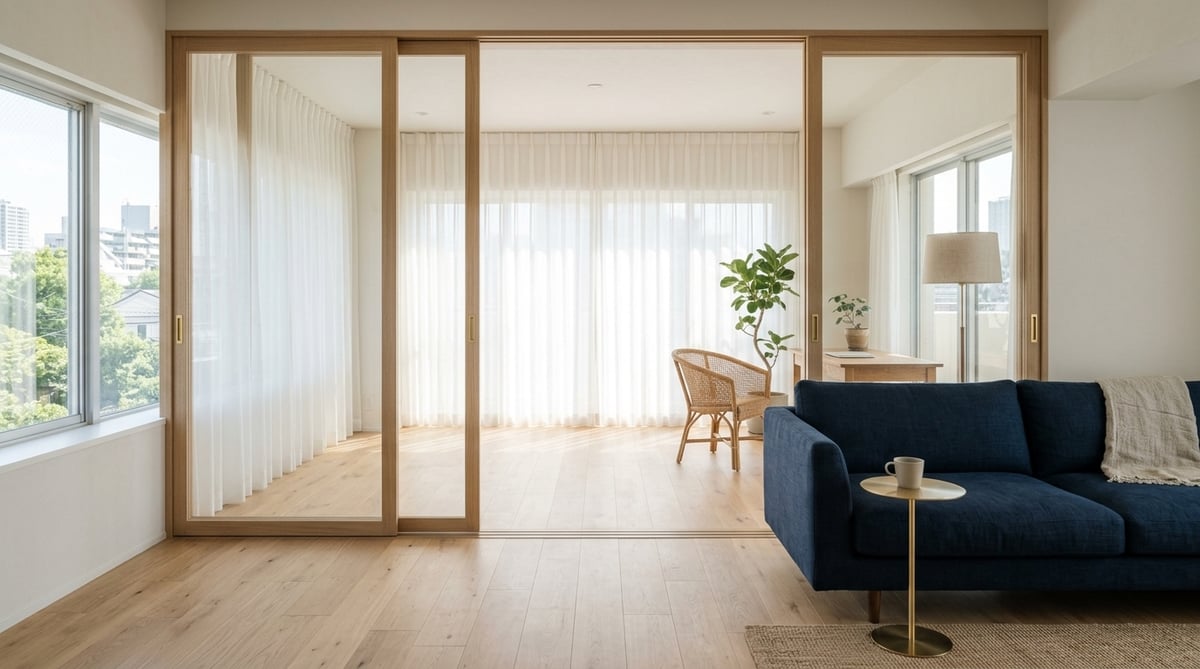
Stepping just one block off the tree-lined Kasuga-dori Avenue reveals a lush canopy of university campuses and academic institutions, enveloping the neighborhood in an exquisite serenity rarely found in central Tokyo. In springtime, the cherry blossom boulevard of Harimazaka paints the area in gentle pastel tones, while students, researchers, and local residents stroll calmly through the streets morning and evening. Though technically an underground subway station, Myogadani Station features an open-cut, above-ground platform bathed in natural sunlight—a fitting symbol of the open, airy lifestyle this prestigious neighborhood affords.
In central Tokyo's rental market, international professionals, expats, and discerning families inquiring about Myogadani are consistently drawn to more than just rapid transit. They seek verified neighborhood safety, top-tier academic prestige, and an elegant retreat insulated from the hustle of downtown entertainment quarters. With direct Marunouchi Line access whisking commuters straight to Otemachi and Tokyo Station in just 10 to 12 minutes, how does this educational hilltop sanctuary preserve such an unblemished residential atmosphere? From the practical viewpoint of a licensed Japanese real estate broker, this comprehensive guide examines real market rent averages, topographical hill lines, practical lifestyle dynamics, and critical decision-making criteria to help you secure the ideal home with complete peace of mind.
- Direct Tokyo Metro Marunouchi Line connection reaching Otemachi in approx. 10-11 minutes, Tokyo Station in 12 minutes, and Ikebukuro in 5 minutes without transfers.
- A premier academic hilltop cluster home to Ochanomizu University, University of Tsukuba Tokyo Campus, and prestigious Kubomachi Elementary, boasting exceptionally low crime rates favored by solo female renters and expat families.
- Median market rent is 114,000 yen for 1K and 194,000 yen for 1LDK apartments. For lower monthly fixed costs, compare Shin-Otsuka; for vibrant commercial amenities, compare Korakuen.
Transit Convenience and Marunouchi Line Connectivity
The definitive operational advantage of Myogadani Station is its rapid, frictionless transit along the Tokyo Metro Marunouchi Line, offering direct access into Tokyo's primary commercial, financial, and administrative powerhouses. Located strategically on the inbound section towards central Tokyo from Ikebukuro, trains arrive at rapid frequencies during morning peak hours, eliminating daily commuting friction.
Direct Commute Times to Otemachi, Tokyo, Ginza, and Kasumigaseki
The Tokyo Metro Marunouchi Line links Myogadani directly—without a single train change—to major business terminals including Ikebukuro, Otemachi, Tokyo, Ginza, and Kasumigaseki.
During the morning peak commuting window, trains depart every 2 to 3 minutes, meaning you will rarely spend time waiting on the platform. For corporate professionals with offices in Otemachi or government specialists commuting to Kasumigaseki, a door-to-door transit time of just 20 to 25 minutes makes Myogadani an optimal live-work sanctuary. As explored in our Kasumigaseki commute guides and comparative analyses between the Chiyoda and Marunouchi Lines, reaching Tokyo's financial core or government district on a single seat provides invaluable comfort and energy savings for demanding careers.
Above-Ground Open Platform Structure and Station Exit Flow
An essential structural nuance of Myogadani Station is its elevation. Although part of Tokyo's historic subway network, the tracks run through an open-cut valley situated between the Kohinata Plateau and the Koishikawa Plateau. As a result, the two side platforms are located at surface level in a natural cutting rather than deep underground. You do not need to descend multiple underground escalator flights; walking from the ticket gates to the train boarding doors takes mere seconds, making daily morning commutes remarkably swift.
The station provides two ground-floor ticket gate concourses, each tailored to distinct residential zones:
- Kasuga-dori Concourse (Exits 1 and 2): Facing directly onto Kasuga-dori Avenue, Exit 1 connects directly into the Myogadani Station MF Building and includes full barrier-free elevator access. It offers seamless pathways to Ochanomizu University, Atomi University, Bunkyo Municipal Kubomachi Elementary School, Education of the Forest Park (Kyoiku-no-mori Park), and the University of Tsukuba Tokyo Campus. On the south side of Kasuga-dori Avenue, Exit 2 serves pedestrians walking toward Takushoku University Bunkyo Campus, the Otsuka Community Activity Center, and the refined residential estates of Kohinata.
- Koishikawa 4-chome Concourse (Exit 3): Positioned on the eastern flank of the station, this gate opens directly across from a 24-hour Maruetsu Petit grocery supermarket. It offers level, barrier-free access toward Academy Meidai, Koishikawa Library, Takehaya Park, and the famed cherry blossom promenade of Harimazaka.
Note that the station's official designations are strictly "Exit 1", "Exit 2", and "Exit 3"—there are no cardinal "East" or "West" exits. When reviewing rental floor plans and property listing sheets, identifying which official exit aligns with your pedestrian route is essential for evaluating your actual daily commute.
For a broader perspective on neighboring communities, refer to our comprehensive Marunouchi Line guide to evaluate how Myogadani compares with adjacent stops along the line.
Simply enter the rent and deposit from portal listings to calculate a full, itemized breakdown including brokerage and guarantor fees without hidden add-ons.
Myogadani Rent Market Averages by Layout
Recognized as an exclusive hilltop educational enclave, the rental market around Myogadani Station enjoys consistent, resilient demand within Bunkyo Ward. Anchored by prestigious public school districts and stellar public safety metrics, property values remain remarkably stable, attracting established professionals, academic personnel, and expatriate households who prioritize environmental quality.
Realistic Market Rent Ranges by Apartment Layout (P20 to P80 & Median)
Below are the current market rent benchmarks across common apartment layouts around Myogadani Station. Use these figures to calibrate your housing budget.
| Apartment Layout | Median Monthly Rent | Standard Range (P20–P80) | Property Characteristics & Target Demographic |
|---|---|---|---|
| 1R (Studio) | ¥85,000 | ¥72,000 – ¥101,000 | Suited for university students or solo expats prioritizing initial cost savings. Older builds start in the 70,000 yen range. |
| 1K (Separate Kitchen) | ¥114,000 | ¥101,000 – ¥129,000 | The prime choice for single corporate professionals. Modern reinforced concrete (RC) buildings with auto-locks and separate bath/toilet. |
| 1DK | ¥141,000 | ¥126,000 – ¥161,000 | Ideal for solo renters seeking dedicated dining separation or additional storage space for remote work setups. |
| 1LDK | ¥194,000 | ¥172,000 – ¥224,000 | Popular with couples and remote-working expats. Elegant low-rise residences around Harimazaka with premium finishes. |
| 2LDK | ¥275,000 | ¥236,000 – ¥327,000 | Households with children and school-age families. Strong competition centered on the renowned Kubomachi Elementary catchment. |
Budget Allocation Logic for Singles, Couples, and Families
Understanding the pricing spectrum allows renters to make confident, strategic choices during property evaluations.
For single working professionals seeking a 1K apartment, the median rent sits at 114,000 yen. While comparable to central Ikebukuro (median 117,000 yen), Myogadani offers an incomparably quieter, safer residential environment free of late-night nightlife disturbances. If your target budget is under 100,000 yen, expanding your walking radius to 10 minutes from the station or considering well-maintained renovated properties aged 20 to 25 years is highly effective. Furthermore, as detailed below, shifting one stop outbound toward Shin-Otsuka Station opens up newer construction or larger floor areas for the exact same budget.
For dual-income couples and expats seeking a 1LDK apartment, the median rate is 194,000 yen. Securing a home inside the Yamanote Line loop on a safe, elevated educational plateau under 200,000 yen represents an exceptionally well-balanced proposition across Tokyo. Properties surrounding the picturesque Harimazaka promenade (Koishikawa 4-chome and 5-chome) are particularly coveted for their quiet surroundings and scenic views, often finding tenants within days of listing.
For family households, 2LDK residences post a median rent of 275,000 yen, with premium condominium-grade units easily reaching beyond 300,000 yen. Bunkyo Ward is renowned for the highest academic standards among Tokyo public schools, with Kubomachi Elementary standing as one of the most prestigious. Family demand focused on school district eligibility keeps supply tight throughout the year. When an attractive 2LDK or 3LDK vacancy appears, prompt application readiness is essential.
Micro-Neighborhood Profiles, Topography, and Daily Walking Routes
When searching for a home in Myogadani, two vital geographic factors require close inspection: the unique atmosphere of each micro-neighborhood and the striking topographical elevation known locally as a "suribachi" (mortar-shaped valley). Radiating from the station, the northeastern Koishikawa sector and southwestern Kohinata sector offer distinctly different lifestyles, while your vertical position on the plateau or in the valley directly dictates your daily walking effort.
Koishikawa 4 & 5-chome, Harimazaka Promenade (Exit 3)
- ✓ Lush central green median and magnificent four-season foliage along the Harimazaka cherry blossom boulevard
- ✓ Plentiful grocery options including 24-hour Maruetsu Petit and quality Santoku supermarket
- ✓ Abundant family infrastructure such as Takehaya Park and Koishikawa Public Library
Kohinata 1 to 4-chome, Myogazaka Slopes (Exit 2)
- ✓ Stately low-density residential estates designated as Category 1 Mid/High-Rise Residential Zones
- ✓ Marked inclines such as Myogazaka and Koshin-zaka descending toward Otowa and Edogawabashi
- ✓ Almost zero commercial clutter, preserving immaculate nighttime silence and absolute residential privacy
Otsuka 1 to 3-chome: Academic Enclave and Parklands (Exit 1)
North of the station across Kasuga-dori Avenue lies Otsuka 1 to 3-chome, the area that most purely embodies Myogadani's academic identity. Just outside the station, Education of the Forest Park provides wide lawns, shaded woodlands, and the Bunkyo Sports Center. On weekends, parents relax on the grass while joggers circle the perimeter, creating a precious green sanctuary in the heart of the metropolis.
Surrounding the park are the University of Tsukuba Tokyo Campus, Ochanomizu University, Atomi University, and the prestigious Bunkyo Municipal Kubomachi Elementary School. Because of this high concentration of academic institutions, regular police patrols and neighborhood safety watches are active throughout the day. Along Kasuga-dori Avenue, modern mid-to-high-rise residential buildings feature robust security systems, auto-locks, and delivery box lockers, offering high-quality housing stock for solo professionals and couples.
Musashino Upland Ground Stability vs. Lowland Slope Hazards
For tenants and international residents who prioritize structural safety and disaster resilience, ground conditions are a key consideration. The elevated plateaus of Myogadani (Koishikawa 5-chome, Otsuka 1 to 3-chome, and the upper terrace of Kohinata) are situated atop the robust Musashino Upland (volcanic ash loam terrace). Municipal geological data indicates an extremely low risk of soil liquefaction, and the plateau is not classified as large-scale developed fill land (be sure to consult Bunkyo Ward's official hazard maps for property-specific checks). Furthermore, the high ground sits safely beyond storm surge and tsunami evacuation zones, offering the reassuring stability characteristic of Tokyo's historic uplands.
However, an essential aspect to examine when viewing properties is the lowlands situated at the base of surrounding slopes. Descending northeast along Yutatezaka leads into the valley along Senkawa-dori Avenue, while descending south via Myogazaka or Koshin-zaka leads toward the low-lying Otowa and Kanda River drainage basin. Portions of these valley floors are designated on flood hazard maps as inland inundation caution zones during torrential rainfall.
Even for two properties advertised as an identical "8-minute walk from the station," your daily physical effort and geological foundation differ significantly depending on whether the building is on the plateau or at the base of an incline. When attending an apartment viewing, it is crucial to walk the exact pedestrian route to confirm whether steep inclines or staircases lie between your front door and the station concourse.
Supermarkets, Daily Shopping, and Neighborhood Safety
While Myogadani deliberately lacks sprawling department stores, neon-lit retail plazas, or nightlife districts, its network of neighborhood supermarkets and pharmacies makes daily life effortless for both home cooks and busy working professionals.
Local Supermarkets and Operating Hours
Within comfortable walking distance of Myogadani Station, several grocery stores cater to diverse daily routines:
- Maruetsu Petit Myogadani: Located immediately outside station Exit 3. Its crowning benefit is 24-hour operation. Whether returning from late-night overtime or picking up fresh milk early in the morning, this store is an invaluable asset for busy executives and solo expats.
- Santoku Myogadani Ekimae: Situated on the ground level of Atlas Tower Myogadani adjacent to Exit 1. Renowned for premium fresh produce, quality meats, and healthy prepared deli dishes, it serves as the dependable primary grocer for local residents.
- Santoku Myogadani Branch: Located along Harimazaka in Koishikawa 4-chome. Extremely convenient for residents living within the Koishikawa residential pocket who prefer not to walk all the way back to the station.
- My Basket (Myogadani Station North & East Branches): Compact Aeon-group grocery outlets located within quiet residential backstreets, open from 7:00 AM to 11:00 PM. Ideal for quick, economical purchases of everyday staples and drinks.
- Welcia Myogadani Ekimae: A well-stocked pharmacy providing over-the-counter medicine, household toiletries, and daily cosmetics.
With round-the-clock convenience and high-grade specialty grocers coexisting within a two-minute radius, everyday grocery shopping in Myogadani is remarkably seamless. (Store operating hours are subject to change; please verify the latest official business notices).
Exemplary Safety Across Otsuka and Tomisaka Police Precincts
Public safety around Myogadani Station is shared between two Metropolitan Police Department jurisdictions: Otsuka Police Station oversees the Otsuka and Kohinata sides, while Tomisaka Police Station covers the Koishikawa side. With police boxes stationed at key junctions and an academic zoning code that strictly prohibits pachinko parlors, bars, and adult entertainment venues, the community maintains an orderly, civil atmosphere.
Crime incident mapping published by the Tokyo Metropolitan Police Department confirms that violent crime and home burglaries remain at baseline minimums for central Tokyo. Major avenues like Kasuga-dori are brightly illuminated throughout the night. Whether for women returning home on late trains or young elementary pupils walking independently to school, Myogadani stands out as one of Tokyo's most secure and trustworthy residential environments.
Comparing Myogadani with Adjacent Marunouchi Line Stations
When evaluating Myogadani, prospective renters frequently compare it with its two immediate neighbors on the Marunouchi Line: Shin-Otsuka Station (one stop toward Ikebukuro) and Korakuen Station (one stop toward Otemachi). Understanding how they contrast helps you identify which location matches your priorities.
| Comparison Metric | Shin-Otsuka Station (1 stop toward Ikebukuro) | Myogadani Station (Subject Station) | Korakuen Station (1 stop toward Otemachi) |
|---|---|---|---|
| Connected Train Lines | Marunouchi Line (JR Yamanote Line Otsuka Station within walking distance) | Marunouchi Line (Surface-level open cutting platform) | Marunouchi & Namboku Lines (Connects to Kasuga Station for Mita & Oedo Lines) |
| 1K Median Rent | ¥107,000 (¥7,000 lower than Myogadani) | ¥114,000 | ¥119,000 (¥5,000 higher than Myogadani) |
| 1LDK Median Rent | ¥178,000 (¥16,000 lower than Myogadani) | ¥194,000 | ¥200,000 (¥6,000 higher than Myogadani) |
| Urban Character & Commerce | Down-to-earth residential atmosphere with medical facilities and local shopping | Prestigious academic hilltop with lush parklands and quiet residential quarters | Dynamic administrative & entertainment hub featuring Tokyo Dome City and LaQua |
| Best Suited For | Renters seeking lower monthly fixed costs who value walking access to the JR Yamanote Line | Renters prioritizing top-tier safety, premier school districts, and serene green surroundings | Renters seeking multi-line subway mobility, extensive dining, and vibrant urban entertainment |
When Shin-Otsuka Station is the Better Choice
Shin-Otsuka is situated just one station away (approximately 2 minutes by train), yet average rental prices are noticeably more economical. Renters save roughly 7,000 yen per month on a 1K apartment and around 16,000 yen per month on a 1LDK, translating to nearly 400,000 yen in cumulative savings over a two-year lease. Additionally, JR Otsuka Station on the Yamanote Line is an easy 10 to 12-minute walk away, providing an invaluable backup route for frequent shinkansen travelers or commuters heading to Shinjuku and Shibuya.
If you do not require a specific school catchment like Kubomachi and your objective is to maximize square footage while containing rental overhead, Shin-Otsuka should be at the top of your comparison list.
When Korakuen Station is the Better Choice
Korakuen Station serves as a major four-line transit interchange connecting the Marunouchi and Namboku Lines with the Toei Mita and Oedo Lines at Kasuga Station. At street level, the Bunkyo Civic Center (housing Bunkyo Ward City Hall) stands alongside Tokyo Dome City, LaQua Spa, and extensive shopping complexes, placing entertainment, dining, and municipal services right at your doorstep.
If you dine out frequently, desire direct transit to Roppongi-Itchome or Meguro via the Namboku Line, and thrive in an energetic urban atmosphere, Korakuen is compelling. Conversely, when major concerts or baseball games take place at Tokyo Dome, the surrounding streets can swell with tens of thousands of visitors. For those who prefer to leave the crowds behind and come home to the peaceful embrace of a strictly residential neighborhood, Myogadani remains clearly superior.
Practical Tips for Renting an Apartment in Myogadani
To avoid common pitfalls and secure a satisfying home in Myogadani, consider these practical inspection rules from licensed real estate professionals:
For international families seeking an address within the prestigious Kubomachi Elementary catchment, take exceptional care with official school attendance boundaries. The designated enrollment zone covers only specific addresses within Otsuka 1 to 3-chome and parts of Koishikawa 5-chome; crossing a single street can place a building in an entirely different school zone. Always check the official municipal school boundary lists with the Bunkyo Ward Board of Education using the exact block and lot number before submitting a lease application.
Furthermore, premier low-rise condominiums and high-quality rental units in Myogadani frequently get leased off-market through institutional real estate broker databases (REINS) before appearing on public real estate portals. If you are an expat or international professional moving to Tokyo, having bilingual support through SorAi Tokyo's 24/7 dedicated LINE concierge (@soraitokyo / https://line.me/R/ti/p/@soraitokyo) allows you to bypass phone verification requirements, receive transparent quote second opinions, access no-guarantor lease options, and secure real-time listings as soon as they are released.
Frequently Asked Questions (FAQ)
Here are answers to the most common questions our licensed real estate advisors receive about renting and living around Myogadani Station.
QMyogadani has a reputation for steep hills. Do I need an electric power-assisted bicycle?
AIt depends entirely on the elevation of your specific building. If your apartment is along Kasuga-dori, on the plateau in Koishikawa 5-chome, or at the top of Harimazaka, the terrain is relatively level and a standard bicycle or walking is completely comfortable. However, if your home lies down the slopes of Kohinata toward Otowa or along Senkawa-dori at the base of Yutatezaka, walking back to the station involves an uphill climb. In those locations, an electric power-assisted bicycle will make daily commutes and grocery trips vastly easier.
QCan a single professional find a quality 1K apartment under 100,000 yen in Myogadani?
AWhile the overall median rent for a 1K in Myogadani is 114,000 yen (with the standard range between 101,000 and 129,000 yen), finding quality units in the high 90,000-yen range is entirely feasible if you consider well-renovated apartments aged 20 to 25 years or units around 20 square meters. Furthermore, expanding your search one stop outbound to Shin-Otsuka Station (where the 1K median is 107,000 yen) unlocks a significantly wider selection under 100,000 yen without sacrificing access to central Tokyo.
QHow safe is Myogadani at night? Is it suitable for women living alone?
AMyogadani is recognized as one of the safest residential areas in Tokyo. Due to the presence of prominent educational institutions like Ochanomizu University and Atomi University, local police precincts and community volunteers conduct frequent security patrols. The area has no pachinko parlors or adult nightlife venues, and Kasuga-dori is exceptionally well lit. Even when turning onto residential side streets, calm streetlights illuminate the pathways, making Myogadani an address we recommend with the utmost confidence to solo female renters and families.
QWhat should families keep in mind when hunting for school district apartments like Kubomachi Elementary?
ARental vacancies within the Kubomachi Elementary catchment are in high demand, and competition intensifies dramatically from autumn entrance exam season through early spring school transfers. Quality 2LDK and 3LDK apartments often receive applications within days of appearing. Preparing all documentation in advance, working with an agency that accesses real-time broker databases, and being ready to submit a formal application immediately upon listing are vital for securing a home in this coveted school zone.



Author: Sorai Tokyo Editorial Team (Supervised by Licensed Real Estate Agents)
A real estate consulting team specializing in assisting foreign nationals find rooms and explaining initial costs in Tokyo. We break down language barriers and differences in customs, offering dedicated support in Japanese, English, and Vietnamese for a safe and secure start to your new life.