
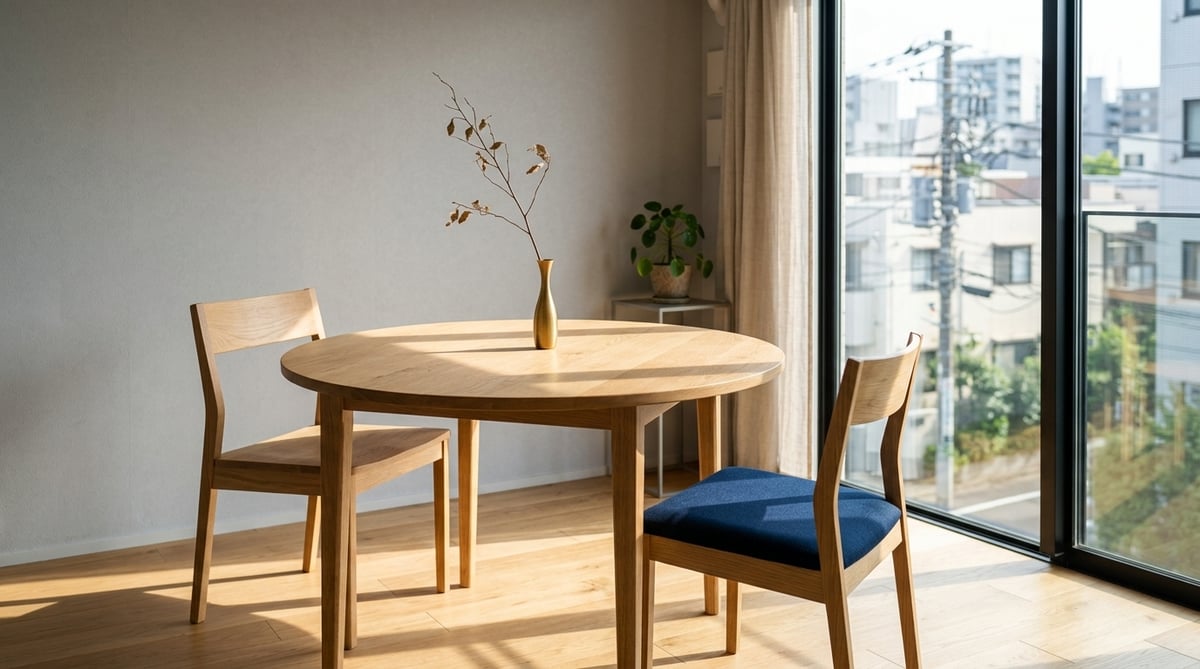
On a weekend morning, pouring freshly brewed coffee into two mugs and discussing the day's plans in a sunlit living room. When starting a life together as a couple, what matters most is an accommodating layout that honors each other's daily rhythms and work schedules, alongside a sustainable, well-planned rent budget. A home that allows each partner a smooth, effortless commute—whether to Otemachi, Kasumigaseki, Shinjuku, or Shibuya—while offering a calm, serene sanctuary to unwind together at the end of the day. The refined, unified openness of a 1LDK versus the practical, private elegance of a 2DK: by carefully discerning the distinct merits of each, your new shared life can truly flourish.
When searching for rental apartments across Tokyo's 23 wards, soaring market rents and shrinking floor plans present an inescapable reality. Particularly in central Tokyo and the western districts, a monthly budget around ¥150,000 often restricts renters to 1K or compact 1DK units of roughly 25 to 30 square meters. Such spaces quickly feel constrained when accommodating belongings for two people alongside dedicated remote-work desks. However, by expanding your search along the Tokyo Metro Chiyoda Line and into Tokyo's northeast and north districts (Joto and Johoku)—areas offering direct, swift transit into the business core—a budget of ¥130,000 to ¥160,000 unlocks spacious 42 to 55 square-meter 1LDK apartments and beautifully renovated, functional 2DK layouts as viable, plentiful options.
Using a dual-income couple commuting to Otemachi/Marunouchi and Shinjuku/Shibuya as our reference case, this comprehensive guide explores sustainable budgeting, the day-to-day realities of 1LDK and 2DK floor plans, soundproofing standards to prevent video-meeting audio interference, leasing procedures, and shared financial management—all from the systematic perspective of a licensed real estate broker with a decade of field experience in Tokyo.
- An active licensed broker thoroughly explains how dual-income couples starting life together in Tokyo can select the ideal 1LDK or 2DK layout within a ¥130,000–¥160,000 monthly rent budget.
- The golden ratio: keeping housing costs within 25–30% of a combined ¥450,000–¥550,000 net income to ensure over ¥100,000 in monthly savings.
- Structural baseline: ensuring at least 180 mm reinforced concrete party walls to protect acoustic privacy between rooms and neighboring units.
Financial Planning for Dual-Income Couples: Establishing a Safe Monthly Budget Between ¥130,000 and ¥160,000
When searching for a shared home, the essential first foundation is establishing a sustainable rent budget. Letting the excitement of moving in together tempt you into stretching your budget can turn fixed housing costs into a perpetual burden, eroding the financial freedom needed for dining out, travel, and future savings.
For dual-income households in the Tokyo metropolitan area with a combined monthly take-home income of ¥450,000 to ¥550,000, a rent level between ¥130,000 and ¥160,000 represents a sound, golden ratio—keeping the housing expense ratio neatly between 25% and 30% of net income. Capping housing expenses around 30% comfortably accommodates everyday utilities and groceries while reliably preserving a monthly surplus of ¥100,000 to ¥150,000 or more for savings and investments.
The 25–30% Golden Ratio for Combined Net Incomes of ¥450,000 to ¥550,000
To illustrate with a concrete household budget simulation, imagine Partner A earns a net monthly income of ¥260,000 and Partner B earns ¥220,000, totaling ¥480,000. If this couple leases a residence for ¥145,000 per month (including building maintenance fees), their housing expense ratio stands at approximately 30.2% of net income.
Breaking down living expenses, allocating ¥65,000 for groceries and dining, ¥23,000 for utilities, ¥12,000 for telecommunications, ¥15,000 for household supplies, ¥40,000 for entertainment, and ¥30,000 each in personal allowances (¥60,000 total) brings total expenditures to roughly ¥360,000. This leaves a dependable monthly savings buffer of approximately ¥120,000, allowing for systematic contributions toward future milestones, quality furniture and appliances, and travel funds.
Risk-Hedge Budgeting: Weathering Temporary Single-Income Periods
Another key advantage of the ¥130,000–¥160,000 rent bracket is its built-in resilience against unforeseen circumstances. Over the course of life, fluctuations in earnings inevitably occur—whether due to temporary career transitions, medical leave, or reduced pay during maternity and parental leave.
Even if one partner's income temporarily pauses, as long as the other earns roughly ¥250,000 to ¥300,000 net, the household can maintain rent payments of ¥130,000 to ¥160,000 on a single income while drawing modestly on reserves. By contrast, leasing a luxury home exceeding ¥200,000 monthly severely elevates the risk of rent default or forced lease termination if one income falters. Preserving financial margin in your rent creates an indispensable safety buffer protecting your shared life.
Monthly Reserve Allocation: Effortlessly Funding Lease Renewals and Future Moves
A frequent blind spot in Japanese rental housing is the renewal cost occurring every two years: the standard lease renewal fee (typically one month's new rent), fire insurance renewal (approx. ¥15,000–¥20,000), and renewal administrative fees (approx. 0.55 months' rent). For an apartment renting at ¥150,000, lease renewal triggers a lump-sum expense of approximately ¥230,000 to ¥250,000.
By setting aside ¥10,000 per month from everyday expenses into an automated shared reserve account, you can settle the renewal invoice upon its two-year anniversary without disturbing your household cash flow. Establishing this automated reserve habit is an essential practical cornerstone for sustaining a calm, enduring rental lifestyle.
Licensed brokers intimately familiar with Tokyo's northeast neighborhoods provide attentive support via video call—from organizing criteria and checking off-market listings to optimizing initial move-in costs.
Simply enter the rent and deposit from portal listings to calculate a full, itemized breakdown including brokerage and guarantor fees without hidden add-ons.
1LDK vs. 2DK Layout Analysis: Selecting the Right Floor Plan for Your Daily Rhythms
When searching within the ¥130,000–¥160,000 budget range, the primary decision point lies between a 1LDK and a 2DK. While real estate portals often highlight newer, stylish 1LDK apartments, from a practical leasing standpoint the ideal choice depends distinctly on your work styles and shared living rhythms.
- Modern Age & Rich Amenities: Predominantly built post-2000, featuring open counter kitchens and auto-reheating baths as standard.
- Spacious Living & Shared Moments: Easily accommodates both sofa and dining sets, creating a bright, airy, hotel-inspired living space.
- Generous Storage Solutions: Abundant properties equipped with walk-in closets (WIC).
- Considerations: With only one private room, simultaneous remote work and differing sleep schedules require careful coordination.
- Two Completely Independent Rooms: Allows dedicated individual workstations or separate bedrooms for each partner.
- Complete Video-Call Acoustic Separation: Closing private doors enables simultaneous online meetings without audio bleed.
- Cost-Effective Floor Area: Many well-maintained, renovated RC buildings offer significantly more square footage at the same rent.
- Considerations: The compact dining-kitchen (DK) area requires clever furniture planning to fit a large sofa.
1LDK Features & Appeal: Hotel-Like Airiness and Unified Interior Design
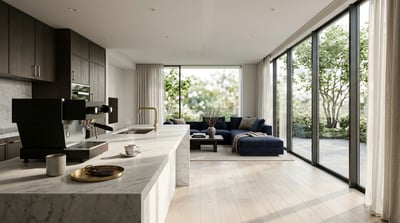
A 1LDK typically comprises a 10 to 12 tatami-mat living-dining-kitchen (LDK) paired with a 5 to 6-mat private bedroom, spanning around 38 to 48 square meters. Its primary appeal lies in the immediate sense of open space and refined traffic flow the moment you step inside. An open counter kitchen naturally fosters conversation during meal preparation, while cohesive furniture styling creates a serene, hotel-inspired environment.
1LDK Blind Spots: Audio Interference During Remote Work and Staggered Schedules
Conversely, couples often encounter challenges regarding acoustics and mismatched daily routines. If one partner joins a conference call in the living area while the other works in the bedroom, voices can easily bleed through sliding doors and into microphones. Furthermore, if Partner A wakes up at 6:30 AM to prepare breakfast while Partner B sleeps until 8:00 AM, kitchen lights and cooking sounds inevitably penetrate the adjoining bedroom.
2DK Strengths & Utility: Sound Isolation and Remote-Work Versatility with Two Independent Rooms
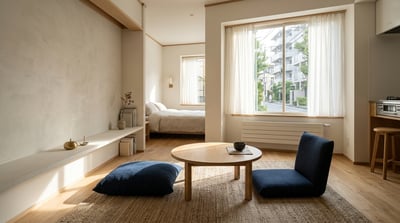
A 2DK—featuring a 6 to 8 tatami-mat dining-kitchen alongside two independent bedrooms—cleanly resolves these friction points. Common in robust reinforced concrete (RC) buildings constructed during the late Showa and early Heisei eras, they offer generous floor plans of 40 to 52 square meters. The standout advantage is having two distinct rooms separated by solid hinged doors. This allows one room to serve as a primary bedroom and the other as a dedicated telework office, or provides separate sleeping quarters for couples with diverging working hours.
Economic Rationality of 2DK Units: Affordable Price-per-Square-Meter and Flexible Layouts
Because many apartment hunters filter out 2DK layouts on search portals, these properties are often priced attractively below prevailing market rates. Within the same station radius, while a 15-year-old 1LDK (40 m²) might rent for ¥155,000, a 35-year-old 2DK (48 m²) with fully modernized plumbing and kitchen fixtures can often be secured for ¥138,000. Saving ¥17,000 each month—roughly ¥200,000 annually—while enjoying larger square footage presents substantial economic rationale.
| Comparison Criteria | 1LDK (Modern Standard) | 2DK (Beautiful Renovation) | Professional Advisory Standard |
|---|---|---|---|
| Floor Area & Composition | 38–48 m² (LDK 10–12 tatami mats + Bedroom 5–6 mats) | 40–52 m² (DK 6–8 tatami mats + 2 Private Rooms 5–6 mats) | Within the same rent tier, a 2DK typically provides 5–10 m² more living area |
| Building Age & Common Areas | Mostly 5–20 years old; auto-lock entry and delivery boxes standard | Mostly 30–45 years old; retro common areas with fully updated interiors | Safety is comparable if the RC building complies with the New Anti-Seismic Standard (June 1981 onwards) |
| Simultaneous Telework Suitability | Fair (Requires care; video call audio leaks between living room and bedroom) | Excellent (Completely independent rooms isolate simultaneous conference calls) | A 2DK is ideal if both partners work remotely 3+ days a week with frequent meetings |
| Tolerance for Staggered Schedules | Kitchen lighting and ventilation fan sounds readily reach the bedroom | Separate bedrooms allow dressing and sleeping without waking your partner | For couples with night shifts, early starts, or frequent overtime, a 2DK ensures sound sleep |
| Interior Aesthetics & Relaxation | Excellent (Accommodates large sofas and dining tables for a hotel-like ambiance) | Dining area is compact; placing large sofas requires keeping room dividers open | A 1LDK is best if you prioritize relaxing together in an open living room on weekends |
Acoustic Standards for Remote Work: Ensuring Sound Isolation with RC and SRC Structures
For dual-income couples—especially when remote work is part of everyday life—a building's acoustic performance directly dictates living comfort. Below are the professional structural benchmarks for preventing noise disputes and holding online conference calls without hesitation.
Why Wooden and Light-Gauge Steel Structures Fall Short: Sound Transmission Mechanics
Tokyo rental properties generally fall into four construction categories: wood-frame (W), light-gauge steel (S), reinforced concrete (RC), and steel reinforced concrete (SRC). In short, working couples sharing an apartment should generally rule out wood-frame and light-gauge steel buildings. Under the acoustic mass law—where sound isolation is proportional to surface weight per unit area—lightweight structures readily transmit sound, allowing spoken voices, keyboard typing, and late-night footsteps to penetrate adjacent walls and create neighborhood friction.
The 180 mm Party Wall Benchmark and the Significance of Concrete Density
The foremost criterion for acoustic serenity is selecting an RC or SRC condominium. Heavy concrete with a specific gravity of 2.3 to 2.4 powerfully dampens acoustic vibrations. When party walls separating neighboring residences measure at least 180 mm (ideally 200 mm or more), they achieve a D-50 sound insulation rating under Architectural Institute of Japan standards—a level where normal conversational voices become virtually inaudible, ensuring exemplary privacy.
T-2 Window Sash Ratings and Double Glazing for External Noise Reduction
To block external street noise, window sash specifications are critical. Near major thoroughfares or train tracks, choosing residences equipped with JIS-certified T-2 sound-rated sashes (providing 30 dB sound reduction) or double-pane inner sash windows keeps indoor ambient noise below 40 dB—equivalent to the quiet hush of a library reading room.
Floor Slab Thickness and Double-Floor Systems to Mitigate Impact Sound
To mitigate floor impact noise—such as walking or sliding chairs—affecting downstairs neighbors, verify whether the concrete floor slab measures 180 to 200 mm or thicker, and whether a raised double-floor construction utilizing vibration-dampening rubber pedestals is installed. During apartment viewings, taking firm, deliberate steps to feel for solid structural rigidity underfoot provides practical reassurance.
| Building Construction Type | Party Wall Specification | Airborne Sound Rating (D-Value) | Concurrent Telework Suitability | Dual-Income Assessment |
|---|---|---|---|---|
| Reinforced Concrete (RC) | Concrete wall: 180–220 mm | D-50 to D-55 (Voices virtually inaudible) | Excellent (Full isolation; calls without concern for neighbors) | Recommended (Top priority structure to target) |
| Steel Reinforced Concrete (SRC) | Steel-reinforced concrete: 200+ mm | D-55+ (Superior acoustic isolation) | Excellent (High-rise engineering standards) | Recommended (Abundant in mid-to-high-rise towers) |
| Heavy-Gauge Steel (S) | ALC autoclaved panels: 100 mm | D-40 to D-45 (Loud voices remain audible) | Fair (Requires vocal volume awareness) | Verify (Requires individual review of party wall design) |
| Light-Gauge Steel & Wood (Apartments) | Gypsum plasterboard + glass wool | D-30 to D-35 (Conversations and ringtones bleed through) | Unsuitable (High risk of noise complaints) | Not Recommended (Strictly avoid for couples) |
During apartment viewings, lightly tap the party wall with your knuckles. A solid, deep, muted thud indicates a robust concrete core. If you hear a hollow resonance, you will want to inspect the dry-wall construction details closely. Additionally, fully close the window sashes, pause in silence, and observe how effectively outdoor traffic and wind sounds are sealed away.
Commute Equilibrium: Station Value and Yamanote Line Connectivity on the Chiyoda Line
When selecting a home as a working couple, balanced commute times to both workplaces are paramount. If one partner commutes toward Otemachi and Kasumigaseki while the other travels to Shinjuku or Shibuya, skewing the home location toward one side places an unfair daily strain on the other. The definitive solution for bridging this divide—while securing an expansive living environment for ¥130,000 to ¥160,000—is leveraging hub stations along Tokyo Metro's Chiyoda Line in the Joto and Johoku districts.
Comparing Price-per-Square-Meter: The Clear Advantage of Northeast and North Hub Stations
On the western stretch of the Chiyoda Line, such as around Yoyogi-Uehara or Akasaka, a budget of ¥130,000 to ¥160,000 confines seekers to compact 1K apartments of 22 to 30 square meters—hardly accommodating for two people. Conversely, eastward along the Chiyoda Line around Machiya, Kitasenju, and Ayase, price-per-square-meter moderates significantly. Here, the exact same budget brings spacious 42 to 55 m² 1LDKs and beautifully renovated 2DKs comfortably within reach, granting 1.5 to 2 times more private living space.
Key Stations Within an 11–22 Minute Direct Ride to Otemachi (Nishi-Nippori, Machiya, Kitasenju, Ayase)
Key stations in the Joto and Johoku areas provide direct transit to Otemachi within 11 to 22 minutes.
- Kitasenju Station: A premier transportation mega-terminal served by five distinct lines: the Tokyo Metro Chiyoda and Hibiya Lines, Tobu Skytree Line (with direct through-service to the Hanzomon Line), JR Joban Line, and Tsukuba Express. Offers a direct 16–18 minute ride to Otemachi (16 min daytime / ~18 min morning rush). Featuring Lumine, Marui, and vibrant traditional shopping arcades, its everyday convenience ranks among the highest in Tokyo.
- Ayase Station: The primary origin and terminus for numerous Chiyoda Line trains. Direct to Otemachi in approx. 20–22 minutes (20 min daytime / ~22 min morning rush). Offers the enviable privilege of a seated morning commute even during peak rush hours, surrounded by tranquil residential neighborhoods.
- Machiya Station: Connected by three lines: the Chiyoda Line, Keisei Main Line, and Tokyo Sakura Tram (Toden Arakawa Line). Swift direct access to Otemachi in approx. 13–14 minutes (13 min daytime / ~14 min morning rush) combines with nostalgic downtown charm and an abundance of supermarkets and local shops.
- Nishi-Nippori Station: An essential transfer junction connecting the Chiyoda Line with the JR Yamanote and Keihin-Tohoku Lines (local trains serve morning/evening hours). Direct to Otemachi in approx. 10–11 minutes (10 min daytime / ~11 min morning rush), with Yamanote Line access reaching Shinjuku in 20 minutes and Shibuya in 27 minutes. It serves as an ideal geographical midway hub for couples dividing their days between Marunouchi and western Tokyo.
Transit Synergy: Harmonizing Otemachi with Shinjuku and Shibuya Commutes
From Kitasenju Station, for example, a partner working in Otemachi enjoys a direct 16–18 minute ride via the Chiyoda Line, while a partner commuting to Shinjuku arrives in roughly 30 minutes via a seamless cross-platform transfer to the Yamanote Line at Nishi-Nippori. For a Shibuya commute, Tobu Skytree Line trains running directly onto the Hanzomon Line provide a one-seat journey without transfers. Having multiple reliable transit corridors brings reassuring peace of mind to dual-career households.
Everyday Living Infrastructure: Station Commercial Centers and 24-Hour Supermarkets
The northeastern corridor along the Chiyoda Line boasts exceptional everyday retail convenience. From the gourmet food halls at Kitasenju's Marui and Lumine, to the Tokyu Store under the elevated tracks at Ayase Station (open until 10:00 PM) and nearby 24-hour grocers like Big-A, to Machiya's directly connected Akafudado and local fresh markets, returning home late never compromises your ability to pick up quality ingredients for home-cooked meals.
| Station (Line) | Typical 1LDK/2DK Rent Range | Average Floor Area Range | Direct Ride to Otemachi | Access to Shinjuku / Shibuya |
|---|---|---|---|---|
| Ayase (Chiyoda Line) | ¥128,000–¥148,000 | 44–54 m² (Spacious) | Direct ~20–22 min (~22 min morning rush / origin trains available) | Shinjuku: 35 min / Shibuya: 42 min (Transfer at Nishi-Nippori) |
| Kitasenju (5 Lines) | ¥138,000–¥162,000 | 40–50 m² (Wide selection from modern to renovated) | Direct ~16–18 min (16 min daytime / ~18 min morning) | Shinjuku: 30 min / Shibuya: 38 min (Direct Hanzomon Line service) |
| Machiya (Chiyoda / Keisei) | ¥135,000–¥155,000 | 40–48 m² (Abundant RC condominiums) | Direct ~13–14 min (13 min daytime / ~14 min morning) | Shinjuku: 26 min / Shibuya: 34 min (Transfer at Nishi-Nippori) |
| Nishi-Nippori (Chiyoda / Yamanote) | ¥145,000–¥168,000 | 38–45 m² (Location-efficiency focused) | Direct ~10–11 min (10 min daytime / ~11 min morning) | Shinjuku: 20 min / Shibuya: 27 min (Direct on Yamanote Line) |
| Reference: Yoyogi-Uehara (Western Tokyo) | ¥210,000–¥260,000 | On a ¥150k budget: 25–30 m² (1K/1DK only) | Direct 18 min | Shinjuku: 6 min (Odakyu) / Shibuya: 15 min |
Expense Sharing for Working Couples: Joint Account Management in Practice
Sharing a home introduces recurring mutual expenses beyond rent, including utilities and groceries. To preempt friction stemming from differing financial sensibilities, establishing an automated, systematic framework for managing shared living costs provides lasting peace of mind.
The Joint Account Fixed-Contribution Model: Simplicity Without Friction
In professional practice, the most highly recommended approach is the joint account fixed-contribution model. Designate a primary shared bank account and schedule automated transfers on a set day each month. For instance, if total shared commitments require ¥300,000—covering ¥150,000 for rent and ¥150,000 for utilities, groceries, and sundries—each partner contributes ¥150,000. Routing rent debits and daily household payments through this single account draws an unambiguous boundary: funds deposited into the joint account belong to the household, while remaining earnings remain entirely personal discretionary capital, fostering mutual respect and independence.
Pitfalls of Itemized Expense Splitting: Fluctuating Costs and Hidden Imbalances
Conversely, itemized splitting—such as one partner covering rent while the other covers groceries and utilities—is best avoided. Inflationary price increases and seasonal spikes in heating or cooling costs place an unpredictable, unequal burden on one person, easily becoming a silent source of resentment.
Emergency Reserves and Forward-Looking Savings Rules
Structuring joint contributions to include a monthly buffer of ¥20,000 to ¥40,000 is exceptionally effective. Pooling an extra ¥30,000 monthly generates an annual reserve of ¥360,000. This fund absorbs two-year lease renewal fees, unexpected social commitments, or home appliance replacements without forcing either partner to dip into personal emergency savings.
Rental Contracts for Cohabiting Couples: Application Screening and Legal Review of Special Clauses
When you discover the right property, cohabitation involves distinct legal procedures and screening standards that differ from solo leasing. Thoroughly understanding the legal relationships and contractual disclosures directly prevents post-move complications.
Mandatory Cohabitant Registration and the Perils of Unauthorized Occupancy
A vital fundamental of rental agreements is official cohabitant registration. Allowing an unlisted individual to reside in the property is considered unauthorized occupancy, constituting grounds for immediate lease termination. Even for unmarried couples, clearly designating the cohabitant alongside the primary applicant and submitting identity verification for both parties forms the bedrock of mutual trust with landlords and management companies.
Single vs. Joint Income Screening: Guarantor and Guarantee Company Requirements
Tenant screening generally follows one of two routes: "single-applicant screening" based solely on the primary tenant's earnings, or "joint income screening" combining both partners' incomes. For a monthly rent of ¥150,000, a primary applicant with a gross annual income of ¥5.4 million or higher typically qualifies smoothly under single screening. When utilizing joint screening, property managers usually require the partner to act as a joint guarantor or enter into a co-signed lease.
Supreme Court Precedent on House Cleaning and Ordinary Wear-and-Tear Clauses
The Supreme Court of Japan (Ruling of December 16, 2005) established strict legal standards regarding the validity of special clauses shifting the cost of ordinary wear and tear onto tenants. Unless the rental agreement explicitly specifies the precise scope and financial liabilities borne by the tenant, or unless comprehensive explanations were rendered and mutually understood at signing—meeting the standard of "objective, unambiguous clarity"—such clauses are held legally invalid.
Judicial Standards on the Validity of Lease Renewal Fee Clauses
Regarding lease renewal fees, the Supreme Court of Japan (Ruling of July 15, 2011) affirmed that renewal clauses may be deemed void under Article 10 of the Consumer Contract Act if the fee is excessively exorbitant relative to the rent and contract term. In standard Tokyo residential leases, one month's rent for a two-year contract is the customary norm; excessive renewal fee demands warrant professional scrutiny.
Initial cost estimates from conventional brokerages frequently include optional line items—such as indoor antibacterial treatment fees (approx. ¥15,000–¥30,000), basic fire extinguishers, or 24-hour emergency support fees—presented as if they were mandatory. Under statutory notices pursuant to Article 46 of the Real Estate Brokerage Act, total brokerage commissions across landlord and tenant are capped at 1.1 months' rent (tax included), as is the maximum tenant charge upon consent. Politely stating, "If these add-on services are optional, please remove them," allows you to trim move-in expenses cleanly and intelligently.
Smart Home Search and Objective Second Opinions by Sorai Tokyo
Embarking on a shared life together marks one of life's most meaningful milestones. We believe you deserve a home that eases daily commuting pressures, harmonizes productivity with restorative rest, and is secured under fair, transparent terms.
At Sorai Tokyo, our standard policy across all residential brokerage is a half-price brokerage fee (0.55 months' rent, tax included). Compared to the standard full commission of 1.1 months' rent charged by traditional agencies, securing a ¥150,000 apartment saves you approximately ¥82,500 on initial move-in costs. Reinvesting those preserved savings into tailored furniture or premium home appliances allows you to begin your shared journey from an elevated starting point.
Furthermore, whenever you discover an appealing property on external portals (such as SUUMO or LIFULL HOME'S), simply share the property link via Sorai Tokyo's official LINE account. Our dedicated licensed brokers will check real-time availability via professional real estate exchange databases (REINS) and conduct a comprehensive, objective "Second Opinion Audit" on the move-in quote completely free of charge to verify that no unnecessary fees have been added. Rest assured, you will experience zero aggressive sales calls or pressured showroom visits.
From your smartphone's bottom navigation menu or your desktop footer, you can freely access Sorai Tokyo's suite of smart tools (SorAi), including our Move-In Cost Simulator, at any time. Instantly calculating precise initial move-in estimates from your target monthly rent will empower your home-search planning with clarity and confidence.
Frequently Asked Questions: Apartment Hunting for Couples (FAQ)
QWhen deciding between a 1LDK and a 2DK for cohabitation, what is the single most decisive factor?
AThe primary decisive factor is the frequency of remote work and the alignment of your daily schedules. If both partners work from home three or more days per week with overlapping video calls, or if you maintain differing wake and sleep hours, a 2DK is far superior. If your work is primarily office-based and you prioritize shared relaxation in an open living room on weekends, a 1LDK is the ideal choice.

Author: Sorai Tokyo Editorial Team (Supervised by Licensed Real Estate Agents)
A real estate consulting team specializing in assisting foreign nationals find rooms and explaining initial costs in Tokyo. We break down language barriers and differences in customs, offering dedicated support in Japanese, English, and Vietnamese for a safe and secure start to your new life.