
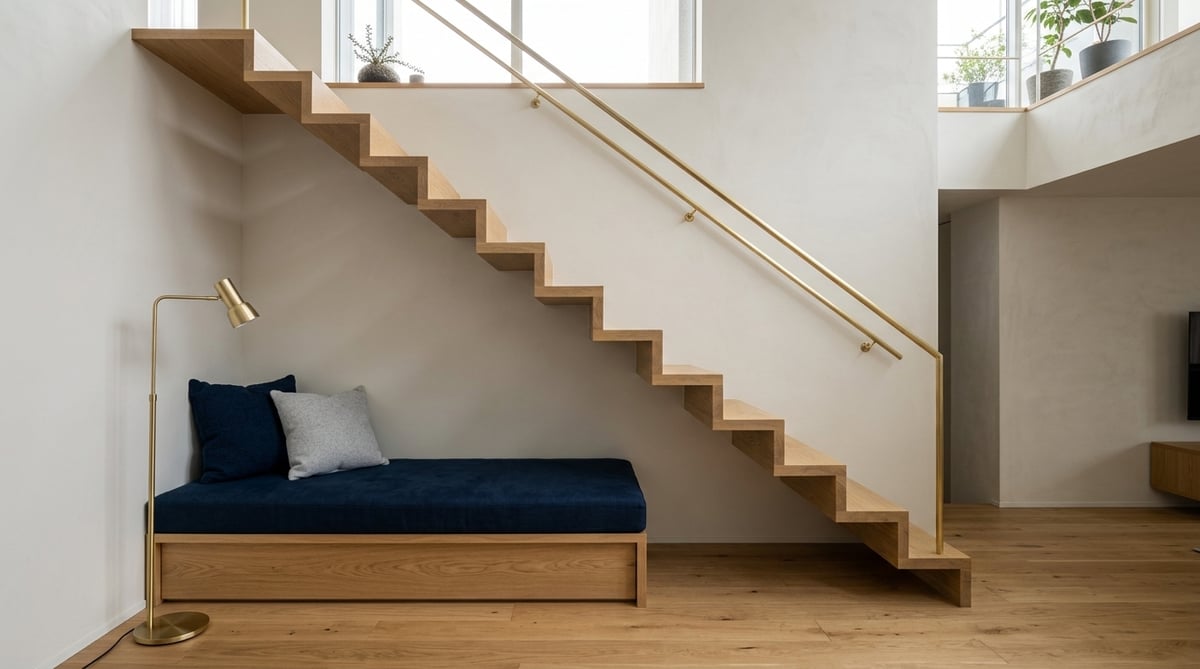
As dusk settles and you step through the station ticket gates, a tranquil residential calm and an inviting warmth welcome you home. When searching for a place to live, true value does not come down to comparing sterile floor plan dimensions or numerical statistics; it lies in how deeply enriching, comfortable, and unburdened your everyday life feels within that space. Drawing upon a decade of firsthand brokerage experience in the Tokyo rental market, I am here to unpack the nuances, clear away uncertainties, and provide the practical clarity you need to choose an apartment with absolute peace of mind.
Nestled in the northeastern corner of Katsushika Ward, Kanamachi flourished historically as a bustling post town along the Mito Kaido highway, retaining a grounded, nostalgic neighborhood charm around its station to this day. Simultaneously, the opening of Tokyo University of Science's Katsushika Campus in 2013 sparked an expansive transformation across the district. Between sprawling green lawns, expansive civic parks, and modern urban revitalization anchored by the large-scale commercial complex MARK IS Katsushika Kanamachi which opened in summer 2025, daily convenience and contemporary civic amenities have steadily reached new heights.
The neighborhood's greatest advantage lies in its direct connection to central Tokyo. By boarding local JR Joban Line trains that run directly through to the Tokyo Metro Chiyoda Line, key business and political hubs such as Otemachi, Kasumigaseki, and Akasaka can be reached without a single transfer, all while maintaining some of the most accessible rent levels across Tokyo's 23 wards. Solo renters can comfortably explore durable reinforced concrete properties starting in the 60,000 yen per month range, while couples can secure spacious one-bedroom or two-room layouts within an affordable 110,000 to 130,000 yen budget. Let us explore the complete landscape of this neighborhood, where sensible fixed living expenses empower a fulfilling lifestyle.
- Direct through-service via Tokyo Metro Chiyoda Line with no transfers. 30 min to Kasumigaseki, 34 min to Akasaka.
- Average market rate for reinforced concrete studio units within a 10-minute walk. Roughly 30,000 to 50,000 yen lower per month than central Tokyo.
- JR Joban Line local service (through to Chiyoda Line) and Keisei Kanamachi Line (connecting at Keisei-Takasago).
Transit Access at Kanamachi Station: Direct Commuter Routes via the Chiyoda Line
Standing on the platform in the crisp morning light, you can hear the steady hum of inbound trains heading smoothly toward central Tokyo. When choosing a home, your daily transit time is far more than a simple commute—it is a cherished moment to frame the beginning and end of your day. Beyond raw journey times on paper, Kanamachi Station's transit network truly excels in offering minimal transfers and a genuinely light mental footprint.
Direct Through-Service to the Tokyo Metro Chiyoda Line and Commute Times to Key Stations
The JR Joban Line local service calling at Kanamachi Station runs directly through Ayase Station onto the Tokyo Metro Chiyoda Line. This seamless through-service forms the bedrock of Kanamachi's residential appeal. Simply pass through the ticket gate and step onto the platform, and you can reach Otemachi in about 25 minutes, Kasumigaseki in about 30 minutes, Akasaka in about 34 minutes, and Omotesando in about 36 minutes—all without changing trains once.
For professionals working around Marunouchi and Otemachi, eliminating the need to climb transfer staircases or wait on crowded intermediate platforms substantially reduces physical fatigue day after day. You can immerse yourself in a book, listen to a podcast, or quietly organize your thoughts, turning your commute into peaceful personal downtime.
Furthermore, Nishi-Nippori Station is just a 15-minute ride away, providing an effortless transfer to the JR Yamanote Line and the Keihin-Tohoku Line. Even when traveling to major sub-centers such as Shinjuku, Shibuya, or Ikebukuro, transferring at Nishi-Nippori keeps total travel time to roughly 40 minutes, giving you flexible transit options across all of central Tokyo.
Alternative Access via Keisei-Kanamachi and Keisei-Takasago to Haneda, Narita, and the Toei Asakusa Line
Just across the south exit plaza of JR Kanamachi Station—a mere one-minute walk—sits Keisei-Kanamachi Station, operated by Keisei Electric Railway. Having this second station available serves not only your weekend getaways and airport travel, but also functions as an invaluable backup corridor whenever the Chiyoda Line encounters an unexpected delay.
The Keisei Kanamachi Line is a single-track shuttle line connecting through Shibamata to Keisei-Takasago Station in roughly 5 minutes. The terminus, Keisei-Takasago Station, is a major railway junction where the Keisei Main Line, the Hokuso Line, and the Narita Sky Access Line converge. From Keisei-Takasago, rapid limited express and Access Express services run directly through to the Toei Asakusa Line, providing swift transit to Nihombashi, Higashi-ginza, Shimbashi, and Shinagawa, as well as direct airport journeys taking about 45 minutes to Narita Airport and direct through-trains to Haneda Airport.
In Tokyo's metropolitan transit network, neighborhoods reliant on a single railway corridor carry the risk of leaving residents completely stranded during service suspensions. In Kanamachi, having two independently operated rail networks—JR and Keisei—ready for daily use offers an invaluable safety net that elevates urban living comfort.
Morning Rush Hour Realities: Crowd Levels and Practical Seating Strategies
On weekday mornings between 7:30 and 8:30, inbound Joban Line local trains arrive at Kanamachi Station carrying commuters from Chiba and Ibaraki prefectures, meaning cars are noticeably full. The segment between Machiya and Nishi-Nippori represents the peak density of the line, where passengers stand shoulder to shoulder. However, seasoned commuters take advantage of practical techniques to bypass peak crowding and secure a seat.
The first strategy is targeting scheduled departures that originate at Kashiwa Station or Matsudo Station in the morning timetable. Compared to long-distance runs starting from Abiko or Toride, these origin runs have significantly lower passenger volumes, offering far more breathing room inside the train car. In addition, boarding cars toward the very front or rear ends of the train helps you avoid the crowding that builds up near the center doors when passengers transfer from the rapid line at Matsudo.
The second strategy takes advantage of trains that originate at Ayase Station, located just two stops toward central Tokyo. Ride the local train for about 6 minutes from Kanamachi to Ayase, then step across to line up for a Chiyoda Line train originating at Ayase bound for Yoyogi-Uehara. This guarantees you a comfortable seat all the way into Otemachi or Kasumigaseki. Taking an extra 10 to 15 minutes in your morning schedule to virtually eliminate commute stress is one of the standout advantages of living on this corridor.
Late-Night Return Options via Ayase and Kita-Senju
When wrapping up your workday in central Tokyo and heading home at night, the Chiyoda Line cuts straight beneath the heart of the capital back toward Kita-Senju and Ayase. Late-night timetables on the Chiyoda Line run remarkably late, with departures from Otemachi past midnight still reaching Kanamachi.
One detail to keep in mind late at night is that some Chiyoda Line trains terminate early at Kita-Senju or Ayase. However, upon arrival at Kita-Senju or Ayase, these services frequently connect with onward Joban Line local trains bound for Abiko or Matsudo. Even if you find yourself on the very last train that terminates at Ayase, Kanamachi is only about a 10-minute taxi ride away (costing approximately 1,800 yen to 2,200 yen at late-night rates). Having a swift, affordable backup plan when missing the final connection provides genuine peace of mind when living in Tokyo's eastern residential districts.
Complete rental and living guide for all stations on the Tokyo Metro Chiyoda Line, from Kita-Ayase and Kita-Senju to downtown Otemachi.
Urban Redevelopment and Evolving Living Infrastructure Around Kanamachi Station
Strolling along the pedestrian deck in front of the station, you will notice a natural harmony between sleek, newly redeveloped high-rises and traditional shopping streets lined with fluttering shop curtains. Guided by Katsushika City's urban master plan, the area around Kanamachi Station has undergone deliberate, phased redevelopment over the past decade. Rather than chasing fleeting trends, this is a prime example of thoughtful urban renewal that steadily strengthens the neighborhood's structural foundation.
The Higashi-Kanamachi 1-Chome West Redevelopment and the Opening of MARK IS Katsushika Kanamachi
The "Higashi-Kanamachi 1-Chome West District Category 1 Urban Redevelopment Project" (commonly known as CROSS KANAMACHI), underway just east of the Kanamachi Station North Exit, is a flagship initiative dramatically transforming both the streetscape and the convenience of daily life around the station. As the first phase of this development, MARK IS Katsushika Kanamachi—a major mixed-use commercial facility rising five stories above ground with one basement level—was successfully completed and opened its doors in July 2025.
Inside the complex, York Foods MARK IS Katsushika Kanamachi has opened with state-of-the-art facilities, serving as the modernized successor to the long-beloved local supermarket. It is seamlessly integrated alongside a large pharmacy, daily lifestyle stores, cafes, a comprehensive medical clinic mall, and even a rooftop driving school. With the ability to pick up everyday groceries and household essentials all in one stop without ever stepping into the rain, shopping efficiency has improved dramatically for everyone from solo professionals to busy working couples.
The Tower Residence Redevelopment at the Former Ito-Yokado Site and Its Future Roadmap
Following the successful launch of the Phase I commercial complex, preparations are steadily advancing for Phase II, centered on the former Ito-Yokado Kanamachi site. This second phase will introduce a major mixed-use high-rise residential tower rising 40 stories above ground and two below, reaching an approximate height of 150 meters.
After careful reviews of construction specifications and rising material costs, the updated timeline targets groundbreaking in autumn 2026, with full completion scheduled for spring 2031. The lower floors of the tower will house additional retail tenants, childcare support facilities, and open community gathering spaces. In tandem with this landmark residence, plans also call for expanded pedestrian promenades and disaster-prevention plazas. This integrated approach ensures that neighborhood walkability around Kanamachi Station and overall long-term property values will be well-positioned to strengthen over the coming decade.
South Exit Hubs: Beltore Kanamachi, Venasis Kanamachi, and the Katsushika City Central Library
Even before the latest north-exit redevelopment took shape, the south exit had already established itself as a well-integrated, sophisticated urban center. Directly fronting the station plaza stands Venasis Kanamachi, an impressive 41-story residential and commercial tower. Its lower floors house a 24-hour Maruetsu supermarket, an invaluable asset for busy professionals returning home late at night.
A true highlight of Venasis Kanamachi is the Katsushika City Central Library located on the third floor. Housing an extensive collection of roughly 400,000 volumes, it stays open on weekdays until 10:00 PM and features generous reading lounges along with dedicated desks equipped with power outlets for laptop work. Having such a quiet, focus-friendly environment for study and remote work right by the station offers immense practical value for single professionals and teleworkers looking to elevate their daily productivity.
Just nearby, Beltore Kanamachi—the commercial podium of Proud Tower Kanamachi, completed in 2021—adds even more daily convenience with dining spots, medical clinics, and Kanamachi Puratto, a municipal community activity center. Complete with an indoor children's play area perfect for rainy days and rentable music practice rooms, it has quickly become a warm, welcoming gathering space for local residents.
Open Green Spaces at the Tokyo University of Science Katsushika Campus and Katsushika Niijuku Mirai Park
Just about an eight-minute walk from the North Exit of Kanamachi Station lies the Tokyo University of Science Katsushika Campus and the adjacent Katsushika Niijuku Mirai Park, built across a sprawling former industrial site. Designed as an open campus without fencing or barriers between the university grounds and the ward park, this entire district forms a welcoming, lush urban oasis seamlessly integrated with the surrounding neighborhood.
Spanning roughly 7.1 hectares, the expansive grounds feature beautifully manicured lawn plazas where you will see residents jogging in the morning, students reading on benches in the early afternoon, and families taking leisurely strolls. The campus library, dining hall, and on-site bakery cafe are also open to the general public, infusing the neighborhood with youthful energy alongside a refined, scholarly calm.
This setting offers a wide-open expanse of sky and a profound sense of freedom that is exceedingly rare in central Tokyo's denser residential quarters. Having the everyday luxury of enjoying an open-air picnic just minutes from your front door—without the hassle of a weekend trek—is one of Kanamachi's most therapeutic advantages, effortlessly washing away daily stress.
24-Hour Supermarkets and Vibrant Local Shopping Streets for Daily Life
While modern shopping complexes provide fantastic convenience, everyday life in Kanamachi is truly defined by its character-rich shopping streets branching north and south of the station, along with an array of supermarkets tailored to every lifestyle rhythm.
For daily groceries, residents rely on a well-balanced shopping triangle: Maruetsu Kanamachi near the South Exit, open 24 hours a day; Tokyu Store right outside the North Exit, open until 11:00 PM; and York Foods inside MARK IS. For home cooks looking to maximize their grocery budget, specialty discounters like Gyomu Super and friendly neighborhood produce stands just a short walk from the station are invaluable neighborhood staples.
Strolling down Kanamachi Chuo Shopping Street or Suzuran-dori at dusk, you are welcomed by the mouthwatering aroma of freshly fried croquettes from independent butcher shops and the warm glow of traditional Japanese confectionery stores. Casual conversations with shopkeepers and picking up handcrafted side dishes on your way home from work offer a welcoming warmth and peace of mind unique to Tokyo's historic neighborhoods—a reassuring touch of daily comfort that chain stores simply cannot replicate.
North Exit Area: Living Environment (Redevelopment, University & Vast Parks)
The opening of MARK IS Katsushika Kanamachi has dramatically elevated everyday shopping convenience right outside the station. The area features wide, neatly planned pedestrian walkways and an exceptionally clean, modern streetscape, complemented by the Tokyo University of Science campus and the expansive open lawns of Niijuku Mirai Park.
Living Around the South Exit: Mixed-Use Towers, the Central Library, and Dual-Line Access
Directly connected to commercial landmarks such as Vinasis Kanamachi and Beltore Kanamachi, this area places a 24-hour supermarket and the Central Library—open until 10:00 PM—right at your doorstep. Access to Keisei-Kanamachi Station is seamless, with vibrant, historic local shopping streets also just a short stroll away.
Average Rent for Solo Living in Kanamachi and Cost-of-Living Scenarios by Take-Home Pay
When choosing a home, your monthly rent is the single most critical factor shaping the foundation of your daily life. Stretching your budget too thin just to cover housing costs puts constant pressure on dining out, traveling, and personal growth, quietly wearing away your peace of mind over time. The greatest value Kanamachi offers lies in keeping your fixed living expenses at a healthy, sustainable level while maintaining smooth, effortless access to central Tokyo.
Studio & 1K Rent Market Rates: Price Differences by Building Age and Walking Distance
An objective look at the current market rates for single-occupancy layouts (around 20 to 25 square meters) near Kanamachi Station reveals that a reinforced concrete 1K within a 10-minute walk typically ranges between 65,000 and 75,000 yen per month. For solidly built reinforced concrete buildings around 15 to 25 years old, you will find plenty of quality listings around 60,000 to 65,000 yen, including management fees.
In contrast, if you look along the same Chiyoda Line inside the Yamanote loop—around Nishi-nippori, Nezu, or Otemachi—a reinforced concrete 1K offering comparable floor space and sound insulation easily jumps to 95,000 to 120,000 yen. Choosing Kanamachi creates a substantial fixed-cost savings of 30,000 to 45,000 yen each month, adding up to 360,000 to 540,000 yen annually. The financial peace of mind that comes from redirecting that surplus into savings, self-development, or your favorite hobbies is a tremendous advantage.
| Layout & Floor Area | Within 5-Min Walk (Newer / RC) | 6–10 Min Walk (Market Standard) | 11–15 Min Walk (Value / Spacious) | vs. Central Tokyo (Sendagi / Nishi-Nippori) |
|---|---|---|---|---|
| Studio / 1K (20–25 sqm) | ¥75,000–¥85,000 | ¥65,000–¥75,000 | ¥55,000–¥65,000 | ¥30,000–¥40,000 cheaper |
| 1DK / 1LDK (32–42 sqm) | ¥125,000–¥145,000 | ¥105,000–¥125,000 | ¥90,000–¥105,000 | ¥45,000–¥60,000 cheaper |
| 2DK / 2LDK (45–60 sqm) | ¥150,000–¥180,000 | ¥130,000–¥155,000 | ¥110,000–¥130,000 | ¥60,000–¥85,000 cheaper |
Ideal Rent and Budget Breakdown for Solo Living on a ¥200,000 Take-Home Pay
For young professionals in their first three years of work earning a take-home income of roughly ¥200,000 per month, keeping your rent under 28% of your net pay (around ¥56,000 to ¥58,000) is strongly recommended from a financial safety standpoint. In Kanamachi, this budget realistically puts quality reinforced concrete apartments within a 10 to 12-minute walk from the station, or well-built steel-frame residences even closer to the train gates, well within your reach.
- Rent & Management Fees: ¥58,000 (29.0% of net pay)
- Food & Groceries: ¥35,000 (Primarily home cooking, with casual dining out on weekends)
- Utilities: ¥12,000 (Electricity: ¥6,000; City Gas: ¥3,500; Water: ¥2,500)
- Connectivity & Phone: ¥6,000 (Budget SIM plan and home fiber internet)
- Daily Household Supplies: ¥5,000
- Social, Hobbies & Personal Development: ¥25,000
- Clothing, Grooming & Healthcare: ¥15,000
- Savings & Investments: ¥44,000 (Guaranteed monthly buffer for wealth building)
Stretching your finances to pay ¥80,000 a month in central Tokyo shrinks your monthly savings cushion down to around ¥20,000. At that margin, sudden expenses like wedding gifts, funerals, or replacing a broken home appliance can instantly push your household into the red. By holding your rent in the upper ¥50,000 range in Kanamachi, you preserve the ability to stash away more than ¥40,000 every single month, providing solid, worry-free financial peace of mind.
Ideal Rent and Budget Breakdown for a Monthly Take-Home Income of 250,000 Yen
Once you have built solid professional experience and reached a stable net monthly income of 250,000 yen, your ideal rent-to-income ratio sits comfortably around 26% to 27%—roughly 65,000 to 68,000 yen per month. In Kanamachi, this budget tier unlocks the widest and most attractive selection of homes. You can comfortably secure a high-quality reinforced concrete 1K apartment (22 to 26 square meters) within a 7- to 8-minute walk from the station, complete with modern amenities such as auto-lock security, an independent washbasin vanity, and a bathroom dryer system.
- Rent & Management Fee: 68,000 yen (27.2% of take-home pay)
- Groceries & Dining: 45,000 yen (Provides ample leeway for weekday lunches and weekend cafe outings)
- Utilities (Electricity, Gas, Water): 14,000 yen (Ensures comfortable seasonal air conditioning use without stress)
- Mobile & Internet: 8,000 yen
- Household Essentials: 8,000 yen
- Socializing, Self-Development & Hobbies: 35,000 yen
- Clothing & Personal Care: 17,000 yen
- Savings & Investments (NISA): 55,000 yen
With this balanced allocation, you can comfortably build over 600,000 yen in net savings every year without compromising day-to-day living standards. It establishes a resilient financial foundation that naturally adapts to future life transitions—whether that means marriage, going independent, or pursuing further studies abroad.
Optimal Rent and Monthly Budget Breakdown on a 300,000 Yen Take-Home Pay
For mid-career professionals earning a net monthly income of 300,000 yen, two distinct housing strategies emerge: deliberately capping rent below 25% (under 75,000 yen) to aggressively maximize savings and investments, or allocating 85,000 to 95,000 yen toward a spacious 1DK or 1LDK apartment (32 to 38 square meters) to curate an uncompromising remote work and living environment.
- Rent & Maintenance Fee: 78,000 yen (Station-adjacent, high-grade reinforced concrete 1K; 26.0% of take-home pay)
- Groceries & Dining: 50,000 yen (Quality ingredients and occasional dining out)
- Utilities: 15,000 yen
- Internet & Mobile Phone: 8,000 yen
- Household Essentials & Home Decor: 12,000 yen
- Self-Development, Certifications & Socializing: 40,000 yen
- Clothing, Wellness & Healthcare: 22,000 yen
- Savings & Wealth Management: 75,000 yen
Renting a property of comparable caliber in central Tokyo easily climbs to 110,000 to 130,000 yen, making a monthly fixed-cost savings of over 40,000 yen exceptionally powerful. Consistently allocating 70,000 to 80,000 yen per month toward index funds or investments turns building a portfolio exceeding 10 million yen over a decade into a tangible reality.
Practical Room Layouts: Real-World Dimensions and Bed/Desk Placement for 6-Mat and 8-Mat Rooms
The most common pitfall during apartment viewings is overestimating actual living space simply by looking at the "6 tatami mats" figure on the floor plan. While real estate advertising standards define one mat as at least 1.62 square meters, the actual usable floor area drastically shifts depending on whether the room is rectangular or square, the swing path of doors, and protruding structural columns or ceiling beams.
For a standard 6-mat room (roughly 9.7 to 10.0 square meters), interior wall dimensions typically measure around 2,600 mm in width by 3,500 mm in depth. Placing a standard single bed (1,000 mm wide by 2,000 mm long) against the longer wall consumes approximately 60 percent of that length. If you plan to set up a dedicated remote-work desk (1,200 mm wide by 600 mm deep) with an office chair, you must factor in a mandatory clearance of at least 800 mm behind the desk just to pull out the chair and sit down comfortably.
Step up to an 8-mat room (approximately 13.0 square meters), and wall dimensions expand to roughly 3,500 mm by 3,600 mm. Even with a semi-double bed (1,200 mm wide), a full-sized desk, a compact two-seater low sofa (1,300 mm wide), and a TV stand, you can still easily maintain a central walkway clearance of at least 600 mm. For anyone who wants a gentle zoning separation between sleeping and living areas, or who refuses to compromise on their home workstation setup, leveraging Kanamachi's budget-friendly market rates to target a 7.5 to 8-mat bedroom is the smartest move from a professional broker's perspective.
Rent Market Rates for Couples in Kanamachi and Financial Planning for Co-living
Starting a new life together with a partner is an irreplaceable time where you align your daily rhythms, share values, and build the foundation for your future. However, in the rental market, apartments designed for two people naturally require larger floor plans, causing overall rent to jump and frequently placing a heavy strain on household finances. Kanamachi serves as an ideal setting where dual-income couples can secure generous space and exceptional comfort under a sustainable financial plan.
Rent Rates for 1LDK, 2DK, and 2LDK Layouts and How to Choose the Right Floor Area
The prevailing market rates for couple-oriented rental homes in Kanamachi center around the following ranges: 105,000 to 125,000 yen for a 1LDK (35 to 45 square meters); 95,000 to 115,000 yen for a 2DK (40 to 50 square meters); and 130,000 to 155,000 yen for a spacious 2LDK (50 to 65 square meters).
When selecting a floor plan, couples who share synchronized waking and sleeping schedules and prioritize spending quality time together in the common living area will find a 1LDK of 38 to 42 square meters to be the best fit. Securing at least 10 tatami mats (roughly 16.5 square meters) for the living, dining, and kitchen area, along with 5 to 6 tatami mats (about 8 to 10 square meters) for the bedroom, allows ample room to arrange your favorite dining table and sofa.
On the other hand, if one or both partners work remotely, or if your sleep schedules differ, a 1LDK can lead to unexpected stress due to overlapping video call audio and lighting. For these couples, a 2DK or 2LDK providing two independent private rooms is strongly recommended. In Kanamachi, it is quite common to discover fully renovated 2DK apartments in slightly older buildings for around 100,000 yen per month, offering a smart, cost-effective pathway to securing personal privacy without exceeding your budget.
Living Cost Breakdown for Dual-Income Couples with Combined Take-Home Pay of 350,000 Yen
Here is a monthly living cost simulation for a couple in their early-to-mid twenties with a combined take-home income of 350,000 yen per month. By keeping your housing expense ratio within 28% of combined net income (under approximately 100,000 yen), you create financial breathing room while steadily building emergency funds and savings for future weddings or travel.
- Rent and Maintenance Fee: 98,000 yen (a renovated 2DK or compact 1LDK within a 10-minute walk from the station; 28.0% of net income)
- Food Expenses: 55,000 yen (primarily home-cooked meals, with weekend dining out)
- Utilities: 20,000 yen (electricity 10,000 yen, city gas 6,000 yen, water 4,000 yen)
- Telecommunications: 12,000 yen (smartphones for both partners plus home fiber Wi-Fi)
- Daily Household Supplies: 10,000 yen
- Date Nights and Shared Socializing: 30,000 yen
- Individual Allowances / Discretionary Spending: 40,000 yen (20,000 yen each)
- Shared Savings and Future Fund: 85,000 yen
Splitting rent right down the middle means each person pays only 49,000 yen per month for housing. For partners who previously paid 60,000 to 70,000 yen each while living alone in single-room studios, moving in together compresses housing and utility costs significantly, dramatically accelerating their monthly savings rate. This financial framework comfortably produces over 1,000,000 yen in joint annual savings without sacrificing daily peace of mind.
Living Cost Breakdown for Dual-Income Couples with Combined Take-Home Pay of 450,000 Yen
For working couples in their late twenties to early thirties earning a combined take-home income of 450,000 yen per month, the golden ratio for rent settles between 25% and 27% (roughly 115,000 to 125,000 yen). In Kanamachi, this budget puts high-spec, modern 1LDK units (42 to 48 square meters) near the station or peaceful 2LDK residences (52 to 58 square meters) in quiet residential quarters well within reach.
- Rent and Maintenance Fee: 118,000 yen (a well-appointed 1LDK exceeding 45 square meters; 26.2% of net income)
- Food Expenses: 65,000 yen (quality seasonal home cooking paired with favorite restaurant outings)
- Utilities: 22,000 yen
- Telecommunications: 14,000 yen
- Daily Supplies and Interior Decor: 15,000 yen
- Shared Leisure and Vacation Reserve: 40,000 yen
- Individual Allowances: 60,000 yen (30,000 yen each)
- Shared Savings and Tax-Advantaged Investment (NISA): 116,000 yen
By consistently channeling over 110,000 yen into savings and asset accumulation each month, your combined net worth expands by roughly 1,400,000 yen each year. If you eventually decide to purchase a permanent home in Tokyo, you will have built a solid down payment, significantly expanding your life choices down the road.
Balancing Dual Remote Work: Traffic Flow and Furniture Placement
The single greatest operational challenge for modern cohabiting couples is preserving visual and acoustic independence when both partners work from home at the same time. Holding online meetings simultaneously in the same undivided room is exceptionally difficult, making thoughtful layout selection and strategic furniture positioning essential.
If you choose a 1LDK, the golden rule is a split workstation layout: position one desk along a wall in the main living-dining area and place the second desk in a corner of the bedroom. When arranging the bedroom workstation, position the chair so your back faces away from the bed, ensuring that private bedding never enters the webcam frame. Furthermore, if the partition sliding doors are made of frosted glass or slatted louvers, voices and lighting will leak straight through. Be sure to select a property fitted with solid wood core sliding doors that close flush to completely seal off each zone.
With a 2LDK, the most functional layout designates the 11 to 13 tatami-mat living-dining room as your shared leisure sanctuary, Bedroom 1 (6 tatami mats) as the primary sleeping quarter, and Bedroom 2 (4.5 to 5 tatami mats) as a dedicated home office and walk-in closet. Completely cordoning off work monitors and paperwork from your daily living space makes shutting down after hours effortless, sustaining a healthy, harmonious rhythm in your relationship.
Managing Shared Rent Allocation and Household Emergency Funds
The key to a harmonious, enduring co-living experience is establishing crystal-clear money management rules before signing the lease. When dividing rent and household expenses, couples typically choose between two main structures: the 50-50 Equal Split Model or the Proportional Income Model.
When both partners earn roughly equal take-home pay (for instance, 220,000 yen and 230,000 yen), an exact 50-50 split covering rent, management fees, and utilities is clean and prevents friction. However, if there is a noticeable income gap (such as 280,000 yen versus 180,000 yen), an equal split places a disproportionate financial burden on the lower-earning partner, and disparities in remaining discretionary money will breed quiet resentment over time. In such cases, adopting a proportional contribution method based on net income ratios (such as 60:40) represents the fairest path forward.
In addition, we strongly recommend opening a joint household bank account and setting up automated transfers on every payday to cover rent, shared living expenses, and joint savings. Managing supermarket runs, daily groceries, and utility direct debits entirely through this single central account permanently eliminates the tedious, daily friction of tallying who paid for what.
Reinforced Concrete Standards and Soundproofing Benchmarks to Prevent Noise Issues
The single most essential element defining daily comfort in a home is quietness. Returning exhausted from a demanding workday only to hear conversational murmurs, sneezes from next door, or heavy footsteps from above drains mental energy far more than most people anticipate. Noise complaints consistently rank at the very top of rental disputes, making solid, insider knowledge of building structures indispensable during your apartment hunt.
Comparing Sound Insulation Across Wooden, Steel, RC, and SRC Structures
Residential building structures generally fall into five categories: wood frame, light-gauge steel frame, heavy-gauge steel frame, reinforced concrete, and steel-framed reinforced concrete. Acoustically, sound transmission operates inversely to physical mass; the heavier and denser the walls and floors, the higher their sound insulation performance.
While wood-frame and light-gauge steel apartments offer lower construction costs and accessible rent, their walls are frequently constructed as hollow assemblies using gypsum plasterboard and fiberglass insulation, which severely limits their ability to block low-frequency sounds such as footsteps and deep bass. In a bustling metropolis where individual lifestyle schedules vary dramatically, securing peaceful nighttime sleep fundamentally requires choosing either reinforced concrete or steel-framed reinforced concrete construction.
However, you should never assume complete immunity just because a property listing states reinforced concrete. In certain developments, while the building's exterior perimeter, columns, and structural beams are solid concrete, the party walls dividing adjacent units are built using hollow dry-wall systems, such as autoclaved lightweight concrete panels or simple gypsum board. Verifying the actual wall specifications rather than relying solely on the general structural label is crucial.
Verifying 180mm+ Demising Wall Thickness and Raised Floor and Ceiling Construction
The primary objective benchmark for preventing sound leakage between neighbors is the thickness of the demising party wall. In a standard mid-to-high-grade rental condominium, if the cast-in-place concrete boundary wall measures 180 millimeters or greater—ideally 200 millimeters or more—it achieves the Architectural Institute of Japan sound insulation rating equivalent to Special to First Grade (approximately D-50 to D-55). At this standard, normal conversational speech and everyday television audio from next door are attenuated to virtually inaudible levels.
Furthermore, dampening structure-borne impact noise from above, such as footsteps or dropped items, requires a floor slab thickness of ideally 200 millimeters or more, combined with a raised double-floor and suspended double-ceiling construction system. Compared to direct flooring where wood laminate is bonded straight onto the concrete slab, a raised floating floor resting on rubber-cushioned vibration-dampening support legs absorbs direct floor impact far more effectively. Having a licensed real estate broker inspect the architectural blueprint notes or building brochure specifications lets you verify these acoustic measures with certainty beforehand.
T-2 Window Sash Ratings and Mitigating Noise Along Arterial Roads and Train Tracks
When evaluating properties situated along active rail lines such as the Joban Line or major arteries like Mito Kaido Route 6, examining the sound isolation grade of the window sashes becomes paramount. Regardless of how robust the concrete demising walls are, if the soundproofing performance of the window openings is inadequate, exterior traffic noise will intrude unhindered.
Under Japanese Industrial Standards, window sash acoustic performance is categorized into grades: T-1 (reducing sound by 25 decibels), T-2 (reducing sound by 30 decibels), T-3 (reducing sound by 35 decibels), and T-4 (reducing sound by 40 decibels). Even when living adjacent to busy roads or train corridors, an airtight sash rated T-2 or above, or a dual-window configuration featuring an interior secondary resin sash, can dramatically dampen passing train rumble and vehicular traffic to library-level quietness—below 40 decibels indoors.
Alongside window fittings, inspect the wall-mounted twenty-four-hour ventilation intake ports. If a vent is merely a bare open pipe sleeve passing through the wall, it turns into an acoustic conduit through which outdoor clamor easily enters. Checking whether the port incorporates sound-absorbing interior sleeves or specialized exterior acoustic hoods is a vital yet frequently overlooked detail in sound mitigation.
On-Site Acoustic Verification Techniques and Common Area Indicators During Viewings
During an on-site viewing, there are straightforward techniques anyone can apply to test sound insulation. Upon stepping into the main room, gently rap against the demising wall shared with the neighboring apartment using your knuckles or the heel of your palm. A dull, dense, solid sound indicates wallpaper applied directly onto a solid poured concrete wall. Conversely, a hollow, high-pitched resonance indicates a hollow cavity drywall, signaling that thoughtful furniture placement will be necessary to buffer sound transmission.
Additionally, a building's shared common areas mirror the consideration and community standards of its current residents. Pay close attention to whether discarded flyers are strewn around the entrance mailboxes, whether the designated trash disposal area overflows with garbage bags outside of scheduled collection days, and whether the bicycle parking area contains abandoned or chaotically parked bikes. Condominiums where common facilities are meticulously maintained reflect not only thorough management oversight, but also a considerate resident base, resulting in a demonstrable and dramatically lower incidence of noise disputes.
Close all windows, pause conversations, and stand quietly in the center of the room to assess baseline interior silence. Next, switch the kitchen exhaust fan to its highest speed and listen for any high-pitched whistling around the window sashes or air supply vents, which checks airtightness and airflow pressure balance. Inspect the entrance door rubber gaskets to ensure they have not hardened, cracked, or degraded over time. Checking whether light leaks around the door peephole or whether draft gaps exist around the perimeter is also an essential criterion for blocking hallway foot traffic noise from filtering indoors.
How to Legally Reduce Upfront Rental Costs and Negotiate Effectively
Once you have found an apartment you love and step forward to apply, you are presented with the initial cost estimate. For many renters, the long list of unfamiliar charges on this invoice can be genuinely bewildering. Beyond standard security deposits and key money, items such as room disinfection fees, 24-hour emergency support packages, and document preparation charges are routinely tacked on as if they were mandatory. All too often, this inflates the move-in invoice to an overwhelming five to six months of rent. Here is a practical, licensed broker's guide to understanding the legal grounds behind these line items and strategically eliminating unnecessary expenses.
Reviewing and Removing Unnecessary Add-on Fees: Room Disinfection and 24-Hour Support
When reviewing an initial move-in estimate, the primary targets for cost reduction are the "optional add-on services" tacked on independently by brokerage or property management agencies. Here are the most common culprits and the reality behind them:
- Room Disinfection / Antibacterial Deodorizing Fee (16,500 to 27,500 yen): In many cases, this service simply involves setting off an inexpensive aerosol deodorizing spray inside the apartment. A professional move-out deep cleaning was already conducted when the previous tenant vacated, fully ensuring basic hygiene and sanitation standards. As a general rule, this service is entirely optional and can be declined.
- 24-Hour Tenant Emergency Support (16,500 to 22,000 yen / 2 years): While marketed as an emergency response service for lost keys or plumbing leaks, standard renters insurance policies (fire and personal contents coverage) almost always include comparable 24/7 home assistance and emergency repair riders at no extra charge. Paying for this service often results in paying twice for the exact same coverage. Unless the property management company strictly mandates it as a non-negotiable leasing condition, you can negotiate to remove it.
- Document Preparation / System Usage Fee (5,500 to 11,000 yen): Drafting the lease agreement is a core clerical duty already covered by the statutory brokerage commission fee. Billing tenants separately under distinct labels such as administrative or system fees borders on an administrative violation under Article 46 of the Real Estate Brokerage Act, which caps maximum broker compensation.
Simply auditing and removing these redundant add-ons will routinely shave 40,000 to 60,000 yen off your upfront move-in costs. When submitting your initial rental application, the practical approach is to calmly state: "Are these auxiliary services optional? Since I do not require them, could you please remove these items and re-issue the updated estimate?"
Your Right to Choose Fire Insurance and Fair Premium Standards
When signing a lease agreement in Japan, it is standard practice for the agent's initial estimate to automatically bundle a pre-designated fire insurance policy, typically costing between 20,000 yen and 25,000 yen for a two-year term. Under Japanese Insurance Business Law and the Antimonopoly Act (specifically regarding unfair trade practices and illegal tie-in sales), landlords and real estate brokerages are strictly prohibited from forcing tenants into a specific insurance provider. As a tenant, you hold the legal right of free choice to select and arrange your own insurance policy, provided it satisfies comparable or equivalent coverage requirements.
At its core, mandatory rental housing insurance revolves around two key coverages: household goods insurance (protecting your personal belongings) and tenant liability insurance (a vital rider covering damages owed to the landlord in the event of an accidental fire, water leak, or pipe burst). By taking advantage of online non-life insurance companies or small-amount short-term insurance specialists, a single resident can secure comprehensive coverage for just 4,000 yen to 6,000 yen per year (around 8,000 yen to 12,000 yen for two years). This typically includes 10 million to 20 million yen in tenant liability, 100 million yen in personal liability, and 24/7 home emergency assistance services. Simply switching from the agent's designated policy to an independently arranged plan safely trims down your initial moving costs by roughly 10,000 yen to 15,000 yen without compromising your protection.
Comparing Move-In Cost Breakdowns: How to Leverage a Professional Second Opinion
When you place a standard estimate from a typical leasing agency side by side with a vetted, optimized proposal from Sorai Tokyo, the difference in total costs becomes immediately clear.
| Cost Breakdown (Example: ¥70,000 Rent, ¥5,000 Management Fee) | Typical Agency Quote | Sorai Tokyo Optimized Plan | Cost Reduction & Audit Rationale |
|---|---|---|---|
| Brokerage Commission | ¥77,000 (1.1 months incl. tax) | ¥38,500 (Half price / 0.55 months incl. tax) | Statutory half-month rate applied per Article 46 of the Real Estate Brokerage Act (-¥38,500) |
| Room Disinfection & Antibacterial Treatment | ¥19,800 | ¥0 (Removed unneeded fee) | Completely removed as an optional add-on (-¥19,800) |
| 24/7 Emergency Support Fee | ¥16,500 | ¥0 (Covered by insurance) | Eliminated duplicate coverage via the emergency assistance rider in renter's insurance (-¥16,500) |
| Fire & Renter's Insurance (2 Years) | ¥22,000 (Designated agency) | ¥10,000 (Freely chosen policy) | Switched to a direct online short-term insurance policy with equivalent coverage (-¥12,000) |
| Security Deposit, Key Money, Advance Rent, etc. | ¥225,000 | ¥225,000 | Mandatory contract costs (1 month deposit, 1 month key money, 1 month advance rent, guarantee company fee) |
| Total Move-in Cost | ¥360,300 | ¥273,500 | Optimized savings of -¥86,800 |
If another agency has shown you an apartment and the initial cost estimate gives you pause or raises doubts, always seek a second opinion before signing any lease. At Sorai Tokyo, we offer a free Second Opinion Diagnostic: simply send an image of your quote from any agency to our official LINE account. A licensed real estate broker with a decade of hands-on industry experience will impartially review every line item, advising you free of charge on which charges can be negotiated or removed, and whether the terms align fairly with local real estate regulations and customs.
Restoration to Original Condition: Key Rules and Supreme Court Precedents to Prevent Move-Out Disputes
When moving into an apartment, the last thing on your mind is how you will leave it. Yet across Japan's rental market, disputes at move-out remain remarkably common: landlords attempting to withhold entire security deposits for full wallpaper replacements, or property managers invoicing exorbitant "special cleaning fees." Fortunately, understanding the legal framework and landmark court rulings at the very start of your lease can prevent these move-out disputes entirely.
The Supreme Court 2005 Ruling: Three Criteria for Valid Move-Out Cleaning Riders
Most standard rental leases include a special clause or rider stating: "The tenant shall bear the flat move-out room cleaning fee (e.g., a specified amount in Japanese yen)." Under statutory default rules, a tenant who leaves a property swept and ordinarily clean is not responsible for professional turnover cleaning for the next tenant; however, when an explicit rider is lawfully drafted, the tenant becomes responsible.
The definitive judicial boundary for these riders was established by the Supreme Court of Japan Second Petty Bench on December 16, 2005. The Supreme Court ruled that any contractual clause imposing burdens on a tenant beyond their statutory duty to restore ordinary wear and tear is legally null and void unless it satisfies three strict criteria:
- Objective and Specific Language: The lease contract must clearly and unambiguously define the exact scope, basis of calculation, and concrete monetary amount (or unit price) for which the tenant is liable.
- Informed and Explicit Tenant Consent: The licensed real estate broker must provide a clear oral explanation prior to signing, ensuring the tenant fully understands and agrees that they are assuming costs for ordinary wear and tear that they would not otherwise be legally obligated to pay.
- Absence of Unconscionability (Good Faith Compliance): The invoiced amount must not be disproportionate compared to local market rates or rent levels, and must not unfairly prejudice the consumer's interests in violation of Article 10 of the Consumer Contract Act.
A vague, one-line stipulation merely stating "tenant pays move-out cleaning" without a specific figure, or a clause that was never explained orally during the mandatory property disclosures, can be successfully challenged as legally unenforceable under this Supreme Court precedent.
The Supreme Court 2011 Ruling: Lease Renewal Fees and Practical Brokerage Insights
A well-known rental custom in the Greater Tokyo Kanto region is the lease renewal fee—typically equivalent to approximately one month's rent due every two years upon contract extension. The legality of renewal fee clauses was fiercely litigated in Japanese courts under Article 10 of the Consumer Contract Act, which invalidates clauses that unilaterally harm consumer rights.
In response, the Supreme Court of Japan Second Petty Bench on July 15, 2011 established a unified precedent: renewal fee clauses explicitly set forth in a residential lease contract are legally valid, provided there are no exceptional circumstances demonstrating that the fee is excessively high relative to the rent amount and the lease duration. For a two-year lease term, a renewal fee of one to two months' rent possesses recognized economic rationale—acting as a rent supplement or consideration for continued long-term tenancy—and is deemed legally enforceable.
From a practical brokerage perspective, pay close attention if a lease contract additionally lists a separate "renewal administrative fee" payable to the property management or leasing agency. When a lease attempts to double-charge both a full renewal fee and an excessive administrative handling fee, there is often room for clarification or negotiation regarding the actual administrative services provided and the clarity of tenant consent. Always confirm the exact total amount of all combined renewal fees before signing your lease agreement.
Kanamachi Area Safety Statistics, Flood Hazard Maps, and Living Environment Evaluation
Peace of mind when settling into a new neighborhood is defined by every step you take walking home after dark and the quiet reassurance you feel on nights of heavy rainfall. Rather than relying on subjective impressions or casual rumors, let us thoroughly examine Kanamachi's overall safety from multiple angles, drawing directly from official police crime statistics and municipal disaster prevention data.
Safety Trends Around Kanamachi Station Based on Tokyo Metropolitan Police Crime Data
According to the latest neighborhood-by-neighborhood crime data published annually by the Tokyo Metropolitan Police Department, the areas surrounding Kanamachi Station—including Kanamachi 6-chome, Higashi-Kanamachi 1-chome, and Niijuku 3-chome—maintain an exceptionally calm and stable security profile compared to major commercial hubs across Tokyo's 23 wards.
A closer look at the statistical breakdown reveals that violent crimes, such as robbery or assault, are remarkably rare. The vast majority of recorded incidents fall under non-intrusive theft, overwhelmingly represented by bicycle theft, including bikes taken from parking areas when left unlocked. This pattern simply reflects the widespread daily use of bicycles facilitated by Katsushika Ward's flat, easily rideable terrain.
In terms of day-to-day perceptual safety, the establishment of the Tokyo University of Science campus has significantly increased foot traffic among students and faculty. This influx prompted enhanced street lighting throughout the area, alongside proactive patrols by local neighborhood associations and crime prevention volunteers. Once you step just beyond the station's commercial core, quiet residential streets unfold. Even for solo female residents, practicing standard personal precautions—such as taking off earphones when walking at night and selecting buildings with auto-lock entry systems—ensures a peaceful, worry-free living experience.
Flooding Scenarios from the Arakawa, Nakagawa, and Edogawa Rivers and Floor-Level Selection in Katsushika Ward Hazard Maps
When choosing a home, one objective reality that cannot be overlooked is flood risk. Katsushika Ward sits in a low-lying alluvial basin bordered by the Arakawa and Nakagawa Rivers to the west and the Edogawa River to the east, making a grounded, scientific understanding of flood preparedness essential.
Referring to Katsushika Ward's official Flood Hazard Map, which models an assumed maximum-scale rainfall event occurring roughly once every 1,000 years, a levee breach could lead to anticipated flood depths of 2.0 to 3.0 meters around Kanamachi Station, reaching the floor level of a building's second story. Certain low pockets could see depths of 3.0 to 5.0 meters, reaching from the second-story eaves up toward the third-floor level.
Given these topographical conditions, a licensed real estate professional's property selection criteria boil down to three key points:
- Floor Selection: Whether living alone or as a couple, prioritize units on the 3rd floor or higher whenever possible. This ensures your living quarters remain above projected water levels during an extreme flood event, enabling safe vertical evacuation—meaning you can shelter in place within your home until floodwaters recede.
- Building Structure and Electrical Substation Equipment: Opt for robust reinforced concrete (RC) residential buildings, and verify that high-voltage electrical substations, commonly known as cubicles, are situated on intermediate floors or the rooftop rather than in the basement or on the ground floor, or are properly protected by flood barrier walls.
- Reviewing Water Damage Insurance Coverage: Verify that your tenant fire insurance policy explicitly includes flood damage coverage, securing a financial safety net for personal property and household furnishings in the event of an emergency.
By selecting an appropriate floor level and familiarizing yourself with designated evacuation points on the hazard map in advance, you can enjoy all the rich urban conveniences Kanamachi offers without unnecessary anxiety.
Everyday Balance and Well-Being Provided by Mizumoto Park and the Edogawa Riverbanks
Living close to nature is often sacrificed in exchange for urban convenience. Kanamachi's greatest luxury, however, lies in how seamlessly expansive waterside and green landscapes—among the finest in Tokyo—blend right into daily life.
Just a 10-minute bicycle ride north of the station brings you to Mizumoto Park, spanning approximately 96 hectares as the only waterside park of its kind in metropolitan Tokyo. Stretching along a vast flood-control reservoir known as Koaidame, the park features a breathtaking forest of around 1,500 towering metasequoia dawn redwoods, Japanese iris gardens that bloom brilliantly in early summer, open-air barbecue facilities, and a dedicated dog run. Taking a weekend stroll through dappled sunlight along the water or going for a refreshing run offers deep physical and mental restoration from the fatigue of city life.
Furthermore, the riverbed grounds of the Edogawa River running east of the station serve as an ideal outdoor escape. An expansive cycling path free of traffic lights extends for miles; heading south leads you directly to the atmospheric temple town of Shibamata Taishakuten, famous as the setting for the classic film series Otoko wa Tsurai yo. Working dynamically on the frontlines of central Tokyo during the week, then unwinding amidst lush greenery and open water on the weekend—this balanced, rejuvenating rhythm is precisely why residents choose to settle down in Kanamachi for the long term.
Street Lighting Around the Station and Safe Walking Routes for Solo Female Residents and Late-Night Commuters
When returning home late at night, the brightness and pedestrian activity along the route from the station to your doorstep fundamentally shape your daily sense of security. Around Kanamachi Station, there are clear, practical guidelines for choosing the safest paths home.
Heading toward the North Exit, the main avenue extending toward the Tokyo University of Science features wide sidewalks illuminated by evenly spaced LED street lamps, providing excellent visibility throughout the night. With late-operating supermarkets like Tokyu Store and convenience stores scattered along the corridor, you can walk home with peace of mind amid a consistent pedestrian presence. When turning off into residential side streets, a core safety practice is to stay on the brightly lit main thoroughfare as long as possible, turning only at the very final corner before your building.
Toward the South Exit, the recommended path follows the bus route passing east of the Venasis Kanamachi complex or moves along the central shopping arcade. The presence of a 24-hour Maruetsu supermarket ensures continuous foot traffic and well-maintained illumination. When attending apartment viewings, visiting during bright daylight hours is standard, but walking the route from the station again after dusk allows you to personally gauge lighting blind spots and pedestrian density—a decisive final check for selecting a home you will love without regrets.
Room Viewing Procedures and Key Steps Leading to Your Lease Contract
From the moment you begin your apartment search in Tokyo to the exciting day you turn the key in your new front door, taking a methodical and deliberate approach at every phase is the best way to prevent unexpected disputes and sign your lease with genuine peace of mind. Here is a streamlined, practical roadmap grounded in professional real estate brokerage experience.
Define Budget & Building Structure
Cap rent at 28% of net income; prioritize reinforced concrete for optimal soundproofing
On-Site Viewing & Measurement
Check party wall insulation, common areas, and measure fridge/washing machine bays
Objective Quote Audit
Remove non-mandatory add-on fees and cut upfront costs with discounted brokerage fees
Important Matters & Signing
Review Tokyo Rules and move-out clauses, finalized via transparent online briefing
Always bring a retractable tape measure when attending an apartment viewing. In particular, be sure to verify the following four critical dimensions:
- Refrigerator Alcove Width and Depth: Confirm that the usable clearance width measures at least 650 mm to 700 mm, and verify that opening the refrigerator doors will not obstruct kitchen cabinet doors or main walkthrough corridors.
- Washing Machine Waterproof Drain Pan Internal Dimensions: A standard single-occupant top-loading washer generally fits within a 640 mm by 640 mm pan. However, if you plan to install a front-loading washer-dryer combo, you must confirm an internal depth of at least 700 mm and check that the water supply faucet is mounted at a height of 1,100 mm or higher from the pan base.
- Clear Passage Width Along Delivery Routes (Elevator, Stairwells, and Front Doorway): Even if the interior living space is spacious, narrow elevator door openings (typically 800 mm) or low stairwell landing ceilings can prevent large bed frames or full-sized refrigerators from passing through, necessitating crane hoist operations that incur substantial out-of-pocket costs.
- Curtain Track Width and Clearance to Floor: To guarantee your privacy from your very first night in the apartment, do not measure the window frame itself. Instead, measure precisely from outer ring to outer ring along the curtain track gliders, as well as the vertical distance from the base of the gliders down to the floor.
Starting a Fulfilling, Financially Balanced Life in Kanamachi
Offering a 25-minute direct commute to Otemachi on the Chiyoda Line, the open, breezy greenery of the Tokyo University of Science campus and Niijuku Mirai Park, and an evolving station area transformed by modern redevelopment, Kanamachi holds true potential. It provides hardworking professionals and couples in Tokyo with a sound, sustainable lifestyle and the precious room to breathe that city life often lacks.
Searching for a new home is fundamentally a warm, forward-looking journey—an opportunity to thoughtfully reshape your daily rhythm and the time you share with those who matter most. Imagine a living space filled with the morning aroma of freshly brewed coffee, or the deep, restful quiet that welcomes you home after a demanding workday. To help you secure such a solid foundation for your life, we bring together a decade of hands-on brokerage experience, dedicated to standing by your side as trusted, conflict-free advisors.
You can explore Sorai Tokyo’s smart rental tools, including our Move-In Cost Calculator, anytime via the sticky bottom navigation on mobile or the footer on desktop. Furthermore, if you come across a property listing you like on any major housing portal, simply share the URL with us on our official LINE account. A licensed real estate specialist will verify the latest vacancy status through the inter-brokerage real estate exchange network, objectively audit the initial move-in quote, and provide an independent second opinion on third-party estimates—completely free of charge. Take a deep breath, move at your own pace, and feel free to reach out whenever you are ready.
Frequently Asked Questions (FAQ)
Q Can I get a seat during the morning rush hour when commuting from Kanamachi toward Otemachi via the Chiyoda Line?
A Trains are already quite crowded by the time they reach Kanamachi Station, so boarding directly will generally mean standing for your commute. However, you can significantly reduce crowding by aiming for trains that originate from Matsudo or Kashiwa during morning peak hours. Alternatively, by traveling two stops inbound to Ayase Station and queuing for one of the Chiyoda Line trains originating there, you can reliably secure a seat all the way to Otemachi or Kasumigaseki. Furthermore, because the ride to Otemachi takes only about 25 minutes, the physical toll of commuting is remarkably mild compared to many other major Tokyo lines.
Q I have heard Kanamachi carries flood risks. What measures can I take when choosing a property to ensure peace of mind?
A According to the Katsushika Ward Flood Hazard Map under maximum anticipated rainfall scenarios, there are areas designated with potential inundation depths of around 2.0 to 3.0 meters in the event of major flooding along the Arakawa or Edogawa rivers. Therefore, selecting an apartment on the third floor or higher in a reinforced concrete building serves as an exceptionally reliable safeguard. Living on the third floor or above ensures that floodwaters will not enter your living space, allowing for safe vertical evacuation within your own home. In addition, checking the installation floor of the building's electrical substation equipment in advance and confirming that your renter's insurance policy includes comprehensive water damage coverage will give you complete preparedness.
Q Can you review an initial cost estimate provided by another agency to check for unnecessary line items?
A Yes, we would be delighted to help. At Sorai Tokyo, all you need to do is send a photo or screenshot of your move-in cost estimate to our official LINE account. A dedicated, licensed real estate broker will conduct an objective second-opinion audit completely free of charge. We closely inspect optional add-ons such as indoor disinfection and mandatory 24-hour support fees, evaluate the appropriateness of the fire insurance premium, and verify that the brokerage fee complies with statutory limits. We then provide transparent, actionable advice to help you avoid overpaying. Rest assured that we never engage in unsolicited or aggressive sales outreach.
Q Is Kanamachi safe for single women living alone in terms of neighborhood crime and walking home at night?
A As reflected in the official neighborhood-level crime statistics published by the Tokyo Metropolitan Police Department, violent crime and assault are exceptionally rare around Kanamachi, giving the area an impressively calm and reliable safety record. Since the opening of the Tokyo University of Science campus, sidewalks and street lighting have been substantially upgraded, offering many bright routes with excellent visibility even after dark. A 24-hour Maruetsu supermarket operates by the South Exit, while Tokyu Store open until 11:00 PM and MARK IS are located by the North Exit, ensuring a steady, reassuring flow of foot traffic. By selecting an apartment equipped with an auto-lock entry system and a monitor intercom, and keeping to well-lit main thoroughfares on your walk home, women living on their own can enjoy complete peace of mind.

Author: Sorai Tokyo Editorial Team (Supervised by Licensed Real Estate Agents)
A real estate consulting team specializing in assisting foreign nationals find rooms and explaining initial costs in Tokyo. We break down language barriers and differences in customs, offering dedicated support in Japanese, English, and Vietnamese for a safe and secure start to your new life.