
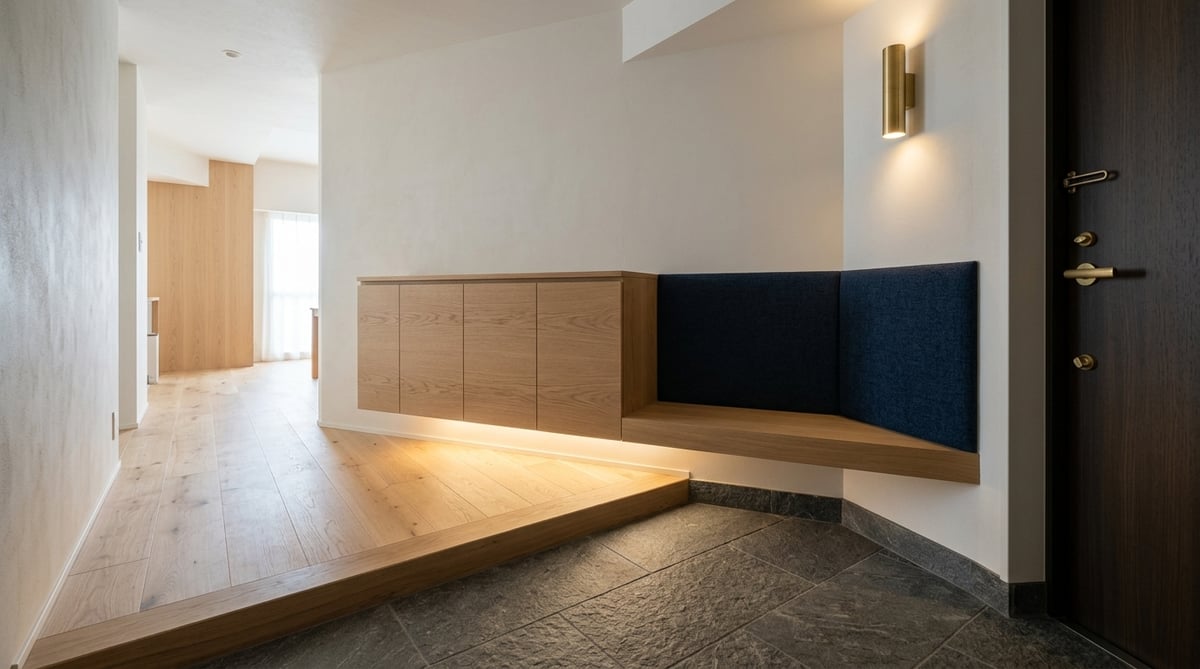
Facing a multi-hundred-thousand-yen total on an upfront rental estimate is a familiar moment of hesitation for many city dwellers. You may long for the understated warmth and five-line transit convenience of Kitasenju, yet pause before the sheer weight of initial expenses. Understanding how Japanese real estate pricing works offers clarity and empowerment. Move-in fees are not an immutable package you must silently accept. By gently clearing away arbitrary dealer markups and securing your legitimate rights under the law, keeping ¥100,000 to ¥200,000 in your pocket allows you to invest in comfortable furniture and daily ease. Wise living begins with unraveling the components of move-in costs.
- Standard Tokyo Upfront Cost (Rent Multiple) stands at 'Standard Tokyo Upfront Cost (Rent Multiple)', providing a practical benchmark for informed living.
- Potential Savings from Pruning Options stands at 'Potential Savings from Pruning Options', providing a practical benchmark for informed living.
- Legal Default Fee Limit (Article 46) stands at 'Legal Default Fee Limit (Article 46)', providing a practical benchmark for informed living.
Why Move-In Costs Reach Five Times the Rent: Dissecting the Financial Breakdown
When leasing an apartment in Tokyo, the prevailing benchmark for move-in expenses stands at 4.5 to 5.5 months of rent. For example, signing for a standard single resident flat in Kitasenju (¥80,000 monthly rent plus ¥8,000 maintenance fee) frequently requires a total upfront payment between ¥400,000 and ¥500,000. When combined with moving vans and furnishing outlays, beginning a new chapter in the city can easily demand over ¥600,000 in immediate cash reserves.
Why do these figures mount so rapidly? The primary reason is that closing invoices bundle numerous items with varied legal backgrounds, often functioning as an opaque black box to prospective tenants. Here is an overview of the foundational components found on standard rental cost sheets:
- Advance Rent (1 Month + Prorated Rent): Covers the prorated balance for days remaining in the move-in month alongside the full payment for the subsequent month. Because this constitutes legitimate living rent, it cannot be subtracted, though choosing your contract start date strategically helps modulate cash timing.
- Security Deposit (1 to 2 Months Rent): A security deposit held by the landlord to guarantee restoration duties or rent arrears. If the apartment is cared for responsibly within reasonable wear and tear, this balance is reconciled and refunded when vacating.
- Key Money (1 to 2 Months Rent): A customary non-refundable gratuity paid to property owners. Unlike deposits, it will never be returned. A historical relic of postwar housing shortages, it represents the single largest area of modern cost-cutting through careful selection or negotiation.
- Brokerage Commission (0.55 to 1.1 Months Rent, Tax Included): The service fee paid to the brokerage intermediary for arranging the transaction. While legally capped under Article 46 of the Real Estate Brokerage Act, conventional agencies routinely bill the absolute statutory maximum of 1.1 months by default.
- Rent Guarantor Guarantee Fee (Initial Enrollment: 0.5 to 1 Month Total Rent): The commission paid to a credit guarantor firm in place of an individual co-signer. Over 80% of Tokyo rental listings now mandate guarantor coverage, billing roughly 40% to 100% of total monthly fees at signing.
- Fire & Renter Liability Insurance (¥15,000 to ¥25,000 for 2 Years): Policy covering water damage, household goods, and tenant liabilities. While agencies usually bundle their chosen insurer, tenants can occasionally arrange comparable coverage independently at approximately ¥10,000.
- Key Replacement Fee (¥15,000 to ¥35,000): Direct cost of swapping door lock cylinders for safety. Standard pin-tumbler cylinders cost around ¥15,000, whereas high-security dimple or Opnus keys can exceed ¥20,000 to ¥30,000.
While compiling these essential charges already reaches nearly four times the rent, conventional agencies often layer discretionary add-ons such as sanitization, 24-hour support plans, or document preparation fees, inflating invoices to five or six times rent. Recognizing each line item is your primary line of defense.
| Cost Item | ¥80,000 Rent | ¥100,000 Rent | ¥120,000 Rent | Negotiability & Adjustments |
|---|---|---|---|---|
| Advance Rent (1 Month) | ¥80,000 | ¥100,000 | ¥120,000 | Mandatory payment (Move-in date can be adjusted) |
| Deposit (1 Month) | ¥80,000 | ¥100,000 | ¥120,000 | Security fund (¥0 upfront on zero-deposit homes) |
| Key Money (1 Month) | ¥80,000 | ¥100,000 | ¥120,000 | Completely avoidable by choosing zero-key-money homes |
| Brokerage Fee (Typical 1.1 mo) | ¥88,000 | ¥110,000 | ¥132,000 | Cut in half with Sorai Tokyo (0.55 months) |
| Guarantor Fee (50% rent) | ¥44,000 | ¥54,000 | ¥65,000 | Subject to plan rules; mandatory in most properties |
| Fire Insurance (2 Years) | ¥18,000 | ¥20,000 | ¥22,000 | Self-arrangement can save ¥5,000 to ¥10,000 |
| Lock Replacement Fee | ¥22,000 | ¥22,000 | ¥27,500 | Depends on building rules (can occasionally be waived) |
| Total Baseline (No Options) | ¥412,000 | ¥506,000 | ¥606,500 | Savvy renters can cut ¥100k–¥200k+ |
Licensed Real Estate Broker Advice
When you receive an itemized estimate after touring an apartment, avoid looking only at the total figure. Take a highlighter and group lines into statutory, contractually required costs versus optional items added by the brokerage agency. Unfamiliar English-labeled service titles beyond rent, deposit, key money, guarantor fees, commissions, and insurance represent prime opportunities for major savings.
Consult with experienced bilingual real estate advisors via video call. From selecting safe neighborhoods to verifying contract terms, we help you find the right home.
The Reality of Article 46: The 0.55-Month Brokerage Fee Cap and Sorai Tokyo Standards
In standard rental practice, intermediary agencies routinely demand a brokerage fee equal to one full month of rent plus consumption tax (1.1 months total) as if it were an immutable legal standard. However, an examination of Article 46 of the Real Estate Brokerage Act alongside Ministry of Land, Infrastructure, Transport and Tourism Notice No. 1552 reveals that the foundational statute establishes a very different baseline.
Under Japanese law, the combined compensation an agency can collect across both parties—the lessor (landlord) and lessee (tenant)—is capped at one month of rent plus consumption tax. Section 4 of the ministry notice explicitly defines the ceiling chargeable to an individual tenant:
"The total compensation a real estate transaction business may receive from both parties concerning mediation of building leases for residential use shall not exceed an amount equivalent to one month of rent. In this case, the amount of compensation that may be received from one party shall not exceed an amount equivalent to 0.55 times one month of rent, unless the prior consent of said client is obtained at the time of receiving the mediation request."
In short, the fundamental statutory principle dictates that without prior consent, the maximum brokerage fee chargeable to a tenant is 0.55 months of rent (tax included). To bill 1.1 months, the agency must secure the tenant's unambiguous agreement at the exact moment mediation is requested—such as when booking viewings or applying to view homes. In daily agency practice, many companies obscure this consent phase and present an invoice for 1.1 months during contract explanations as an assumed convention.
| Monthly Rent | Standard Industry Fee (1.1 Months) | Sorai Tokyo Standard (0.55 Months) | Retained Savings for Tenant |
|---|---|---|---|
| ¥70,000 | ¥77,000 | ¥38,500 | ¥38,500 saved |
| ¥80,000 | ¥88,000 | ¥44,000 | ¥44,000 saved |
| ¥100,000 | ¥110,000 | ¥55,000 | ¥55,000 saved |
| ¥120,000 | ¥132,000 | ¥66,000 | ¥66,000 saved |
| ¥150,000 | ¥165,000 | ¥82,500 | ¥82,500 saved |
Honoring the spirit of Article 46, Sorai Tokyo applies a uniform standard of half-month brokerage fees (0.55 months of rent, tax included) across all rental agreements. We refrain from misleading slogans like "up to zero fees" or hidden administrative caveats. By locking your fee ceiling strictly at 0.55 months regardless of which apartment you choose, you retain ¥44,000 on an ¥80,000 apartment, or ¥82,500 on a ¥150,000 residence, directly upon signing.
These preserved savings can be dedicated to pieces that enrich your everyday life—such as an artisanal solid wood dining chair sourced along Kitasenju's local shopping streets or tailored linen curtains that soften morning daylight across your new living room.
Evaluating Zero-Deposit & Zero-Key-Money Homes: Distinct Advantages and Move-Out Traps
Filtering for "no deposit, no key money" across rental search portals returns many appealing properties in Kitasenju. These zero-zero listings dramatically lower upfront hurdles by roughly ¥150,000 to ¥250,000, offering immense appeal when preserving liquidity is paramount.
Drawing on over a decade in real estate practice, however, key money and security deposits originate from entirely different contexts. Failing to distinguish between them can lead to substantial regrets: while entering the lease feels economical, leaving it years later can trigger unexpected invoices.
The Rational Reasons Landlords Waive Key Money
Key money, as noted, is a gratuitous gift to the owner. Homes listed with zero key money are by no means inherently defective. In today's competitive rental market, owners deliberately set zero key money based on sound management strategies:
- Differentiation Against Nearby Buildings: When identical floor plans compete within the same walking radius, lowering upfront barriers lifts portal visibility and speeds up occupancy.
- Vacancy Countermeasures in Low Seasons: From early summer through autumn, owners prefer waiving one or two months of key money rather than suffering extended vacant months.
- Institutional Fund Priorities: Unlike private individual landlords, institutional investors and real estate funds managing entire residential towers focus on year-round occupancy targets (typically exceeding 95%) rather than sporadic lump-sum gifts.
Consequently, zero-key-money listings frequently represent genuine, uncompromised cost savings and deserve active consideration.
The Latent Risks of Zero-Deposit Leases: Cleaning Riders and Termination Penalties
In contrast, zero-deposit listings require careful scrutiny. Deposits exist to collateralize restoration obligations. For an owner, offering an apartment with zero deposit carries the risk of uncollected restoration balances when a tenant departs. To insulate themselves, owners almost invariably include mandatory move-out cleaning riders or short-term termination penalty clauses.
For instance, special clauses may mandate: "Tenant shall pay a fixed room cleaning fee of ¥55,000 (tax included) upon vacating," or "Cleaning fees shall be billed at ¥1,320 per square meter, reconciled upon departure due to zero initial deposit." In a 25 sqm studio, this secures a predetermined charge of approximately ¥33,000; in a 40 sqm one-bedroom, it reaches ¥52,800.
Benefits of Zero-Deposit, Zero-Key-Money Homes
Immediate cash outflow at contract signing is minimized. On an ¥80,000 per month residence, skipping one month of deposit and one month of key money preserves ¥160,000 at signing, freeing funds for moving vans or furnishings. In particular, zero key money delivers pure, permanent financial relief since it is never repayable.
Contractual Caveats in Special Terms
Without an upfront deposit, room cleaning costs (typically ¥1,100 to ¥1,320 per sqm) are billed at move-out. Furthermore, vacating within six to twelve months frequently triggers early termination penalties equal to one or two months of rent. Tenants anticipating possible job transfers or lifestyle shifts must review these terms carefully.
Supreme Court Precedents and Tokyo Rule Validation Standards
Regarding move-out cleaning clauses, legal boundaries must be respected. Under the Ministry of Land, Infrastructure, Transport and Tourism's Restoration Guidelines and the Tokyo Rental Housing Dispute Prevention Ordinance ("Tokyo Rules"), baseline cleaning and ordinary aging wear incurred for subsequent tenants should legally fall on the owner as part of standard rent.
When an agreement shifts these costs onto a tenant via special clauses, a landmark decision by the Supreme Court of Japan Second Petty Bench (December 16, 2005) held that such clauses are legally invalid unless they satisfy the following three validity criteria:
- Objective Clarity: The contract must explicitly articulate that the tenant assumes costs encompassing normal wear and tear, specifying precise unit rates or explicit sums rather than vague generalities.
- Unambiguous Tenant Consent and Recognition: At signing, the tenant must distinctly understand and willingly acknowledge that they are assuming expenses typically covered by the lessor, following clear broker explanations.
- Absence of Usurious or Oppressive Terms: The charged sums must align with fair market benchmarks without violating principles of good faith (Consumer Contract Act Article 10) to the consumer's unilateral detriment.
When reviewing zero-zero properties, always verify in the Statement of Important Matters what payment obligations arise upon move-out. In many instances, the difference is merely one of timing—paying upfront versus upon departure—making total cost evaluation essential.
Trimming ¥50,000 to ¥80,000: Pruning Unnecessary Options like Sanitization and Support Plans
Reviewing an upfront cost sheet often reveals unfamiliar secondary services. These ancillary expenses are largely introduced by brokerages to supplement corporate profit margins; when tenants assert that participation is discretionary, the vast majority can be eliminated.
The table below breaks down typical discretionary line items and how to decline them with quiet confidence:
- Indoor Sanitization / Antibacterial Coating (¥15,000 to ¥25,000): Marketed as ozone deodorization or protective sanitization prior to move-in. In agency reality, comprehensive specialist treatment is exceedingly rare; often, a staff member merely releases a brief aerosol spray inside the vacant room. As this is not a property management mandate, saying "I do not require sanitization; please remove this line item" easily clears the charge.
- 24-Hour Emergency Support / Resident Concierge Club (¥15,000 to ¥22,000 for 2 Years): A support line for late-night lockouts or plumbing leaks. While seemingly reassuring, standard renter liability insurance policies almost universally incorporate 24/7 complimentary dispatch for unlocking and plumbing emergencies, creating direct duplication. Property management firms frequently maintain emergency hotlines as well. Stating "My insurance already includes emergency dispatch, so I respectfully decline external support packages" is fully accepted.
- Mini Fire Extinguisher / Disaster Readiness Kit (¥10,000 to ¥16,500): Packaged sales of compact fire sprays or emergency backpacks. Under the Fire Service Act, statutory firefighting equipment for apartments is the landlord's responsibility in common areas; there is no legal basis compelling individual tenants to purchase specialized indoor canisters. Comparable sprays retail online for around ¥3,000. Stating "I will supply my own emergency goods, so this is unnecessary" resolves the matter.
- Document Processing / Administrative System Fees (¥11,000 to ¥33,000): Charged under the pretext of bound contract preparation or ledger inputs. Real estate regulations place a strict ceiling on total broker compensation through statutory commission caps. Re-labeling compensation as "administrative fees" to collect amounts beyond the brokerage commission cap is widely recognized as an unlawful evasion of statutory fee limits. When paying a full commission, you have solid grounds to insist on striking separate documentation charges.
| Estimate Line Item | Typical Billed Amount | Actual Nature & Legal Character | Action & Refusal Strategy |
|---|---|---|---|
| Sanitization / Antibacterial Spray | ¥16,500 to ¥22,000 | Discretionary option (often simple spray can application) | Straightforward ("Indoor sanitization is not required") |
| 24-Hour Resident Support | ¥16,500 to ¥22,000 | Frequently duplicated by standard renter insurance | Moderate (Removable unless strictly required by management) |
| Disaster / Fire Extinguisher Kit | ¥11,000 to ¥16,500 | Voluntary goods purchase (inexpensive commercial options) | Straightforward ("I will provide my own safety goods") |
| Document / System Admin Fee | ¥11,000 to ¥33,000 | Suspected double-billing exceeding statutory commission limits | Legal point ("This is legally part of brokerage mediation") |
| Total Unnecessary Options | ¥55,000 to ¥93,500 | Discretionary dealer margin without living value | Target complete removal with polite assertion |
Licensed Real Estate Broker Advice
When requesting the removal of optional add-ons, some sales agents may push back, claiming: "Removing this will fail the landlord's screening" or "It is a mandatory closing condition." However, property owners evaluate income stability, employment history, and reliability—not whether a tenant purchases optional room sprays from the agency. If confronted with resistance, asking calmly: "Is this an explicit condition set by the building owner, or an optional service offered by your agency?" cleanly resolves the pressure.
Timing and Negotiation Techniques for Securing One Month of Free Rent
Another reliable instrument for lowering upfront costs is securing a "Free Rent" concession—an agreement where the landlord waives rental obligations for an introductory window (typically 0.5 to 1 month, and occasionally up to 2 months).
On a flat renting for ¥90,000 monthly, one month of free rent eliminates the initial month's advance rent of ¥90,000, leaving that cash balance entirely in your savings. While asking an owner to trim base rent or deposits can cause friction, free rent proposals align remarkably well with landlord financial goals.
Why Property Owners Prefer Free Rent Over Lowering Monthly Rent
When a prospective tenant asks for a ¥3,000 discount on monthly rent, landlords frequently decline. Lowering the contractual headline rent directly harms the building's asset valuation and net yield, which diminishes bank financing appraisals and eventual sales value. Furthermore, if other occupants in the building discover a neighboring flat rents for less, it triggers lease renegotiations.
Free rent, by contrast, preserves the official nominal rent at ¥90,000 on all formal registries and bank documents while treating the initial free month as a temporary promotional incentive. The property's capital asset valuation remains intact, enabling owners to resolve vacancies quickly without degrading book values.
Identify Listing Duration and Vacancy History
Check how long the listing has been on the market through major portals or broker discussions. Properties vacant for over two months create heightened urgency for owners eager to secure steady revenue.
Target the Slower Leasing Window (May to November)
Following the busy spring moving season, the rental market enters a quieter phase from May through November. Owners carrying vacancies during this period dread losing income through the winter until the next spring cycle.
Submit Written Applications Tied to Immediate Commitment
Avoid asking casually during tours if prices can drop. Instead, propose: "If 0.5 to 1 month of free rent can be granted, I will complete this application and sign immediately today," presenting a clear mutual benefit in writing.
Review Early Termination Clauses for Penalties
Contracts granting free rent usually include short-term penalty terms requiring repayment of the concession if departing within one or two years. Verify that the required stay matches your plans before signing.
As a seasoned brokerage technique, rather than bluntly demanding a full month of free rent, suggesting that the prorated rent from your mid-month move-in date through the end of the month (roughly 0.5 months) be treated as free rent often meets with quick approval.
Cost-Effective Micro-Areas and Building Characteristics in Kitasenju
Kitasenju Station is Adachi Ward's premier transportation hub, served by five intersecting lines: JR Joban Line, Tokyo Metro Chiyoda Line, Tokyo Metro Hibiya Line, Tobu Skytree Line, and the Tsukuba Express. With direct connections to Otemachi in approximately 16 minutes and Kasumigaseki in 21 minutes, tenant demand remains robust.
Nonetheless, clear variations in upfront pricing flexibility and zero-key-money opportunities emerge across the station's east and west sides, distance from ticket gates, and structural ages. Understanding local geography helps you locate quiet, affordable, and well-connected residences.
West Exit (Lumine, Marui, Shukuba-dori): Commercial Vitality and Firm Terms
Kitasenju's West Exit features pedestrian decks leading directly to Lumine Kitasenju and Marui, while the historic Shukuba-dori shopping street runs along the former Nikko Kaido. Packed with dining spots, grocers, and pharmacies, daily convenience is exceptional. However, because demand remains concentrated here, landlords generally hold firm to standard one-month deposit and one-month key money terms.
To reduce move-in expenses on the west side, look 10 to 13 minutes outward toward Senju Okawa-cho or Senju Moto-machi. Entering these tranquil residential quarters along the Arakawa riverfront reveals renovated reinforced concrete (RC) buildings where zero-key-money or free-rent promotions regularly appear.
East / Denki-Dai Exit: Serene Surroundings and Negotiable Opportunities
The East Exit (Denki-Dai Exit) faces the open campus of Tokyo Denki University, combining vibrant student energy with calm downtown warmth. Passing through Gakuen-dori shopping street connects smoothly into the peaceful neighborhoods of Senju Asahi-cho, Senju Azuma, and Hinode-cho.
With fewer large commercial complexes than the west, the eastern quadrant offers a substantial supply of residences for singles and families. This abundance of housing creates healthy competition among property owners, making zero-key-money terms and free-rent concessions much more common. Within 7 to 10 minutes on foot, renters frequently discover properties where initial expenses can be trimmed significantly.
Expanding Options to Neighboring Stations: Ayase, Kita-Ayase, and Nishi-Nippori
Looking one or two stops along the Chiyoda Line expands your options and balances rent against initial capital outlays:
- Ayase Station: Just one stop (about 3 minutes) from Kitasenju on the Chiyoda Line, Ayase is a critical hub featuring originating trains (primarily from Platform 2). Equipped with East and West ticket barriers, it offers convenient elevated shopping at Tokyu Store Ayase (open until 22:00) and Belx Adachi Kahei along Kan-nana Dori (open until 21:00). Base rents are roughly ¥5,000 to ¥10,000 lower than Kitasenju, making initial costs in the low ¥300,000s achievable on zero-zero properties.
- Kita-Ayase Station: The originating terminal of the branch Chiyoda Line, offering seated morning commutes directly into Otemachi. Equipped with North, South, and Central ticket barriers, it links directly to the Lalaterrace Kita-Ayase commercial facility. Smooth pedestrian walkways access Shobunuma Park. Despite ongoing station-area modernization, rents remain among the most competitive in Adachi Ward, with numerous newly built or modern buildings running upfront discount campaigns.
- Nishi-Nippori Station: Four stops toward Otemachi, connecting the Chiyoda Line, JR Yamanote Line, Keihin-Tohoku Line, and Nippori-Toneri Liner. Featuring underground exits (Exits 1–3) and JR gates, it provides effortless access to both inner and outer Yamanote rings. While rents trend higher than Kitasenju, the financial impact of cutting broker commissions by half is most pronounced in this higher rent bracket.
| Station / Area | Studio / 1K Rent Benchmark | Transit Time to Hubs | Upfront Cost Profile & Strategies |
|---|---|---|---|
| Kitasenju Station (West Exit) | ¥78,000 to ¥85,000 | Otemachi 16m / Ueno 8m | High demand keeps terms firm. Look 10+ min out in quiet areas. |
| Kitasenju Station (East Exit) | ¥73,000 to ¥80,000 | Otemachi 16m / Kasumigaseki 21m | Healthy stock; zero key money and free rent easier to negotiate. |
| Ayase Station (East/West Exits) | ¥68,000 to ¥75,000 | Otemachi 19m (Many seated departures) | Rent is one step lower; zero-zero apartments multiply. |
| Kita-Ayase Station (North/South) | ¥63,000 to ¥70,000 | Otemachi 23m (Direct originating trains) | Modernized gates with high-value stock. Premier cost-performance. |
| Nishi-Nippori Station (Exits 1–3) | ¥85,000 to ¥95,000 | Otemachi 11m / Shinjuku 19m | Yamanote connection. Cutting fees in half yields huge cash savings. |
From a building structure standpoint, reinforced concrete (RC) buildings constructed 15 to 25 years ago with freshly refurbished interiors offer optimal value. Having shed their initial new-construction premium, owners often package them with "zero key money, one month deposit, and one month free rent" to attract quality tenants. Rather than insisting strictly on brand-new builds, examining the updated state of indoor fixtures—such as modern air conditioning, washlet toilets, and independent washbasins—is the secret to harmonizing comfort with cost efficiency.
Sorai Tokyo Half-Month Brokerage and Free Estimate Second Opinion on LINE
When searching for a new home, you may discover a promising property on an internet portal but wonder: "Is this quote really fair?" or "Are redundant options inflating this estimate?"
Sorai Tokyo was founded to eliminate these doubts, allowing residents to embark on their next chapter with clarity and peace of mind by rethinking conventional brokerage practices.
Half-Month Brokerage Fees (0.55 Months Rent, Tax Included) on All Listings
Sorai Tokyo handles virtually all rental residences listed across Tokyo on major real estate portals (including SUUMO, LIFULL HOME'S, and at home) at our standard half-month brokerage commission (0.55 months rent, tax included).
We do not restrict discounts to limited partner properties or insert hidden paperwork surcharges. Operating in strict accordance with Article 46 of the Real Estate Brokerage Act, our compensation limit is set at 0.55 months of rent, ensuring transparent, legitimate pricing regardless of which home you select.
Dedicated Broker Verification and Free Second-Opinion Diagnoses
While some platforms claim to determine vacancies instantly via automated algorithms, live rental market realities dictate that property statuses shift by the hour. At Sorai Tokyo, licensed real estate brokers personally review real-time availability through REINS and direct property management systems, eliminating misleading automated flags.
For those who have already viewed an apartment through another agency and hold a written cost estimate, we provide a complimentary Estimate Second Opinion Diagnosis via our official LINE account. Simply send a photo or PDF of your estimate to our chat, and an experienced licensed broker with over 10 years of field tenure will impartially examine:
- Whether improper administrative or document processing charges violate real estate fee regulations
- Whether discretionary items like sanitization or concierge memberships can be struck from the quote
- Whether guarantor rates and fire insurance premiums reflect genuine market baselines
- The exact net amount saved by completing your agreement through Sorai Tokyo's half-month brokerage standard
Streamlined Viewings: Meeting and Concluding On-Site Without Agency Detours
Many renters have experienced the tiring routine of visiting physical brokerage storefronts, filling out extensive questionnaires, and enduring high-pressure pitches for unrelated listings.
At Sorai Tokyo, on-site rendezvous and direct departures are our standard practice. We meet you directly in front of the building at your chosen time, allowing you to examine the rooms, natural light, and building maintenance attentively at your own pace alongside dedicated specialists. We never engage in aggressive sales calls or hurried closing tactics. Once the viewing finishes, you are free to return home and reflect comfortably on LINE.
Whether using our mobile bottom navigation or desktop footer tools, you can explore the SorAi Move-In Cost Simulator and analytical tools at your convenience. Share a listing link or cost estimate with us on LINE as comfortably as enjoying a cup of tea, and let us assist your journey with seasoned expertise.

Frequently Asked Questions on Move-In Costs in Kitasenju
Choosing a home is more than comparing square meters and numbers; it prepares the stage for your daily life. An evening grocery stroll through welcoming shopping streets, or a peaceful morning seat on an originating Chiyoda Line train reading a favorite book—these quiet daily moments matter most. We hope these insights allow you to navigate initial rental costs with confidence and ease. Whenever questions arise, our licensed team is always ready to welcome your inquiry on LINE.
QIf I negotiate for half-month brokerage fees, will real estate agencies dislike it or will it disadvantage my tenant screening?
AWhen negotiating discounts in person with conventional brokerage agencies, agents can become defensive or deprioritize your application. However, tenant screening is evaluated by property management companies, guarantor companies, and landlords, not the brokerage agency. The screening criteria strictly assess annual income, tenure, and credit history; the brokerage fee paid has zero impact on the screening outcome. By utilizing transparent services like Sorai Tokyo that pledge half-month brokerage fees upfront, you can reduce initial costs as a rightful privilege without any awkward negotiation.
QI am worried about being billed exorbitant cleaning fees when moving out of a zero-deposit, zero-key-money home. How can I prevent this?
AThe most effective countermeasure is checking special clauses in the Statement of Important Matters and the lease contract before signing. If 'Tenant covers move-out cleaning' is stated, confirm whether a per-square-meter rate (standard market range is ¥1,100 to ¥1,320 per sqm tax included) or fixed total is explicitly written. Furthermore, photographing preexisting scuffs, stains, wallpaper tears, and fixture condition on move-in day with timestamps, and submitting a move-in checklist to management, provides objective proof against wrongful claims upon moving out.
QAn estimate from another agency includes an indoor sanitization fee. Can this be removed right before signing?
AYes, it can be removed at any point prior to signing and sealing the contract. Simply state via email or messaging: 'I do not require indoor sanitization or tenant support options; please reissue the estimate without them.' If they argue that it is mandatory or already scheduled, request: 'Please provide the contractor name, detailed service specifications, and confirmation of whether this is an explicit landlord listing requirement.' This straightforward request typically resolves unwanted add-ons.
QWhat happens if I cancel a lease with a free rent promotion before one year due to unforeseen circumstances?
AMost contracts featuring free rent promotions include a short-term termination penalty clause. Typical conditions require paying an amount equivalent to the free rent (usually one month of rent) if terminating within one year, or 0.5 months if terminating within two years. If there is a possibility of early relocation due to career transfers or family events, verify the required occupancy period before finalizing your agreement. If you plan to reside for more than one year as standard, no penalty applies.
QCan Sorai Tokyo introduce properties found on major listing portals like SUUMO and HOME'S?
AYes, virtually all residential rental properties listed online across Tokyo can be handled. Japan's rental market shares listing information via the Ministry of Land, Infrastructure, Transport and Tourism's designated real estate information network (REINS) and inter-broker databases. Regardless of which agency advertises the home online, Sorai Tokyo can verify vacancy status and handle the contract at our standard half-month brokerage fee (0.55 months rent including tax). Simply share the property URL through our official LINE account for prompt availability and initial cost estimates.

Author: Sorai Tokyo Editorial Team (Supervised by Licensed Real Estate Agents)
A real estate consulting team specializing in assisting foreign nationals find rooms and explaining initial costs in Tokyo. We break down language barriers and differences in customs, offering dedicated support in Japanese, English, and Vietnamese for a safe and secure start to your new life.