
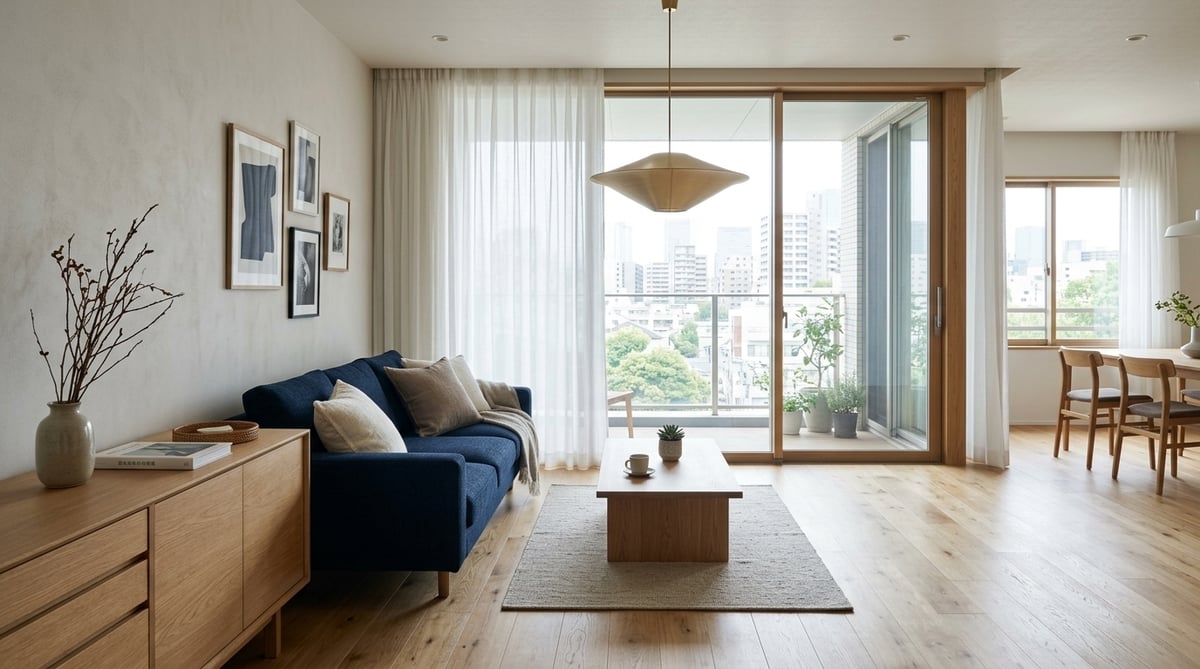
Stepping out of the station ticket gates at twilight, you are welcomed by the quiet rhythm of daily neighborhood life and an unmistakable, reassuring warmth. In the breeze sweeping across the pedestrian deck at the West Exit, the hurried footsteps of residents picking up dinner ingredients blend with cheerful hums from nearby shopping complexes, while across the East Exit plaza, commuters make their steady way home at an unhurried, comfortable pace. When searching for a home, true value does not come down to a detached checklist of square footage and specifications; it hinges entirely on how enriching, sustainable, and stress-free your everyday routine feels once you settle in. The peaceful calm that greets you the moment you open your front door, the soft morning light spilling across the floor on a quiet weekend, the joy of stocking up on fresh seasonal produce and stepping into your kitchen—choosing a neighborhood that provides this essential groundwork is the very foundation of safeguarding your finances and nurturing long-term wellbeing. Drawing upon a decade of firsthand field experience as a licensed real estate broker, I offer these practical, objective insights to demystify complex contract terms and upfront costs, empowering you to choose your next home with complete peace of mind.
- Travel time via the Joban Rapid Line and Ueno-Tokyo Line
- Saves 20,000 to 30,000 yen per month in fixed expenses compared to central Tokyo stations
- An optimal benchmark balancing living defense reserves with steady future savings
Transit Access and Direct Downtown Connections from Matsudo Station
Situated as a strategic transport hub in northwestern Chiba Prefecture, Matsudo Station offers exceptional practicality for commuting into central Tokyo. Located just across the Edo River that borders Tokyo and Chiba, the station serves both the JR Joban Line (Rapid and Local services) and the Shin-Keisei Line. This network provides seamless, transfer-free access to major hubs on the eastern side of the Yamanote loop, such as Tokyo and Shinagawa Stations, as well as core subway districts including Otemachi and Omotesando.
Direct Convenience to Tokyo and Shinagawa via the Joban Rapid Line and Ueno-Tokyo Line
The greatest strength of the JR Joban Rapid Line is its through-service via the Ueno-Tokyo Line, connecting passengers directly to Tokyo, Shimbashi, and Shinagawa Stations by way of Ueno Station. From Matsudo Station, the fastest journey to Tokyo Station takes approximately 24 minutes, and Shinagawa can be reached in about 33 minutes. Even during the morning peak hours, rapid trains run on a frequent schedule, matching or exceeding the travel times of private railway lines, the Chuo Line, or the Sobu Line within Tokyo's 23 wards.
After departing Matsudo, the rapid service stops at Kita-Senju, Minami-Senju, Mikawashima, Nippori, and Ueno. Arriving at Nippori Station takes only around 17 minutes, making transfers to the JR Yamanote and Keihin-Tohoku Lines remarkably smooth. In addition, Nippori serves as the primary transfer hub for the Keisei Skyliner to Narita Airport, offering significant time advantages for business trips and overseas travel. For professionals working in Marunouchi, Yaesu, Otemachi, Toranomon, or Shimbashi, the speed of the Joban Rapid Line plays a decisive role in reducing daily physical fatigue.
Subway Commutes to Otemachi, Kasumigaseki, and Omotesando via Direct Chiyoda Line Through-Service
Matsudo Station is also served by JR Joban Line Local trains. These local trains run through directly onto the Tokyo Metro Chiyoda Line from Ayase Station, cutting straight through central Tokyo without requiring a single transfer.
Taking a local train from Matsudo passes through Kanamachi and Kameari, reaching Ayase Station (West and East Exits)—the gateway to the Chiyoda Line—in about 8 minutes, and the major interchange of Kita-Senju Station (West Exit and East Denki-Dai Exit) in approximately 12 minutes. Staying on board takes you directly to Nishi-Nippori (approx. 18 min), Otemachi (approx. 29 min), Hibiya (approx. 32 min), Kasumigaseki (approx. 35 min), Akasaka (approx. 39 min), Omotesando (approx. 42 min), Meiji-jingumae Harajuku (approx. 44 min), and all the way to Yoyogi-Uehara.
The standout advantage of the direct Chiyoda Line route is that it eliminates stairs, platform changes, and waiting for connecting trains. Although travel time is a few minutes longer than the rapid service, the comfort of stepping directly onto the underground concourse at your destination makes your commute far more productive and relaxing for reading or catching up on work. Furthermore, several morning trains originate directly at Matsudo Station. Lining up on the platform slightly ahead of departure makes a fully seated commute to Otemachi or Kasumigaseki an entirely realistic daily routine.
Practical Detour Options and Utilizing Originating Trains During Service Disruptions
A frequently overlooked risk when renting in the greater Tokyo area is the disruption of daily commutes caused by railway delays or suspended service. Matsudo Station excels here by offering multiple redundant transit alternatives.
Even if the JR Joban Rapid Line suspends service due to strong winds or operational incidents, the local tracks operate on an independent quadruple-track layout. As long as local services are running, you can continue directly into central Tokyo via the Chiyoda Line. In addition, the Shin-Keisei Line departs from the East Exit of Matsudo Station. This allows you to immediately detour to Yabashira Station to connect with the JR Musashino Line (Shin-Yabashira Station), travel via Shin-Kamagaya Station to access the Hokuso Line, Narita Sky Access Line, and Tobu Urban Park Line, or bypass traffic entirely toward Keisei-Tsudanuma Station.
A comprehensive bus network also links Matsudo to Kita-Senju, Ayase, and Kanamachi Stations, significantly lowering the risk of becoming completely stranded during wide-area transit disruptions. Whether taking connecting buses or cycling toward the Kita-Ayase Station area (North, South, and Central Gates), Matsudo's close geographic proximity to Tokyo's Adachi and Katsushika Wards provides exceptional transit resilience when unexpected events arise.
Consult with experienced bilingual real estate advisors via video call. From selecting safe neighborhoods to verifying contract terms, we help you find the right home.
Living Around Matsudo Station: How to Navigate the Top Three Station-Front Shopping Centers
The primary reason Matsudo Station earns such high praise from solo professionals and couples is the exceptional concentration of everyday essentials tightly gathered right outside the gates. Within a few hundred meters of leaving the ticket barriers, the area provides a completely seamless layout where you can stock up on groceries, pick up household supplies, handle municipal paperwork, and dine out all in a single stop.
atre Matsudo, KITE MITE MATSUDO, and PLARE Matsudo: Features and Home Cooking Environment
The area surrounding Matsudo Station is anchored by three major commercial shopping complexes, each offering distinct advantages. The key to maximizing your daily household efficiency lies in smartly utilizing each one according to your routine lifestyle flow.
The first hub is atre Matsudo, directly connected to the JR ticket gates via an elevated pedestrian deck. Spanning eight above-ground floors, its basement and first floor house premium fresh produce markets and specialty prepared-food counters. Even coming home late from work, you can exit the ticket barriers and pick up crisp vegetables, fresh sashimi, and ready-to-eat delicatessen dishes without ever stepping into the rain. Complete with MUJI, UNIQLO, a bookstore, and inviting cafés, it is the perfect spot for effortless weekday errands on your commute home.
The second hub is KITE MITE MATSUDO, an expansive multi-purpose complex situated about a five-minute walk from the West Exit. Redeveloped on the spacious former site of the Isetan Matsudo department store, it serves as an indispensable daily living anchor for local households. Its basement floor features a vast branch of Lopia—a high-volume supermarket renowned for unmatched value and selection—while upper levels neatly organize Nojima consumer electronics, Nitori home furnishings, a major bookstore, a 100-yen shop, and rooftop open-air dining.
The third hub is PLARE Matsudo, directly accessible via the pedestrian deck from the East Exit. Built around its core anchor tenant, the Ito-Yokado Matsudo department store, this center excels in everyday clothing, home goods, household essentials, a dispensing pharmacy, and specialized medical clinic floors. Its rooftop also features the lushly planted Platto Garden, providing a welcoming green sanctuary to unwind under the open sky between errands.
Defending Your Monthly Budget: Grocery Strategies for Singles and Couples Using Discount Supermarket Lopia
Whether living solo or as a couple, grocery expenses represent the single largest variable cost impacting your monthly disposable income. Located on the B1 floor of the Kitemite Matsudo shopping complex right outside Matsudo Station's West Exit, Lopia Matsudo is renowned for unbeatable discount pricing and bulk portions, rooted in its heritage as a wholesale butcher.
Inside, mega-packs of domestic chicken breast and sliced pork are displayed at extraordinarily low per-gram prices alongside blocks of Japanese Black Wagyu, imported beef, market-fresh cuts of sashimi, generous family-sized seafood platters, and seasonal produce that evoke the bustling energy of a wholesale market. Seasonings, dry staples, and frozen items—including commercial-grade bulk goods—are stocked at some of the lowest price points in the entire region. Simply establishing a weekend routine of buying groceries in bulk at Lopia, portioning and freezing pre-seasoned meats, and batch-cooking staple side dishes can easily save you between 20,000 and 40,000 yen or more each month compared to dining out.
In addition, the neighborhood around Matsudo Station is a fiercely competitive battleground for drugstores. In fact, Matsudo City is the historic birthplace of Matsumoto Kiyoshi, Japan's largest drugstore chain. Multiple Matsumoto Kiyoshi outlets, along with Sundrug and Cocokara Fine, cluster tightly around the station. Being able to stock up on daily consumables, household essentials, beverages, and daily necessities by pairing store loyalty points with weekly discount sale days serves as a powerful advantage in systematically trimming your everyday living expenses.
Living with Breathing Room: Riverside Open Space and Historic Gardens
What forms a wonderful contrast to the urban convenience around the station is the abundance of nature and rich historical ambiance waiting just a short walk away.
Strolling westward from the West Exit through the local shopping streets for about 10 to 15 minutes, the horizon suddenly opens up to reveal the sweeping Edogawa Riverside. The seemingly endless green riverbanks, along with well-maintained cycling paths and pedestrian walkways, provide an ideal setting to recharge with daily jogs, leisurely walks, or weekend picnics. At dusk, the sunset dipping beyond the water against the distant silhouette of Mount Fuji offers a tangible, peaceful sense of time slowing down—a welcome escape from the bustle of central Tokyo.
On the east side, perched atop a gentle hill, lies Tojo Residence and Tojogaoka Historical Park, which preserves the former estate of Akitake Tokugawa, the final lord of the Mito domain. Designated as an Important Cultural Property of Japan, this magnificent traditional wooden residence features meticulously maintained, expansive lawn gardens that showcase natural beauty through every season. From winter plum blossoms and spring cherry blossoms to lush early-summer foliage and vibrant autumn leaves, having daily access to traditional Japanese aesthetics and tranquil open space gently unwinds the everyday tension of busy city life.
West vs. East Exit: Neighborhood Profiles and Safety Realities
When searching for a home around Matsudo Station, the first crucial dynamic to understand is how dramatically the character and topography differ between the West and East exits. Choosing the right side of the station to match your daily lifestyle and comfort level with neighborhood security is the single biggest factor in preventing post-move regret.
Thriving Retail Hub and Flat Riverside Living
- Topography: Flat terrain stretching from the station to the Edo River, offering easy walking routes and effortless bicycle commuting
- Key Commercial Facilities: Atre Matsudo, Kitemite Matsudo featuring Lopia supermarket, Daiei, and the vibrant West Exit shopping street
- Neighborhood Vibe: Lively dining and commercial streets right outside the station, seamlessly transitioning into quiet residential pockets and open riverbank vistas
- Ideal For: Single professionals prioritizing everyday shopping convenience, and couples looking for flat, stress-free access routes
The Civic Heart and an Elevated Residential District on Resilient Ground
- Topography & Ground: Gentle slopes ascending to the Shimosa Plateau with elevated terrain, offering exceptionally low flood risk and solid, stable bedrock.
- Key Landmarks & Amenities: Plare Matsudo (anchored by Ito-Yokado supermarket), Matsudo City Hall, the District Court, and Matsudo Central Park.
- Neighborhood Vibe: An orderly, refined civic enclave framed by lush greenery, mature trees, and a peaceful residential atmosphere.
- Recommended For: Solo female professionals seeking peace of mind and quiet surroundings, as well as couples prioritizing a serene, relaxed lifestyle.
West Exit: Commercial Vibrant Streets and Edogawa Riverside Living
Carrying forward its rich heritage as Matsudo-shuku—a bustling post station along the historic Mito Kaido road—the West Exit serves as the cultural and commercial heart of the area. Radiating outwards from the station plaza, lively shopping arcades are packed with banks, medical clinics, restaurants, cozy cafes, and local izakayas.
The greatest advantage of the West Exit is the flat topography that extends seamlessly from the station plaza through the residential neighborhoods right up to the Edogawa riverbank. With virtually no steep slopes to worry about, cycling makes daily errands to shopping destinations like Kitemite Matsudo and neighborhood supermarkets effortless. Furthermore, closer to the Edogawa River, you will find numerous mid-to-high-rise condominium complexes and modern reinforced concrete rental apartments, many of which offer airy riverfront breezes and expansive scenic views.
That said, one key detail to keep in mind is a small district just northwest of the station plaza, where traditional dining spots, retro hostess bars, and nightlife establishments cluster together. While businesses staying open late ensure well-lit streets well into the night, prospective tenants sensitive to street touts, late-night noise, or who simply prefer a serene walk home after dark should consider properties accessible via major thoroughfares—such as Harusamebashi-dori Avenue or Nagareyama Kaido Road—to bypass the busy nightlife quarter altogether.
The East Exit: Civic Hubs and Peaceful Upland Residential Neighborhoods
The East Exit side of Matsudo Station serves as the civic and educational center of the city—a notably calm, refined district. Stepping across the pedestrian deck immediately brings you to Plare Matsudo, just beyond which stand major public institutions including Matsudo City Hall, the Chiba District Court Matsudo Branch, and the local tax office.
Geographically, heading east from the station leads along a gentle upward incline onto the Shimosa Plateau, a solid diluvial upland resting 15 to 25 meters above sea level. While navigating the slope takes a little legwork, this elevated topography offers the immense peace of mind that flood hazards—such as overflows from the Edogawa River—are virtually nonexistent. With Matsudo Central Park and the Seitoku University campus gracing the area, the neighborhood maintains a clean, leafy streetscape blissfully free from adult entertainment venues and commercial nightlife noise.
For solo female renters and couples seeking a settled, quiet foundation for their daily life, the solid public safety and tranquil evenings of the East Exit make it an exceptionally compelling choice.
Nighttime Safety and Walking Routes Home: Insights from Matsudo Police Crime Statistics
Many people still hesitate about Matsudo's safety due to outdated reputations from decades past. However, recent official crime statistics make it abundantly clear that those concerns no longer reflect modern reality.
Thanks to targeted initiatives led by the Chiba Prefectural Police and the Matsudo Police Station—including the widespread installation of security cameras, stepped-up routine patrols centered around station-front police boxes, and dedicated local neighborhood watch programs—recorded penal code offenses have plummeted significantly over the past ten years. Parallel to the station area's redevelopment and the modernization of commercial facilities, streetlights have also been rapidly upgraded to bright LEDs.
That said, a closer look at local crime incident maps reveals that bicycle theft, especially of unlocked bikes, continues to make up the vast majority of all reported incidents. By practicing basic everyday precautions—such as consistently using dual locks on your bicycle and sticking to well-lit main thoroughfares like Mito Kaido or Shiyakusho-dori on your walk home while avoiding dimly lit or narrow back alleys—there is no reason to feel undue anxiety, even if you are living on your own.
Matsudo Station Area Rent Benchmarks and Budget Planning by Layout
While offering a 20- to 30-minute commute to central Tokyo, Matsudo provides rents noticeably lower—by one to two full tiers—compared to neighboring Tokyo wards like Adachi and Katsushika. This financial advantage is the primary economic rationale for choosing Matsudo. Based on 2026 market data, let us map out a realistic budget plan tailored to your lifestyle.
Average Rent by Layout and Comparison with Major Tokyo Stations
Below is the average monthly rent by floor plan around Matsudo Station, primarily based on reinforced concrete and steel-reinforced concrete apartment buildings. Comparing these figures with Ayase, Kanamachi, and Kita-Senju—stations sharing direct service along the same corridor via the Chiyoda Line—clearly highlights the exceptional cost-performance that Matsudo offers.
| Layout | Approx. Floor Area | Matsudo Station Rent | Kanamachi Station Rent | Ayase Station Rent | Kita-Senju Station Rent |
|---|---|---|---|---|---|
| 1K / 1R (Studio) | 20–26 m² | ¥55,000–¥68,000 | ¥68,000–¥78,000 | ¥75,000–¥85,000 | ¥85,000–¥100,000 |
| 1DK / 1LDK (1-Bedroom) | 30–42 m² | ¥78,000–¥102,000 | ¥95,000–¥120,000 | ¥105,000–¥135,000 | ¥125,000–¥160,000 |
| 2DK / 2LDK (2-Bedroom) | 45–58 m² | ¥100,000–¥138,000 | ¥125,000–¥155,000 | ¥138,000–¥175,000 | ¥165,000–¥210,000 |
| 3LDK+ (3-Bedroom+) | 60–75 m² | ¥135,000–¥175,000 | ¥160,000–¥205,000 | ¥180,000–¥230,000 | ¥220,000–¥280,000 |
As clearly illustrated in the rent comparison table above, Matsudo Station offers significantly lower rental rates across every unit size. Compared to Kanamachi Station just across the prefectural border, rent in Matsudo runs about ¥10,000 to ¥15,000 less per month, and about ¥20,000 to ¥30,000 less than Ayase Station. When compared directly to a major hub like Kita-Senju Station, an equivalent one-bedroom (1LDK) apartment saves you upwards of ¥40,000 per month—accumulating to roughly ¥500,000 in annual housing savings. This meaningful cost difference provides a decisive financial advantage, whether you choose to elevate your overall quality of life or build wealth for the future.
Rent-to-Take-Home Pay Ratios and Financial Defense Simulations
When signing a lease, real estate agents often suggest the outdated rule of thumb: "one-third of your pre-tax monthly income." However, with rising social insurance premiums and ongoing inflation, budgeting for an apartment based on gross salary is a critical mistake that can easily derail your household finances. At Sorai Tokyo, we define strict "rent ratios based on your actual take-home pay" to safeguard your sustainable financial well-being.
- Single-person households: Within 25% to 28% of net take-home pay (a safe range that leaves room for unexpected medical expenses and personal development).
- Dual-income couples: Within 22% to 26% of combined net take-home pay (a resilient budget capable of weathering a career pause or building long-term education funds).
Below is a simulation of household budget allocations based on net monthly take-home pay when living in Matsudo. Keeping fixed overhead low naturally creates a lifestyle where home cooking and effortless saving coexist with zero stress.
| Expense Category | Take-Home 200,000 yen (Single) | Take-Home 250,000 yen (Single) | Take-Home 350,000 yen (Couple) | Take-Home 450,000 yen (Dual Income) |
|---|---|---|---|---|
| Target Rent (incl. Management Fee) | 54,000 yen (27.0%) | 66,000 yen (26.4%) | 85,000 yen (24.3%) | 108,000 yen (24.0%) |
| Utilities (Electricity, Gas, Water) | 12,000 yen | 13,000 yen | 22,000 yen | 25,000 yen |
| Food (Mainly Home Cooking & Discount Groceries) | 30,000 yen | 36,000 yen | 55,000 yen | 65,000 yen |
| Telecommunications (Wi-Fi & Mobile Phone) | 8,000 yen | 9,000 yen | 14,000 yen | 16,000 yen |
| Daily Necessities & Sundries | 7,000 yen | 9,000 yen | 15,000 yen | 18,000 yen |
| Entertainment, Socializing & Clothing | 25,000 yen | 32,000 yen | 50,000 yen | 68,000 yen |
| Emergency Savings & Investments | 64,000 yen (32.0%) | 85,000 yen (34.0%) | 109,000 yen (31.1%) | 150,000 yen (33.3%) |
How Keeping Fixed Costs Low Builds Lasting Financial Freedom
As the simulation above illustrates, taking full advantage of Matsudo's sensible rent rates alongside cost-saving grocery hubs like Lopia makes a substantial difference. Even a single resident bringing home 200,000 yen a month can comfortably set aside over 60,000 yen each month. For a cohabiting couple with a combined net income of 350,000 yen, that figure climbs to a dependable 100,000 yen or more reserved for savings and wealth-building.
Once you sign a lease, housing costs become your single largest non-negotiable monthly expense. Getting caught up in the status or neighborhood prestige of central Tokyo and stretching your rent to 35% or 40% of your take-home pay inevitably forces you to cut back on daily meals and live in fear of sudden expenses, whether that means wedding invitations, seasonal travel, or emergency bills. Opting for the practical advantages of Matsudo is a wise long-term strategy—one that offers everyday peace of mind alongside a resilient financial safety net for your future.
Selecting Floor Plans and Furniture Dimensions for Singles and Couples
When searching for an apartment, relying solely on the tatami mat count shown on a floor plan can be misleading. Listed room dimensions frequently include protruding columns, pipe shafts, and structural beams. Without knowing the actual usable floor dimensions down to the millimeter before arranging furniture and home appliances, you risk delivery complications or creating uncomfortably cramped living pathways.
Usable Floor Area and Furniture Layout for Studio and One-Room Living
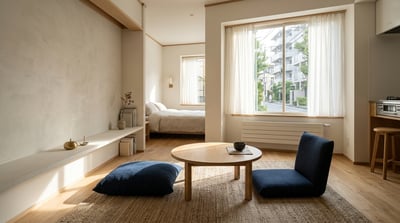
For single professionals selecting a studio or one-room layout, the total private floor area typically ranges from 20 to 25 square meters, with the main living area spanning 6 to 7.5 tatami mats (roughly 10 to 12 square meters). The following dimensional guidelines will help you maintain comfortable, unobstructed movement throughout your daily routine:
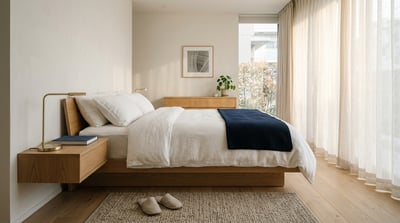
- Bed Space: A standard single bed measures 970 mm in width by 1,950 mm in length. If you prefer a semi-double bed, plan for 1,200 mm by 1,950 mm. Place the headboard flush against the wall and maintain at least 600 mm of clearance between the side of the bed and any closet doors—providing ample clearance for opening doors and bending down comfortably.
- Work Desk and Setup: If you work remotely from home, a desk measuring at least 1,000 mm wide by 600 mm deep serves as a functional baseline. Pulling out your desk chair to sit and stand smoothly requires an unobstructed depth of 750 mm to 800 mm behind the desk. Arrange the layout so your home office workspace does not encroach on your path to the bed.
- Refrigerator and Washing Machine Placement: Compact refrigerators suited for solo living (130 to 170 liters) typically measure 550 mm to 600 mm in width. Standard Japanese waterproof washing machine drain pans measure 640 mm by 640 mm internally. If you plan to install a front-loading washer-dryer combo, do not measure only the drain pan; always use a tape measure to verify that all hallway doors and bathroom entryways along the delivery route offer a clear opening width of at least 650 mm.
Daily Flow and Privacy for Dual-Income Couples in One-Bedroom and Two-Bedroom Homes
For couples moving in together, the primary options are one-bedroom layouts spanning 35 to 45 square meters, or two-bedroom configurations between 45 and 55 square meters. The two greatest lifestyle friction points for cohabiting couples are sleep disruption caused by differing daily schedules and audio bleed during concurrent remote work video conferences.
In a one-bedroom apartment, the designated bedroom must be spacious enough (at least 5 tatami mats, or approximately 8.2 square meters) to accommodate either a standard double bed (1,400 mm wide by 1,950 mm long) or two single beds placed side by side (1,940 mm wide by 1,950 mm long). In the combined living, dining, and kitchen area, you will likely set up a two-to-four-person dining table (1,200 mm wide by 750 mm deep) and a two-seat sofa (1,400 mm wide by 800 mm deep). To avoid feeling boxed in, ensure a viewing distance of at least 1,500 mm between your seating and the media console.
If both partners work from home, we strongly advise choosing either an independent one-bedroom layout where solid, swing-hinged doors isolate the bedroom from the living room, or a two-bedroom layout providing separate rooms for each person. Partitioning your space with only a lightweight sliding door allows early-morning alarms, morning preparations, and late-night business calls to carry straight through, creating avoidable relationship friction.
Structural Acoustics: Partition Wall and Window Standards for Soundproofing
Whether living alone or as a couple, acoustic insulation is the single most critical factor determining quality of life in multi-family residential buildings. While wood-frame apartments and lightweight steel structures offer lower construction and rental costs, their party walls provide minimal sound isolation. This carries a persistent risk of neighbor disputes sparked by conversational noise, footsteps, or vibrating morning alarms.
To secure a peaceful living environment in the Matsudo area, choosing a building constructed from Reinforced Concrete (RC) or Steel Reinforced Concrete (SRC) is a non-negotiable prerequisite. When viewing properties in person, make sure to inspect these two physical performance benchmarks:
- Party Wall Thickness of 180 mm or Greater (Cast-in-Place Concrete with a Sound Insulation Rating of TLT-55 or Higher): Lightly tap the boundary wall separating your unit from your neighbor with your knuckles to test the resonance. Listen for a dense, dull, solid thud. If you hear a dry, hollow rattle, the wall is likely a dry partition wall with insufficient acoustic insulation between drywall sheets, posing a significant risk of daily noise transfer from next door.
- Acoustic Window Rating of T-2 (30 dB Sound Reduction) or Double Glazing: Around Matsudo Station, high-frequency operations on the Joban Rapid and Local train lines combine with heavy vehicle traffic along major thoroughfares such as Mito Kaido (National Route 6) on the West Exit side. To suppress exterior train rumble (around 80 dB) and heavy truck road noise down to below 40 dB indoors—equivalent to the quiet of a library reading room—high-grade acoustic windows rated T-2 or higher, or retrofit dual-pane storm sash systems, serve as an indispensable defense barrier.
- Ground Stability Across Matsudo's Upland Plateaus and Lowland Basins: The elevated plateau extending east of the station (the Shimosa Upland) is blanketed by durable Kanto Loam layers, providing excellent resistance to seismic shaking and zero risk of liquefaction. In contrast, the lowland basin along the Edo River west of the station consists of soft alluvial soil. For properties in this western zone, choosing a reinforced concrete building with foundation pilings driven deep into solid bedrock support strata is essential for earthquake safety and peace of mind.
Scrutinizing Initial Move-in Costs and Eliminating Unnecessary Ancillary Fees in Lease Agreements
When renting an apartment in Tokyo, it is unfortunately all too common for brokerage initial cost estimates to include optional, inflated ancillary fees that you have no legal obligation to pay. By meticulously examining each line item and negotiating removals based on clear, factual grounds, you can reliably save between 50,000 and 100,000 yen—or even more—protecting your hard-earned savings right from the start.
Breakdown of Move-in Costs and Itemized List of Reducible Fees
Below is a practical overview of common optional fees routinely added by leasing agencies, their legal standing under Japanese real estate regulations, and actionable strategies for reviewing and negotiating them down.
| Estimate Line Item | Typical Agency Charge | Legal Status & Necessity | Broker Scrutiny & Negotiation Strategy |
|---|---|---|---|
| Indoor Disinfection & Deodorizing Fee | 16,500 to 27,500 yen | Optional (Can be refused) | [Complete Removal] Most services involve little more than setting off an over-the-counter smoke fogger or room spray. Request its full removal from the quote by stating: "I will perform my own thorough cleaning and ventilation prior to move-in, so this service is not needed." |
| 24-Hour Emergency Support Fee | 16,500 to 22,000 yen | Generally optional (Depends on building rules) | [Generally Removed] Functions duplicate the emergency dispatch services (lockouts, plumbing leaks) already bundled into standard renters insurance. State: "I will handle emergencies through my own insurance policy, so please remove this fee." |
| Document Preparation & Administrative Fee | 5,500 to 11,000 yen | Potential Real Estate Business Act violation | [Complete Removal] Preparing contract paperwork and processing administrative steps are duties legally included in the brokerage commission. Charging separately constitutes double-billing; firmly eliminate it by demanding the statutory legal basis for this fee. |
| Peace-of-Mind Move-in Pack & Disaster Kit | 11,000 to 22,000 yen | Optional (Tie-in sale) | [Complete Removal] Often an egregious markup on basic mini fire extinguishers or emergency supplies. Politely decline by clarifying: "I prepare my own emergency supplies to my personal standards, so this kit is unnecessary." |
| Designated Fire & Renters Insurance (2 Years) | 18,000 to 26,000 yen | Carrying insurance is mandatory | [Switch to Self-Arranged Policy] Decline agency-designated policies inflated with broker markups. Instead, independently secure equivalent or superior coverage online (20 million yen tenant liability plus 100 million yen personal liability) for roughly 4,000 to 8,000 yen per year. |
| Brokerage Commission | 1.1 months' rent (tax incl.) | Statutory default is 0.55 months' rent | [Standardized to 0.55 Months] Under Article 46 of the Real Estate Brokerage Act, billing 1.1 months without prior tenant consent is illegal. Secure your contract through Sorai Tokyo to guarantee the standard half-month rate (0.55 months' rent, tax incl.). |
Your Right to Choose Fire Insurance and Selecting the Right Coverage
In a standard residential lease, securing fire insurance (a combination of household contents insurance and tenant liability insurance) to cover fire or water damage is an essential tenant obligation. However, there is absolutely no legal requirement compelling you to enroll in the specific insurance policy mandated by the real estate brokerage.
The policies recommended by real estate agencies are almost always bundled packages priced at around 20,000 yen for a two-year term, inflated with generous agency commissions (kickbacks). On the other hand, if you directly purchase a tenant policy online—such as direct renter insurance plans from providers like Nisshin Fire or Zurich—you can secure identical or even superior coverage (20 million yen in tenant liability, 3 to 5 million yen in household contents, and 100 million yen in personal liability for everyday incidents) for around 4,000 yen annually (about 8,000 yen for two years), cutting your premiums by more than half.
To legally arrange your own insurance, simply notify the management company or landlord in writing or by email: "I will independently purchase an insurance policy that satisfies your required coverage criteria (e.g., tenant liability of at least 20 million yen) and submit a copy of the insurance certificate prior to the contract start date."
A Proven 5-Step Process to Securing Prime Rentals in Matsudo—and How Sorai Tokyo Backs You
To secure an ideal home at a fair cost, you need a disciplined, strategic approach grounded in the realities of Japan's property distribution network—rather than simply browsing commercial rental portals aimlessly.
Concrete Steps for a Seamless Property Search
The first step in finding your ideal home is to establish a strict, comfortable rent ceiling based on your net monthly take-home pay, and clearly map out your space requirements for essential furniture—such as bed dimensions, desk width, and refrigerator space. From there, you can begin shortlisting listings that meet your criteria on major portals like SUUMO or LIFULL HOME'S.
However, it is crucial to understand that real estate portals often contain duplicate postings or "bait-and-switch" listings—properties kept online to attract inquiries even though they have already been rented out. Once you identify homes you like, cross-referencing them against the industry-standard inter-broker distribution database is indispensable. This confirms whether the property is actively available and reveals the exact, official leasing terms set by the landlord's representing agency.
During in-person viewings, look beyond interior aesthetics. Engage all your senses to inspect the cleanliness of shared areas like trash collection points and bicycle parking, check resident bulletin boards for notices regarding noise complaints, and observe shifts in neighborhood sound levels between day and night.
Starting a Calm, Grounded Daily Life in Matsudo
Choosing a home is far more than simply collecting the keys to an apartment. It is about waking up refreshed to greet each new morning, returning after a demanding workday to the reassuring warmth of your own sanctuary, and cherishing unhurried moments with your partner or personal downtime—all within a comfortable, sustainable budget. Building that dependable foundation for everyday life is the true essence of apartment hunting.
Just over twenty minutes from central Tokyo, Matsudo offers the expansive waterside of the Edo River, vibrant shopping hubs right outside the station, and, above all, the genuine advantage of keeping rent and living expenses reasonable. It stands as an exceptionally compelling choice for living intelligently and abundantly in modern Tokyo. Do not let unfounded worries or opaque upfront costs hold you back; let the practical insights gained from ten years on the front lines of real estate serve as your steadfast shield. At Sorai Tokyo, we remain dedicated to walking alongside you with honest expertise, ensuring that your new chapter in Matsudo begins with complete peace of mind and pride.
Frequently Asked Questions
Q How crowded are morning commuter trains from Matsudo into central Tokyo, and what alternatives exist during transit delays?
A During the weekday morning peak between 7:30 and 8:30 AM, both the Joban Rapid Line and local through-trains onto the Tokyo Metro Chiyoda Line see typical Greater Tokyo crowding rates of around 140% to 150%. A game-changing tip for a comfortable commute is to take trains that originate right at Matsudo Station on the Chiyoda Line. Lining up on the platform 10 to 15 minutes before departure lets you secure a seat all the way into core business hubs like Otemachi and Hibiya. Furthermore, because local and rapid services operate on independent tracks along a quadruple-track corridor, a delay on the Joban Rapid Line rarely halts the local Chiyoda Line service. You also have detour options via the Shin-Keisei Line toward Yabashira and Shin-Kamagaya, giving you exceptional transit redundancy into central Tokyo.
Q Is the area around Matsudo Station safe for women living alone, and what are the key differences between the West and East Exits?
A Public safety around Matsudo Station has improved substantially in recent years thanks to an expanded security camera network and regular police patrols, making it quite secure for solo living. The station surroundings vary notably by exit. The West Exit is flat and lively, packed with shopping malls, supermarkets, and restaurants; however, because some nightlife spots exist near the plaza, women living alone often prefer properties accessible via well-lit main thoroughfares like Harusamebashi-dori. On the other hand, the East Exit serves as an administrative and educational hub hosting Matsudo City Hall, courts, and university facilities. It features clean, quiet, and residential streets free from red-light establishments. With its calm atmosphere even late at night, the elevated residential pocket on the East Exit side is particularly recommended for female solo renters and anyone prioritizing a serene environment.
Q If my lease agreement states non-refundable security deposit amortization or a fixed cleaning fee, do I risk facing surprise bills at move-out?
A The legal outcome hinges entirely on how specific special clauses are drafted in your contract. If the agreement explicitly states that a specified sum will be deducted from your deposit as a fixed move-out cleaning fee to cover ordinary restoration, this clause generally meets Supreme Court criteria and remains legally enforceable. The real risk lies in double-dipping language, such as clauses stating that the tenant must pay the full actual cost of repair and restoration separately from the non-refundable deposit deduction. During the Explanation of Important Matters before signing, insist on written confirmation specifying exactly what scope of restoration is covered by the deposit amortization and fixed cleaning fee to eliminate ambiguous additional charges.
Q Do standard tenant protections like the Tokyo Rental Housing Rules and national guidelines still protect me for properties in Chiba Prefecture?
A Yes, they apply completely. While the Tokyo Metropolitan Ordinance for the Prevention of Residential Rental Disputes mandating pre-contract explanations directly governs Tokyo properties, its core legal principles are identical to the Ministry of Land, Infrastructure, Transport and Tourism national restoration guidelines and established Supreme Court precedents. These universal tenets establish that landlords bear the cost of normal wear and tear and natural aging, and that wallpaper residual asset value depreciates to virtually one yen after six years. Even for properties situated in Chiba Prefecture, Japanese courts utilize these national guidelines as the de facto judicial standard. Confirming upfront that move-out settlements will follow the Ministry guidelines gives you ironclad legal protection against unfair inflated claims.

Author: Sorai Tokyo Editorial Team (Supervised by Licensed Real Estate Agents)
A real estate consulting team specializing in assisting foreign nationals find rooms and explaining initial costs in Tokyo. We break down language barriers and differences in customs, offering dedicated support in Japanese, English, and Vietnamese for a safe and secure start to your new life.