
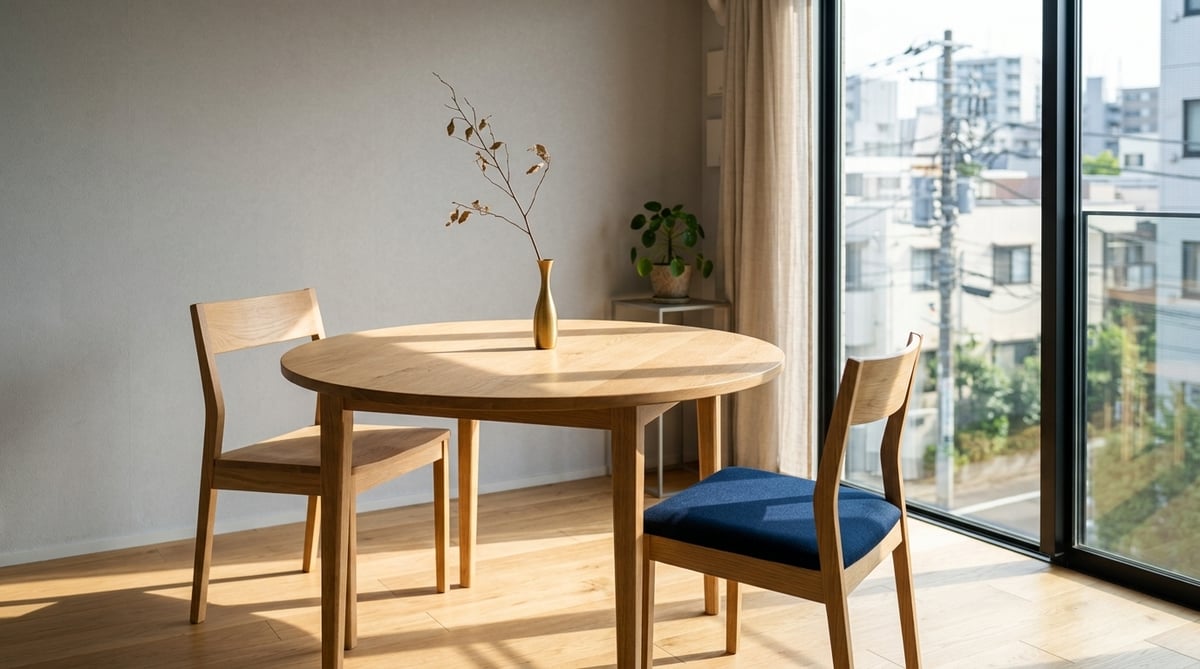
On a Saturday morning, coming up the stairs from the North Exit of Sangenjaya Station into the bustling intersection where Chazawa-dori meets Tamagawa-dori, many couples pause at the sheer volume of pedestrians and the rumble of the Metropolitan Expressway overhead, exchanging glances and wondering if it might be a bit too lively for family life. Yet, turning your back to Tamagawa-dori and walking just six minutes up the gentle incline of Taishido 2-chome, the scenery shifts completely into a tranquil residential sanctuary lined with three- to five-story low-rise residences and detached homes with private garden trees. The earlier bustle fades away, and standing in a sunlit living room with an open window welcoming a gentle breeze, many visitors discover the dual character of this neighborhood for the first time.
When seeking to balance a direct commute to Shibuya, Omotesando, and Otemachi with a spacious 70 to 85 sqm living environment for your family, Sangenjaya's rental benchmarks—a median of ¥307,000 for 2LDKs and ¥379,000 for 3LDKs (approximately ¥4,750 per sqm)—stand at a critical decision threshold. Should you shift toward Ikejiri-ohashi to be closer to Shibuya, expand toward Komazawa-daigaku near Komazawa Olympic Park to moderate your budget, or search toward Gakugei-daigaku on the Tokyu Toyoko Line where living spheres overlap? In Sangenjaya, where a vibrant commercial hub directly adjoins quiet residential plateaus, daily satisfaction depends not merely on the station name, but on which thoroughfare you cross, which specific micro-neighborhood (chome) you select, and the underlying topography.
From daily commute margins and total housing costs projected over a two-year horizon to school commute routes for international and local public schools, along with the distinct lease terms of luxury condominium rentals exceeding ¥300,000 per month, this guide outlines the practical criteria you need to choose with complete confidence.
- Sangenjaya rental medians stand at ¥307,000 for 2LDK and ¥379,000 for 3LDK units. Located just one express stop (approx. 4–5 minutes) from Shibuya, it offers substantial savings in total housing expenditure compared to central Shibuya, allowing families to secure larger floor plans or premium low-rise condominium residences within the same budget.
- A 5- to 10-minute walk inward from the commercial zones along Tamagawa-dori (Route 246) and Setagaya-dori leads to stable upland plateaus across Taishido 2–3 chome, Shimouma 2-chome, and Mishuku 1-chome, designated as quiet residential zones situated outside official flood hazard zones.
- Direct, transfer-free access connects seamlessly to Omotesando, Nagatacho, and Otemachi via the Hanzomon Line, while the British School in Tokyo (BST) Showa Campus (Secondary School) is conveniently located an approximate 7-minute walk from South Exit A on the Showa Women's University campus.
Direct Commutes to Shibuya and Otemachi vs. 2-Year Total Cost Breakeven Across 4 Neighboring Stations
Sangenjaya Station on the Tokyu Den-en-toshi Line is served by all train types—Express, Semi-Express, and Local—and operates direct mutual through-service to the Tokyo Metro Hanzomon Line via Shibuya. Beyond being merely one express stop (approx. 4–5 minutes) from Shibuya (or approx. 5 minutes on a local train via Ikejiri-ohashi), it offers seamless, transfer-free transit to key central business districts such as Omotesando, Aoyama-itchome, Nagatacho, and Otemachi, even during peak morning rush hours. For those wishing to gain a broader perspective on how central living environments compare, reviewing our Hanzomon Line Area Guide and Tokyu Den-en-toshi Line Area Guide provides a multidimensional understanding of this corridor.
Express Stops and Setagaya Line Origins: Commuter Margins and Station Gate Navigation
While neighboring stations on the Den-en-toshi Line such as Ikejiri-ohashi and Komazawa-daigaku also offer direct access to the Hanzomon Line via local or semi-express services, Sangenjaya offers two distinct transit advantages: Express train stops and serving as the originating terminal for the Tokyu Setagaya Line. On weekends, traveling toward Futako-tamagawa for shopping takes just one express stop (approx. 6 minutes). Furthermore, boarding the charming light-rail Setagaya Line just past the West Gate toward Carrot Tower allows effortless north-south transit across Setagaya Ward, connecting to the Keio Line at Shimo-takaido Station and the Odakyu Line at Yamashita Station (Gotokuji Station), smoothly broadening weekend outings and extracurricular activities for children.
The underground Den-en-toshi Line concourse is divided into the Central Gate on the east and the West Gate on the west, and selecting the correct exit to street level directly shapes your daily walking experience. If you are heading to the residential quarters of Taishido 2-chome or Mishuku, taking North Exit A or North Exit B on the north side of Tamagawa-dori avoids waiting at pedestrian crossings along busy Route 246. For Showa Women's University and Shimouma 2- or 3-chome, South Exit A on the south side of Tamagawa-dori is optimal, while South Exit B serves Kamiuma and Nozawa. On rainy days, or when heading toward Taishido 4-chome and Wakabayashi, using the Setagaya-dori Exit via the underground concourse toward Carrot Tower provides a protected, stress-free route.
Rental Benchmarks and 27-Month Total Cost Comparison: Ikejiri-ohashi, Komazawa-daigaku, and Shibuya
When dual-income households and families evaluate a home over a typical 2-year lease (or fixed-term lease), looking beyond monthly rent to the two-year total housing cost is essential. This includes 24 months of rent plus initial fees estimated at roughly 3 months of rent (covering security deposits, key money, and agency fees, representing a 27-month baseline; this serves as an effective benchmark for comparing net financial commitments). Below is a comparative overview of median rental rates and 2-year total costs between Sangenjaya and four key benchmark stations.
| Station Name (Ward) | Est. Price per sqm | 1K / 1LDK Median | 2LDK Median (2-Yr Total Cost) | 3LDK Median (2-Yr Total Cost) |
|---|---|---|---|---|
| Sangenjaya (Setagaya) | ¥4,750 / sqm | ¥126,000 / ¥215,000 | ¥307,000 (¥8,289,000 / Baseline) | ¥379,000 (¥10,233,000 / Baseline) |
| Ikejiri-ohashi (Setagaya) | ¥4,900 / sqm | ¥132,000 / ¥226,000 | ¥325,000 (¥8,775,000 / +¥486,000) | ¥402,000 (¥10,854,000 / +¥621,000) |
| Komazawa-daigaku (Setagaya) | ¥4,450 / sqm | ¥116,000 / ¥196,000 | ¥277,000 (¥7,479,000 / -¥810,000) | ¥343,000 (¥9,261,000 / -¥972,000) |
| Shibuya (Shibuya) | ¥5,600 / sqm | ¥157,000 / ¥274,000 | ¥404,000 (¥10,908,000 / +¥2,619,000) | ¥499,000 (¥13,473,000 / +¥3,240,000) |
| Gakugei-daigaku (Meguro) | ¥4,950 / sqm | ¥131,000 / ¥224,000 | ¥323,000 (¥8,721,000 / +¥432,000) | ¥399,000 (¥10,773,000 / +¥540,000) |
Compared to the immediate vicinity of Shibuya Station, moving just one express stop away creates a total housing expenditure difference of ¥2.6 million to over ¥3.2 million across a two-year period. While that budget in Shibuya Ward typically limits options to compact 60 sqm 2LDKs or tower apartments surrounded by commercial high-rises, in Sangenjaya that financial margin allows you to comfortably secure a spacious 75 to 85+ sqm corner residence or a refined low-rise condominium equipped with built-in dishwashers and floor heating.
Comparing adjacent stations along the Den-en-toshi Line brings the trade-offs into even sharper relief. Ikejiri-ohashi, slightly closer to Shibuya, offers the sophisticated ambiance of the Meguro River corridor; however, its retail infrastructure and shopping streets are more modest, and two-year total costs run approximately ¥490,000 to ¥620,000 higher than Sangenjaya. Conversely, Komazawa-daigaku, one stop further out, bypasses express trains but saves roughly ¥810,000 to ¥970,000 over two years, placing the lush expanse of Komazawa Olympic Park right at your doorstep. Whether the extensive grocery shopping options and express transit mobility justify this price differential serves as a clear, objective criterion for evaluating homes along this line. For a broader comparison of stations across both corridors, consult our Den-en-toshi & Hanzomon Line 2LDK & 3LDK Family Rental Guide.
Navigating the Overlap with Gakugei-daigaku Station in the Shimouma District
When searching for spacious family residences in the Shimouma 2-chome and 3-chome neighborhoods southeast of Sangenjaya Station, international families frequently ask: "If a property is a 12- to 14-minute walk from Sangenjaya, would it be better to look closer to Gakugei-daigaku (or Yutenji) on the Tokyu Toyoko Line?" Geographically, Shimouma sits squarely between the Den-en-toshi and Toyoko lines, where the daily spheres of both stations naturally intersect.
When deciding between these two options, the most practical approach is to work backward from each partner's primary commuting corridor. If your workplace is along the Hanzomon Line—such as Otemachi, Jimbocho, Nagatacho, or Omotesando—anchoring your search on the Sangenjaya side eliminates transfers and minimizes morning fatigue. Conversely, if your work or daily routine centers on Nakameguro, Daikanyama, Yokohama, Minatomirai, or Fukutoshin Line destinations like Shinjuku-sanchome and Ikebukuro, selecting a residence close to Gakugei-daigaku (an express stop on the Toyoko Line) is more time-efficient. Looking at living environments and budgets, the residential plateau of Shimouma in Setagaya Ward offers market rates roughly ¥430,000 to ¥540,000 lower over two years compared to the Gakugei-daigaku area in Meguro Ward, offering the practical advantage of finding spacious low-rise residences with lush grounds and on-site parking.
Simply enter the rent and deposit from portal listings to calculate a full, itemized breakdown including brokerage and guarantor fees without hidden add-ons.
Topography and Zoning: Differentiating Main Arterials from Taishido and Shimouma Plateaus
The most important principle when evaluating homes in Sangenjaya is never to judge the entire neighborhood solely by the lively commercial atmosphere around the station. The area immediately fronting the station where Tamagawa-dori (Route 246) and Setagaya-dori form a Y-shaped fork is designated as a commercial zoning district, packed with dining establishments and retail shops. Step just one street back, however, and both urban planning zoning and the underlying topography change distinctly.
| Target District (Chome) | Primary Zoning Category | Topography & Flood Assessment | Neighborhood Feel & On-Site Inspection Points |
|---|---|---|---|
| Taishido 2–3 chome (Inward residential blocks) |
Category I Residential / Category I Mid/High-Rise Residential |
Volcanic Loam Plateau Outside Flood Inundation Zones |
Tranquil setting characterized by 3- to 5-story homes. Check nighttime street lighting, sidewalk widths, and gentle slope toward Karasuyamagawa Green Road. |
| Shimouma 2-chome & Mishuku 1-chome | Category I Mid/High-Rise Residential / Category I Residential |
Volcanic Loam Plateau Outside Flood Inundation Zones |
Quiet condominium streetscape with high environmental protections. Check walking routes to Setagaya Park and mechanical parking pallet dimensions. |
| Shimouma 3-chome Vicinity (Along Jakuzuregawa Green Road) |
Category I Mid/High-Rise Residential / Category I Low-Rise Exclusive |
Partial Valley-Bottom Lowland Outside Flood Inundation Zones |
Pleasant living setting along the green path. Check drainage slopes during heavy downpours, ground-floor humidity, and elevation of electrical substations. |
| Taishido 1, 2, 4-chome, etc. (Along Route 246 & Setagaya-dori) |
Commercial / Neighborhood Commercial |
Volcanic Loam Plateau Outside Flood Inundation Zones |
Within 5 minutes of station; superior retail access. Check window sound insulation ratings (T-2 to T-3) and redevelopment potential on southern adjacent lots. |
Musashino Loam Plateau and Residential Zones in Taishido, Shimouma, and Mishuku
The inward residential blocks of Taishido 2-chome and 3-chome, Mishuku 1-chome north of Tamagawa-dori, and Shimouma 2-chome to the south are situated on the Musashino Volcanic Loam Plateau, known for its stable, solid ground. These districts are designated outside official flood inundation hazard zones on Setagaya Ward's flood hazard map. The zoning transitions primarily to Category I Residential and Category I Mid/High-Rise Residential zones (typically with a 200% floor area ratio), which strictly prohibits amusement facilities such as pachinko parlors or massive commercial complexes, establishing a handsome, uniform streetscape of low- to mid-rise residences.
A 6- to 10-minute stroll from the station's energetic core is far from lost commute time; it offers a pleasant decompression buffer to transition from professional intensity into relaxed home life. Compared to commercial sites facing the main boulevards, these residential pockets offer a more balanced ratio of rent to square footage. Even returning late at night, residents are shielded from vehicle idling noise and enjoy a peaceful bedroom environment conducive to deep rest. During on-site viewings, we always recommend walking the return route in the evening to evaluate street lamp frequency and sidewalk widths firsthand.
Inland Drainage and Substation Elevation Along Jakuzuregawa and Karasuyamagawa Green Roads
While uplands dominate the Sangenjaya area, the micro-topography dips gently along pedestrian green roads that trace former natural stream beds. Notable examples include the areas around Jakuzuregawa Green Road, descending south from the Shimouma 2-chome plateau toward Shimouma 3-chome, and Karasuyamagawa Green Road, bordering Taishido 3-chome and 4-chome to the north. These tree-lined green paths offer delightful pedestrian promenades for weekend strolls and children's play; however, topographically, certain sections fall into minor valley-bottom depressions between surrounding plateaus.
Even when designated outside public flood hazard zones for river overflow, valley corridors can experience inland rainwater runoff from surrounding slopes during sudden torrential cloudbursts, potentially straining storm drains. When inspecting properties in these micro-valleys, check whether the building entrance is elevated above the street level, ensure proper ventilation and dehumidification in ground-floor or split-level lower-floor units, and confirm that common electrical rooms are elevated or equipped with flood barriers for long-term peace of mind.
Sound Insulation Ratings and Future Natural Light Along Route 246 and Setagaya-dori
For busy dual-income couples seeking to preserve an extra 15 minutes in their morning routine, condominium rentals situated along Tamagawa-dori (Route 246) or Setagaya-dori within a 1- to 5-minute walk from the station represent a highly practical alternative. These developments frequently offer extensive building amenities that streamline weekday life, including auto-lock security, parcel delivery lockers, carpeted hotel-style interior hallways, and 24-hour on-site trash disposal.
It is important to remember that Tamagawa-dori features a dual-level structure, with the elevated Metropolitan Expressway Route 3 Shibuya Line running directly above the surface arterial. Vehicle tire noise from the elevated highway can travel horizontally toward mid- to upper-floor units (roughly 6th to 10th floors). Consequently, indoor acoustic comfort depends heavily on architectural soundproofing. During your viewing, always test the space with windows both opened and firmly latched. Verify whether the property features JIS soundproof window sash ratings of T-2 to T-3, or secondary inner glazing (double sashes), and whether exterior 24-hour ventilation intake vents include acoustic sound-dampening sleeves. Selecting an apartment where the balcony and master bedroom face away from the main boulevard into the inward residential neighborhood lets you enjoy both station proximity and quiet interiors. In commercial zones with relaxed height restrictions, it is also wise to inspect whether adjacent southern lots (such as coin parking lots or older low-rise commercial structures) have the potential for future mid-rise redevelopment that could alter your natural daylight.
Commercial Residences 1–5 Min Walk from Station
- ✓ Return home in minutes on rainy days, creating breathing room for morning commutes and nursery drop-offs
- ✓ Abundant premium amenities: interior hallways, kitchen garbage disposals, and 24/7 trash disposal
- ✓ Well-lit paths with active storefronts and pedestrian traffic for safe evening returns
Upland Low-Rise Enclaves 6–12 Min Walk from Station
- ✓ Peaceful Musashino Loam upland setting where you can open windows to enjoy fresh air and gentle quiet
- ✓ Generous 75–90+ sqm 2LDK and 3LDK floor plans, including private roof terraces and low-rise layouts
- ✓ Seamless pedestrian connectivity to Setagaya Park, green trails, and prestigious educational campuses
Daily Grocery Logistics and School Routes: BST Showa Campus and Local Public Schools
When picturing daily family life, Sangenjaya remains a top choice because it combines rapid central transit with an unpretentious, highly functional neighborhood rhythm. Rather than feeling pressured into high-end specialty grocery stores or constrained by small convenience shops, residents effortlessly alternate between multiple full-scale supermarkets and neighborhood shopping arcades based on what they need each evening.
Integrating Seiyu, Tokyu Store, and Daiei into Commuting Routines
A primary everyday convenience for working parents is that large supermarkets naturally align with your walking path home, regardless of which sector you live in. Returning north toward Taishido 2-chome to 5-chome via the North Exit and Chazawa-dori brings you directly past Seiyu Sangenjaya, which carries everything from groceries and household supplies to daily apparel across multiple floors. Walking toward the Setagaya-dori Exit and Carrot Tower leads to Tokyu Store Sangenjaya, renowned for its fresh produce, meats, and prepared delicatessen counters. For those heading toward Taishido 1-chome or Shimouma 2-chome via South Exit A through the Sakae-dori shopping street, Daiei Sangenjaya is conveniently positioned. No matter your residential direction, you rarely need to detour to the opposite side of the station just for groceries.
Beyond these anchor supermarkets, shopping streets like Chazawa-dori, Suzuran-dori, and Taishido Chuo-gai are dotted with artisanal bakeries, legacy fruit and vegetable merchants, and neighborhood delicatessens where you can pick up a warm side dish on your way home. On weekend mornings, grabbing an espresso and taking a leisurely walk through Mishuku or Shimouma brings you to Setagaya Park, where fountain plazas, mature woods, and a miniature steam train offer an expansive outdoor retreat just minutes from central Tokyo.
Commuting Logistics for the British School in Tokyo (BST) Showa Campus
For international families evaluating Sangenjaya through an educational lens, an anchor institution is the British School in Tokyo (BST) Showa Campus, situated within the grounds of Showa Women's University in Taishido 1-chome. An essential detail to note is that while the Azabudai Hills campus hosts Nursery through Primary School, the Showa Campus in Sangenjaya is dedicated exclusively to the Secondary School (Years 7 to 13).
From South Exit A of Sangenjaya Station, the Showa Campus is an easy 7-minute walk. For families residing in the residential pockets of Taishido 1–2 chome, Shimouma 2-chome, or Mishuku 1–2 chome, students can walk or cycle safely to school (in accordance with school regulations) without ever boarding a train. Sharing its spacious grounds with Showa Women's University's affiliated elementary, junior high, and high schools, the campus environment benefits from continuous security and a refined academic setting. For families with siblings split between Primary at Azabudai Hills and Secondary at Showa Campus, Sangenjaya provides a balanced transit hub: one student walks locally, while the other takes a direct Hanzomon Line train toward central Tokyo, optimizing transit routines for the entire household.
Confirming Specific Lot Numbers for Setagaya Municipal School Districts
For families planning to enroll children in local public elementary or junior high schools, it is vital to recognize that school district boundaries in Setagaya Ward are delineated at the granular parcel and lot number level, not merely by the chome district. For instance, within Taishido 2-chome, designated elementary schools can alternate between Mishuku Elementary School (Mishuku Junior High) and Taishido Elementary School (Taishido Junior High) on adjacent lots across the very same street. Walking slightly south, east, or west transitions into the catchment zones for Nakazato Elementary, Komatsunagi Elementary, or Asahi Elementary School.
While public rental portal listings frequently provide estimated school districts, properties on opposite sides of a residential lane often attend entirely different schools. If you have a specific public school in mind, always verify the exact residential address (Chome-Ban-Go) against the official school attendance zone registry published by the Setagaya Ward Board of Education before submitting an application. Additionally, walking the prospective school route with your child to evaluate pedestrian crossings, crossing signals, and sidewalk safety barriers provides vital peace of mind.
Lease Legalities and Specifications in the ¥300,000–¥400,000 Family Rental Bracket
Prime 70 to 90 sqm 2LDK and 3LDK homes across Taishido, Shimouma, and Mishuku are predominantly individually owned condominium rentals (bunsokan) or boutique, high-specification low-rise residences. In the ¥300,000 to over ¥400,000 monthly price bracket, lease agreements involve distinct legal structures, tenant screening procedures, and technical specifications that differ significantly from standard single-occupancy rentals.
Fixed-Term Lease Early Termination Clauses and Re-contracting in Corporate Leases
When owners relocate abroad or plan long-term asset management, premium condominiums are frequently leased under Fixed-Term Tenancy Agreements (Article 38 of the Act on Land and Building Leases) with durations set between two and five years. Unlike standard renewable leases, a fixed-term lease legally terminates upon expiration, continuing only if both lessor and lessee mutually agree to enter into a new contract (typically accompanied by a re-contracting fee equal to 0.5 to 1 month of new rent).
For international executives and multinational corporate relocations operating under corporate lease agreements, reviewing the lease's early termination provisions is critical. Under Article 38, Paragraph 7 of the Act on Land and Building Leases, individual residential tenants in properties under 200 sqm have a statutory right to terminate early with one month's notice if unavoidable circumstances (such as job relocation, medical care, or family caregiving) prevent them from using the property as their principal base of living. However, this statutory safeguard applies strictly to individual contracts and does not protect corporate lease entities. Consequently, when applying under a corporate name, your advisor must ensure that a clear special covenant is negotiated—permitting early termination upon one to two months' written notice due to corporate transfer or employee separation without punitive penalties—to keep the agreement aligned with your employer's corporate housing policy.
Mechanical Parking Dimensions for Large SUVs and EVs, plus Pet Bylaws
In low-rise upland developments, strict building coverage ratios often require underground pit-style mechanical parking systems. Even in premium low-rise condominiums built 10 to 20 years ago, pallet restrictions were often engineered around historical vehicle standards: length under 5,000mm, width under 1,850mm, height under 1,550mm, and weight under 2,000kg. If you drive a modern full-size luxury SUV, imported vehicle, or an electric vehicle (EV) with high battery weight (often exceeding 1,950mm in width and weighing 2,300kg to 2,500kg+), a generic "parking available" note on a floor plan is insufficient. Always confirm your vehicle's exact length, width, height, curb weight, minimum ground clearance, and tire-track width with your advisor before booking an inspection to verify high-roof or surface parking spot availability.
Similarly, when renting with a dog or cat, condominium rentals require meeting a dual layer of approvals: the individual property owner's consent and the building's official Homeowners Association (HOA) management bylaws. Whether the regulations specify "one small dog under 10kg with shoulder height limits" or "consultation for medium dogs or two pets," along with building rules regarding carrying pets or using pet carts in lobbies and elevators, should all be confirmed in advance to ensure an uncompromised, harmonious tenancy.
Transparent Brokerage Fees, the Tokyo Rules, and Move-Out Cost Audits
For rental properties in the upper ¥300,000s, total upfront move-in costs often reach ¥1.8 million to ¥2.5 million. Clear, statutory guidance based on Japanese real estate law serves as your primary financial safeguard. Under Article 46 of the Real Estate Brokerage Act, agency brokerage fees are legally capped at 0.55 months' rent (including tax) from the tenant unless prior written consent has been granted, with an absolute statutory ceiling of 1.1 months' rent. Carefully examining initial cost estimates to confirm there are no compulsory, unnecessary optional service add-ons provides essential peace of mind.
Furthermore, to prevent disputes over restoration fees when vacating, the Tokyo Metropolitan Government enforces the Tokyo Rental Housing Dispute Prevention Ordinance (commonly known as the "Tokyo Rules"). Certified explanation documents must be provided and explained before signing, clarifying that natural wear-and-tear and age-related deterioration are the legal responsibility of the landlord, while tenant liability is strictly limited to intentional damage or negligence. Under the Ministry of Land, Infrastructure, Transport and Tourism (MLIT) guidelines, the standard depreciable lifespan of wall coverings is established at 6 years; even if damaged through tenant carelessness, restoration costs are evaluated on a per-wall plane basis rather than charging for the entire room. Special clauses common in high-end rentals—such as mandatory 1-month deposit deductions (shikikin shokyaku) or fixed air conditioning and house cleaning fees—must also satisfy the Supreme Court's three validity criteria (clause clarity, mutual explicit agreement, and absence of excessive unreasonableness). Verifying these scopes beforehand ensures complete transparency.
If you have any questions regarding move-in estimates or fixed-term lease covenants on properties found on third-party portals, you are welcome to utilize Sorai Tokyo's Brokerage Fee & Lease Negotiation Advisory. Simply forward the property listing link to our official LINE concierge (@soraitokyo / https://line.me/R/ti/p/@soraitokyo). Our licensed real estate advisors will cross-reference the national broker database for live availability, audit upfront fee breakdowns, and provide a transparent second opinion—completely free, with no phone calls and no pushy sales tactics. You can also access our SorAi smart tools directly from the floating bottom menu on mobile or the footer on desktop.
Who Thrives in Sangenjaya—and When Alternative Stations Offer a Better Fit
There is no single universal "perfect" location in Tokyo real estate. Every station and residential pocket exhibits its own character, and the ideal choice emerges naturally from the daily rhythm and morning convenience your family prioritizes.
Sangenjaya (particularly the upland residential enclaves of Taishido 2–3 chome, Shimouma 2-chome, and Mishuku 1-chome) is an exceptional fit for dual-income and family households who value direct, transfer-free commutes to Otemachi, Nagatacho, Omotesando, and Shibuya, combined with the grounded convenience of multiple full-scale supermarkets and neighborhood merchants. By saving ¥2.6 million to over ¥3.2 million across two years compared to central Shibuya or Minato Ward, families can reallocate that budget toward expansive 75 to 85+ sqm residences and premium condominium features, while enjoying walking access to BST Showa Campus (Secondary School) and esteemed local academies.
Conversely, if your family prioritizes the following criteria, considering nearby alternative stations will likely deliver greater day-to-day satisfaction:
- Desiring wide, flat pedestrian decks from ticket gates to home and one-stop shopping at department stores or major shopping malls: Sangenjaya's station area is characterized by traditional, narrow shopping lanes alongside arterial avenues, where certain sidewalks require extra care when maneuvering strollers. Futako-tamagawa (just one express stop away), with its comprehensively redeveloped pedestrian plazas and expansive shopping malls, provides a far more seamless walking environment.
- Prioritizing lower housing costs over express train stops, centered around morning runs in expansive parks or walking family pets: Komazawa-daigaku (serving Fukasawa and Komazawa) reduces 2-year total housing costs by approximately ¥810,000 to ¥970,000 while placing Komazawa Olympic Park right in your everyday neighborhood.
- Primarily commuting along the Toyoko or Fukutoshin lines (Nakameguro, Yokohama, Shinjuku-sanchome) with a strict under-7-minute walk requirement: Rather than walking 12 to 14 minutes from Shimouma, basing your search directly around Gakugei-daigaku (a Toyoko Line express stop) or neighboring Yutenji simplifies your morning routine significantly.
- Prioritizing quiet riverside ambiance along the Meguro River and proximity to Shibuya over vibrant station shopping streets: Moderate your budget upward slightly and consider luxury condominium residences around Ikejiri-ohashi (spanning Ikejiri, Mishuku, and Ohashi).
The subtle change in atmosphere when crossing a single street cannot be fully captured by floor plan minutes or station names alone. By walking the actual streets and evaluating data and lease covenants with clarity, the right choice for your family becomes evident. Whenever you have questions, please feel free to reach out to Sorai Tokyo at your own pace via LINE. We are dedicated to providing calm, objective advisory to ensure your new chapter in Tokyo begins with complete confidence.
Frequently Asked Questions: Sangenjaya 2LDK & 3LDK Rentals
QSangenjaya Station has a reputation for vibrant dining and nightlife. Where can families find quiet residential living?
AWhile the areas immediately fronting Carrot Tower, Suzuran-dori, and the entrance to Chazawa-dori are designated commercial zones, walking 5 to 10 minutes inward from Tamagawa-dori (Route 246) or Setagaya-dori leads to Category I Residential and Category I Mid/High-Rise Residential zones across Taishido 2–3 chome, Shimouma 2-chome, and Mishuku 1-chome. Situated on the stable Musashino Loam Plateau outside official flood hazard zones, these streets are lined with 3- to 5-story residences and detached homes, maintaining a notably peaceful atmosphere through the night.
QWhich residential sectors offer the smoothest school commute to the British School in Tokyo (BST) Showa Campus?
ABST Showa Campus, situated within Showa Women's University in Taishido 1-chome, is dedicated exclusively to the Secondary School (Years 7 to 13) and is located approximately 7 minutes on foot from South Exit A. For an easy walking commute without crossing major surface thoroughfares, the residential sectors south of Route 246 in Taishido 1-chome and Shimouma 2-chome are particularly seamless. Residents in Taishido 2-chome or Mishuku 1-chome on the north side can also walk comfortably via station underground passages or pedestrian overpasses.
QCan a corporate lease for a fixed-term rental condominium be terminated early if an employee is transferred?
AExtreme caution is required. The statutory right to terminate early with one month's notice under Article 38, Paragraph 7 of the Act on Land and Building Leases applies strictly to individual contracts and does not extend to corporate lease agreements. When leasing a fixed-term property under a corporate name, it is essential that your real estate advisor explicitly negotiates an early termination rider allowing cancellation with 1 to 2 months' prior written notice due to corporate personnel transfers, verifying that no punitive early termination penalties apply before signing.
QHow should noise levels be evaluated when viewing a station-front condominium along Tamagawa-dori (Route 246)?
ABecause Tamagawa-dori features the elevated Metropolitan Expressway running above the surface road, traffic hum travels directly toward mid- and upper-floor units as well as low floors. When viewing an apartment, prioritize layouts where balconies and primary bedrooms face inward toward quiet residential streets. Inside the home, test sound levels with windows shut, verifying whether the windows feature T-2 to T-3 acoustic ratings or secondary glazing, and confirm that 24-hour wall ventilation vents are fitted with acoustic insulation sleeves.



Author: Sorai Tokyo Editorial Team (Supervised by Licensed Real Estate Agents)
A real estate consulting team specializing in assisting foreign nationals find rooms and explaining initial costs in Tokyo. We break down language barriers and differences in customs, offering dedicated support in Japanese, English, and Vietnamese for a safe and secure start to your new life.