
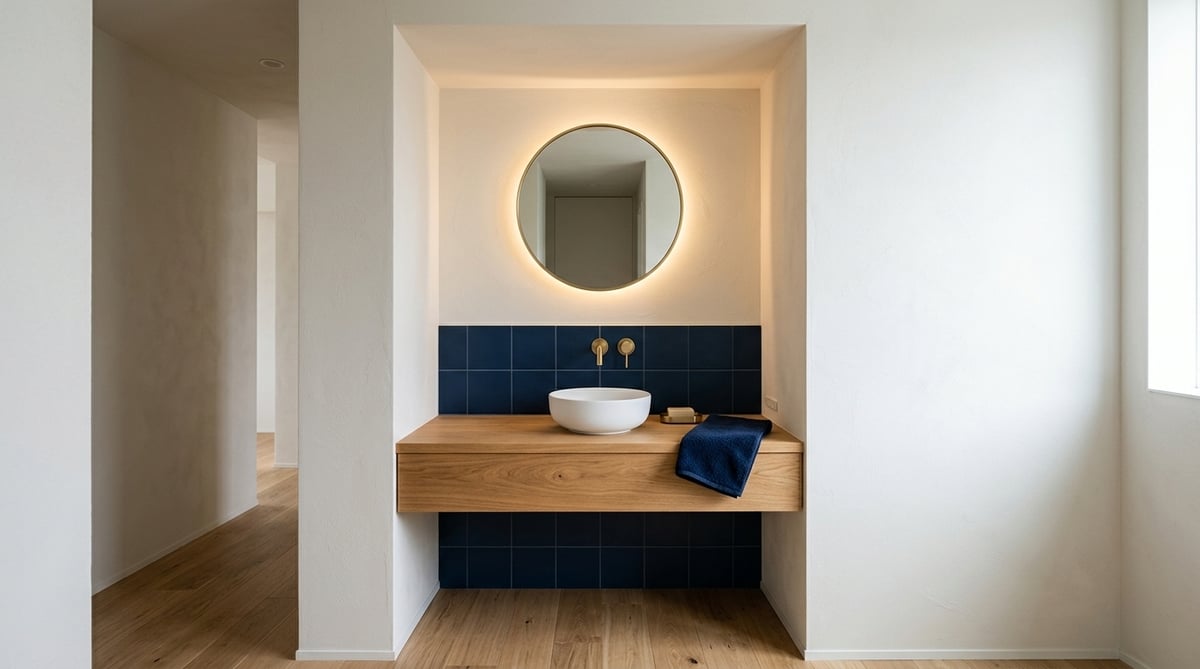
On a weekend morning, as you walk north through the vibrant shopping streets branching from Kitasenju Station's West Exit and climb the riverbank at the foot of Senju Shinbashi Bridge, the horizon opens up before you. An expansive blue sky stretches overhead, fresh breezes drift across the river surface, and runners and residents reading on picnic blankets dot the open greenery. At dusk, the water glows crimson as the refined silhouette of Mount Fuji appears in the distance. Right beside Kitasenju—one of Tokyo's premier railway hubs served by five train lines—lies a peaceful residential environment surrounded by vast open skies and natural waterscapes. Here, urban functionality and tranquil riverside calm coexist in effortless harmony.
When selecting a neighborhood in Tokyo, many prioritize commute times and the convenience of station-front retail. On those counts, Kitasenju Station offers exceptional transit access and daily amenities. Furthermore, long-time residents often speak of "the quiet comfort of having the Arakawa riverbank right next to daily life." A morning stroll bathed in sunlight naturally resets the mind, bringing a calm margin of time to both workdays and weekend mornings. It is an invaluable luxury unique to a riverside enclave set just beyond the bustling city center.
Living priorities naturally evolve across life stages. There are seasons when immediate proximity to station retail suits a fast-paced routine, and seasons when one prefers a quiet residential pocket surrounded by curated interior spaces and peaceful riverside breezes on weekends. The enduring appeal of Kitasenju is that you never have to compromise one for the other: you secure direct transit connections into central Tokyo while remaining just a 10- to 15-minute walk from open skies and waterside serenity.
- A licensed real estate broker analyzes the rental market, daily flow, and flood resilience around Senju Shinbashi and the Arakawa riverside in Kitasenju.
- Direct access to Otemachi Station in approximately 16 minutes via the Tokyo Metro Chiyoda Line, pairing central convenience with waterside tranquility.
- Five train lines (JR, Tokyo Metro, Tobu, and Tsukuba Express) provide exceptional flexibility for daily commuting and transit across Tokyo.
A Five-Line Mega Terminal Paired with Expansive Riverside Greenery
Kitasenju Station serves as a central hub connecting five lines: JR Joban Line, Tokyo Metro Hibiya Line, Tokyo Metro Chiyoda Line, Tobu Skytree Line (with direct through-service to the Tokyo Metro Hanzomon Line), and Tsukuba Express. Taking the Chiyoda Line brings you directly to Otemachi Station in approximately 16 minutes and Kasumigaseki Station in about 21 minutes. Utilizing the Ueno-Tokyo Line on the JR Joban Line reaches Ueno in roughly 9 minutes and Tokyo Station in about 15 minutes, while the Hibiya Line offers direct connections to Akihabara, Ginza, and Roppongi. Tobu Skytree Line trains running directly into the Hanzomon Line provide seamless access to Omotesando and Shibuya, ensuring swift transit to major districts across Tokyo.
For daily commuting comfort, the timetable of the Tokyo Metro Chiyoda Line is particularly advantageous. Morning rush hours feature services originating from Kita-Ayase Station and Kitasenju Station itself. Timing your departure with these starting trains offers opportunities to secure a comfortable seat all the way to Otemachi and Kasumigaseki. Reading a morning novel or reviewing the news in a calm carriage sets a relaxed, composed tone for the workday ahead.
Surrounding the station are premier department stores and retail complexes including Lumine Kitasenju and Kitasenju Marui, accommodating daily groceries, fashion, interior goods, bookstores, and varied dining. In contrast, heading into the West Exit's Senju Honcho Shopping Street or Shukubamachi-dori along the historic Old Nikko Highway introduces a charming, historic downtown atmosphere. Delicatessens, local bakeries, and artisan coffee roasters line the streets, lending a warm, grounded texture to everyday routines.
Passing north through these traditional streets leads into peaceful residential enclaves where vehicle traffic drops, soon giving way to the gentle slope of the Arakawa levee. Comprehensive retail convenience, intimate historic streets, and vast natural riverfront spaces—all within a comfortable 15-minute walking radius—form the foundation of Kitasenju's exceptional livability.
A licensed real estate broker specializing in East Tokyo guides you via video consultation—from clarifying search criteria and checking off-market listings to optimizing initial contract fees.
Simply enter the rent and deposit from portal listings to calculate a full, itemized breakdown including brokerage and guarantor fees without hidden add-ons.
Outdoor Activities Centered Around Senju Shinbashi and Niji no Hiroba
The defining highlights of Kitasenju's Arakawa riverside are Senju Shinbashi Bridge along Nikko Highway (National Route 4) and Niji no Hiroba (Rainbow Plaza) situated just upstream. Walking from the station's West Exit through Shukubamachi-dori toward the base of Senju Shinbashi, a gentle, wide slope leads up to the embankment. The route is paved and easy to navigate with bicycles or strollers, integrating naturally into daily walking routines.
Reaching the crest of the levee reveals an unobstructed sky free of high-rise structures. Within the riverbed grounds lies the Arakawa Emergency River Road, providing long stretches of flat, signal-free paved paths. On weekend mornings, runners and road cyclists glide along the route. Alongside the paved tracks, wide grassy buffers offer ample space to walk or jog at your own pace according to daily physical condition.
Niji no Hiroba, located on the upstream side of Senju Shinbashi, is a designated community gathering ground. In spring, fan-shaped flower beds blossom with vibrant tulips and pansies, adding seasonal color to the waterside. Across the lawn, single residents and families set up picnic mats to unwind under the open sun.
Taking freshly baked bread and coffee from a neighborhood bakery out to the grass for a quiet read offers a tranquil escape from urban bustle. In the evening, many local residents return for cool breezes while stretching or power walking, using the waterside as a natural retreat to wash away workday fatigue.
At dusk along the Arakawa levee, the western sky transitions from amber to twilight, revealing the crisp silhouette of Mount Fuji beyond the Chichibu mountains on clear days. Walking quietly beside the calm river current becomes an inspiring daily ritual to conclude the day.
Residential Enclaves: Living Environments of Senju Sakuragi, Okawa-cho, Motomachi, and Yanagi-cho
Lying northwest of Kitasenju Station and directly fronting the Arakawa levee are four distinctive sub-neighborhoods. Each possesses a distinct residential tempo and commercial layout, allowing you to tailor your apartment search to your exact living rhythm.
Senju Okawa-cho sits at the western base of Senju Shinbashi Bridge, offering a residential pocket directly adjacent to the levee. Lined with low-rise apartment residences and detached homes, it preserves a peaceful atmosphere sheltered from station-front commotion. Because you can access the embankment in a 2- to 3-minute walk, it is ideally suited for residents who enjoy morning or evening jogging. The local Life supermarket in Senju Okawa-cho remains open until 24:00, ensuring effortless grocery runs even on late evenings.
Senju Motomachi borders the southwest edge of Senju Okawa-cho. It retains the deep historic warmth of old Tokyo, anchored by Motoshuku Shrine and Takara-yu, a revered neighborhood sento bathhouse known for its Japanese garden. Nestled within quiet streets are renovated cafes and artisan shops, sustaining steady popularity among single professionals and couples seeking calm living quarters.
Senju Sakuragi occupies an open, breezy setting positioned between the Sumida and Arakawa rivers. Anchored by educational facilities such as Teikyo University of Science Senju Campus and Motoshuku Elementary School, it features organized, pleasant town planning. While reaching Kitasenju Station requires roughly a 15- to 18-minute walk, the entirely flat topography allows for effortless bicycle commuting, supplemented by dependable Toei Bus and Tobu Bus routes on rainy mornings.
Senju Yanagi-cho lies just beyond the West Exit shopping arcade, creating an optimal middle ground between bustling commercial avenues and quiet homes. Located approximately 10 to 13 minutes on foot from the station, it lets you enjoy station-front amenities while preserving serene home surroundings. Dotted with independent grocers and local diners, it offers an authentic, grounded sense of daily convenience.
Kitasenju Station West/East Exit 1–7 Min Walk
- ✓ Immediate access to Lumine, Marui, and lively shopping arcades, allowing effortless grocery runs and dining even on rainy days.
- ✓ Minimal morning commute times with quick walking access to ticket gates.
- / Exposed to the activity of busy commercial avenues, with consistent foot traffic and street sounds into the evening.
- / Higher benchmark rents, requiring potential adjustments to floor space or building age for the same budget.
Senju Okawa-cho & Senju Sakuragi 10–16 Min Walk
- ✓ Steps from the Arakawa levee and Niji no Hiroba, making walking and running a seamless daily habit.
- ✓ 15,000 to 25,000 JPY lower monthly rent than station-front units, securing larger floor space or extra rooms within the same budget.
- ✓ Notable nighttime quietness, allowing for serene, restful home living.
- / Requires a 10- to 16-minute walk to the station; checking bicycle parking or nearby bus stops is recommended.
Rent Benchmarks and Initial Cost Comparison by Layout
When selecting a rental apartment, balancing monthly rent and initial move-in costs is central to making a sound decision. Around Kitasenju Station, rental price points shift clearly with distance from the station. Comparing the commercial station-front zone (within 5 minutes on foot) to the riverside residential neighborhoods of Senju Okawa-cho, Sakuragi, and Motomachi (10 to 16 minutes on foot), identical floor layouts typically show a monthly price difference of roughly 15,000 to 25,000 JPY.
| Layout Type | Floor Area Guideline | Station-Front Area (1–7 min walk) | Riverside Area (10–16 min walk) | Monthly Savings & Features |
|---|---|---|---|---|
| Studio / 1K | 20㎡ – 28㎡ | 83,000 – 95,000 JPY | 68,000 – 80,000 JPY | Approx. 15,000 JPY/mo lower; abundant units with spacious private living quarters |
| 1DK / 1LDK | 32㎡ – 45㎡ | 130,000 – 165,000 JPY | 110,000 – 140,000 JPY | Approx. 20,000 – 25,000 JPY/mo lower; well suited for couples |
| 2LDK | 50㎡ – 65㎡ | 175,000 – 220,000 JPY | 140,000 – 180,000 JPY | Approx. 35,000 – 40,000 JPY/mo lower; easily accommodates a dedicated remote work room |
This difference translates to an annual household savings of approximately 180,000 to 300,000 JPY, and 360,000 to 600,000 JPY across a standard two-year lease term. For residents who naturally enjoy a flat 10-odd-minute walk or a brief bicycle ride as part of their daily wellness routine, the riverside residential enclaves present an exceptionally cost-effective proposition.
From the perspective of household cash flow planning based on net income, riverside rent benchmarks provide dependable stability.
For example, for a single professional with a net monthly take-home pay of 200,000 JPY, a sound rent guideline is around one-third of net income, or 68,000 to 75,000 JPY. Right around the station, options are often limited to older, compact units. In Senju Okawa-cho or Motomachi, however, you can realistically find reinforced concrete (RC) buildings with auto-locks, separate bathrooms and toilets, and main rooms exceeding 11 square meters (7 tatami mats). Budgeting 40,000 JPY for food, 12,000 JPY for utilities, 8,000 JPY for connectivity, and 25,000 JPY for personal leisure still leaves room to save over 40,000 JPY each month.
For a single professional or couple with a net monthly income of 300,000 JPY, a target rent of 110,000 to 125,000 JPY applies. While station-front options predominantly offer 1K to 1DK layouts, the riverside area brings spacious 38㎡ to 45㎡ 1LDK apartments within comfortable reach. You can arrange a dining set and sofa in the living space without crowding the bedroom's desk and bed. Allocating 60,000 JPY for groceries, 18,000 JPY for utilities, 12,000 JPY for connectivity, and 40,000 JPY for dining and leisure preserves a solid monthly savings rate of around 60,000 JPY.
For a couple or small family with a net monthly income of 450,000 JPY, a budget of 140,000 to 170,000 JPY allows for a generous 2LDK exceeding 55㎡. In addition to a comfortable living-dining area, you can maintain separate spaces for a primary bedroom and a home office or nursery, establishing a private, balanced sanctuary.
Arakawa Flood Hazard Maps and Building Selection Standards
When searching for a home near the Arakawa riverbank, evaluating water damage and flood risk is essential. As licensed real estate brokers, we present objective facts grounded in municipal hazard data and civil flood management structures.
The contemporary lower reaches of the Arakawa originate from the "Arakawa Floodway," a monumental national civil engineering project constructed from the Taisho to early Showa eras. Built to safeguard Tokyo's downtown basins from inundation, it maintains an extensive river corridor roughly 500 meters wide flanked by reinforced embankments. Working in tandem with upstream retention reservoirs, it has delivered robust flood control during recent major typhoon events.
Conversely, examining the official flood hazard map published by Adachi Ward (reflecting maximum anticipated rainfall scenarios) shows that parts of Senju Okawa-cho, Senju Motomachi, Senju Sakuragi, and Senju Yanagi-cho are designated within zones where potential flood depth could reach 3.0m to under 5.0m (and higher in select locations) in the event of an embankment breach. A flood depth exceeding 3.0 meters corresponds to the height spanning from the ceiling of the first floor to the floor of the second story in standard buildings.
A pragmatic approach to this risk is not simply to eliminate riverbank neighborhoods altogether. Instead, by strategically selecting building structures and floor levels, one can effectively achieve safe "vertical evacuation."
| Structure & Floor Type | Water Resistance & Structural Rating | Relation to Max Inundation Line | Evacuation Strategy & Broker Rating |
|---|---|---|---|
| Wood / Light-Gauge Steel: 1st–2nd Floors | Risk of exterior damage from water currents and structural buoyancy during inundation | Submersion potential extending up to the second story | Requires early wide-area evacuation. Not suitable for vertical shelter-in-place. |
| RC / SRC: 1st–2nd Floors | Low risk of structural collapse, but internal private quarters risk flooding | Risk of water immersion for furniture and indoor utilities | Temporary retreat to common upper floors possible; recovery of living quarters takes time. |
| RC / SRC: 3rd Floor and Above | Robust structural integrity and independence of reinforced concrete | Clears the anticipated flood line (approx. 3.0m–5.0m) | Enables safe vertical shelter inside your residence. Highly recommended. |
Selecting an apartment on the 3rd floor or higher in a mid-to-high-rise reinforced concrete (RC) or steel-reinforced concrete (SRC) building positions your living space above the anticipated flood line, physically insulating your rooms from inundation damage. Even if external roads become submerged and impede outside movement, sheltering safely in place inside your residence remains entirely viable.
In addition, it is prudent to inspect the building's common infrastructure layout. Properties equipped with flood barriers at the main entrance, or those where electrical substation gear (cubicles) and water supply pumps are elevated above ground level rather than located in basements or ground floors, dramatically reduce the risk of power outages or water cuts during severe weather. Inquiring about these elements during viewings or the Important Matters Explanation provides substantial peace of mind.
Furthermore, reviewing rental regulations and guidelines beforehand prevents friction at the time of move-out.
Under the Ministry of Land, Infrastructure, Transport and Tourism's (MLIT) "Guidelines on Restoration to Original Condition," items such as wallpaper and cushion flooring have a recognized statutory service life of 6 years. Once 6 years have elapsed, their residual book value declines to 1 JPY (with a nominal 10% residual value standard). Restoration expenses for normal wear and tear or aging changes—such as sun fading or furniture pressure marks—are legally the landlord's responsibility, and tenants bear no duty to restore them. Even in cases where minor damage occurs due to tenant negligence, repair claims are restricted strictly to the impacted panel or section.
For rental properties across Tokyo, the "Tokyo Rental Housing Dispute Prevention Ordinance (Tokyo Rules)" applies. During the Important Matters Explanation, licensed brokers are legally required to deliver written disclosures and verbally explain that ordinary wear and tear is borne by the landlord, and that the landlord holds the statutory duty to repair natural equipment breakdowns.
Regarding special move-out clauses, the Supreme Court decision of December 16, 2005 establishes that tenant-paid wear-and-tear clauses are valid only when: (1) clearly and objectively stipulated in the contract text, (2) explicitly recognized and acknowledged by the tenant, and (3) not excessively burdensome or contrary to good faith (under Article 10 of the Consumer Contract Act). Renewal fee provisions are likewise governed by the Supreme Court ruling of July 15, 2011, remaining valid only when clearly stated and not disproportionate. Partnering with a brokerage that strictly adheres to these statutes and judicial precedents is fundamental to securing a protected tenancy.
Under public notices pursuant to Article 46 of the Real Estate Brokerage Act, total brokerage fees cannot exceed 1.1 months' rent (tax inclusive), and absent advance consent, fees collected from either client cannot exceed 0.55 months' rent (tax inclusive). Sorai Tokyo applies a transparent 0.55-month (tax inclusive) standard across all residential listings.
Daily Shopping and Commuting: Balancing Department Stores and Historic Streets
Choosing a residential enclave near the Arakawa riverbank never means sacrificing convenience in daily shopping or transit. The distinct advantage of living in Senju Okawa-cho, Senju Motomachi, or Senju Yanagi-cho is the effortless ability to alternate between major station shopping complexes and traditional downtown grocers along your walk home.
| Retail Facility / Shopping Street | Location & Access | Typical Operating Hours | Daily Use Scenarios |
|---|---|---|---|
| Lumine Kitasenju | Directly connected to Kitasenju Station | 10:00–20:30 (Grocery Floors) | Seijo Ishii, quality food halls, and Muji; ideal for swift shopping on rainy workdays. |
| Kitasenju Marui (Shokuyukan) | Direct pedestrian deck link from West Exit | 10:00–20:00 | Fresh produce markets at Marui Shokuyukan, daily lifestyle goods, and specialty stores. |
| Life Supermarket Senju Okawa-cho | Central Senju Okawa-cho (2 min walk to levee) | 9:30–24:00 | Primary supermarket for riverside residents; open until midnight for fresh food and household necessities. |
| Shukubamachi-dori Shopping Street | Old Nikko Highway stretching north from West Exit | Varies by individual shop | Butchers, prepared delicatessens, artisan bakeries, and cozy owner-operated dining. |
Envision your evening commute home: arriving at Kitasenju Station in about 16 minutes from Otemachi via the Chiyoda Line, you pick up ingredients in the station-linked Lumine food hall. Leaving through the West Exit and strolling along Shukubamachi-dori, warm storefront lights illuminate the peaceful historic street.
Continuing past the shopping arcade into the residential enclaves of Senju Okawa-cho or Motomachi, quiet surroundings welcome you back. If you forgot an essential item, Life Supermarket Senju Okawa-cho is open until 24:00, providing reliable late-night support. Opening your apartment window, fresh breezes from the Arakawa levee flow through your living space, concluding the day in soothing stillness.
The morning commute is equally effortless, thanks to entirely flat topography from the riverside neighborhoods to Kitasenju Station. The 12- to 15-minute walk serves as refreshing, unhurried morning exercise. If traveling by bicycle, the trip takes a mere 4 to 5 minutes. Numerous municipal and private underground bicycle garages (with both commuter passes and daily stalls) operate around Kitasenju Station, allowing you to tailor your commuting method to the morning weather and daily schedule.
Frequently Asked Questions (FAQ)
QIs walking or cycling more practical when commuting to Kitasenju Station from Senju Okawa-cho or Senju Sakuragi?
AAlternating based on weather and season is the most practical choice. Walking from Senju Okawa-cho or Senju Motomachi to Kitasenju Station takes roughly 12 to 15 minutes across level ground, making it an enjoyable, healthy morning stroll through the shopping street on pleasant days. When commuting from Senju Sakuragi or when you wish to shorten travel time, cycling takes just 4 to 6 minutes, supported by regular-use and pay-per-use underground bicycle garages at the station's West Exit. On rainy mornings, local Toei and Tobu bus routes operating from Senju Sakuragi and Senju Okawa-cho offer direct access to the station plaza.
QWhat is the single most important criterion when choosing an apartment near the river to manage flood risk?
AThe most decisive standard is selecting a residence located on the 3rd floor or higher within a reinforced concrete (RC) or steel-reinforced concrete (SRC) building. Adachi Ward's maximum anticipated flood depth in this zone is approximately 3.0m to under 5.0m; choosing the 3rd floor physically places your private rooms above the potential inundation level. Structurally sound RC buildings provide strong structural independence, enabling safe vertical shelter-in-place inside your home. Furthermore, selecting buildings where electrical cubicles and water pumps are installed on elevated floors, or where entrance flood gates are installed, substantially enhances resilience and infrastructure stability during extreme emergencies.
QWhat difference in upfront move-in costs can I expect between station-front and riverside properties?
ABecause initial lease fees—such as security deposits, key money, advance rent, brokerage fees, and guarantor fees—are calculated as multiples of base monthly rent, riverside properties (in Senju Okawa-cho, Sakuragi, etc.) with rents 15,000 to 25,000 JPY lower automatically reduce total upfront contract costs by approximately 70,000 to 150,000 JPY. Additionally, riverside residential pockets often feature competitive promotions such as zero key money or discounted deposits, further curbing move-in expenses. Reallocating those surplus funds toward quality interior furnishings and creating a refined living space provides a tangible enhancement to your daily quality of life.

Author: Sorai Tokyo Editorial Team (Supervised by Licensed Real Estate Agents)
A real estate consulting team specializing in assisting foreign nationals find rooms and explaining initial costs in Tokyo. We break down language barriers and differences in customs, offering dedicated support in Japanese, English, and Vietnamese for a safe and secure start to your new life.