
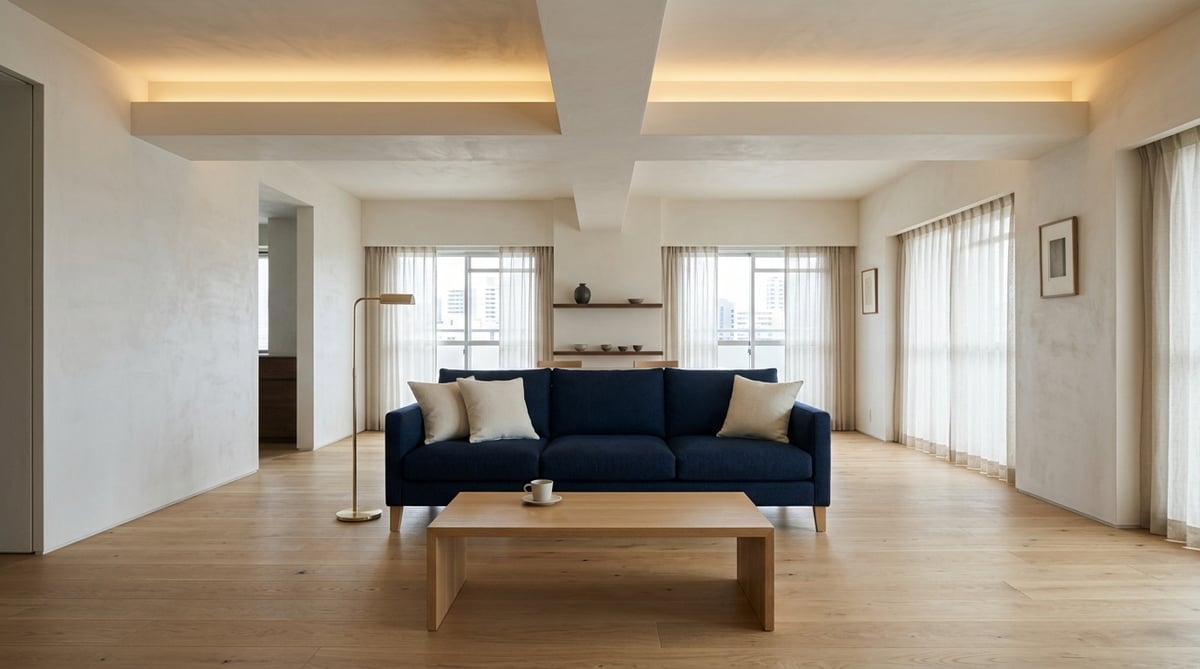
Waiting at the traffic light at the Yoyogi Station West Exit intersection at dusk, you will often see an olive-green Yamanote Line train and a canary-yellow Chuo-Sobu Line local train running side by side on the elevated tracks just seconds apart. If you tour a 1LDK apartment in Yoyogi 1-chome—priced in the 250,000 yen range—and look out from its balcony toward the lights of Shinjuku's skyscrapers, and then the following weekend take the Chuo-Sobu Line a few stops west to Nakano or east past Akihabara to Kinshicho, opening the door to a unit on the exact same budget reveals a 2LDK over 50 square meters with a separate workroom and generous storage.
Intersecting and running parallel through major central terminals like Shinjuku, Yoyogi, and Akihabara, these two JR lines are among the most frequently compared options when searching for an apartment in Tokyo. Looking at median rents for a 1K, Shinjuku and Yoyogi sit at 145,000 yen, whereas Nakano is 118,000 yen and Kinshicho is 107,000 yen—a monthly difference of roughly 27,000 to 38,000 yen. For a 1LDK, that gap widens to 50,000 to over 70,000 yen per month, and for a 2LDK, it exceeds 90,000 to 110,000 yen per month.
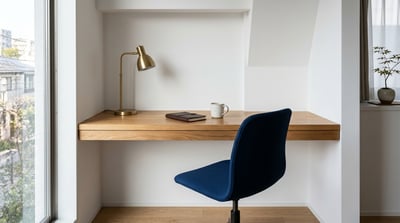
Do you prioritize the mobility of a loop line that glides directly into Shinagawa, Shibuya, and Tokyo Station without transfers, or do you prefer keeping monthly fixed costs lower so you can enjoy a spacious living room with a comfortable sofa and a dedicated study desk? Neither choice is universally right. By weighing morning seating availability, transfer walking distances, two-year total housing costs, and how neighborhood quietness and ground elevation shift from one street to the next, you can clarify which option fits your daily rhythm.
- Choose the Yamanote Line if you prioritize direct access to Shinagawa, Shibuya, and Tokyo Station along with minimal cascading delays from other lines.
- Choose the Chuo-Sobu Line if you want direct access to Iidabashi and Ochanomizu, seated commutes from Nakano, and larger floor plans for your budget.
- The 2-year total housing cost difference between Shinjuku/Yoyogi and Nakano/Kinshicho is roughly 680,000–950,000 yen for a 1K and 1.35M–1.82M yen for a 1LDK.
Morning Commutes: Loop Line Reliability vs. East-West Direct Access
Daily commuting fatigue is shaped far more by how rarely delays occur, how crowded the train cars are, and whether you have to climb stairs during transfers than by straight-line distance on a map. Let us first look at the operational structure of both lines and the peak-hour crowding data published by the Ministry of Land, Infrastructure, Transport and Tourism.
| Comparison Item | Yamanote Line | Chuo-Sobu Line (Local) |
|---|---|---|
| Operation & Through-Service | Independent central loop (no through-service with other railways) | East-west local line (Mitaka to Chiba; partial Tozai Line through-service) |
| Train Configuration | 11-car trains (E235-0 series) | 10-car trains (E231-0 and E231-500 series) |
| Peak Morning Crowding Rate | Outer loop: 135% (Ueno to Okachimachi, 7:55–8:55) Inner loop: 136% (Shin-Okubo to Shinjuku, 7:44–8:44) |
Sobu Local: 145% (Kinshicho to Ryogoku, 7:34–8:34) Chuo Local: 93% (Yoyogi to Sendagaya, 7:49–8:49) |
| Major Direct Business Hubs | Tokyo, Yurakucho, Shimbashi, Shinagawa, Shibuya, Shinjuku, Ikebukuro | Shinjuku, Ichigaya, Iidabashi, Suidobashi, Ochanomizu, Akihabara |
| Morning Seating Opportunities | Limited to select depot-originating trains at Osaki, Ikebukuro, etc. | Easy to get a seat on trains originating at Nakano (Local & Tozai Line) |
Crowding rates are based on peak-section data published by the Ministry of Land, Infrastructure, Transport and Tourism (FY2024–2025).
Yamanote Line Punctuality and Direct Links to Shinagawa, Shibuya, and Marunouchi
From a practical standpoint, the Yamanote Line's greatest strength is that it operates as an independent loop with no through-service to suburban or private railway lines. On radial commuter lines in the Tokyo metropolitan area, crossing checks or strong winds far out in the suburbs frequently trigger cascading delays into central Tokyo. By contrast, the Yamanote Line runs on a closed loop where 11-car trains arrive every two to three minutes. Even if you miss one train, the next pulls in almost immediately, reducing the daily stress of watching the clock at the ticket gate.
Furthermore, connecting Tokyo, Yurakucho, Shimbashi, Hamamatsucho, Tamachi, Takanawa Gateway, Shinagawa, Osaki, and Shibuya on a single loop gives it an advantage that east-west lines cannot easily replicate. Even if a job change or office relocation moves your workplace from Marunouchi to Shinagawa or Shibuya, you can continue commuting directly without moving apartments. For those who value predictable travel times above all else, it is a dependable piece of urban infrastructure.
Chuo-Sobu Line Direct Access to Iidabashi & Ochanomizu and East-West Crowding Differences
The Chuo-Sobu Line local service cuts straight east-west across the inside of the Yamanote loop. It provides direct, transfer-free access to central business and university districts—such as Yotsuya, Ichigaya, Iidabashi, Suidobashi, and Ochanomizu—that would otherwise require a detour or transfer on the Yamanote Line. When heading toward Marunouchi or Otemachi, you can also step across the same island platform at Ochanomizu (Track 4) to catch the JR Chuo Line Rapid to Tokyo Station, transfer outside the gates to the Tokyo Metro Marunouchi Line, or take the Tokyo Metro Tozai Line directly from Nakano to Otemachi.
One important nuance is how differently the morning commute feels on the eastern side (Sobu Local) versus the western-to-central section (Chuo Local). Between Kinshicho and Ryogoku, where commuters from Chiba and Funabashi converge, peak morning crowding reaches 145%, meaning passengers near the doors stand shoulder to shoulder. By contrast, between Yoyogi and Sendagaya—after many riders disembark at Shinjuku—crowding drops to a calm 93%, leaving plenty of room to hold a strap and read a book or check your phone.
Further west at Nakano Station, both Chuo-Sobu Line local trains and Tokyo Metro Tozai Line trains originate at the station. By lining up one or two trains ahead during the morning rush, you can sit comfortably all the way to Iidabashi, Akihabara, or Otemachi, turning 30 minutes of standing into a calm start to the workday.
Smart Transfers: Cross-Platform Convenience at Yoyogi vs. Shinjuku and Akihabara
If you live along the Chuo-Sobu Line and commute to Yamanote Line stations such as Shibuya, Ebisu, or Shinagawa, your choice of transfer station significantly affects your daily step count. During property tours, we often recommend using cross-platform transfers at Yoyogi Station rather than transferring at Shinjuku.
At Yoyogi Station, Track 2 (Yamanote Line inner loop toward Harajuku, Shibuya, and Shinagawa) and Track 3 (Chuo-Sobu Line toward Shinjuku and Nakano) face each other on the exact same island platform. When arriving from the east—such as Sendagaya, Yotsuya, Iidabashi, Ryogoku, or Kinshicho—you simply step a few paces across the platform to board the Yamanote Line without climbing or descending a single stair.
At Shinjuku Station, although the Yamanote Line (Tracks 14 and 15) and Chuo-Sobu Line (Tracks 13 and 16) are close together, certain travel directions require a two- to three-minute walk via the south overpass or central concourse. Meanwhile, at Akihabara Station on the eastern side, the north-south Yamanote Line platforms on the second floor intersect perpendicularly with the east-west Chuo-Sobu Line platforms on the third floor. Dedicated escalators and stairs near the central ticket gate connect them smoothly, though queues form at peak hours—positioning yourself near the stairs before arriving makes the transfer much lighter.
Simply enter the rent and deposit from portal listings to calculate a full, itemized breakdown including brokerage and guarantor fees without hidden add-ons.
Rent & 2-Year Total Housing Costs by Floor Plan: Where Space Meets Budget
After commuting routes, the next key factor is monthly rent and two-year total housing costs. Below is a comparison of median rents, approximate price per square meter, and estimated two-year total cost differences (using Shinjuku and Yoyogi as the baseline) across the three interchange stations—Shinjuku, Yoyogi, and Akihabara—and four stations two to four stops east or west: Nakano, Koenji, Ryogoku, and Kinshicho.
| Station (Ward) | Approx. Price / sqm | 1R / 1K | 1DK / 1LDK | 2LDK | 2-Year Diff vs. Shinjuku (1K / 1LDK) |
|---|---|---|---|---|---|
| Shinjuku (Shinjuku Ward) | 5,300 yen/sqm | 108,000 / 145,000 yen | 179,000 / 251,000 yen | 367,000 yen | Baseline (±0 yen) |
| Yoyogi (Shibuya Ward) | 5,300 yen/sqm | 108,000 / 145,000 yen | 179,000 / 251,000 yen | 367,000 yen | Baseline (±0 yen) |
| Akihabara (Chiyoda Ward) | 5,000 yen/sqm | 98,000 / 132,000 yen | 163,000 / 224,000 yen | 323,000 yen | Approx. -325,000 / -675,000 yen |
| Nakano (Nakano Ward) | 4,600 yen/sqm | 88,000 / 118,000 yen | 144,000 / 197,000 yen | 278,000 yen | Approx. -675,000 / -1,350,000 yen |
| Ryogoku (Sumida Ward) | 4,450 yen/sqm | 84,000 / 114,000 yen | 140,000 / 192,000 yen | 272,000 yen | Approx. -775,000 / -1,475,000 yen |
| Koenji (Suginami Ward) | 4,400 yen/sqm | 83,000 / 112,000 yen | 137,000 / 186,000 yen | 259,000 yen | Approx. -825,000 / -1,625,000 yen |
| Kinshicho (Sumida Ward) | 4,200 yen/sqm | 79,000 / 107,000 yen | 131,000 / 178,000 yen | 254,000 yen | Approx. -950,000 / -1,825,000 yen |
Figures represent median asking rents for each layout. The 2-year total difference is calculated on a 25-month basis (24 months of rent difference plus one month of rent-linked initial costs such as key money). Actual total payments vary depending on renewal fees and fixed move-out cleaning clauses.
Singles (1R / 1K): A 30,000 Yen Monthly Gap & Northern Yamanote Alternatives
For a single-person 1K apartment, moving just five to ten minutes by train from Shinjuku or Yoyogi (145,000 yen) to Nakano or Koenji lowers fixed monthly rent by 27,000 to 33,000 yen, while moving east to Ryogoku or Kinshicho saves 31,000 to 38,000 yen per month. Over a two-year lease, that adds up to roughly 680,000 to 950,000 yen—enough to cover all move-in costs and a full set of new furniture and appliances.
If you keep a budget of 130,000 to 140,000 yen per month, Shinjuku and Yoyogi typically offer standard 1K units around 25 square meters. By contrast, Koenji (1DK at 137,000 yen), Kinshicho (1DK at 131,000 yen), and Nakano (1DK at 144,000 yen) allow you to step up to a 1DK over 30 square meters with a door separating the bedroom from the dining kitchen. For anyone who prefers keeping cooking aromas out of the bedroom or wants space for a proper dining table, that one-tier layout upgrade makes a noticeable difference in daily comfort.
If you still want to live near a Yamanote Line station while keeping rent in the 100,000 to 110,000 yen range, looking toward the northern side of the Yamanote loop is a practical alternative. Otsuka and Sugamo both have a median 1K rent of 107,000 yen, Tabata is 97,000 yen, and even Shin-Okubo and Takadanobaba sit at 122,000 yen—comparable to or lower than Nakano through Kinshicho. Although travel times to southwestern Tokyo are slightly longer, northern Yamanote stations offer a strong third option for singles balancing loop-line reliability with controlled rent.
Couples (1LDK): Saving 1.35M–1.82M Yen Over Two Years & Securing Work-from-Home Space
At the 1LDK tier—popular with couples and singles seeking extra breathing room—the price gap becomes even clearer. Major Yamanote stations such as Shinjuku and Yoyogi (251,000 yen), Shibuya (274,000 yen), and Shinagawa (258,000 yen) center around 250,000 yen per month. Meanwhile, Nakano (197,000 yen), Ryogoku (192,000 yen), Koenji (186,000 yen), and Kinshicho (178,000 yen) all remain below 200,000 yen.
Compared with Shinjuku and Yoyogi, the two-year housing cost savings reach approximately 1.35 million yen in Nakano and 1.82 million yen in Kinshicho. Equally noteworthy is what happens if you keep a 250,000 to 260,000 yen budget along the Chuo-Sobu Line: in Koenji (2LDK at 259,000 yen) or Kinshicho (2LDK at 254,000 yen), you can rent a 2LDK for roughly the same monthly cost as a 1LDK in Shinjuku. For dual-income households where both partners take online meetings, having a separate workroom apart from the living room helps both people maintain their own daily rhythm.
Families (2LDK): The Extra-Room Break-Even Point & Long-Term Cost Planning
For 2LDK apartments—often chosen when welcoming a child or upgrading from a cramped layout—the difference in price per square meter (5,300 yen/sqm in Shinjuku/Yoyogi vs. 4,400 yen/sqm in Koenji and 4,200 yen/sqm in Kinshicho) multiplies across a larger floor area, creating a gap of 90,000 to over 110,000 yen per month, or more than 2.2 million to 2.8 million yen over two years. Around central Yamanote terminals, condominium-grade tower apartments dominate supply, making the upper-300,000 yen range the standard.
Looking one or two stops further west from Nakano and Koenji brings you to Asagaya (245,000 yen) and Ogikubo (237,000 yen), while one stop east of Kinshicho is Kameido (240,000 yen)—all offering calm residential environments with family-sized apartments in the low-200,000 yen range. Because two-year renewal fees and fixed move-out cleaning clauses also affect actual expenses, it is wise to compare total two-year and four-year costs using the Explanation of Important Matters rather than looking at asking rent alone.
Neighborhood Feel, Terrain, and Zoning Across 7 Representative Stations
Route maps and rent tables cannot capture the atmosphere outside the ticket gates, how quiet the streets feel at night, or the ground elevation beneath your feet. Based on walking these neighborhoods during client tours, here is how the seven stations divide into three distinct area profiles.
Shinjuku, Yoyogi, and Akihabara: Multi-Line Networks & Quiet Side Streets
Shinjuku and Yoyogi sit on the stable upland of the Musashino Plateau (loam terrace), with most city blocks lying outside official flood-inundation hazard zones. While the immediate Shinjuku Station area is a bustling commercial zone anchored by Lumine Shinjuku and NEWoMan Shinjuku, walking south through Yoyogi 2-chome and 1-chome toward Sendagaya 5-chome (a Category 2 Residential Zone) quickly transitions into quieter apartment streets away from the main avenues.
When searching around Yoyogi Station, you have convenient everyday grocery options such as Maruman Store Minami-Shinjuku and My Basket Yoyogi 2-chome, though it is important to check distance from Meiji-dori and the railway tracks in person. Walking eight to ten minutes west or south from Yoyogi Station also brings you within three to five minutes of Minami-Shinjuku and Sangubashi stations on the Odakyu Line or Kitasando Station on the Tokyo Metro Fukutoshin Line—meaning a quieter apartment right next to Kitasando or Sangubashi often shortens your morning walk compared to a 10-minute walk from Yoyogi.
On the eastern side, Akihabara is famous for its electronics district, yet just across Showa-dori in Kanda Sakumacho and Kanda Izumicho lies a cluster of apartments popular with singles and working couples. Atre Akihabara 1 (including Seijo Ishii) and Yodobashi Camera Multimedia Akiba sit right by the station, while Life Kanda Izumicho serves the eastern residential blocks. The terrain is flat delta and coastal lowland—easy for cycling—but parts of Kanda Sakumacho 3-chome (under 0.5m) and Kanda Aioicho (0.5–3.0m) fall within Kanda River and Arakawa flood hazard zones, making building-level flood preparedness worth checking.
Nakano and Koenji: Stable Upland Ground & Lively Shopping Arcades
Heading west from Shinjuku, Nakano and Koenji greet you with covered shopping arcades and independent local shops right outside the station. Nakano offers a compact, practical layout: the lively Nakano Sun Mall and Nakano Broadway plus the open greenery of Shiki-no-Mori Park on the north side, and Life Nakano Ekimae and Nakano Marui (Peacock Store) on the south side. Both the north commercial zone and south neighborhood commercial zone rest on stable loam plateau ground outside flood-inundation zones, providing peace of mind for long-term living.
One stop further west, Koenji stands out for its everyday affordability and fresh food options, including Tokyu Store beneath the elevated tracks, Koenji Junjo Shopping Street to the north, Pal and Look shopping streets to the south, and OK Store Koenji in Minami 4-chome. During viewings, pay attention to how terrain and zoning shift across the tracks: the southern commercial area includes flat valley-bottom blocks, whereas heading north into Yamatocho 4-chome in Nakano Ward brings you onto loam plateau ground zoned as a Category 1 Low-Rise Exclusive Residential District—quiet three-story residential streets just a ten-minute walk from the station's energy.
When choosing between Nakano and Koenji, also note the JR Chuo Line Rapid weekend schedule. Rapid trains stop at Koenji on weekdays, but pass through on Saturdays, Sundays, and holidays, leaving only Chuo-Sobu Line local trains. If you want weekend Rapid and Special Rapid service plus the Tozai Line, Nakano is more convenient; if you prefer low-rise residential calm, approachable arcades, and rent that is 6,000 to 11,000 yen lower per month, Koenji is a natural fit.
Ryogoku and Kinshicho: Flat Riverside Streets & Full-Scale Commercial Convenience
East of Akihabara toward the Sumida River, Ryogoku and Kinshicho feature flat reclaimed land that makes pushing a stroller or riding an electric-assist bicycle effortless. Kinshicho in particular concentrates full-scale retail around the station—Termina, Kinshicho Marui, and Kinshicho Parco (Seiyu) on the south side, and Arcakit Kinshicho (Life) and Olinas Kinshicho with a cinema on the north side—alongside the greenery of Kinshi Park. With both the JR Sobu Line Rapid (direct to Tokyo, Shimbashi, and Shinagawa) and the Tokyo Metro Hanzomon Line (direct to Otemachi, Omotesando, and Shibuya), Kinshicho balances cost performance with strong transit access.
One stop west, Ryogoku trades Kinshicho's large-scale commercial bustle for Edo-period heritage at Ryogoku Edo NOREN, Yokoamicho Park, and riverside walks along the Sumida River Terrace. Everyday supermarkets such as Summit Store Ryogoku Ishihara and Maruetsu Petit Ryogoku Midori 1-chome dot the neighborhood, and the Toei Oedo Line provides a second rail option alongside JR local trains. If you prefer quieter residential streets away from the busier south-side entertainment blocks, look toward Kamezawa north of Kinshicho or Ishihara and Midori east of Ryogoku.
When to Pass on Each Line & Nearby Subway Alternatives
Because both lines have clear strengths, knowing which trade-offs you are unwilling to accept makes the decision straightforward. Here is how the two lifestyles compare.
Yamanote Line (Shinjuku, Yoyogi, Akihabara, etc.) Fits Best If You:
- ✓ Commute directly to Shinagawa, Shimbashi, Hamamatsucho, or Shibuya without transfers
- ✓ Prioritize 2–3 minute headways and minimal cascading delays from suburban lines
- ✓ Value saving 30 minutes morning and evening through proximity to work over floor area
- ✓ Want flexibility to keep commuting without moving if your office relocates
Chuo-Sobu Line (Nakano, Koenji, Ryogoku, Kinshicho) Fits Best If You:
- ✓ Want to upgrade to a 1DK–2LDK with a study or extra storage on the same budget
- ✓ Need direct access to central hubs like Iidabashi, Suidobashi, Ochanomizu, or Ichigaya
- ✓ Value seated commutes from Nakano or Kinshicho's large malls and Hanzomon Line
- ✓ Enjoy warm neighborhood energy with lively shopping streets and nearby parks
When Passing on the Yamanote Line for the Chuo-Sobu Line Makes Sense
You should consider passing on major Yamanote terminals if you work from home often and want daytime quietness plus at least 45 square meters of living space around a 200,000 yen budget. Trying to keep rent down near Shinjuku, Yoyogi, or Akihabara often narrows your options to older compact units or apartments facing busy roads and tracks. Expanding your search 10 minutes outward to Nakano, Koenji, Ryogoku, or Kinshicho opens up newer auto-lock condominiums in calmer residential zones.
Similarly, if your office is in Iidabashi, Suidobashi, Ichigaya, or Yotsuya, living on the Yamanote Line actually adds a daily transfer. And if you prefer casual shopping at local arcades like Nakano Sun Mall or Koenji Junjo Shopping Street—or large malls like Olinas and Arcakit Kinshicho—over department stores, the Chuo-Sobu Line feels more natural.
When Passing on the Chuo-Sobu Line for the Yamanote or Nearby Subways Makes Sense
Conversely, you should pass on the Chuo-Sobu Line if you commute daily to southeastern Yamanote hubs like Shinagawa, Tamachi, Hamamatsucho, Shimbashi, or Osaki, or if you want to avoid the 145% morning crowding between Kinshicho and Ryogoku as well as eastern lowland flood risks. (Note that Kinshicho offers direct Sobu Line Rapid service to Shimbashi and Shinagawa, so your comfort with rapid-train crowding is the deciding factor.)
Another practical point is checking overlapping subway stations within a 10- to 12-minute walk. For example, an apartment 12 minutes south of Nakano or Koenji may sit just four or five minutes from Shin-Nakano or Shin-Koenji on the Tokyo Metro Marunouchi Line. If you work in Otemachi, Kasumigaseki, Ginza, or Akasaka-mitsuke, choosing a home right next to the Marunouchi Line shortens your walk in the rain and simplifies your morning routine. Likewise, consider Morishita Station (Toei Shinjuku and Oedo lines) south of Ryogoku, or Asakusabashi and Iwamotocho stations east and south of Akihabara.
Choosing a Neighborhood That Matches Your Daily Rhythm
Comparing the Yamanote Line and the Chuo-Sobu Line comes down to tuning your priorities between transit certainty and breathing room at home. Whether you step onto a Yamanote train arriving every three minutes on weekday mornings, or read on a seated Nakano-originating train before picking up seasonal groceries in a local arcade on the weekend, both paths can support a fulfilling life in Tokyo.
If you are weighing Yoyogi against Nakano, or wondering how Kinshicho compares with Otsuka on the northern Yamanote Line for your specific visa, guarantor, and budget needs, feel free to reach out to Sorai Tokyo. Simply send the URL of any listing you are considering to our official LINE (@soraitokyo / https://line.me/R/ti/p/@soraitokyo)—no phone number or store visit required, and zero pushy sales calls. Our licensed real estate specialists will check live availability in the inter-agency database and provide a transparent, free second opinion on initial costs and property conditions.
You can also try our 24/7 dedicated AI concierge and smart tools anytime from the bottom menu on mobile or the footer on desktop, completely anonymously, to organize your search at your own pace.
Frequently Asked Questions: Yamanote vs. Chuo-Sobu Line
QWhich Chuo-Sobu Line stations allow you to sit down during the morning rush into central Tokyo?
AOn the western side, Nakano Station is the primary originating hub. Because both Chuo-Sobu Line local trains and Tokyo Metro Tozai Line trains start there, lining up slightly early lets you commute seated toward Iidabashi, Akihabara, or Otemachi. Mitaka Station also offers originating trains, and east of Shinjuku between Yoyogi and Sendagaya, peak crowding is a calm 93%.
QAre there areas on the Yamanote Line with rents similar to the Chuo-Sobu Line?
AYes. Looking at the northern to northeastern side of the Yamanote loop helps keep rent down. Otsuka and Sugamo have median rents of 107,000 yen for a 1K and 178,000 yen for a 1LDK—nearly identical to Kinshicho—while Tabata (1K at 97,000 yen; 1LDK at 162,000 yen) and Komagome (1K at 104,000 yen; 1LDK at 173,000 yen) are even more affordable while retaining loop-line reliability.
QWhat flood-preparedness details should I check when renting in Kinshicho, Ryogoku, or Akihabara?
ABecause these neighborhoods sit in Tokyo's eastern lowlands along the Arakawa, Sumida, and Kanda river basins, first check the latest Chiyoda Ward or Sumida Ward flood, inland-water, and storm-surge hazard maps for your exact block. Choosing a unit on the second floor or above, and confirming whether the building's electrical room is elevated and flood barriers are stocked at the entrance, provides added reassurance.
QIs transferring from the Chuo-Sobu Line to the Yamanote Line smoother at Yoyogi or Shinjuku?
AIf you are coming from the east (Sendagaya, Yotsuya, Ryogoku, Kinshicho) and heading toward Shibuya or Shinagawa on the Yamanote inner loop, Yoyogi Station is far smoother thanks to its same-platform transfer between Tracks 2 and 3 with no stairs. If you are heading toward Ikebukuro or Takadanobaba on the outer loop, or transferring to private railways and subways, Shinjuku Station is more convenient.



Sorai Tokyo Co., Ltd. Editorial (Licensed Real Estate Agency #113297)
Licensed online real estate agency handling residential leasing across 15 major Tokyo lines (Member of All Japan Real Estate Association). Powered by our proprietary 24/7 AI "SorAi" on iOS/LINE and dedicated licensed realtors, we support renters end-to-end from vacancy checks on major portals to viewings and digital contracts.