
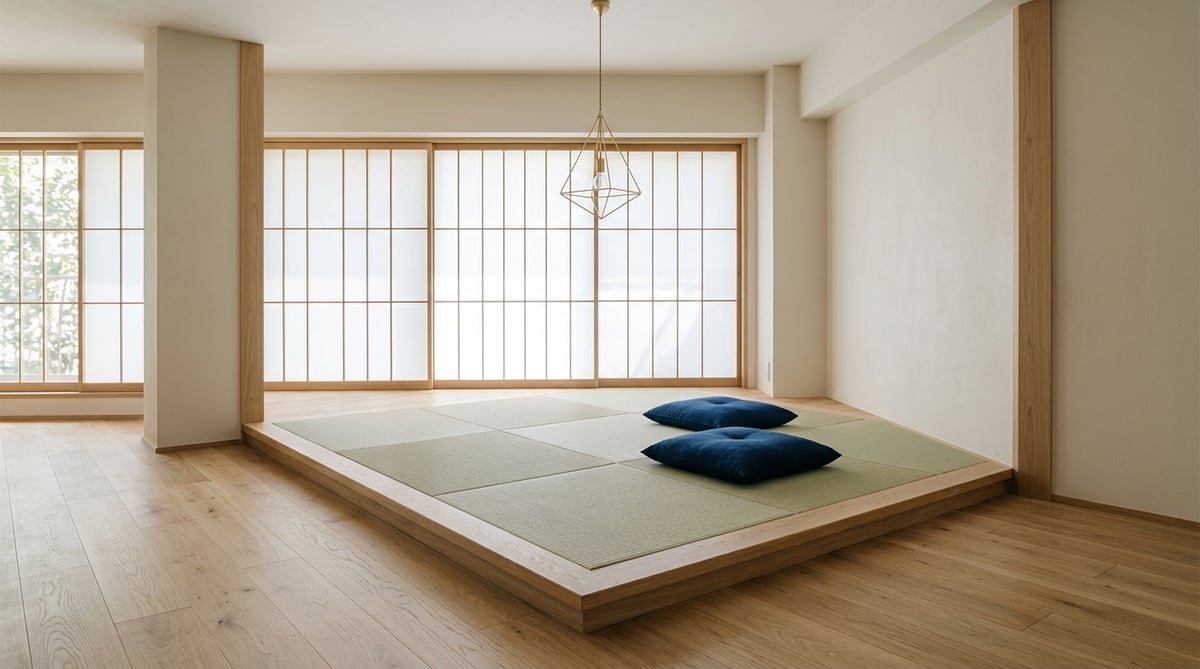
Akasaka in Minato Ward is renowned as a hub of politics, business, and cosmopolitan culture. Nearby lies Nogizaka, where the sprawling greenery of Tokyo Midtown intersects with the architectural refinement of The National Art Center, Tokyo. While these two iconic Tokyo neighborhoods are often perceived primarily as glittering commercial districts, taking just a few steps back from the main avenues reveals surprisingly quiet, historic residential quarters.
For mature couples looking to build a new life together, the Akasaka and Nogizaka area offers a rare setting where an effortless commute and a genuinely serene residential environment coexist without compromise. In recent years, rents for newly constructed high-rise tower apartments in central Tokyo have soared, making listings exceeding ¥400,000 to over ¥600,000 per month all too common when seeking sufficient space for two.
Against this backdrop, discerning DINKS and couples preparing for marriage are increasingly turning their attention to low-rise vintage apartments within a monthly budget of ¥250,000 to ¥320,000. Built from the late Showa to early Heisei eras, these low-rise residences embody substantial building materials, generous ceiling heights, and spacious floor plans of approximately 50 to 65 square meters rarely found in today's new builds. Drawing on a decade of practical experience as a licensed real estate broker guiding central Tokyo home searches, this guide explores the authentic daily rhythm of cohabitation in Akasaka and Nogizaka alongside essential tips for selecting the right home.
- For couples planning mature cohabitation in the Akasaka and Nogizaka areas.
- A licensed broker explains the appeal of low-rise vintage rentals in the ¥250,000–¥320,000 range, 1LDK/2LDK floor plan layouts, ground stability and safety based on MLIT data, and upfront cost simulations.
- Reviewing property flyers and consulting professionals beforehand helps prevent hidden costs and post-move disputes before signing a lease.
This guide is tailored specifically for couples in their 30s and mature pairs seeking to cultivate a tranquil daily life within a budget of approximately ¥250,000 to ¥320,000 per month, balancing the unparalleled convenience of Minato Ward with the verdant quietude of low-rise vintage apartments. It outlines the residential fabric bordering Akasaka Hikawa and Minami-Aoyama, the unique architectural dignity and structural checkpoints of vintage buildings, and refined daily living routines.
The Appeal of Cohabitation in Akasaka and Nogizaka
An Urban Structure Separating Commercial Hubs from Residential Enclaves
When most people hear the name Akasaka, they likely envision the lively streetscapes around Akasaka Sacas and Akasaka Biz Tower, lined with restaurants and dining establishments along Hitotsugi-dori and Misuji-dori. However, taking a bird's-eye view from an urban planning perspective reveals an exceptionally clear transition between commercial zones and exclusively residential districts.
Walking just three minutes away from the commercial corridors along Sotobori-dori or Akasaka-dori into Akasaka 6-chome, 7-chome, 8-chome, or toward Minami-Aoyama 1-chome, the landscape shifts into "Category 1 Medium-to-High-Rise Exclusive Residential Districts" and "Category 2 Residential Districts." Here, street widths expand and the open sky unfolds beyond the cluster of skyscrapers, preserving the dignified atmosphere of an estate neighborhood that once hosted samurai residences and daimyo manors.
Dotted with landmarks such as the U.S. Embassy Housing Compound, the Embassy of Canada, and the Sogetsu Kaikan, the area benefits from frequent security patrols. Despite sitting right in the center of Tokyo, it remains untouched by blaring horns or bustling nightlife; at night, a serene calm settles in with a gentle breeze. For professionals seeking a clear boundary between work and private life, this sense of spatial insulation offers irreplaceable value.
Why Dual-Income Couples Choose Akasaka and Nogizaka
For busy dual-income couples, minimizing daily commute exhaustion and protecting shared time together directly affects quality of life. Basing your home in the Akasaka and Nogizaka area provides an overwhelming advantage in accessing Tokyo's key business centers.
The Chiyoda Line connects directly to Otemachi in about 9 to 12 minutes, Kasumigaseki and Hibiya in about 4 to 8 minutes, and Omotesando in about 2 to 4 minutes. Furthermore, offices around Roppongi-itchome, Izumi Garden Tower, ARK Hills, and Toranomon Hills are within an easy 10-to-20-minute walk. Walking to work in the fresh morning air without having to board packed commuter trains brings tremendous mental and physical composure.
Even when demanding projects or dinner engagements keep you out late, a taxi ride home costs around the base fare to ¥1,500 from Roppongi or Shibuya, and roughly ¥2,500 from Marunouchi or Ginza. Never having to rush a conversation to catch the last train leaves ample room to enjoy leisurely weekday dinners together.
Space Comparison: New Tower Condos vs. Low-Rise Vintage Apartments
Currently, searching for new or recently built tower condominiums in the Akasaka and Nogizaka area within a budget of ¥250,000 to ¥320,000 typically yields compact 1LDK units of only 35 to 42 square meters. While luxurious for a single resident, this size often feels cramped when two adults bring their belongings together and try to balance remote work and household routines simultaneously.
On the other hand, turning to low-rise vintage apartments built 30 to 45 years ago reveals 1LDK to 2LDK layouts spanning 50 to 65 square meters within the exact same ¥250,000 to ¥320,000 budget. An additional 15 to 20 square meters of living space makes a decisive difference in everyday movement, storage capacity, and furniture layout flexibility.
New / Modern Tower Condos (35–42㎡)
- Layout & Space: 1LDK (Living/Dining/Kitchen approx. 9–11 tatami mats, bedroom approx. 3.8–4.5 mats).
- Furniture Constraints: Bed size is often limited to semi-double; accommodating two separate desks is challenging.
- Amenities: Well-equipped with garbage disposals, floor heating, and hotel-like concierge services.
- Living Experience: Common areas are glamorous, but spending time together inside can lead to overlapping sightlines and daily noise.
Low-Rise Vintage Apartments (50–65㎡)
- Layout & Space: Spacious 1LDK–2LDK (LDK approx. 14–18 tatami mats, bedroom approx. 6–8 mats).
- Furniture Freedom: Easily accommodates a 1,600 mm queen bed and a 1,500 mm dining table with generous clearance.
- Privacy & Independence: Completely separated bedroom and living areas allow both partners to focus on distinct activities.
- Living Experience: Substantial tiled facades and tall ceilings foster an enduring calm, imparting deep relaxation to daily life.
Licensed brokers well-versed in central Tokyo guide you through defining your criteria, checking unlisted properties, and optimizing upfront fees via video call.
[Housing Guide by Budget] For Those Seeking to Live in Akasaka on ¥180,000–¥240,000 Rent
For younger dual-income couples wishing to start living in Akasaka with a rent around ¥200,000, targeting fully renovated older 1LDK apartments around 40 square meters is a realistic option. Key insights for budget-conscious home searches are detailed in the article below.
👉 [Rent ¥180k–¥240k] Guide to Older Renovated 1LDKs & Cohabitation in Akasaka
Complete rental and living guide for all stations on the Tokyo Metro Chiyoda Line, from Kita-Ayase and Kita-Senju to downtown Otemachi.
Architectural Dignity and Living Comfort of Low-Rise Vintage Apartments
Substantial Architectural Specifications and Common Spaces
Many of the low-rise vintage residences standing on the elevated plateaus of Akasaka and Minami-Aoyama were built from the late 1970s through the early 1990s as luxury condominiums by leading developers of the era, who spared no craftsmanship or expense. Their underlying architectural philosophy differs fundamentally from contemporary rental-only buildings designed primarily around construction efficiency and cost cutting.
Individually kiln-fired split tiles or scratch tiles lining exterior walls, natural stone entrances enriched by decades of patina, and solid wrought-iron gates exude an enduring elegance that only deepens over time. Many properties are embraced by lush landscaping and feature hotel-style covered coach entrances (porte-cochères). Being able to enter and exit a taxi shielded from the rain is a thoughtful touch uniquely suited to Minato Ward's sophisticated lifestyle.
Furthermore, common hallways frequently feature carpeted, hotel-like interior corridors. In addition to offering complete privacy shielded from outside view, they protect residents from wind and rain while dampening footsteps and outside noise from reaching living quarters.
Practical Layout Dimensions Enabled by 50–65 Square Meters
When two adults share a home, maintaining a comfortable sense of distance—feeling each other's presence without crowding—requires understanding furniture dimensions and walkway clearances down to the millimeter. Consider a typical 55-square-meter 1LDK layout featuring a 14-mat living/dining/kitchen area and a 6.5-mat bedroom.
In the living/dining area, placing a four-person dining table (1,500 mm wide by 850 mm deep) still leaves ample room for perimeter walkways of 800 mm or more. The living zone easily accommodates a three-seater sofa (around 2,000 mm wide), a coffee table, and a 55-inch television console without feeling cramped. Additionally, space beside the kitchen counter or by the window allows for a dedicated 1,000 mm desk for remote work.
With a separate bedroom of 6 to 7 tatami mats, a queen-size bed (1,600 mm wide by 2,000 mm long) can be centered with 400 mm nightstands on either side. Walkways on both sides ensure that one partner getting up at night will not disturb the other's sleep. Placing a second desk in a corner of the bedroom allows both partners to conduct simultaneous video calls behind closed doors with complete acoustic separation.
Technical Checkpoints When Viewing Fully Renovated Units
When evaluating vintage properties, fully renovated units featuring updated appliances and contemporary aesthetics are exceptionally enticing. However, one must look beyond cosmetic wallpaper and fresh flooring. As a real estate broker conducting site viewings, I always advise checking the condition of invisible infrastructure.
The renewal history of water supply, hot water, and drainage pipes within the exclusive living unit is especially critical. In buildings around 40 years old, original galvanized steel or copper piping may remain, posing risks of discolored water or leakage due to aging. Choosing a home where a full skeleton renovation replaced old piping with durable cross-linked polyethylene or polybutene pipes guarantees peace of mind for daily water use.
The second essential checkpoint is electrical capacity (ampere limit). In buildings from the Showa era, total building power constraints may restrict individual unit contracts to 30A or 40A. When two people run two air conditioners, an induction cooktop, a microwave, and a washer-dryer at the same time, breakers can easily trip. It is wise to inspect the electrical distribution board and building bylaws to confirm whether single-phase three-wire power can be upgraded to 50A or 60A.
Window sash acoustic and thermal insulation should also not be overlooked. While replacing existing exterior sashes is typically restricted because they are common property, units equipped with newly added interior secondary glazing (double sashes) offer dramatically improved airtightness and sound insulation, creating a quiet, climate-controlled sanctuary.
| Building Type & Age | Floor Area / Layout | Typical Rent (Incl. Fee) | Key Advantages | Key Considerations Before Signing |
|---|---|---|---|---|
| Low-Rise Vintage 30–45 yrs old · RC |
52–65㎡ 1LDK–2LDK |
¥250,000–¥320,000 | Spacious interiors, substantial exterior facade, high ceilings, solid management track record. | Pipe replacement status, electrical ampere limits, window sash sound insulation. |
| Mid-Rise Renovated 20–30 yrs old · SRC |
45–55㎡ 1LDK |
¥270,000–¥340,000 | New seismic code compliant, auto-lock security, delivery parcel boxes. | Structural pillars/beams projecting into rooms reduce effective furniture space. |
| High-Rise Tower Condo Recent to 10 yrs · RC |
36–42㎡ 1LDK |
¥290,000–¥380,000 | Extensive shared amenities, skyline views, 24/7 on-floor trash disposal, advanced security. | Storage and living spaces are compact for two; higher rent per square meter. |
Whether a vintage apartment retains its value and offers a pleasant living environment depends entirely on management quality and resident awareness. During viewings, always check whether the shared trash disposal area is spotless, whether mailboxes are free of scattered junk flyers, and whether bicycles are neatly parked. Furthermore, properties with regularly updated long-term repair plans and scheduled major renovations will deliver a comfortable lifestyle that defies their building age.
Daily Life in the Quiet Residential Enclaves of Akasaka Hikawa and Minami-Aoyama
Greenery and Serenity in Akasaka 6-chome and 7-chome (Around Akasaka Hikawa Shrine)
Known as the most prestigious residential enclave within Akasaka, the elevated district across Akasaka 6-chome and 7-chome embraces Akasaka Hikawa Shrine. Founded over a thousand years ago with its current sanctuary dating back nearly 300 years, the shrine is surrounded by lush sacred woods that feel remarkably detached from the urban center.
Within the shrine grounds stands a grand ginkgo tree over 400 years old, designated a natural monument by Minato Ward, displaying distinct seasonal beauty throughout the year. Merely strolling through these woods before a morning commute or on a weekend stroll fills the lungs with clean air, gently unwinding minds weary from the metropolitan rush.
This plateau once hosted the estate where Katsu Kaishu, a towering figure of the late Edo period, spent his later years. Today, low-rise residences and official compounds, including the U.S. Embassy Housing Compound, stand peacefully side by side. Positioned far back from arterial roads, nighttime traffic noise is virtually absent. Opening the windows to welcome the cool night breeze while living in the very heart of Tokyo is a true luxury.
Sophisticated Streets of Akasaka 8-chome and Minami-Aoyama 1-chome
Stretching from Nogizaka Station toward Gaienmae and Omotesando, Akasaka 8-chome and Minami-Aoyama 1-chome represent the pinnacle of refinement where culture harmonizes with verdant surroundings. Along Aoyama-dori, the Embassy of Canada and Takahashi Korekiyo Memorial Park showcase impeccably maintained street trees forming an immaculate streetscape.
One of the great joys of living here is having the cherry tree avenues of Aoyama Cemetery and the ginkgo-lined avenues of Meiji Jingu Gaien as everyday jogging courses and walking routes. Passing beneath canopies of cherry blossoms in spring and walking over carpets of golden leaves in autumn enriches daily life with a vivid sense of the seasons.
Weekend brunches naturally invite strolls toward Minami-Aoyama to explore independent boulangeries and hidden cafes, or browse interior design shops along Omotesando together. It is an enviable position where world-class culture and gastronomy are accessible effortlessly in casual weekend attire.
Expansive Garden Spaces Around Akasaka 9-chome and Hinokicho Park
Extending east of Nogizaka Station, Akasaka 9-chome offers the privilege of treating Hinokicho Park, adjacent to Tokyo Midtown, as an everyday garden. Developed on the historic grounds of the Choshu Mori clan's suburban residence—once celebrated as the "Cypress Mansion" for its abundant cypress trees—this municipal park preserves rich water features and greenery.
A strolling Japanese pond garden seamlessly merges with the expansive open lawns of Midtown, where local residents can be seen practicing yoga or reading under morning sunlight filtering through the trees. Having such an immaculately maintained outdoor expanse right outside your front entrance provides immeasurable peace of mind in metropolitan living.
Topography and Daily Mobility on the Slopes of the Musashino Plateau
A key geographical feature essential to understand when exploring Akasaka and Nogizaka is the undulating terrain situated at the eastern edge of the Musashino Plateau. Slopes dating back to the Edo period—such as Hikawazaka, Tangozaka, Sambonzaka, Yagenzaka, and Moto-Hikawazaka—form the historical backbone of the neighborhood.
In terms of elevation, the valley basin around Akasaka Station sits at roughly 10 to 12 meters above sea level, while the high ground around Akasaka Hikawa Shrine and Minami-Aoyama 1-chome reaches 28 to 32 meters. This creates an elevation difference of 15 to 20 meters across just a few hundred meters. This elevation is precisely what grants the plateaus their abundant sunlight, pleasant breezes, and secluded quietude shielded from street-level traffic.
In daily life, the following practical habits significantly ease movement across these hills:
- Using Vertical Building Passages to Bypass Slopes: When heading home to the plateau from Akasaka Station, taking escalators or elevators inside the station-connected Akasaka Biz Tower brings you to upper street levels effortlessly. Similarly, utilizing interior routes through Tokyo Midtown from Nogizaka Station Exit 3 lets you reach high ground without climbing steep outdoor hills.
- E-Bikes and Bike Shares (e.g., LUUP): Minato Ward boasts a remarkably dense network of bike-share ports, with numerous stations around Akasaka and Nogizaka. With electric assist, a 15-meter elevation gain is effortless, providing breezy 5-to-10-minute trips to Roppongi Hills, ARK Hills, and Toranomon.
- Nimble Everyday Taxi Use: Gaien-Higashi-dori, Roppongi-dori, and Akasaka-dori have some of the highest taxi frequencies in Tokyo. On rainy days, after grocery shopping, or when feeling under the weather, hailing a taxi is immediate and seamless.
Quality Grocery Sourcing and Daily Shopping Logistics
Precce Premium Tokyo Midtown (Basement 1)
The flagship supermarket anchoring the dining tables of couples in Akasaka and Nogizaka is Precce Premium Tokyo Midtown, located on the B1 floor of the Galleria. As Tokyu Store's premier luxury format, it connects directly via an underground passage to Nogizaka Station Exit 3, allowing residents to shop without getting wet on rainy days.
Open from 8:00 AM to 11:00 PM, it accommodates both early morning grocery runs and late evening returns from work. The shelves display farm-direct JAS-certified organic produce, seasonal seafood from across Japan, and premium Japanese Black Wagyu beef, alongside an impressive selection of imported condiments, cheeses, and cured meats. A walk-in cellar stocks fine wines from across the globe, turning Friday night visits to select a weekend vintage and appetizers into a delightful ritual.
Seijo Ishii Akasaka Biz Tower and Daily Supermarkets
For routines centered around Chiyoda Line Akasaka Station, Seijo Ishii Akasaka Biz Tower on the B1 level is an indispensable ally. Open on weekdays from 8:00 AM to 11:00 PM (10:00 AM to 10:00 PM on weekends and holidays), it allows commuters to pick up prepared gourmet deli items, artisanal breads, and dairy immediately upon stepping off the train.
In addition to upscale grocers, everyday neighborhood options offering basic pantry staples, beverages, and household goods at reasonable prices are well within walking distance. Along Akasaka-dori and inside Biz Tower, Maruetsu Petit Akasaka Biz Tower (7:00 AM–10:00 PM) and My Basket in Akasaka 3-chome provide convenient stops for forgotten ingredients or quick daily essentials.
For pharmaceuticals and daily sundries, Tomod's Tokyo Midtown and Sugi Pharmacy Akasaka provide reliable support, including prescription dispensing. This establishes a well-balanced shopping routine: sourcing fine weekend ingredients and specialty items at Precce Premium and Seijo Ishii, while managing weekday basics and consumables at Maruetsu Petit and My Basket.
| Store Name | Location & Nearest Exit | Operating Hours | Features & Strengths | Recommended Use for Couples |
|---|---|---|---|---|
| Precce Premium Tokyo Midtown |
Direct from Nogizaka Sta. Exit 3 Galleria B1F |
8:00 AM – 11:00 PM | Premium fresh produce, Wagyu beef, organic vegetables, dedicated wine cellar. | Weekend culinary projects, specialty ingredients, effortless rainy-day shopping. |
| Seijo Ishii Akasaka Biz Tower |
Direct from Akasaka Sta. Exit 3a/3b Biz Tower B1F |
Weekdays 8:00 AM – 11:00 PM Weekends/Holidays 10:00 AM – 10:00 PM |
Artisanal prepared foods, cheeses, imported sweets, high-quality deli goods. | Quick pick-ups after stepping off the train at Akasaka, hassle-free weeknight dinners. |
| Maruetsu Petit Akasaka Biz Tower |
Direct from Akasaka Sta. Biz Tower B1F |
7:00 AM – 10:00 PM | Affordable pantry staples, everyday consumables, beverages. | Early morning or late-evening top-ups, daily household replenishment. |
| My Basket Akasaka 3-chome |
3 min walk from Akasaka Sta. Exit 1 Akasaka 3-chome Commercial Area |
7:00 AM – 11:00 PM | Compact, convenient store footprint near the station for quick shopping. | Quick stops on the way home, replenishing milk, snacks, and daily items. |
Exit Structures and Smart Commuting Routes at Nogizaka & Akasaka Stations
Navigating Exits at Nogizaka Station (Tokyo Metro Chiyoda Line)
Minimizing everyday commuting friction requires an exact understanding of your nearest station's underground layout and street-level exits. Nogizaka Station on the Tokyo Metro Chiyoda Line is an underground station with a single island platform and two tracks. Exits constantly accessible on official maps include Exits 1, 2, 3, and 5, along with Exit 6 which operates during the opening hours of The National Art Center, Tokyo (Exit 4 is currently closed).
- Exit 1 (Nogi Shrine, Gaien-Higashi-dori, Aoyama 1-chome): Located to the left after passing through the ticket gate, adjacent to the torii gate of Nogi Shrine. This is the primary route to the elevated residential quarters of Akasaka 8-chome and Minami-Aoyama 1-chome, framed by lush greenery in spring.
- Exit 2 (Nogizaka Overpass, Roppongi 7-chome): Situated east of the Nogizaka Overpass where Akasaka-dori and Gaien-Higashi-dori intersect at split levels. Equipped with a street-level elevator, it offers step-free access ideal for rolling luggage or strollers, providing a smooth path toward Roppongi Crossing or the western approach of The National Art Center, Tokyo.
- Exit 3 (Tokyo Midtown Direct Underground Concourse, Hinokicho Park, National Art Center Passageway): The most crucial portal, linking the gates directly to Tokyo Midtown's lower floors via a dedicated underground passage. Residents can visit Midtown or Precce Premium without an umbrella on rainy days, while enjoying level, direct access to Hinokicho Park and the art museum entrance.
Navigating Exits at Akasaka Station (Tokyo Metro Chiyoda Line)
Akasaka Station, running beneath Akasaka-dori from east to west, features Exits 1 through 7 (there is no Exit 8).
- Exits 1 & 2 (Akasaka-dori, Hitotsugi-dori, Tameike): Accessed from the eastern end of the platform (Hitotsugi-dori ticket gates). Convenient for accessing the dining establishments along Hitotsugi-dori and heading toward Tameike-sanno.
- Exits 3a & 3b (Akasaka Biz Tower Direct): Connected directly to the main gates, offering escalators up to the subterranean atrium of Akasaka Biz Tower. Equipped with both escalators and elevators, these exits are invaluable on rainy days or when carrying heavy luggage. At street level, the open plaza of Akasaka Sacas and Seijo Ishii unfold immediately.
- Exit 4 (Hitotsugi-dori): Exits north of Akasaka Sacas, offering quick access to commercial facilities, pharmacies, and conveniences along Hitotsugi-dori.
- Exit 7 (Akasaka 6-chome, 7-chome, Hikawa Shrine): Extending from the western ticket gates (Nogizaka direction). This is the key arterial route for reaching Akasaka Hikawa Shrine and the elevated residential quarters of Akasaka 7-chome (adjacent Exits 5a, 5b, and 6 are closed due to ongoing redevelopment).
Travel Times to Key Business Districts and Walking Commutes
Using Akasaka or Nogizaka Station as your starting point dramatically reduces transit times to Tokyo's prime commercial hubs. A direct Chiyoda Line ride reaches Otemachi Station in approximately 9 to 12 minutes, Kasumigaseki and Hibiya in 4 to 8 minutes, and Omotesando in 2 to 4 minutes—a fraction of Tokyo's typical 45-to-60-minute commute.
Even more remarkable is the luxury of a walking commute. ARK Hills and Izumi Garden (Roppongi-itchome) are a comfortable 10 to 15 minutes away on foot; Tokyo Midtown Tower is just 3 to 8 minutes; and Toranomon Hills or Atago Green Hills can be reached in an 18-to-25-minute walk.
Walking to work through Hinokicho Park or along Akasaka's tree-lined slopes under the crisp morning sun serves as refreshing aerobic exercise and a mindful ritual that clears the mind. Once experienced, the freedom from transit delays and crowded carriages offered by living close to work becomes truly indispensable.
Otemachi & Marunouchi Financial Hubs
Roppongi-itchome & ARK Hills
Kasumigaseki Government District & Hibiya
Omotesando, Harajuku & Shibuya
Tenant Screening Standards for Couples and Upfront Cost Optimization
Income Criteria for Tenant Screening in the ¥250,000–¥320,000 Range
In rental tenant screening, a standard guideline for rental affordability is that gross monthly income should be at least three times the total monthly rent (rent plus management fee), or gross annual income should be at least three times annual rent.
For example, applying individually for a property renting at ¥280,000 (including management fee) generally requires an annual income of approximately ¥10,000,000 to ¥11,000,000. While professionals in listed companies, physicians, or attorneys can easily qualify alone, working couples where neither meets this threshold individually can comfortably pass screening by joining forces through joint applications: "Joint Lease Contracts" or "Income Aggregation."
Legal Differences Between Joint Leases and Income Aggregation
When two individuals co-lease an apartment, there are two primary structures: a "Joint Lease" (co-tenancy) and "Income Aggregation" (primary tenant plus joint guarantor). Understanding the legal mechanisms and practical nuances of each is essential for a frictionless application.
1. Joint Lease (Co-Tenancy): Both partners sign as primary tenants (co-lessees) and bear joint and several liability for the entire rent. For instance, if one partner earns ¥6.5 million and the other earns ¥5.5 million, the application is evaluated on a combined household income of ¥12 million. Leveraging the full financial credibility of both partners significantly boosts approval odds in higher rent brackets. Note, however, that identification and income certificates (tax withholding slips or tax returns) are required for both individuals, and if one partner later stays alone, a formal contract modification and re-screening will be necessary.
2. Income Aggregation (Primary Tenant + Joint Guarantor): One partner acts as the primary leaseholder while the other serves as both cohabitant and joint guarantor. Depending on the property manager or rent guarantee company (credit-based, LICC, or independent), a pledge confirming engagement or intent to marry may be requested. In vintage buildings—many of which are owned by private individual landlords—qualitative trust factors, such as character, employment stability, and perceived care for the property, often carry as much weight as mechanical income tallies.
Upfront Cost Simulation and Practical Savings for a ¥280,000 Rent Model
When considering vintage apartments in the ¥250,000 to ¥320,000 range, understanding the total upfront capital required at lease signing is essential. A standard benchmark for total move-in costs in Tokyo is approximately 4 to 5 months of total monthly rent (rent plus management fee).
Below is a comparative simulation based on a representative unit renting at ¥280,000 per month (inclusive of management fee), contrasting standard brokerage fees (1 month rent + tax) with an optimized rate (0.5 month rent + tax).
| Cost Item | Calculation Basis | Standard Move-in Cost | With Optimized Fee |
|---|---|---|---|
| Security Deposit (Shikikin) | 1 month rent | ¥280,000 | ¥280,000 |
| Key Money (Reikin) | 1 month rent | ¥280,000 | ¥280,000 |
| Advance Rent & Fee | Following month (1 month) | ¥280,000 | ¥280,000 |
| Brokerage Fee | Standard 1 mo. + tax / Optimized 0.5 mo. + tax | ¥308,000 | ¥154,000 (Save ¥154,000) |
| Initial Guarantee Fee | Approx. 50% of total rent | ¥140,000 | ¥140,000 |
| Fire Insurance | 2-year coverage | Approx. ¥20,000 | Approx. ¥20,000 |
| Estimated Total (Incl. Tax) | Total Move-in Cost | Approx. ¥1,308,000 | Approx. ¥1,154,000 (Difference: -¥154,000) |
Compared to the statutory ceiling under Article 46 of the Real Estate Brokerage Act and MLIT notifications (one month rent plus tax), optimizing the fee to 0.5 months plus tax allows couples in the ¥250,000 to ¥320,000 rent bracket to save approximately ¥140,000 to ¥170,000 directly on upfront costs. Redirecting these savings into quality furniture, modern appliances, or moving expenses provides welcome financial breathing room at the start of your new life.
Sorai Tokyo's Smart Tools and Official LINE Consultation
Sorai Tokyo provides streamlined, completely online guidance for finding rental homes across central Tokyo's prestigious neighborhoods, including Akasaka and Nogizaka.
If you come across a property of interest on portal sites such as SUUMO or HOME'S, simply send the listing URL to Sorai Tokyo's official LINE. Our licensed brokers will check the real-time availability via REINS (the inter-broker real estate network) and perform an objective audit of upfront costs or provide a second opinion on competing estimates entirely free of charge.
Furthermore, you can freely access Sorai Tokyo's suite of smart tools (SorAi)—including our Upfront Cost Simulator—at any time from the bottom navigation on mobile or the footer on desktop. There is no prior registration or unsolicited sales calls, allowing you to plan your moving budget at your own pace.

Frequently Asked Questions (FAQ)
QAre there earthquake safety concerns with vintage apartments that are 30 to 40+ years old?
ABuildings that received building confirmation on or after June 1, 1981, conform to the New Seismic Design Standards (Shin-Taishin), engineered to prevent collapse even during major earthquakes measuring upper 6 to 7 on the Japanese seismic intensity scale. Furthermore, even among older vintage buildings constructed prior to that date, many have completed seismic retrofitting through Minato Ward subsidies and building management initiatives, obtaining official Certificates of Compliance with New Seismic Standards. Additionally, the plateaus of Akasaka (part of the Musashino Plateau) are supported by dense Kanto loam layers, ranking among the most stable ground conditions on municipal hazard maps. When evaluating prospective properties, our licensed brokers objectively examine seismic retrofit history and the health of the reserve fund.
QCan unmarried couples or partners dating prior to marriage pass tenant screening?
AYes, applications pass smoothly in most cases. In recent years, cohabitation by unmarried couples and DINKS has become commonplace in central Tokyo's rental market, and rent guarantee corporations and major property management firms handle them flexibly. However, because some individual private landlords may worry about unexpected early vacancy if the couple separates, practical steps—such as stating an intention to marry or entering into a joint lease (co-tenancy)—are highly effective in providing peace of mind to the owner. We provide personalized advice on structuring application documentation suited to your specific circumstances.
QGiven the hilly terrain, is living here inconvenient without owning a car?
AYou can live completely comfortably without owning a vehicle. The Akasaka and Nogizaka areas enjoy some of Tokyo's densest transit connectivity: besides the Chiyoda Line, stations for the Ginza and Marunouchi Lines (Akasaka-mitsuke), Oedo and Hibiya Lines (Roppongi), and Hanzomon Line (Aoyama-itchome) are all within walking distance. Moreover, shared electric bike ports (such as LUUP and Docomo Bike Share) are scattered every few dozen meters throughout Minato Ward, making hill climbs feel as easy as flat ground. Combined with exceptionally frequent taxi traffic, avoiding the substantial cost of parking (typically ¥45,000 to ¥65,000 per month locally) in favor of flexible, on-demand mobility is often the more rational choice.

Author: Sorai Tokyo Editorial Team (Supervised by Licensed Real Estate Agents)
A real estate consulting team specializing in assisting foreign nationals find rooms and explaining initial costs in Tokyo. We break down language barriers and differences in customs, offering dedicated support in Japanese, English, and Vietnamese for a safe and secure start to your new life.