
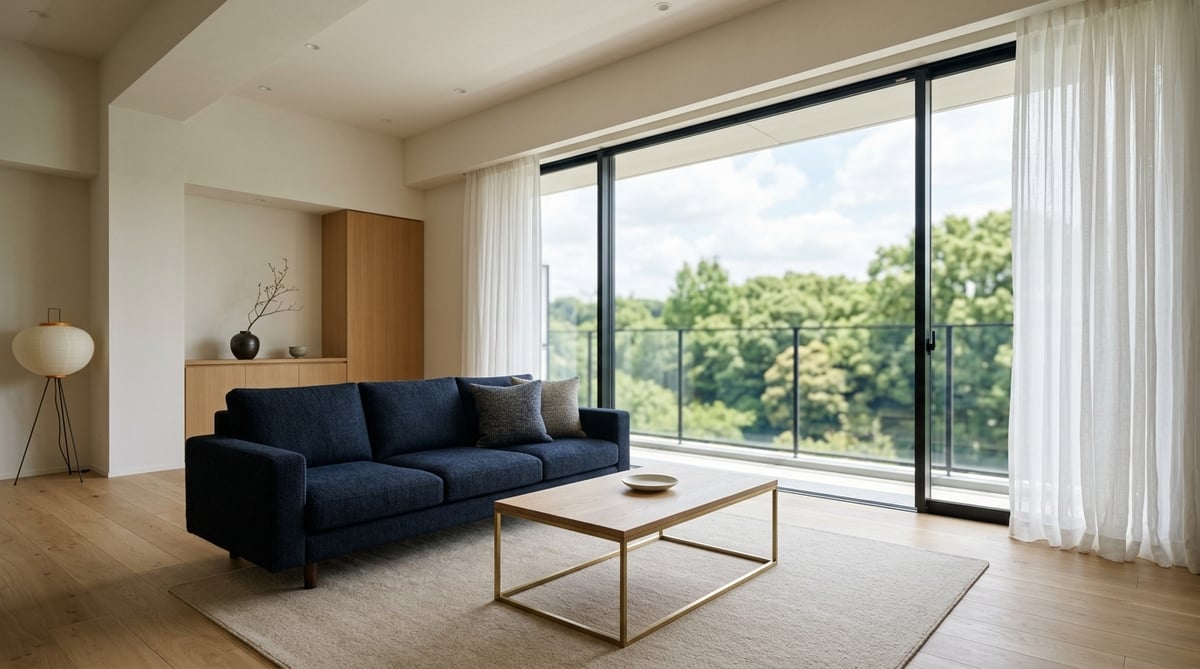
Just two stops and an eight-minute train ride apart on the Chiyoda Line. While both neighborhoods belong to Tokyo's Adachi Ward, finding two adjacent stations across the Tokyo metropolitan network where the view from the carriage window and the overall street atmosphere change so dramatically is a genuine rarity.
Step through the morning ticket gates at Kita-Senju, and your ears catch the brisk footsteps of thousands transferring between the JR Joban Line, Tobu Skytree Line, and Tsukuba Express. Flanked by massive department stores like Lumine and Marui alongside historic post-town shopping arcades, this bustling mega-terminal radiates boundless energy day and night. Freshly roasted coffee aromas drift from station cafés in the morning, while vintage red lanterns illuminate evocative Showa-era alleys at dusk—a captivating district where metropolitan vitality meets down-to-earth downtown warmth.
Ride just eight minutes further to the terminal station of Kita-Ayase, however, and the train glides to a stop next to the lush greenery of Shobunuma Park. A calming quietude welcomes you, inviting an immediate deep breath. Once a quiet terminal served only by three-car branch shuttle trains, Kita-Ayase completed its platform expansion in 2019 to accommodate full ten-car direct trains into central Tokyo. Coupled with the arrival of the directly connected shopping complex LaLa Terrace Kita-Ayase, the district has evolved into an inviting residential haven that balances peaceful suburban living with direct one-seat transit into Otemachi and Kasumigaseki.
Between these two stations along the exact same train line lies a clear rental gap of 20,000 to 40,000 yen per month across equivalent layouts. Annually, this represents an extra 240,000 to 480,000 yen in your bank account; across a standard two-year residential lease including renewal fees, the difference reaches roughly 500,000 to 1,000,000 yen in lifestyle capital. Do you leverage five transit lines and immerse yourself in urban excitement, or do you sink comfortably into a guaranteed morning seat with a book and gain an entire extra room for your budget? As a licensed Japanese real estate broker with a decade of field experience helping international residents navigate Tokyo rentals, let us objectively and thoughtfully examine which choice best aligns with your Tokyo journey.
Key Profiles of Two Neighborhoods Separated by Eight Minutes on the Chiyoda Line
Kita-Senju and Kita-Ayase represent two distinctive facets of eastern Tokyo's Adachi Ward. On a railway map, they sit just two stations apart on the Tokyo Metro Chiyoda Line with Ayase Station positioned between them, covering a straight-line distance of merely 3.5 kilometers. While you could easily cycle between them in under twenty minutes, the sensory ambiance that greets you upon exiting each station could hardly be more different.
Kita-Senju has flourished since the Edo period when it prospered as Senju-shuku, the first post station along the historic Nikko Kaido highway. That rich heritage endures throughout traditional shopping streets like Senju Honcho-dori and Shukubamachi-dori, lined with multigenerational tea merchants, handmade rice cracker shops, and lively neighborhood taverns. Simultaneously, grand shopping landmarks Lumine Kita-Senju and Kita-Senju Marui stand proudly outside the station exits, while Tokyo Denki University's modern open-air campus anchors the east side. With students, office workers, young couples, and seniors constantly mingling, Kita-Senju pulses with vitality seven days a week.
In striking contrast, Kita-Ayase presents a planned, tranquil low-rise residential enclave blessed with generous greenery and waterways. Right beside the station lies Shobunuma Park, celebrated across eastern Tokyo for its lush waterscapes where roughly 8,100 Japanese irises across 140 varieties bloom in early summer alongside charming wooden waterwheels and winding streams. Long functioning merely as a quiet terminus housing the Tokyo Metro Ayase train depot, the station underwent a historic upgrade in March 2019 when platforms were extended to welcome ten-car direct trains through to Yoyogi-Uehara. With the full opening of LaLa Terrace Kita-Ayase directly connected to the station, all daily shopping, dining, and healthcare needs are neatly unified at your doorstep, establishing an idyllic haven for residents prioritizing calm surroundings.
Commute Priority Alignment
Determine whether multi-line speed or guaranteed terminal seating matters more
Budget & Layout Comparison
Calculate the objective space trade-offs unlocked by the 30,000 yen gap
On-Site Neighborhood Check
Inspect ambient noise, evening streetlighting, and building sound insulation
Fair & Transparent Leasing
Eliminate unnecessary initial fees and verify fair statutory brokerage rates
Specializing in Tokyo's eastern districts, our licensed bilingual team guides you through criteria definition, unlisted listings, foreign resident screening, and initial quote optimization via quick video consultations.
Complete rental and living guide for all stations on the Tokyo Metro Chiyoda Line, from Kita-Ayase and Kita-Senju to downtown Otemachi.
Transit Access Comparison: 5-Line Multi-Access Hub vs. Guaranteed Chiyoda Line Terminal Seating
Evaluating transit connectivity involves far more than simply timing the train ride to central Tokyo. The physical crush inside carriages during morning peak hours, the walking distance and stairs required during station transfers, and the availability of alternative routes during unexpected service delays directly dictate your daily mental and physical energy.
Kita-Senju Station: Eastern Tokyo's Largest Multi-Line Transit Junction
Kita-Senju's supreme advantage is that five distinct railway lines converge in one interconnected junction: Tokyo Metro Chiyoda Line, Tokyo Metro Hibiya Line, JR Joban Line (Rapid and Local), Tobu Skytree Line (Isesaki Line), and the Tsukuba Express.
Via the Chiyoda Line, you can reach Otemachi in 16 direct minutes, Kasumigaseki in 21 minutes, and Omotesando in 30 minutes. Switching to the Hibiya Line gives you direct access to Ueno in 9 minutes, Akihabara in 12 minutes, Ginza in 22 minutes, and Roppongi in 31 minutes. Boarding the JR Joban Line Rapid provides a one-seat ride through the Ueno-Tokyo Line straight into Tokyo Station in roughly 20 minutes and Shinagawa in 30 minutes. Connecting smoothly without transfers or requiring at most one simple change to almost any premier commercial hub makes Kita-Senju one of Tokyo's most mobile transit powerhouses.
However, this multi-line strength carries practical morning realities. Because Kita-Senju serves as the regional convergence point for passengers flooding in from across Adachi, Katsushika, Saitama, Chiba, and Ibaraki, its concourses and platforms experience intense congestion during peak rush hour (7:40 AM to 8:40 AM). Inbound Chiyoda Line trains bound for Yoyogi-Uehara arrive at Kita-Senju already packed near capacity; securing a seat during peak morning hours is practically impossible. Furthermore, transferring between the underground Chiyoda Line platforms and the elevated third-floor Tobu and Hibiya Line platforms requires navigating multiple flights of stairs and escalators, frequently taking four to six minutes amidst the crowd.
Kita-Ayase Station: The Invaluable Calm of 100% Guaranteed Seated Commutes
Kita-Ayase's defining commute asset is its position as the originating terminal station on the Tokyo Metro Chiyoda Line. During busy weekday mornings, standing in the designated boarding queue guarantees you a comfortable seat—an extraordinary advantage that transforms the daily routine of busy professionals.
From Kita-Ayase, direct travel time to Otemachi is roughly 27 minutes, Kasumigaseki about 32 minutes, Akasaka around 36 minutes, and Omotesando approximately 39 minutes. Although you spend about 11 minutes longer on the train compared to boarding at Kita-Senju, the difference in toll on your mind and body is night and day. Squeezing into a crowded car and gripping an overhead strap for 16 tense minutes bears little comparison to relaxing into a plush seat for 27 uninterrupted minutes, reading a book, checking industry news on your smartphone, or enjoying a restful morning nap.
During the peak morning window (7:00 AM to 8:50 AM), numerous direct trains originate right from Kita-Ayase heading toward Yoyogi-Uehara. Even if a particular train fills up, stepping back to lead the queue for the next scheduled departure ensures a seated journey. During off-peak daytime hours and evenings, trains terminating at Ayase connect seamlessly to the Kita-Ayase platform shuttle on Platform 0 with cross-platform coordination, keeping your return trip smooth and predictable.
| Criteria & Key Destinations | Kita-Senju Station (5-Line Hub) | Kita-Ayase Station (Chiyoda Terminal) |
|---|---|---|
| Connected Lines | Chiyoda Line, Hibiya Line, JR Joban Line, Tobu Skytree Line, Tsukuba Express (5 lines total) | Tokyo Metro Chiyoda Line (Single integrated branch system) |
| Access to Otemachi | Direct in approx. 16 min (Heavy rush hour crowding; standing only) | Direct in approx. 27 min (Guaranteed seated boarding on originating trains) |
| Kasumigaseki & Omotesando | Kasumigaseki 21 min, Omotesando 30 min (Direct) | Kasumigaseki 32 min, Omotesando 39 min (Direct) |
| Tokyo, Ueno & Ginza Access | Ueno 9 min (Direct), Tokyo 20 min (Direct), Ginza 22 min (Direct) | Approx. 30–35 min via seamless transfer at Kita-Senju or Nishi-Nippori |
| Morning Rush Seating Difficulty | Extremely difficult (Boarding trains already at peak regional congestion) | Extremely effortless (Guaranteed seated boarding from platform queues) |
| Alternative Routes in Delays | Multiple bypass routes available via 4 other operating train lines | Chiyoda delays require local bus connections to Ayase or Kameari Station |
Commercial Infrastructure & Living Convenience: Department Stores & Arcades vs. Modern Station Complexes
The caliber of nearby retail amenities and dining establishments profoundly shapes your weekday meal prep routine and weekend leisure. Here too, Kita-Senju and Kita-Ayase present completely contrasting streetscapes.
Kita-Senju: Lumine, Marui, and Five Major Shopping Streets
Kita-Senju's retail density rivals Kinshicho as eastern Tokyo's premier shopping nexus. Station-connected Lumine Kita-Senju houses Seijo Ishii gourmet groceries, upscale delicatessen counters, patisseries, boutique apparel, and major bookshops, allowing you to complete high-end shopping on your way home without getting caught in the rain. Just across the west exit pedestrian deck, Kita-Senju Marui features electronics giant Nojima, an expansive Muji branch, and the comprehensive B1 food hall Marui Shokuyukan, seamlessly taking care of everything from weekly groceries to thoughtful gifts.
Yet the authentic soul of Kita-Senju lies at the foot of these modern towers, where bustling traditional shotengai fan out in every direction. The west exit leads into Senju Honcho-dori and Shukubamachi-dori (Sun Road), buzzing each evening with neighborhood residents picking up fresh tempura, croquettes, and prepared sides. Meandering down quiet side streets reveals renovated traditional townhouses converted into secluded specialty cafés, micro-roasteries, and craft beer bars—offering endless weekend exploration. Outside the east exit, Gakuen-dori thrives on the youthful energy of Tokyo Denki University students, filled with affordable family-run diners and takeout spots. Streetlights stay illuminated late into the night, creating a paradise for those who love dining out.
Kita-Ayase: Connected Retail via LaLa Terrace and Community Supermarkets
Historically, Kita-Ayase featured relatively modest retail choices directly around the station, but the comprehensive grand opening of LaLa Terrace Kita-Ayase in June 2025 transformed daily life. Stretching under the railway viaducts and into adjacent blocks, this modern development concentrates essential living infrastructure into a cohesive, walkable footprint: a full-scale supermarket, pharmacies, specialized medical clinics, a licensed daycare nursery, cafés, and bakeries.
Within comfortable walking distance, Kita-Ayase also offers dependable grocery staples including a 24-hour Seiyu Kita-Ayase branch and the expansive Summit Store within LaLa Terrace, renowned for fresh produce and accessible pricing. Regardless of how late work keeps you, picking up dinner ingredients and household necessities remains completely stress-free.
Because Kita-Ayase deliberately avoids the neon-lit entertainment hubs and late-night drinking quarters found in massive hubs, deep tranquility settles over the district after dark. Wandering just minutes from the station brings you into peaceful residential streets with light vehicular traffic, free from street solicitation or rowdy tavern noise. For families with young children or professionals seeking restorative sleep detached from city clamor, this combination of modern convenience and high public safety provides immense peace of mind.
Living in Kita-Senju
- Connected Lumine & Marui malls fulfill shopping and dining right at home
- Atmospheric shopping streets packed with craft coffee and independent eateries
- Boundless dining options ensure hearty meals even when arriving late
- Five transit lines provide swift mobility to commercial centers and airports
Living in Kita-Ayase
- LaLa Terrace Kita-Ayase unifies supermarkets, clinics, and daily retail
- Shobunuma Park provides water features and seasonal blooms right nearby
- Originating Chiyoda Line trains offer guaranteed seated morning commutes
- Absence of nightlife entertainment ensures quiet, safe nighttime streets
Rent Comparison by Layout and Impact on Household Budgets
When selecting a rental residence, the monthly rent represents your most significant recurring financial commitment. Although Kita-Senju and Kita-Ayase sit only eight minutes apart on the train line, their respective rental markets exhibit an unmistakable price boundary.
Market Rental Rates Across Standard Layouts (2026 Data)
The broader rent increases across Tokyo's 23 wards have naturally touched the eastern sector, yet neighborhoods reflect differing price dynamics. As an established multi-line junction, Kita-Senju commands strong tenant demand from both solo professionals and families, maintaining firm pricing. In contrast, while Kita-Ayase's direct train service and station-front developments have boosted convenience, it retains remarkable affordability as an Adachi residential retreat.
| Floor Plan Layout | Kita-Senju Market Benchmark | Kita-Ayase Market Benchmark | Monthly Rent Variance | 2-Year Total Savings (with Renewal) |
|---|---|---|---|---|
| Studio / 1K (20–26 ã„¡) | ¥75,000 – ¥90,000 | ¥60,000 – ¥72,000 | Approx. ¥15,000 – ¥20,000 | Approx. ¥375,000 – ¥500,000 |
| 1DK / 1LDK (32–45 ã„¡) | ¥130,000 – ¥170,000 | ¥95,000 – ¥125,000 | Approx. ¥35,000 – ¥45,000 | Approx. ¥875,000 – ¥1,120,000 |
| 2LDK / 3LDK (50–65 ã„¡) | ¥180,000 – ¥230,000 | ¥120,000 – ¥150,000 | Approx. ¥60,000 – ¥80,000 | Approx. ¥1,500,000 – ¥2,000,000 |
Even for compact single-occupant 1K units, the average gap is roughly 18,000 yen per month. In 1LDK apartments, the difference widens to around 40,000 yen, and for family-sized 2LDK apartments, it expands to 60,000 to 80,000 yen per month. Rather than viewing these as mere abstract numbers, let us analyze what this means for your daily living comfort and home furnishings.
The Tangible Reality of a ¥30,000 Monthly Gap: Living Space and Furniture Layout
Consider a solo professional earning a net monthly salary of 280,000 yen. Renting a modern 1K apartment (85,000 yen including management fees) seven minutes from Kita-Senju Station leaves 18,000 yen less in disposable income each month compared to a similar 1K (67,000 yen total) five minutes from Kita-Ayase Station. More importantly, if you allocate that same 85,000 yen budget in Kita-Ayase, a spacious 35-square-meter 1LDK layout comes firmly within reach.
A 22-square-meter 1K and a 35-square-meter 1LDK offer radically different qualities of life. In a 22-square-meter 1K, your primary living room measures roughly 6 tatami mats (about 2.7m by 3.6m). Once you place a single bed along the wall and set up a dedicated work desk and ergonomic office chair, remaining floor space becomes scarce; maintaining an unobstructed 60-centimeter walking corridor consumes almost the entire room. Dining, sleeping, and remote work occur within the exact same visual boundary, making psychological separation between professional focus and evening unwinding challenging over time.
Conversely, in a 35-square-meter 1LDK (approx. 9-mat living-dining kitchen plus a 4.5-mat private bedroom), your bedroom comfortably accommodates a semi-double bed with built-in storage. Meanwhile, your living area easily fits a two-seater sofa, TV console, and a full dining table. Physical doors separate your social and culinary spaces from your sleeping quarters, fostering deep restfulness and focus.
Lifestyle Fit: Choosing Between Urban Action and Peaceful Retreat
Choosing an apartment is fundamentally choosing how you want to spend your days. When deliberating between Kita-Senju and Kita-Ayase, visualizing your typical routine from waking up to turning off the lights will guide you naturally toward the right match.
Who Thrives Most in Kita-Senju?
Kita-Senju shines brightest for residents who draw energy from their immediate urban environment:
- Enthusiasts of dining out and lively evening socializing: If exploring cozy eateries along Senju Honcho-dori, trying local craft beers, or chatting with shopkeepers over dinner provides essential relaxation after a long workday, Kita-Senju provides an unbeatable culinary backdrop.
- Professionals with diverse travel destinations: If your work or social life takes you frequently toward Ueno, Akihabara, Tokyo Station, Roppongi, Tsukuba, or Chiba, the five-line interchange saves immense transit time throughout the week.
- Those who prefer brightly lit, energetic streets: Surrounded by university campuses and retail stores, the active foot traffic ensures safe, well-illuminated walks home even late at night.
Who Thrives Most in Kita-Ayase?
On the other hand, Kita-Ayase provides exceptional satisfaction for residents who view their home as a peaceful sanctuary for body and mind:
- Commuters seeking relief from packed rush-hour trains: If you commute along the Chiyoda Line toward Otemachi, Kasumigaseki, Akasaka, or Omotesando, having a guaranteed seat every morning to read, study Japanese, listen to podcasts, or catch up on sleep significantly enhances your daily well-being.
- Budget-conscious residents prioritizing square footage and savings: If you prefer upgrading your living space—getting a 1LDK instead of a 1K, or a 2LDK instead of a 1LDK—while keeping surplus funds for savings, travel, or home hobbies, Kita-Ayase delivers superior value.
- Remote and hybrid workers needing a quiet environment: If you work from home several days a week and need an undisturbed environment for video calls, followed by weekend walks or bench reading in Shobunuma Park, Kita-Ayase's calm neighborhood pacing is an ideal fit.
Professional Broker Advice: Building Structure, Soundproofing, and Flood Safety
Once you narrow down your preferred neighborhood, the most critical evaluation moves to specific building construction standards and regional hazard profiles. Let us review the essential checks experienced real estate professionals verify on-site that cannot be determined from online photos alone.
Acoustic Insulation and Structural Selection: RC/SRC vs. Steel Frame and Wood
The foundation of long-term rental satisfaction is acoustic comfort. Near lively commercial hubs in Kita-Senju or along arterial roads like Kannana-dori in Kita-Ayase, verifying the building's structural classification is paramount.
Standard residential construction in Japan includes wood frame, light-gauge steel frame, heavy-gauge steel frame, reinforced concrete (RC), and steel-framed reinforced concrete (SRC). To minimize airborne and impact noise from adjacent units, choosing reinforced concrete (RC) or steel-framed reinforced concrete (SRC) is strongly recommended.
During property viewings, we always recommend verifying these three tangible factors:
- Demising wall construction between units: Gently knock on the shared wall with your knuckle. A dull, solid sound indicates solid concrete or dry-lining insulation, whereas a hollow, drum-like echo suggests lightweight gypsum board over studs. If hollow, confirm that the dry-lining wall meets standard sound-attenuation specs (ideally 180mm or thicker).
- Window sash acoustic rating: Particularly along bustling shopping streets in Kita-Senju or near major thoroughfares in Kita-Ayase, window soundproofing dictates indoor quietness. Look for T-2 (30dB reduction) or T-3 (35dB reduction) rated sashes, or dual-pane acoustic secondary glazing.
- Maintenance standards in common areas: Always check the mailbox area for stray flyers, inspect the recycling station for clean sorting, and glance at the bicycle parking area for abandoned bikes. Pristine common areas indicate diligent property management and considerate neighbors.
Adachi Ward Flood Hazard Maps and the Importance of Vertical Evacuation
Adachi Ward, where both Kita-Senju and Kita-Ayase reside, is situated on low-lying alluvial plains bordered by major rivers: the Arakawa, Sumida, Nakagawa, and Ayase rivers. Consequently, reviewing official flood hazard maps before signing a lease is vital for personal safety.
According to the Adachi Ward Flood Hazard Map (based on maximum simulated torrential rainfall occurring once in a millennium), an extreme breach of the Arakawa River could lead to inundation depths between 3.0 and 5.0 meters across broad areas near both stations, reaching from the first floor ceiling to the second floor level. Floodwaters could persist for several days in low points.
When leasing in this region, our professional recommendation is to select an apartment on the 3rd floor or higher in a robust reinforced concrete (RC/SRC) building. In the rare event of major river flooding, living on the 3rd floor allows for safe "vertical evacuation" within your own home, keeping you above floodwaters and eliminating the hazardous journey of walking to emergency shelters through submerged streets.
Statutory Consumer Protections and Preventing Excessive Move-In Charges
When you discover an apartment you love and proceed toward contracting, you will receive an itemized estimate of move-in costs. In Japan's rental market, certain agencies continue the outdated habit of adding discretionary fees without legal backing. To protect your budget, keep these key legal principles and judicial precedents in mind:
- Article 46 of the Real Estate Brokerage Act (Brokerage Fee Caps): Under Japanese law, the total brokerage fee collected by an agency cannot exceed one month's rent plus consumption tax (1.1 months total) shared between landlord and tenant. Furthermore, Ministry of Construction Notification No. 1782 specifies that an agency cannot charge the tenant more than 0.5 months' rent plus tax (0.55 months) unless the tenant gives explicit prior consent. If an agency automatically bills a full 1.1 months without discussion, you have the statutory right to request adherence to standard rates.
- MLIT Guideline for Restoration to Original Condition: Tenants in Japan are only legally liable for damage caused intentionally or through negligence. Routine wear and tear resulting from normal daily use is already covered by your monthly rent. For wallpaper (cross), standard rules establish a six-year service life with a residual asset value of just 1 yen. If you move out after six years of occupancy, you cannot be billed for full wallpaper replacement due to natural aging. Furthermore, even if accidental damage occurs, responsibility is limited to the damaged wall section rather than the entire room.
- Tokyo Metropolitan Ordinance for the Prevention of Rental Housing Disputes ("Tokyo Rule"): When signing a residential lease in Tokyo, a licensed broker must provide a dedicated written explanation and oral briefing regarding the basic principles of move-in repairs and tenant rights. Landlords are legally responsible for repairing air conditioners and water heaters that fail due to age, and tenants cannot be made to pay for standard appliance replacements.
- Supreme Court Decision of December 16, 2005 (Three Requirements for Special Clauses):
For special lease clauses imposing costs on the tenant (such as mandatory departure cleaning fees or lock replacement charges) to be legally enforceable, they must satisfy three strict tests:
- The clause serves a legitimate purpose and does not violate the Consumer Contract Act or good faith principles.
- The contract explicitly and objectively states that the tenant is assuming costs that standard law would otherwise assign to the landlord.
- The tenant clearly recognized and voluntarily agreed to the specific scope and financial burden of the clause.
- Supreme Court Decision of July 15, 2011 (Lease Renewal Fee Validity): Renewal fees paid every two years are generally considered legally valid provided the amount is reasonable in relation to rent and lease duration. In Tokyo's 23 wards, the prevailing standard is one month's rent for a two-year lease term. Always verify that a contract does not impose an excessive renewal charge (such as two or three months' rent).
Transparent Second Opinions and Multilingual Support on LINE
From early neighborhood scouting to final lease signing, sorting through conflicting online rental ads and complex Japanese invoices can feel daunting—especially for foreign residents and newcomers.
At Sorai Tokyo, our mission is to ensure every resident finds their ideal home with complete fee transparency and peace of mind. We follow statutory guidelines and standard market networks to offer brokerage services at half the conventional rate (0.55 months' rent including tax). We never tack on mandatory room sanitization charges, mystery disinfection kits, or inflated administrative add-ons.
We do not use misleading marketing claims like "instant real-time vacancy scanning." Rather than automated guesses, our practical process is personal: simply send us any listing link you find on SUUMO, LIFULL HOME'S, or at home via our official LINE. Our experienced, licensed real estate brokers immediately check Japan's professional inter-broker databases (such as REINS and ITANDI BB) to verify genuine availability, screen landlord policies for foreign residents, and review your initial cost breakdown or competitor quotes completely free of charge.
Whether you are using a smartphone via our bottom navigation bar or browsing on desktop, feel free to use our SorAi move-in cost calculators and diagnostic tools anytime. With no phone number required, zero sales calls, and no store visits, consider us your reliable local pair-programming partner for apartment hunting in Tokyo.
Frequently Asked Questions: Choosing Between Kita-Senju and Kita-Ayase
QHow frequently do originating Chiyoda Line trains run from Kita-Ayase in the morning, and can I really get a seat?
ADuring the busiest weekday morning hours (7:00 AM to 8:50 AM), direct Chiyoda Line trains toward Yoyogi-Uehara depart every 5 to 10 minutes. If you wait in the platform queue, you can secure a seat with near 100% certainty. If you arrive right as the doors close, you may need to stand, but simply waiting for the next train puts you at the front of the line. For commuters who value reading, quiet reflection, or extra rest, this feature is invaluable.
QAre there safety concerns in Kita-Senju when walking home late at night?
AThe dining and drinking clusters around the west exit bus rotary and along Senju 2-Chome feature numerous bars operating late, drawing lively weekend crowds. However, police officers maintain visible patrols, and violent crime statistics remain extremely low. For single female residents or families seeking calm nighttime streets, the east exit around Tokyo Denki University or residential areas slightly off the main avenues—such as Senju-Kotobukicho and Senju-Nakaicho—offer well-lit, peaceful, and reassuring walking routes.
QHow does the 20,000 to 40,000 yen rent difference between Kita-Ayase and Kita-Senju translate into apartment size and amenities?
AFor the exact same monthly budget, this price gap directly converts into either an entire extra room or significantly newer building construction and premium specifications. For instance, an 85,000 yen budget in Kita-Senju typically yields a 15- to 20-year-old 1K apartment around 22 square meters. In Kita-Ayase, that identical budget unlocks a recently built 35-square-meter 1LDK equipped with an auto-locking entrance, reheating bath system, and separate vanity sink. For remote workers needing a separate home office or couples beginning life together, Kita-Ayase provides compelling cost-performance.

Author: Sorai Tokyo Editorial Team (Supervised by Licensed Real Estate Agents)
A real estate consulting team specializing in assisting foreign nationals find rooms and explaining initial costs in Tokyo. We break down language barriers and differences in customs, offering dedicated support in Japanese, English, and Vietnamese for a safe and secure start to your new life.