
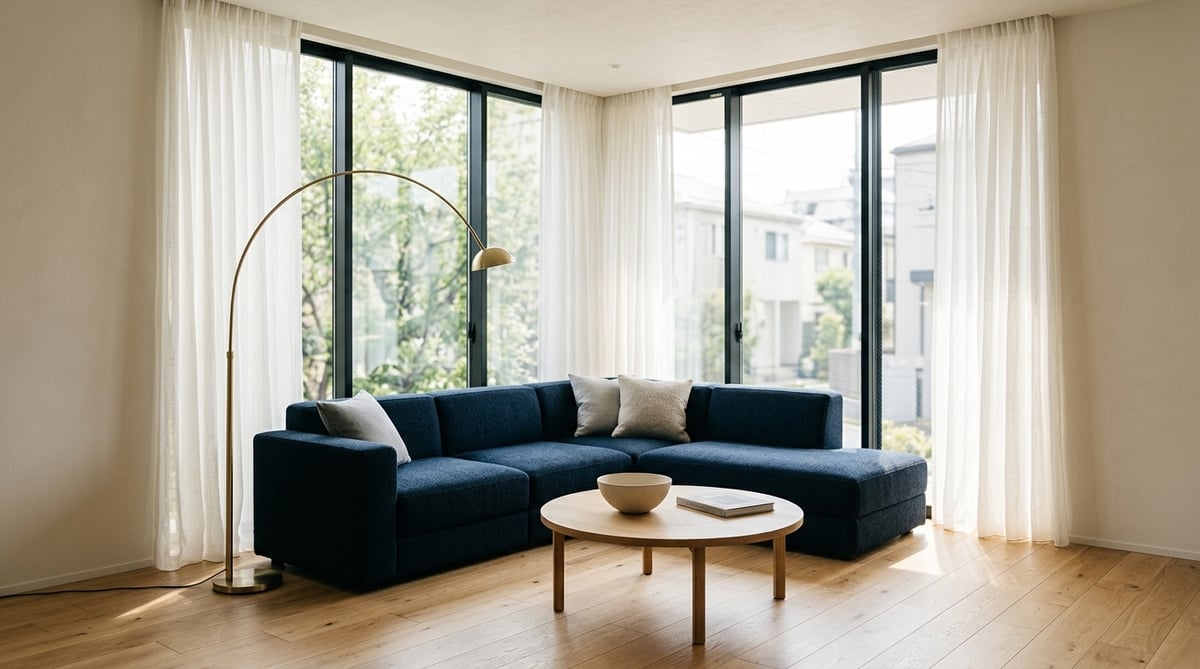
Before 8:00 a.m., walking through the double-height second-floor concourse of Takanawa Gateway Station, soft natural light filters through the membrane roof, illuminating a timber-accented station building and an orderly pedestrian deck beyond. Stepping out of the South Gate into Gateway Park, the glass facades of NEWoMan Takanawa and The Linkpillar 2—both fully open since late March 2026—reflect the crisp morning air, while the aroma of freshly roasted coffee drifts from cafes preparing to open.
Yet if you exit the same second-floor concourse through the North Gate and walk toward National Route 15 (Daiichi Keihin), the streetscape shifts. Detour signs for the long-closed Sengakuji Station Exit A1 and construction hoardings around towering cranes come into view. During property viewings, clients often ask candidly: "I heard the station area was completely finished, but if I rent an apartment now, will I be dealing with construction noise and detours until my next lease renewal?"
Measured against a typical two-year lease—or a four-year stay including one renewal—the Takanawa Gateway Station area as of November 2026 sits in a transitional phase where a completed station-front complex ready for daily use from day one coexists with surrounding infrastructure that will remain under construction until you move out or renew. Rather than relying solely on renderings of what the area will look like years from now, checking whether the currently open station routes and established residential streets suit your daily routine is the most reliable way to choose an apartment with confidence.
- Takanawa Gateway City fully opened in March 2026, giving residents immediate access to Meidi-ya, Seijo Ishii, and an on-site medical mall from day one.
- Sengakuji Station redevelopment (scheduled for FY2031) and the east-side pedestrian bridge toward Shibaura (targeted for FY2028–FY2030) will remain under construction throughout a standard 2-to-4-year lease.
- Topography divides daily comfort: the Takanawa 1–3-chome upland offers quiet streets and stable ground, while the Shibaura side provides flat access and large supermarkets.
November 2026 Opening Status and Surrounding Construction Through 2031
When evaluating the Takanawa Gateway Station redevelopment from a renter's perspective, it helps to separate the station-front complex developed by JR East—Takanawa Gateway City—from the Sengakuji Station District redevelopment and east-west transit infrastructure led by the Tokyo Metropolitan Government, Tokyu Land Corporation, and Keikyu Corporation. The former already has its urban functions in place, whereas the latter is a long-term project aiming for phased completion between FY2028 and FY2031.
Daily Amenities Ready from Day One in Takanawa Gateway City
Following the initial town opening on March 27, 2025, and the full launch of NEWoMan Takanawa in September 2025, the station-front district reached full completion on March 28, 2026, with the opening of Complex II "The Linkpillar 2," the cultural center "MoN Takanawa: The Museum of Narratives," and the residential tower "Takanawa Gateway City Residence." Now that the opening-day crowds have settled into a calmer daily rhythm, walking through the area reveals not only office workers and hotel guests, but also local residents carrying reusable bags home from grocery shopping.
For everyday convenience, the food floors and medical and childcare facilities connected directly to the ticket-gate level by pedestrian decks are particularly reassuring. On the first floor of NEWoMan Takanawa North near the North Gate, Meidi-ya Takanawa Store (10:00–20:00) offers fresh produce and specialty groceries, while Seijo Ishii NEWoMan Takanawa (10:00–21:00) sits on the first floor of South near the South Gate—allowing you to pick up fresh ingredients, prepared meals, and imported foods on your way home without getting wet in the rain. In addition, The Linkpillar 2 houses the lifestyle zone "NEWoMan Takanawa Mimure" on floors 2–3 and the multi-specialty medical zone "Takanawa Gateway Clinics" on floors 4–5. Licensed nurseries such as Poppins Nursery School Sora Takanawa Gateway Ekimae and Umi Takanawa Gateway Ekimae are also operating, alongside Tokyo International School, which relocated and opened on the residential tower side in August 2026. While we also cover the station's basic layout and surroundings in our Takanawa Gateway Station Living & Rent Guide, by autumn 2026 the area has clearly matured into a neighborhood where weekday errands can be handled right at the station.
Sengakuji and East-West Transit Works Continuing Through 1–2 Lease Renewals
On the other hand, if you sign a standard two-year lease in November 2026, your first renewal will fall in November 2028, and even a four-year stay with one renewal will end in November 2030. Projects that will not finish within that timeframe include the Sengakuji Station District Type-2 Urban Redevelopment Project—located just past the North Gate toward Daiichi Keihin—and the pedestrian bridge spanning the east side of the JR tracks toward Shibaura.
Around Sengakuji Station, construction began in November 2024 on a 30-story-above-ground, 3-story-below-ground mixed-use building (approx. 112,467 sqm total floor area, roughly 385 residential units, offices, retail, and integrated station facilities) along with platform widening for the Toei Asakusa Line and Keikyu Line, with completion slated for FY2031 (around March 2032). Consequently, the closure of Sengakuji Station Exit A1—in effect since January 2021—will continue long term, and the pedestrian deck linking Takanawa Gateway Station to the Sengakuji redevelopment building will remain a work in progress. Meanwhile, the "Takanawa Gateway Station East-Side Connecting Passage" (a pedestrian bridge planned to cross above the JR and Shinkansen tracks directly toward Shibaura Central Park) has had its target opening adjusted to FY2028–FY2030 due to design changes involving underground utility interference and roof installation.
| District / Infrastructure Project | Status as of Nov 2026 | Completion / Opening | Impact on 2–4 Year Rental Living |
|---|---|---|---|
| The Linkpillar 1 (North / South) |
Fully operational | Pre-opened Mar 2025 Full launch Sep 2025 |
Daily access to NEWoMan Takanawa (Meidi-ya, Seijo Ishii), JW Marriott Hotel Tokyo, etc. |
| The Linkpillar 2, MoN Takanawa & Residence | Fully operational | Opened Mar 28, 2026 (Move-ins from Apr) |
Mimure, Takanawa Gateway Clinics, licensed nurseries, and cultural center usable from day one |
| Second East-West Connecting Road (Shibaura / Konan pedestrian route) |
Pedestrian route switched (Full road under construction) |
Route switched Mar 28, 2026 Full completion FY2031 |
Easier to walk from Shibaura without detouring to Sengakuji intersection, though roadwork continues |
| Takanawa Chikkutei Preservation & Viewing | Under preservation work | Targeted spring 2028 | Maintenance work around the viewing area continues until around your first lease renewal |
| East-Side Connecting Passage (Pedestrian bridge to Shibaura Central Park) |
Design change / under construction | Target FY2028–FY2030 | No elevated deck across tracks at move-in; must use the switched Second East-West Road route |
| Sengakuji Station District Redevelopment (Station upgrade, 30-story tower, deck) |
Main & underground works (Exit A1 closed) |
Scheduled FY2031 (Around Mar 2032) |
Detours to Exits A2–A4 and hoardings/construction vehicles along Daiichi Keihin remain for 2–4 years |
Looking at this breakdown, even among apartments advertised as "walking distance to Takanawa Gateway Station," your daily commute and evening walk home will feel very different depending on whether your building connects via the South Gate deck, passes the construction hoardings at Sengakuji intersection, or uses the ground-level route east of the tracks. Rather than deciding based on brochures promising "future direct deck access," it is essential to verify whether the path you can walk today feels comfortable.
Simply enter the rent and deposit from portal listings to calculate a full, itemized breakdown including brokerage and guarantor fees without hidden add-ons.
North vs. South Gate Routes and Takanawa Upland vs. Shibaura Lowland
Takanawa Gateway Station has two island platforms with four tracks on the ground floor (Tracks 1–2 for the JR Yamanote Line, Tracks 3–4 for the JR Keihin-Tohoku Line) and an elevated second-floor concourse supervised by architect Kengo Kuma. There are no exits labeled "East Exit" or "West Exit"; instead, ticket gates are consolidated into two locations on the second floor: the North Gate (toward Tamachi and Sengakuji Station, adjacent to NEWoMan Takanawa North) and the South Gate (toward Shinagawa, directly connected to Gateway Park, NEWoMan Takanawa South, and The Linkpillar 1 & 2). Elevators are installed at both the Tamachi (north) and Shinagawa (south) ends of each platform, and accessible restrooms are located near both gates, making travel smooth with suitcases or strollers.
Stepping out of these two gates, within just a few hundred meters east to west, the elevation, ground stability, zoning, and supermarket options divide cleanly into three distinct zones.
Daiichi Keihin & Sengakuji Commercial Zone: Transit Access and Soundproofing
The area around Sengakuji Station—reached in roughly 2 to 5 minutes on foot from the North Gate via deck or street-level paths (along National Route 15 / Daiichi Keihin in Takanawa 2-chome)—is a commercial zone lined with shops and mid-to-high-rise condominiums. Its primary advantage is mobility: in addition to the JR Yamanote and Keihin-Tohoku Lines, you can use the Toei Asakusa Line and Keikyu Main Line daily. Direct access to Haneda Airport without transfers and straight-shot commutes to Shimbashi, Higashi-Ginza, and Nihombashi make this a practical base for frequent flyers and those working in eastern central Tokyo (for a broader look along the line, see our Toei Asakusa Line Area Guide).
In practice, however, because Sengakuji Exit A1 remains closed long term, you should measure walking times assuming a detour to Exit A2 (equipped with an elevator) or Exits A3 and A4 across Daiichi Keihin. Moreover, this zone sits along a major arterial road and borders redevelopment construction running through FY2031. During viewings, close the windows to check indoor quietness (looking for T-2 grade or higher soundproof sashes or double glazing) and listen for traffic noise entering through wall ventilation vents.
Takanawa 1–4-chome Upland: Loam Plateau Quietness and 2026 Grocery Shifts
Climbing west up the slopes beside Sengakuji Temple, Isarago-zaka, or Katsura-zaka from Daiichi Keihin, the atmosphere turns noticeably quieter. The inland side of Takanawa 1–4-chome sits on a volcanic ash plateau (loam upland) roughly 20 meters above sea level, zoned primarily as a Category 1 Medium-to-High-Rise Exclusive Residential District and located outside official flood inundation hazard zones. Well-tended low- and mid-rise condominiums and residences with mature greenery line the streets, offering calm nights away from main-road noise.
If you are apartment hunting on the upland in 2026, note a key shift in local supermarkets. The long-standing Peacock Store Takanawa Gyoranzaka closed on February 22, 2026, for building reconstruction, but shortly afterward on March 7, 2026, the former Peacock Store Mita Isarago reopened as "Food Style Mita." In addition, Takanawa 1-chome has the 24-hour "Lincos Takanawa," and heading toward Shinagawa Station's Takanawa Exit (Takanawa 4-chome) from the South Gate gives you access to "Keikyu Store Takanawa" (10:00–22:00). Many residents now pick up quick items at Seijo Ishii or Meidi-ya inside the station on busy weeknights and do larger weekend shopping at Food Style Mita or Lincos Takanawa. Proximity to general hospitals—such as JCHO Tokyo Takanawa Hospital in Takanawa 3-chome and Tokyo Saiseikai Central Hospital and International University of Health and Welfare Mita Hospital in Mita 1-chome—adds further peace of mind.
Shibaura 3–4-chome & Konan Canal Side: Flat Routes and 2026 Access
East of the tracks, Shibaura 3–4-chome and the Konan area sit on flat reclaimed land with virtually no hills, contrasting sharply with the Takanawa upland. Previously, walking from Shibaura to Takanawa Gateway Station required a wide detour toward the Sengakuji intersection, but the pedestrian route switch on the Second East-West Connecting Road on March 28, 2026, has made walking from Shibaura and Konan noticeably more direct. While the elevated East-Side Connecting Passage is targeted for FY2028–FY2030, the current flat ground-level route already eases daily travel for cyclists and families with strollers.
Shibaura is also well supplied with practical supermarkets: the 24-hour "Peacock Store Shibaura Island" in Shibaura 4-chome, the 24-hour "Niku no Hanamasa Shibaura" and "My Basket Shibaura 3-chome" (8:00–23:00) in Shibaura 3-chome, plus the large "Life Msb Tamachi" (weekdays 8:00–24:00, weekends 9:30–24:00) near Tamachi Station's East Exit. Because this is reclaimed lowland, however, it is important to check Minato Ward's storm surge and inland flood hazard maps, and to verify on site whether a building's electrical equipment room is elevated to the second floor or higher and whether flood barriers are installed at the entrance.
Takanawa Upland (Inland Takanawa 1–4-chome)
- ✓ Stable loam plateau ~20m above sea level, outside flood hazard zones.
- ✓ Primarily exclusive residential zoning, keeping nights calm and quiet.
- ✓ Served daily by Food Style Mita and 24-hour Lincos Takanawa.
- ✓ Involves uphill/downhill walks from the station; test the route with bags.
Shibaura & Daiichi Keihin (Shibaura 3–4, Takanawa 2 Lowland)
- ✓ Flat terrain with no hills, making cycling and stroller commutes effortless.
- ✓ March 2026 pedestrian route switch improved access from Shibaura to the station.
- ✓ Abundant large stores including Peacock Store Shibaura Island and Life Msb Tamachi.
- ✓ Check soundproof sash ratings and elevated electrical rooms in lowland/commercial zones.
Rent Comparison with Neighboring Yamanote and Subway Stations
When searching around Takanawa Gateway, comparing rents not only with adjacent JR stations but also with overlapping subway stations up the hill or along nearby avenues helps clarify what your budget buys. For a broader overview of the loop line, see our Yamanote Line Area Guide. Below, we compare Takanawa Gateway's direct neighbors along two axes: the same JR corridor and overlapping walkable lines.
JR Yamanote & Keihin-Tohoku Neighbors (Tamachi, Shinagawa, Hamamatsucho, Osaki)
| Station (Ward) | 1R | 1K | 1DK | 1LDK | 2LDK | Approx. Rent / sqm |
|---|---|---|---|---|---|---|
| Takanawa Gateway (Minato) | ¥106,000 | ¥143,000 | ¥176,000 | ¥246,000 | ¥361,000 | ¥5,300/sqm |
| Tamachi (Minato) | ¥106,000 | ¥143,000 | ¥176,000 | ¥246,000 | ¥361,000 | ¥5,300/sqm |
| Shinagawa (Minato) | ¥110,000 | ¥148,000 | ¥182,000 | ¥258,000 | ¥374,000 | ¥5,400/sqm |
| Hamamatsucho (Minato) | ¥110,000 | ¥148,000 | ¥182,000 | ¥256,000 | ¥374,000 | ¥5,400/sqm |
| Osaki (Shinagawa) | ¥97,000 | ¥131,000 | ¥161,000 | ¥224,000 | ¥325,000 | ¥4,900/sqm |
Because all of these stations sit on the JR Yamanote Line (with Takanawa Gateway, Tamachi, Shinagawa, and Hamamatsucho also served by the JR Keihin-Tohoku Line), direct JR travel toward Tokyo, Yurakucho, or Shibuya differs little. What separates their rent levels and daily feel is the character of connecting lines and the depth of station-front commerce.
Notably, Takanawa Gateway and neighboring Tamachi share identical average rent benchmarks across every layout. Yet actual listings show Tamachi's market is shaped by a wide range of building ages in Shiba 5-chome and Shibaura, valued for casual dining along Keio Nakadori and proximity to Mita Station (Toei Mita and Asakusa Lines). Takanawa Gateway, by contrast, appeals to renters who prefer a calm station front free of nightlife districts, paired with daily access to the newly opened NEWoMan Takanawa.
To the south, Shinagawa commands a higher budget tier—especially for 1LDK and 2LDK units—thanks to direct Tokaido Shinkansen and Keikyu Main Line connections. Hamamatsucho sits at a similar level as a business hub linking the Tokyo Monorail and Daimon Station (Toei Oedo and Asakusa Lines). If you want to live on the southern side of the Yamanote Line without compromising on floor space or a dedicated home-office nook, expanding your search to Osaki in Shinagawa Ward (or Gotanda at ¥228,000 for 1LDK and ¥332,000 for 2LDK) lets you gain roughly 5 sqm or step up to a newer building grade on the same monthly budget.
Walkable Neighboring Lines: Sengakuji, Shirokane-Takanawa, Takanawadai, and Mita
Searching on the Takanawa upland or along Daiichi Keihin frequently turns up listings within walking distance of multiple stations, such as "10 minutes from Takanawa Gateway, 8 minutes from Shirokane-Takanawa." To help decide whether centering your search on a subway station makes more sense, here is how nearby stations compare.
| Station (Main Lines) | 1R | 1K | 1DK | 1LDK | 2LDK | Approx. Rent / sqm |
|---|---|---|---|---|---|---|
| Sengakuji (Toei Asakusa / Keikyu Main) | ¥106,000 | ¥143,000 | ¥176,000 | ¥246,000 | ¥361,000 | ¥5,300/sqm |
| Shirokane-Takanawa (Namboku / Toei Mita) | ¥112,000 | ¥151,000 | ¥186,000 | ¥263,000 | ¥387,000 | ¥5,500/sqm |
| Takanawadai (Toei Asakusa) | ¥105,000 | ¥141,000 | ¥174,000 | ¥244,000 | ¥357,000 | ¥5,250/sqm |
| Mita (Toei Mita / Toei Asakusa) | ¥107,000 | ¥144,000 | ¥177,000 | ¥249,000 | ¥364,000 | ¥5,350/sqm |
Sengakuji shares virtually the same living sphere as Takanawa Gateway's North Gate, so its rents match. Shirokane-Takanawa, reached up the hill from Takanawa 1–2-chome, commands the highest rent tier in the area because it offers both the Tokyo Metro Namboku Line and Toei Mita Line, including originating trains where commuters can sit to Tameike-Sanno, Nagatacho, Hibiya, and Otemachi (see our Shirokane-Takanawa Living & Rent Guide and Namboku vs. Toei Mita Line Commute Comparison).
Conversely, Takanawadai—toward Sakurada-dori from Takanawa 3-chome—is served solely by the Toei Asakusa Line and lacks large commercial complexes right at the station, keeping rents slightly softer despite being a quiet Minato Ward upland neighborhood. Commuting via the Asakusa Line toward Gotanda, Shimbashi, or Nihombashi on weekdays and walking down to NEWoMan Takanawa on weekends offers a balanced mix of quietness and cost. For those who want both direct subway access to Otemachi/Hibiya and the JR Yamanote Line via flat sidewalks, Mita (paired with Tamachi) is also highly practical (detailed in our Toei Mita vs. Yamanote Line Commute Comparison).
Supply Trends by Layout & Age and Budgeting with Management Fees
The rental market around Takanawa Gateway tends to polarize by building grade. A prime example is the 44-story "Takanawa Gateway City Residence" (847 units, move-ins from April 2026), which draws international corporate assignees and families seeking concierge services and proximity to the international school (for screening and contract practices in high-end southern Yamanote rentals, see our South Yamanote High-Grade & Fixed-Term Rental Guide).
For singles seeking 1R/1K units (around ¥106,000–¥143,000) or couples looking for 1LDK units (around ¥246,000), supply falls into three main buckets:分譲 (condo-grade) rentals along Daiichi Keihin, low- and mid-rise buildings on the Takanawa 2–3-chome upland, and large-scale or tower residences in Shibaura 3–4-chome. Filtering strictly for newer buildings within 5 minutes of the station often pushes rents well above the median. Expanding your search to well-maintained 15-to-25-year-old reinforced concrete buildings with renovated interiors on the Takanawa upland—or established residences in Shibaura—makes it much easier to keep total monthly fixed costs (including management and common-area fees) in check while gaining better storage and sound insulation.
Matching Your Daily Rhythm: Takanawa Gateway vs. Neighboring Stations
There is no single right answer between living at a newly developed station front and choosing an adjacent station with mature shopping streets. Picturing your daily routine from morning until night will point to the setting where you feel most at ease.
Lifestyles That Fit Takanawa Gateway Station
Takanawa Gateway suits renters who want to avoid crowded nightlife districts and neon-lit station fronts while balancing spacious modern urban amenities with a calm residential environment. With the March 2026 full opening, Meidi-ya, Seijo Ishii, Mimure's shops, Takanawa Gateway Clinics, and MoN Takanawa all sit on a pedestrian deck just minutes from the gates. Coming home through an airy concourse and quiet deck for groceries or clinic visits—without weaving through busy entertainment streets—brings a sense of ease to weekday evenings.
It also works well for singles, dual-income couples, and families who commute briskly to Shinagawa, Tokyo, or Marunouchi on the Yamanote or Keihin-Tohoku Lines, fly via Haneda Airport on the Keikyu Line from Sengakuji, and value quiet evenings for reading and rest on the Takanawa upland.
When Tamachi, Shirokane-Takanawa, or Osaki May Feel More Natural
Depending on your priorities, centering your search on a neighboring station can yield higher daily satisfaction.
If you prefer not to navigate Sengakuji construction detours through FY2031, enjoy casual independent eateries and bistros on your walk home, and want large supermarkets like Life Msb Tamachi nearby on weekends, the Tamachi / Mita area is a dependable fit (see our Toei Mita Line Area Guide).
If you like the quiet upland environment but commute toward Roppongi-itchome, Tameike-Sanno, or Nagatacho—and value seated originating subway trains plus shopping at Queen's Isetan Shirokane-Takanawa or the Shirokane shopping street—then Shirokane-Takanawa (featured in our Namboku Line Area Guide) streamlines your daily commute. And if you work from home frequently and prioritize an extra study room or larger living-dining area over station-front glamour on the same rent budget, Osaki or Gotanda—just one or two stops from Shinagawa—offers noticeably more room for your furniture.
Fixed-Term Leases, Restoration Rules, and Viewing Checks in Takanawa
When narrowing down specific properties in Takanawa, Mita, or Shibaura, knowing a few practical legal and inspection details common to Minato Ward's higher-grade and redevelopment-adjacent buildings helps prevent surprises later.
Fixed-Term Leases (Article 38) Early Termination & Corporate Housing Rules
In condo-grade rentals on the Takanawa upland, high-end station-front residences, and buildings with future redevelopment plans, units are frequently offered on a Fixed-Term Building Lease (Article 38 of the Act on Land and Building Leases) rather than a standard renewable lease. A fixed-term lease ends definitively at the expiration date without automatic renewal. Even when a listing states "re-contracting negotiable," verify before applying whether a re-contracting administrative fee (often 0.5 to 1 month's new rent) applies and whether the owner's plans could change.
A detail frequently overlooked in Takanawa is the scope of the statutory early termination right under Article 38, Paragraph 7. For residential fixed-term leases under 200 sqm of floor area, the law grants the tenant the right to terminate with one month's notice if unavoidable circumstances—such as job transfer, medical treatment, or caring for a family member—make it difficult to continue using the unit as their primary residence. However, this statutory right applies only to individual residential contracts and does NOT apply to corporate-name leases (company housing). If you are leasing a fixed-term unit through your employer's corporate housing program, confirm in writing before applying whether the contract includes a voluntary early-termination clause (e.g., 1–2 months' advance notice) and what short-term cancellation penalties apply.
Restoration Clauses, the Tokyo Rule, and On-Site Noise & Flood Checks
In higher-rent Minato Ward apartments, reviewing move-out restoration costs and house-cleaning clauses in writing before signing ensures transparency. Under the Ministry of Land, Infrastructure, Transport and Tourism's "Guidelines on Restoration," wallpaper has a statutory useful life of 6 years (reaching a residual value of ¥1 at 6 years), and replacement costs for normal wear and tear—such as sunlight fading or furniture marks—are borne by the landlord. Even if a tenant accidentally damages a wall, the tenant's share is generally prorated by elapsed years on a single-wall basis rather than the entire room. In Tokyo residential leases, the "Tokyo Rule" (Tokyo Metropolitan Ordinance for the Prevention of Rental Housing Disputes) also requires a licensed real estate agent to explain and deliver a separate written document outlining restoration principles and special clauses before signing, and repairs for age-related failure of water heaters or air conditioners are likewise the landlord's responsibility.
For any special clause shifting normal wear-and-tear costs (such as a fixed house-cleaning fee) to the tenant to be legally valid, the Supreme Court ruling of December 16, 2005 requires that the scope and amount be stated unambiguously in the contract and that the tenant clearly understands and agrees to bear costs beyond normal obligation. Furthermore, for individual consumer leases, if a fixed repair or deduction clause is disproportionately high relative to the rent and local norms—unfairly harming the consumer's interests against good faith—it may be invalidated under Article 10 of the Consumer Contract Act (and the framework of the Supreme Court rulings of March 24 and July 12, 2011). Keeping these two standards—clarity of terms and reasonableness of amount—in mind helps you evaluate initial fees calmly.
During your on-site viewing, check details that floor plans cannot show: near Daiichi Keihin or JR tracks, close the windows to test soundproof sash performance and listen at wall vents; on the Takanawa upland, walk the evening route from your actual station gate up the slope to check sidewalk width and street lighting; in Shibaura's lowland, inspect whether the ground-floor electrical room is elevated and whether flood barriers are equipped; and in commercial or quasi-industrial zones, look for coin parking lots or aging low-rise buildings directly facing your balcony that could be redeveloped during your stay, altering sunlight or views.
If you find a property you are considering, simply send the listing URL to Sorai Tokyo's official LINE (@soraitokyo). Our 24/7 AI concierge and licensed real estate agents will check live availability in the inter-agency database and provide a free, transparent second opinion on initial fees, fixed-term lease clauses, and special terms—completely anonymously, with no phone number required, zero pushy sales calls, and no store visits needed. You can also explore our SorAi smart tools anytime from the bottom menu on mobile or the footer on desktop.
Choosing a Home Around Takanawa Gateway with Confidence
With the full opening of Takanawa Gateway City in March 2026, the station area has transitioned from a future blueprint into a practical neighborhood where Meidi-ya, Seijo Ishii, medical clinics, and cultural venues are part of everyday life. At the same time, because Sengakuji redevelopment and the east-side pedestrian bridge will continue through FY2028–FY2031, anchoring your 2-to-4-year lease decision on the station routes you can walk today—and whether the upland's quietness or the lowland's flat convenience fits your routine—remains the surest guide.
Whether you are drawn to the calm residential streets of the Takanawa upland, the flat canal-side convenience of Shibaura, or neighboring hubs like Tamachi, Shirokane-Takanawa, or Osaki, the right choice depends on how you spend your days. Whenever you would like to double-check a listing or compare options, feel free to reach out to Sorai Tokyo—our experienced licensed agents are here to support your move with calm, transparent advice.
Frequently Asked Questions: Takanawa Gateway Redevelopment & Renting
QAs of 2026, can I handle all daily grocery and household shopping right at Takanawa Gateway Station?
AYes, for weekday errands. Since the full opening on March 28, 2026, Meidi-ya Takanawa Store (10:00–20:00) on the first floor of NEWoMan Takanawa North and Seijo Ishii NEWoMan Takanawa (10:00–21:00) on the first floor of South are directly connected to the ticket gates. In addition, the Takanawa upland has Food Style Mita (opened March 2026) and 24-hour Lincos Takanawa, while Shibaura offers 24-hour Peacock Store Shibaura Island and Niku no Hanamasa Shibaura (note that Peacock Store Takanawa Gyoranzaka closed on February 22, 2026).
QHow long will the Sengakuji Station redevelopment and Exit A1 closure continue?
AThe Sengakuji Station District redevelopment is scheduled for completion in FY2031 (around March 2032), and Exit A1 has been closed since January 2021 for station improvement works. Throughout a 2-to-4-year lease signed now, detours to Exit A2 (with elevator) or Exits A3 and A4—along with construction hoardings along Daiichi Keihin—will remain in place, so checking the actual walking route and nighttime lighting during a viewing is recommended.
QHas walking to Takanawa Gateway Station from Shibaura or Konan become more convenient?
AYes. With the pedestrian route switch on the Second East-West Connecting Road on March 28, 2026, it is now much easier to reach the station from Shibaura without a wide detour to the Sengakuji intersection. However, because the elevated East-Side Connecting Passage toward Shibaura Central Park is targeted for FY2028–FY2030, walking the current switched ground route during your viewing will give you an accurate sense of your daily commute time.
QWhat should I watch out for when renting a fixed-term lease apartment in Takanawa under a corporate housing contract?
AThe statutory one-month early termination right for unavoidable reasons (such as job transfers or medical care) under Article 38, Paragraph 7 of the Act on Land and Building Leases applies only to individual residential leases under 200 sqm—it does not apply to corporate-name leases. When signing a corporate fixed-term lease, verify in writing beforehand whether the contract includes a voluntary early-termination clause, what cancellation penalties apply, and what terms govern re-contracting.

Sorai Tokyo Co., Ltd. Editorial (Licensed Real Estate Agency #113297)
Licensed online real estate agency handling residential leasing across 15 major Tokyo lines (Member of All Japan Real Estate Association). Powered by our proprietary 24/7 AI "SorAi" on iOS/LINE and dedicated licensed realtors, we support renters end-to-end from vacancy checks on major portals to viewings and digital contracts.