
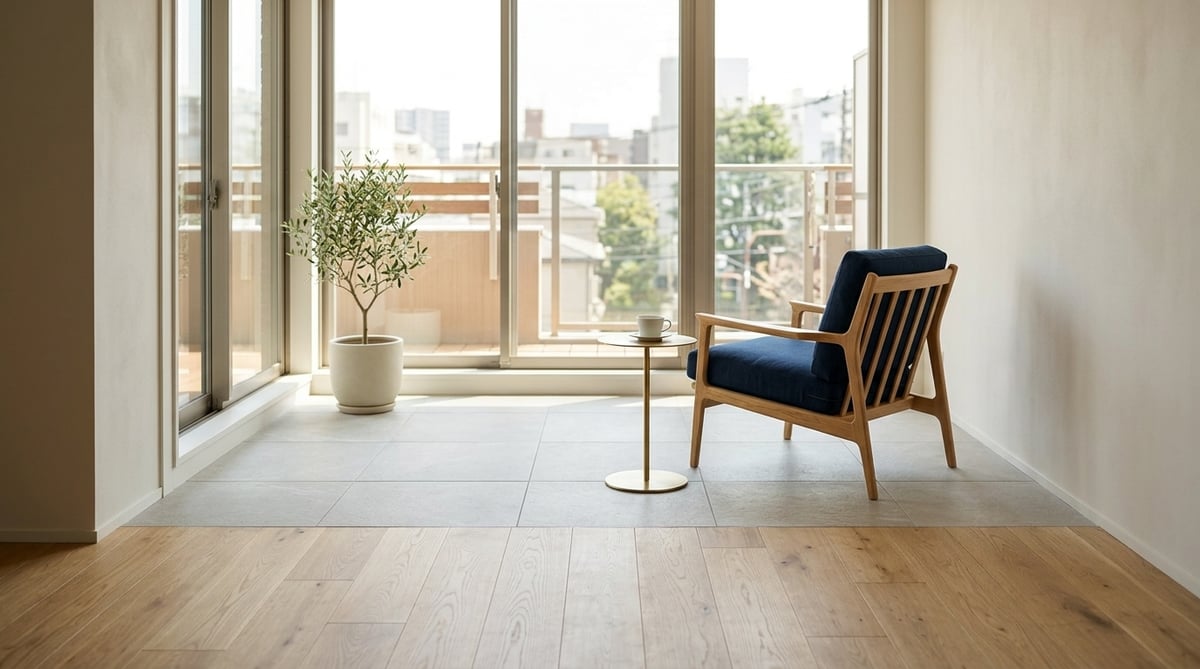
Just past 7:00 AM at the East Exit of Ayase Station. Stepping out through the open station-front traffic plaza newly completed in January 2025, the warm aroma of freshly baked bread and ground coffee from Vie de France inside M'av Ayase Lieta beneath the elevated tracks drifts gently into the crisp morning air. Passing through the ticket gates, office workers quietly queue on Platform 2 for the originating turn-back train, their expressions carrying a calm margin of ease before heading into central Tokyo.
Despite offering direct, transfer-free access via the Tokyo Metro Chiyoda Line to major business districts such as Otemachi, Kasumigaseki, and Akasaka in roughly 20 to 25 minutes, median rents at Ayase Station remain steady at ¥86,000 for a 1K and ¥138,000 for a 1LDK. Compared with Kita-Senju just one stop and about three minutes closer to the center (¥98,000 for a 1K; ¥162,000 for a 1LDK), that represents a monthly difference of ¥12,000 to ¥24,000. On the walk back along the tree-lined avenue after a viewing, many clients candidly ask: "For a station this convenient, why is the rent kept so reasonable? I'm a little hesitant, wondering if there's a hidden drawback I'll only notice after moving in."
To put it plainly, Ayase's affordability is not the flip side of poor livability. Rather, it stems from a clear convergence of urban factors: how the railway network divides its roles, differences in commercial land values, and a deep housing stock nurtured by flat terrain. Once you understand the mechanics behind these numbers and the practical points to keep in mind for a low-lying riverside area, you can redirect those monthly savings toward an upper-floor unit (second floor or higher) or a concrete building with auto-lock security and strong soundproofing—setting up a comfortable, reassuring new life in Tokyo without stretching your budget.
- Median rents in Ayase are ¥86,000 (1K) and ¥138,000 (1LDK), saving roughly ¥144,000 to ¥288,000 per year compared with neighboring Kita-Senju
- Lower rents are driven by single-axis line land values, abundant flat-terrain housing stock, and a daily supermarket-centered commercial zone
- Living atmospheres differ between the quiet residential East Exit and the West Exit/Kosuge side, which welcomed Sunrise Ayase in 2025
Ayase Rent Market vs. Kita-Senju and Central Tokyo: Annual Fixed-Cost Differences
Once the Chiyoda Line crosses the Arakawa River heading outward from central Tokyo, rent levels ease gradually. Even within that progression, the single-stop gap between Kita-Senju and Ayase (2.6 operating kilometers, roughly 3 minutes by train) marks a distinct step down in pricing that goes beyond mere distance. While we also map out the broader corridor in our Chiyoda Line Area Guide and Chiyoda & Joban Line Rent Gradient Comparison, let us first look side by side at current median rents in Ayase and key comparison stations.
| Station (Ward & Main Lines) | Rent per sqm | 1R | 1K | 1DK | 1LDK | 2LDK |
|---|---|---|---|---|---|---|
| Ayase (Adachi Ward / Chiyoda Line & Joban Local) | ¥3,400 | ¥63,000 | ¥86,000 | ¥105,000 | ¥138,000 | ¥196,000 |
| Kita-Senju (Adachi Ward / Chiyoda Line & 4 other lines) | ¥3,900 | ¥73,000 | ¥98,000 | ¥121,000 | ¥162,000 | ¥229,000 |
| Machiya (Arakawa Ward / Chiyoda Line, Keisei Line, etc.) | ¥3,800 | ¥70,000 | ¥94,000 | ¥116,000 | ¥154,000 | ¥215,000 |
| Sendagi (Bunkyo Ward / Chiyoda Line) | ¥4,400 | ¥83,000 | ¥112,000 | ¥137,000 | ¥186,000 | ¥266,000 |
| Kita-Ayase (Adachi Ward / Chiyoda Line) | ¥3,200 | ¥58,000 | ¥78,000 | ¥96,000 | ¥127,000 | ¥177,000 |
| Kameari (Katsushika Ward / Joban Local Line) | ¥3,300 | ¥60,000 | ¥81,000 | ¥100,000 | ¥133,000 | ¥184,000 |
| Gotanno (Adachi Ward / Tobu Skytree Line) | ¥3,200 | ¥59,000 | ¥80,000 | ¥98,000 | ¥129,000 | ¥181,000 |
Monthly Breathing Room of Around ¥10,000 for Solo Renters (1R & 1K)
When solo renters or professionals relocating for work in central Tokyo look for an apartment around the high ¥80,000s to ¥90,000 per month including management fees, options inside the Yamanote loop—such as Bunkyo Ward's Sendagi—tend to be older, compact studio units where features like a separate washbasin, two-burner stove, or auto-lock entrance are hard to find. We explore the livability and budget differences between the downtown side and the Yamanote interior in our Chiyoda Line Downtown vs. Bunkyo Plateau Rent Comparison Guide, and even across the Arakawa River in Kita-Senju, newer 1K apartments within a 10-minute walk of the station often list around ¥100,000.
Extending your search just three minutes further to Ayase noticeably changes the quality of options within that same high-¥80,000s budget. On quiet residential streets just one block off the main avenue, 1K apartments around 25 sqm on the second floor or higher of reinforced concrete (RC) buildings—complete with a separate bath and toilet, independent washbasin, and parcel delivery lockers—become realistic candidates. Trading a few extra minutes on the morning train for a spacious room and clean, modern plumbing that lets you unwind the moment you unlock your front door is precisely why Ayase remains a steady favorite among single residents.
Roughly ¥290,000 in Annual Fixed-Cost Savings for Couples & 1LDK+ Households
For larger layouts such as 1LDK and 2LDK apartments, the rent difference per square meter translates directly into substantial household savings. For couples moving in together, newlyweds, or remote workers needing a dedicated study, the ¥24,000 monthly gap between Kita-Senju and Ayase's median 1LDK rents adds up to roughly ¥288,000 (nearly ¥290,000) per year. Over a standard two-year Tokyo lease, that equals approximately ¥580,000 in fixed housing costs.
In our day-to-day consultations, dual-income couples who initially leaned toward a major terminal station often walk around Ayase, see its calm streets and well-stocked supermarkets firsthand, and conclude: "With the ¥290,000 a year we save here, we can invest in a dining table we truly love and still not compromise on building security or floor level." Leaving comfortable room in the monthly budget for good meals and weekend outings, rather than stretching for rent alone, is one of this neighborhood's quiet strengths.
Simply enter the rent and deposit from portal listings to calculate a full, itemized breakdown including brokerage and guarantor fees without hidden add-ons.
5 Structural Reasons Why Ayase Rent Remains Affordable
Why do Ayase rents stay so composed compared with neighboring terminal stations despite its direct central Tokyo access? Looking closely at how the land developed and how the local rental market behaves, five clear structural factors are at work.
| Structural Factor | Urban & Rental Market Background | What It Means for Your Home Search |
|---|---|---|
| Single-Axis Corridor Without Multi-Line Transfers | Unlike 5-line Kita-Senju, Ayase serves only the Chiyoda / Joban Local axis, and Joban Rapid trains pass through | If you commute along the Chiyoda Line, you avoid paying a terminal-station premium for lines you never use |
| Moderate Commercial & Residential Land Values | Official land prices around Ayase Station and nearby residential blocks are a fraction of Kita-Senju's West Exit core | Lower land acquisition costs allow landlords to offer comparable building grades at gentler rents |
| Flat Terrain & Deep Housing Stock | Level residential streets span Adachi and Katsushika Wards, with steady supply from mid-aged to newly built apartments | Even 10+ minute walks or bike rides stay effortless, keeping competition healthy and rents from overheating |
| Lowland Flood Zones & Outdated Impressions | Situated in a river lowland, some renters also filter out the area based on decades-old stereotypes without visiting | By choosing a 2nd-floor+ unit and inspecting the streets in person, you gain strong value relative to actual livability |
| Everyday Supermarkets Over Department Stores | Rather than luxury fashion malls, price-competitive grocery stores cluster around the station | Not only rent, but daily grocery and household expenses stay balanced, supporting overall cost of living |
Single-Axis Structure (Not a Multi-Line Hub) and Boundary-Station Fare Rules
The primary reason is that neighboring Kita-Senju is a massive five-line interchange—serving the JR Joban Rapid Line, Tokyo Metro Hibiya Line, Chiyoda Line, Tobu Skytree Line, and Tsukuba Express—whereas Ayase is a single-axis station where the Tokyo Metro Chiyoda Line and JR Joban Local Line meet. Even the JR Joban Rapid Line connecting directly to Ueno, Tokyo, and Shinagawa stops at Kita-Senju but passes through Ayase. Because transfer demand from commuters heading toward Hibiya Line stations, Akihabara, or Shinagawa does not concentrate here, upward pressure on rents remains much gentler.
This difference in demand is mirrored directly in official land valuations. According to the Ministry of Land, Infrastructure, Transport and Tourism's published land prices, commercial land at Ayase Station (Ayase 1-chome, ¥926,000/sqm) is less than one-fourth that of Kita-Senju's West Exit commercial core (Senju 2-chome, ¥4,100,000/sqm). Moving slightly into residential blocks such as Ayase 3- and 4-chome, Nishi-Ayase, or Kosuge and Horikiri in Katsushika Ward to the south, land acquisition costs drop further. Because apartment rents are built on land cost plus construction cost, areas with restrained land prices can offer the same building quality at noticeably more approachable rents.
Meanwhile, for anyone whose workplace sits along the Chiyoda Line—Otemachi, Hibiya, Kasumigaseki, Akasaka, or Omotesando—being a single-axis station is no inconvenience at all. In fact, as a Tokyo Metro boundary station, Ayase offers originating turn-back trains from Platform 2, allowing you to commute seated if you time your arrival on the platform. We detail how to make the most of these originating trains in our Chiyoda Line Ayase & Kita-Ayase Originating Train Guide. Additionally, the 2.6 km segment between Kita-Senju and Ayase operates under a special fare rule: although it is a Tokyo Metro line, it is priced at the minimum JR Tokyo-area electric train fare, and JR stations do not sell tickets solely for this segment (JR Passenger Operating Regulations Article 16-5), reflecting the long-standing integrated operation of the Joban Local and Chiyoda Lines.
Abundant Housing Stock on Flat Terrain and a Practical Daily Commercial Environment
The second factor is the combination of level ground and deep housing supply. In hilly districts like Bunkyo or Minato Ward, walking away from the station often means climbing steep slopes, so demand concentrates tightly around station-front buildings and pushes rents up. Around Ayase, however, a nearly flat plain stretches across Adachi Ward (Ayase, Higashi-Ayase, Nishi-Ayase) and Katsushika Ward (Kosuge, Horikiri). A 10- to 12-minute walk feels light, and a bicycle expands your daily radius effortlessly, preventing demand from clustering on just a few blocks. From solid mid-rise condominiums built in the 1980s–2000s to the 32-story City Tower Ayase completed in 2025 and recent new builds, a wide spectrum of properties competes for tenants, naturally keeping market rents steady.
Ayase's commercial landscape also aligns with this grounded cost of living—centered on practical daily stores rather than special-occasion department stores. Around the station you will find Ito-Yokado Ayase, Tokyu Store Ayase (3-1-2 Ayase, Adachi Ward), and Big-A Ayase (2-26-8 Ayase, Adachi Ward), while beneath the tracks lie M'av Ayase Lieta (home to Saint Marc Cafe and Vie de France) and the long-standing specialty shops of Metro Center Ayase. Furthermore, on November 20, 2025, the mixed-use commercial facility Sunrise Ayase opened its first phase on the southern Kosuge 4-chome side in Katsushika Ward, adding an OK Supermarket Ayase Ekimae branch on the B1 floor and a medical clinic mall including Sogo Pharmacy on the 4th floor. Being able to buy fresh groceries and daily necessities at competitive prices without pretension supports your overall monthly budget.
River-Lowland Flood Hazards and Outdated Stereotypes Creating Value
As a licensed real estate specialist, I also want to be completely transparent about the lowland hazard profile and lingering preconceptions. Ayase sits on flat alluvial terrain between the Arakawa, Ayase, and Naka Rivers. On the Arakawa River flood hazard maps published by Adachi and Katsushika Wards, parts of the area are designated for potential inundation of 0.5 m to under 3 m, with certain pockets marked at 3 m to under 5 m. We explain how to read these maps and choose appropriate floor levels in our Kita-Senju, Ayase & Kita-Ayase Flood Hazard Map Guide; naturally, these geographic conditions help keep land prices and ground-floor rents restrained.
In addition, some renters still filter out Adachi Ward entirely based on decades-old news reports or vague impressions without ever walking the streets. In reality, following the 2025 East Exit plaza renewal and new residential developments, the streetscape has steadily matured, and residential blocks just off the main roads offer a calm everyday rhythm. You can review objective block-by-block crime statistics and East/West Exit trends in our Ayase East vs. West Exit Livability & District Data Guide—the gap between outdated perceptions and today's well-kept environment is precisely what creates such compelling value for those who visit in person.
How Daily Life Shifts Between the East Exit, West Exit, and Katsushika Kosuge Side
Ayase is an elevated station with ticket gates oriented along its east-west tracks, and the border between Adachi Ward and Katsushika Ward runs just south of the station. Depending on which exit you use and which direction you walk, your evening grocery route and the quietness outside your window change noticeably.
From the Renewed East Exit to Quiet Residential Blocks in Ayase 3- & 4-chome and Higashi-Ayase
The East Exit, bathed in morning light, has seen the most dramatic streetscape improvements in recent years. Opened in January 2025, the roughly 1,500 sqm East Exit traffic plaza neatly consolidates Harukaze community bus stops and taxi stands, creating a spacious, pedestrian-friendly approach separated from vehicle traffic. Landmark City Tower Ayase rises beside the plaza, while Ito-Yokado Ayase and Tokyu Store Ayase brighten the walk home from the gates.
Walking about five minutes northeast past the station-front commercial zone into Ayase 3-chome, Ayase 4-chome, or Higashi-Ayase 1-chome, the zoning shifts to Category 1 Residential, and the bustle of storefronts fades away. Neat sidewalks line level streets of mid-rise apartments and detached homes, where you pass couples carrying grocery bags or neighbors walking dogs at dusk. It is an easygoing, quiet pocket well suited to solo residents and couples who want calm surroundings on weekends.
Lively Dining Along the West Exit to Nishi-Ayase and the Katsushika Kosuge Side
On the West Exit side, Metro Center Ayase beneath the tracks and the surrounding streets host welcoming set-meal diners, bakeries, and independent eateries where you can easily stop by after work. Passing Big-A Ayase along Ayase 2-chome and heading northwest into Nishi-Ayase 2- and 3-chome brings you into a Category 1 Medium-to-High-Rise Exclusive Residential Zone—balancing quiet living with approachable rents.
Equally noteworthy is the convenience south of the tracks in Kosuge 4-chome and Horikiri 8-chome in Katsushika Ward. Here, Sunrise Ayase (opened November 2025) lets you pick up fresh produce and prepared foods at OK Supermarket on the B1 floor or visit the 4th-floor clinic mall and Sogo Pharmacy on your way home. For tips on choosing well-lit evening routes and quiet blocks, see our Ayase Safety & Well-Lit Residential Route Guide.
Choosing Between Nearby Stations by Lifestyle: Kita-Senju, Kita-Ayase, Kameari & Gotanno
Even in a well-balanced neighborhood like Ayase, it is not the only right answer for every lifestyle. Depending on your workplace line, weekend shopping habits, and preferred walking distance, a neighboring station—or another line within walking reach—may fit your daily rhythm even better.
Who Feels Right at Home in Ayase
- ✓ Commuters heading directly to Otemachi, Kasumigaseki, Akasaka, or Omotesando on the Chiyoda Line
- ✓ Riders who want both frequent Joban through-trains and the option of Ayase-originating trains
- ✓ Households that enjoy comparing multiple large supermarkets like OK and Ito-Yokado
- ✓ Renters who prefer putting ¥12,000–¥24,000/month saved over Kita-Senju toward better specs or higher floors
When Nearby Stations May Fit Better
- ✓ Kita-Senju: if you need Hibiya Line, Joban Rapid, or Tsukuba Express transfers and department stores
- ✓ Kita-Ayase: if you want 1K rents around ¥78,000, park greenery, and easy originating-train seating
- ✓ Kameari: if you enjoy warm, traditional shopping arcades alongside large retail complexes
- ✓ Gotanno: if your Nishi-Ayase search goes beyond a 12-minute walk and you use the Hibiya Line
Kita-Senju for Multi-Line Hubs & Department Stores; Kita-Ayase for Extra Calm
If one partner commutes on the Chiyoda Line while the other uses the Hibiya Line or JR lines toward Shinagawa, or if you enjoy browsing station-building department stores and fashion boutiques on your way home, Kita-Senju (1K ¥98,000; 1LDK ¥162,000) remains a dependable hub even with the rent difference. Its East Exit Gakuen-dori side also offers quieter residential pockets, as detailed in our Kita-Senju West vs. East Exit Comparison Guide.
Conversely, if you want to lower fixed costs one step further and enjoy greener, quieter surroundings, neighboring Kita-Ayase (1K ¥78,000; 1LDK ¥127,000) on the Chiyoda Line branch is a calm alternative. With LaLa Terrace Kita-Ayase opening in June 2025, daily shopping has become much more convenient while preserving its low-rise residential feel. You can compare train frequencies and originating-seat odds in our Kita-Ayase vs. Ayase Commuting & Livability Guide.
Kameari's Local Arcade Charm and Gotanno Within Walking Reach of Nishi-Ayase
One stop east on the JR Joban Local Line, Kameari in Katsushika Ward (1K ¥81,000; 1LDK ¥133,000) shares the same direct Chiyoda Line service while pairing lively traditional shopping streets with large commercial complexes. Though it lacks Ayase's originating trains, it appeals to residents who value weekend shopping variety alongside modest rents.
Another practical perspective when looking in Nishi-Ayase is comparing walking distances to nearby lines. From Nishi-Ayase 3-chome, Ayase Station is a flat 12- to 15-minute walk, whereas walking 7 to 10 minutes northwest brings you right into the station-front zone of Gotanno on the Tobu Skytree Line (direct Hibiya Line service; 1K ¥80,000; 1LDK ¥129,000). Weighing whether your daily commute follows the Chiyoda Line (Otemachi, Akasaka) or the Hibiya Line (Ueno, Akihabara, Ginza, Roppongi) makes that choice straightforward.
3 Steps to Turn Ayase's Rent Savings Into Peace of Mind
Rather than simply hunting for the lowest-priced unit in Ayase, directing part of the ¥12,000–¥24,000 monthly savings toward flood resilience and sound insulation significantly improves long-term satisfaction. Here is a three-step checklist from property selection to contract review.
Choosing 2nd-Floor+ Units and Checking Building Equipment (Electrical Rooms & Floodgates)
The first step to living comfortably in a flat riverside area is giving yourself a modest margin in building structure and floor height. Allocating just ¥5,000 to ¥10,000 of your monthly savings easily secures a second-floor or higher unit in a reinforced concrete (RC) building with auto-lock entry and a video intercom. Beyond reducing flood anxiety during typhoons or heavy rain, an upper floor also eases concerns about street-level sightlines, humidity, and security. Healthcare professionals who need quiet daytime sleep after night shifts can also consult our Ayase & Kita-Ayase Soundproof Rental Guide for Medical Workers.
During viewings, take a moment to inspect the ground-floor entrance as well: check whether the lobby is raised a few steps above street level, whether there is storage for removable floodgates (water-stop boards), and whether the building's electrical room is positioned high enough to avoid water damage—helping protect against power outages or elevator shutdowns.
Checking Street-Side Soundproofing and Reviewing Initial Fees & Lease Clauses
Next, evaluate sound and future sunlight based on the micro-location. If you choose a commercial-zone building within five minutes of the station (such as Ayase 1–2 chome or Kosuge 4-chome), listen with the windows closed to check the acoustic performance of the sashes against road traffic, and note whether older wooden houses or coin parking lots sit directly south of your balcony where taller buildings could later be constructed. In residential zones like Ayase 3–4 chome or Nishi-Ayase, walking the route yourself to check street lighting and sidewalk visibility provides reassurance.
Finally, ensure your monthly rent savings are not eroded by padded initial fees or unclear move-out charges. Under Tokyo's Rental Housing Dispute Prevention Ordinance (the "Tokyo Rule"), landlords must explain and provide written documentation on standard restoration principles (normal wear and tear is the landlord's responsibility) before signing. Confirming that any tenant-borne cleaning clauses specify exact amounts and scope—and that unnecessary add-on services are not slipped into your initial quote—ensures a transparent, stress-free move-in.
A Practical Framework for Choosing Your Home in Ayase
Ayase offers direct Chiyoda Line access to Otemachi and Akasaka while keeping rents ¥12,000 to ¥24,000 per month gentler than Kita-Senju. That balance is rooted in straightforward urban fundamentals: single-axis land values, deep housing stock on flat terrain spanning Adachi and Katsushika Wards, and everyday supermarkets clustered around the station.
If you prioritize a multi-line terminal's department stores or hilltop terrain, another neighborhood may suit you better. Yet for residents who want to balance a smooth commute, comfortable room size, solid building security, and monthly financial breathing room, Ayase is a warm, grounded option. Whether you prefer the renewed tree-lined East Exit, the welcoming West Exit eateries, or the Kosuge side anchored by Sunrise Ayase, walking the streets in person will quickly show which route fits your rhythm.
If you are unsure about a property's surroundings, flood-map status, or whether an initial-cost quote is fair, feel free to reach out to Sorai Tokyo anytime. Send us a listing URL on our 24/7 official LINE (@soraitokyo / https://line.me/R/ti/p/@soraitokyo)—no phone number, no pushy sales calls, and no office visit required—and our licensed specialists will check live availability in the industry database and provide a free, transparent second opinion on initial fees, guarantor-free options, and visa-friendly screening at your own pace.
Frequently Asked Questions About Ayase Rent & Apartment Hunting
QCan I get a seat on the morning commute from Ayase Station toward Otemachi and Kasumigaseki?
AYes. In addition to through-trains arriving from the JR Joban Local Line, Ayase Station operates "Ayase-originating" Chiyoda Line turn-back trains departing from Platform 2 and other tracks. While through-trains are crowded during peak hours, arriving slightly early to queue for an originating train makes it quite realistic to commute seated all the way to Otemachi, Kasumigaseki, or Akasaka.
QDoes living in Adachi Ward (Ayase) vs. Katsushika Ward (Kosuge) make a difference in daily life?
AFor daily commuting and shopping, you will hardly notice the ward border—residents on either side freely use both station exits and Sunrise Ayase. However, resident registration, garbage sorting rules, childcare/living support desks, and hazard map issuers are handled by either Adachi Ward Office or Katsushika Ward Office, so confirming which ward your building belongs to before signing makes administrative procedures smoother.
QIs there anything special to watch out for regarding the Kita-Senju–Ayase fare rule?
AAyase is a joint-use boundary station between Tokyo Metro and JR East, and the 2.6 km Kita-Senju–Ayase segment carries a special fare matching JR's minimum Tokyo-area electric train fare (with JR stations not selling paper tickets solely for this segment). If you tap an IC card (Suica or PASMO) or use a Tokyo Metro commuter pass toward Otemachi, you can pass through the gates seamlessly as usual.

Sorai Tokyo Co., Ltd. Editorial (Licensed Real Estate Agency #113297)
Licensed online real estate agency handling residential leasing across 15 major Tokyo lines (Member of All Japan Real Estate Association). Powered by our proprietary 24/7 AI "SorAi" on iOS/LINE and dedicated licensed realtors, we support renters end-to-end from vacancy checks on major portals to viewings and digital contracts.