
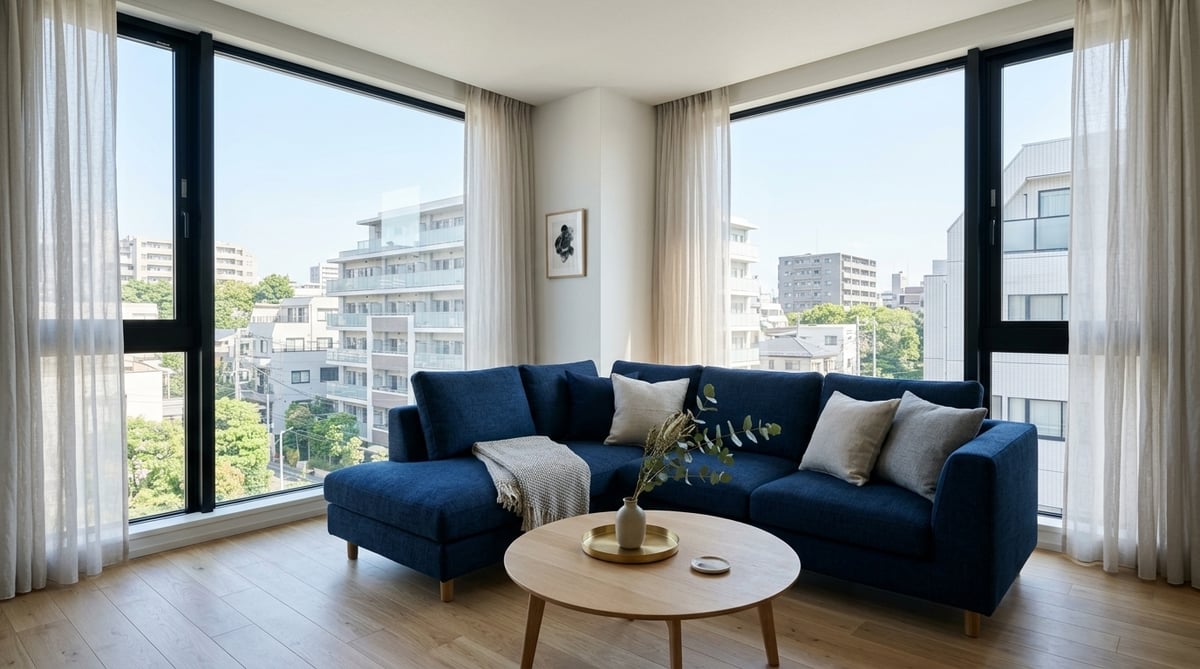
As dusk settles and you step out of the station ticket gates, the gentle hum of neighborhood life and a nostalgic warmth greet you. When choosing a home, a truly worthwhile decision is never merely a comparison of technical specs or numerical data, but rather how rich, peaceful, and unforced daily life feels within that space. The savory aroma of fresh deli dishes drifting from beneath the elevated tracks at the West Exit, the relaxed footsteps of locals crossing the East Exit plaza, and the gentle murmur of the water park greenway just a short stroll away—all shape the rhythm of the neighborhood. Working remotely means spending extended hours at home, making the angle of daylight streaming through your window, the reassuring quiet beneath your fingertips as you type, and the refreshing air that invites a deep breath after work the true determinants of daily quality of life. Drawing upon a decade of practical experience as a licensed real estate broker, this guide offers trusted insights to ease your concerns and help you choose your ideal home with confidence.
- A licensed real estate broker explains key market insights, living environments, and leasing essentials for finding remote work-ready rentals in Ayase.
- Safe financial benchmarks to control fixed costs and absorb increased utility and internet expenses
- Soundproofing standards using RC/SRC construction to prevent voice leakage during online calls
Remote Work Environment and Everyday Convenience in Ayase
Located in the eastern part of Adachi Ward, Ayase is a residential enclave where the warm charm of Tokyo's traditional neighborhoods harmonizes seamlessly with modern urban amenities. While boasting outstanding rail access to central Tokyo, the neighborhood offers open skies and a serene living environment as soon as you step off the train. For remote professionals spending full days working from home, indoor comfort is paramount, but the sense of openness and effortless grocery shopping just beyond your doorstep are equally vital to maintaining everyday well-being.
Transportation Advantages of an Origin Station and Regional Access
The greatest advantage of Ayase Station (West and East Exits) is its position as an interconnecting terminal between the Tokyo Metro Chiyoda Line and local JR Joban Line services, offering frequent Chiyoda Line trains originating directly from this station. Even for fully remote roles, trips into central Tokyo inevitably arise for weekly office days, client visits, or professional seminars. During weekday morning rush hours, choosing an origin train at Ayase Station lets you board easily and secure a comfortable seat, reaching Otemachi Station in approximately 20 direct minutes, Kasumigaseki Station in about 25 minutes, and Omotesando Station in roughly 30 minutes. Transforming a crowded commute into productive time for reading or planning significantly reduces daily physical fatigue.
Furthermore, neighboring Kitasenju Station (West Exit and East Exit / Denki-Dai Exit) is just one stop away (about a 3-minute ride) via the Chiyoda Line or Joban Line, and easily accessible by bicycle in 10 to 12 minutes thanks to the flat local topography. Kitasenju is one of Tokyo's premier transit hubs, connecting the Chiyoda Line, Hibiya Line, Tobu Skytree Line, JR Joban Rapid Line, and Tsukuba Express. It features major commercial complexes such as Lumine and Marui, along with Hands, Loft, and extensive bookstores. The convenience of picking up PC peripherals or specialty books in the adjacent neighborhood is a substantial privilege of living in Ayase. Meanwhile, one stop north at Kita-Ayase Station (North, South, and Central Gates), ongoing redevelopment following direct through-service to the main Chiyoda Line has introduced new shopping centers and medical clinics. Living in Ayase gives you seamless bicycle access to all these urban conveniences.
Daily Grocery Shopping and a Peaceful Residential Setting
When working from home, cooking for yourself becomes more frequent, making quick grocery runs during lunch breaks or after work directly tied to living comfort. Around Ayase Station, everyday shopping facilities are concentrated right beneath the elevated tracks and around the station plazas. In addition to the "M'av Ayase Rietta" shopping arcade under the tracks, the East Exit features the large "Ito-Yokado Ayase Store" and "Tokyu Store Ayase Store" (open until 10:00 PM), while the West Exit hosts the 24-hour "Big-A Ayase Store," allowing you to pick up fresh produce and prepared meals regardless of the weather. The East Exit side is also dotted with community-oriented supermarkets, drugstores, budget greengrocers, and butcher shops, keeping everyday living costs among the most reasonable in Tokyo's 23 wards.
The neighborhood also offers a balanced selection of chain cafes, quiet independent coffee shops, and bakeries—providing excellent third-place options when you want to spend the morning on focused deep work at home and shift to a cafe for afternoon research. Furthermore, a short walk north of the station brings you to the greenway of the Tokyo Metropolitan Higashi-Ayase Park, stretching approximately two kilometers. With stunning cherry blossoms in spring, cool leafy shade and gentle streams in summer, and rich autumn foliage on the zelkova trees, this waterside park is the perfect restorative walking route to relieve eye and neck strain from staring at computer screens. This rare combination of swift access to the city center and tranquil proximity to nature is precisely why Ayase appeals so strongly to remote professionals.
Licensed real estate brokers specializing in Tokyo's Joto area provide warm, personalized support via video consultation—from clarifying search criteria and checking off-market listings to optimizing initial contract fees.
Simply enter the rent and deposit from portal listings to calculate a full, itemized breakdown including brokerage and guarantor fees without hidden add-ons.
Floor Plan Selection and Dimensional Standards for Remote Workspaces
When selecting a home intended for remote work, one of the most common pitfalls is signing a lease based solely on total floor area or tatami mat count, only to find that bringing in a desk and office chair completely obstructs everyday living flow. On Japanese architectural drawings, a "6-tatami (6-jo)" room measurement simply represents the wall-center area, inclusive of pillar projections, ceiling beams, door swing radiuses, and closet clearance. To work remotely in genuine comfort, physical furniture dimensions and unhindered movement clearances must be planned down to the millimeter.
Zoning Design within a Single Room
- Effective Living Space: Secure at least 7.5 tatami mats (24–28㎡+ total area)
- Visual Separation: Screen off the bed area using partitions or open shelving
- Zero Pathway Interference: Eliminate overlap between closet doors and chair movement
- Cost Efficiency: Keeps rent moderate, freeing budget for high-speed fiber and gear
Fully Independent Workspace Setup
- Complete Rhythm Separation: Distinct rooms physically decouple work from resting time
- Meeting Privacy: Blocks out partner or family sounds from other living spaces
- Accommodates Large Desks: Fits standing desks (1400mm+ width) and multi-monitor setups
- Mental Reset: Simply closing the room door transitions your mindset to relaxation
Physical Desk Placement Dimensions Across 1K, 1DK, and 1LDK Layouts
While a standalone laptop can get by on a compact desk measuring 800mm wide by 500mm deep, sustained intellectual work with one or two external monitors (24 to 27 inches), a keyboard, mouse, and reference documents requires a desktop surface of at least 1,000 to 1,200mm in width and 600 to 700mm in depth. Placing large displays on a shallow desk under 500mm deep forces the screen too close to your eyes, leading to severe eyestrain and chronic neck and shoulder tension.
Equally critical is the operating clearance behind the desk for your chair. A standard office chair castor base measures 600 to 650mm in diameter. Factoring in sitting back comfortably and pushing the chair back to stand up, you must maintain a clearance of at least 750mm—ideally 900mm—between the desk edge and any wall or furniture behind it. When this clearance falls below 600mm, the castors bump into walls or bed frames with every movement, creating persistent daily irritation.
Attempting to fit both a semi-double bed (1,200mm wide by 2,000mm long) and a 1,200mm-wide desk into a standard 1K layout (20–25㎡ with a 6-tatami room) leaves the room floor dominated by bulky furniture, shrinking the remaining walkway to a cramped 400mm. For a single professional setting up a remote work station in a 1K apartment, selecting a room of at least 7.5 tatami mats (25㎡+ total area)—preferably 8 tatami mats or larger—is the essential threshold for balancing livability with workday focus. In a 1LDK (35–45㎡), you can position your workstation in a corner of the living-dining-kitchen (LDK) area or designate the bedroom entirely as a quiet workspace, making zoning between everyday life and professional tasks far more effortless.
Workday Pathways, Electrical Outlets, and Daylight Positioning
Floor plans alone rarely convey two critical details: outlet counts and placement, and the angle of daylight from windows. A remote work setup continuously powers a laptop or PC, external displays, desk lighting, phone chargers, and a Wi-Fi router, easily requiring 4 to 6 outlets. Running extensive extension cords across the floor from a lone corner outlet not only looks unkempt, but also poses tripping hazards and fire risks from damaged cables.
When viewing a property in person, always bring a measuring tape to check furniture locations alongside the exact positions of electrical outlet plates. The ideal setup features at least two outlets directly adjacent to your intended desk wall (200 to 300mm above the floor). The location of the optical fiber outlet (optical wall socket) is equally important. If it sits by the entrance shoe closet or beneath the kitchen counter, you will need to run an Ethernet cable along baseboards into the main room, making the clearance beneath interior doors another vital checkpoint.
Regarding natural light, the physical relationship between windows and your desk defines daily visual comfort. The layout most to be avoided is sitting with your back directly to a window (backlighting). Harsh direct sunlight from behind creates intense monitor glare, making screens difficult to read and accelerating eye fatigue. Conversely, facing a window directly often causes eyestrain due to the stark contrast between outside brightness and screen luminance, while outside movement frequently interrupts concentration. Ergonomically, the gold standard is side lighting, with the window positioned to the left or right of your workstation. Combining this arrangement with blackout curtains or adjustable light-filtering roll screens allows soft, stable natural light to enhance focus throughout the day.
Video Call Backgrounds and Camera Angle Considerations
In remote work, video calls with clients and colleagues are a daily fixture. While virtual backgrounds on Zoom and Teams have improved, they increase processing load and often cause awkward visual artifacts when hands or physical documents are held up. In professional settings, a neat, authentic physical background inspires immediate confidence.
When planning what appears behind you on camera, inspect the following points carefully:
- Concealing Everyday Clutter: Ensure unmade beds, clothing racks, cluttered kitchen sinks, and restroom doors fall completely outside the camera's field of view.
- Utilizing Clean Wall Surfaces: Position your desk so that a clean white wall, organized bookshelf, or modest houseplant sits behind you. Maintaining roughly 1,000mm between your chair and the background wall creates natural depth and a refined, professional composition on screen.
- Eliminating Direct Backlight: Sitting with a window behind you causes camera auto-exposure to adjust to the exterior light, casting your face in heavy shadow. To present a bright, natural image, position daylight to illuminate your face from the front or side, or ensure enough space to bounce gentle desk lighting toward yourself.
Evaluating Fiber-Optic Types and Ensuring Stable Connectivity
When selecting a home for remote work, no matter how elegant the floor plan or interior finishes, work stalls completely if the internet connection is sluggish or erratic. To ensure uninterrupted file transfers, continuous cloud synchronization, and stable video calls, developing a discerning eye for the building's underlying network infrastructure is indispensable.
Even when a property listing advertises "Fiber-Optic Ready" or "Internet Included," never take it at face value. While fiber optics may run from the utility pole to the building's main distribution frame (MDF), the internal wiring from the MDF to individual apartments makes a world of difference in real-world speed and stability. Always verify which of the following three wiring methods is installed before signing:
- Fiber to the Home (FTTH / Optical Wiring): Fiber-optic cable runs directly from the MDF into the optical wall socket inside your unit. Speeds range from 1 Gbps to 10 Gbps. Immune to external electromagnetic noise, this is the only recommended wiring method for seamless remote work.
- VDSL System: Uses existing analog copper telephone wiring from the MDF to each unit to transmit converted signals. Speeds are physically capped at a maximum of 100 Mbps download and 35 Mbps upload. Highly susceptible to peak-hour congestion and household electronic noise, making it a primary cause of speed degradation.
- LAN Cable System: Distributes connections from the MDF to individual units via Ethernet cables (UTP). Maximum speeds vary between 100 Mbps and 1 Gbps depending on the cable category installed (Cat5, Cat5e, Cat6, etc.).
Wiring Architecture Differences: FTTH vs. VDSL vs. LAN Distribution
Reinforced concrete (RC) buildings constructed before the early 2000s frequently employ VDSL wiring. This approach was widely adopted when existing conduit pipes lacked space for newly routed fiber-optic cables, making use of legacy telephone wiring instead. The fundamental drawback of VDSL is that theoretical peak speeds are capped at 100 Mbps download and 35 Mbps upload.
In modern remote working environments—involving high-definition video conferences with screensharing, gigabyte-sized design files or code deployments, and video uploads—an upload speed that dips to 10–20 Mbps causes frequent audio dropouts and frozen screens. Furthermore, VDSL suffers severe slowdowns between 8:00 PM and midnight on weekdays when residents use the web simultaneously, and carries an ongoing risk of momentary disconnections caused by high-frequency interference from nearby electrical lines.
By contrast, an optical wiring system delivers fiber directly to a wall plate marked "Optical" inside your living space, preserving pure optical signals from the terminal box to the ONU (Optical Network Unit) with zero loss. Supporting speeds from 1 Gbps to 10 Gbps, it consistently clocks real-world speeds of 200 to 600 Mbps or higher. Checking for "Optical Wiring (FTTH)" in the listing notes or confirming the presence of an optical wall plate during an in-person viewing is your strongest defense against connectivity issues.
IPv6 (IPoE) Compatibility and Practical Provider Selection
Even with optical wiring installed in your unit, high-speed performance remains out of reach if your internet service provider (ISP) relies on outdated PPPoE (Point-to-Point Protocol over Ethernet) connections. PPPoE routes through network termination points (POI) between NTT East's NGN network and ISPs, creating severe bottlenecks due to today's explosive growth in internet traffic.
The technology that bypasses this congestion entirely is the IPoE (IP over Ethernet) architecture, combined with IPv4 over IPv6 (such as MAP-E or DS-Lite), which routes legacy IPv4 websites through the high-speed next-generation network. Because IPoE connects directly through high-capacity gateways without passing through congested network termination points, connection speeds remain brisk even during peak weekday evenings and weekends, maintaining comfortable low latency (Ping under 15ms).
When contracting a new optical line independently—whether via NTT collaboration services like Docomo Hikari, SoftBank Hikari, and Biglobe Hikari, or proprietary networks like NURO Hikari and au Hikari—always choose a plan that includes IPv4 over IPv6 services (e.g., v6 Plus, transix, or OCN Virtual Connect) as standard. For your home Wi-Fi router, selecting a model compatible with Wi-Fi 6 (IEEE 802.11ax) or Wi-Fi 6E featuring gigabit LAN ports (1000BASE-T or higher) is a foundational requirement to realize your computer's full potential.
Caveats of "Free Internet" Properties and Speed Testing Essentials
In recent years, rental apartments targeting single professionals increasingly highlight "Free Internet (Wi-Fi Included)" as a selling point. Saving roughly 4,000 to 5,000 yen per month on connectivity bills sounds enticing, but remote workers must examine these offers with caution.
Most properties advertising free internet contract only one or a few shared lines for the entire building, distributing that single connection to all apartments through an internal router. This structure introduces several critical risks:
- Severe Bandwidth Congestion: When neighboring tenants download large gaming updates or stream 4K video, your unit's bandwidth is compressed, sometimes dropping real-world speeds down to single-digit Mbps.
- Absence of Public IP Addresses: Tenants are frequently assigned private IP addresses, which can prevent connections to corporate VPNs or violate access restrictions on proprietary workplace servers.
- Prohibitions on Private Line Installation: Because the building already offers a "free" network, building management regulations often forbid tenants from contracting and installing their own dedicated optical fiber line.
If you consider a property with complimentary internet, obtain written confirmation from the management company before signing on whether you are permitted to install your own dedicated NTT optical fiber line at your own expense. During an on-site viewing, connect your smartphone to the building's Wi-Fi access point or tethering setup and run speed tests (via Fast.com or Speedtest.net) to record download, upload, and latency (Ping/Jitter) metrics as an essential safeguard.
Essential Soundproofing and Acoustic Structural Checkpoints for Home Workspaces
The leading source of stress in remote work—and the most common spark for neighbor disputes—is noise. The security risk of confidential meeting discussions leaking into neighboring apartments, coupled with the frustration of a neighbor's TV or footsteps being picked up by your microphone, severely compromises daily productivity and mental peace. Because sound insulation cannot be fundamentally improved through DIY fixes after moving in, evaluating the building's core structure beforehand is paramount.
RC and SRC Structural Characteristics and the 180mm+ Dividing Wall Benchmark
Multi-unit residential buildings in Japan generally fall into five structural categories: wood frame, light-gauge steel, heavy-gauge steel, reinforced concrete (RC), and steel reinforced concrete (SRC). To be direct: if you regularly work from home, wood-frame and light-gauge steel buildings should be excluded from your search. The dividing walls (demising walls) in wood and light-gauge steel buildings typically consist of gypsum board with fiberglass insulation, which physically lacks the mass needed to insulate against human speech (500–1,000 Hz, approximately 60 dB).
Acoustic insulation in multi-family buildings relies heavily on the transmission loss of dividing walls specified by the Building Standards Act. Following the "Mass Law"—where heavier material mass yields greater sound vibration dampening—selecting an RC or SRC building with a solid concrete structure is a non-negotiable prerequisite.
Even among RC buildings, acoustic performance varies substantially. The critical metric to inspect is dividing concrete wall thickness. Modern condominium-grade buildings and high-spec rental properties feature dividing concrete walls of 180mm to 200mm or thicker, achieving an acoustic rating of D-50 to D-55 (recommended by the Architectural Institute of Japan, where normal conversation in neighboring units is virtually inaudible). Conversely, budget-focused RC rentals may have dividing walls of only 150mm, or rely on concrete columns and beams while using dry gypsum board partitions between units. When lightly knocking on a wall, solid concrete produces a dull, solid "thud," whereas gypsum board or GL construction (drywall mounted over concrete with an air gap) emits a hollow, resonant sound. Because GL construction can produce a "drum effect" (amplifying specific low frequencies), the tactile feel and resonance of a wall knock serve as crucial diagnostic cues.
Window Sash Acoustic Ratings (T-2 or Higher) and External Noise Dampening
In preserving indoor tranquility, window sashes play a role every bit as decisive as the walls. Because sound travels most readily through air gaps, thin glazing and loose sash frames become the primary conduits for exterior noise. Ayase features elevated tracks for the Tokyo Metro Chiyoda Line and JR Joban Line, as well as major thoroughfares like Kannana Dori (Ring Road No. 7), making traffic noise management essential.
Under Japanese Industrial Standards (JIS), sash sound insulation is categorized into "T-ratings," indicating how much exterior noise the window can attenuate (reduce):
- T-1 Rating (25 dB Reduction): Standard residential sashes. Suitable for quiet residential lanes, but insufficient to block noise along major roadways or train lines.
- T-2 Rating (30 dB Reduction): The benchmark for sound-insulating sashes. Reduces train noise (around 80 dB) or busy arterial road noise (around 70 dB) down to 40–50 dB indoors (comparable to a library or quiet office). A recommended baseline for remote work.
- T-3 Rating (35 dB Reduction): Advanced soundproofing utilizing dual sashes (existing window plus an interior secondary sash) or specialized acoustic laminated glass. Closing the window almost entirely silences exterior city commotion.
During an on-site viewing, firmly fasten the sash crescent lock and inspect whether the rubber weatherstripping seals tightly. In addition, an increasing number of properties feature dual-pane inner sashes (resin secondary windows installed inside existing sashes). The dead-air cavity between the sashes delivers exceptional acoustic dampening and thermal insulation, dramatically shutting out external noise while curbing winter condensation and reducing heating and cooling costs.
Practical On-Site Sound Insulation Tests for Property Viewings
During a property viewing, even without specialized acoustic meters, you can evaluate sound insulation using these practical broker-tested techniques:
- Hand-Clap Acoustic Test: Stand in the center of the room and clap your hands once firmly in front of your chest. In a well-insulated, airtight room, the sound decays smoothly and cleanly without muddy flutter echoes. In a room with low-density walls and air leaks, you will hear a thin, tinny reverberation, signaling poor airtightness.
- Sash Open-Close Contrast Test: Open the window fully, listen attentively to ambient outdoor sounds (traffic, birds, wind), then slowly slide the window shut and firmly engage the crescent lock. Observe whether you perceive a distinct, immediate drop in volume that welcomes an instant stillness into the room. If the volume drop feels faint or gradual, the sash seal has degraded.
- Ventilation Duct and Air Inlet Inspection: Sound also enters through kitchen exhaust ducts and fresh-air intake registers. Check whether air inlets feature acoustic sleeves or soundproof exterior hoods, and listen for amplified outdoor street noise when operating the ventilation fan.
- Common Hallway Voice Test: Ask the viewing agent to step out into the common hallway, close the front entrance door, and speak at a conversational volume. If voices are clearly audible through the peephole, mail slot, or door gaskets, conversations from inside your home will easily spill into the public corridor.
Ayase Station Area Rent Benchmarks and Budgeting for Remote Workers
Creating an ideal remote work setting calls for sufficient floor space and sound structural quality, but stretching your rent beyond healthy limits defeats the purpose. To establish sustainable financial peace of mind, it is essential to understand real market rates in Ayase and structure a budget based on objective take-home income.
Average Rent Rates by Floor Plan
As of 2026, average monthly rents around Ayase Station for RC/SRC buildings—the foundational requirement for remote work—are outlined below. This table contrasts standard rental apartments with remote work-recommended grades (newer construction, optical FTTH wiring, and verified dividing wall acoustic performance).
| Floor Plan | Estimated Floor Area | Standard RC Average Rent | Remote Work Recommended Grade | Recommended Remote Work Style |
|---|---|---|---|---|
| 1K / 1R | 22–28㎡ | ¥72,000–¥82,000 | ¥78,000–¥88,000 | Single / Space-saving desk setup (2–3 days WFH/week) |
| 1DK / 1LDK | 32–45㎡ | ¥98,000–¥125,000 | ¥108,000–¥135,000 | Single full-remote / Dual-income (Fully independent workspace) |
| 2DK / 2LDK | 48–60㎡ | ¥128,000–¥160,000 | ¥138,000–¥175,000 | Working couples / 2-person concurrent remote work (Separate private rooms) |
| 3LDK or Larger | 65–80㎡ | ¥170,000–¥215,000 | ¥185,000–¥235,000 | Family households (Dedicated home office room) |
Appropriate Rent Ratios by Take-Home Pay and Living Expense Simulations
The traditional real estate rule of thumb—"rent should be one-third of gross monthly salary"—no longer aligns with modern financial realities, where health insurance, pension contributions, and employment taxes reduce take-home pay. Budgeting based on pre-tax income leaves significantly less discretionary cash than anticipated, eroding your capacity for savings and personal investment.
Sorai Tokyo defines precise, objective benchmarks based on net take-home pay to establish resilient financial security:
- Single Households: Within 25% to 28% of net take-home income (a safe threshold that comfortably accommodates higher utility and network costs)
- Working Couples: Within 22% to 26% of combined net household income (a resilient level capable of weathering career transitions or parental leave)
Below is a monthly cost-of-living simulation categorized by net income levels. Because working from home naturally increases utility usage compared to office commuters, factoring these operational expenses into your preliminary budget is essential.
| Expense Item | ¥250k Net (Single) | ¥300k Net (Single) | ¥400k Net (Couple / Single) | ¥500k Net (Dual-Income) |
|---|---|---|---|---|
| Recommended Rent (incl. Management Fee) | ¥68,000 (27.2%) | ¥80,000 (26.7%) | ¥100,000 (25.0%) | ¥125,000 (25.0%) |
| Utilities (Adjusted for WFH) | ¥15,000 | ¥17,000 | ¥24,000 | ¥28,000 |
| Telecommunications (High-Speed Fiber + Mobile) | ¥10,000 | ¥11,000 | ¥16,000 | ¥18,000 |
| Food & Daily Essentials | ¥45,000 | ¥52,000 | ¥75,000 | ¥90,000 |
| Workspace Maintenance & Self-Investment | ¥8,000 | ¥12,000 | ¥18,000 | ¥25,000 |
| Culture, Leisure & Social Expenses | ¥25,000 | ¥32,000 | ¥45,000 | ¥60,000 |
| Emergency Savings & Future Investments | ¥79,000 (31.6%) | ¥96,000 (32.0%) | ¥122,000 (30.5%) | ¥154,000 (30.8%) |
Running Costs: Utility and Telecommunications Expenses in Remote Work
Transitioning from an office commute to working from home means air conditioning, PCs, lighting, and monitors run continuously during hours when the home was previously vacant. Especially during summer (July–September) and winter (December–February), running air conditioning for 12 to 16 hours daily to maintain comfort typically increases electricity bills by 3,000 to 6,000 yen per month compared to an average single commuter household.
Adding high-speed optical broadband expenses (approximately 4,500 to 5,500 yen monthly) creates an unavoidable increase in ongoing fixed costs. If you sign a lease looking strictly at the rent figure, you may find that combined utility and internet spikes inflate your total monthly outflow by over 10,000 yen. Designing your budget so that all housing-related fixed costs—rent plus essential infrastructure—stay within 30% to 33% of net monthly income is the golden rule for stress-free living.
Valid Initial Move-In Costs and Reducible Incidental Fees
Initial moving quotes provided by rental agencies frequently include optional fees that tenants have no legal obligation to pay. By rigorously auditing line items that brokers or property management companies present as mandatory, and firmly requesting their removal, you can reduce your initial move-in costs by 50,000 to over 100,000 yen.
Unnecessary Incidental Fees to Eliminate from Lease Agreements
The table below summarizes common incidental fees frequently slipped into standard rental quotes, their legal nature, and professional negotiation guidelines for removing them.
| Itemized Fee | Typical Agency Rate | Legal Status & Necessity | Professional Audit & Reduction Strategy |
|---|---|---|---|
| Indoor Disinfection / Antibacterial Deodorizing Fee | ¥16,500–¥27,500 | Optional (Can be refused) | [Completely Eliminate] Often consists of merely spraying over-the-counter room deodorizer with negligible lasting efficacy. Request removal by stating: "I decline this service for allergy prevention and will clean the unit myself prior to move-in." |
| 24-Hour Emergency Support / Safe Living Fee | ¥16,500–¥22,000 | Generally Optional (Subject to management rules) | [Generally Eliminate] Emergency callout services (for lost keys, water leaks) are already duplicate-covered by tenant fire insurance riders. Request removal by explaining: "I will rely on the emergency roadside/home assistance included in my own insurance policy." |
| Document Preparation / Administrative Processing Fee | ¥5,500–¥11,000 | Suspected Violation of the Real Estate Brokerage Act | [Completely Eliminate] Preparing lease contract documents is a standard service already covered under the brokerage commission. Charging separately constitutes double-billing. Request removal by asking for the statutory legal basis of the fee. |
| Designated Fire Insurance Premium (2 Years) | ¥18,000–¥25,000 | Insurance coverage is required; specific insurer is not | [Switch to Self-Arranged Policy] Decline the expensive agency-designated policy and arrange equivalent or superior coverage independently through direct online insurers (¥20M tenant liability + ¥100M personal liability) for roughly ¥4,000 to ¥8,000 annually. |
| Brokerage Commission | 1.1 months' rent (incl. tax) | Statutory limit is 0.55 months' rent without prior consent | [Normalize to 0.55 Months] Under Article 46 of the Real Estate Brokerage Act, charging 1.1 months without prior consent is unlawful. Assert the statutory 0.55 months' rate, or apply Sorai Tokyo's half-price rate (0.55 months' rent, tax included). |
How to Find Remote Work Rentals in Ayase and Sorai Tokyo's Free Consultation
Properties genuinely suited for remote work must satisfy rigorous filters across structure, internet wiring, and room dimensions. Merely toggling search checkboxes on public portals will not surface these premium homes. Adopting a systematic search workflow is the most direct path to securing an exceptional property without wasting time or money.
Basic Property Search Steps and Inspection Flow
The first step in finding your home begins with a measuring tape: measure your desk (width and depth) and chair clearance, then establish the minimum room size needed for your target layout (at least 7.5 tatami mats for singles, 1LDK or larger for couples). When you find appealing properties on consumer portals like SUUMO or HOME'S, save their URLs or floor plans for professional review.
During on-site viewings, look beyond surface cosmetic appeal. Use your tape measure to confirm desk and outlet clearances, and test wall knock resonance and window airtightness. When applying, have an objective professional audit the initial quote to strip out extraneous options before signing the lease.
Starting a Balanced, Sustainable Remote Work Life in Ayase
Choosing a home is never a mechanical checklist exercise of square meters and walking minutes to the station. It is waking up in that space, placing a freshly brewed cup of coffee on your desk, and opening your laptop amid deep morning quiet. It is stepping out after a focused morning session to stroll beneath the leafy canopy of Higashi-Ayase Park, filling your lungs with crisp air, and picking out fresh seasonal ingredients in vibrant shopping arcades at dusk before heading home. Each of these effortless daily moments builds the bedrock of sustainable living and healthy physical and mental vitality.
Remote working has elevated the standards demanded of our living spaces. Desk clearances, optical wiring architectures, concrete wall acoustics, and financial breathing room through sensible rent ratios—if even one of these elements is compromised, friction quietly emerges. By pairing your search with a licensed broker's decade of field experience and legal protective measures, you can cut through hidden fees and opaque contract clauses to choose an apartment with unwavering confidence. Sorai Tokyo is here to support you with integrity and deep local expertise, ensuring your new life in Ayase begins on serene, deeply rewarding footing.
Frequently Asked Questions
QWhat is the minimum room size required for remote work in a 1K apartment?
AWhen setting up a desk (1,000 to 1,200mm wide) with an ergonomic office chair alongside a single or semi-double bed, you need at least 7.5 tatami mats (25㎡ or more total floor area) based on wall-center dimensions. In a typical 6-tatami room (20–22㎡), remaining walkway clearances shrink below 400mm, causing frequent collisions between chair movements and closet or room doors. A room of 7.5 to 8 tatami mats provides sufficient spatial breathing room to place a partition or open bookshelf between your bed and workspace, enabling clear visual separation between work and rest.
QIf an apartment uses a VDSL connection, is it possible to install a private optical fiber line?
AWhile technically feasible in some cases, it strictly requires prior written consent from the building's management association or property owner. Installing an independent fiber line requires routing cable from the utility pole along the building exterior and passing it through existing openings such as air conditioning conduits without drilling holes. However, many condominium and rental management rules completely prohibit individual line routing to protect building aesthetics and exterior wall warranties. Always check with the management company prior to applying whether individual fiber installation via AC ducts is permitted.
QI have frequent video conferences. Can soundproofing sheets or DIY acoustic panels make a wood or steel-frame room viable?
ADIY soundproofing sheets or acoustic wall panels cannot fundamentally prevent conversational speech from leaking into neighboring apartments. While sound-absorbing materials reduce interior echo, sound transmission loss is governed by material mass (such as concrete weight). Wood and light-gauge steel dividing walls fundamentally lack the physical mass required, meaning structural vibration sounds easily flank through gaps and beams into adjacent rooms. For those conducting frequent vocal video calls, choosing an RC or SRC building with concrete dividing walls of 180mm or thicker from the outset is the only foolproof way to avoid noise disputes.

Author: Sorai Tokyo Editorial Team (Supervised by Licensed Real Estate Agents)
A real estate consulting team specializing in assisting foreign nationals find rooms and explaining initial costs in Tokyo. We break down language barriers and differences in customs, offering dedicated support in Japanese, English, and Vietnamese for a safe and secure start to your new life.