
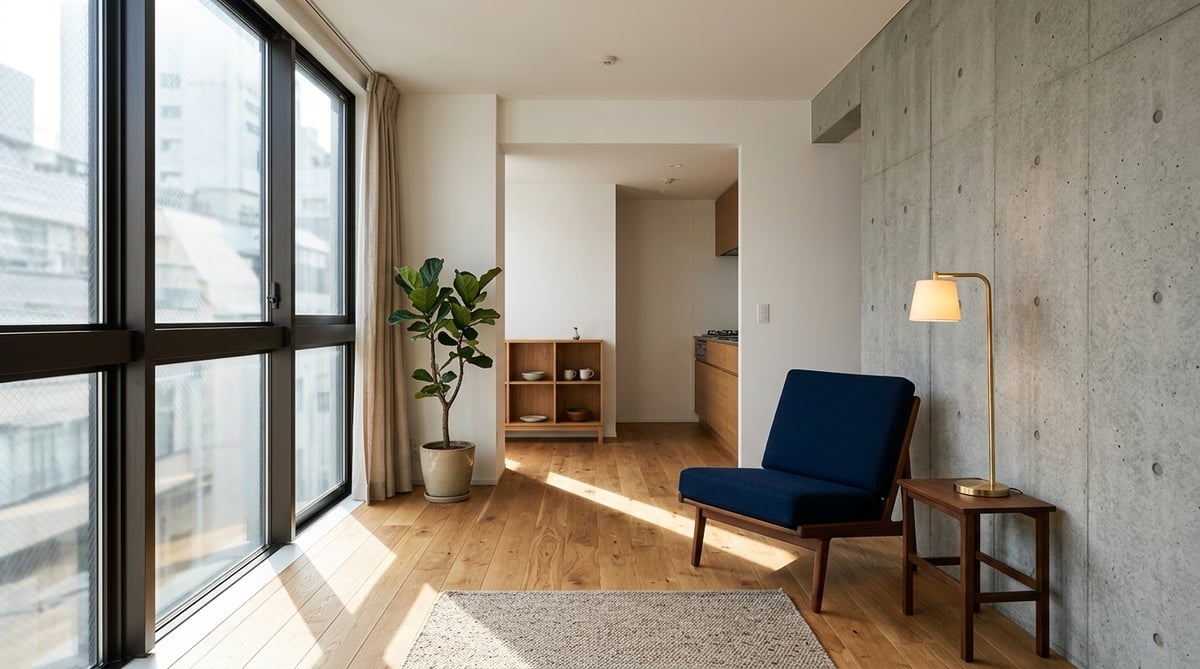
At 7:40 AM, cold morning air mingles with the rising body heat of hurried commuters in the vast subterranean concourse of Otemachi Station. While sharing the identical destination of "commuting to Otemachi," commuters ascending the escalators from the deep platforms of the Chiyoda Line and those exiting the ticket gates of the Marunouchi Line show a distinct contrast in their walking directions and pacing. One stream moves steadily toward Otemachi One, the zelkova trees along Marunouchi Naka-dori Avenue, and the tranquil corporate districts bordering the Imperial Palace Gardens; the other strides briskly toward the Tokyo Sankei Building, Otemachi Building, and the business corridors of Nihombashi and Kanda.
Otemachi and Kasumigaseki serve as the beating twin hearts of Japanese enterprise and national governance. The two primary subway arteries of Tokyo Metro connecting directly beneath both central hubs without a single transfer are the Chiyoda Line and the Marunouchi Line. For professionals, international expats, and newcomers prioritizing an effortless commute to central Tokyo offices, choosing a residential base often comes down to a crucial crossroads: the warmth, authentic downtown charm, and exceptional cost-performance of the Chiyoda Line corridor in eastern Tokyo (Adachi and Arakawa Wards), versus the established culture, upscale hillside topography, and leafy streetscapes of the Marunouchi Line corridor in western Tokyo (Suginami and Nakano Wards).
While both lines offer direct connectivity to Otemachi and Kasumigaseki, there are decisive structural differences that define everyday quality of life: the nature of morning rush-hour congestion, real opportunities to secure a seated commute from origin stations, delay vulnerability tied to inter-line through-services versus isolated operations, and monthly rental pricing. Drawing on over a decade of hands-on leasing brokerage practice in Tokyo as a licensed real estate transaction specialist (Takken), official transport data from the Ministry of Land, Infrastructure, Transport and Tourism (MLIT), and on-the-ground neighborhood realities, we deliver a comprehensive, objective comparative analysis of both essential subway lines.
Route Alignments and Station Flow: Two Major Metro Arteries to Otemachi & Kasumigaseki
Within Tokyo's underground rail network, the Chiyoda Line and Marunouchi Line serve as foundational lifelines supporting the nation's core commercial and administrative engines, yet their physical alignments and neighborhood atmospheres present fascinating contrasts. Let us first review the core technical specifications of both lines and how passenger pedestrian flow operates upon arrival.
The Chiyoda Line: Cutting Diagonally Across Downtown Tokyo
The Tokyo Metro Chiyoda Line spans 24.0 km across 20 stations, connecting Kita-Ayase Station in Adachi Ward with Yoyogi-Uehara Station in Shibuya Ward. It forms a powerful diagonal route cutting cleanly from the northeastern corner of Tokyo's 23 wards down toward the southwest.
The defining strength of the Chiyoda Line lies in how it seamlessly binds Japan's key political, financial, and cultural districts along a single continuous track. Departing Kita-Ayase and Ayase in Adachi Ward, trains cross the Arakawa River over an open-air bridge into the massive multi-line terminal of Kita-Senju, plunge beneath the Sumida River into Machiya in Arakawa Ward, link with the Yamanote Line loop at Nishi-Nippori, pass historic neighborhood pockets at Sendagi and Nezu, and travel through Yushima and Shin-Ochanomizu before pulling directly into Otemachi, Japan's primary financial hub, followed by Nijubashimae (Marunouchi) right before the Imperial Palace plaza.
From there, the line glides through Hibiya, the governmental district of Kasumigaseki, Kokkai-gijidomae (National Diet Building), Akasaka, Nogizaka, Omotesando, Meiji-jingumae (Harajuku), and Yoyogi-koen, terminating at Yoyogi-Uehara where it connects with the Odakyu Line. To the north, Chiyoda Line trains offer widespread reciprocal through-service onto the JR Joban Local Line (toward Matsudo, Kashiwa, and Abiko), and to the west onto the Odakyu Line (toward Machida and Hon-Atsugi). Comprehensive living conditions across individual stops along the corridor are also detailed in our Chiyoda Line Area Guide.
The Marunouchi Line: U-Shaped Loop Connecting Mega-Terminals
In contrast, the Tokyo Metro Marunouchi Line spans 27.4 km in total, consisting of a 24.2 km main line with 25 stations running from Ikebukuro Station in Toshima Ward to Ogikubo Station in Suginami Ward, alongside a 3.2 km branch line with 4 stations connecting Nakano-Sakaue Station to Honancho Station in Suginami Ward. It traces a distinctive broad U-shaped loop encircling central Tokyo.
The hallmark of the Marunouchi Line is its comprehensive coverage of Tokyo's iconic commercial and business epicenters—Ikebukuro, Tokyo, Ginza, and Shinjuku—all within a single system. Departing the western residential districts of Suginami and Nakano (Ogikubo, Minami-Asagaya, Shin-Koenji, Higashi-Koenji, Shin-Nakano, Nakano-Sakaue, Honancho, Nakano-Fujimicho, and Nakano-Shimbashi), trains traverse Shinjuku, Shinjuku-sanchome, Yotsuya, Akasaka-mitsuke, Kasumigaseki, Ginza, Tokyo, Otemachi, Ochanomizu, and Korakuen before terminating at Ikebukuro.
The entire line utilizes standard-gauge tracks (1,435 mm) with third-rail electrical collection. Because it maintains zero reciprocal through-service operations onto private railways or JR lines, it operates as an entirely self-contained, closed transit network. Furthermore, following platform extension work at Honancho Station completed in 2019, 6-car main line trains now operate directly from Honancho Station into central Tokyo on a daily basis, significantly upgrading transit convenience across the western corridor.
Station Flow and Walking Distances at Otemachi & Kasumigaseki
During morning commutes, the walking distance and underground navigation from the train door to your office desk influence daily stress levels just as much as time spent on board. The platform placements for both lines at Otemachi Station and Kasumigaseki Station exhibit sharp, tangible distinctions.
At Otemachi Station, the Chiyoda Line platform is positioned on the western edge of the station complex, placed deep underground on the Marunouchi and Imperial Palace side. Exiting the ticket barriers provides direct, weather-protected underground passageway access to Otemachi One (Mitsui & Co. Building), Otemachi Financial City, the Keidanren Kaikan, JA Building, Nikkei Inc. Tokyo Headquarters, and the Palace Hotel Tokyo. Furthermore, because it lies immediately adjacent to the underground walkways leading to the JR Tokyo Station Marunouchi North Exit, the Chiyoda Line is exceptionally advantageous for professionals working around Marunouchi Naka-dori Avenue.
Conversely, the Marunouchi Line platform at Otemachi Station is located on basement level 2 (B2F) toward the central axis along Eitai-dori Avenue. Being considerably shallower than the Chiyoda Line platform, it requires significantly fewer escalator and stair ascents to reach street level. It directly connects with the Tokyo Sankei Building, Otemachi Building, Shin-Otemachi Building, and Otemachi Place. For offices positioned toward Kanda Station or the Nihombashi financial corridor, the Marunouchi Line noticeably reduces morning foot travel.
Kasumigaseki Station presents a similarly clear spatial divide. The Chiyoda Line platform sits adjacent to Hibiya Park, the Ministry of Health, Labour and Welfare (MHLW), the Ministry of the Environment (Central Government Building No. 5), and the Ministry of Economy, Trade and Industry (METI annex). In contrast, the Marunouchi Line platform is situated closer to the Tokyo District Court, Tokyo High Court, Ministry of Justice, Ministry of Foreign Affairs, and Ministry of Finance. Because both lines are separated east and west with the Hibiya Line platform in between, knowing which subway exit stands closer to your daily workplace is essential for eliminating unnecessary underground walking.
Check Exact Office Building Location
Marunouchi/Imperial Palace side vs Sankei Building side. Calculate door-to-desk walking minutes.
Evaluate Morning Seated Commute Needs
Choose between Kita-Ayase/Ayase origins (Chiyoda) or Ogikubo/Honancho origins (Marunouchi).
Assess Delay Resilience & Escape Routes
Dense detour network on Chiyoda vs isolated, disturbance-free tracks on Marunouchi.
Compare Rents & 2-Year Total Housing Costs
Eastern Tokyo living surplus (Adachi/Arakawa) vs western Tokyo district prestige (Nakano/Suginami).
Consult with experienced bilingual real estate advisors via video call. From selecting safe neighborhoods to verifying contract terms, we help you find the right home.
Morning Rush Dynamics: Crowding Curves & Seating Likelihood
Whether you begin your workday relaxed in a comfortable seat or compressed standing shoulder-to-shoulder directly impacts your daily cognitive focus and mental stamina. Based on official Ministry of Land, Infrastructure, Transport and Tourism (MLIT) urban rail surveys and actual train schedules, we examine real-world crowding dynamics and origin station seating realities.
MLIT Data: Machiya to Nishi-Nippori (150%) and the Rapid Transfer Dispersal
According to the official MLIT Urban Railway Congestion Survey (FY2023 data), the most congested section of the Chiyoda Line is between Machiya Station and Nishi-Nippori Station (7:45 AM to 8:45 AM), recording a congestion rate of 150%. At this level of crowding, passengers' shoulders touch and using a smartphone requires care, while reading a folded newspaper or physical book is practically impossible.
Because suburban through-service commuters arriving from the JR Joban Local Line merge with passengers boarding at Kita-Ayase, Ayase, Kita-Senju, and Machiya, passenger density reaches its daily crescendo immediately after departing Machiya Station.
However, the Chiyoda Line's morning rush features a decisive mitigating factor that is unmatched by other Tokyo lines: the immediate arrival at Nishi-Nippori Station.
As a premier transfer interchange with both the JR Yamanote Line and the Keihin-Tohoku Line, Nishi-Nippori sees massive crowds disembark toward Ikebukuro and Shinjuku or Ueno, Tokyo, and Shinagawa. Approximately 35% to 40% of passengers exit the train all at once. The dense pressure felt upon leaving Machiya dissolves in seconds. Because the ride from Machiya to Nishi-Nippori takes a mere 2 minutes, enduring this single brief stretch rewards passengers with noticeably relaxed, comfortable train interiors through Sendagi, Nezu, Yushima, Shin-Ochanomizu, and Otemachi.
Marunouchi Line Crowding: Shin-Otsuka to Myogadani (142%)
Meanwhile, the most congested section on the Marunouchi Line occurs along the northern section between Shin-Otsuka Station and Myogadani Station (8:00 AM to 9:00 AM), registering a congestion rate of 142% (FY2023 MLIT data). While statistically lower and milder than the Chiyoda Line's 150%, the subjective passenger experience tells a different story.
For inbound trains heading from the western suburbs (Ogikubo and Nakano) toward Otemachi, car density feels remarkably intense. All Marunouchi Line trains operate with 6 cars per trainset (compared to 10 cars on the Chiyoda Line), meaning overall passenger capacity per train is inherently compact.
When inbound trains pull into Shinjuku Station, substantial crowds alight, but an equally massive volume of commuters boards heading toward Akasaka-mitsuke, Ginza, and Otemachi. While further passenger rotation occurs at Yotsuya Station (connecting with JR Chuo and Sobu Lines) and Akasaka-mitsuke Station (connecting with the Ginza Line), inbound professionals bound for primary office clusters continue to fill the cars. Consequently, train interiors maintain a consistently elevated passenger density all the way into Otemachi Station.
Origin Seating Battle: Kita-Ayase & Ayase vs Ogikubo, Honancho & Nakano-Fujimicho
For individuals who value utilizing their transit time for reading, professional preparation, or restful meditation, securing a guaranteed seat from an originating station is often the decisive factor when selecting a neighborhood. Both lines feature robust starting hubs on their respective eastern and western wings.
On the eastern wing of the Chiyoda Line, the primary seating anchors are Kita-Ayase Station and Ayase Station in Adachi Ward.
From Kita-Ayase Station, on weekday mornings between 7:00 AM and 8:59 AM, 5 direct originating trains depart in the 7 o'clock hour and 3 in the 8 o'clock hour (8 total direct trains toward Yoyogi-Uehara). In addition, taking one of the frequent Ayase shuttle trains (7 shuttles across the 7-8 AM window) allows seamless, same-platform boarding onto originating trains at Ayase Station. Boarding a direct starting train from Kita-Ayase delivers a peaceful, seated journey of approximately 27 minutes to Otemachi Station and 32 minutes to Kasumigaseki Station.
Ayase Station borders Tokyo Metro's largest rail facility, the Ayase Train Depot. Numerous trains originate directly from Platform 2 (the center track). Queuing on the platform 5 to 8 minutes prior to departure guarantees an uninterrupted seat for the 22-minute ride to Otemachi.
On the western wing of the Marunouchi Line, seating anchors include Ogikubo Station, Honancho Station, and Nakano-Fujimicho Station.
Because Ogikubo Station serves as the western terminus of the main line, every single train bound for Ikebukuro originates here. Even during peak morning rush, waiting for one or two trains while standing at the front of the queue guarantees a seat, providing a 33-minute direct ride (approx. 35 to 38 minutes during peak hours) to Otemachi and 28 minutes to Kasumigaseki.
At Honancho Station, the terminus of the branch line, 6-car through-trains running directly onto the main line toward Ikebukuro operate during morning rush, offering seated commutes to Otemachi. Nakano-Fujimicho Station, home to the Nakano Train Depot, also offers depot-originating morning services that provide dependable seated boarding, making western Tokyo equally appealing for seated commuters.
Delay Resilience and Operational Security: Structural Contrasts
When unexpected train delays or service suspensions strike during morning rush hours, how swiftly you can pivot and reach your office desk is an essential measure of practical risk management. The presence of inter-line through-service and differences in signaling systems fundamentally dictate each line's delay resilience.
Joban & Odakyu Through-Service: Chiyoda Line and Escape Routes via Kita-Senju & Nishi-Nippori
The Chiyoda Line operates a wide-area reciprocal through-service with both the JR Joban Local Line (toward Chiba and Ibaraki Prefectures) and the Odakyu Line (toward Kanagawa Prefecture). The flip side of traveling long distances without changing trains is the structural vulnerability to outside disruptions: track incidents, level-crossing inspections, or severe weather on partner rail lines can cascade delays onto Chiyoda tracks.
However, the Chiyoda Line is backed by an exceptionally robust suite of alternative escape routes.
Whenever severe disruptions emerge on partner railways, Tokyo Metro swiftly terminates through-service and initiates self-contained turn-around operations between Ayase Station and Yoyogi-Uehara Station. Except for the scenic bridge crossing the Arakawa River between Kita-Senju and Ayase, virtually the entire route runs deep underground, rendering it highly resistant to typhoons, high winds, and heavy snowfall.
Even more reassuring is the sheer transport redundancy found at key interchange hubs.
Kita-Senju Station brings together 5 lines: the Chiyoda Line, Hibiya Line, JR Joban Rapid Line / Ueno-Tokyo Line, Tobu Skytree Line, and Tsukuba Express. Machiya Station provides access to the Keisei Main Line and Tokyo Sakura Tram (Toden Arakawa Line), while Nishi-Nippori Station offers an immediate connection to the JR Yamanote Line (note: Keihin-Tohoku Line rapid trains pass without stopping during daytime off-peak hours, so Yamanote trains are used). In the rare event of a full Chiyoda Line stoppage, moving just a single station opens multiple alternative bypass tracks into central Tokyo, keeping the risk of an immobilized commute exceedingly low.
Independent Operation & Next-Gen CBTC: The Marunouchi Line's Absolute Punctuality
When it comes to ironclad schedule precision, the Marunouchi Line commands an undeniable advantage. The Marunouchi Line maintains complete operational independence, hosting zero through-services with external railway operators. Regardless of major collisions, weather halts, or signal failures affecting JR lines or private suburban rails, the Marunouchi Line's timetable remains virtually untouched.
Furthermore, because the entire line utilizes standard-gauge rails with third-rail electrical collection and features no grade-level road crossings, hazards like vehicular accidents, crossing gate malfunctions, or external debris intrusion are structurally eliminated.
A crowning technological achievement is the cutting-edge Communications-Based Train Control (CBTC) wireless signaling system, which entered full commercial operation across the entire line on December 7, 2024. Transitioning from legacy fixed-block signaling to real-time wireless control of safety headway between moving trains has drastically enhanced rush-hour train following performance. Annoying stop-and-go crawls and cautionary signal slowdowns outside stations have been sharply minimized, enabling an ultra-dense headway of approximately 1 minute 50 seconds to 2 minutes with rock-solid timetable stability.
Rental Market Dynamics: Eastern Tokyo (Adachi & Arakawa) vs Western Tokyo (Nakano & Suginami)
Monthly rent represents the largest fixed recurring expense in anyone's budget. Despite both corridors providing direct access to Otemachi and Kasumigaseki, a pronounced pricing divergence exists between the Chiyoda Line corridor in eastern Tokyo and the Marunouchi Line corridor in western Tokyo. Based on our proprietary rental transaction database (median contracted rent values), we break down price disparities by apartment layout alongside a realistic 2-year total living cost simulation.
| Line / Station | Travel Time to Otemachi | Studio (1R) Median | 1K Median | 1LDK Median | 2LDK Median |
|---|---|---|---|---|---|
| Chiyoda Line Kita-Ayase | Direct approx. 27 min (Origin services) | ¥58,000 | ¥78,000 | ¥127,000 | ¥177,000 |
| Chiyoda Line Ayase | Direct approx. 22 min (Center track origins) | ¥68,000 | ¥86,000 | ¥138,000 | ¥185,000 |
| Chiyoda Line Machiya | Direct approx. 13 min | ¥70,000 | ¥94,000 | ¥150,000 | ¥215,000 |
| Chiyoda Line Kita-Senju | Direct approx. 16 min | ¥78,000 | ¥98,000 | ¥158,000 | ¥225,000 |
| Marunouchi Line Honancho | Direct approx. 31-33 min (Origin services) | ¥75,000 | ¥102,000 | ¥170,000 | ¥236,000 |
| Marunouchi Line Nakano-Fujimicho | Direct approx. 28 min (Depot origins) | ¥77,000 | ¥104,000 | ¥174,000 | ¥247,000 |
| Marunouchi Line Shin-Koenji | Direct approx. 26 min | ¥83,000 | ¥112,000 | ¥185,000 | ¥259,000 |
| Marunouchi Line Minami-Asagaya | Direct approx. 29 min | ¥81,000 | ¥109,000 | ¥180,000 | ¥252,000 |
| Marunouchi Line Ogikubo | Direct approx. 33 min (35-38 min peak, all origin) | ¥77,000 | ¥104,000 | ¥171,000 | ¥248,000 |
Single-Resident Layouts (1R & 1K): Monthly Financial Cushion
Looking at popular 1K layouts for single working professionals, comparing Ayase Station on the Chiyoda Line (median ¥86,000) with Honancho Station on the Marunouchi Line (median ¥102,000) reveals a monthly difference of approximately ¥16,000. When comparing origin terminals—Kita-Ayase (median ¥78,000) versus Ogikubo (median ¥104,000)—the gap widens to ¥26,000 per month.
A monthly saving of ¥20,000 translates to ¥240,000 annually, and ¥480,000 across a standard 2-year lease cycle in pure disposable cash. This substantial capital can be directed toward personal growth, creative pursuits, building an investment portfolio, or travel, establishing a tangible sense of financial calm in daily living.
Rather than adhering strictly to rigid formulas like "spending one-third of your take-home pay on rent," renters who prioritize lower fixed commitments and healthy savings will find the Chiyoda Line's eastern corridor an exceptionally compelling financial launchpad.
Couples & Family Layouts (1LDK & 2LDK): Floor Area Advantages
For couples moving in together or planning for children requiring 1LDK or 2LDK layouts, the regional pricing divide becomes even more pronounced.
For 1LDK units, median rents in Kita-Ayase (¥127,000) and Ayase (¥138,000) on the Chiyoda Line run approximately ¥33,000 to ¥43,000 cheaper per month than Honancho (¥170,000) and Ogikubo (¥171,000) on the Marunouchi Line. For 2LDK homes, Ayase's median of ¥185,000 stands against Shin-Koenji's ¥259,000 and Nakano-Fujimicho's ¥247,000, creating an ongoing monthly price difference of ¥60,000 to over ¥70,000.
Attempting to find a 2LDK under ¥200,000 in western Tokyo often forces significant compromises: buildings exceeding 30 to 40 years of age or walking distances exceeding 15 minutes from the station. In contrast, along the Chiyoda Line in Ayase or Kita-Ayase, that same ¥200,000 budget comfortably secures a modern, recently built reinforced concrete (RC) residence featuring auto-lock security and spacious floorplans surpassing 50 square meters. For dual-earner couples needing dedicated home-office workspaces, having generous square footage dramatically minimizes day-to-day stress.
2-Year Total Housing Cost Simulation: Ayase vs Ogikubo (¥568,000 Gap)
A rental lease involves far more than simply monthly rent. A true comparison requires evaluating total out-of-pocket costs, including move-in initial expenses (security deposit, key money, brokerage fees, guarantor company coverage, and advance rent) alongside the renewal fee paid every two years. Here is a realistic 2-year total expenditure simulation for a typical single-resident 1K apartment.
| Cost Breakdown Item | Model A: Chiyoda Line Ayase (1K) | Model B: Marunouchi Line Ogikubo (1K) | Difference (B − A) |
|---|---|---|---|
| Monthly Rent + Maintenance Fee | ¥94,000 (Rent ¥86k + Fee ¥8k) | ¥114,000 (Rent ¥104k + Fee ¥10k) | +¥20,000 / month |
| Total Rent + Fees over 2 Years (24 months) | ¥2,256,000 | ¥2,736,000 | +¥480,000 |
| Estimated Initial Move-in Costs (approx. 3.5 months) | ¥329,000 | ¥399,000 | +¥70,000 |
| 2-Year Renewal Fee (1 month new rent) | ¥86,000 | ¥104,000 | +¥18,000 |
| 2-Year Total Housing Expenditure | ¥2,671,000 | ¥3,239,000 | +¥568,000 |
Initial costs are estimated at approximately 3.5 months of rent: 1 month security deposit, 0 months key money, 1 month advance rent, 0.55 months brokerage fee (Sorai Tokyo standard), and approximately 0.95 months covering guarantor company fee and fire insurance. Moving van services and individual utility connection fees are excluded.
As the calculations demonstrate, even for a standard single 1K unit, a substantial difference of ¥568,000 over 2 years (approximately ¥284,000 annually) emerges. For larger 1LDK or 2LDK family residences, this gap expands to between ¥1,000,000 and ¥1,500,000 over a two-year lease.
Whether to reallocate this capital toward life experiences, savings, and investments, or to invest it into the prestige and vibrant culture of Suginami and the JR Chuo Line connection is entirely your choice. Having clear, objective figures ensures your property decision remains grounded and confident.
Neighborhood Atmosphere, Daily Conveniences & Ground Realities
Your everyday life is shaped by far more than train cars and four walls. The brightness of residential streets walking home after dark, supermarket opening hours, neighborhood parks for weekend unwinding, and geological resilience against natural disasters all combine to define lasting peace of mind.
Adachi & Arakawa: Welcoming Downtown Spirit, Flat Cycling & Flood Preparedness
The eastern sector of the Chiyoda Line—Adachi Ward (Ayase and Kita-Ayase) and Arakawa Ward (Machiya)—charms residents with its unpretentious warmth, bustling traditional shopping streets (shotengai), and dense clusters of everyday retail directly flanking station exits.
At Ayase Station, Tokyu Store (open until 10:00 PM) and Ito-Yokado Ayase stand steps from the ticket gates, while the elevated under-track shopping mall "M'av Ayase Lieta" provides varied grocery and casual dining options on the way home. Kita-Ayase Station features the directly connected "M'av Kita-Ayase Lieta," supported by Y's Mart Kita-Ayase (open until 10:00 PM) and Super Belx Adachi-Kahei along Ring Road 7 (open until 9:00 PM). At Machiya Station, the directly connected Sunpop Machiya complex and Gourmet City Machiya (open 24 hours) ensure that late-working professionals and dual-career couples never worry about late-night groceries.
Cradled by the Arakawa and Nakagawa Rivers, this entire area is exceptionally flat with virtually no slopes or steep inclines. Residents can comfortably navigate everywhere by standard bicycle without needing an electric assist, enjoying a convenient cycling lifestyle supported by extensive station bike parking. Peaceful recreational greenery is also close at hand, such as Higashi-Ayase Park with its meandering stream and the famous Shobunuma Park next to Kita-Ayase Station, showcasing seasonal blooms throughout the year.
Nevertheless, professional integrity requires highlighting critical geological awareness: flood hazard preparedness. Situated in low-lying alluvial plains, certain pockets fall within municipal flood hazard zones where an extreme Arakawa River breach could submerge ground-floor levels. When selecting a residence here, our firm advice is to avoid ground-floor wooden apartments and prioritize units on the 2nd floor or above within reinforced concrete (RC or SRC) buildings with solid structural foundations to secure your safety and personal property.
Nakano & Suginami: Musashino Plateau Bedrock, Cultural Character & Vibrant Streets
Covering the western territory of the Marunouchi Line, Suginami Ward (Honancho, Shin-Koenji, Minami-Asagaya, Ogikubo) and Nakano Ward (Nakano-Fujimicho, Nakano-Shimbashi) are situated on the robust bedrock of the Musashino Plateau, representing some of Tokyo's most cherished residential communities.
Directly connected to Ogikubo Station are Lumine Ogikubo and Ogikubo Town Seven; the B1 food hall of Seiyu Ogikubo operates 24 hours, accommodating any work schedule. Shin-Koenji Station is surrounded by historic, spirited shopping streets including Koenji Look Street and the covered PAL Arcade, fostering a distinctive creative ecosystem brimming with vintage fashion boutiques, indie coffee shops, and legacy food stalls. Honancho Station boasts the traditional Honan Ginza shopping street, Summit Store Izumi (open until midnight), and the extensive Shimachu Homes Nakano home center (open until 8:00 PM), providing exceptional shopping depth.
Furthermore, expansive woodlands like Zenpukuji River Green Space and Wadabori Park are within easy reach, offering peaceful weekend walking and running trails beneath lush canopies.
From a disaster-resilience standpoint, being situated on the diluvial terrace of the Musashino Plateau covered by the Kanto loam layer means ground shaking amplification during earthquakes is relatively subdued and risks from major river flooding are low (though localized pluvial street ponding in low-lying spots along the Kanda or Zenpukuji Rivers should be checked on municipal hazard maps). For those drawn to established community character, bohemian flair, and elevated topography, the price premium delivers enduring satisfaction.
Living Surplus & Cost-Performance Profile
- ✓ Significant savings: 1K units ¥16,000–¥26,000/mo cheaper
- ✓ Guaranteed seated commutes from Kita-Ayase and Ayase origins
- ✓ Completely flat topography ideal for effortless cycling
- ✓ Rapid rush-hour pressure drop at Nishi-Nippori Station
District Brand & Transit Punctuality Profile
- ✓ Closed-system operation & CBTC signaling: zero through-service delays
- ✓ Direct single-train access to Shinjuku, Ginza, Tokyo, Otemachi & Ikebukuro
- ✓ Solid diluvial bedrock on the Musashino Plateau with superior flood resilience
- ✓ Mature creative scenes, indie boutiques, and vibrant shopping arcades
Which Line Fits You Best? Decision Guide by Lifestyle Priorities
Neither subway line is objectively superior to the other. Rather, the best choice depends directly on what you value most in your daily life in Tokyo. As experienced real estate advisors intimately familiar with both corridors, here is our straightforward breakdown of who thrives best on each line.
The Chiyoda Line is Ideal For:
- Renters prioritizing smart fixed-cost management to build savings, invest, or pursue passions (saving ~¥20,000/month or ~¥568,000 across a 2-year lease).
- Commuters who wish to spend their mornings reading or resting by securing a guaranteed seat from Kita-Ayase or Ayase origin services.
- Professionals working on the western side of Otemachi (Otemachi One, Marunouchi, Imperial Palace side) or at Kasumigaseki's MHLW/METI ministries, Hibiya, Akasaka, and Omotesando.
- Residents who enjoy flat terrain, station-adjacent supermarkets, and the convenience of getting around town easily by bicycle.
- Renters who apply smart safety filtering by choosing 2nd-floor or higher units in sturdy reinforced concrete (RC) buildings.
The Marunouchi Line is Ideal For:
- Professionals with non-negotiable morning schedules where avoiding delays caused by other railway lines is imperative (supported by independent tracks and CBTC signaling).
- Residents who frequently visit major commercial hubs beyond Otemachi, including Shinjuku, Ginza, Tokyo Station, and Ikebukuro.
- Commuters whose desks sit on the central side of Otemachi (Tokyo Sankei Building side) or Kasumigaseki's judicial courts, Ministry of Justice, and Ministry of Finance.
- Those seeking the peace of mind that comes with building on the elevated, solid ground of the Musashino Plateau.
- Lovers of Tokyo's distinctive neighborhood culture, indie dining, vintage clothing, and lively shopping arcades found across Suginami and Nakano.
A satisfying home in Tokyo is defined not only by commute minutes on a map, but by the physical walk from the ticket gate to your office chair, the mental peace of reading a book on your morning train, and the financial breathing room left in your monthly budget. Aligning your unique personal priorities will naturally point you toward an apartment you will love for years to come.
Frequently Asked Questions: Chiyoda Line vs Marunouchi Line
QFor commuting to Otemachi and Kasumigaseki, is the Chiyoda Line or Marunouchi Line more convenient?
AConvenience depends on the specific building where you work. At Otemachi Station, the Chiyoda Line platform is located on the western side, offering direct underground passage to Marunouchi Naka-dori, Otemachi One, Keidanren Kaikan, and the Nikkei Headquarters. The Marunouchi Line platform is located more centrally near Eitai-dori Avenue, placing it closer to the Tokyo Sankei Building, Otemachi Building, and routes toward Kanda and Nihombashi. At Kasumigaseki Station, the Chiyoda Line is closest to MHLW, METI, and Hibiya Park, whereas the Marunouchi Line sits closest to the Tokyo District Court, Ministry of Justice, and Ministry of Finance.
QWhich stations are recommended if I want to sit down during the morning rush hour?
AOn the Chiyoda Line, Kita-Ayase Station and Ayase Station are top recommendations. Kita-Ayase offers 8 direct originating trains during the 7-8 AM window plus frequent shuttle trains to Ayase, reaching Otemachi in about 27 minutes. Ayase Station features numerous center-track originating trains on Platform 2. On the Marunouchi Line, Ogikubo Station (where every train originates), Honancho Station (offering 6-car through-services), and Nakano-Fujimicho Station (with depot-originating departures) are your best options for a seated commute.
QWhich line experiences fewer train delays and service disruptions?
AThe Marunouchi Line holds a decisive edge in timetable reliability. Because it operates as an entirely self-contained system with zero outside through-services, it is completely insulated from incidents on suburban railway networks. The Chiyoda Line can experience ripple delays from its reciprocal through-services with the JR Joban and Odakyu Lines; however, during incidents, Tokyo Metro promptly switches to internal shuttle operations, and major hubs like Kita-Senju and Nishi-Nippori provide exceptional alternative rail bypasses.
QIf I find an apartment on SUUMO or other major portals, can Sorai Tokyo check the move-in estimate and handle the lease?
AYes, absolutely. Send us the URL of any listing you find on SUUMO, LIFULL HOME'S, or any real estate portal via our official LINE (@soraitokyo). A licensed real estate transaction specialist will verify real-time availability via B2B agency databases. We review your quote for unnecessary hidden fees and can facilitate your lease at our standard 50% discount brokerage fee (0.55 months rent incl. tax), completely online with English support and no mandatory office visits required.

Author: Sorai Tokyo Editorial Team (Supervised by Licensed Real Estate Agents)
A real estate consulting team specializing in assisting foreign nationals find rooms and explaining initial costs in Tokyo. We break down language barriers and differences in customs, offering dedicated support in Japanese, English, and Vietnamese for a safe and secure start to your new life.