
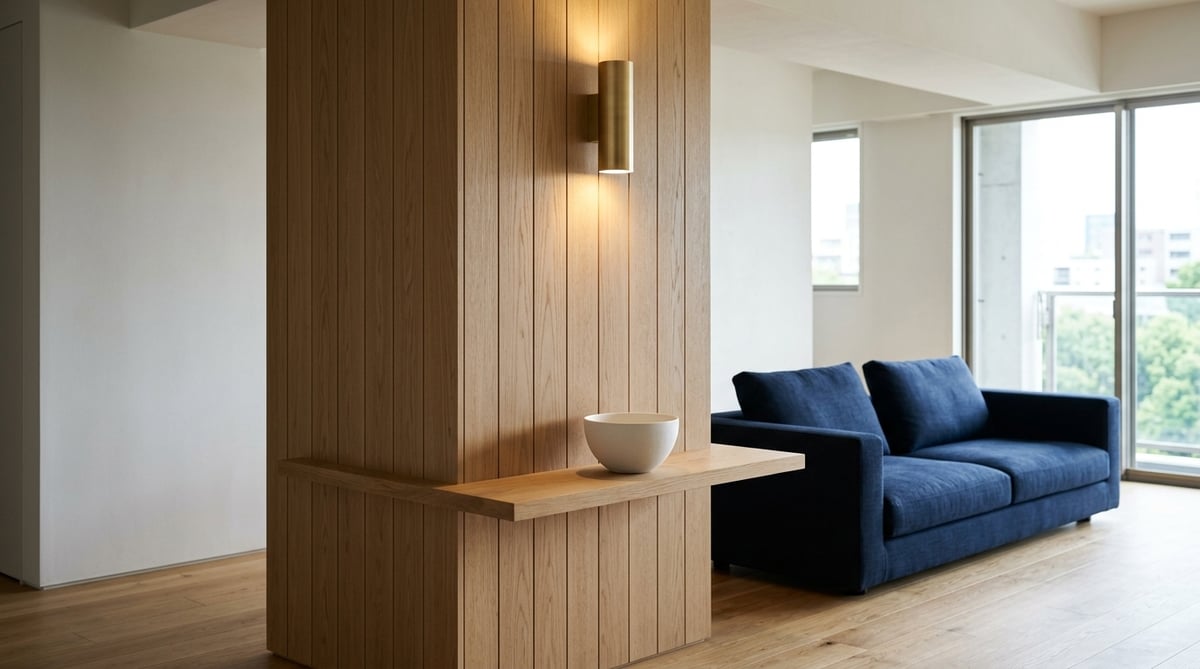
On a quiet afternoon in Sarugakucho, just one street back from the lush, tree-lined avenue of Kyu-Yamate-dori, an expat couple working for a multinational firm paused in front of a three-story, low-rise brick-tile residence after a viewing. They shared an honest dilemma: "The interior finishing and the view overlooking private greenery are serene and appealing. However, with rent at 267,000 yen for a 1LDK and 394,000 yen for a 2LDK, wouldn't it be more practical for our daily routines to choose an apartment closer to Ebisu or Shibuya Station, where multiple train lines and integrated commercial buildings are right at our doorstep?"
Indeed, Daikanyama's rental price per square meter stands around 5,600 yen—putting it on equal footing with major transit hubs like Shibuya Station and prime central districts like Toranomon in Minato Ward. Daikanyama Station is served solely by the Tokyu Toyoko Line local trains, and the station front does not feature massive department stores or complex transit-mall developments. Yet senior executives and international families continue to seek residences in this neighborhood. The appeal lies not in commercial density or transit speed, but in preserving single-stop proximity to Shibuya and Naka-Meguro while enjoying peaceful nights and uncompromised privacy in a hillside, low-rise residential enclave protected by strict height zoning.
Choosing the right home here requires looking beyond branding and carefully examining daily commute patterns, grocery options, corporate housing allowance rules, and unique conditions such as fixed-term lease agreements and mechanical parking constraints. From practical trade-offs against neighboring Ebisu, Shibuya, and Naka-Meguro, to the distinct neighborhood characteristics of Sarugakucho, Hachiyamacho, and the Aobadai heights, this guide outlines the practical criteria needed for international residents and corporate leaseholders to make an informed decision.
- Daikanyama is one stop from Shibuya and Naka-Meguro via local Tokyu Toyoko Line trains. A simple cross-platform transfer to the origin station of the Tokyo Metro Hibiya Line at Naka-Meguro offers a seated morning commute toward Roppongi and Toranomon. If multi-line access or station-connected shopping is your top priority, compare residences within an 8 to 12-minute walk of Ebisu or Naka-Meguro.
- Average rents stand at 394,000 yen for a 2LDK (estimated 2-year total housing cost of 10.638 million yen) and 48.7万円 for a 3LDK. Sarugakucho, Hachiyamacho, and the Aobadai heights sit on solid Musashino loam plateau ground, classified outside official flood hazard zones.
- Under Article 38 of the Act on Land and Building Leases, statutory early termination rights do not protect corporate leases. Reviewing diplomatic and relocation early-exit clauses in advance is crucial. For individual leases, English-friendly guarantor companies like GTN and parking dimensions for European/US SUVs require early verification.
Location Trade-offs and Daily Transit Realities: Daikanyama vs. Shibuya, Ebisu, and Naka-Meguro
When considering a move to Daikanyama, the first practical factor to evaluate is how relying on local-only Tokyu Toyoko Line train service impacts your daily schedule. While express and limited express trains bypass Daikanyama Station, both Shibuya and Naka-Meguro are just one stop away (a 2 to 3-minute ride). With local trains departing every few minutes during daytime and peak hours, platform wait times are negligible.
Local Tokyu Toyoko Line Service and the Seated Transfer at Naka-Meguro for Roppongi and Toranomon
For professionals commuting to multinational corporate hubs in Roppongi, Kamiyacho, Toranomon, and Kasumigaseki, Daikanyama offers a quiet logistical advantage: quick access to the Tokyo Metro Hibiya Line at adjacent Naka-Meguro Station. Riding just one stop on the Toyoko Line to Naka-Meguro allows a smooth transfer to the Hibiya Line. Because Naka-Meguro is the originating terminal for the Hibiya Line, waiting for the next scheduled departure allows you to take a seat comfortably for your morning commute to Roppongi, Toranomon Hills, and Ginza, significantly reducing physical fatigue.
Conversely, daily transfers through Shibuya Station toward the JR Yamanote Line, Tokyo Metro Ginza Line, or Hanzomon Line require extra time. The Toyoko Line platforms at Shibuya are located deep underground on the fifth basement floor (B5F). While the train ride from Daikanyama takes roughly two minutes, navigating escalators and corridors from the B5F platform to ground-level JR ticket gates or the elevated Ginza Line platform typically takes an additional 5 to 8 minutes. If you commute daily toward Shinagawa, Tokyo, or Marunouchi, walking directly to Ebisu Station to board the JR Yamanote Line or Hibiya Line is often a more reliable option.
The 8 to 12-Minute Walking Radius: Distinct Roles of Ebisu, Naka-Meguro, and South Shibuya
Examining a map around Daikanyama Station reveals that walking east downhill leads to Ebisu Station, walking southwest downhill leads to Naka-Meguro Station, and heading north brings you to the New South or South exits of Shibuya Station—each within an 8 to 14-minute walk. During property viewings, clients often ask: "If we can walk to Ebisu or Naka-Meguro in around 10 minutes from Daikanyama, wouldn't it be more convenient to live 3 to 5 minutes from Ebisu or Naka-Meguro Station from the start?"
The answer depends on what you seek in your nighttime environment and the view from your window. The areas around Ebisu Station West Exit and Naka-Meguro Station are dense with popular dining spots, remaining lively and energetic late into the evening. In contrast, once you ascend the slope into Sarugakucho, Hachiyamacho, or the Aobadai heights on the Daikanyama side, commercial traffic drops sharply, and the streets turn calm and quiet past 9:00 PM. Enjoying dinner and boutique shopping in Ebisu and Naka-Meguro on weekends while keeping your sleeping quarters in a serene, elevated low-rise enclave represents the true living value of Daikanyama.
For a broader comparison across southwestern central Tokyo, review our South Yamanote Expat Rental Guide: Shibuya, Ebisu, Meguro & Shinagawa and our comprehensive Yamanote Line Area Guide. If you are also considering quiet residential enclaves within walking distance of Shibuya, explore our Shibuya, Nanpeidai, Shoto & Daikanyama Luxury Rental Guide, or check our detailed Naka-Meguro Area Guide for details on the Meguro River commercial district and Hibiya Line transit advantages.
When Another Neighborhood May Better Suit Your Lifestyle
Regardless of Daikanyama's tranquil charm, certain lifestyle priorities may make neighboring districts a better match. For instance, if you prefer finishing your grocery, gourmet, pharmaceutical, and household shopping in one stop inside a train-station commercial complex on your way home, the area around Ebisu Station—anchored by Atre Ebisu—or the redeveloped shopping complexes surrounding Shibuya Station will provide far smoother daily domestic routines.
Additionally, walking between the Daikanyama plateau and Ebisu or Naka-Meguro involves distinct elevation changes and noticeable hills. For families navigating with baby strollers or relying on non-electric bicycles, the flatter streetscapes of central Naka-Meguro or central Ebisu will prove more comfortable. Furthermore, if you value expansive panoramic views above the 20th floor, 24-hour bilingual front-desk concierge services, or in-house fitness centers and guest suites typical of major high-rise towers, looking into high-rise luxury towers in Shibuya, Ebisu, Meguro, or Shinagawa is more practical than Daikanyama, where strict building height limits preserve low-density architecture.
Lifestyles Suited to Daikanyama (Sarugakucho, Hachiyamacho, Aobadai)
- ✓ Prefer low-rise residences of around 3 stories with limited total units and high acoustic and visual privacy
- ✓ Wish to unwind away from commercial foot traffic and evening noise in an elevated, green setting
- ✓ Easy short taxi rides or a seated Hibiya Line transfer to Roppongi, Toranomon, and Shibuya
Lifestyles Suited to Station-Front Ebisu, Shibuya, and Naka-Meguro
- ✓ Want flat, direct access to the JR Yamanote Line or multiple Metro lines right outside the ticket gates
- ✓ Prefer finishing daily grocery shopping quickly at station malls or large multi-floor supermarkets on the walk home
- ✓ Prioritize tower residences with high-floor skyline views, 24-hour staffed concierges, and shared amenities
Simply enter the rent and deposit from portal listings to calculate a full, itemized breakdown including brokerage and guarantor fees without hidden add-ons.
Rent Benchmarks for 1LDK to 3LDK and Budget Planning Across 2 Years
The table below summarizes median rent benchmarks by layout across Daikanyama and its three neighboring key stations (Ebisu, Shibuya, and Naka-Meguro), along with estimated 2-year total living costs for a 2LDK apartment (calculated based on 24 months of rent plus initial contract costs equivalent to roughly 3 months of rent, totaling 27 months).
| Station (Ward) | Est. Price / m² | 1K | 1LDK | 2LDK | 3LDK | 2LDK 2-Yr Total Cost (vs. Daikanyama) |
|---|---|---|---|---|---|---|
| Daikanyama (Shibuya Ward) | ¥5,600 / m² | ¥154,000 | ¥267,000 | ¥394,000 | ¥487,000 | ¥10,638,000 (Base) |
| Ebisu (Shibuya Ward) | ¥5,400 / m² | ¥148,000 | ¥258,000 | ¥374,000 | ¥462,000 | ¥10,098,000 (-¥540,000) |
| Shibuya (Shibuya Ward) | ¥5,600 / m² | ¥157,000 | ¥274,000 | ¥404,000 | ¥499,000 | ¥10,908,000 (+¥270,000) |
| Naka-Meguro (Meguro Ward) | ¥5,300 / m² | ¥145,000 | ¥253,000 | ¥367,000 | ¥454,000 | ¥9,909,000 (-¥729,000) |
Why Equal Square-Meter Rates Yield Vastly Different Living Spaces
A notable insight from the data is that Daikanyama's per-square-meter rate matches Shibuya Station—a premier multi-line transit hub—and exceeds both Ebisu and Naka-Meguro. However, while the square-meter pricing is comparable, what that investment buys in physical living space differs substantially between Shibuya and Daikanyama.
In Shibuya, 1LDK and 2LDK units are largely concentrated in high-rise towers and dense urban apartments built on commercial-zoned parcels near the station, where rental costs reflect transit convenience, skyline views, and extensive shared amenities. In Daikanyama's Sarugakucho, Hachiyamacho, and Aobadai, however, residences feature low-density layouts—often only two to three units per floor—with staggered architectural footprints that avoid direct sightlines between neighbors, deep overhangs, and expansive balconies overlooking curated greenery. Costs here go directly into spaciousness, tranquility, and privacy. Furthermore, many 2LDK and 3LDK residences in Daikanyama were built between the late 1980s and 2000s specifically for multinational executives. These vintage low-rise properties feature generous ceiling heights, wide living rooms, en-suite bathrooms attached to master bedrooms, and full-size kitchen appliances (ovens and dishwashers) well-suited to international lifestyles.
Evaluating 2-Year Total Housing Costs, Initial Fees, and Corporate Housing Limits
Looking at total two-year living expenses (a 27-month baseline), renting a 2LDK in Daikanyama averages roughly 540,000 yen more than in Ebisu, and about 729,000 yen more than in Naka-Meguro. When expat housing allowances have fixed monthly ceilings, a variance of 20,000 to 30,000 yen per month frequently determines whether an apartment meets your floor-space requirements.
In leasing practice, it is vital to clarify whether your employer's corporate housing policy caps apply solely to base rent or include monthly management/maintenance fees and parking spaces. Low-rise residences in Daikanyama often contain only 10 to 30 units. To maintain rigorous security and attentive grounds management, maintenance fees often reach 30,000 to 50,000 yen per month, while indoor parking spaces command 45,000 to 60,000 yen per month. If the base rent exhausts your allowance limit, ancillary fees may need to be paid out-of-pocket or could cause the corporate lease application to be rejected. Establishing your total allowance framework early is essential. Alternatively, extending your search toward the lower slopes of Aobadai near Naka-Meguro or the lower edge of Ebisu-Nishi can reduce your two-year costs by 500,000 to 700,000 yen while keeping you within Daikanyama's everyday lifestyle perimeter.
Neighborhood Dynamics, Topography, and Education: Sarugakucho, Hachiyamacho, and Aobadai
While often grouped together under the "Daikanyama area," zoning regulations and micro-topography shift noticeably depending on whether a property sits east or west of Kyu-Yamate-dori, or across the ward boundary between Shibuya Ward and Meguro Ward. Understanding these differences helps identify the streetscape best suited to your household.
Sarugakucho and Hachiyamacho: Embassy Enclaves and Low-Rise Building Restrictions
Spanning north and northwest from Daikanyama Station, Shibuya Ward's Sarugakucho and Hachiyamacho represent the core of the area's low-rise residential heritage. Except for parcels fronting main thoroughfares, the majority of this district is designated as a Category 1 Exclusively Low-Rise Residential Zone (typically 60% building-to-land ratio, 150% floor-area ratio), strictly capping building heights. With minimal shadow cast by surrounding structures and no towering neighbors looking down, second- and third-floor residences enjoy open skies and unobstructed natural daylight and cross-ventilation.
Along and near Kyu-Yamate-dori stand diplomatic institutions including the Royal Danish Embassy in Sarugakucho and the Embassy of the Arab Republic of Egypt near the Aobadai border. Year-round regular police foot patrols contribute to a safe pedestrian environment for walking at night. Everyday groceries are convenient at Peacock Store Daikanyama inside the station-front Daikanyama Address Dixsept complex, while Daikanyama T-SITE (Tsutaya Books) along Kyu-Yamate-dori serves as a relaxed extension of your home for morning coffee, evening reading, or remote work.
The Elevated Mansions of Meguro Ward's Aobadai 2-Chome and Topographical Boundaries
Heading southwest along Kyu-Yamate-dori across the border into Meguro Ward brings you to the plateau of Aobadai 2-Chome. Here, zoning is even more restrictive, dominated by a Category 1 Exclusively Low-Rise Residential Zone with a 100% floor-area ratio. Adjacent to the green slopes of Saigoyama Park and Sugekari Park, this neighborhood features low-rise apartment residences and detached luxury rental homes exceeding 100 square meters on spacious plots.
From a geotechnical and disaster-prevention perspective, the high ground running from Daikanyama Station across Sarugakucho, Hachiyamacho, and Aobadai 2-Chome sits atop the solid Musashino loam plateau. Liquefaction risks are exceptionally low, and government hazard maps classify this plateau completely outside designated flood inundation areas. However, attention to micro-topographical shifts within single blocks is essential. For instance, while the plateau portion of Ebisu-Nishi 2-Chome near Daikanyama Station (around 20-ban) consists of stable ground, descending the slope toward Ebisu Station (around 12-ban) or descending the steep hills from Aobadai down to the Meguro River (Naka-Meguro Station) transitions into low-lying valley terrain.
While low-lying streets offer flat walking routes, it is advisable to check whether electrical equipment rooms are elevated above ground level and whether building entrances and parking ramps are equipped with flood barrier gates. Conversely, for low-rise hillside properties on high ground, inspecting perimeter drainage slopes, retaining walls, foundation conditions, street lighting, and sidewalk widths along evening walking routes ensures peace of mind.
Ward Boundaries, School Districts, and International School Bus Access
For families relocating with children, navigating the municipal boundaries between Shibuya Ward (Sarugakucho, Hachiyamacho, Ebisu-Nishi) and Meguro Ward (Aobadai, Kamimeguro) requires care. Childcare subsidy programs, nursery school application processes, and designated public elementary and junior high schools differ by address. Even within walking distance of Daikanyama Station, assigned public schools vary between Sarugaku Elementary School, Hasebe Elementary School, Hachiyama Junior High School, and Sugekari Elementary School in Meguro Ward. Before signing a lease, confirm assigned schools directly through the respective municipal board of education using the exact parcel number.
For families attending international schools across Tokyo, proximity to Kyu-Yamate-dori and Komazawa-dori—wide avenues with safe pull-off spaces—makes this neighborhood a frequent stop along dedicated international school bus routes. Because bus routes and boarding points can change annually based on student distribution, verifying current pickup locations directly with school administration prior to submitting a rental application is recommended.
Leasing Procedures for Expat Executives: Fixed-Term Leases, Guarantee Screening, and Technical Checks
High-end residences in Daikanyama frequently involve contract structures, screening protocols, and physical equipment specifications that differ from standard Japanese apartments. Familiarizing yourself with these practical nuances ensures a seamless application process.
Fixed-Term Corporate Leases (Article 38) and Restoration Standards
Many 2LDK and 3LDK residences in Sarugakucho, Hachiyamacho, and Aobadai are managed as Fixed-Term Building Leases (Article 38 of the Act on Land and Building Leases). Owners frequently use this structure for asset management or while temporarily posted abroad. Under Japanese law, establishing a valid fixed-term lease requires both a written contract and an independent, pre-contract disclosure statement delivered in writing, explaining that the lease expires without automatic renewal at the end of the term.
For corporate expat leases, a critical detail to examine is the scope of early termination rights under Article 38, Paragraph 7. By statute, the right to terminate early due to unavoidable personal circumstances applies strictly to individual residential tenants occupying properties under 200 square meters. Corporate leases (where your employer is the legal tenant) and units exceeding 200 square meters are not granted automatic statutory early termination rights. If an overseas corporate transfer or unexpected recall occurs without an explicit early-exit clause, the company could remain liable for rent through the remainder of the term. It is therefore vital to negotiate an explicit diplomatic or corporate transfer clause in the lease draft (e.g., allowing termination with two months' written notice).
Furthermore, because luxury apartments feature solid hardwood flooring, imported wall coverings, and natural stone countertops, move-out restoration rules should be clarified before signing. Under Ministry of Land, Infrastructure, Transport and Tourism (MLIT) guidelines and the Tokyo Metropolitan Government's Rental Housing Dispute Prevention Ordinance ("Tokyo Rules"), repairs for normal wear and tear and aging are the landlord's responsibility. For example, standard wallpaper depreciates to a residual value of 1 yen over six years. Special clauses regarding fixed move-out cleaning fees or non-refundable deposit deductions must satisfy the three conditions set by the Supreme Court of Japan (Second Petty Bench decision of December 16, 2005): objective clarity, explicit tenant agreement, and consumer fairness under Article 10 of the Consumer Contract Act.
Individual Leases for Recent Arrivals: Multilingual Guarantors (GTN) and Documentation
When leasing under an individual executive's name or as the head of a newly formed Japanese subsidiary, the absence of a Japanese resident certificate (juminhyo), domestic tax statements, or a local credit history can present initial hurdles. Properties that strictly require traditional domestic credit-card-affiliated guarantee firms may face delays if past local earnings cannot be verified.
Selecting residences that accept specialized multilingual guarantee companies such as GTN (Global Trust Networks), or choosing property management firms experienced with foreign corporate transferees, provides a smooth path forward. In these workflows, tenants can objectively prove financial stability by submitting a passport, residence card (or Certificate of Eligibility [COE] and visa if arriving soon), an English offer letter or employment contract specifying position, duration, and guaranteed compensation, along with bank balance statements where needed. Guarantor firms with English identity-verification phone screenings and multilingual customer support ensure a comfortable, transparent process.
Mechanical Parking Limitations for Large SUVs and Pet Regulations
Vehicle dimensions and pet rules often emerge as late hurdles during rental applications. While some luxury residences in Sarugakucho and Aobadai feature rare indoor flat-surface or underground self-drive parking, mechanical stack parking systems built in the 1990s and 2000s commonly impose strict restrictions: overall width under 1,850 mm to 1,950 mm, overall height under 1,550 mm, and gross weight under 2,000 kg to 2,300 kg. Popular imported full-size SUVs and modern electric vehicles (often exceeding 1,950 mm in width, 1,550 mm in height, and 2,400 kg in weight) cannot fit onto these mechanical trays. Checking vehicle registration papers, wing-mirror clearances, and ramp angles in advance is essential.
Similarly, for pet owners, a listing stating "pets negotiable" requires verification of the building's building management bylaws. Confirm specific limits on shoulder height, weight, and total number of pets (e.g., whether medium or large dogs are permitted, or only small breeds), alongside any individual owner conditions such as an additional month of security deposit. If you have several candidate properties across portals, you can also use our Comprehensive SUUMO Consultation Service to simultaneously verify parking availability, GTN guarantor acceptance, and fixed-term lease negotiation options across listings.
Core Decision Criteria for Choosing Your Home in Daikanyama
Daikanyama does not cater to those seeking high-velocity transit hubs or massive station-front shopping malls. Instead, it offers a refined rhythm of life defined by tree-lined streets, low-density residences on solid loam plateau ground, and effortless single-stop access to central Tokyo's key business centers.
Against market rents of 267,000 yen for a 1LDK, 394,000 yen for a 2LDK, and 48.7万円 for a 3LDK, staying close to Ebisu or Shibuya Station provides excellent transit efficiency and tower conveniences. Conversely, if you prioritize tranquil mornings, green views from a three-story brick-tile residence, and peaceful evenings on an elevated plateau, Sarugakucho, Hachiyamacho, and the Aobadai heights are difficult to match. There is no single correct choice—only the home and neighborhood that align naturally with your daily commute, family rhythm, and desired lifestyle.
If you have questions regarding lease conditions, parking dimensions, or required expat documentation, feel free to reach out to Sorai Tokyo with the ease of enjoying a cup of tea. Send a property link via our official LINE account (@soraitokyo / https://line.me/R/ti/p/@soraitokyo) anytime. Our licensed real estate advisors will cross-reference the official B2B property network database, verify real-time availability, and provide objective second-opinion reviews on initial estimates—without high-pressure sales calls, store visits, or phone number requirements. You are also welcome to use our online smart tools (SorAi) via the bottom navigation on mobile or the footer on desktop to calculate rent and move-in estimates at your own pace.
Frequently Asked Questions (FAQ)
QCan I apply for and pass screening for a Daikanyama apartment before arriving in Japan, even without a Japanese residence card?
AYes, depending on the property and assigned guarantee company. For listings accepting international guarantor firms like GTN (Global Trust Networks), you can proceed before landing in Japan by submitting your passport, Certificate of Eligibility (COE) or entry visa issued by Immigration Services, and an English offer letter or employment contract detailing your position and guaranteed salary. We recommend checking individual property terms early to coordinate viewing and contract schedules.
QWhen entering a corporate fixed-term lease, which clauses protect against unexpected overseas transfers or recalls?
AStatutory early termination rights under Article 38, Paragraph 7 of the Act on Land and Building Leases apply solely to individual residential leases under 200 square meters, not to corporate leases. Therefore, it is critical to confirm that the special terms section of the lease draft includes a diplomatic or relocation clause stating that the tenant may terminate early with specified advance notice (e.g., two months' notice) in the event of an overseas transfer, recall, or resignation, and to verify whether any early termination penalties apply.
QAre grocery shopping and hillside walking inconvenient around Daikanyama Station without a large department store?
AEveryday grocery shopping is covered by Peacock Store Daikanyama inside the station-front Daikanyama Address Dixsept complex. For extensive department store food halls or large transit malls, residents frequently combine shopping at nearby Ebisu Station (Atre Ebisu), an 8 to 10-minute walk away. Because slopes connect the plateau to Naka-Meguro and Ebisu, families using strollers or bicycles daily will find greater comfort by choosing homes on the flat plateau along Kyu-Yamate-dori or within upper Sarugakucho and Hachiyamacho.



Author: Sorai Tokyo Editorial Team (Supervised by Licensed Real Estate Agents)
A real estate consulting team specializing in assisting foreign nationals find rooms and explaining initial costs in Tokyo. We break down language barriers and differences in customs, offering dedicated support in Japanese, English, and Vietnamese for a safe and secure start to your new life.