
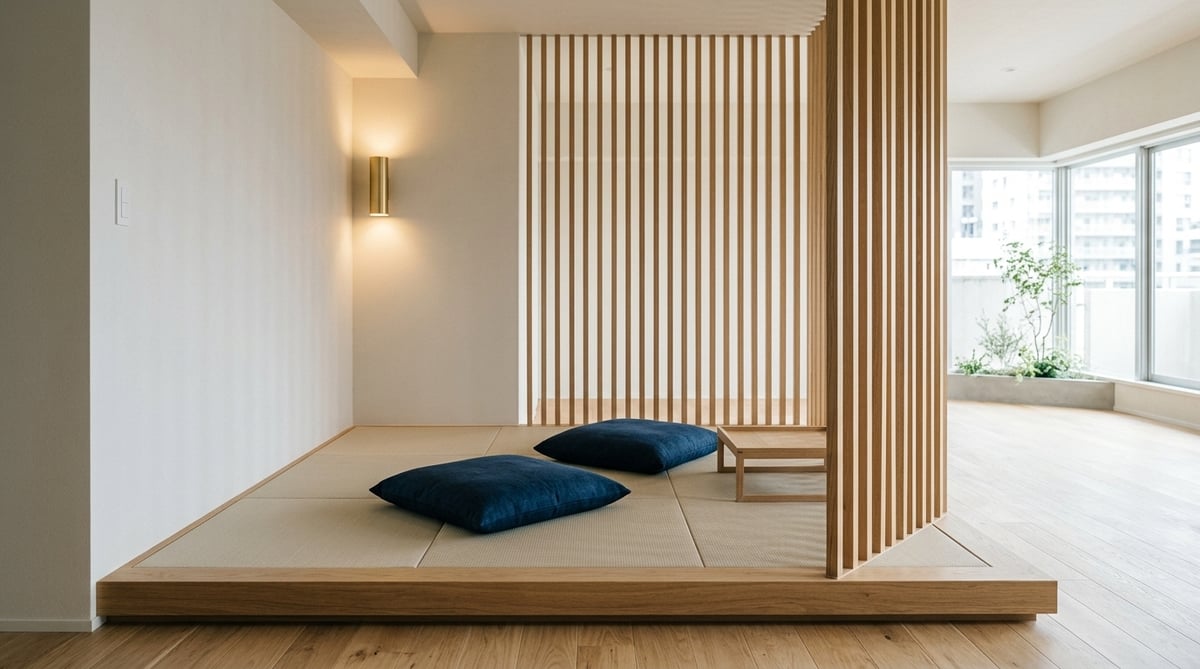
8:20 AM. Savoring a freshly brewed cup of coffee, dressing comfortably, and stepping through the entrance lobby, you are greeted by the crisp morning light illuminating Hibiya-dori and Shintora-dori avenues. Free from the congestion of crowded ticket gates and train delay announcements, you enjoy an unhurried morning walk through the verdant tree canopy of Hibiya Park directly to your office. This lifestyle is far from an exclusive privilege reserved only for the wealthy.
In Minato Ward's Shimbashi 5-chome and 6-chome, Nishi-Shimbashi 2-chome and 3-chome, and the tranquil enclaves of Atago and Shiba-Daimon, there is an accessible selection of quality soundproof condominium residences offering single-occupant 1K and studio layouts for ¥110,000 to ¥140,000 per month. While bustling with commercial vitality during business hours, these residential pockets become remarkably serene after 8:00 PM. Drawing on a decade of licensed real estate broker experience in central Tokyo, this guide explores neighborhood selection, soundproofing criteria, and daily grocery infrastructure to help professionals working in Hibiya, Uchisaiwaicho, Kasumigaseki, and Marunouchi realize a walking-commute lifestyle.
- An in-depth guide to studio living within walking distance of Hibiya and Uchisaiwaicho.
- Eliminating rush-hour transit stress and delay risks with a train-free walking commute.
- Reclaiming approximately 120 minutes of personal freedom daily compared to a 50-minute one-way commute.
The Ultimate Work-Live Proximity: The Luxury of Walking to Hibiya and Uchisaiwaicho
For business professionals working in Tokyo, the daily commute is often the greatest drain on physical and mental energy. During the morning peak hours on the Chiyoda, Mita, Yamanote, and Ginza lines, congestion rates frequently reach 130% to 150%, leaving barely enough room to check a smartphone. Stepping completely away from that daily turmoil to walk on foot from your front door directly to your office desk is one of the most effective ways to elevate your everyday quality of life.
The Hibiya and Uchisaiwaicho district hosts flagship commercial towers including the Fukoku Seimei Building, Hibiya Kokusai Building, Mizuho Bank Head Office, the Imperial Hotel, and Tokyo Midtown Hibiya. Heading north along Hibiya-dori connects seamlessly to Yurakucho, Marunouchi, and Otemachi, while heading west leads directly to the government quarter of Kasumigaseki and Toranomon Hills. Facing this business core from the south, Nishi-Shimbashi, southern Shimbashi (5-chome and 6-chome), Atago, and Shiba-Daimon sit precisely within a comfortable 10-to-15-minute walking radius.
For example, from Nishi-Shimbashi 2-chome, walking north along Hibiya-dori to Uchisaiwaicho Station on the Toei Mita Line takes only 6 to 8 minutes (via Exit A3), while Hibiya Station (via Exit A14 or Exit A11 connected directly to Tokyo Midtown Hibiya) is just 12 to 14 minutes away on foot. Your morning path is lined with the fountains and lush zelkova trees of Hibiya Park, naturally sharpening your focus and presence of mind before the workday begins. Even in inclement weather, you can access the underground concourses of Uchisaiwaicho Station and Hibiya City toward Kasumigaseki, or Hibiya Station's extensive underground network toward Yurakucho and Marunouchi, shielding you from rain and summer heat—a structural lifestyle benefit unique to this location.
From Toei Mita Line Uchisaiwaicho Station (near Exit A6), underground pedestrian corridors connect directly to the Hibiya City complex and toward Kasumigaseki Station. Walking further north along Hibiya-dori grants access to one of Tokyo's most expansive subterranean walkway networks, extending from the Hibiya Station concourse through Yurakucho, Ginza, and Otemachi. Once you reach the threshold of the Hibiya-Yurakucho area from Nishi-Shimbashi, you can navigate seamlessly to major office towers through climate-controlled underground passages, even on sweltering midsummer days or during torrential rain.
Licensed real estate brokers experienced in central Tokyo rental transactions provide dedicated video call support—from clarifying your criteria and checking off-market inventory to optimizing move-in estimates.
Complete rental and living guide for all stations on the Tokyo Metro Chiyoda Line, from Kita-Ayase and Kita-Senju to downtown Otemachi.
Targeting Quality Studios for ¥110,000–¥140,000 in Shimbashi, Nishi-Shimbashi, and Atago
Many people wonder whether quality rental housing in the ¥110,000 to ¥140,000 range genuinely exists in the heart of Minato Ward. In newly built high-rise condominium towers in Roppongi, Akasaka, or Azabu-Juban, studio and 1K units regularly command rents exceeding ¥160,000 to ¥200,000. However, shifting your gaze south of Shimbashi Station or toward the inner residential lanes of Nishi-Shimbashi reveals a completely different pricing dynamic.
This district features a rich concentration of mid-scale reinforced concrete (RC) and steel-reinforced concrete (SRC) condominium residences built from the late 1990s through the 2010s, including well-managed brands such as Lions, Plaire, Castalia, Park Habio, and Concieria. Units typically range from 20 to 26 m² in floor area. Many were constructed by local property owners following the bubble era for stable, long-term leasing, intentionally omitting extravagant shared amenities like concierge desks or gyms. As a result, the market maintains a balanced, sustainable rent level of ¥115,000 to ¥138,000, inclusive of monthly management fees.
| Neighborhood | Studio (1K) Rent Range | Commute Time to Hibiya & Uchisaiwaicho | Primary Stations & Official Exits | Neighborhood Character & Living Environment |
|---|---|---|---|---|
| Nishi-Shimbashi 2-chome & 3-chome | ¥125,000–¥145,000 (22–27 m² floor area) |
Uchisaiwaicho: 6–8 min walk Hibiya: 11–13 min walk |
Uchisaiwaicho Station (Exit A3) Toranomon Hills Station (Exit B4) |
Adjacent to government quarter and Toranomon. Orderly streetscape on flat terrain. |
| Shimbashi 5-chome & 6-chome | ¥115,000–¥135,000 (20–25 m² floor area) |
Uchisaiwaicho: 9–12 min walk Hibiya: 14–16 min walk |
Shimbashi Station (Karasumori Exit) Onarimon Station (Exit A4) |
South of Shintora-dori. Quiet at night with exceptional value. |
| Atago 1-chome & 2-chome | ¥135,000–¥155,000 (24–30 m² floor area) |
Uchisaiwaicho: 12–15 min walk Hibiya: 16–18 min walk |
Kamiyacho Station (Exit 3) Onarimon Station (Exit A5) |
Adjacent to Atago Shrine greenery. Refined, understated elegance. |
| Shiba-Daimon 1-chome & 2-chome | ¥118,000–¥138,000 (21–26 m² floor area) |
Uchisaiwaicho: 13–16 min walk Hibiya: 18–20 min walk |
Daimon Station (Exit A6) Hamamatsucho Station (North Exit) |
Zojoji Temple and Shiba Park nearby. Direct, seamless access to Haneda Airport. |
Furniture Placement and Usable Interior Dimensions for 20–25 m² Studio Apartments
When viewing 1K rental properties in the ¥110,000 to ¥140,000 bracket, the most crucial consideration is not the total floor area stated on the floor plan, but the effective usable dimensions of the living space. In a 22 m² 1K unit, approximately 11 to 12 m² is allocated to the entryway, hallway, bathroom, kitchen, storage, and plumbing shaft (PS), leaving an actual room area of roughly 6.0 to 6.8 tatami mats (calculated from wall centers).
A standard single bed measures 98 cm wide by 198 cm long, while a semi-double bed measures 120 cm wide by 198 cm long. If the shorter wall of the main room provides at least 2.4 meters of clearance, you can position the bed horizontally along the window wall without obstructing the flow between the doorway and closet, while leaving ample room for a 100 cm by 60 cm work desk and task chair. Bringing a tape measure to the viewing to verify electrical outlet positions, closet door swing paths, and ensuring that air conditioner airflow does not blow directly onto the bed will make a tangible difference in everyday living comfort.
Remarkably Affordable Home Cooking Supported by OK Store Ginza and Hanamasa
Many prospective residents worry that living in a central Tokyo business district means having no local supermarkets, relying on dining out, and seeing monthly expenses skyrocket. However, the everyday living infrastructure developed across Shimbashi and Nishi-Shimbashi in recent years easily dismantles this preconception.
A premier ally for home cooks is Niku no Hanamasa Nishi-Shimbashi (2-23-1 Nishi-Shimbashi, Minato Ward). Open from 6:00 AM to 1:00 AM, it stocks fresh meats and seafood alongside commercial-sized seasonings, frozen vegetables, pasta, and dairy products at surprisingly competitive prices. Returning home late on a weekday evening knowing you can purchase fresh, wholesome ingredients without relying solely on convenience stores brings invaluable peace of mind to single life.
For routine daily top-ups, Maruetsu Petit Shimbashi 5-chome (5-1-9 Shimbashi, Minato Ward, open 8:00 AM–11:00 PM) and My Basket Shimbashi 5-chome are within a few minutes' walk. These neighborhood groceries cater specifically to single households with conveniently portioned pre-cut produce, deli dishes, milk, and eggs, allowing you to complete grocery runs efficiently without waste.
Moreover, along the walking route home from Hibiya and Yurakucho stands OK Store Ginza (B1 & B2, Marronnier Gate Ginza 2, 3-2-1 Ginza, Chuo Ward, open 8:30 AM–9:30 PM)—a renowned high-volume discount supermarket. Operating under the philosophy of "High Quality, Everyday Low Price," OK Store offers seasonings, beverages, frozen foods, and daily household essentials at prices matching or beating suburban big-box retailers. It serves as an unbeatable spot for stocking up on your evening commute. Living in the center of a premier business district while maintaining home-cooking expenses comparable to suburban residential neighborhoods is one of the distinct hidden strengths of the Nishi-Shimbashi and southern Shimbashi area.
On weekday evenings, pick up pantry staples and seasonings at OK Store in Marronnier Gate Ginza on your walk back from Hibiya, and supplement daily fresh produce at Niku no Hanamasa or Maruetsu Petit in Nishi-Shimbashi. By establishing this two-tiered grocery routine, you can comfortably keep monthly food expenses around ¥30,000 to ¥40,000 while enjoying a refined central Tokyo lifestyle.
Nighttime Tranquility and Safety in the Business Core: The Character of Residential Lanes One Block Off the Avenues
Hearing the name "Shimbashi," most people picture the lively tavern alleys sprawling beneath the train tracks near JR Shimbashi Station's Karasumori Exit and the SL Plaza. It is certainly true that office workers gather there on Friday evenings for vibrant socializing. From a real estate practitioner's perspective, however, the critical factor is identifying where that nightlife district clearly ends—the urban boundary line.
That decisive boundary is Loop Route 2, known as Shintora-dori Avenue. Walking south from Shimbashi Station's Karasumori Exit and crossing the wide expanse of Shintora-dori into Shimbashi 5-chome, Shimbashi 6-chome, or Nishi-Shimbashi 2-chome and 3-chome, the urban atmosphere transforms completely. The cluttered restaurant neon signs and commercial billboards vanish, replaced by mid-rise office buildings, legal and accounting practices, printing firms, and understated, well-maintained residential condominiums.
During the day, business professionals and legal practitioners quietly come and go. Yet once 8:00 PM passes, office lights dim, vehicular traffic drops off sharply, and a profound stillness settles over the neighborhood. Entering the inner lanes one or two blocks off major thoroughfares like Daiichi Keihin (Route 15) or Hibiya-dori—such as the quiet streets around Nanso Park or heading toward Atago Police Station—the only sounds you hear are the occasional passing taxi and your own footsteps.
Prioritizing Visibility and Proximity to Stations
- ✓Broad, well-lit sidewalks provide excellent visibility and security when returning home late at night
- ✓Effortless mobility with immediate taxi hailing right outside the entrance lobby
- ✓Requires attention to emergency vehicle sirens and low-frequency vibration from heavy transport trucks
Prioritizing Nighttime Serenity and Restful Sleep
- ✓Minimal nighttime through-traffic creates an astonishingly tranquil living environment, even with windows cracked open
- ✓Excellent neighborhood security situated along the active patrol routes of Atago Police Station and local kōban
- ✓Essential to verify distance, line of sight, and natural light relative to neighboring commercial buildings beforehand
Examining official neighborhood crime statistics published by the Tokyo Metropolitan Police Department confirms that incidents of violent crime and residential burglary in Shimbashi 5-chome, 6-chome, and Nishi-Shimbashi 2-chome and 3-chome remain exceptionally low throughout the year. The close proximity of Atago Police Station (6-18-12 Shimbashi), frequent regular patrols by police officers, and the constant surveillance presence of private security personnel and security cameras across corporate and government buildings serve as an effective deterrent, offering reassuring security for single female residents as well.
The Luxury of Time: Complete Freedom from Packed Commuter Trains and Late-Night Cabs
When choosing a home, focusing exclusively on rent figures often causes people to overlook the significant costs of commuting time, physical fatigue, and unexpected late-night transportation expenses. Consider living in an outlying neighborhood paying ¥85,000 per month with a 50-minute one-way commute, versus living in Nishi-Shimbashi paying ¥128,000 per month with a 12-minute walk to work. Comparing these two lifestyles with objective figures reveals unexpected financial and personal rationality.
| Comparison Item | Suburban / Outer Metro Area (50-Min. Transit Commute) | Nishi-Shimbashi / South Shimbashi (12-Min. Walking Commute) |
|---|---|---|
| Monthly Rent & Management Fee | Approx. ¥85,000 | Approx. ¥128,000(Difference: +¥43,000) |
| Daily Round-Trip Commute | 100 minutes (packed trains, 2 transfers) | 24 minutes (walking only, zero train rides) |
| Total Annual Commute Time | Approx. 400 hours / year(Based on 20 workdays/month) | Approx. 96 hours / year(Reclaims 304 hours annually) |
| Late-Night Taxis (2–3 times/month) | ¥16,000–¥24,000 / month (Approx. ¥240,000 / year) |
¥0 (Walk home regardless of train schedules) |
| Out-of-Pocket Transit Costs | Reimbursed by employer (weekend trips to central Tokyo paid out-of-pocket) | Hibiya, Ginza, Marunouchi, and Yurakucho within walking distance (zero transit expense) |
| Overall Assessment: Real Cost & Well-Being | Rent is lower, but accumulated fatigue from transit stress and monthly late-night travel expenses takes a heavy toll. | Eliminating late-night taxi costs offsets more than half the rent difference, while reclaiming over 300 hours of personal freedom annually. |
On evenings when unexpected overtime or impromptu business dinners arise, you are spared the lingering anxiety of constantly checking the clock for the last train. Nor do you face the frustrating fatigue of missing the last departure and paying ¥7,000 to ¥9,000 for a late-night surcharge taxi from Tokyo Station or Ginza. When your residence is in Nishi-Shimbashi or southern Shimbashi, these concerns vanish entirely.
No matter how late it gets, a comfortable 10-to-15-minute walk along flat, well-lit sidewalks brings you safely back to your own bed. The following morning, you can sleep peacefully until 7:30 AM, enjoy a relaxed breakfast and freshly ground coffee, dress at an unhurried pace, and still arrive at your office desk 30 minutes before the workday starts. Protecting your sleep and reclaiming mental ease is one of the most rewarding investments you can make in your daily professional performance.
Key Criteria for Selecting Studios Near Hibiya: Soundproofing, Sunlight, and Layout
When choosing a studio apartment near a central business district, sound insulation and spatial clearance from surrounding buildings (lighting and privacy) demand the closest scrutiny. No matter how convenient the location, being disturbed by noise from adjoining units or outdoor traffic will quickly erode your sense of everyday ease.
Regarding building construction, wooden and lightweight steel structures are unsuitable for urban core living, making it essential to understand the difference between standard structural steel (S-type) and reinforced concrete (RC / SRC). In single-occupant condominiums, the exact specifications of the demising walls between adjoining units serve as the decisive factor for sound privacy.
| Structural & Architectural Element | Professional Recommended Spec | Standard Compromise Spec | On-Site Inspection Method |
|---|---|---|---|
| Primary Building Structure | RC (Reinforced Concrete) or SRC (Steel Reinforced Concrete) |
Steel frame (Heavy steel) with ALC panel exterior walls |
Check the structure type listed on the official registry or property brochure |
| Demising Walls Between Adjoining Units | Solid RC concrete wall 180–200 mm+ thickness |
Double-layer dry gypsum drywall approx. 136 mm thickness |
Gently knock on the wall to check for a solid, deadened thud rather than a hollow resonance |
| Window Sash Soundproof Rating | T-2 (30 dB reduction) or T-3 (35 dB reduction) / Double sashes |
T-1 rating (25 dB reduction) Standard single-pane glass sashes |
Inspect the weatherstrip gasket thickness and feel for airtight pressure resistance upon closing |
| Setback Distance from Exterior Environment | Facing inner lane or 8+ meters clearance from neighboring buildings |
Facing major thoroughfare directly or under 3 meters clearance from adjacent building |
Open the window to visually check positions of opposing exhaust ducts and rooftop AC compressors |
Assessing Line-of-Sight Privacy and Exhaust Ducts in Commercial Districts
Another vital checklist item when viewing apartments in Shimbashi and Nishi-Shimbashi is the setback from neighboring buildings and mechanical equipment placement. In commercial zoning, it is commonplace for adjacent plots to hold office buildings of equal or greater height.
During an in-person viewing, open the living room windows and verify two specific factors. First is visual privacy. If facing an office building, assess whether your window aligns directly with office desks across the way, potentially requiring you to keep curtains drawn throughout the day. Conversely, facing an office building means those spaces are empty on weekends, holidays, and evenings, providing surprisingly tranquil, unobserved privacy during your off-hours.
The second factor is the placement of large commercial air conditioning units and restaurant kitchen exhaust ducts. If rooftop chillers or kitchen ventilation outlets on adjacent buildings face directly toward your apartment windows or balcony, low-frequency hums or cooking odors may infiltrate even with windows closed. Opening the windows during a daytime viewing and listening closely in complete silence is an essential step.
Four Steps to Choosing an Ideal Soundproof Studio Near Hibiya
Reverse-Engineering Your Commute Route & Target Walking Time
Draw a 15-minute walking radius around your workplace building (Hibiya, Uchisaiwaicho, Kasumigaseki, etc.) and anchor your search on Shimbashi 5 & 6-chome and Nishi-Shimbashi 2 & 3-chome.
Filtering for RC Construction & Demising Wall Specifications
Verify RC or SRC construction on property floor plans and prioritize units facing inner lanes. If facing an avenue, require T-2 or T-3 soundproof window sashes as a mandatory criterion.
Checking On-Site Conditions on Weekday Evenings & Weekends
Walk the neighborhood after 8:00 PM on a weekday to evaluate ambient quiet and street lighting. Time the actual walking route to local groceries such as Hanamasa and Maruetsu Petit.
Scrutinizing Initial Estimates & Applying 50% Off Brokerage
Eliminate unnecessary ancillary charges like mandatory indoor deodorization or inflated 24-hour support fees, finalizing move-in costs smartly with Sorai Tokyo's 50% off commission (0.55 months incl. tax).
Embracing Clear Mornings and Free Evenings Within Walking Distance of Hibiya and Uchisaiwaicho
Living within walking distance of your workplace does far more than shorten transit times. It allows you to redirect the energy once depleted by crowded trains toward personal growth and restorative rest, giving you the reassuring comfort of returning to a warm home within minutes, even after working late into the night. The neighborhoods of Shimbashi 5-chome, 6-chome, and Nishi-Shimbashi provide a steadfast foundation to support such an autonomous, well-paced urban lifestyle.
At Sorai Tokyo, simply send us a property listing URL from any portal site via our official LINE, and our dedicated licensed real estate brokers will cross-reference the inter-broker network database to thoroughly confirm the latest, accurate availability. We provide complimentary, 100% online guidance—from second-opinion reviews of estimates from other agencies and eliminating redundant ancillary charges to calculating your move-in savings with our half-price brokerage fee (0.55 months' rent, tax included). You will never receive aggressive sales calls or pressure to visit an office, so you can explore your options with complete peace of mind.
Whether using the fixed bottom navigation on your smartphone or the footer area on your desktop, you can freely access Sorai Tokyo's suite of smart tools (SorAi), including the Upfront Cost Simulator, anytime. As you embark on this new chapter of central Tokyo living, we are here to accompany your journey with thoughtful care and dedicated professionalism.

Frequently Asked Questions About Living Within Walking Distance of Hibiya and Uchisaiwaicho
QShimbashi has a strong reputation as a lively nightlife hub for office workers. Does nighttime noise or neighborhood safety affect single residents living here?
AShimbashi's nightlife and dining district is almost entirely contained between the Karasumori Exit and Shintora-dori Avenue (Loop Route 2). Once you cross Shintora-dori into Shimbashi 5-chome and 6-chome, or head west of Hibiya-dori into Nishi-Shimbashi 2-chome and 3-chome, vehicular traffic drops drastically after 8:00 PM, creating a remarkably tranquil residential and office enclave. Under the jurisdiction of Atago Police Station, with a dense network of security cameras and well-lit sidewalks, the area maintains a high standard of public safety that offers complete peace of mind, including for single female residents.
QCan I truly walk comfortably to Hibiya, Marunouchi, or Kasumigaseki every morning? What is the commute like on rainy days?
AFrom Nishi-Shimbashi 2-chome and 3-chome, walking to offices around Uchisaiwaicho Station takes just 6 to 8 minutes, Hibiya Station 11 to 13 minutes, and the government district of Kasumigaseki 10 to 15 minutes—comfortable distances that feel like an easy morning stroll. On rainy days, you can utilize the underground walkways connecting Uchisaiwaicho Station and Hibiya City toward Kasumigaseki, or tap into the extensive subterranean network extending from Hibiya Station through Yurakucho, Ginza, and Otemachi, allowing you to commute comfortably while minimizing exposure to the elements.
QWhat level of soundproofing can I realistically expect from reinforced concrete (RC) buildings in the ¥110,000 to ¥140,000 rent range?
AIn condominium-grade RC and SRC residences constructed from the late 1990s onward, demising walls typically feature solid concrete thicknesses of 180 mm or more, and floor slabs measure around 200 mm, meaning conversational voices and television sounds virtually never bleed into adjacent units. However, because properties facing Hibiya-dori or Daiichi Keihin may be exposed to road traffic noise and emergency sirens, verifying window sashes rated T-2 or higher—or choosing a residence along an inner residential lane—is our professional recommendation for ensuring absolute peace and quiet.

Author: Sorai Tokyo Editorial Team (Supervised by Licensed Real Estate Agents)
A real estate consulting team specializing in assisting foreign nationals find rooms and explaining initial costs in Tokyo. We break down language barriers and differences in customs, offering dedicated support in Japanese, English, and Vietnamese for a safe and secure start to your new life.