
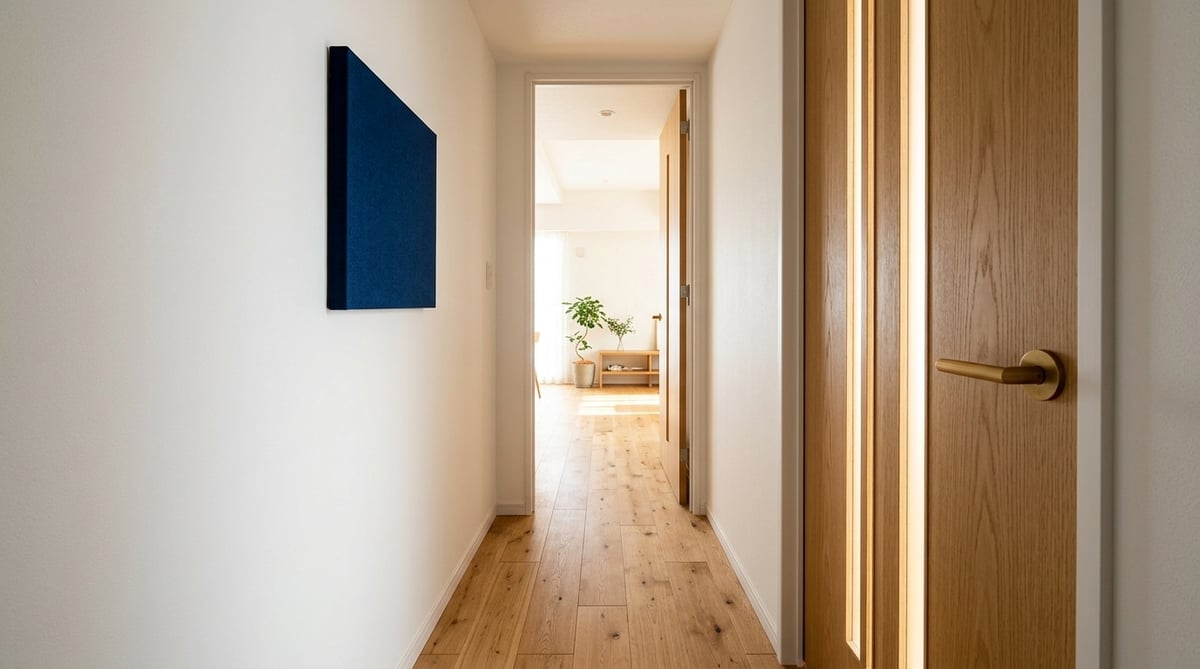
On an afternoon just after the rain, walking up the stairs from the south exit of Ikejiri-Ohashi Station and leaving behind the hum of Tamagawa-dori, a gentle five-minute stroll up the Osakano-ue slope brings you into the peaceful streets of Meguro Ward's Higashiyama district, lined with low-rise residential residences. Located just one stop and three minutes from Shibuya Station via local trains on the Tokyu Den-en-toshi Line, the neighborhood also offers direct, seamless connections to Omotesando and Otemachi without transferring.
Despite being directly adjacent to central Tokyo, rent levels in Ikejiri-Ohashi average a median of ¥325,000 for a 2LDK (around ¥4,900 per square meter), offering a calm budget buffer of ¥70,000 to ¥80,000 per month compared to neighboring Shibuya or Daikanyama within walking distance. At the same time, dual-income couples and international families we accompany on viewings often ask whether express-stop Sangenjaya might be more convenient, or which neighborhood enclave—Higashiyama, Mishuku, or Ohashi—best aligns with their lifestyle.
Even within the same station catchment area, the commercial zones along arterial avenues, the elevated residential plateaus, and the lowlands along the Meguro River vary substantially in nighttime tranquility and flood hazard profiles. Structuring your search around your household rhythm and neighborhood topography is the most reliable starting point.
- Median rents stand at ¥325,000 for 2LDK and ¥402,000 for 3LDK units, saving ¥2.13M–¥2.61M over two years compared to Shibuya while securing larger floor areas and quiet surroundings.
- Topography ranges from stable loam plateaus in Meguro Ward's Higashiyama and Setagaya Ward's Mishuku to valley lowlands in Ohashi, alongside commercial zones along Route 246 where soundproof sashes are essential.
- Balances a swift 1-stop, 3-minute ride to Shibuya against express-stop Sangenjaya, while providing residential quietness compared to shared walking zones like Nakameguro and Daikanyama.
2LDK & 3LDK Rental Market & 2-Year Total Housing Cost: Ikejiri-Ohashi vs. Shibuya, Nakameguro, & Sangenjaya
When comparing 2LDK and 3LDK residences offering direct downtown access, reviewing the "2-year total housing cost (calculated over 27 months)"—which combines monthly rent with initial costs such as security deposits, key money, and brokerage fees (estimated at roughly three months' rent)—provides a clear, realistic financial comparison across stations.
Situated immediately west of Shibuya Station, Ikejiri-Ohashi transitions smoothly into the residential districts of Setagaya and Meguro Wards, serving as the first station where the heavy commercial premium of a massive transit hub tapers off. For households aiming to reallocate housing cost savings toward larger living spaces or children's education, it represents a well-balanced alternative.
| Station (Primary Ward) | Price per ㎡ | 1LDK Median | 2LDK Median (2-Yr Total) | 3LDK Median (2-Yr Total) | vs. Ikejiri-Ohashi 2-Yr Diff (2LDK / 3LDK) |
|---|---|---|---|---|---|
| Ikejiri-Ohashi (Setagaya / Meguro) | ¥4,900 | ¥226,000 | ¥325,000 (¥8.775M) | ¥402,000 (¥10.854M) | Baseline |
| Shibuya (Shibuya Ward) | ¥5,600 | ¥274,000 | ¥404,000 (¥10.908M) | ¥499,000 (¥13.473M) | +¥2.133M / +¥2.619M |
| Sangenjaya (Setagaya Ward) | ¥4,750 | ¥215,000 | ¥307,000 (¥8.289M) | ¥379,000 (¥10.233M) | -¥486,000 / -¥621,000 |
| Nakameguro (Meguro Ward) | ¥5,300 | ¥253,000 | ¥367,000 (¥9.909M) | ¥454,000 (¥12.258M) | +¥1.134M / +¥1.404M |
| Daikanyama (Shibuya Ward) | ¥5,600 | ¥267,000 | ¥394,000 (¥10.638M) | ¥487,000 (¥13.149M) | +¥1.863M / +¥2.295M |
How a ¥2M+ Housing Cost Difference 1 Stop from Shibuya Translates to Space and Quality
By shifting just one station (3 minutes) west on the Den-en-toshi Line from Shibuya Station, two-year total housing costs decrease by ¥2,133,000 for a 2LDK and ¥2,619,000 for a 3LDK. With the same monthly budget of approximately ¥350,000 to ¥400,000, options within walking distance of Shibuya Station are predominantly compact floor plans or located in high-traffic mixed commercial blocks. In Ikejiri-Ohashi, however, 65 to 75 ㎡ high-spec condominiums (bunsyo chintai) and units with dedicated home-office studies come comfortably within reach.
For dual-income couples working remotely, having independent rooms so that simultaneous video conferences do not interfere with one another fundamentally shapes daily living comfort. Waking up on weekend mornings to take quiet walks along tree-lined streets away from retail crowds is an authentic lifestyle luxury gained in exchange for a three-minute train ride.
For broader comparisons across the rail line, explore our Tokyu Den-en-toshi & Hanzomon Line 2LDK & 3LDK Rental Guide.
Choosing Between Express-Stop Sangenjaya and Local/Semi-Express Ikejiri-Ohashi
Comparing Ikejiri-Ohashi to its neighboring station, Sangenjaya, reveals that two-year housing costs in Ikejiri-Ohashi are ¥486,000 higher for a 2LDK and ¥621,000 higher for a 3LDK. Both stations connect directly to the Tokyo Metro Hanzomon Line, providing one-seat access to major business hubs including Shibuya, Omotesando, Nagatacho, and Otemachi without transferring.
The deciding factor lies in daily rhythm: whether you prefer express train stops, connections to the Tokyu Setagaya Line, and bustling local shopping streets (shotengai) right at your doorstep, or if you value being just one stop (3 minutes) from Shibuya with a quieter station environment. Because express trains pass through Ikejiri-Ohashi, station concourse foot traffic is noticeably calmer, allowing for a seamless transition into a peaceful residential mindset even when returning late at night.
Sangenjaya naturally suits households seeking lively local dining and energetic commercial avenues on their way home. Conversely, Ikejiri-Ohashi appeals to those prioritizing evening stillness alongside quick taxi or bicycle access toward Shibuya, Shinsen, and Nakameguro.
Households Best Suited for Ikejiri-Ohashi
- ✓ Prioritizing 1 stop (3 min) to Shibuya, with bicycle and walking proximity to central Tokyo
- ✓ Raising children or working remotely in peaceful residential zones near Higashiyama or Setagaya Park
- ✓ Integrating the boutiques, cafes, and bakeries of Nakameguro and Daikanyama into daily walking distance
Households Best Suited for Sangenjaya
- ✓ Saving roughly ¥480k–¥620k over two years with a wider selection of rental inventory
- ✓ Utilizing outbound express trains toward Futako-tamagawa and Mizonokuchi, or the Setagaya Line
- ✓ An active lifestyle centered around independent bistros and extensive local shopping streets
Sharing Life Spheres with Nakameguro & Daikanyama: Walking Proximity and Cost Balance
While exploring residences in Meguro Ward's Higashiyama 2-chome and 3-chome or the Ohashi sector, you will frequently find properties located just 10 to 15 minutes on foot from Nakameguro Station (Tokyu Toyoko & Tokyo Metro Hibiya Lines) or Daikanyama Station (Toyoko Line). Prospective tenants often pause to wonder whether renting directly in Nakameguro or Daikanyama would be simpler.
Looking at the two-year total housing cost, however, Nakameguro exceeds Ikejiri-Ohashi by ¥1,134,000 for a 2LDK, while Daikanyama is ¥1,863,000 higher; for 3LDK layouts, the premium reaches up to ¥2,295,000. Furthermore, while Nakameguro Station offers the notable advantage of being the terminus for the Hibiya Line, the vibrant commercial activity along the Meguro River—especially during cherry blossom season—means surrounding streets remain busy throughout weekends.
By establishing your home on the elevated ground of Meguro Ward's Higashiyama, you can enjoy a calm weekday commute directly to Otemachi and Nagatacho from Ikejiri-Ohashi Station, while walking over to bookshops, specialty cafes, and artisanal bakeries in Nakameguro and Daikanyama on weekends—benefiting from dual-line access while maintaining manageable housing expenses.
Simply enter the rent and deposit from portal listings to calculate a full, itemized breakdown including brokerage and guarantor fees without hidden add-ons.
Micro-Topography, Zoning, and School Catchment Nuances Across Higashiyama, Mishuku, and Ohashi
Ikejiri-Ohashi Station features underground platforms beneath Tamagawa-dori (National Route 246), with ground-level exits spanning the boundary between Meguro Ward and Setagaya Ward. Even among listings noted with the identical "8-minute walk to station," the choice of block dictates a shift from elevated volcanic loam plateaus to lowlands along the Meguro River, alongside distinct public school catchment assignments.
Understanding each address's designated zoning and topographical background in advance provides clear, actionable criteria for what to evaluate during on-site viewings.
| District Zone | Primary Zoning | Topography & Flood Assessment | Public Elementary & Junior High Catchment | Neighborhood Atmosphere & Viewing Checklist |
|---|---|---|---|---|
| Meguro Ward Higashiyama 1–3-chome | Category I Residential / Category I Mid/High-Rise Exclusive | Volcanic Loam Plateau; outside designated flood hazard zones | Meguro Municipal Higashiyama Elementary / Higashiyama Junior High | Quiet residential plateau extending toward Suwayama. Check walking slope steepness and night lighting on the return route. |
| Setagaya Ward Mishuku 1–2-chome & Ikejiri 2-chome | Category I Mid/High-Rise Exclusive / Category I Residential | Volcanic Loam Plateau; outside designated flood hazard zones | Mishuku 2-chome: Tamon Elem. / Taishido JHS Ikejiri 2-chome: Ikejiri Elem. / Mishuku JHS |
Peaceful enclave adjacent to Setagaya Park. Verify exact school boundary lines per block and lot numbers. |
| Meguro Ward Ohashi 1–2-chome | Commercial / Quasi-Industrial / Residential | Valley Lowland (near Meguro River); check pluvial & flood hazard maps | Meguro Municipal Sugakari Elementary / Meguro First Junior High | Redeveloped hub integrated with Meguro Sky Garden & large supermarket. Check electrical room elevation and entrance flood barriers. |
| Tamagawa-dori & Arterial Frontage (e.g., Ikejiri 3-chome) | Commercial Zone (FAR 500%–600%) | Transition zone between loam plateau and lowland | Setagaya Municipal Mishuku Elementary / Mishuku Junior High (applicable zones) | Concentration of modern RC high-rises close to the station. Inspect double-glazed window ratings and redevelopment potential of southern lots. |
Meguro Ward Higashiyama 1–3-chome: Elevated Loam Plateau Residences Extending to Suwayama
Spreading southeast after ascending the Osakano-ue slope from the south exit, Meguro Ward's Higashiyama 1-chome through 3-chome primarily consists of Category I Residential and Category I Mid/High-Rise Exclusive zones formed on a sturdy volcanic ash (Kanto loam) plateau. On official municipal hazard maps, this elevated sector lies entirely outside designated river flood hazard zones, offering stable ground conditions.
Stepping one street inward from the major thoroughfare reveals manicured low-rise condominium complexes and spacious detached homes, where through-traffic is minimal and nighttime tranquility is reliably preserved. As it falls within the catchment for Meguro Ward's reputable Higashiyama Elementary School and Higashiyama Junior High School, this district is frequently requested by name by families with school-age children.
Because the area is elevated, walking back from the station or toward Nakameguro involves navigating slopes. During your viewing, test the incline with an electric-assist bicycle or stroller, and observe the street width and evening illumination along your anticipated commute path.
Setagaya Ward Mishuku 1–2-chome & Ikejiri 2-chome: Gentle Plateaus Flanking Setagaya Park
Extending southwest from the west exit, Setagaya Ward's Mishuku 1–2-chome and Ikejiri 2-chome feature tranquil streetscapes designated as Category I Mid/High-Rise Exclusive and Category I Residential zones on the loam plateau. This area is also situated outside designated flood hazard zones and is just a 5- to 8-minute walk to lush Setagaya Park, which features fountain plazas, baseball fields, and children's play areas.
Strolling under tall trees on a weekend morning with freshly roasted coffee, or spending relaxed hours with family on wide lawns, provides an escape from urban intensity that feels remarkably detached from Shibuya's neon pulse just one stop away. Artisanal bakeries, independent coffee roasters, and understated bistros are peppered throughout, making weekend walks an engaging part of daily life.
One essential detail is the public school catchment system: within Setagaya Ward, Mishuku 2-chome is assigned to Tamon Elementary and Taishido Junior High, while Ikejiri 2-chome is zoned for Ikejiri Elementary and Mishuku Junior High. A single street divide can change the assigned institution, so families prioritizing specific schools should verify addresses via the Setagaya Ward Board of Education boundary tables.
Meguro Ward Ohashi 1–2-chome & Tamagawa-dori: Redevelopment Convenience, Acoustic Checks, & Flood Mitigation
On the east and north sides, Meguro Ward's Ohashi 1-chome and 2-chome represent a functional urban district anchored by the Meguro Sky Garden—a multi-tiered rooftop park atop the Ohashi Junction—connected with redeveloped residential towers and large-scale grocery stores. School catchments here fall under Meguro Municipal Sugakari Elementary and Meguro First Junior High, offering flat pedestrian pathways equipped with elevators and public ramps for an easy walk home.
Topographically, however, Ohashi includes valley lowlands near the Meguro River. During property viewings, in addition to checking pluvial and river hazard maps, confirm whether the building's electrical and substation equipment is elevated to the second floor or higher, and verify if flood barriers are installed at building entrances. Meanwhile, arterial corridors along Tamagawa-dori (Route 246) and the elevated Route 3 Shuto Expressway, including Setagaya Ward's Ikejiri 3-chome, are zoned commercial with floor area ratios (FAR) of 500% to 600%, providing ample reinforced concrete (RC) high-rise options within 5 minutes of the station.
Because major avenues carry continuous traffic around the clock, inspecting window acoustic performance is paramount: check for double-glazed sashes, JIS T-3 or T-4 rated soundproof windows, and sound-baffled 24-hour fresh-air intake vents. Furthermore, because commercial zones have fewer height and setback restrictions, observe whether coin-operated parking lots or older low-rise buildings exist on the south or primary lighting side, anticipating potential future redevelopment that could affect your natural daylight.
Transit Convenience to Omotesando, Nagatacho, & Otemachi, Grocery Logistics, & When to Look Elsewhere
Transit timetables and grocery routes often dictate long-term residential satisfaction more than floor plans alone. Here is an overview of morning commuting dynamics, everyday shopping options across the four station exits, and transparent criteria for when another neighborhood may serve your family better.
Direct Commutes to Central Business Districts & Local/Semi-Express Timetable Considerations
The Tokyu Den-en-toshi Line operates through-service directly into the Tokyo Metro Hanzomon Line from Shibuya Station, linking key commercial and political districts—such as Omotesando, Aoyama-itchome, Nagatacho, Kudanshita, and Otemachi—without transfers. Ikejiri-Ohashi Station is served by Local and Semi-Express trains, while Express trains pass through without stopping.
For inbound morning commutes toward central Tokyo, however, Shibuya is only one stop (approx. 3 minutes) away, and every train on the Hanzomon Line operates as a local service stopping at all stations. As a result, the absence of express stops causes virtually no delay during morning commutes. When traveling outbound toward Futako-tamagawa, Mizonokuchi, or Nagatsuta, you can easily transfer to an Express service at adjacent Sangenjaya Station if needed.
For an in-depth perspective on neighboring transit hubs, explore our Tokyu Den-en-toshi Line Area Guide and connected Tokyo Metro Hanzomon Line Area Guide.
4 Station Exits and Daily Grocery Routing: Life, Ozeki, & Seijo Ishii
Ikejiri-Ohashi Station features four exits—East, South, West, and North—allowing your return walking route and grocery stops to integrate naturally depending on where you reside. Near the East and North exits in the Ohashi sector stands Life Meguro Ohashi Store, a large supermarket offering fresh produce, meats, and household items across expansive floor space, ideal for weekend bulk shopping.
Heading toward Mishuku or Ikejiri via the West Exit, Ozeki Ikejiri Store is just a few minutes' walk away, widely praised by home cooks for its fresh seasonal produce and exceptional fishmonger selection. In addition, Seijo Ishii Ikejiri-Ohashi Store sits right by the station, offering high-grade prepared foods, charcuterie, and imported ingredients, making it effortless to put together a refined dinner even on late weekday evenings.
Browsing independent boutiques along the East Exit shopping street or taking a quiet evening walk through Meguro Sky Garden adds a restorative touch that eases the fatigue of a demanding workday.
4 Conditions Where Considering Other Stations Is the Wiser Choice
Even a neighborhood with exceptional transit and residential harmony will not be the right match for every family. First, if your priority is having immediate walking access to department stores, movie theaters, and mega electronics retailers in a single commercial complex, living directly around Shibuya Station or Futako-tamagawa Station will deliver higher satisfaction.
Second, if your routine involves frequent outbound travel on express trains or you require flexible transfers across multiple train lines, express-stop Sangenjaya Station or dual-line Nakameguro Station (Toyoko and Hibiya Lines) provide more direct options. Third, if completely flat terrain for strollers or standard bicycles is a mandatory condition, the uphill grade toward Higashiyama or Mishuku can become tiring, making flat sections of Ohashi or stations along other lines preferable.
Fourth, if you dream of throwing windows wide open to enjoy seasonal breezes within 3 minutes of the station, commercial zones along Route 246 require closed windows and mechanical ventilation to manage traffic acoustics and exhaust. Households placing high value on natural cross-ventilation and porch-side stillness should expand their search 8 to 12 minutes out into the residential cores of Higashiyama or Mishuku.
Navigating Fixed-Term Leases, Corporate Contracts, and Initial Costs on ¥300k–¥400k+ Units
In high-grade residences across Higashiyama, Mishuku, and Ohashi tower developments, lease agreements often differ significantly from standard studio rentals. For units renting at ¥325,000 to ¥402,000 per month, contractual fine print, upfront cost structures, and move-out clauses can swing total expenses by hundreds of thousands of yen.
Article 38 Fixed-Term Leases and Mid-Term Termination in Corporate Housing Contracts
Many premium 2LDK and 3LDK residences in Ikejiri-Ohashi are listed under Fixed-Term Building Leases (Teiki Shakuya, governed by Article 38 of the Act on Land and Building Leases), often because the owners are on overseas corporate assignments. Unlike standard renewable leases, fixed-term contracts terminate definitively upon maturity with no right of renewal. Confirming whether re-contracting is possible, along with re-contracting processing fees and rent renegotiation terms, is essential prior to application.
A frequently overlooked clause involves mid-term termination under corporate contract structures. While Article 38, Paragraph 5 provides individual tenants residing in residential buildings under 200 ㎡ the statutory right to terminate upon one month's notice due to unavoidable circumstances (such as job relocation, medical care, or nursing family members), this statutory termination right does not automatically apply to corporate entities.
When leasing under a corporate name via company housing policies, ensure that a specific rider allowing mid-term cancellation with 1–2 months' advance notice is explicitly drafted into the contract, and clarify any short-term cancellation penalties during preliminary negotiations.
Guarantor Screening Preparation and Brokerage Fee Transparency Under Article 46
For family units exceeding ¥300,000 to ¥400,000 per month, utilizing institutional guarantee companies—ranging from credit-bureau affiliated firms to independent providers and international expat specialists like GTN—is almost universally required. Screening rules vary regarding whether combined dual-income earnings are accepted or if evaluation relies solely on the primary applicant's income.
For individuals who have recently changed employers, have less than one full year of tax withholding records, or serve as corporate directors or business owners, gathering offer letters, employment contracts, and recent tax declarations or tax certificates in advance ensures you can submit your application without losing prime units to competing applicants.
Furthermore, under Article 46 of the Real Estate Brokerage Act, statutory brokerage fees for residential leases are capped at 0.5 months' rent plus consumption tax (reaching a maximum of 1 month's rent plus tax only with prior client consent). Choosing an advisor who transparently details initial estimates line by line, clearly distinguishing mandatory costs from optional add-on services, is fundamental to a smooth, trustworthy transaction.
Move-Out Restoration Rules: Tokyo Rules, MLIT Guidelines, and Supreme Court Precedents
With expansive 2LDK and 3LDK spaces, verifying restoration standards before signing protects you from unexpected charges upon departure. Under the Tokyo Metropolitan Ordinance for the Prevention of Rental Housing Disputes (commonly known as the "Tokyo Rules"), explanation documents must be provided during the Explanation of Important Matters (Juyo Jiko Setsumei). These clarify that normal wear and tear and aging deterioration are the landlord's responsibility, while tenant repairs are limited to intentional or negligent damage, and that maintenance for aging water heaters or air conditioning units is borne by the owner.
Equally critical is the Ministry of Land, Infrastructure, Transport and Tourism (MLIT) Restoration Guidelines, which stipulate a 6-year useful life for wallpaper (depreciating to a residual value of 1 yen after 6 years) and establish that repair costs for accidental damage should be calculated on a per-wall surface basis. Even if specific riders stipulate fixed cleaning fees or non-refundable deposit deductions, they must meet the three criteria set by the Supreme Court precedent of December 16, 2005 (clarity of the rider, mutual understanding and genuine agreement, and absence of excessive or unconscionable burden relative to customary rent).
If you have identified a listing on real estate portals, send the link to our official LINE account or contact our Portal Listing Second Opinion Concierge. Our bilingual, licensed specialists will check live availability directly against inter-agent databases (REINS), review initial quotes objectively, and analyze lease conditions. You can reach out with zero sales calls, completely free of charge, using the quick consultation tools (SorAi) via the bottom menu on mobile or the footer on desktop.
Conclusion: Selecting a Residence in Ikejiri-Ohashi That Naturally Complements Your Lifestyle
Ikejiri-Ohashi offers an uncommon residential balance: located just one station (3 minutes) from Shibuya Station, it saves more than ¥2,000,000 in housing costs over two years while granting generous floor layouts and leafy surroundings. From the quiet enclave of Meguro Ward's Higashiyama atop the Osakano-ue slope to the parkside greenery of Mishuku and Ikejiri, and the functional high-rise living in Ohashi, each district holds unique merits.
There is no single universal choice. Whether your priority is unhurried morning commutes, well-stocked supermarkets on the walk home, or quiet weekend sunshine streaming through home-office windows, selecting the neighborhood and lease structure that respects your lifestyle matters most.
If you encounter questions regarding acoustic performance, hazard details, or fixed-term lease provisions for any prospective home, please feel free to reach out to Sorai Tokyo for an unhurried, pressure-free consultation.
Frequently Asked Questions: 2LDK & 3LDK Rentals in Ikejiri-Ohashi
QDoes the lack of express train stops at Ikejiri-Ohashi cause commuting inconveniences?
AFor inbound commutes toward downtown, Shibuya is only one stop away (approx. 3 minutes), and all trains on the connected Tokyo Metro Hanzomon Line stop at every station, meaning there is essentially no time loss from express trains passing through. Only when traveling outbound toward Futako-tamagawa or Mizonokuchi might you occasionally transfer to an express at adjacent Sangenjaya Station.
QAHow do parenting resources and municipal procedures differ between Meguro Ward (Higashiyama) and Setagaya Ward (Mishuku/Ikejiri)?
ABecause Ikejiri-Ohashi sits on the boundary between Meguro Ward (Higashiyama, Ohashi) and Setagaya Ward (Ikejiri, Mishuku), your choice of address determines the municipal office handling daycare applications, nursery admission points, child support subsidies, and designated public elementary and junior high schools. Families prioritizing school districts or daycare entries should filter candidates by municipal ward and specific block address rather than station name alone.
QWhen inspecting apartments along Route 246 (Tamagawa-dori), how should acoustic and air quality be evaluated?
AFor residences facing Tamagawa-dori or the elevated expressway, verify whether secondary interior glazing or JIS T-3/T-4 rated acoustic sashes are fitted. During your viewing, close all windows completely and listen from the center of the living room to evaluate low-frequency truck rumblings and vibrations. Additionally, check for sound-baffled ventilation hoods and pollen/particulate filters on 24-hour fresh-air wall intakes.
QCan I request a second opinion on initial costs and contract terms for properties found on portal sites?
AYes. Even for listings found on third-party real estate portals, sending us the property URL allows our licensed real estate specialists to verify live status on inter-broker databases, evaluate initial quote transparency, and audit fixed-term riders objectively. You can start anytime without phone numbers or sales follow-ups via our online consultation tools.



Author: Sorai Tokyo Editorial Team (Supervised by Licensed Real Estate Agents)
A real estate consulting team specializing in assisting foreign nationals find rooms and explaining initial costs in Tokyo. We break down language barriers and differences in customs, offering dedicated support in Japanese, English, and Vietnamese for a safe and secure start to your new life.