
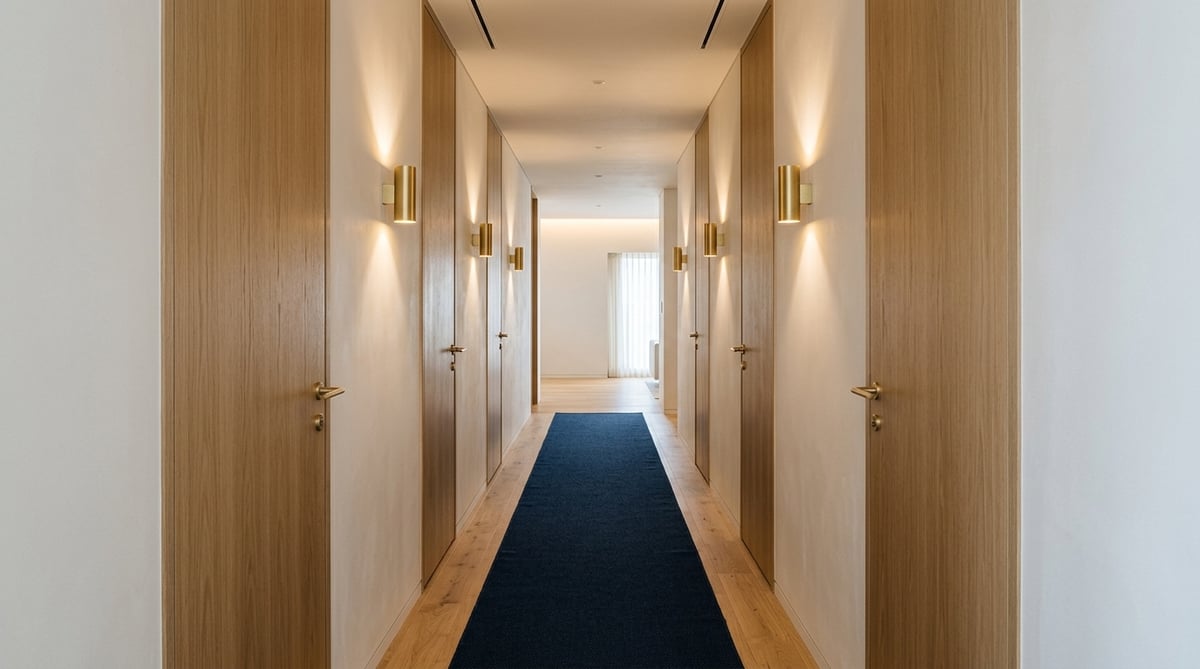
Professionals working across central government ministries in Kasumigaseki—bureaucrats, attorneys, judicial staff, policy aides, and consultants at allied think tanks—frequently manage demanding schedules that stretch from early morning into the late night. Amid tight deadlines and unscheduled emergency attendances, daily commuting time and quality sleep are often the first necessities compromised.
Within the immediate Kasumigaseki and Nagatacho neighborhoods of Chiyoda Ward, standard residential rental properties are virtually nonexistent. In adjacent prime central districts like Toranomon, Akasaka, and Roppongi, monthly market rents for a studio or 1K apartment routinely exceed 140,000 to 180,000 yen. However, looking along Tokyo Metro's three arterial routes serving Kasumigaseki—the Chiyoda, Hibiya, and Marunouchi Lines—and extending the search radius to stations just 10 to 18 minutes away on the train, rent levels settle significantly into the range of 70,000 to roughly 100,000 yen per month.
Maintaining a door-to-door commute of approximately 20 minutes from your apartment entrance to your office desk does more than minimize morning transit fatigue. It also offers the practical reassurance of keeping late-night taxi fares between 2,500 and 4,000 yen when working past the last train. Furthermore, by evaluating reinforced concrete (RC) acoustic insulation to ensure deep, restorative rest and securing streamlined grocery routes for midnight returns, you can build a sustainable living environment that supports demanding careers.
- A licensed broker compares rent gaps across the Chiyoda, Hibiya, and Marunouchi Lines within a 20-minute door-to-door commute to Kasumigaseki Station.
- Preserve daily stamina with a 10 to 18-minute train ride combined with a 5-minute station walk.
- Reduce housing costs by 40,000 to 70,000 yen per month compared to central Minato and Chiyoda Wards.
Criteria for Choosing a Home Within 20 Minutes Door-to-Door to Kasumigaseki
Working in Kasumigaseki encompasses a diverse range of locations; designated exits vary substantially depending on your specific ministry, agency, or office building. Understanding the underground layout of the station and calculating travel time directly from your front door to your office desk is an essential first step in your home search.
The Three-Line Layout of Kasumigaseki Station and Ministry Exit Connections
Tokyo Metro Kasumigaseki Station features an extensive subterranean concourse where the Marunouchi Line (Station M15), Hibiya Line (H07), and Chiyoda Line (C08) intersect across multiple underground levels. Connected walkways extend directly into the basements of major ministry headquarters, allowing staff to reach their work floors without stepping into the rain on inclement days.
Based on official station guides, key exit clusters connect directly to specific government complexes:
- Exit Cluster A (Chiyoda & Hibiya Lines Side): Exits A1 and A2 serve the Ministry of Justice, Tokyo District Court, and Metropolitan Police Department. Exit A3a leads to the Ministry of Land, Infrastructure, Transport and Tourism (MLIT), Japan Coast Guard, and Central Government Building No. 3. Exits A6, A7, and A9 serve the Ministry of Agriculture, Forestry and Fisheries (MAFF) and Central Government Building No. 1. Exits A4 and A8 connect to the Ministry of Foreign Affairs (MOFA). Exits A11 through A13 connect to the Ministry of Finance (MOF) and Ministry of Economy, Trade and Industry (METI) Main Building.
- Exit Cluster B (Marunouchi Line Side): Exits B1a and B1b serve Central Government Building No. 6, the Japan Fair Trade Commission, and the Bar Association Building. Exits B3a and B3b lead to the Ministry of Health, Labour and Welfare (MHLW), Ministry of the Environment (MOE), and Central Government Building No. 5.
- Exit Cluster C (Chiyoda Line, toward Kokkai-gijidomae): Exits C1 through C4 connect to the METI Annex, Hibiya Park, and underground walkways leading toward Toranomon.
While the Marunouchi Line platforms (B2F, Tracks 1/2) and Hibiya Line platforms (B2F, Tracks 3/4) sit on a single underground level, the Chiyoda Line platforms operate across a split two-tier layout: Track 5 toward Yoyogi-uehara on B2F, and Track 6 toward Ayase on B3F. Walking between the Marunouchi Line platforms and the Chiyoda Line Exit Cluster A (serving MOF and MOFA) takes over five minutes through concourse passages. Selecting a line that arrives adjacent to your specific ministry's gates substantially lightens daily walking fatigue.
Preserving Energy with a Sub-5-Minute Station Walk During Heavy Workweeks
During Diet sessions, staff frequently handle late-night bill examinations, legislative drafting, and urgent policy inquiries that extend work hours past midnight. Returning home in an exhausted state, the difference between a 12-minute walk and a 4-minute walk from the station plays a decisive role in long-term health management.
A round-trip difference of 16 walking minutes per day accumulates to 320 minutes—over five hours and twenty minutes—across 20 working days each month, time that converts directly into uninterrupted sleep and relaxation. Furthermore, during sweltering summer months or heavy storms, being able to step into your residential lobby within minutes of leaving the ticket gate provides peace of mind that safeguards physical well-being.
The Reality of Late-Night Taxi Fares and Emergency Call-Ins
The last subway trains departing Kasumigaseki generally leave between 12:10 AM and 12:30 AM. When duties run past schedule, taxis become a standard and practical commuting option.
From Kasumigaseki intersections (such as in front of MOFA or METI), late-night taxi fares (including the 20% surcharge between 10:00 PM and 5:00 AM) average around 2,500 to 3,500 yen to the Yushima and Nezu areas along the Chiyoda Line (a distance of roughly 5.5 to 6.5 km taking 12 to 15 minutes). A ride to Myogadani on the Marunouchi Line ranges between 2,800 and 3,800 yen. In contrast, traveling to Iriya or Minowa on the Hibiya Line generally costs 3,500 to 4,500 yen, while reaching Honancho or Nakano-shimbashi on the Marunouchi Line runs roughly 4,000 to 5,500 yen.
Many workplaces enforce strict criteria for reimbursing late-night taxi vouchers. When personal expense is required, locations such as Yushima, Nezu, and Myogadani—situated just north of the core center—keep taxi fares in the modest 3,000-yen range and allow emergency returns to ministry doors within approximately 15 minutes, representing a rational choice for risk management.
Licensed real estate specialists well-versed in Tokyo's eastern districts provide dedicated video consultation—from organizing requirements to confirming unlisted listings and optimizing initial move-in costs.
Complete rental and living guide for all stations on the Tokyo Metro Chiyoda Line, from Kita-Ayase and Kita-Senju to downtown Otemachi.
Rent Gaps and Characteristics Across the Three Lines Serving Kasumigaseki
The Chiyoda, Hibiya, and Marunouchi Lines connect Kasumigaseki Station along distinct urban axes, creating clear variations in neighborhood character and rental pricing. The following data highlights how rent levels compare across each transit corridor.
Comparison of 1K Rent Levels Across the Chiyoda, Hibiya, and Marunouchi Lines
Comparing rental rates for reinforced concrete 1K apartments (approximately 20 to 25 square meters) situated 10 to 20 minutes from Kasumigaseki reveals clear distinctions between east and west, as well as across individual subway lines.
| Line | Featured Station | 1K Rent Level (RC) | Direct Ride to Kasumigaseki | Late-Night Taxi Est. | Living Environment Highlights |
|---|---|---|---|---|---|
| Chiyoda Line | Yushima | 95,000–110,000 JPY | Approx. 10 min | Approx. 2,500–3,200 JPY | Academic prestige, quiet upland slopes, close to Okachimachi |
| Nezu | 85,000–100,000 JPY | Approx. 12 min | Approx. 2,800–3,500 JPY | Serene Yanesen historic charm, adjacent to University of Tokyo | |
| Machiya | 75,000–85,000 JPY | Approx. 18 min | Approx. 4,200–5,200 JPY | Low cost of living, practical hub with 3 accessible train lines | |
| Hibiya Line | Iriya | 85,000–95,000 JPY | Approx. 19 min | Approx. 3,500–4,300 JPY | Flat historic terrain, walkable convenience to JR Ueno Station |
| Minowa | 75,000–85,000 JPY | Approx. 21 min | Approx. 3,800–4,800 JPY | 24-hour supermarkets, budget-friendly everyday grocery prices | |
| Marunouchi Line | Nakano-shimbashi | 80,000–95,000 JPY | Approx. 16–20 min | Approx. 4,200–5,200 JPY | Peaceful enclave near Shinjuku, leafy paths along Kanda River |
| Honancho | 75,000–85,000 JPY | Approx. 19–21 min | Approx. 4,500–5,800 JPY | Guaranteed seated commute from origin station, lively local shopping streets | |
| Myogadani | 95,000–110,000 JPY | Approx. 14 min | Approx. 2,800–3,800 JPY | Top-tier public safety in Bunkyo Ward, scenic Harimazaka cherry trees |
Structural Dynamics Driving Price Gaps Between West, East, and North Tokyo
Across the Tokyo rental market, an established disparity where western wards command higher rents than eastern and northern districts remains influential. Western wards like Nakano and Suginami maintain enduring popularity among younger professionals seeking proximity to Shinjuku and Shibuya, supporting firm baseline rental values. Within that western sector, stations along the Marunouchi branch line—such as Nakano-shimbashi and Honancho—serve as accessible pockets where rents are 10,000 to 20,000 yen lower than stations along the main trunk line, despite offering direct subway access to Shinjuku and Kasumigaseki.
In contrast, the northern and eastern districts served by the Chiyoda and Hibiya Lines (encompassing Taito, Arakawa, and Bunkyo Wards) offer an appealing blend of historic neighborhoods and quiet educational quarters. While prestigious academic centers like Yushima and Myogadani maintain rent levels around 100,000 yen, stations such as Iriya, Minowa, and Machiya provide a healthy stock of quality RC buildings starting in the mid-70,000-yen range, helping significantly lower overall living costs.
Balancing Rent Allocation Against Take-Home Pay and Financial Peace of Mind
Early- and mid-career national public servants, legal associates, and consulting professionals often see monthly take-home pay ranging from 250,000 to 380,000 yen. Rather than adhering rigidly to conventional guidelines suggesting rent should not exceed one-third of net income, establishing a balanced monthly budget aligned with your workload and lifestyle needs offers greater peace of mind.
For instance, with a net monthly income of 300,000 yen, choosing an 85,000-yen apartment (in Machiya, Honancho, or Minowa) leaves 215,000 yen in monthly disposable funds. This cushion comfortably accommodates dining out during peak project periods, professional book purchases, and savings. Conversely, selecting a 105,000-yen apartment (in Yushima or Myogadani) can be viewed as an intentional monthly investment of 20,000 yen in personal time and energy—securing a 10-minute commute and low taxi fares. Both choices reflect sound personal strategies for sustaining demanding professional roles.
Living Environments and Convenience on the Chiyoda Line (Yushima, Nezu, Machiya)
The Tokyo Metro Chiyoda Line provides exceptionally direct access to Exit Cluster A at Kasumigaseki Station (serving MAFF, MLIT, MOJ, MOFA, and MOF), making it an established route for government officials. The three stations of Yushima, Nezu, and Machiya each present distinct residential appeal.
Yushima Station (Rents: 95,000–110,000 JPY): Central Proximity and Taxi Efficiency
Yushima Station (Station C13) offers outstanding proximity to central Tokyo, connecting directly to Kasumigaseki in approximately 10 minutes and Otemachi in just 4 minutes. Exits 1 through 6 provide straightforward access toward Kasuga-dori, the Tenjin-shita intersection, and Ueno-hirokoji.
Topographically, Yushima is defined by sloping terrain connecting the Hongo Plateau to the Shinobazu Pond lowlands. Framing the historic Yushima Tenmangu Shrine are the scenic steep stairways of Tenjin Otokozaka and Onnazaka, surrounded by historic inclines such as Muen-zaka, Sanmi-zaka, and Sanemori-zaka with elevation changes of roughly 15 meters. The higher ground opens into tranquil residential enclaves bordering the University of Tokyo and Kyu-Iwasaki-tei Gardens, while the lower slopes merge into the vibrant commercial districts of JR Okachimachi and Ueno Stations.
For daily grocery shopping, Summit Store Yushima Tenjin-minami (open until 11:00 PM) near Tenjin-shita intersection reliably supports home cooking. Additionally, Yoshiike—the renowned fresh seafood and food specialty department store by Okachimachi Station—and Gyomu Super Ueno-hirokoji sit within walking distance, accommodating both home cooks and those picking up prepared meals. A late-night taxi ride from Kasumigaseki via Sotobori-dori takes about 12 minutes and costs roughly 2,500 to 3,200 yen, safeguarding valuable rest hours even during demanding peak periods.
Nezu Station (Rents: 85,000–100,000 JPY): Cultural Serenity and Night Commute Routes
Nezu Station (C14), neighboring Yushima, connects directly to Kasumigaseki in roughly 12 minutes. Its entryways are concentrated at Exit 1 fronting the Nezu intersection and Exit 2 on the east side of Shinobazu-dori.
As part of the celebrated Yanesen district (Yanaka, Nezu, Sendagi), Nezu presents streetscapes where historic shitamachi warmth harmonizes with refined academic character. The lush wooded grounds of Nezu Shrine, artisan galleries converted from traditional row houses, and quiet coffee shops lend the neighborhood a relaxed, dignified rhythm on weekends.
Supermarkets include Aka-Fudado Nezu (open until 10:00 PM) directly along Shinobazu-dori near Exit 1, and Maruetsu Petit Ikenohata 2-chome toward Ikenohata. Along Shinobazu-dori, sidewalks remain well-lit with clear visibility late into the night. While smaller residential lanes set back from Kototoi-dori provide a quiet sleeping environment with minimal foot traffic, staying along the brightly illuminated main avenues provides an effortless and secure route home after midnight.
Machiya Station (Rents: 75,000–85,000 JPY): Value-Driven Cost of Living and Triple-Line Access
Further northeast from Nezu, Machiya Station (C17) links directly to Kasumigaseki in 18 minutes and Otemachi in 13 minutes. Alongside Tokyo Metro Chiyoda Line underground entrances (Exits 1 to 3), the station functions as a convenient multi-modal hub intersecting with the Keisei Main Line and the Tokyo Sakura Tram (Toden Arakawa Line) above ground.
Machiya’s foremost advantage is exceptional cost performance, offering quality RC 1K apartments from the mid-70,000-yen range while remaining inside Tokyo’s 23 wards on a direct Chiyoda Line route. The basement of the station-connected Marks Tower Machiya complex houses a 24-hour Gourmet City supermarket, ensuring fresh groceries and wholesome side dishes remain accessible even upon returning in the early hours. Aka-Fudado Machiya and well-stocked drugstores also line Otakebashi-dori.
The surrounding terrain is flat, making bicycle travel easy, with the expansive greenery of Arakawa Nature Park close by. For professionals prioritizing balanced monthly housing expenditures and increased disposable income over central city glamour, Machiya represents a highly practical choice.
Living Environments and Convenience on the Hibiya Line (Iriya, Minowa)
The Tokyo Metro Hibiya Line connects Kasumigaseki at intermediate and B2 underground levels, linking Roppongi and Ebisu in the southwest with Ginza and Ueno in the northeast. The northern stations of Iriya and Minowa offer a welcoming community atmosphere alongside reliable everyday conveniences.
Iriya Station (Rents: 85,000–95,000 JPY): Proximity to Ueno and Grocery Convenience
Iriya Station (Station H19) provides swift connections: 19 minutes direct to Kasumigaseki, 16 minutes to Ginza, 7 minutes to Akihabara, and just one stop (1 minute) to Ueno. Its four exits surround the lively Iriya intersection where Showa-dori and Kototoi-dori cross.
A key geographic strength of Iriya is its flat landscape and walking proximity to JR Ueno and Uguisudani Stations. From the southern side of Iriya Station, the Iriya Exit of JR Ueno Station is a comfortable 10 to 12-minute walk, providing effortless access to the Yamanote Line and Shinkansen bullet trains. Peaceful residential streets surround the historic Iriya Kishimojin (Shingen-ji Temple), renowned for its annual Morning Glory Fair in July.
Grocery shopping is straightforward. Coco's Nakamura sits near the station crossroads, Inageya Iriya (open until 10:00 PM) operates on Kototoi-dori, and MyBasket Iriya 2-chome serves Kanasugi-dori, catering well to evening shoppers. Because Showa-dori carries substantial traffic and road noise from trucks, selecting an RC apartment situated one block back from the arterial roadway is essential for preserving nighttime quiet.
Minowa Station (Rents: 75,000–85,000 JPY): Accessible Rent and Welcoming Neighborhoods
Minowa Station (H20), located just north of Iriya, reaches Kasumigaseki directly in about 21 minutes. Exits 1 through 3 are arranged around the Ozeki-yokocho intersection where Meiji-dori meets Nikko Kaido. The Minowabashi terminal of the Tokyo Sakura Tram is also a short walk away.
Minowa is widely known for some of Tokyo's most competitive everyday living costs. The station-front Wise Mart operates 24 hours a day, facilitating grocery trips after late work sessions. The Olympic Minowa general supermarket and the retro covered arcade of Joyful Minowa—featuring local butchers, fishmongers, and delicatessens—provide budget-conscious residents with reliable options.
With 1K rental rates ranging from 75,000 to 85,000 yen, finding modern RC buildings equipped with auto-lock security in the low 80,000-yen range is common. It offers an ideal setting for those who value pragmatic daily living.
Hibiya Line Train Frequency and Realities of the Kasumigaseki Commute
During the morning rush hour, the Hibiya Line operates on a high-density timetable with trains running every 2 to 3 minutes. With multiple origin trains departing from Kitasenju toward Naka-meguro, cars carry moderate crowds when boarding at Minowa or Iriya; however, the short 19 to 21-minute transit time to Kasumigaseki keeps physical fatigue manageable.
Furthermore, all train sets on the Hibiya Line are standardized modern 20-meter, 7-car formations (such as the Tokyo Metro 13000 series and Tobu 70000 series), providing excellent climate control, sound insulation, and smooth transit dynamics. Reviewing work memos or catching up on reading during the commute can be done comfortably.
Yushima, Nezu, Myogadani
- Commute Time: Direct 10–14 min ride to Kasumigaseki
- Late-Night Taxi: Approx. 2,500–3,800 JPY for prompt emergency responses
- Atmosphere & Safety: High serenity surrounded by academic districts, temples, and parks
- Rent Level: 1K 95,000–110,000 JPY (valuable investment in personal time and stamina)
Machiya, Iriya, Minowa, Honancho
- Commute Time: Direct 18–21 min ride (Honancho offers guaranteed seating from origin)
- Late-Night Taxi: Approx. 3,500–5,500 JPY (awareness of last train schedule recommended)
- Shopping Access: 24-hour supermarkets and bustling retail arcades nearby
- Rent Level: 1K 75,000–85,000 JPY (securing generous margin in net income)
Living Environments and Convenience on the Marunouchi Line (Nakano-shimbashi, Honancho, Myogadani)
The Tokyo Metro Marunouchi Line connects directly to Exit Cluster B at Kasumigaseki Station (serving MHLW, MOE, the Ministry of Internal Affairs and Communications, National Police Agency, National Personnel Authority, Tokyo High Court, and Bar Association Building). The three stations examined below showcase distinct attractions spanning western residential calm and northern academic refinement.
Nakano-shimbashi Station (Rents: 80,000–95,000 JPY): Proximity to Shinjuku with Quiet Residential Charm
Nakano-shimbashi Station (Station m-05) on the Marunouchi Honancho Branch Line reaches Kasumigaseki Station in 16 to 20 minutes either via a smooth transfer at Nakano-fujimicho / Nakano-sakaue or by boarding a direct service. The single ticket gate at the foot of Shimbashi Bridge over the Kanda River features elevator access, ensuring clear and efficient navigation.
A notable feature of Nakano-shimbashi is that despite being located within 2.5 kilometers straight-line distance from Shinjuku Station, the station area is completely free of major commercial night districts, retaining a quiet, neighborly residential atmosphere. The riverside promenade along the Kanda River is lined with cherry trees, offering pleasant waterside walks during the spring blossom season.
Along the station avenue, Maruetsu Nakano-shimbashi (open until 11:00 PM) and MARUSHO Pico Nakano-shimbashi (open until 1:00 AM) make it easy to buy fresh groceries when returning late. The 24-hour Niku no Hanamasa Nakano store is also within reachable distance. The balance of immediate Shinjuku access and serene living starting from the 80,000-yen range makes Nakano-shimbashi a compelling choice.
Honancho Station (Rents: 75,000–85,000 JPY): Origin Seating and Vibrant Shopping Avenues
As the terminus of the Marunouchi Branch Line, Honancho Station (Station m-03) saw its accessibility improve significantly following platform extension works in 2019, which enabled 6-car direct train services toward Ikebukuro. Kasumigaseki is accessible directly in approximately 19 to 21 minutes. Alongside Exits 1 and 2 along Kannana-dori, Exit 3 on the west side of Honan-dori provides elevator and escalator access.
The primary advantage of living in Honancho is the guarantee of a seated morning commute on trains originating here. For professionals in Kasumigaseki coping with irregular sleep hours, spending 20 morning minutes seated to read or rest quietly provides a meaningful boost to physical and mental wellness.
Around the station, the lively Honan Ginza shopping street features grocers, independent cafes, and bakeries. Comprehensive infrastructure—including a large Summit Store Izumi (open until midnight) and Matsumoto Kiyoshi—is gathered right at the station exit, making life straightforward for solo dwellers.
Myogadani Station (Rents: 95,000–110,000 JPY): Exemplary Public Safety and Educational Enclaves
Situated on the main Marunouchi Line, Myogadani Station (Station M23) sits on the heights of Koishikawa in Bunkyo Ward, connecting directly to Kasumigaseki in 14 minutes and Otemachi in just 10 minutes. Passengers can use Exit 1 on Kasuga-dori or Exit 2 toward Korakuen.
Myogadani forms one of Tokyo's foremost educational enclaves, hosting campuses including Ochanomizu University, the University of Tsukuba Tokyo Campus, Takushoku University, and Atomi Gakuen. Bunkyo Ward consistently records the lowest number of recognized penal offenses among Tokyo's 23 wards, providing high safety when walking home at night. Walking slightly south from Kasuga-dori leads to Harimazaka, celebrated for its broad cherry-tree promenade and manicured sidewalks that create a calm, open urban scene.
Everyday essentials can be purchased at Santoku Myogadani (open until 11:00 PM) and Maruetsu Petit Myogadani by the station. Kasuga-dori runs along the ridgeline of the Koishikawa plateau, providing a level, pleasant walk that avoids steep slopes. While rent levels average around 100,000 yen, Myogadani remains an attractive choice for commuters prioritizing public safety, manicured streetscapes, and rapid transit to Kasumigaseki.
Selecting Soundproof RC Properties to Protect Sleep Quality
Regardless of how short a commute may be, undisturbed rest is impossible if living sounds from adjacent units or outside street noise interrupt your sleep. The following section provides professional guidelines on architectural acoustic insulation and key lease considerations essential for demanding work schedules.
Physical Criteria for Reinforced Concrete Partition Walls and Acoustic Insulation
Building acoustic performance is objectively evaluated using the Architectural Institute of Japan's "D-value" standard for airborne sound insulation. In residential apartments, D-50 represents the baseline where television audio and normal conversation from adjacent units become barely perceptible, while D-55 serves as the ideal benchmark ensuring high silence during quiet night hours.
| Building Structure | Standard Partition Wall Specification | Airborne Sound Insulation (D-Value) | Typical Floor Slab Thickness | Suitability for Restful Sleep |
|---|---|---|---|---|
| RC / SRC (Recommended) | Poured-in-place concrete 180–200 mm thick | D-50 to D-55 (Excellent) | 180–220 mm or more | Highly recommended for night-shift professionals |
| Heavy Steel Frame (High-End) | Drywall fire-soundproof wall (multi-layer gypsum board) | D-45 to D-50 (Standard) | Approx. 120–150 mm | Acoustic performance varies depending on contractor specs |
| Lightweight Steel Frame | Glass wool insulation + single-layer plasterboard | D-35 to D-40 (Caution advised) | ALC panels (Under 100 mm) | Footsteps and voices carry readily; not recommended |
| Wooden Structure | Timber framing + plasterboard (hollow cavity) | D-30 to D-35 (Unsuitable) | Plywood + flooring | Elevated risk of daily noise friction |
When assessing reinforced concrete (RC) apartments, review the thickness of the boundary walls between neighboring units on architectural plans. Concrete walls with a thickness of 180 mm or more (preferably 200 mm) substantially reduce sound transmission governed by the acoustic mass law. Furthermore, in properties where plasterboard is affixed directly to concrete using adhesives (known as GL construction), hollow resonance—sometimes referred to as the drum effect—can reduce low-frequency sound dampening. Consequently, walls finished with direct wallpaper application or independent stud-isolated double drywall are preferred.
When considering apartments facing major thoroughfares such as Showa-dori, Kasuga-dori, or Kannana-dori, examine the window sash acoustic rating (T-1 to T-3). Soundproof sashes rated T-2 (reducing sound by roughly 30 dB) or T-3 (reducing sound by roughly 35 dB), as well as dual-glazed inner windows, significantly dampen exterior vehicle and truck noise, keeping indoor spaces tranquil.
Walking Convenience to 24-Hour Supermarkets and Convenience Stores
During property viewings, an often-overlooked factor is the walking route between the station ticket gate and your building entrance. Arriving after midnight after an intensive workday, having to walk five minutes in the opposite direction of your apartment just to buy groceries introduces unnecessary daily friction.
An ideal layout features a direct path: Station Gate → 24-Hour Supermarket or Major Convenience Store → Apartment Entrance. Stations like Machiya with Gourmet City (open 24 hours), Minowa with Wise Mart (open 24 hours), Nakano-shimbashi with MARUSHO Pico (open until 1:00 AM), and Honancho with Summit Store Izumi (open until midnight) ensure that balanced, fresh food supplies remain easily accessible on your way home.
Frequently Asked Questions (FAQ)
QWhich hidden-gem stations offer the most competitive rents within 20 minutes door-to-door to Kasumigaseki?
AThree standout stations include Machiya on the Chiyoda Line, Minowa on the Hibiya Line, and Honancho on the Marunouchi Honancho Branch Line. All three connect directly to Kasumigaseki Station in 18 to 21 minutes while offering reinforced concrete 1K apartments in the 75,000 to 85,000-yen range. Honancho offers the added advantage of origin train services, allowing you to commute seated comfortably from the start.
QFor professionals working late shifts or on-call duties, what soundproofing aspects should be inspected during viewings?
AFirst, examine the partition wall construction between units. Tapping gently on the wall should produce a dense, solid concrete thud rather than a hollow vibration that indicates drywall cavities or GL plasterboard construction. Second, inspect window sash insulation ratings. Check whether exterior street noise from major roadways is adequately muted when windows are closed, and look for double-glazed sashes or T-2 ratings or higher. Scheduling viewings during quieter evening hours can also provide an accurate sense of acoustic privacy.
QWhich line best balances late-night taxi affordability with rapid daytime train commutes to Kasumigaseki?
AYushima Station and Nezu Station along the Chiyoda Line offer the strongest balance. Direct subway transit takes only 10 to 12 minutes, while late-night taxi rides from Kasumigaseki (in front of MOFA or METI) via Sotobori-dori and Chuo-dori take approximately 12 to 15 minutes, costing around 2,500 to 3,500 yen even with night surcharges. They represent optimal locations for minimizing transit time and expense during unplanned overtime or emergency recalls.

Author: Sorai Tokyo Editorial Team (Supervised by Licensed Real Estate Agents)
A real estate consulting team specializing in assisting foreign nationals find rooms and explaining initial costs in Tokyo. We break down language barriers and differences in customs, offering dedicated support in Japanese, English, and Vietnamese for a safe and secure start to your new life.