
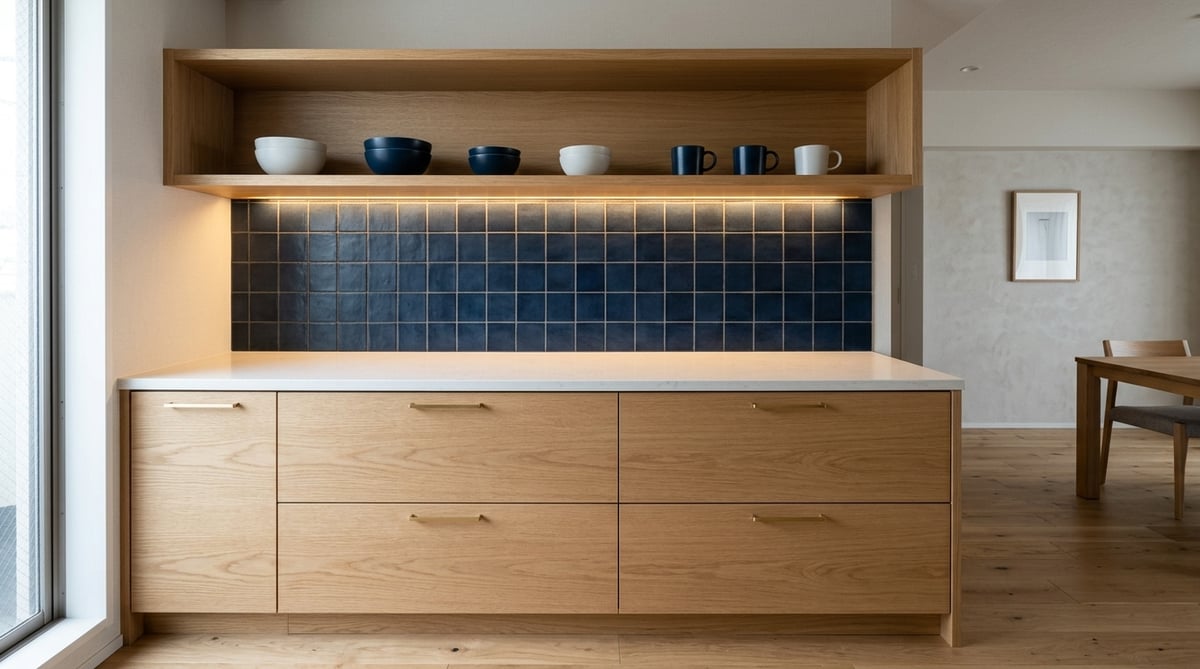
At dusk, stepping out of the station ticket gates, you are welcomed by the gentle cadence of daily life embracing the neighborhood and an inviting, nostalgic warmth. When searching for a home, a truly worthwhile choice goes beyond comparing raw specifications and figures; it is about how fulfilling, comfortable, and sustainable your daily life will feel once you settle in. Drawing upon a decade of field experience as a licensed real estate broker, I offer practical insights to ease your anxieties and help you choose your next home with quiet confidence.
Located in the northeastern corner of Adachi Ward at Tokyo's eastern edge, Kita-Ayase once maintained a quiet, unassuming presence as a minor terminal station alongside the Tokyo Metro Chiyoda Line train depot. Today, having evolved into an origin station offering direct 10-car through-service toward Yoyogi-Uehara, it attracts keen attention from single professionals and young dual-income couples seeking a harmonious blend of effortless downtown access and a calm, character-rich residential setting. Beyond its commuter convenience, Kita-Ayase's true appeal lies in its everyday livability—shaped by Adachi Ward's remarkably flat terrain, an extensive greenway network, and commercial amenities delivering exceptional value.
When putting down roots in a new neighborhood, the supermarkets supporting your daily meals are vital not only to your quality of life, but also to safeguarding your household finances. Within comfortable cycling distance in Kita-Ayase lie two major retail hubs with distinct strengths: Super Belx, renowned for reliable freshness and competitive pricing rooted in its heritage as a greengrocer, and Gyomu Super, an indispensable ally for bulk buying and frozen meal prep. Understanding the distinct advantages of each store and mastering bicycle-based grocery runs across this level terrain provides the foundation for enjoying rich, nourishing meals while steadily building your savings.
In this guide, we provide a thorough analysis of Kita-Ayase from the perspective of both everyday residents and licensed real estate practice—spanning its geographical features and retail landscape, cycling grocery routes, kitchen dimensions and floor plan criteria that make cooking a pleasure, rent-to-income benchmarks calculated from take-home pay, and rigorous scrutiny of rental initial costs under the Real Estate Brokerage Act and MLIT guidelines.
- A licensed real estate broker explains key rental market dynamics, living environments, and leasing contracts for mastering grocery shopping at Belx and Gyomu Super by bicycle in Kita-Ayase.
- Target newer 1K to 1R apartments in Kita-Ayase to secure ¥50,000 monthly in savings through consistent home cooking.
- Choose an RC-structure 1K (over 25 sqm) within a 10-minute walk of the station featuring a spacious two-burner stove kitchen.
Living Environment and Daily Grocery Flow Around Kita-Ayase Station
In the crisp morning air, soft sunlight filters through the trees of Shobunuma Park to illuminate the path beneath your feet. Walking around Kita-Ayase Station, less than 30 minutes from central Tokyo, there is an expansive openness in the flat terrain and wide skies that brings immediate peace of mind. Extending across eastern Adachi Ward, this area rests on an alluvial lowland nestled between the Arakawa and Nakagawa Rivers, featuring virtually no steep hills in any direction from the station. This sheer flatness is Kita-Ayase's greatest geographical advantage, allowing bicycles to take center stage in daily life.
Kita-Ayase Station was once merely a branch terminal where three-car shuttle trains shuttled back and forth to Ayase Station, but extensive renovations have revitalized the entire station plaza. Today, Kita-Ayase features three distinct ticket gates: the North, South, and Central Gates. The North Gate connects directly to commercial facilities north of Kannana-dori Avenue, the Central Gate faces the elevated underpass and bus terminals, and the South Gate opens directly into Shobunuma Park. Each gate aligns seamlessly with local foot traffic, naturally dispersing morning and evening crowds. Furthermore, as an origin station, waiting for a train or two during the morning rush virtually guarantees a comfortable seat straight to central hubs such as Otemachi, Hibiya, and Akasaka, drastically reducing everyday commuting stress.
In the evening, exiting the Central or South Gates after work, lines of headlights along Kannana-dori Avenue—which traverses the station area from east to west—convey the vibrant pulse of the city. Yet, taking just a few steps off the main avenue leads into serene low-rise residential streets, where warm lights and the gentle aromas of home-cooked dinners drift from neighborhood windows. This contrast between arterial convenience and residential tranquility gives Kita-Ayase its distinct sense of calm.
In daily life, grocery shopping on the way home from work is exceptionally convenient. Summit Store, located inside MITSUI Shopping Park LaLa terrace KITA-AYASE and directly connected to the North Gate, remains open until 10:30 PM, making it invaluable for picking up last-minute ingredients or heavy beverages. However, to establish a robust home-cooking habit that keeps food costs firmly in check while enjoying culinary variety, a cycling routine to larger surrounding supermarkets on weekends or days off becomes essential.
Within a 5- to 10-minute bike ride from Kita-Ayase Station, distinctive shopping destinations are dotted across the Kahei district to the northwest, Higashi-Ayase and Yanaka to the southwest, and Oyata to the northeast. In particular, cycling southwest along the lush greenways of Higashi-Ayase Park running north to south allows you to completely bypass the vehicular traffic of Kannana-dori Avenue. This provides safe, pleasant access to Super Belx Adachi Kahei and Gyomu Super Ayase. Pedaling along leafy tree-lined paths while feeling the seasonal breeze transcends a simple grocery chore, offering a refreshing moment of calm in a busy week.
Licensed real estate brokers well-versed in Tokyo's Joto area provide attentive video call support, from clarifying your search criteria and checking off-market listings to optimizing initial rental costs.
Simply enter the rent and deposit from portal listings to calculate a full, itemized breakdown including brokerage and guarantor fees without hidden add-ons.
Store Characteristics and Strategic Division of Belx and Gyomu Super
The secret to establishing a thriving home-cooking routine in Kita-Ayase lies in understanding each supermarket's strengths and combining them strategically. Pursuing rock-bottom prices at the expense of quality or defaulting to convenient neighborhood shops at premium markups is not a sustainable lifestyle habit. Super Belx and Gyomu Super in the Kita-Ayase area form an ideal partnership, each perfectly compensating for the other's shortcomings.
The Strengths of Super Belx: Mastering Fresh Food Quality and Value
Super Belx is a community-rooted supermarket chain operated by Sun Belx, headquartered right in Adachi Ward. Originating as a traditional greengrocer, its produce department is immediately visible upon entering, boasting an energy, freshness, and variety that standard urban supermarkets cannot rival. From Kita-Ayase, two branches—Super Belx Adachi Ayase (Ayase 4-chome) and Super Belx Adachi Kahei (Kahei 3-chome)—sit comfortably within cycling distance.
The defining advantage of Belx lies in its remarkable freshness and unbeatable pricing for fresh perishables, driven by specialized procurement routes. Leafy greens sourced fresh from the market each morning are crisp and vibrant, while tomatoes and root vegetables are sold in generous bags at surprisingly affordable rates. While smaller single-portion packs are available, those with an established cooking routine can purchase whole seasonal produce or large bundles, blanching and freezing portions the same day to dramatically lower their monthly food bills.
The fresh seafood and meat counters are equally impressive. The seafood department features full-service counter sales with whole fish, where staff will deftly clean, gut, or fillet your selection into three pieces upon request. Everyday seasonal fish like sardines, horse mackerel, and mackerel line the displays in peak condition, bringing the flavors of the seasons directly to your table. In the meat section, mega-packs of domestic chicken breast and sliced pork cuts are consistently offered at low prices, serving as an exceptional resource for weekend meal prep and bulk purchases. By centering your grocery shopping on Belx, you can easily maintain high nutritional quality and culinary satisfaction across the three perishable staples: produce, fish, and meat.
Leveraging Gyomu Super for Frozen Essentials and Dry Goods
On the other hand, Gyomu Super Ayase (Kosuge 4-chome, Katsushika Ward), situated near the ward border south of Ayase Station, supports daily life through an entirely different approach. Operated by Kobe Bussan, Gyomu Super brings wholesale ingredients originally intended for the restaurant industry directly to individual consumers. Its true value centers on large-volume frozen foods, imported dry goods, and foundational seasonings.
A standout category at Gyomu Super is its lineup of frozen vegetables directly imported from European countries such as Belgium. Pre-cut frozen broccoli florets (500g), chopped onions, fried eggplant, and sliced bell peppers require zero prep work. Storing them in resealable freezer bags lets you toss them directly into daily soups and stir-fries while still frozen, effortlessly boosting your vegetable intake. Even when unseasonable weather drives fresh market prices up, frozen vegetables remain steady in price throughout the year, serving as a powerful financial shock absorber.
Furthermore, pantry essentials—such as bulk dried pasta (in 1kg or 5kg packages), olive oil, whole canned tomatoes, pure sesame oil, and Chinese cooking condiments—are priced at unit costs well below the sale prices of conventional supermarkets. Staples like chicken bouillon powder, consomme, and various spices can also be purchased in large containers, drastically reducing the ongoing cost of home cooking. In addition, daily perishables produced in group-owned domestic factories, including 5-pack frozen udon noodles, natto, and tofu, offer astonishing cost efficiency.
Establishing a Weekly Routine Combining the Two Supermarket Giants
The secret to maximizing both stores lies in a clear division of roles: a once-a-week bulk run to Gyomu Super for base supplies, complemented by one or two visits to Belx for fresh ingredients. Stopping by a grocery store every evening after work tends to invite takeout temptations due to fatigue, inadvertently causing dining expenses to balloon. By stocking up on dry goods, frozen vegetables, seasonings, and staple carbs at Gyomu Super on your days off, and sourcing seasonal meat, fish, and produce at Belx for that week's meals, you establish a resilient two-tier shopping cycle that is central to practical budgeting in Kita-Ayase.
| Store Name | Distance & Travel Time from Kita-Ayase Station | Business Hours | Core Specialties & Key Purchases | Bicycle Parking Facilities |
|---|---|---|---|---|
| Super Belx Adachi Ayase | Approx. 2.0 km southwest (approx. 8 min by bicycle) | 10:00 AM – 9:45 PM (Sundays from 9:00 AM) | Seasonal produce, fresh seafood counter, meat mega-packs, daily dairy/tofu | Dedicated flat bicycle parking available (Free, approx. 80 spaces) |
| Gyomu Super Ayase | Approx. 1.9 km southwest (approx. 8 min by bicycle) | 9:00 AM – 8:00 PM | Pre-cut frozen vegetables, bulk dry goods, foundational seasonings, frozen meats | Storefront bicycle parking space available (Free, approx. 20 spaces) |
| Super Belx Adachi Kahei | Approx. 500 m northwest (approx. 2 min by bicycle) | 10:00 AM – 9:00 PM (Sundays from 9:00 AM) | Large store close to station, produce, meat, prepared deli, Tuesday flat-price sale | Spacious bicycle parking fully equipped (Free, ramp access) |
| Summit Store LaLa terrace KITA-AYASE | Directly connected to Kita-Ayase Station North Gate (1 min walk) | 9:30 AM – 10:30 PM | Direct station access, alcoholic beverages, fresh foods & deli, ready-to-eat meals | Facility bicycle parking available (First 2 hours free, etc.) |
| Seiyu Kita-Ayase | Approx. 600 m southeast (approx. 3 min by bicycle) | Open 24 hours | Open 24/7 year-round, Minna no Osumitsuki private brand, daily sundries | On-site bicycle parking available (Free) |
Cycling Routes and Safe Grocery Planning on Flat Terrain
On a clear weekend afternoon, pedaling through the neighborhood on your favorite bicycle with a gentle breeze against your face is an everyday luxury. Transforming grocery runs in Kita-Ayase into an enjoyable daily routine requires choosing safe, smooth routes and outfitting your bicycle thoughtfully for cargo.
Bypassing Kannana-dori Avenue via the Higashi-Ayase Park Greenway
Kannana-dori Avenue, which cuts east to west right in front of Kita-Ayase Station, is a major arterial thoroughfare in the greater Tokyo area with frequent traffic from large trucks and buses. Although the sidewalks offer adequate width, cycling here is less than ideal due to long traffic light waits, turning vehicle risks, and exhaust fumes. Therefore, planning routes that intelligently bypass Kannana-dori by utilizing lush backstreets and park paths is paramount.
When heading southwest from Kita-Ayase Station toward Super Belx Adachi Ayase or Gyomu Super Ayase, the most scenic and safest route leads through Higashi-Ayase Park. This expansive Tokyo metropolitan park curves in a distinctive U-shape from Ayase Station toward Kita-Ayase, offering dedicated walking and cycling paths along lush greenery and waterways. Cherry blossoms form a canopy in spring, deep foliage provides shade in summer, and vibrant foliage creates autumn tunnels—all within a car-free environment where you can cycle with complete peace of mind.
Exiting through the South Gate and passing through quiet residential streets brings you onto the Higashi-Ayase Park greenway, leading smoothly toward Ayase without interruptions from traffic lights. Riding under dappled sunlight turns routine transit into a refreshing break. Meanwhile, heading northwest toward Super Belx Adachi Kahei via the local streets of Yanaka and Kahei tucked behind Kannana-dori allows you to avoid congested intersections and reach your destination safely and effortlessly.
Bicycle Outfitting and Packing Techniques for Bulk Groceries
Transporting bulk goods from Gyomu Super and fresh perishables from Belx safely in a single trip requires the right bicycle setup. Relying solely on a standard front basket (approximately 15–20 liters) quickly proves inadequate for a week's groceries and risks making the steering unsteady or causing a tip-over.
The ideal configuration for comfortable shopping is a "dual-basket setup," adding a generous rear basket (25–30 liters) to a sturdy rear rack. This provides 45 to 50 liters of total carrying capacity—comparable to a compact carry-on suitcase. Delicate items prone to crushing, such as bread, eggs, and strawberries, go in the front basket, while heavy items like seasonings, frozen meats, and large bags of root vegetables ride low in the rear basket, dramatically enhancing steering stability and riding safety.
Another essential investment is a large, square insulated cooler bag paired with reusable ice packs. Frozen vegetables from Gyomu Super and fresh seafood from Belx are exceptionally sensitive to temperature changes. Choosing a 30-liter square cooler bag that fits snugly inside your rear basket and placing hard-case ice packs frozen at home on the bottom will keep your groceries in peak freshness all the way home, even on midsummer days.
Bicycle Parking Conditions Around Supermarkets and the Station
To eliminate stress during grocery trips, familiarizing yourself with parking environments at each destination is equally essential. Both Super Belx Adachi Kahei and Adachi Ayase offer spacious on-site flat bicycle parking free of charge, with ample spacing between stalls to accommodate bikes equipped with large front and rear baskets. At Gyomu Super Ayase, parking is available directly in front of the shop; visiting in the morning or early afternoon rather than crowded weekend evenings ensures effortless parking and cargo loading.
To seamlessly integrate weekday commuting and after-work grocery stops, subscribing to a monthly pass at a municipal bicycle parking facility near Kita-Ayase Station is a smart option. Adachi Ward operates multiple underground and under-railway bicycle lots around Kita-Ayase Station, with monthly pass rates set at very reasonable prices—around ¥1,000 for students and approximately ¥1,500 to ¥2,000 for general commuters. Securing a spot in a weather-protected underground facility shields your bicycle from rain and weathering while keeping your daily mobility at its best.
Floor Plan and Kitchen Dimension Standards Supporting Home Cooking
Returning from a weekend shopping run and setting out vibrant groceries across the kitchen counter brings a quiet sense of fulfillment—the feeling of intentionally crafting your own daily life for the week ahead. However, no matter how high in quality and affordable your ingredients are, an inadequate kitchen layout or cramped fixtures can quickly turn home cooking into a frustrating chore. To sustain cooking comfortably as a powerful financial engine, you must rigorously inspect physical kitchen dimensions and structural criteria during the apartment hunt.
Worktop Space and Cooktop Requirements Dictating Cooking Efficiency
The most common pitfall in studio (1R) and 1K rental apartments is overlooking kitchen amenities, leading to the collapse of cooking habits. Above all, pay close attention to the width of the preparation counter (worktop) between the sink and the stove.
In typical single-occupancy rentals, compact kitchenettes often provide a mere 15 to 20 cm of prep space. With such dimensions, you cannot even lay down a standard cutting board (typically 35–40 cm wide), forcing you to prep precariously over a sink bridge board. To comfortably slice vegetables or prep seafood on a regular basis, an effective worktop space of at least 40 cm—ideally 45 to 60 cm—between the sink and stove is essential.
Regarding cooking appliances, single-burner stoves cannot be recommended for anyone intending to cook regularly. Parallel tasks—such as heating soup while stir-frying an entree or boiling pasta while emulsifying sauce—become impossible, doubling the time spent in the kitchen. Make it a baseline requirement to look for at least two gas burners (city gas specification) or a dual-zone induction cooktop delivering at least 2,000W of total heating power.
Refrigerator Capacity and Installation Dimensions for Bulk Storage
The core asset that makes weekend bulk shopping at Belx and Gyomu Super viable is your refrigerator and its allocated alcove. Compact two-door refrigerators commonly sold for single renters (around 80–100 liters total) fill up completely after stashing just a few bags of frozen vegetables or meat mega-packs, immediately derailing any bulk storage strategy.
To successfully safeguard living costs through home cooking, even single residents require a two- or three-door refrigerator with a total capacity of 150 to 200 liters, with at least 45 to 60 liters dedicated to the freezer compartment. For couples or two-person households, a mid-sized unit with 300 to 350 liters total capacity represents the optimal standard.
During property viewings, be sure to measure the refrigerator space in three dimensions with a tape measure. A typical 150–200 liter refrigerator measures approximately 480–520 mm in width and 580–620 mm in depth. The space must provide additional clearance for heat ventilation—at least 5 mm on both sides, 20 mm behind, and 50 mm above. Even more critical are the kitchen passageway clearance and the door swing direction. Verify whether at least 70 cm of aisle width remains between the appliance and opposite counters or walls, and confirm that the refrigerator door can swing open past 90 degrees without striking adjoining walls.
Sound Insulation and Structural Building Requirements
When evaluating overall living quality for a home-cooking lifestyle, building structure and acoustic insulation are non-negotiable. Kita-Ayase encompasses both the lively Kannana-dori corridor and tranquil interior residential pockets; in either location, choosing a reinforced concrete (RC) or steel-reinforced concrete (SRC) structure remains a fundamental principle.
Wood-frame or light-gauge steel apartments offer lower construction costs and cheaper market rents, but their dividing walls often provide noticeably poorer acoustic insulation. Daily sounds from neighbors, late-night cooking noises, and ventilation fan vibrations can transmit directly between units, creating substantial living stress. In RC or SRC buildings, the sheer mass of concrete significantly dampens airborne sound. During viewing visits, it is prudent to confirm whether dividing walls are solid poured concrete (ideally 180 mm or thicker) or constructed with multi-layered gypsum board assemblies.
For properties situated within a direct line of 150 meters from Kannana-dori Avenue, sound insulation against road noise and vibrations from heavy commercial vehicles is paramount. Look for window sashes rated at least T-2 (acoustic rating Grade 30, which reduces exterior noise by approximately 30 dB), or ideally residences equipped with double-glazed secondary sashes or acoustic laminated glass. This ensures that while you enjoy urban convenience, you preserve a quiet, restful sleeping sanctuary at night.
Living Cost Defense: Rent-to-Income Benchmarks Based on Take-Home Pay
In the quiet of the evening, sitting down with household accounts to map out future plans brings clarity. The ultimate peace of mind when selecting a home is knowing that your monthly fixed costs fit your means naturally, giving you economic stability whatever life brings. Among all fixed expenses forming the bedrock of financial security, rent is both the largest and least flexible.
The 25–28% Take-Home Pay Buffer as a Financial Shock Absorber
In the real estate industry, an old adage suggests that "rent should be one-third (approx. 33%) of monthly income." However, this guideline is a relic of an era characterized by rapid economic growth and guaranteed annual raises. In today's climate of rising social insurance contributions (lowering net pay) and ongoing price inflation, it represents an unnecessarily risky standard. Calculating your housing budget based on actual monthly take-home pay deposited into your account, rather than gross salary, is an essential rule of modern financial self-defense.
The recommended benchmarks for appropriate rent ratios are as follows:
- Optimal Rent Ratio for Single Households: Within 25% to 28% of monthly take-home pay (total rent including management and maintenance fees)
- Optimal Rent Ratio for Dual-Income / Couples: Within 22% to 26% of combined monthly take-home pay (factoring in future life events, maternity, or temporary leave)
Kita-Ayase's compelling advantage lies in offering direct origin-station convenience on the Chiyoda Line while maintaining average rental rates that are roughly ¥15,000 to ¥25,000 lower than stations closer to central Tokyo (such as Nishi-Nippori, Sendagi, and Machiya) or neighboring Kitasenju Station. Capturing this regional rent advantage—rather than automatically upgrading to a pricier unit—allows you to lock in lower fixed costs and build an emergency cash reserve month after month without deprivation.
How Establishing a Home-Cooking Cycle Lowers Food Expenses
Pairing a disciplined rent ratio with the Belx and Gyomu Super cycling grocery strategy yields dramatic improvements in food expenditures—the single largest variable living cost.
When a single professional in Tokyo relies primarily on dining out and convenience stores—spending roughly ¥400 on breakfast, ¥1,000 on lunch, ¥1,200 on dinner, and ¥400 on coffee or drinks—daily food costs easily reach ¥3,000, totaling nearly ¥85,000 to ¥100,000 each month. In contrast, by adopting a planned home-cooking lifestyle—combining weekend dry goods and frozen staples from Gyomu Super (approx. ¥12,000/month), fresh perishables from Belx twice weekly (approx. ¥2,500 per trip, or ¥20,000/month), and basic rice and pantry items (approx. ¥5,000/month)—monthly food costs comfortably settle between ¥35,000 and ¥42,000.
This creates a monthly surplus of roughly ¥45,000 to ¥55,000, representing an annual gain in disposable funds of approximately ¥540,000 to ¥660,000. Far from exhausting yourself with austere penny-pinching, generating this financial cushion while eating nourishing, seasonal ingredients is one of the greatest benefits Kita-Ayase offers its residents.
Food Expenses: Approx. ¥88,000 / month
- Convenience store runs morning and evening cost ¥800–¥1,500 per visit
- Restaurant lunches and takeout easily consume over ¥30,000 monthly
- Imbalanced nutrition risks lower energy levels and diminished focus
- Combined with high rent (33% of take-home pay), savings capacity is depleted
Food Expenses: Approx. ¥38,000 / month
- Stabilize base grocery costs with frozen vegetables and pantry items from Gyomu Super
- Maximize nutrition and freshness with seasonal produce, seafood, and meat from Belx
- Maintain a safe fixed-cost buffer with rent capped around 25% of take-home pay
- Allocate monthly surplus of ¥50,000+ toward emergency reserves and investments
| Budget Category | ¥200,000 Net (Single) | ¥250,000 Net (Single) | ¥300,000 Net (Single) | ¥450,000 Net (Dual-Income) |
|---|---|---|---|---|
| Appropriate Rent (incl. fees) | ¥54,000 (27.0%) | ¥68,000 (27.2%) | ¥80,000 (26.7%) | ¥110,000 (24.4%) |
| Food (primarily cooking) | ¥35,000 | ¥38,000 | ¥42,000 | ¥65,000 |
| Utilities (Water, Gas, Power) | ¥11,000 | ¥12,000 | ¥13,000 | ¥22,000 |
| Telecommunications (Internet & Mobile) | ¥6,000 | ¥7,000 | ¥8,000 | ¥13,000 |
| Daily Sundries, Clothing & Misc. | ¥15,000 | ¥20,000 | ¥25,000 | ¥40,000 |
| Leisure, Culture & Socializing | ¥20,000 | ¥30,000 | ¥40,000 | ¥60,000 |
| Emergency Savings & Investment Capacity | ¥59,000 | ¥75,000 | ¥92,000 | ¥140,000 |
Scrutinizing Initial Rental Costs and Applying Legal Protections
Ahead of starting an exciting new chapter, many people have experienced the shock of seeing an initial quote from a real estate agency with an astonishingly inflated total. Seeing an invoice reaching 5 to 6 months' worth of rent—bloated with unfamiliar line items on top of standard security deposits and key money—reflects a longstanding structural issue in the rental industry. As a licensed real estate broker who has overseen transactions for a decade, I can assure you that there is no need to accept these quotes unquestioningly; with an accurate understanding of the law and official guidelines, you can confidently eliminate unnecessary optional fees.
Unnecessary Optional Add-On Fees to Remove from Quotes
Alongside inflated brokerage fees, what needlessly balloons initial quotes is a variety of "optional incidental fees" tacked on as sales incentives for real estate brokers and property management companies. While presented as if they were mandatory conditions for moving in, the vast majority are optional services with zero legal obligation.
- Room Disinfection / Antibacterial Deodorizing Fee (Market rate: ¥15,000–¥25,000): Agencies frequently charge tens of thousands of yen for simple tasks such as spraying a basic aerosol deodorizer in the room. The actual hygienic benefit is negligible, and it is never a legal prerequisite for executing a lease. You can fully eliminate this cost by stating clearly: "Please remove the room disinfection service, as it is not needed."
- 24-Hour Emergency Tenant Support Fee (Market rate: ¥16,500–¥22,000): While offering emergency dispatch for water leaks or lost keys, this service largely duplicates the management company's baseline maintenance obligations and riders already bundled into fire insurance policies. Unless explicitly mandated in building bylaws, this is an optional service and can be declined upon request.
- Document Preparation Fee / Tenant Welcome Pack / Administrative Fee (Market rate: ¥11,000–¥33,000): The statutory brokerage fee cap established under Article 46 of the Real Estate Brokerage Act covers all administrative handling associated with intermediary services. Charging separate fees for document preparation or administration alongside the brokerage commission likely constitutes an unlawful circumvention of legal compensation limits, and payment should be firmly declined.
- Agency-Designated Fire & Renter's Insurance (Market rate: ¥18,000–¥25,000 for 2 years): These expensive policies are typically designated so that agencies can pocket broker commissions. Tenants possess a legally protected right to freely choose and enroll in their own fire and renter's liability insurance. By independently enrolling in a direct online policy (such as Nisshin Fire's policy for renters or Zurich) meeting the landlord's coverage requirements (approx. ¥10M–¥20M tenant liability, ¥100M personal liability), you can secure equivalent or superior coverage for around ¥8,000 to ¥10,000 for two years (approx. ¥4,000–¥5,000/year)—less than half the price.
Utilizing Sorai Tokyo's Smart Tools and Official LINE Consultation
The flood of listings during an apartment search and the stress of negotiating with real estate agencies can feel overwhelming when carried alone. Sorai Tokyo is dedicated to freeing apartment hunters from opaque industry practices, providing a support framework grounded in fair real estate standards to ensure you find a home with total peace of mind.
Clear 50% Off Brokerage Fees and Fundamental Cost Optimization
At Sorai Tokyo, brokerage fees are transparently capped at 50% off (0.55 months' rent, tax included). Some services heavily marketing "zero brokerage fees" make up the difference by forcing costly disinfection charges, administrative fees, or mandatory options upon applicants. Sorai Tokyo rejects these misleading fee transfers entirely, adhering strictly to the statutory principles of Article 46 of the Real Estate Brokerage Act with a transparent commission of 0.55 months' rent (tax included). This delivers a genuinely clean reduction in initial move-in costs with zero hidden charges.
Accessing SorAi Smart Tools
If you want to understand your optimal rent based on your lifestyle and take-home pay, or estimate total move-in costs before signing, explore Sorai Tokyo's proprietary SorAi smart tools.
Via the fixed bottom navigation on mobile or the footer area on desktop, you can freely access Sorai Tokyo's suite of SorAi smart tools—including the Initial Cost Simulator—at any time. Without requiring membership registration or personal information, simply enter your monthly net income or desired rent to view an instant, legally sound breakdown of estimated upfront costs.
Sustainable Budgeting and a Comfortable Home: The Foundation for an Enriched Life
As dusk turns to evening, a gentle aroma of home cooking fills the room, where a bowl of freshly steamed rice, seasonal fish from Belx, and hearty miso soup made with staples from Gyomu Super grace the table. Returning after a full day's work to a home that harmonizes naturally with your means, wrapped in quiet comfort and security—is this not the true essence of an enriched life in the city?
House hunting is never a mere mechanical exercise of studying floor plans, calculating walking minutes to the station, and comparing price tags. It is an intentional process of sketching the contours of your daily life: the mornings you will awaken to, the pleasant paths you will cycle on your days off, the nourishing meals you will enjoy, and the long-term financial security you will build over time.
Kita-Ayase offers effortless connectivity to central Tokyo alongside safe park greenways nurtured by Adachi Ward's flat terrain and robust shopping hubs supporting everyday life. By anchoring your rent to realistic take-home earnings, leveraging legal knowledge to eliminate unnecessary upfront fees, and unlocking local mobility on two wheels, you can enjoy all that this community has to offer. With these practical choices, everyday living ceases to be an exercise in compromise and transforms into a genuinely rewarding life.
Whenever uncertainties or questions arise during your search, remember that professional guidance is always at hand. Access Sorai Tokyo's smart tools (SorAi)—including our Initial Cost Simulator—via the mobile bottom menu or desktop footer whenever you need them. Furthermore, if you have a property flyer or a quote from another broker in hand, feel free to reach out via our official LINE account. Our dedicated licensed brokers are here to guide your first steps into a new home with integrity and seasoned practical expertise.
Frequently Asked Questions About Living in Kita-Ayase
QIs a bicycle truly essential when starting a home-cooking lifestyle around Kita-Ayase Station?
AWhile it is entirely possible to manage on foot using Summit Store inside LaLa terrace KITA-AYASE or shops under the elevated tracks, introducing a bicycle is strongly recommended to substantially reduce food expenses while enjoying a rich variety of meals. Key grocery hubs serving the Kita-Ayase area, such as Super Belx (Adachi Kahei and Adachi Ayase branches) and Gyomu Super Ayase, are situated between 500 meters and 2 kilometers from the station. Walking can require more than 30 minutes round-trip, making it strenuous to carry heavy seasonings or large bags of frozen foods. Because Adachi Ward is completely flat without steep inclines and boasts well-maintained greenways like Higashi-Ayase Park, a bicycle allows you to reach these major stores in just 2 to 8 minutes each way. As an investment that vastly broadens your daily radius and shopping freedom, a city bicycle equipped with gears and a rear basket is your best ally for life in Kita-Ayase.
QWhen visiting both Belx and Gyomu Super on the same day, which store should I visit first?
AThe golden rule for food safety and efficient cargo packing is to visit "Gyomu Super first, Belx second." Items purchased at Gyomu Super consist primarily of heavy, shelf-stable goods such as bulk dry pantry staples, large condiment bottles, and solid frozen vegetables. Purchasing these first allows you to pack them flat and securely at the bottom of your rear basket. You can then head to Belx to pick up temperature-sensitive fresh meats, fish, and delicate produce like tomatoes or strawberries, packing them in your cooler bag or front basket. Following this sequence prevents delicate perishables from being crushed or warming up, ensuring everything arrives home safely and in prime condition.
QCan optional fees like tenant support and disinfection fees really be removed from initial rental quotes?
AYes, unless explicitly stated as mandatory conditions in the official Explanation of Important Matters or building management bylaws, these are optional items that tenants are legally entitled to decline. Many agencies include them by default to bolster their profit margins, making them look compulsory. When negotiating, remain courteous and calm, communicating via email or written text: "Regarding optional add-on services that are not legally required conditions in the listing's Explanation of Important Matters (such as indoor disinfection, 24-hour support, or document preparation fees), I decline enrollment and kindly ask that they be removed from the estimate." Arbitrarily refusing to execute a lease without justifiable grounds presents regulatory risks for agencies under the Real Estate Brokerage Act, meaning they will promptly agree to remove them in the vast majority of cases.
QWhat are the benefits of Kita-Ayase being an origin station, and how should I choose between the ticket gates?
AAs an origin station on the Tokyo Metro Chiyoda Line, Kita-Ayase's premier advantage is that even during peak morning rush hours, letting a train or two pass allows you to secure a seat for a direct, comfortable ride to major business hubs such as Otemachi, Kasumigaseki, and Omotesando. Regarding the ticket gates, each serves distinct neighborhood flows: The "Central Gate" faces Kannana-dori Avenue from beneath the elevated tracks, providing direct access to bus stops, taxi stands, and underpass retail shops. The "North Gate" connects via a pedestrian deck over Kannana-dori, offering seamless access to LaLa terrace KITA-AYASE and residential areas to the north (Kahei and Oyata). The "South Gate" connects directly into Shobunuma Park, offering the most scenic route home toward Higashi-Ayase Park and southern residential quarters while enjoying seasonal blooms. Choosing the gate that aligns best with your residence ensures a stress-free daily walking routine.

Author: Sorai Tokyo Editorial Team (Supervised by Licensed Real Estate Agents)
A real estate consulting team specializing in assisting foreign nationals find rooms and explaining initial costs in Tokyo. We break down language barriers and differences in customs, offering dedicated support in Japanese, English, and Vietnamese for a safe and secure start to your new life.