

If someone asks me, "What kind of town is Kita-Senju?", my answer is always "a town of dualities." Despite being a massive transit hub where five different train lines intersect, a short walk from the station ticket gate reveals retro back alleys that preserve the quiet atmosphere of the Showa era and historic post town remnants. Recently, stylish renovated cafes and independent bookstores have been popping up in these old buildings, creating a charming vibe of the old and new. If you want to explore other spots, see our 3 Recommended Hidden Cafes in Kita-Senju.
📋 Table of Contents
To help you discover this deep side of Kita-Senju, we've mapped out a weekend stroll from the hidden traditional dessert cafe "Senju Sabo" to the open banks of the Arakawa River—a route that captures the true local character of the neighborhood.
1. Handcrafted Sweets & Traditional Coziness: Senju Sabo
Leaving the bustling shopping streets near the West Exit and turning down a narrow side street, a rustic wooden facade with a traditional noren curtain comes into view. This is Senju Sabo.
The shop was born from the owner's desire to create a peaceful sanctuary where people of all generations in Kita-Senju could gather and relax. What makes this place truly special is that almost everything—from the sweet red bean paste (anko) and brown sugar syrup (kuromitsu) to the chewy gyuhi and kanten jelly—is meticulously handcrafted in-house daily.
Stepping inside, you are greeted by cozy tatami seating and beautiful antique wooden furniture. Even on my very first visit, the staff welcomed me with warm, genuine smiles, making me feel like a regular. Whether you want to spend a quiet weekend afternoon lost in a good book or guide a close friend through the local flavors of Kita-Senju, there is no place more inviting than this.
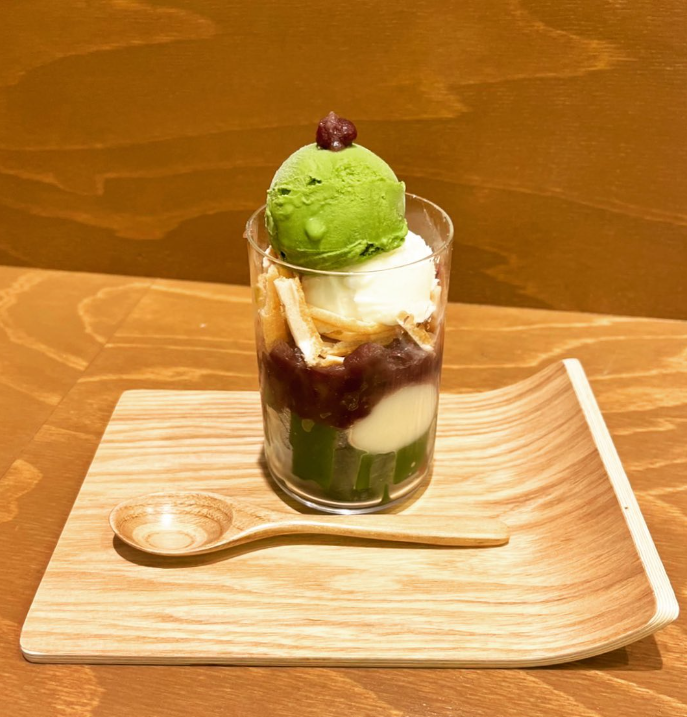
- Signature Dish: Handcrafted Anmitsu
The house-made kanten jelly, boiled directly from red algae, has a wonderfully firm texture that stands out from store-bought versions. It pairs beautifully with rich, flavorful anko, soft gyuhi, and deep, dark kuromitsu syrup, all topped with fresh seasonal fruits. - Melty Warabi-mochi & Premium Japanese Tea
Prepared fresh to order, the warabi-mochi is so soft and delicate that it is a challenge to pick up with chopsticks. Dusted in fragrant roasted soybean powder (kinako) and drizzled with sweet syrup, it melts instantly on the tongue. Enjoyed alongside a cup of freshly brewed tea, it feels like the ultimate reward after a long week.
🍵 Shop Information - Senju Sabo
Address: Left Room, 1F, Marufuku Building A, 2-12 Senju, Adachi-ku, Tokyo
Access: Approx. 7-minute walk from Kita-Senju Station (West Exit)
Hours: 10:30 AM – 6:00 PM (Closed on Mondays)
Official Website: https://senjusabo.therestaurant.jp/
※Please check their official website or Instagram (@senjusabo) for temporary closures and updated hours.
\ 100% Free Consultation in English / Vietnamese / Russian /
Find Foreigner-Friendly Apartments in Tokyo via LINE
No guarantor required! Simply send us your budget and preferred area (e.g., Kita-Senju).
Our bilingual team will search the real-time databases and send you pre-screened properties directly on LINE.
※No spam calls or pushy sales. Available 24/7
2. Feel the River Breeze: Relaxing at the Arakawa Riverbank
Once you've satisfied your sweet tooth, take a 9-minute walk north to the Arakawa Riverbank. With its endless sky and lush grassy banks, this open space serves as a beloved community backyard where locals jog, walk their dogs, and enjoy peaceful picnics.
The route from Senju Sabo is simple and scenic. As you step out of the cafe, you will head toward the historic Old Nikko Highway (Senju-shuku-dori). Here, you can admire sturdy Edo-period storehouses standing next to modern coffee shops and select clothing boutiques housed in renovated folk dwellings. We recommend our Kita-Senju Retro Walk Guide if you want to explore old public baths (sento) and renovated bars. Moving past the quiet residential streets, you will soon spot a massive green slope ahead. Climbing the stairs of the embankment reveals a panoramic view of the wide river, accompanied by a refreshing breeze.
Sitting on the grassy bank away from the city noise, watching the quiet flow of the river, is the ultimate way to refresh your mind. If your schedule allows, stay until dusk. The sky paints a gorgeous gradient of orange and purple, reflecting off the water's surface in a sparkling golden shimmer—a view so beautiful it will leave you speechless.
💡 Local Tips for Your Arakawa Walk
- Grab a Picnic Treat: Stop by one of the local bakeries or coffee stands along the highway to pick up artisan pastries or drinks to enjoy on the grass.
- Visit at Golden Hour: In the summer, wait until after 4:00 PM when the intense sun begins to set. The cool river breeze makes it the ideal time to relax and watch the sunset.