
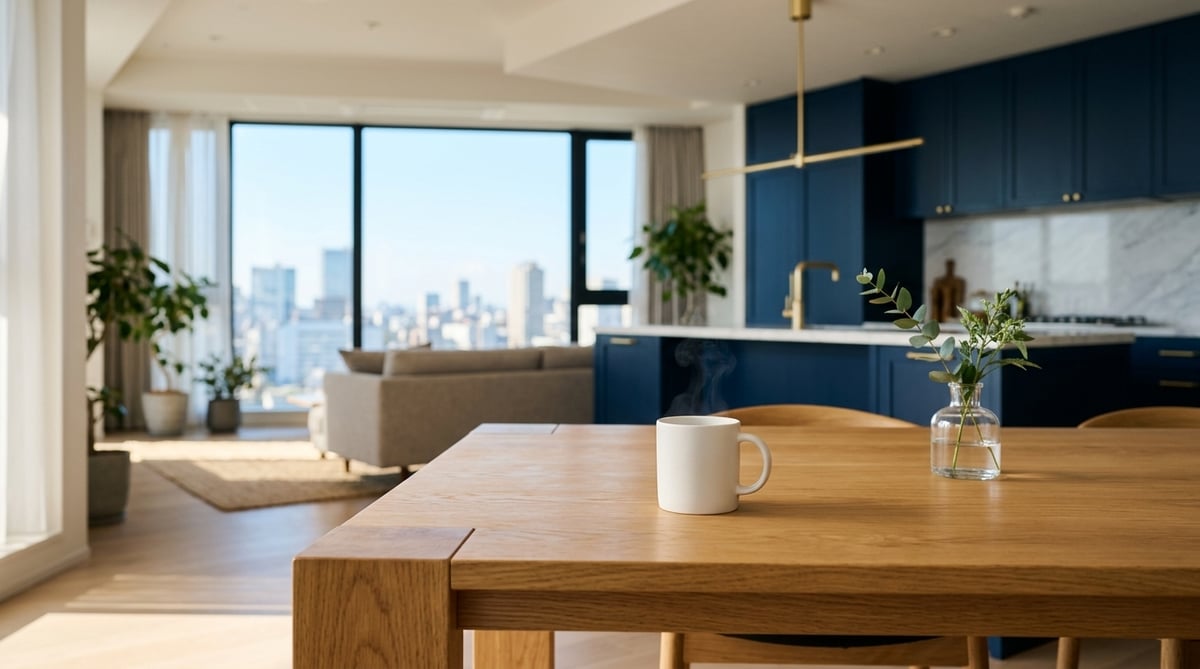
On a quiet night at the end of the month, opening a household budget app in a neat, well-loved room while sipping freshly brewed dark roast tea brings a gentle sense of fulfillment. Once again, by naturally balancing neighborhood greengrocers with midnight supermarkets unique to Kitasenju, grocery expenses stay comfortably within budget. Enjoying unrestricted access to five transit lines—the Chiyoda Line, Hibiya Line, Joban Line, Tobu Skytree Line, and Tsukuba Express—with rent in the 70,000 yen range allows surplus funds to flow effortlessly into self-investment or weekend cafe visits tucked away in backstreets. A smart, enriching single life unbound by excessive frugality is truly alive here in Kitasenju.
Located in the northeastern area of Tokyo's 23 wards in Adachi Ward, Kitasenju seamlessly harmonizes its rich history as a bustling post town on the ancient Nikko Kaido highway with modern commercial convenience around the station, further enlivened by vibrant university campuses. While boasting outstanding transit access directly into central Tokyo—approximately 16 minutes to Otemachi on the Tokyo Metro Chiyoda Line and 8 minutes to Ueno on the JR Joban Line—rental rates and fresh grocery prices remain substantially lower than areas along the Yamanote Line. Consequently, it consistently garners strong acclaim as the most balanced option for business professionals and first-time solo dwellers alike.
As a dedicated licensed real estate broker with over a decade of experience in residential leasing and neighborhood research across Adachi, Katsushika, and Arakawa Wards, I will openly share the authentic rental market realities, actual utility and living expense breakdowns paid by solo tenants, and sustainable spending balances across various take-home income tiers. May this bring clear resolution to your daily life planning and support you in choosing a home without regrets.
- A licensed broker thoroughly explains estimated living expenses for living alone in Kitasenju (160,000–180,000 JPY/month), rental market trends, balance simulations across take-home incomes of 180k, 220k, and 280k JPY, initial move-in costs, and a West vs. East Exit neighborhood comparison.
- Standard spending baseline assuming 75,000–85,000 JPY rent and city gas utility supplies.
- Primary contracted volume zone within a 10-minute walk from the station, inclusive of building management fees.
Estimated Living Costs and Breakdown for Singles in Kitasenju
When preparing to live alone in Kitasenju, projecting monthly expenditures is the foundational first step of home selection. By comparing national and Tokyo 23-ward data from the Statistics Bureau's Family Income and Expenditure Survey (single-person households) against empirical lease records in Adachi Ward, standard monthly expenditures for singles in Kitasenju settle comfortably between 150,000 and 180,000 yen.
Living in a comparable condominium in central hubs like Minato or Shibuya Ward often requires 110,000 to 140,000 yen for rent alone, easily inflating total living costs to 220,000–260,000 yen. In contrast, well-equipped reinforced concrete (RC) 1K apartments in Kitasenju can be found in the upper 70,000s to lower 80,000s yen. Combined with lower local retail prices across the district, an economic surplus of roughly 60,000 to 80,000 yen per month naturally emerges.
Average Single-Person Household Living Expenses: 150,000–180,000 JPY per Month
To grasp total living costs accurately, one must draw clear boundaries between fixed and variable costs, noting where Kitasenju's unique regional qualities make a difference. Below is a standard monthly budget model for a working professional residing in a 1K apartment (city gas, 22–25 m²) located roughly 10 minutes on foot from Kitasenju Station.
| Expense Category | Monthly Estimate | Breakdown & Kitasenju Neighborhood Insights |
|---|---|---|
| Rent & Management Fees | 75,000 JPY – 85,000 JPY | Standard baseline for an auto-lock RC 1K within an 8–12 minute walk, under 15 years old. Options in the 60,000 JPY range are also widely available with flexible building age or structural choices. |
| Food Expenses (Cooking + Dining Out) | 30,000 JPY – 40,000 JPY | Primarily home cooking utilizing local greengrocers on Shukubamachi-dori, late-night station supermarkets open until 1:00 AM, and Super Tanaka on the East Exit. Includes weekend dining out. |
| Utilities (Water, Power, Gas) | 10,000 JPY – 13,000 JPY | Electricity (4,500–6,000 JPY), Gas (3,000–4,500 JPY assuming city gas), Water (2,000–2,500 JPY). Avoiding propane gas properties is the most prudent approach. |
| Communications (Smartphone & Wi-Fi) | 4,000 JPY – 6,000 JPY | Estimated when pairing an MVNO discount SIM (2,000–3,000 JPY) with a property featuring free building internet. Add approx. 4,500 JPY if contracting an independent fiber-optic line. |
| Daily Necessities & Sundries | 8,000 JPY – 10,000 JPY | Living maintenance costs such as detergents, paper goods, skincare, haircuts, and dry cleaning. The district's competitive drugstore landscape ensures affordable purchases. |
| Social & Leisure | 20,000 JPY – 30,000 JPY | Dining with friends, hobby books, movies, cafe visits, etc. An essential allocation to nurture personal well-being without excessive restriction. |
| Total Monthly Living Cost Estimate | approx. 147,000 JPY – 184,000 JPY | With a take-home income of 200,000 to 250,000 JPY, this represents a sound baseline allowing 20,000 to 60,000+ JPY in comfortable monthly savings. |
Balancing Central Tokyo Access and Downtown Affordability
A crucial factor when assessing living costs in Kitasenju is the compression of transit fares and commuting time. At Kitasenju Station, where five direct downtown transit routes intersect, the Tokyo Metro Chiyoda Line takes you directly to Otemachi in about 16 minutes and Kasumigaseki in 21 minutes. The Hibiya Line provides seamless access to Ueno in roughly 11 minutes, Akihabara in 14 minutes, and Ginza in 24 minutes. Furthermore, via the JR Joban Line's Ueno-Tokyo Line, you can reach Tokyo Station in about 16 minutes and Shinagawa Station directly in roughly 25 minutes.
Even for professionals whose commuter passes are fully reimbursed, fewer transfers on weekend outings not only cuts out-of-pocket transit expenses but also drastically lowers everyday travel fatigue. With late train services, knowing you can reliably return on late Chiyoda or Hibiya Line departures after overtime work or evening dinners provides immense peace of mind far exceeding monetary figures.
Licensed brokers well-versed in Tokyo's eastern districts provide dedicated video consultations, helping organize your criteria, discover off-market listings, and optimize initial move-in costs.
Simply enter the rent and deposit from portal listings to calculate a full, itemized breakdown including brokerage and guarantor fees without hidden add-ons.
Rent Benchmarks by Floor Plan: How to Calculate Rent-to-Income Ratios
Rent is undeniably the single largest recurring expense in tenant living. Because it is automatically debited every month, the decision made at contract signing heavily influences financial breathing room. While the real estate sector has traditionally recommended that "rent should be within one-third of net monthly income," contemporary living costs and long-term savings goals suggest this guideline should be applied with thoughtful care.
For early-career professionals in their first to third years, or anyone prioritizing certifications and self-investment, keeping rent between 25% and 28% of net income significantly enhances household resilience. Conversely, if having a high-comfort home environment for remote work is your foundational value, investing 30% to 33% of take-home pay in a premium reinforced concrete residence can also be a thoroughly sensible, satisfying choice.
Rent Benchmarks for Singles near Kitasenju Station (Studio, 1K, 1DK)
The single-resident rental market around Kitasenju Station displays distinct pricing tiers based on layout, building age, and station walking distance. Here are authentic pricing ranges derived from transaction records on the inter-broker network (REINS):
- Studio / 1R (15–18 m²): 60,000–70,000 JPY (Typically wooden or light-gauge steel frame apartments about 10 minutes on foot. Units with compact kitchenettes or shower rooms can be found starting from the high 50,000s).
- 1K (20–25 m² with separated bath and toilet): 75,000–85,000 JPY (The primary transaction volume zone for reinforced concrete condominiums 7–12 minutes from the station, featuring independent washbasins, bathroom ventilation dryers, and auto-lock security).
- 1DK / Spacious 1K (28–33 m²): 88,000–100,000 JPY (Distinct division between dining kitchen and bedroom. Highly favored by tenants who enjoy home cooking or need a defined telework desk area).
- 1LDK (35–42 m²): 115,000–135,000 JPY (Modern RC properties roughly 10 minutes from the station. Allows a complete separation between living room and bedroom, favored by singles earning over 300,000 JPY net or couples planning cohabitation).
Keeping Rent-to-Income Ratio at 25–30% for Healthy Cash Flow
When assessing the ideal rent ratio against take-home income, the primary consideration is resilience against unexpected expenses and income shifts. Sudden medical bills, family obligations, or urgent appliance replacements are an inevitable part of life.
Capping rent near 25% of take-home pay allows savings to accumulate automatically from each paycheck, making it straightforward to build a solid emergency buffer (3 to 6 months of living expenses) within six to twelve months. Having an emergency reserve on hand eases workplace pressure and brings profound peace of mind. Prioritize your housing requirements thoughtfully to discover a balance that feels genuinely comfortable.
Comparing the West and East Exits: Rent Differences and Living Environments
House hunting in Kitasenju immediately presents a distinct contrast in neighborhood atmosphere and rental pricing between the West Exit and the East Exit (Den-dai Exit). Even for properties located an identical 8-minute walk from the station, your daily commuting path and surrounding vibe differ substantially depending on which side you choose.
West Exit (Lumine, Marui, Shukubamachi-dori): The commercial core of Kitasenju. Station towers Lumine and Marui rise over the plaza, connecting to pedestrian decks that lead into the historic Shukubamachi-dori shopping street and bustling restaurant alleys. Bright street lamps and constant pedestrian traffic offer high security when returning late at night. However, RC condominiums within a 5–8 minute walk typically command rents 3,000 to 5,000 yen higher per month than those on the East Exit.
East Exit (Den-dai Exit, Tokyo Denki University, Gakuen-dori): Stepping through the ticket gates reveals the expansive Senju Campus of Tokyo Denki University. From the clean station square, Gakuen-dori (Asahicho Shopping Street) stretches east into residential neighborhoods. Here, dynamic collegiate energy coexists harmoniously with a peaceful downtown residential district. Free from commercial bustle, it suits singles seeking quiet surroundings. Rents are slightly more accessible than the West Exit, hiding many high-value properties.
When considering wooden or light-gauge steel frame apartments to trim rental expenses, keep acoustic insulation and thermal insulation top of mind. While these buildings rent for 10,000 to 15,000 yen less per month than reinforced concrete (RC) due to lower construction costs, airborne noise and footfalls from adjacent units transmit more readily. Furthermore, outdoor temperatures penetrate rooms more easily in summer and winter, raising air conditioning usage and adding 2,000 to 3,000 yen to monthly electric bills. If you work from home frequently and value interior serenity, weigh the rent savings carefully against utility expenses and living comfort.
Daily Grocery Shopping Routes in Kitasenju to Keep Food Under 40,000 JPY
Food expenses are the single area where personal habits and neighborhood infrastructure directly influence the household budget. In pricier downtown districts, brief stops at convenience stores after work easily consume 800 to 1,200 yen each time, with monthly groceries quickly topping 50,000 to 60,000 yen. In contrast, Kitasenju packs thriving traditional shopping arcades, grocery markets, and midnight stores within a short walk from the station, making it effortless to sustain home cooking and keep monthly food spending in the low 30,000 yen range.
Rather than relying on austere economizing, acquiring fresh seasonal produce at honest prices and preparing light meal preps over the weekend forms the true foundation of living well in Kitasenju.
Utilizing West Exit Shukubamachi-dori Greengrocers and Midnight Supermarkets
For singles living on the West Exit, the cluster of independent shops along Kitasenju Shukubamachi-dori Shopping Street (Sun Road) serves as a reassuring everyday asset. At twilight, walking past Marui and stepping into Shukubamachi-dori greets you with comforting aromas from neighborhood deli counters and cheerful calls from local shopkeepers.
At community greengrocers along the street, whole fresh cabbages sell for around 100 yen, bundles of spinach or komatsuna for 80 to 100 yen, and large sacks of onions or potatoes for around 150 yen—far lower than central Tokyo supermarkets. Buying freshly stocked produce by weight encourages natural, wholesome cooking routines.
For late-returning professionals, late-night grocery stores and food shops around the West Exit offer immense convenience. Stores open until 1:00 AM, neighborhood mini-supermarkets, and street delicatessens allow you to purchase reasonably priced groceries and prepared meals even when arriving home after 11:00 PM without relying exclusively on convenience store bento boxes. Timing purchases for evening markdowns or buying in bulk keeps the cost per meal effortlessly modest.
Balancing East Exit Gakuen-dori and Neighborhood Produce Markets
For those using the East Exit (Den-dai Exit), Gakuen-dori Shopping Street functions as the daily kitchen. Extending straight eastward from the station, the avenue features butcher shops, fishmongers, greengrocers, and drugstores alongside affordable dining options frequented by Tokyo Denki University students.
The East Exit area hosts neighborhood grocer Super Tanaka Asahicho Branch, offering everyday fresh meats, fish, produce, and pantry staples at sensible prices. Local butcher shops sell freshly fried croquettes and menchi-katsu starting from the 100-yen range. A practical routine is to cook rice at home and pick up freshly prepared mains from the arcade, enjoying a balanced meal without the time burden of extensive cooking.
The Golden Ratio for Balancing Home Cooking, Takeout, and Dining Out
The key to stabilizing food expenses long-term is avoiding the trap of demanding 100% home cooking. Forcing yourself to prepare every single meal frequently leads to burnout on exhausting workdays, triggering counterproductive delivery and dining splurges.
A balanced benchmark is the "70% Home Cooking + 20% Prepared Delis + 10% Weekend Dining" golden ratio. Keep weekday breakfasts simple with toast or natto over rice, and complement dinners with side dishes prepped over the weekend alongside grilled fish or meat. Pick up prepared deli items when working late, and enjoy delicious dishes and drinks at cozy backstreet cafes or historic downtown izakayas on the weekend. Maintaining this rhythm protects a monthly food budget of roughly 35,000 yen while preserving a high quality of life.
City Gas vs. Propane Gas: The Substantial Impact on Utility Bills
When searching for a rental property, tenants often inspect floor layouts, walking distance, and separated bathrooms closely, but frequently overlook the utility infrastructure: specifically, whether the property is supplied by city gas or propane (LP) gas. This single difference can generate a gap of 3,000 to over 6,000 yen per month—amounting to 40,000 to 70,000 yen annually.
While most modern rental condominiums in Adachi Ward are connected to Tokyo Gas city lines, older low-rise apartments and select single-tenant buildings still rely on on-site propane cylinders. Understanding how these rate structures differ is vital to protecting your fixed monthly budget.
Average Single-Person Utilities Breakdown (Electric, Gas, Water)
Standard utility bills for singles in Kitasenju average roughly 10,000 to 13,000 yen per month. Seasonality plays a significant role: bills peak during midsummer (July–August) due to air conditioning and in midwinter (December–February) from space heating and higher bath water temperatures, settling back to around 8,000 yen during mild spring and autumn months.
- Electricity: 4,500–6,500 JPY (Around 3,500 JPY in spring/autumn; rising toward 7,500 JPY with heavy winter heating).
- Gas (City Gas): 2,800–4,500 JPY (Varies based on cooking habits and daily bathtub soaking).
- Water: 2,000–2,500 JPY (Billed bimonthly by Tokyo Metropolitan Waterworks at roughly 4,000–5,000 JPY per cycle).
Economic Reasons to Avoid Propane Gas Rental Properties
While city gas rates are regulated public utilities with transparent pricing, propane gas operates under a deregulated pricing structure. Suppliers independently establish base rates and unit consumption charges, resulting in base fees roughly 1.5 times higher and usage rates 1.8 to 2 times higher than city gas.
If you take daily hot baths or cook frequently on a gas stove, a monthly gas bill that would cost 3,500 yen on city gas can easily climb to 7,000 to 9,000 yen on propane. Choosing a propane apartment simply because "the rent is 3,000 yen cheaper" often backfires, as higher utility charges cancel out the discount and inflate overall monthly living costs.
City Gas Properties (Tokyo Gas, etc.)
- ✓ Estimated monthly gas bill for singles: approx. 2,800–4,500 JPY
- ✓ Transparent regulated rates with negligible risk of arbitrary price spikes
- ✓ Minimal financial strain even when preparing hot baths daily throughout winter
- ✓ Fixed cost savings of approx. 80,000–120,000 JPY over a standard two-year lease
Propane Gas Properties (LP Gas)
- ! Estimated monthly gas bill for singles: approx. 6,000–9,500 JPY
- ! Deregulated pricing leads to significantly higher base and unit volume charges
- ! Risk of winter gas bills exceeding 10,000 JPY when filling baths frequently
- ! Slight rent savings can easily be reversed by substantial utility differences
Checking Equipment Specifications on Property Sheets Before Signing
When reviewing property listing sheets (Maisoku) on web portals or at real estate agencies, examine the small print in the "Equipment" section alongside the rent and floor plan. The listing will explicitly state either "Public Water / Public Sewer / City Gas" or "Public Water / Public Sewer / LP Gas (Propane)."
If the sheet vaguely indicates just "Gas," ask the agent directly: "Is this property supplied by city gas or propane gas?" Catching this detail early prevents unpleasant surprises at the contract's Important Matters Explanation stage.
Budget Simulations and Savings Plans for Net Incomes of 200k, 250k, and 300k JPY
The most practical approach to personal financial planning is running simulations tailored to your exact take-home pay (net income remaining after taxes and social insurance deductions). Even within the same neighborhood of Kitasenju, target rental bands, flexible allowances for dining and entertainment, and realistic savings velocity vary substantially across net income levels of 200,000, 250,000, and 300,000 yen.
Here are realistic budget allocations and sustainable savings projections across each income tier.
| Budget Category | 200,000 JPY Net Income Model | 250,000 JPY Net Income Model | 300,000 JPY Net Income Model |
|---|---|---|---|
| Rent & Management Fees | 68,000 JPY (34.0%) | 78,000 JPY (31.2%) | 98,000 JPY (32.7%) |
| Food (Cooking & Dining Out) | 32,000 JPY | 38,000 JPY | 45,000 JPY |
| Utilities | 10,000 JPY | 11,500 JPY | 13,000 JPY |
| Communications | 4,000 JPY | 5,000 JPY | 6,000 JPY |
| Daily Necessities | 8,000 JPY | 9,500 JPY | 12,000 JPY |
| Social & Hobbies | 18,000 JPY | 28,000 JPY | 40,000 JPY |
| Total Monthly Expenditure | 140,000 JPY | 170,000 JPY | 214,000 JPY |
| Potential Monthly Savings / Investments | approx. 60,000 JPY | approx. 80,000 JPY | approx. 86,000 JPY |
At 200,000 JPY Net Income: Steady Savings with 65,000–70,000 JPY Rent
For fresh graduates or professionals following recent career transitions earning around 200,000 yen net, keeping rent strictly within 65,000 to 70,000 yen represents the most prudent approach. Around Kitasenju Station, ideal targets include steel-frame 1Ks roughly 10–13 minutes out, renovated 20-year-old RC condominiums, or apartments in the peaceful residential enclaves of the East Exit.
In this bracket, managing food expenses around 32,000 yen via Shukubamachi-dori produce shops and station markets, coupled with an MVNO SIM keeping mobile bills near 4,000 yen, holds total expenditures to around 140,000–150,000 yen. This comfortably frees up roughly 40,000 to 60,000 yen each month (approx. 500,000 to 700,000 yen annually, excluding bonuses) for savings and diversified investments, establishing a dependable emergency reserve within your first year.
At 250,000 JPY Net Income: 75,000–85,000 JPY Rent for Comfort and 50k+ Savings
Reaching around 250,000 yen net after three to five years in the workforce expands housing possibilities considerably. The ideal rental bracket moves to 75,000–85,000 yen, bringing reinforced concrete (RC) buildings under 15 years old and within a 7–10 minute walk directly into range.
Units offering sought-after amenities—such as auto-lock security, delivery parcel lockers, independent washstands, bathroom dryers, and two-burner gas stoves—elevate daily comfort and security substantially. Even with rent around 80,000 yen and a broader dining and social allowance, total expenses remain near 170,000 yen. A steady monthly savings accumulation of 70,000 to 80,000 yen (roughly 900,000 to 1,000,000 yen annually) enables professional self-investment, certifications, and vacation travel alongside a balanced personal life.
At 300,000 JPY Net Income: 95,000–110,000 JPY Rent for 1LDK Living or Accelerated Wealth Building
When net monthly income surpasses 300,000 yen, housing transcends a mere resting base, serving as a dedicated home workspace or leisure sanctuary. The appropriate rent band shifts to 95,000–110,000 yen, making spacious 1DK layouts over 30 m² or 1LDK residences around 35 m² viable choices.
A layout cleanly separating the bedroom and living area accommodates full-size work desks and monitors, facilitating smooth transitions between work and relaxation. Alternatively, choosing to keep rent pegged to an 80,000 yen 1K and directing the entire surplus into index funds or professional ventures—maintaining a steady 100,000 to 120,000+ yen monthly investment rate—is an equally sophisticated strategy. You enjoy complete autonomy to design a lifestyle aligned with your aspirations.
Practical Techniques to Substantially Reduce Initial Move-In Costs
Equally critical to monthly living costs is the initial outlay required when signing a residential lease. Typically, upfront move-in costs in Japan average 4.5 to 5 months of rent. For an 80,000 yen apartment, this requires 360,000 to 400,000 yen in liquid cash at signing.
However, examining quotation breakdowns through a professional lens frequently reveals optional line items and brokerage surcharges that tenants have no legal obligation to pay. By applying appropriate scrutiny before signing, tenants can reliably shave 50,000 to over 100,000 yen off their upfront expenses.
Deconstruct the Estimate Line by Line
Separate essential contractual fees (security deposits, key money, advance rent) from discretionary incidental add-ons.
Remove Unnecessary Incidental Add-Ons
Review and remove optional charges like disinfection fees, fire extinguisher sales, or duplicate 24-hour emergency support packages.
Select a Half-Month Brokerage Fee Agency
Choose a brokerage that clearly charges half a month's rent (0.55 months incl. tax) rather than the conventional full month fee.
Finalize via Second Opinion Verification
Have your quote examined by a dedicated broker prior to application, advancing to contract with only genuine, legitimate expenses.
Standard Initial Move-In Cost Breakdown (4.5–5 Months of Rent)
The standard components comprising upfront lease costs are listed below. For a typical 1K apartment renting for 80,000 yen (with a 5,000 yen management fee), the approximate figures appear as follows:
- Security Deposit / Shikikin (1 Month): 80,000 JPY (A security fund securing restoration obligations upon move-out. While zero-deposit listings exist, move-out cleaning fees are generally written into special clauses instead).
- Key Money / Reikin (1 Month): 80,000 JPY (Gratuity paid to the lessor. Zero-reikin listings have been rising in recent years).
- Advance Rent & Maintenance (1 Month): 85,000 JPY (Rent for the following full calendar month. If moving mid-month, prorated rent for the move-in days is added).
- Brokerage Commission (Standard 1 Month + Tax): 88,000 JPY (Remuneration paid to the mediating real estate agency).
- Guarantor Company Initial Enrollment Fee: 40,000–42,500 JPY (Generally around 50% of total monthly charges).
- Fire & Renter's Insurance: 15,000–20,000 JPY (Standard premium for a two-year policy).
- Lock Replacement Fee: 16,500–22,000 JPY (Actual hardware cost for dimple keys or high-security cylinders).
- Total Estimated Move-In Cost: approx. 396,500–417,500 JPY
Identifying Discretionary Add-Ons on Cost Estimates (Disinfection, Support Fees)
When requesting cost estimates for listings found online, you may encounter unfamiliar line items alongside the mandatory expenses above. Known as "ancillary products," these are largely optional services that tenants have the freedom to accept or decline.
Prominent examples include "Indoor Disinfection / Deodorization (16,500–22,000 JPY)," "Pest Control & Antibacterial Coating (15,000–30,000 JPY)," "Fire Extinguishing Canisters / Throw Balls (8,000–12,000 JPY)," "24-Hour Tenant Emergency Support (16,500–22,000 JPY)," and "Document Preparation / Administrative Fees (5,500–11,000 JPY)."
Disinfection and deodorization can easily be handled independently with store-bought aerosol sprays. Furthermore, 24-hour emergency support packages often duplicate emergency plumbing and lock services already embedded in your mandatory fire insurance policy. Verifying and declining redundant add-ons can save 30,000 to nearly 60,000 yen upfront.
Under Article 46 of the Real Estate Brokerage Act and Ministry of Land, Infrastructure, Transport and Tourism (MLIT) notifications, the total statutory limit for brokerage fees receivable by an agency on a residential lease is capped at one month's rent plus consumption tax. Furthermore, absent prior consent from both parties, the statutory ceiling receivable from either the lessor or tenant alone is 0.5 months' rent plus tax (0.55 months total). While many brokerages routinely bill tenants the full 1.1 months, Sorai Tokyo operates on a transparent baseline policy of "Half-Month Brokerage Fee (0.55 months incl. tax)." On an 80,000 yen apartment, this reliably saves you 44,000 yen in brokerage fees alone.
Steps for a Second Opinion Quote Audit Prior to Contract Signing
If an initial estimate presented at another agency feels questionable prior to submitting an application, do not sign on impulse; calmly state that you will "take it home for review." Even if an agent presses that "the unit will be taken if you don't apply immediately," every tenant has the right to coolly assess a transaction worth hundreds of thousands of yen.
By sharing a photo of your quote or the listing URL with Sorai Tokyo's dedicated advisors via LINE, we can consult the inter-broker network, verify the original conditions set by the property management company, and objectively determine whether any unauthorized brokerage markups have been attached.
Beginning a Balanced Single Life in Kitasenju
The swift transit freedom afforded by five direct downtown railway lines, the welcoming presence of historic shopping streets, and everyday retail prices that naturally trim living expenses—these qualities in Kitasenju offer far more than financial savings. They bring authentic peace of mind to daily routines and create valuable time to pursue new personal endeavors.
Instead of being drained by exhausting daily commutes, you can pick up fresh side dishes at twilight arcades and enjoy reading in a tranquil room on weekends with freshly brewed coffee. Surplus funds can be channeled into personal growth or shared over delightful meals with friends. The daily rhythm you cultivate here in Kitasenju will undoubtedly feel more relaxed, natural, and fulfilling than before.
Should you have questions regarding apartment selection or personal budget planning, feel free to reach out to Sorai Tokyo anytime. Our dedicated licensed brokers, deeply familiar with the district, are here to accompany your new life journey with warmth and integrity.
Frequently Asked Questions About Living Costs in Kitasenju
QCan I comfortably live alone in Kitasenju with a take-home income of 200,000 JPY?
AYes, it is entirely feasible. By targeting a 1K apartment around 65,000 to 70,000 JPY (roughly 10–12 minutes on foot or in East Exit residential neighborhoods) and choosing city gas, you can keep fixed monthly costs comfortably low. Benefiting from Shukubamachi-dori produce shops and late-night supermarkets makes it easy to control food spending around 30,000 JPY per month, reliably enabling around 30,000 JPY in monthly savings.
QHow do living costs and daily convenience differ between the West and East Exits of Kitasenju Station?
AIn terms of rent, the commercial West Exit tends to run approximately 3,000 to 5,000 JPY higher per month than the East Exit. The West Exit features Lumine, Marui, and Shukubamachi-dori, making it ideal for those prioritizing dining and shopping convenience. In contrast, the East Exit (Den-dai Exit) hosts Tokyo Denki University and Gakuen-dori, opening into quiet residential streets suited for tenants prioritizing tranquil surroundings and cost efficiency. Because both exits are richly supplied with affordable local food markets, there is virtually no difference in grocery expenses.

Author: Sorai Tokyo Editorial Team (Supervised by Licensed Real Estate Agents)
A real estate consulting team specializing in assisting foreign nationals find rooms and explaining initial costs in Tokyo. We break down language barriers and differences in customs, offering dedicated support in Japanese, English, and Vietnamese for a safe and secure start to your new life.