
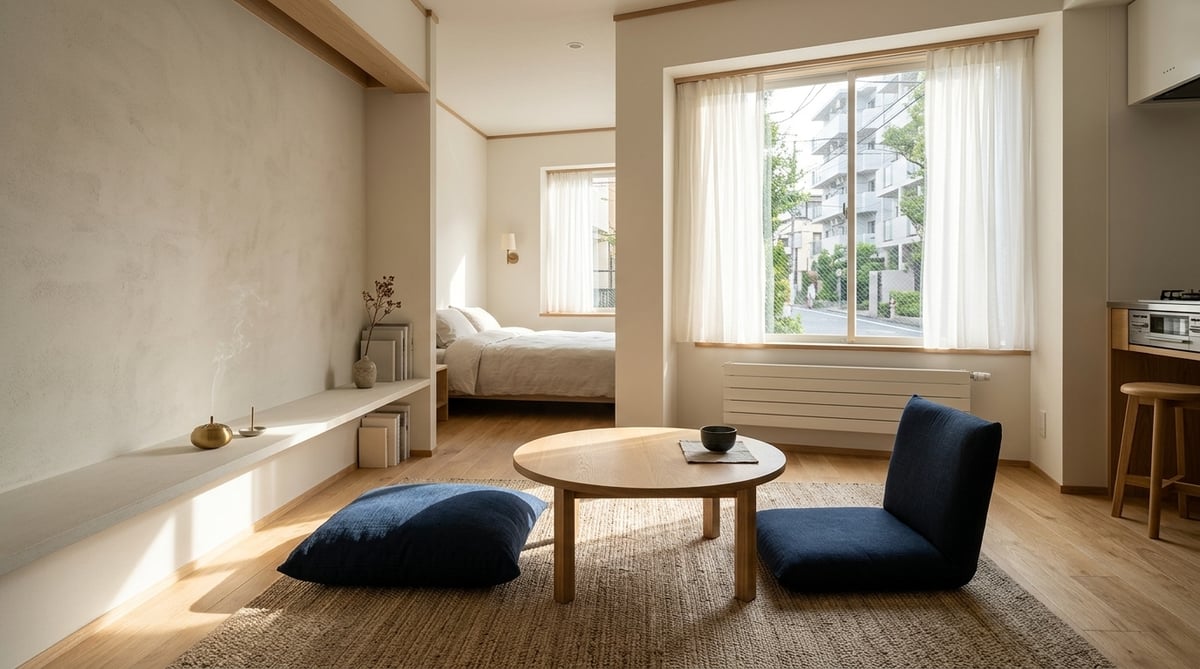
At dusk, as you step through the station ticket gates, a gentle sense of daily life and a nostalgic warmth welcome you. When searching for a home, a truly valuable choice goes beyond comparing raw specs or numbers; it is about how fulfilling, comfortable, and sustainable your daily life will be. Drawing upon a licensed real estate broker's decade of field experience, we share practical insights to ease your anxieties and help you choose your home with quiet confidence.
Cradled by the Arakawa and Sumida Rivers, Kitasenju has been a vibrant hub of daily living and transit ever since flourishing as Senju-juku, the first post station on the historic Nikko Kaido during the Edo period. In the bustling alleys of Shukuba-machi Street off the West Exit, evening aromas of simmering stews drift from long-established delicatessens as students head home from clubs and lectures. Meanwhile, stepping out the East Exit brings you face to face with the sleek, modern campus of Tokyo Denki University.
While cherishing its downtown warmth, Kitasenju transformed into an impressive college hub following proactive university invitations beginning in the 2000s. Today, five universities are gathered here, drawing young people with diverse dreams and aspirations. However, as its convenience as a premier Tokyo railway terminal grows, market rents have risen steadily year after year. Within the realistic limits of family allowances and part-time wages, securing a peaceful haven that supports your studies and creative pursuits without straining your budget is a vital priority. In this guide, we cut through exaggerated claims and marketing slogans to explore how to start a grounded, fulfilling student life in Tokyo.
- A licensed broker explains rental market trends, living environments, and contract protections for student housing in Kitasenju across five university campuses.
- Direct access via 5 major railway lines: JR Joban Line, Chiyoda Line, Hibiya Line, Tobu Skytree Line, and Tsukuba Express.
- Fast access to central Tokyo: 9 mins to Ueno, 16 mins to Otemachi, and 11 mins to Akihabara, offering superb mobility for internships and job hunting.
Kitasenju as a College Town: Campus Locations and Daily Commutes
Kitasenju's emergence as an academic center stems from Adachi Ward's strategic university initiatives combined with unmatched transit convenience where five rail lines converge. Concentric around the station, distinct educational and research institutions have set down roots, and the ideal living quarters naturally vary depending on each campus location.
Commuting Ease to Tokyo Denki University (Tokyo Senju Campus)
Relocated from Kanda Jinbocho in 2012, Tokyo Denki University's Tokyo Senju Campus sits right in front of Kitasenju Station's East Exit (often called the Dendaiguchi). Exiting the ticket barriers brings you to the campus entrance in just a one-minute walk, boasting one of the most accessible collegiate locations in the greater Tokyo area.
For science and engineering students, staying late in laboratories for experiments, graduation theses, or programming projects is commonplace. Being able to use university facilities without stressing over the last train is a substantial advantage that directly enhances the quality of your learning. Consequently, peaceful and flat neighborhoods within a 5- to 10-minute walk of the East Exit—such as Senju Asahicho, Senju Azuma, and Hinodecho—enjoy steady popularity among Denki University students.
Tokyo University of the Arts (Senju Campus): Creative Spaces and Neighborhood Atmosphere
Walking ten-odd minutes west through the historic Shukuba-machi Street toward the Motojuku-cho district brings you to the serene Senju Campus of Tokyo University of the Arts (Geidai), home to the Department of Musical Creativity and the Environment as well as the Graduate School of Film and New Media. Rebuilt on the site of a former elementary school, the campus enjoys close ties with the local neighborhood, fostering a peaceful atmosphere where artistic endeavors harmonize with historic downtown culture.
Searching for housing as a Geidai student involves distinctive considerations compared to typical student rentals. Many students engage in acoustic design, video editing, and media art creation. Consequently, exceptional sound insulation capable of accommodating late-night computer work, headphone monitoring, and practicing small instruments becomes the foremost priority. Because wooden apartments present risks of noise transmission to adjacent units, reinforced concrete (RC) buildings with solid concrete dividing walls serve as the foundational standard.
Access to Teikyo Science University, Bunkyo University, and the Open University of Japan
Other academic institutions in the Kitasenju area also feature distinctive and attractive settings. Located along the Sumida River in Senju Sakuragi, Teikyo Science University's Senju Campus offers a verdant environment for students studying medical care, nursing, animal sciences, and education. Local buses run regularly from the station's West Exit, and the level terrain allows an easy 7- to 10-minute bike ride.
In addition, Bunkyo University's Tokyo Adachi Campus (opened in 2021 in Hanahata, Adachi Ward) can be reached via Yatsuka or Takenotsuka Stations on the Tobu Skytree Line, or by local bus and bicycle from Kitasenju Station's East Exit. Furthermore, the Open University of Japan's Tokyo Adachi Study Center operates inside the Tokyo Art Center complex near the West Exit, hosting learners from all walks of life. This gathering of academic institutions infuses Kitasenju with vibrant energy.
A 5-Line Transit Hub: Daily Mobility and Future Career Opportunities
Kitasenju Station integrates five major transit arteries: the JR Joban Line, Tokyo Metro Chiyoda Line, Tokyo Metro Hibiya Line, Tobu Skytree Line (Isesaki Line), and the Tsukuba Express. This network provides outstanding mobility not just for university lectures, but also for internships, part-time jobs, job interviews, and weekend leisure across Tokyo.
With direct rides of approximately 16 minutes to Otemachi on the Chiyoda Line, 9 minutes to Ueno on the Joban Line, and direct access to Ginza and Roppongi via the Hibiya Line, students save both travel time and transportation expenses during future job hunting. Furthermore, the Tobu Skytree Line offers through-service with the Tokyo Metro Hanzomon Line, providing one-seat rides to Shibuya and Omotesando. Remaining connected to central Tokyo while enjoying friendly downtown warmth and everyday convenience is why Kitasenju continues to be favored by students and working professionals alike.
Licensed real estate brokers specialized in Tokyo's Joto area provide warm, personalized video support—from clarifying criteria and checking unlisted properties to optimizing initial move-in costs.
Simply enter the rent and deposit from portal listings to calculate a full, itemized breakdown including brokerage and guarantor fees without hidden add-ons.
Rent Market Rates and Floor Plan Insights Around Kitasenju
While Kitasenju has flourished as an academic town, its rental market is far from a budget-only destination. Elevated by excellent transit convenience, it attracts downtown corporate commuters and dual-income couples, keeping rent rates at the higher end within Adachi Ward. When searching for student housing, gaining a realistic grasp of market structures and appropriate budgets is the essential first step.
Rent Rates and Usable Floor Area: Studio (1R), 1K, and 1DK
Currently, single-occupancy rentals within a 10-minute walk of Kitasenju Station average approximately 68,000 to 75,000 yen for a studio (1R) and 75,000 to 88,000 yen for a 1K layout, inclusive of monthly management and maintenance fees. In newly built or modern reinforced concrete (RC) buildings with auto-lock security, 1K units frequently command 85,000 to 95,000 yen.
In terms of living area, studios standardly span around 15 to 18 square meters, while 1K units typically range from 20 to 25 square meters. In 15-square-meter layouts, combined three-piece unit bathrooms (tub, sink, and toilet in one room) are common, offering an effective option to keep monthly rent manageable. Conversely, if you plan to cook regularly or wish to separate your study desk from your bed, a 1K layout with at least 20 square meters and a partitioned kitchen space is well worth considering.
East Exit (Dendaiguchi) vs. West Exit (Shukuba-machi): Atmosphere and Rent Differences
Kitasenju Station reveals distinct neighborhood characters and pricing differences on either side of the tracks. When exploring options, we recommend evaluating not just campus proximity, but also the surrounding streetscape and nighttime tranquility.
The East Exit (Dendaiguchi) area was redesigned alongside Tokyo Denki University's arrival, presenting open, well-lit streetscapes. Student-friendly eateries, drugstores, and convenience stores are neatly clustered here. Due to short commuting walks and high daily convenience, student demand is exceptionally steady, meaning rents remain firm even for older properties.
On the West Exit side, major commercial centers like Kitasenju Marui and Lumine Kitasenju anchor the station plaza, while traditional avenues like Senju Honcho-dori and Shukuba-machi Street extend just steps away. Neighborhood greengrocers, butcher shops, and affordable diners abound, allowing students to enjoy warm downtown charm while keeping living costs reasonable. The West Exit also has a broader rental inventory across various building ages and distances from the station, offering greater opportunity to discover well-maintained apartments in the lower 60,000-yen range.
Building Age and Equipment Amenities: Finding Your Break-Even Point
In the rental market, four key amenities heavily influence prices: separate bath and toilet, indoor washing machine hookup, second floor or higher, and auto-lock security. Insisting on all four within a 10-minute walk of Kitasenju Station makes finding units under 80,000 yen remarkably difficult.
Discerning which amenities are essential versus where you can remain flexible is the secret to sound budget management. For example, even in buildings over 30 years old, many units have undergone full interior renovations with brand-new plumbing and modern finishes. Filtering out properties purely based on year of construction can lead you to overlook reasonably priced, highly comfortable residences. Furthermore, while three-piece unit bathrooms are often avoided, they allow quick, comprehensive cleaning and save 10,000 to 15,000 yen monthly compared to separated units. Over four university years, this adds up to 500,000 to 700,000 yen in savings—a meaningful financial difference worth calculating.
Furniture Layout and Spatial Dimensions for Student Living
When viewing an apartment or reviewing floor plans, avoid judging space solely by tatami mat counts such as "6 jo." In Japan, tatami dimensions vary among regional standards such as Edo-ma (approx. 1.55 sqm), Kyo-ma (approx. 1.82 sqm), and Danchi-ma (approx. 1.45 sqm); two rooms marked as 6 jo can differ in actual floor space by over 15%.
For single student living, keep these essential furniture dimensions in mind:
- Single Bed: Approx. 100 cm width × 200–210 cm length
- Study / PC Desk: Approx. 100–120 cm width × 60 cm depth
- Desk Chair Clearance: Approx. 75–80 cm behind the desk for comfortable movement
- Bookshelf / Storage Shelf: Approx. 60–80 cm width × 30–40 cm depth
- Walkway Clearance: Minimum 60 cm (75 cm or more recommended for doorways and passing)
If walls feature structural pillars or ceiling beams, a bed may not fit where planned, or closet doors may be obstructed. Bringing a tape measure to your viewing to check wall dimensions, power outlet placements, and door swing paths ensures a functional and comfortable study space upon moving in.
| Layout Type | Standard Floor Area | Within 5 Mins Walk of Kitasenju | 10–15 Mins Walk of Kitasenju | Key Features & Equipment |
|---|---|---|---|---|
| Studio 1R (3-Piece Unit Bath) | 14–17 sqm | ¥62,000–¥68,000 | ¥53,000–¥60,000 | 5–6 tatami room. Kitchen inside room. Ideal for minimizing fixed monthly costs. |
| 1K (Separate Bath & Toilet) | 18–22 sqm | ¥78,000–¥86,000 | ¥68,000–¥75,000 | 6–7 tatami room with separate 2-tatami kitchen. Separates cooking and study areas. |
| 1K (Modern / Separate Vanity) | 22–26 sqm | ¥88,000–¥98,000 | ¥78,000–¥86,000 | Auto-lock, bathroom dryer, independent vanity. Prioritizes security and comfort. |
| 1DK / 2K (Shared Living Option) | 28–35 sqm | ¥105,000–¥125,000 | ¥90,000–¥108,000 | Suited for siblings sharing or art/music students requiring dedicated studio space. |
Bike-Commuting Neighborhoods to Reduce Monthly Rent by 10,000–20,000 Yen
As rental rates around Kitasenju Station remain firm, choosing a neighborhood centered on bicycle commuting represents a smart alternative. The topography of Adachi Ward and neighboring areas along the Arakawa River is remarkably flat, featuring virtually no steep hills. Riding 10 to 15 minutes by bicycle (a distance of roughly 2.5 to 3.5 km) lowers rent rates by 10,000 to 20,000 yen, making it easier to secure larger floor space and upgraded amenities on the same budget.
Chiyoda and Joban Lines (Ayase, Kita-Ayase, Kameari): Affordable Rents & Cycling Routes
Prime candidates include Ayase Station (West and East Exits)—just one stop from Kitasenju on the Chiyoda Line—and Kita-Ayase Station (Central, North, and South Gates), which serves as the line's starting terminus. Around Ayase Station, daily grocery shopping is seamless thanks to Tokyu Store Ayase (open until 22:00) beneath the elevated tracks and Ito-Yokado Ayase (open until 21:00). Average rents are roughly 10,000 yen lower than around Kitasenju Station. Cycling to Kitasenju campuses takes about 10 to 12 minutes (approx. 2.5 km) over level roads. Furthermore, Ayase Station offers Chiyoda Line branch trains to Kita-Ayase from platform 2 and outbound originating trains toward Kitasenju and Yoyogi-Uehara (platforms 1, 2, and 3), providing convenient seats during morning commutes.
Venturing further toward Kita-Ayase Station (with Belx Adachi-Kahei open until 21:00 along Kan-nana Dori), you gain access to originating trains on the Chiyoda Line (both 10-car through-trains and 3-car branch services), while modern 1K units with separate bath and toilet become accessible in the lower 60,000-yen range. Additionally, Kameari Station in Katsushika Ward, one stop away on the Joban Local Line, is another appealing choice. Supported by vibrant local shopping streets and the large Ario Kameari mall, Kameari is an easy 15- to 18-minute cycle (approx. 3.5 km) from Kitasenju.
Tobu Skytree Line (Ushida, Kosuge, Gotanno): Downtown Flavor and Flat Commutes
Looking outbound along the Tobu Skytree Line, Ushida Station (adjacent to Keisei-Sekiya Station) right next to Kitasenju, as well as Kosuge and Gotanno Stations across the Arakawa River, are excellent candidates. Upon exiting Kosuge or Gotanno, quiet low-rise residential neighborhoods unfold, offering peaceful surroundings even at night.
Around Gotanno Station, Summit Store Gotanno (open until midnight), local pharmacies, and classic delicatessens help students keep grocery expenses in check. Cycling to Kitasenju takes roughly 12 to 15 minutes. While the route crosses the Senju Shinbashi Bridge over the Arakawa River, the pedestrian and cycle paths are broad and offer pleasant, scenic views. Rents here run 12,000 to 18,000 yen lower than Kitasenju, allowing you to secure a spacious room on a budget of around 60,000 yen.
Keisei Main Line (Senju-Ohashi & Sekiya): Waterfront Living and Redevelopment
Located a 5- to 8-minute bike ride south of Kitasenju Station are Senju-Ohashi and Keisei-Sekiya Stations on the Keisei Main Line. In front of Senju-Ohashi Station, recent redevelopment brought the Ponte Porta Senju shopping complex, featuring a Life supermarket (open until 21:30), specialty shops, and medical clinics.
The Sumida River terrace offers well-maintained paths where locals enjoy morning and evening strolls or jogging. While only a 15- to 18-minute walk or a quick 5-minute bike ride from Kitasenju's West Exit, this neighborhood provides a calm retreat away from station bustle. For students seeking a peaceful setting to focus on academic studies and research, it is well worth exploring.
Bridge Incline Considerations and Station Bicycle Parking Registrations
When planning a bike-commuting lifestyle, two practical factors deserve careful attention: the incline of river bridges and bicycle parking availability around Kitasenju Station.
Bridges crossing the Arakawa and Sumida Rivers (such as Senju-Ohashi and Senju Shinbashi on Nikko Kaido) are arched higher in the center to permit ship navigation. This creates a gentle slope on your daily commute. If you travel this route daily, a multi-gear bicycle or an electric-assist bicycle can greatly ease physical exertion.
Additionally, the entire perimeter around Kitasenju Station is designated as a "Bicycle Abandonment Prohibition Area." Bicycles parked on sidewalks or streets are promptly impounded, incurring a 3,000 yen removal fee in Adachi Ward. While Adachi Ward operates multiple public and underground bicycle parking facilities near both exits, student commuter passes (approx. 1,500 to 2,500 yen monthly) see heavy demand in spring and may carry waitlists. Checking parking availability and applying for a commuter space in tandem with signing your lease is recommended practical guidance.
Within 10 Mins Walk of Kitasenju
- ✓ Minutes on foot to campus; seamless returns home during late-night lab work or between lectures
- ✓ Stress-free, reliable commutes even on rainy or stormy days
- ✓ Daily convenience with immediate access to Lumine, Marui, and station amenities
Bike Commute Zones (Ayase, Gotanno, etc.)
- ✓ Save ¥15,000–¥20,000 monthly on equivalent units—saving roughly ¥800,000 over 4 years
- ✓ Modern apartments with separate bath/toilet and vanity within reach on a ¥60,000 budget
- ✓ Quiet, low-rise residential streets providing a calm learning environment at night
Student Budget Defense and Monthly Cash Flow Simulations
To navigate four university years smoothly without financial strain, grounded, objective financial planning is indispensable. Keeping fixed housing costs—which comprise the largest share of living expenses—well under control forms the foundation of sound budget defense.
Why the 25%–28% Rent-to-Income Ratio is the Safe Standard
Real estate listings often recommend that "rent should be one-third (approx. 33%) of monthly income." However, this rule of thumb originated during an era of regular seniority wage increases. Grounded in a decade of practical experience, the realistic safety benchmark for a student living alone is 25% to 28% of actual net monthly income (family allowance plus dependable part-time earnings).
If rent exceeds 33%, sudden irregular expenses—such as textbooks, certification exam fees, seminar training trips, or transportation for job interviews—can quickly strain monthly finances. Capping your rent ratio around 28% leaves a comfortable buffer of 10,000 to 20,000 yen each month, allowing you to focus on your studies with peace of mind.
Monthly Cash Flow Simulations Across 3 Student Income Tiers
Below are realistic breakdowns of monthly living costs across typical student net income levels (allowance plus average part-time wages). Clarifying these figures will help you pinpoint your comfortable rent ceiling.
| Expense Category | ¥120,000 Net (Austerity Model) | ¥150,000 Net (Standard Model) | ¥180,000 Net (Comfort Model) |
|---|---|---|---|
| Ideal Rent Ceiling (25%–28%) | ¥30,000–¥33,000 (Dorm / Family home) | ¥38,000–¥42,000 (Suburbs / Unit bath) | ¥45,000–¥50,000 (Older wooden walk-ups) |
| Realistic Market Rent (Inc. Fees) | ¥52,000 (43.3% share; trim extras) | ¥62,000 (41.3% share; standard zone) | ¥75,000 (41.6% share; near station) |
| Food (Cooking & Cafeteria) | ¥28,000 (Primarily home cooking) | ¥35,000 (Cafeteria + home cooking) | ¥42,000 (Dining out + social meals) |
| Utilities (Power, Gas, Water) | ¥10,000 | ¥12,000 | ¥14,000 (Regular AC heating/cooling) |
| Mobile & Internet | ¥6,000 | ¥7,000 | ¥8,000 |
| Daily Household Goods | ¥4,000 | ¥6,000 | ¥8,000 |
| Social, Hobbies & Study | ¥10,000 | ¥18,000 | ¥23,000 (Books, art supplies, tech) |
| Emergency Buffer & Savings | ¥10,000 | ¥10,000 | ¥10,000 |
As this simulation shows, because the realistic market floor for single rentals in Tokyo sits around 50,000 to 60,000 yen, rent frequently approaches 40% of a student's net budget. This makes conscious rent management directly impactful to your everyday nutrition and learning resources. Choosing bike-commuting zones like Ayase or Gotanno (10 to 15 minutes away) to keep rent in the lower 60,000-yen range yields concrete, measurable financial breathing room.
Practical Control of Fixed Costs: Food, Utilities, and Connectivity
Unlike rent, which is locked in upon signing your contract, other living costs can be systematically optimized through thoughtful choices. Here are three primary cost-control strategies from real estate practice:
- Switching to Budget Mobile Plans (MVNO): Transitioning from major carrier unlimited plans (approx. 7,000–9,000 yen/month) to budget SIM plans paired with home Wi-Fi (approx. 1,500–3,000 yen/month) substantially reduces fixed communication costs.
- Evaluating Free Internet Properties: Buildings advertising "free internet" save you 4,000 to 5,000 yen monthly in provider fees. However, older shared wiring (such as VDSL) can experience noticeable slowdowns during peak evening hours, impacting online lectures or large project uploads. Confirming whether the unit has fiber-to-the-unit (FTTH) wiring during your viewing offers peace of mind.
- City Gas vs. Propane (LP) Gas: Properties run on either municipal city gas or propane tanks. Because propane involves delivery and maintenance overhead, rates run noticeably higher, occasionally causing winter heating and hot water bills to exceed 10,000 yen even for single residents. Prioritizing municipal city gas properties is standard guidance for predictable utility expenses.
Building Structure and Acoustic Insulation
Living noise is among the most frequent consultation topics for single students. For Tokyo Denki University students studying late into the night or Tokyo Geidai students working on media editing, structural soundproofing directly shapes the quality of your learning environment.
Trimming Initial Move-In Costs and Full Legal Protections
Once you select an apartment and proceed toward contracting, initial move-in cost estimates presented by brokerage firms can often come as a surprise. Beyond security deposits (shikikin) and key money (reikin), unfamiliar administrative fees frequently inflate total move-in expenses to five or six months' worth of rent. However, many of these line items are optional add-ons that can be negotiated or declined with proper legal understanding. Here is how to streamline initial expenses according to Japanese real estate regulations.
Unnecessary Optional Add-Ons to Remove from Your Move-In Estimate
Move-in estimates from leasing agencies often include optional add-on products enabled by default that offer minimal practical value to tenants.
If the following line items appear on your estimate, they are generally optional and can be declined upon request:
- Indoor Disinfection / Deodorization Coating (Standard: ¥15,000–¥25,000): Often consisting of a simple aerosol spray, this is unnecessary because standard turnover cleaning paid upon previous tenant departure already sanitizes the room. You can decline this optional fee.
- 24-Hour Emergency Support Service (Standard: ¥16,500–¥22,000 for 2 years): While this covers lost keys or plumbing emergencies, such support is often already covered by renter's fire insurance or credit card benefits. Unless explicitly written in the building lease rules as mandatory, you can request its removal.
- Document Preparation / Administrative Processing Fees (Standard: ¥5,500–¥11,000): Preparing lease documentation falls within the statutory scope of the standard brokerage fee under the Real Estate Brokerage Act. Charging separate administrative fees on top of the maximum brokerage commission may constitute improper billing.
- Emergency Fire Extinguisher / Disaster Prep Kits (Standard: ¥10,000–¥15,000): Standard residential fire extinguishers can be purchased affordably at local hardware stores. Bundled overpriced kits can be declined.
Your Legal Right to Freely Choose Renter's Fire Insurance
When entering a lease, brokerages frequently present designated insurance packages (household goods plus tenant liability coverage) costing 20,000 to 25,000 yen for a two-year term.
However, under Article 300 of the Insurance Business Act and the Antimonopoly Act, lessors and brokerages cannot unlawfully coerce tenants into buying a specific insurer's policy. Tenants maintain the legal right to choose and procure any insurance product that meets the management company's coverage standards. Selecting a direct online policy or co-op plan (such as Nisshin Fire's Oheya Kari Renter's Insurance, Zurich, or Zenrosai) provides comprehensive tenant liability and personal liability coverage for roughly 8,000 to 16,000 yen for two years, saving around 10,000 yen on upfront costs.
Supreme Court Precedents on Move-Out Cleaning and Renewal Fees
Lease agreements frequently include special clauses stating that "move-out cleaning fees shall be borne by the tenant" or "a lease renewal fee of one month's rent shall be paid upon renewal." Understanding how Japanese courts view these terms is crucial for protecting your rights.
Regarding special clauses for move-out cleaning, the Supreme Court Decision of December 16, 2005 (Heisei 17) established the governing judicial framework. The Supreme Court ruled that for a clause imposing obligations beyond standard restoration duties to be legally valid, it must meet three conditions:
- Requirement 1: The scope and financial burden borne by the tenant must be explicitly and clearly stated in the contract (specifying exact amounts or calculation standards).
- Requirement 2: The tenant must clearly recognize that they are assuming a burden exceeding ordinary restoration duties.
- Requirement 3: Mutual agreement on this obligation must be formally established between lessor and tenant.
If a contract vaguely notes that "cleaning costs are borne by the tenant" without clear monetary figures or calculation rules, you possess strong legal grounds to dispute the validity of excessive deductions.
Regarding renewal fees, the Supreme Court Decision of July 15, 2011 (Heisei 23) ruled that renewal fee clauses are generally valid under the Consumer Contract Act (Article 10) unless the fee is egregiously disproportionate relative to rent and lease duration. In Tokyo, "one month's rent every two years" is recognized as standard commercial custom; thus, while waiving renewal fees is rarely viable, factoring renewal cycles into your multi-year housing timeline remains essential.
| Move-In Cost Item | Typical Brokerage Estimate | Optimized Estimate (Sorai Tokyo Standard) | Savings & Legal Basis |
|---|---|---|---|
| Advance Rent & Maintenance Fee | ¥70,000 (Following month) | ¥70,000 (Following month) | Actual cost (Prorated days added separately) |
| Deposit & Key Money | ¥70,000 (1 mo. key money / 0 deposit) | ¥70,000 (1 mo. key money / 0 deposit) | Actual cost per property terms |
| Brokerage Commission (Tax Inc.) | ¥77,000 (1.1 months of rent) | ¥38,500 (0.55 months / 50% off) | ¥38,500 saved (Article 46, Brokerage Act) |
| Fire Insurance (2 Years) | ¥22,000 (Broker-designated plan) | ¥9,000 (Direct online choice) | ¥13,000 saved (Exercising tenant right) |
| Disinfection / Deodorization Fee | ¥19,800 (Presented as mandatory) | ¥0 (Declined as optional) | ¥19,800 saved (Removal of unnecessary fee) |
| 24-Hour Emergency Support | ¥16,500 (Optional add-on) | ¥0 (Covered by insurance) | ¥16,500 saved (Elimination of duplicate coverage) |
| Document Prep & Admin Fees | ¥11,000 (Processing fee) | ¥0 (Included in commission) | ¥11,000 saved (Removal of improper extra fees) |
| Total Move-In Costs | ¥286,300 | ¥187,500 | Total Savings: ¥98,800 |
Step-by-Step Apartment Hunting and Free Consultation with Sorai Tokyo
To embark on a fulfilling student life in the spring, strategic research and choosing the right advisory partner are vital. Here is a practical roadmap to navigate property listings and secure your ideal home with total confidence.
Advance Applications vs. Advance Contracts: Smart Selection During Peak Season
During the peak moving season from January to March, high-demand properties (station proximity, RC structure, fair rent) are often listed while the current tenant is still residing there ("scheduled for vacancy").
Understanding the difference between an Advance Application and an Advance Contract is essential:
- Advance Application (Recommended): You submit an application based on floor plans and photos to initiate screening; once the previous tenant moves out and cleaning finishes, you view the physical interior before making a final commitment. If the unit does not meet your expectations upon viewing, you can cancel without penalty.
- Advance Contract (Caution Required): You sign the legal lease without viewing the interior. Canceling afterward forfeits key money and brokerage fees and may trigger early termination penalties. Unless specifically mandated by property terms, proceed with extreme caution.
Share Any Listing URL: Objective Availability Checks & Second Opinions
You do not need to spend days visiting multiple storefront agencies. The vast majority of rental properties across Japan are centralized within the Ministry of Land, Infrastructure, Transport and Tourism's designated Real Estate Information Network System (REINS) and shared B2B networks. Listings found on major portals like SUUMO, LIFULL HOME'S, and at home can be handled by any licensed brokerage.
When you spot an appealing listing, simply send the portal URL or screenshot to Sorai Tokyo's official LINE account. A dedicated licensed broker checks real-time availability via B2B networks, filtering out expired or booked listings so you can search efficiently.
Furthermore, if you have already received an upfront move-in estimate from another firm, send it to us via LINE. A licensed broker will review it objectively, identifying unnecessary optional fees and detailing a streamlined, fair breakdown.
Half-Price Brokerage Commission: Financial Freedom for Your New Life
Sorai Tokyo provides eligible rental properties at 50% off standard brokerage commission (0.55 months' rent, tax included).
For an apartment with 70,000 yen rent, you save approximately 38,500 yen; for an 85,000 yen apartment, you keep roughly 46,700 yen in your pocket. These preserved funds can be applied toward essential study tools like a laptop, course books, or quality furniture. Even with reduced fees, licensed real estate brokers with ten years of field experience accompany you attentively from the Explanation of Important Matters to final key handover.
Utilizing Smart Tools (SorAi) and Attentive Guidance via Official LINE
You can access Sorai Tokyo's smart tools (SorAi)—including our move-in cost simulator—from the bottom navigation bar on mobile or the footer on desktop. By entering your net income or target rent, you can instantly estimate upfront move-in costs and monthly expense balances.
From initial consultations and vacancy verifications to second opinions on cost estimates and viewing arrangements, all communication proceeds at your own pace directly on our official LINE.
Calculate Rent from Income
Cap rent at 25–28% of net allowance and earnings for sustainable living
Select Area & Commute Route
Compare station proximity in Kitasenju against bike zones in Ayase or Gotanno
Send Listing URLs via LINE
Share portal URLs to verify live vacancy status through official broker networks
Half-Price Brokerage Contract
Eliminate extra fees and launch student life with transparent 0.55 mo. fees
Choosing a home is about far more than just finding shelter. It is about whether a fresh breeze greets you when you open the window in the morning; whether warm, welcoming light quietly greets your return in the evening; and whether you can pursue your academic and personal passions unburdened by overwhelming monthly costs. The foundation of everyday life is shaped by the home you choose.
Whenever you face questions or uncertainties, feel free to reach out to Sorai Tokyo. Grounded in a decade of field experience, our licensed brokers stand beside you with deep expertise and genuine care to support your new beginning.
Frequently Asked Questions (FAQ)
QFor students attending Tokyo Denki University, is it better to live near the East Exit or the West Exit of Kitasenju Station?
AIf daily commuting convenience to lectures and laboratories is your top priority, the East Exit (Dendaiguchi) area is ideal. Benefiting from the campus being just a one-minute walk from the ticket gates, residential areas like Senju Asahicho and Senju Azuma allow a flat 5- to 10-minute walk to class. On the other hand, if you cook daily and prefer proximity to shopping arcades or want to keep monthly rent lower, expanding your search toward Motojuku-cho and Senju Nakacho on the West Exit side opens up far more diverse options.
QI will be studying at Tokyo Geidai's Musical Creativity department. Can I live in a wooden apartment if I add soundproofing?
AFrom a practical real estate perspective, producing digital music or acoustic projects in wooden or light-gauge steel apartments carries significant noise dispute risks and warrants caution. Commercial sound-absorbing panels and acoustic curtains cannot structurally prevent low-frequency vibrations or structure-borne noise traveling through walls and floorboards. Selecting a reinforced concrete (RC) building with substantial slab and dividing wall thickness—prioritizing corner or top-floor units—is strongly recommended to support your creative work safely.
QDuring tenant screening for a student apartment, does the screening evaluate the student's part-time wages or the parent's income?
AIn student lease agreements, standard practice is for a parent or legal guardian to act either as the primary contracting party or as the joint guarantor (or guarantor on the rent guarantee company application). Therefore, tenant screening primarily evaluates the parent's years of continuous employment and gross annual income. A student's part-time wages serve only as secondary reference information, allowing the application to proceed smoothly in early spring even before student job earnings begin.

Author: Sorai Tokyo Editorial Team (Supervised by Licensed Real Estate Agents)
A real estate consulting team specializing in assisting foreign nationals find rooms and explaining initial costs in Tokyo. We break down language barriers and differences in customs, offering dedicated support in Japanese, English, and Vietnamese for a safe and secure start to your new life.