
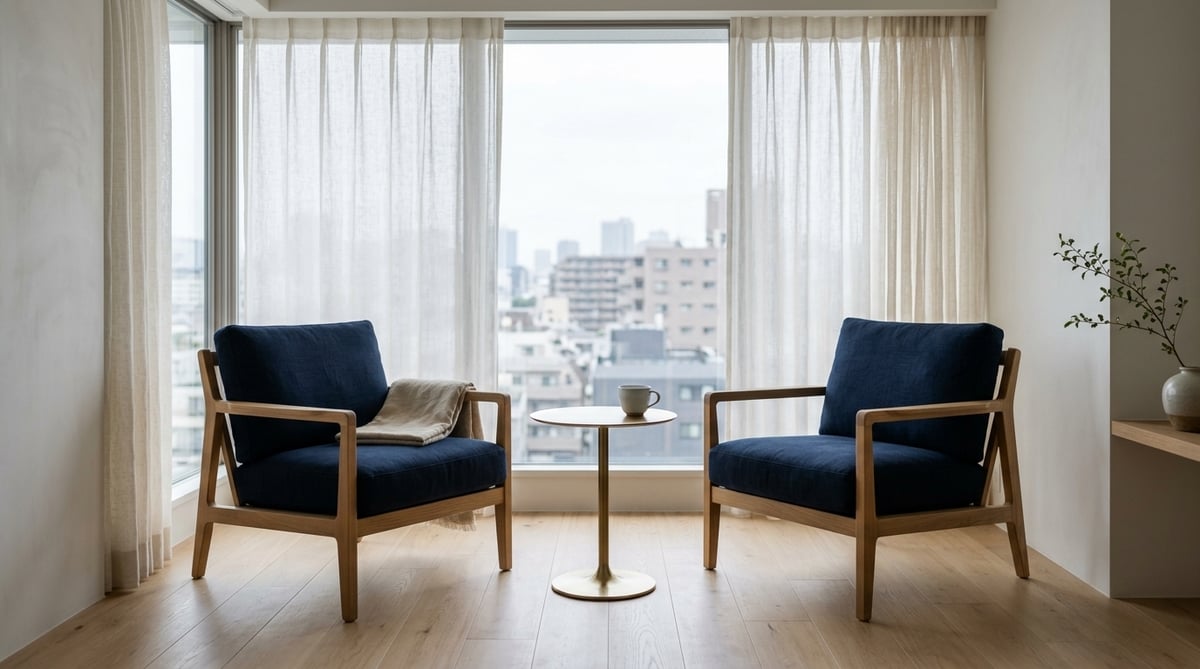
Driving between viewings on a clear afternoon—from the quiet stone walls of Hanabusayama in Kamiosaki, through the golden ginkgo-lined Platinum Street of Shirokanedai, and down toward Minami-Azabu where the canopy of Arisugawa-no-miya Memorial Park sways in the breeze—reveals how noticeably the rhythm of daily life and spoken languages shift over a distance of barely fifteen minutes. When touring 70 to 100 square meter 2LDK and 3LDK residences with international executives and bilingual families, this is often where clients pause: deciding which of these three distinct elevated residential enclaves, situated just a short walk or drive from one another, best anchors their family life in Tokyo.
For budgets in the 350,000 to 550,000 JPY per month range, Meguro, Shirokanedai, and Hiroo all present compelling options. However, calculating the total two-year cost of living (benchmarked at 27 months to factor in initial move-in costs, deposits, and fees) reveals that Shirokanedai commands a premium of roughly 1.49 to 1.86 million JPY over Meguro, while Hiroo represents an increase of 2.13 to 2.65 million JPY. Whether you prioritize the four-line transit hub of Meguro to maximize apartment floor space and commute efficiency to Shinagawa, Haneda Airport, and Otemachi; the peaceful greenery and leafy avenues of Shirokanedai next to the Institute for Nature Study; or an investment in Hiroo's international environment with walking access to schools and import grocers, your family's morning and evening routines will take very different shapes.
Furthermore, even within the radius of a single station, the daily living experience differs fundamentally between stable upland plateaus and flat river basin lowlands—from the gradient faced when pushing a stroller to flood preparedness during seasonal downpours. Below, a licensed Japanese real estate broker outlines the key criteria for choosing the neighborhood that aligns naturally with your family's priorities, alongside practical contractual checkpoints such as early termination clauses under corporate fixed-term leases and mechanical parking restrictions for large imported vehicles.
- Offers a 4-line transit hub with fast airport access, yielding the most spacious layouts and newer construction for your budget among the three areas.
- Balances direct transit to central Tokyo business hubs with serene residential streets surrounded by lush greenery and tree-lined avenues.
- Commands the highest 2-year total cost, balanced by an international community where international schools and Western import supermarkets are within walking distance.
Rental Market Rates and the 2-Year Total Living Cost Threshold
When assessing family residences in the 350,000 to 550,000 JPY monthly range, monthly rent differentials of a few tens of thousands of yen can appear modest at first glance. However, when calculated across a standard two-year residency period (calculated as 27 months to incorporate security deposits, key money, and brokerage commissions), the actual variance on family budgets and corporate housing allowances becomes substantial. Broader market trends across southern Tokyo are detailed in our Shibuya, Ebisu, Meguro, and Shinagawa Rental Guide for Foreign Residents; yet even across these three adjacent stations—all sharing elevated residential enclaves—per-square-meter rental rates diverge significantly.
| Station Area (Key Enclaves) | Est. Rent / sqm | 1LDK Median | 2LDK Median (2-Yr Total) | 3LDK Median (2-Yr Total) |
|---|---|---|---|---|
| Meguro (Kamiosaki, Hanabusayama) | 5,000 JPY | 228,000 JPY | 332,000 JPY (8.96M JPY) | 410,000 JPY (11.07M JPY) |
| Shirokanedai (Shirokanedai 4/5-chome) | 5,500 JPY | 263,000 JPY | 387,000 JPY (10.45M JPY) | 479,000 JPY (12.93M JPY) |
| Hiroo (Minami-Azabu, Hiroo 2/3-chome) | 5,700 JPY | 279,000 JPY | 411,000 JPY (11.10M JPY) | 508,000 JPY (13.72M JPY) |
| (Reference) Ebisu (Ebisu-Minami, Mita) | 5,400 JPY | 258,000 JPY | 374,000 JPY (10.10M JPY) | 462,000 JPY (12.47M JPY) |
Note: The two-year total cost estimates above represent a 27-month baseline, comprising 24 months of contractual rent alongside approximately 3 months' equivalent in initial upfront costs (security deposit, key money, and brokerage fee). In premium condominium rentals or pet-friendly properties, security deposits may be set between 2 to 4 months of rent, so upfront funding should be confirmed against specific listing terms (security deposits are refundable upon move-out, minus restoration expenses). For executives arriving ahead of their families, 1LDK median figures are included for initial solo transition benchmarking.
Balancing the 1.5M to 2.65M JPY Cost Gap Against Usable Floor Space
During an active apartment search, a pivotal threshold emerges: the two-year total living cost of leasing a 2LDK in Hiroo aligns almost identically with that of a 3LDK in Meguro, both hovering around 11.1 million JPY. For example, if a corporate housing policy sets a monthly ceiling at 400,000 to 430,000 JPY, an apartment search within walking distance of Hiroo Station will primarily yield 65 to 75 square meter 2LDK layouts, or renovated units within older vintage condominium buildings. By contrast, expanding your search into Meguro's Kamiosaki and Hanabusayama neighborhoods brings 80 to 95 square meter 3LDK floor plans—complete with dedicated workspaces for dual remote video conferences, separate children's bedrooms, or newer construction with modern concierge facilities—comfortably within reach.
A 1.5 to 2.65 million JPY cost difference over two years does not merely reflect a prestigious postal code; it represents an intentional budget decision. You are weighing whether to prioritize stepping out your front door directly into an English-accessible international community, or allocating funds toward a spacious indoor footprint where large overseas furniture fits comfortably and your family can unwind. For families in their first year in Japan whose non-working partners seek the comfort of English-accessible daily shopping and parenting networks, Hiroo offers immense everyday reassurance. Conversely, for households already settled into life in Japan who prioritize interior space, a home office, and streamlined business transit, Meguro or Shirokanedai provide an exceptionally balanced standard of living.
The Intersecting Borders of Ebisu, Shirokanedai, and Meguro: Budget Allocation Insights
During property tours, clients frequently observe: "If Shirokanedai and Hanabusayama are only a twelve to fifteen-minute walk from neighboring stations, wouldn't it make sense to simply lease near the station with the most moderate market rate?" Indeed, from the East Exit of Meguro Station in Kamiosaki, one can walk seamlessly along flat plateau streets into Shirokanedai. Similarly, the Platinum Street corridor in Shirokanedai 5-chome connects via pleasant pedestrian paths directly to Yebisu Garden Place and Hiroo.
Ebisu, included as a reference point in the table above and featured in our Yamanote Line Area Guide, offers a vibrant array of dining and everyday conveniences, with market rates positioned between Shirokanedai and Meguro. While our Ebisu vs. Meguro Expat Rental Comparison covers this dynamic for singles and working couples, priorities shift notably for families with young children. The immediate surroundings of Ebisu Station feature bustling commercial complexes and dining districts that remain active late into the evening. Families seeking calm, tree-lined residential streets with minimal vehicle traffic for weekend stroller walks frequently choose Shirokanedai 4 or 5-chome or Kamiosaki 3-chome (Hanabusayama), deliberately set apart from bustling commercial zones. Keeping the vibrant energy of adjacent districts within a short walk or single taxi fare while resting in a tranquil residential zone defines the refined lifestyle of southern Tokyo's historic plateaus.
Simply enter the rent and deposit from portal listings to calculate a full, itemized breakdown including brokerage and guarantor fees without hidden add-ons.
Hanabusayama, Platinum Street, and Arisugawa Park: Plateau Stability vs. Lowland Basins
When inspecting properties across Meguro, Shirokanedai, and Hiroo, verifying whether a building sits atop the Musashino Loam Plateau or down within an eroded river valley is every bit as essential as checking the listed walking minutes to the station. While prime historical enclaves sit comfortably atop stable loam plateaus—outside municipal flood hazard inundation zones—walking just a few minutes downhill from a station can completely alter pedestrian gradients and drainage characteristics during heavy rainfall.
Meguro (Kamiosaki & Hanabusayama): 4-Line Transit Hub and the Meguro River Elevation Drop
Meguro Station's defining advantage is its four-line transit interchange: the JR Yamanote Line and Tokyu Meguro Line connect directly with the Tokyo Metro Namboku Line and Toei Mita Line (offering one-seat rides to Roppongi-itchome, Tameike-sanno, Hibiya, and Otemachi). Shinagawa Station is just eight minutes away via the Yamanote Line, significantly easing early-morning domestic Shinkansen departures and international travel to Haneda Airport for busy executives. The redundancy of four rail lines also provides valuable peace of mind during unexpected transit delays.
Regarding residential environments, discerning between main thoroughfares and tucked-away residential blocks is key. The immediate eastern vicinity of Meguro Station and along Meguro-dori Avenue (such as parts of Kamiosaki 2-chome in Shinagawa Ward) are zoned commercial, offering supermarkets, restaurants, and brightly lit walking paths, accompanied by heavier street traffic. When evaluating residences facing major streets, it is wise to inspect nighttime vehicle noise, window sash acoustic performance (such as double glazing), and whether adjacent lots (such as coin parking lots or low-rise aging buildings) present potential future construction risks.
Just one block behind lies Kamiosaki 3-chome, known historically as Hanabusayama. Zoned as a Category I Mid/High-Rise Residential Zone on an elevated plateau, this quiet enclave of mid-rise residences and private estates exhibits a remarkably peaceful atmosphere given its proximity to a major rail hub. Conversely, heading westward down Gonnouskezaka or Gyoninzaka toward the Meguro River (parts of Meguro 1-chome and Shimomeguro in Meguro Ward) leads into a lower elevation basin. Certain sections carry designated flood advisory zones, and the morning walk up to the station involves a noticeable incline. When planning daily routes with electric bicycles or strollers, walk the route in person to compare the steep western descent against the flat plateau approach toward Kamiosaki and Mita. Detailed neighborhood nuances can also be found in our Meguro Station Residential Guide.
Shirokanedai (Shirokanedai 4 & 5-chome): The Green Canopy of the Nature Study and Avenue Buffers
Served by the Tokyo Metro Namboku and Toei Mita lines, Shirokanedai Station is just a two-minute train ride from Meguro. Emerging above ground, the lush forest canopy of the Institute for Nature Study and the Tokyo Metropolitan Teien Art Museum lends the entire neighborhood a tranquil, verdant character. The surrounding area rests atop a geologically stable plateau, with the majority of residential blocks situated safely outside municipal flood zones.
Parcels facing Meguro-dori Avenue in Shirokanedai 3-chome or along Gaien-Nishi-dori (Platinum Street) are designated commercial, characterized by stylish cafes, boutiques, and leafy pedestrian avenues. However, weekend afternoons bring increased foot traffic and leisurely vehicle flow. Families prioritizing quiet privacy often look to Shirokanedai 4 and 5-chome or Shirokane 4-chome, where low-rise and mid-rise residential pockets sit buffered one block behind the main avenues. This setback significantly softens traffic sound, and rental pricing tends to settle into a more moderate range compared to prime commercial-facing addresses.
Note that walking northeast down the slope of Platinum Street toward Shirokane 1 and 2-chome leads down toward the Furukawa River basin, transitioning from plateau to lowland. For properties situated along slope boundaries, checking drainage grades, foundation retaining walls, evening streetlight coverage, and sidewalk widths during dusk ensures an accurate expectation of daily living. Further neighborhood insights are available in our Shirokanedai Station Residential Guide.
Hiroo (Minami-Azabu & Hiroo 2–3-chome): Low-Rise Estates vs. the Shibuya River Lowland Basin
Surrounded by international embassies and the historic greenery of Arisugawa-no-miya Memorial Park, Hiroo exhibits a distinct topographical divide between its elevated, low-rise residential enclaves and the flat lowlands surrounding the station. To the northwest in Shibuya Ward, Hiroo 2 and 3-chome feature strict Category I Low-Rise Exclusive Residential zoning, preserving a calm environment of three-story residences where large commercial and entertainment facilities are prohibited by law. Similarly, the elevated parcels of Minami-Azabu 4 and 5-chome in Minato Ward, situated above Arisugawa Park, feature stable ground safely removed from flood hazard zones.
In contrast, the immediate station area outside Hiroo Station exits (Tokyo Metro Hibiya Line), Hiroo Shotengai (Hiroo 5-chome), and the flat sections of Minami-Azabu 5-chome sit within the valley floor along the Shibuya River (which becomes the Furukawa downstream). The absence of slopes makes pushing a stroller or walking hand-in-hand with young children to the station and grocery stores effortless. However, because certain low-lying sections carry potential storm run-off and pluvial flooding designations during typhoons, families considering apartments in the flat zone should confirm that living quarters are on the second floor or above, and verify that critical building electrical switchgear is elevated and flood barriers are installed at building entrances and underground garage ramps.
International School Commuting Routes and Everyday Groceries
For international families and executives relocating to Tokyo, the five-minute morning walk to an international school bus stop and effortless access to familiar imported ingredients are essential pillars for settling comfortably into Tokyo life. Across these three neighborhoods, rail connections, school bus routing, and grocery environments differ distinctly.
| Criteria | Meguro (Kamiosaki / Hanabusayama) | Shirokanedai (4 & 5-chome) | Hiroo (Minami-Azabu / Hiroo 2–3) |
|---|---|---|---|
| Train Lines | JR Yamanote, Tokyu Meguro, Tokyo Metro Namboku, Toei Mita (4 lines) | Tokyo Metro Namboku, Toei Mita (2 lines) | Tokyo Metro Hibiya (1 line) |
| Key Direct Business Hubs | Shinagawa, Otemachi, Hibiya, Roppongi-itchome, Tameike-sanno, Shibuya | Roppongi-itchome, Tameike-sanno, Nagatacho, Hibiya, Otemachi | Roppongi, Kamiyacho, Toranomon Hills, Kasumigaseki, Hibiya, Ginza |
| International School Access | ASIJ bus stop zones; balanced access to BST Azabudai (Namboku Line) and Showa Campus (bus/train) | ASIJ bus stop zones; short bicycle/car drive to Sacred Heart & Nishimachi; direct Namboku Line to Azabudai | Walking or short drive to Sacred Heart & Nishimachi; multiple ASIJ bus stops; direct Hibiya Line to Azabudai |
| Daily Supermarkets | Precce Meguro (atre Meguro) and station-integrated specialty grocers | Maruetsu Petit Shirokanedai Platinum Street, Inageya Shirokanedai | National Azabu (Minami-Azabu 4-chome), Meidi-Ya Hiroo Store |
ASIJ Bus Routes and Commuting to Sacred Heart, Nishimachi, and BST Campuses
A primary reason Hiroo has long been preferred by international families is its proximity to the International School of the Sacred Heart (ISSH in Hiroo 4-chome) and Nishimachi International School (Moto-Azabu 2-chome), both accessible via walking, cycling, or a short vehicle drop-off. Avoiding peak-hour subway commutes for children while participating effortlessly in school events and parent associations provides immense reassurance, particularly for families navigating their initial transition to Japan.
For the American School in Japan (ASIJ in Chofu, alongside its Early Learning Center in Roppongi), school bus stops are established not only throughout Hiroo and Minami-Azabu, but also at designated points in Shirokanedai and Meguro's Kamiosaki area. However, because bus routes, pickup stops, and seat availability are adjusted annually based on student enrollment, it is critical to verify updated route maps with school admissions once candidate properties are shortlisted, confirming sidewalk widths and pedestrian crossing safety during morning hours.
For families considering the British School in Tokyo (BST), campus locations vary depending on your child's grade level. The Primary School at Azabudai Hills is quickly reached from Hiroo via the Hibiya Line to Kamiyacho, or from Shirokanedai and Meguro via the Namboku Line to Roppongi-itchome. Conversely, for the Secondary School at the Showa Campus (within Showa Women's University in Sangenjaya), Meguro offers practical advantages via a quick connection on the Yamanote Line through Shibuya to the Den-en-toshi Line, or direct bus routes along Meguro-dori. For families considering bilingual education through local public schools, municipal administrative boundaries divide Minato Ward (Kogai Elementary, Koryo Junior High, Shirokaneno-Oka Gakuen), Shibuya Ward (Rinsen Elementary, Hiroo Junior High), and Shinagawa/Meguro Wards, making block-level school district confirmation essential.
National Azabu & Meidi-Ya in Hiroo vs. Station-Direct Convenience in Meguro and Shirokanedai's Calm
Regarding daily groceries, Hiroo is home to two venerable institutions: National Azabu (Minami-Azabu 4-chome), situated directly opposite Arisugawa Park, and Meidi-Ya Hiroo Store inside Hiroo Plaza. With bilingual floor staff, extensive selections of Western cheeses, roasting meats, gluten-free, organic, and vegan products, cooking familiar comfort meals from day one is seamless, even for partners who do not read or speak Japanese.
Meguro's strength lies in its weather-protected efficiency. The station complex, atre Meguro, houses the upscale supermarket Precce Meguro, alongside specialty butchers, fishmongers, organic produce counters, and bakeries. On rainy evenings or after late meetings, you can pick up fresh ingredients directly from the ticket gate without stepping outside. Shirokanedai features practical, high-quality local markets such as Maruetsu Petit Shirokanedai Platinum Street and Inageya Shirokanedai. While Shirokanedai lacks large import grocers or extensive commercial malls, many resident families pick up day-to-day fresh items locally, reserving weekend visits to National Azabu in Hiroo for bulk Western specialty purchases.
Corporate Leases, Fixed-Term Contracts, and Large Vehicle Parking Checkpoints
In high-end 2LDK and 3LDK residential properties ranging from 350,000 to 550,000 JPY per month, many units are privately owned condominiums leased out while owners are on overseas assignments. These properties carry specific condominium bylaws and contractual structures that differ fundamentally from standard individual rentals. Here are the four essential operational steps to navigate from viewing through handover.
Corporate Leases and Fixed-Term Agreements (Article 38 of the Act on Land and Building Leases)
In Hanabusayama, Shirokanedai, and Minami-Azabu, many family-sized condominium rentals are offered under Fixed-Term Building Lease Contracts (under Article 38 of Japan's Act on Land and Building Leases). Unlike standard renewable leases, fixed-term leases conclude automatically upon term expiry without renewal (though re-contracting is frequently possible upon mutual consent). When entering into a fixed-term lease under a corporate entity (corporate housing), verifying the inclusion of an early termination clause is critical.
Under Article 38, Paragraph 7 of the Act, an individual tenant leasing residential property under 200 square meters possesses a statutory right to terminate the lease with one month's notice if unavoidable circumstances (such as an unexpected job transfer or family medical care) make continued occupancy unfeasible. However, this statutory right applies strictly to individual tenants and does not protect corporate lease entities. If a company enters into a three- or five-year fixed-term lease lacking an explicit mid-term termination rider, an unforeseen overseas transfer or repatriation could legally obligate the company to pay the remaining rent balance through the entire contractual period. Aligning with your corporate housing rules at application to negotiate a rider allowing termination upon one to two months' advance notice (or a capped penalty) is essential.
For executives signing leases individually with housing allowances who have newly relocated to Japan, local tax certificates and residency records (Juminhyo) may not yet be issued. In these circumstances, selecting residences that accept specialized multilingual guarantee companies such as GTN (Global Trust Networks), where screening is completed using an official employment offer letter, passport, and emergency contact details, ensures a smooth contract execution without losing a favored property.
Mechanical Parking Limits for Large SUVs and Security Deposit Protection Under Tokyo Rules
For families driving full-sized imported SUVs or electric vehicles (EVs) for weekend trips and school runs, mechanical parking dimensions and load limits represent a frequent logistical hurdle. Underground mechanical parking in central Tokyo residential buildings often enforces ceilings of 1,850 to 1,950 mm in overall width, 1,550 mm in vehicle height (standard sedans) or 2,000 to 2,050 mm (high-roof bays), and maximum weight limits between 2,000 and 2,300 kg. Modern full-sized SUVs exceeding 1,950 mm in width or heavy battery-laden EVs frequently exceed these engineering tolerances. Even when a listing specifies parking availability, the vacant pallet may be restricted to low-roof standard cars. Always match vehicle registration specifications against the building's parking pallet dimensional schedule before viewing.
Furthermore, because security deposits on premium family residences frequently amount to two to four months of rent, understanding Tokyo's legal frameworks for move-out restoration provides valuable financial protection. Under the Tokyo Metropolitan Ordinance on the Prevention of Residential Rental Disputes (the "Tokyo Rules"), real estate brokers are legally required to deliver an independent written disclosure before contract signing explaining that wear and tear resulting from normal everyday use and aging is the landlord's responsibility (including aging breakdowns of water heaters and built-in air conditioning).
Additionally, the Ministry of Land, Infrastructure, Transport and Tourism (MLIT) Restoration Guidelines establish that the depreciable lifespan of wall wallpaper is 6 years (reaching a residual value of 1 JPY after six years). Even if accidental surface damage occurs, tenant liability is generally apportioned to the single damaged wall surface, rather than the entire room. Special clauses mandating tenant-paid move-out cleaning fees must satisfy the rigorous three-part standard established by the Supreme Court of Japan (Second Small Bench, December 16, 2005): clear contractual specificity, explicit mutual tenant understanding and consent, and absence of unreasonable financial burden. Reviewing English draft translations against the original Japanese contract ensures your security deposit remains protected.
When to Pass on an Area: Selecting the Right Fit for Your Family
Meguro, Shirokanedai, and Hiroo each possess unique appeal, yet attempting to combine every single preference into one home often creates friction with budgets or space requirements. There is no single correct choice for every household. By considering what matters most on weekday mornings and weekend afternoons, clarifying when it is reasonable to pass on one area and choose an adjacent district provides a clear decision path.
Scenarios Where Passing on an Area is the Rational Choice
When passing on Hiroo is rational: If primary commuting routes lead to Shinagawa, Marunouchi, or Tokyo Station with frequent business trips via the Tokyu/Shinkansen lines or Haneda Airport, relying solely on the Hibiya Line can add daily transfer friction. Furthermore, within a 400,000 to 450,000 JPY monthly budget, if an 85+ square meter 3LDK layout or a large ground-level parking space for a full-sized SUV is non-negotiable, exploring Hanabusayama in Kamiosaki or the quiet plateaus of Shirokanedai offers a superior balance of living space and tranquility over downsizing in Hiroo's station basin.
When passing on Shirokanedai is rational: For dual-income households with demanding work schedules who require one-stop grocery shopping integrated directly into the train station, or those who depend on Western imported cooking ingredients daily. Because Shirokanedai features moderate-sized local supermarkets rather than large retail hubs, bad weather can make grocery trips slightly less convenient. In this case, Meguro's station-direct retail or Hiroo's international grocery selection will prove more convenient.
When passing on Meguro is rational: If your priority is being insulated from commercial bustle, stepping out your door directly into an international community where English is spoken casually among fellow school parents. For families seeking walking proximity to Sacred Heart or Nishimachi, allocating the 1.5 to 2.65 million JPY premium over two years for Hiroo (Minami-Azabu or Hiroo 2/3-chome) or Shirokanedai's green residential blocks is well justified. Additionally, if the only residences available in Meguro within your budget sit down the steep incline along the Meguro River, it is worth walking the slopes in person before committing.
Families Best Suited to Meguro (Kamiosaki / Hanabusayama)
- ✓ Prioritizing direct, fast connections to Shinagawa, Otemachi, Roppongi-itchome, or Haneda Airport.
- ✓ Securing an 80 to 95 sqm 3LDK or newer construction residence within a balanced budget.
- ✓ Completing daily grocery shopping without rain exposure via the atre Meguro station complex.
Families Best Suited to Shirokanedai & Hiroo
- ✓ Immediate walking proximity to Sacred Heart or Nishimachi, with an English-accessible lifestyle (Hiroo).
- ✓ Relying on National Azabu and Meidi-Ya for daily international groceries (Hiroo).
- ✓ Living along quiet residential plateaus buffered by the Institute for Nature Study and Platinum Street (Shirokanedai).
Selecting Your Home with an Objective Second Opinion
Whether it is fresh coffee in a sunlit living room atop Hanabusayama, morning strolls past the deep woods of the Institute for Nature Study in Shirokanedai, or afternoon conversations under the park trees in Hiroo, each district offers a refined living experience. When real estate listings and maps leave you undecided, strolling from Kamiosaki through Platinum Street and over toward Arisugawa-no-miya Memorial Park on a weekend afternoon often reveals the neighborhood rhythm that fits your family best.
If you encounter a listing and want to confirm whether a specific block sits on an elevated plateau or in a lowland basin, whether a corporate fixed-term lease allows early departure riders, or whether your car fits the parking pallet, reach out to our team at the Sorai Tokyo Concierge Desk. By sending the listing URL to our official LINE account, a licensed real estate broker will check real-time availability via REINS (the nationwide inter-broker database), perform an objective fee audit, and provide a transparent contract review.
Inquiries are welcome completely anonymously without requiring a phone number or office visits. You can access our interactive smart tools (SorAi) via the bottom menu on mobile or the footer on desktop at your own pace, 24/7. We wish you and your family a peaceful and enriching transition to your new home in Tokyo.
Frequently Asked Questions: Family Rentals in Meguro, Shirokanedai, and Hiroo
QCan a corporate fixed-term lease be terminated early if an employee is unexpectedly reassigned abroad?
AThe statutory right under Article 38 of Japan's Act on Land and Building Leases to terminate a fixed-term residential lease with one month's notice applies exclusively to individual tenants facing unavoidable life events, and does not automatically cover corporate lease entities. Therefore, when signing a fixed-term lease under a corporate contract, it is critical to negotiate an explicit rider in advance allowing early termination upon 1 to 2 months' written notice (or capping early departure penalties) before submitting your lease application.
QCan I complete tenant screening under an individual contract if I have newly arrived in Japan without a residency certificate (Juminhyo) or local tax records?
AYes, many properties accommodate this transition. For foreign professionals leasing individually with housing allowances, approvals are routinely obtained by submitting an employment offer letter or remuneration certificate from your Japanese entity or overseas employer, along with your passport and visa documentation, using multilingual rent guarantee companies like GTN (Global Trust Networks). Because screening criteria vary by condominium owner, verifying documentary requirements prior to viewing ensures a smooth process.
QAKamiosaki 2 and 3-chome (Hanabusayama) in Shinagawa Ward, Shirokanedai 4 and 5-chome in Minato Ward, and Hiroo 2 and 3-chome alongside the upper plateau of Minami-Azabu are situated on stable loam plateaus outside designated flood hazard zones. Conversely, parcels along the Meguro River (Meguro 1-chome, Shimomeguro) and the Shibuya River (Hiroo 5-chome, flat parts of Minami-Azabu 5-chome) lie in valley basins. For riverfront properties, verify building electrical substation elevation and flood barriers; on plateau addresses, test the walking slope from the station with a stroller to ensure daily comfort.
A



Sorai Tokyo Co., Ltd. Editorial (Licensed Real Estate Agency #113297)
Licensed online real estate agency handling residential leasing across 15 major Tokyo lines (Member of All Japan Real Estate Association). Powered by our proprietary 24/7 AI "SorAi" on iOS/LINE and dedicated licensed realtors, we support renters end-to-end from vacancy checks on major portals to viewings and digital contracts.