
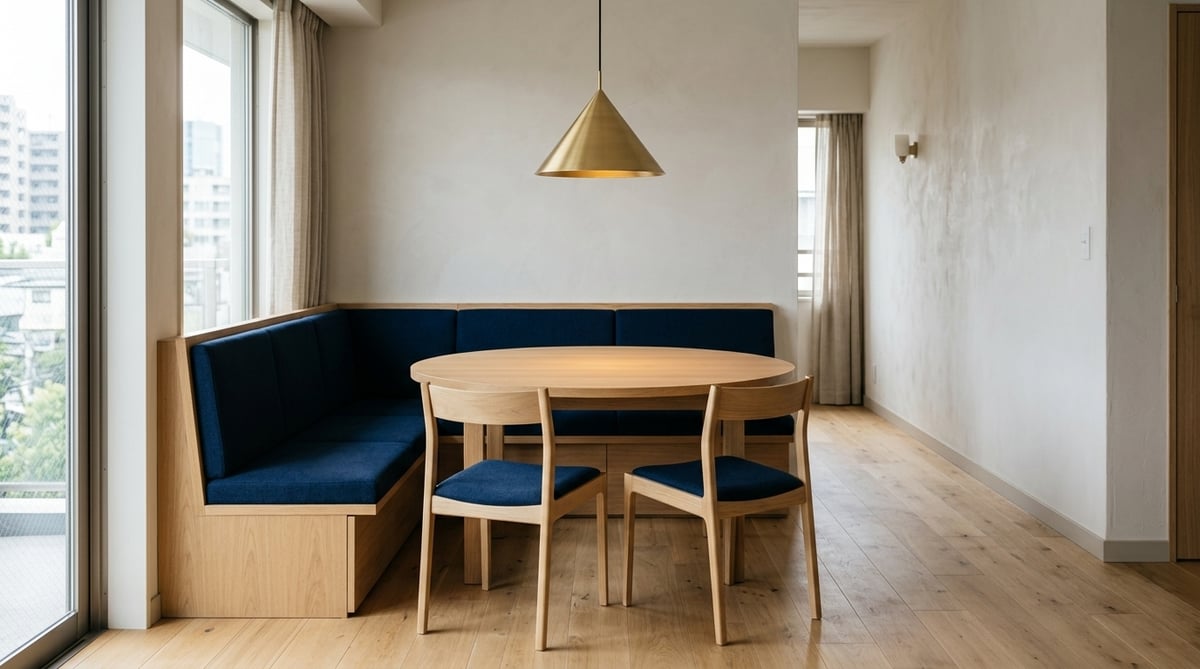
While situated in the heart of the metropolis, Yoyogi-Uehara and Yoyogi-Koen offer immediate access to the verdant expanses of the Musashino Plateau, seamlessly blending characterful local bakeries and intimate bistros into everyday routines. For two independent professionals embarking on a shared journey, this neighborhood provides an unparalleled balance of residential tranquility and urban connectivity in Tokyo.
The Tokyo Metro Chiyoda Line provides direct access to premier commercial districts such as Otemachi, Hibiya, and Kasumigaseki, while the Odakyu Odawara Line reaches Shinjuku in just five minutes. Furthermore, with Shibuya comfortably accessible by bicycle or local bus, the daily commute for dual-income couples becomes remarkably stress-free. Whether meeting after work across a cozy wine bar counter or taking leisurely weekend strolls beneath the sun-dappled canopy of Yoyogi Park with warm pastries in hand, life here introduces a calming breath of fresh air into shared routines.
In this guide, a licensed real estate broker with over a decade of property consulting experience across central Tokyo examines 1LDK and 2DK floor plans within the ¥200,000–¥250,000 monthly rent range. We explore undulating local topography, smart grocery shopping routes, and crucial nuances surrounding cohabitation screening and initial moving cost verification.
- A comprehensive licensed broker guide for couples planning cohabitation in Yoyogi-Uehara and Yoyogi-Koen, covering 1LDK/2DK layouts, dual-commute routines, remote work setups, Tomigaya/Okushibu evening bistros, cost simulations, and dual-occupancy tenant screenings within a ¥200k–¥250k monthly budget.
- Enjoy seated morning commutes by boarding originating trains on the Chiyoda Line at Yoyogi-Uehara Station.
- Odakyu Express and Rapid Express stops connect directly to Shinjuku in just five minutes.
Residential Living Environment of Yoyogi-Uehara and Yoyogi-Koen
For many couples searching for their first joint residence, selecting a home is about more than commuting efficiency—it is an alignment of lifestyle aesthetics. How will weekends be spent? What atmosphere greets you when returning tired at the end of the day? Yoyogi-Uehara and Yoyogi-Koen cater to these aspirations with refined dignity and calm seclusion.
Urban Sophistication Harmonized with Natural Greenery
Strolling through the neighborhoods connecting Yoyogi-Uehara, Yoyogi-Koen, and Tomigaya, the first impression is a gentle calm enveloping the entire district. Stepping away from the main thoroughfares reveals orderly residential streets in Uehara, Oyamacho, and Nishihara—enclaves developed as prestigious residential neighborhoods since the early Showa period—allowing residents to leave metropolitan clamor behind.
Around the stations and along Inokashira-dori Avenue, curated boutiques, pottery galleries, and independent coffee roasters showcase their proprietors' meticulous sensibilities. Unlike bustling commercial districts dominated by chain stores, pedestrians here share an unhurried demeanor, reflecting a mature culture centered on mindful everyday living.
Balanced Proximity to Shibuya, Harajuku, and Shinjuku
A notable advantage of this area is its immediate adjacency to Tokyo's primary transit hubs, while maintaining a comfortable buffer from commercial congestion. Departing from Yoyogi-Koen Station or Yoyogi-Hachiman Station, passing through the Tomigaya intersection, and strolling south through Kamiyamacho (Okushibu), residents can reach the cultural epicenter of Shibuya within approximately 20 minutes on foot.
Furthermore, traversing the green pathways of Yoyogi Park leads directly to Harajuku and Meiji-jingumae, while boarding the Odakyu Line reaches Shinjuku in mere minutes. Enjoying world-class entertainment and retail, followed by a short return home to the soft glow of a quiet residential street, offers working couples valuable mental decompression.
Elevation Dynamics and Topography: Yoyogi-Uehara, Yoyogi-Koen, and Tomigaya
When settling into this neighborhood, understanding the varied topography is essential. Located on the eastern edge of the Musashino Plateau, the district features a dynamic terrain shaped by the Yodobashi upland plateau and the valleys carved by the Udagawa and Tomigayagawa tributaries of the Shibuya River.
Yoyogi-Uehara Station rests in an elevated basin at approximately 35 meters above sea level, with roads sloping gently upward toward Nishihara to the north and Uehara 2-chome and 3-chome to the south. Conversely, the Tomigaya intersection fronting Yoyogi-Koen and Yoyogi-Hachiman stations sits in a lowland valley at around 15 meters above sea level. Heading west toward Yoyogi-Uehara along Inokashira-dori Avenue or east toward Yoyogi 5-chome requires traversing steady inclines with an elevation change of 15 to 20 meters.
While walking offers healthy exercise, utilizing an electrically assisted bicycle significantly streamlines grocery trips and daily travel. Additionally, numerous shared cycle ports such as LUUP are distributed throughout the area, widely embraced by residents as an agile transportation option across these rolling hills.
Licensed real estate specialists well-versed in central Tokyo property selection provide personalized video consultations—covering criteria organization, unlisted listings, and initial cost optimization.
[Tomigaya Shopping Street & DINKS Focus] 1LDK Layout Dynamics Near Yoyogi Park
For an in-depth look at everyday grocery shopping routes along Tomigaya Shopping Street and interior space planning for DINKS 1LDK apartments, explore our dedicated guide below.
👉 Read: Cohabitation in Yoyogi Park: Tomigaya Shopping Routes & DINKS 1LDK Layout Techniques
Complete rental and living guide for all stations on the Tokyo Metro Chiyoda Line, from Kita-Ayase and Kita-Senju to downtown Otemachi.
Seamless Dual Commutes: Chiyoda Line and Odakyu Line Connectivity
When selecting a home for cohabitation, transit access to both workplaces directly impacts overall life satisfaction. Yoyogi-Uehara, Yoyogi-Koen, and Yoyogi-Hachiman stations offer outstanding mobility to Tokyo's primary business hubs.
Seated Commutes from Chiyoda Line Originating Station to Otemachi and Kasumigaseki
The Tokyo Metro Chiyoda Line cuts straight across central Tokyo, serving Omotesando, Nogizaka, Akasaka, Kasumigaseki, Hibiya, Nijubashimae (Marunouchi), and Otemachi. Yoyogi-Uehara Station serves as the western terminus for the line, featuring numerous originating trains during the weekday morning rush hour.
Even during the peak 8:00 AM window, waiting for one or two departures allows commuters to secure a seat, eliminating the fatigue of packed subway cars. Spending twenty peaceful morning minutes seated comfortably—catching up on news or reading a book while smoothly shifting into work mode—delivers substantial daily benefits. Kasumigaseki is accessible in approximately 13 minutes, and Otemachi in about 20 minutes without transfers.
Odakyu Express Stops: 5 Minutes to Shinjuku and Rapid Access to Shimokitazawa
At Yoyogi-Uehara Station, the Odakyu Odawara Line provides stops for local, Commuter Express, Express, and Rapid Express trains. Shinjuku Station is reached non-stop in just five minutes via Express services, offering immediate connections to the JR Yamanote, Chuo, and Saikyo lines.
Heading outbound by just one stop, the vibrant neighborhood of Shimokitazawa—known for its theaters, vintage fashion, and unique eateries—is only three minutes away. Transferring to the Keio Inokashira Line opens seamless travel toward Kichijoji and Meidaimae, expanding weekend leisure opportunities.
Direct Bus Routes and Bike Paths to Shibuya Station
Complementing the rail network is an extensive bus system servicing Shibuya. Frequent services operated by Keio Bus (such as Shibu 63, Shibu 64, and Shibu 66 routes) and Toei Bus depart from stops around the Tomigaya intersection and Yoyogi-Hachiman Station, arriving at Shibuya Station West Exit or Hachiko Exit in roughly 10 to 15 minutes.
Additionally, Shibuya City's community bus, the "Hachiko Bus" (Hill-Crossing Route and Uehara/Tomigaya Route), connects residents to the ward office and Shibuya Station for a flat ¥100 fare. By bicycle, navigating the flat passage through Okushibu (Kamiyamacho and Udagawacho) reaches central Shibuya in under ten minutes, providing a convenient ride home even after train service ends.
Station Layouts, Ticket Gates, and Exits
Understanding station concourses and exit placements is crucial for identifying the most efficient walking routes from prospective residences. Station configurations based on official operator layouts include:
- Yoyogi-Uehara Station (Odakyu Odawara Line / Tokyo Metro Chiyoda Line): An elevated station with two island platforms and four tracks, managed by Odakyu Electric Railway. There is a single ticket gate concourse on the second floor. Exits are divided into North 1, North 2, South 1, South 2, West, and East, directly integrated into the Acorde Yoyogi-Uehara commercial complex. Odakyu and Chiyoda Line platforms share the same floor, enabling cross-platform transfers.
- Yoyogi-Koen Station (Tokyo Metro Chiyoda Line): An underground station with one island platform and two tracks on the B2 level. There are two ticket gate areas: North Gate (toward Yoyogi-Hachiman Station) and South Gate (toward Tomigaya intersection). There are four designated exits: Exit 1 (connecting to Yoyogi-Hachiman Station / Hachiman Shopping Street), Exit 2 (toward Yoyogi 5-chome / Yoyogi Park West Gate), Exit 3 (toward Tomigaya 1-chome / Inokashira-dori), and Exit 4 (toward Tomigaya intersection / Yamate-dori, equipped with an elevator). Note: There is no Exit 5.
- Yoyogi-Hachiman Station (Odakyu Odawara Line): A modern elevated bridge station building completed in 2019, featuring one central ticket gate on the second floor. Exits lead toward the South Exit (less than a 1-minute walk to Yoyogi-Koen Station Exit 1) and the North Exit (accessing the quiet residential quarters of Yoyogi 5-chome).
| Station & Line | Direct Travel Times to Major Hubs | Ticket Gates & Main Exits | Commuter Highlights & Features |
|---|---|---|---|
| Yoyogi-Uehara Station Chiyoda Line / Odakyu Line |
Shinjuku 5 min (Express) Otemachi 20 min (Direct) Omotesando 6 min (Direct) |
Single 2F gate North 1 & 2, South 1 & 2 East, West (Direct Acorde link) |
Seated morning Chiyoda Line commutes. Stops for all Odakyu Express trains. Weatherproof shopping access. |
| Yoyogi-Koen Station Tokyo Metro Chiyoda Line |
Otemachi 18 min (Direct) Hibiya 14 min (Direct) Akasaka 8 min (Direct) |
North Gate & South Gate Exits 1 to 4 (Exit 4 features elevator) |
Immediate access to Yoyogi Park and Okushibu. 1-minute walk to Yoyogi-Hachiman for dual-line versatility. |
| Yoyogi-Hachiman Station Odakyu Odawara Line |
Shinjuku 6 min (Local) Shimokitazawa 4 min (Local) |
Bridge gate concourse South Exit, North Exit |
Tranquil local-stop ambiance. Level pedestrian access directly into Yamate-dori and local shopping streets. |
Evaluating 1LDK vs. 2DK Floor Plans for Couples (¥200k–¥250k Budget)
When searching for a cohabitation residence in Yoyogi-Uehara or Yoyogi-Koen with a budget of ¥200,000 to ¥250,000 (inclusive of management fees), the central question often boils down to choosing between a 1LDK or a 2DK layout. This decision is not merely about room count; it hinges directly on the couple's work routines and remote working frequencies.
1LDK Layouts (40–50 sqm): Shared Living Spaces and Synchronized Daily Rhythms
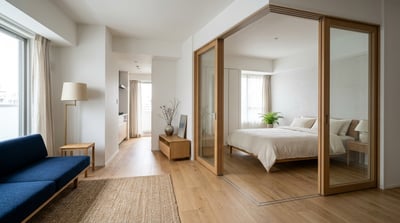
A standard 1LDK floor plan comprises an open living, dining, and kitchen area (LDK) spanning 10 to 13 tatami mats (approx. 16–21 sqm), paired with an independent bedroom of 5 to 6 tatami mats (approx. 8–10 sqm). The standout merit of this layout is the ability to share the primary living space comfortably after returning home. Whether one partner is cooking dinner while the other wraps up work at the dining table, the open concept fosters effortless connection.
Modern reinforced concrete (RC) buildings under 15 years old frequently provide upgraded wet-area fixtures, including counter kitchens, reheating-equipped baths, independent vanities, and bathroom dryers. Conversely, if partners have mismatched sleep or work hours—such as differing early morning or late-night schedules—bedroom door movements and living room lighting can interrupt sleep. Consequently, 1LDK layouts work best for couples with aligned daily rhythms.
2DK Layouts (45–55 sqm): Independence for Remote Work and Differing Schedules
A 2DK floor plan typically includes a central dining and kitchen area (DK) of 6 to 8 tatami mats, alongside two separate private rooms (5 to 6 tatami mats each). While these apartments are generally located in vintage low-rise buildings constructed 25 to 40 years ago, many have undergone comprehensive interior renovations, offering superior space efficiency relative to rental cost.
The decisive benefit of a 2DK is having two distinct rooms with functional separation. One room can serve as a shared bedroom while the other functions as a dedicated home office or personal studio; alternatively, each partner can maintain their own private bedroom. When simultaneous video conferences take place, closing interior doors provides sound isolation. When working late, partners can leave lights on without disrupting each other's rest, minimizing everyday friction.
1LDK (40–50 sqm) Plan
- ✓ Spacious 10–12+ tatami LDK maximizes quality shared time together
- ✓ Equipped with modern amenities such as counter kitchens and reheating baths
- ✓ High building specifications including auto-locks and parcel delivery lockers
2DK (45–55 sqm) Plan
- ✓ Two private rooms allow complete physical separation of office and sleeping quarters
- ✓ Differing bedtime and wake-up schedules do not disturb the other partner
- ✓ Rent per square meter is approximately ¥15,000 to ¥30,000 lower than comparable 1LDKs
Building Age and Finding Value in Renovated Properties
The neighborhoods surrounding Yoyogi-Uehara and Yoyogi-Koen boast numerous well-maintained, low-rise vintage reinforced concrete buildings constructed during the 1970s and 1980s. Properties that received building confirmation after June 1981 conform to the "New Earthquake Resistance Standards," providing sound structural peace of mind.
While newer 1LDK properties at the ¥250,000 budget cap often restrict floor space to 38–42 square meters, a fully renovated 2DK in a 30-year-old building can offer over 50 square meters of living space for ¥220,000 to ¥240,000 per month. Savoring vintage retro exterior character alongside updated system kitchens and solid-wood-style flooring presents a sophisticated, pragmatic choice aligned with the neighborhood's refined aesthetic.
| Comparison Points | 1LDK Plan (Built Within 15 Years) | 2DK Plan (Renovated Property) |
|---|---|---|
| Estimated Area | 40.0–48.0 sqm | 46.0–55.0 sqm |
| Room Allocation | LDK 10–12 tatami + Bedroom 5–6 tatami | DK 6–8 tatami + Room 5 tatami + Room 6 tatami |
| Remote Work Suitability | Comfortable for one person. Simultaneous video calls require acoustic coordination | Rooms are completely independent, easily accommodating concurrent calls behind closed doors |
| Storage Capacity (WIC, etc.) | Typically features one large walk-in closet concentrating shared clothing storage | Deep built-in closets in each room offer substantial cumulative storage volume |
| Target Couple Profile | Couples frequently commuting to offices who enjoy relaxing and dining together in the living room | Couples teleworking 2+ days weekly who prioritize quiet concentration and distinct sleep schedules |
Daily Culinary Life: Acorde Yoyogi-Uehara & Tomigaya Shopping Streets
While Yoyogi-Uehara and Yoyogi-Koen frequently receive acclaim for their dining scene, the infrastructure supporting daily home cooking is equally sophisticated. From neighborhood supermarkets for everyday runs to late-night stops and weekend bulk shopping, residents can tailor their routines seamlessly.
Station-Direct Acorde Yoyogi-Uehara & Odakyu OX Late-Night Shopping
Exiting the ticket barriers at Yoyogi-Uehara Station leads directly into Acorde Yoyogi-Uehara, a multi-story retail complex accessible without opening an umbrella on rainy days. Anchoring this hub on the B1 and 1st floors is the supermarket Odakyu OX Yoyogi-Uehara (open 10:00 AM to 11:00 PM).
Odakyu OX is renowned for farm-fresh produce, premium cuts of meat, fresh seafood, curated specialty seasonings, fine wines, and freshly prepared delicatessen meals. Even when returning home past 10:00 PM after a demanding workday, picking up wholesome dinner items is completely effortless. The building also houses KALDI Coffee Farm, Segami Drugstore, a bookstore, and medical clinics, allowing daily errands to be resolved within the station envelope.
Maruman Store and Seijo Ishii Around the Tomigaya Intersection
Looking toward Tomigaya from Yoyogi-Koen and Yoyogi-Hachiman stations, highly capable grocers sit clustered within short walking distance. Maruman Store Yoyogi-Hachiman (10:00 AM to 11:00 PM), situated along the south shopping street, enjoys substantial neighborhood loyalty for its exceptional meat department and competitive pricing, serving as the foundational grocery store for many households.
At the corner of Tomigaya intersection, Seijo Ishii Tomigaya operates 24 hours a day, offering imported cheeses, charcuterie, artisanal ready-made dishes, and extensive wine selections. It provides welcome convenience for unexpected late-night dinner cravings. Just slightly north along Yamate-dori toward Hatsudai, Niku no Hanamasa Tomigaya is also open 24 hours, making weekend batch cooking economical with bulk meats and seasonings.
Strategic Shopping: OK Store Hatsudai and MyBasket Outposts
For budget-conscious couples, discount supermarkets provide additional financial balance. North of Yoyogi-Uehara in Hatsudai 1-chome, just past Nishihara toward Koshu-Kaido, lies OK Store Hatsudai (8:30 AM to 9:30 PM). With national-brand foods, beverages, and daily household goods priced at regional discount rates, it is a favored weekend cycling destination for bulk restocking.
Furthermore, multiple MyBasket locations dot the streets around Yoyogi-Hachiman and Yoyogi-Uehara, operating from 7:00 AM until midnight. These compact stores make picking up daily essentials like milk, eggs, or bread as quick as visiting a convenience store, but at regular supermarket prices. Combining everyday staples from Maruman Store and OK Store with specialty items and wines from Odakyu OX and Seijo Ishii enables households to balance gourmet dining with disciplined budgets.
Inokashira-dori & Uehara Nakadori: Delis and Legendary Bakeries
Beyond traditional supermarkets, the enduring presence of warm, historic shopping streets enriches everyday life. Stretching northward from Yoyogi-Uehara Station, the Uehara Nakadori Shopping Street hosts traditional handmade tofu shops, greengrocers, and neighborhood butchers famous for freshly fried croquettes.
Most notably, living within walking distance of some of Japan's premier bakeries is a distinctive privilege of this neighborhood. Katane Bakery nestled in quiet Nishihara, 365 Nichi in Tomigaya, and the celebrated bagel destination Tecona Bagel Works near Yoyogi-Hachiman fill the morning air with rich aromas before 8:00 AM. Stopping by for warm bread effortlessly elevates weekend breakfasts into cherished rituals.
Weekend Living: Yoyogi Park Strolls and Tucked-Away Bistros
When cohabiting, weekend hours provide vital space to deepen a shared connection. Residing in Yoyogi-Uehara and Yoyogi-Koen allows couples to enjoy enriching weekend experiences simply by throwing on an outer coat and stepping outside, without needing to board a train.
Morning Yoyogi Park Picnics and Healthy Running Habits
Located just three minutes on foot from Yoyogi-Koen Station and roughly 15 minutes from Yoyogi-Uehara Station, the Tokyo Metropolitan Yoyogi Park spans roughly 54 hectares as a massive forest oasis. Heading out at 8:00 AM on a weekend morning—when paths remain uncrowded and the air is crisp—for a gentle jog or light stretching on the lawn is deeply refreshing.
Bringing along freshly made sandwiches from a neighborhood bakery and a thermos of hot coffee, then spreading a picnic blanket beneath the shade of the central meadow, provides profound relaxation without unnecessary expense. Experiencing cherry blossoms in spring, vibrant summer greenery, and golden ginkgo foliage in autumn restores natural circadian harmony within the city.
Specialty Roasteries and Distinctive Morning Coffee Culture
Tomigaya and the perimeter of Yoyogi Park also serve as prominent centers of specialty coffee culture. Just two minutes from Yoyogi-Koen Station, FUGLEN TOKYO—originating in Oslo, Norway—serves signature light roasts within an interior appointed with vintage mid-century Scandinavian furniture.
Along the railway tracks in Yoyogi 5-chome, Little Nap COFFEE STAND sees locals strolling beside the park with fresh lattes in hand. On the Yoyogi-Uehara side, specialty coffee purveyors such as Maruyama Coffee and local micro-roasters offer fine beans, making the question of which coffee to start the morning with a pleasant weekend ritual.
Evening Intimate Bistros and Natural Wine Bars
A primary reason this district captivates discerning adults is the constellation of hidden bistros and natural wine bars nestled throughout its residential alleyways. Michelin Bib Gourmand recipients and intimate counter-service bistros highlighting organic wines sit quietly within residential blocks.
Establishments like MAISON CINQUANTECINQ near Yoyogi-Uehara Station East Exit and PATH in Tomigaya offer warm, unpretentious hospitality alongside accomplished cuisine. Dining at these establishments feels like a natural extension of daily life—a relaxed toast after a long week rather than a formal reservation. The comfortable familiarity shared with proprietors and regular patrons makes the neighborhood feel like an inviting home base.
An Evening Walk: From Okushibu Through Tomigaya to Uehara
From late afternoon into the evening, walking home from Shibuya through Okushibu (Kamiyamacho and Udagawacho) to Tomigaya and Uehara offers a delightful route. Leaving the neon glow of Shibuya behind, Kamiyamacho-dori presents curated spots like SHIBUYA PUBLISHING & BOOKSELLERS, craft beer bars, and artisanal cheese shops, transitioning gradually into residential tranquility.
Walking in the evening breeze, discussing the day's events, and stopping by a local market for morning fruit or preserves creates an intimate, grounded journey home that train rides cannot replicate.
Tenant Screening for Couples and Optimizing Move-in Costs
Beyond lifestyle visions, leasing an apartment requires successfully navigating tenancy applications and managing upfront capital. Compared to solo leasing, cohabiting couples encounter specific screening criteria and documentation standards.
Screening Criteria for Couples: Joint Leases vs. Single Representative Contracts
Property management companies and landlords evaluating cohabitation applications primarily assess future rent payment capacity and lease stability. Contracts generally follow one of two structures: a single representative tenant, or a joint lease where both parties are contracted (or one acts as joint guarantor).
- Single Representative Contract: The lease is reviewed based solely on one applicant's annual income. For a monthly rent of ¥200,000 to ¥250,000, the primary tenant's gross annual income should realistically be at least ¥7.5M to ¥9.0M (roughly three times the annual rent). When this benchmark is satisfied, the second partner is simply listed as a registered co-occupant, leading to swift approval.
- Joint Lease / Combined Income Application: The couple combines their incomes for evaluation (for instance, Partner A earns ¥4.5M + Partner B earns ¥4.5M = household income of ¥9.0M). When utilizing institutional rent guarantee companies (such as LICC or credit-bureau-affiliated guarantors), structuring the lease as joint co-debtors or designating one partner as tenant and the other as joint guarantor unlocks properties that would be out of reach individually.
Stating the relationship as "engaged" or "cohabiting partners" on the application and securing prior consent from both sets of parents to act as emergency contacts are practical steps that bolster landlord confidence.
Half-Month Brokerage Fees and Eliminating Unnecessary Surcharges
When leasing an apartment at ¥200,000 to ¥250,000 per month, conventional real estate brokerages typically charge initial move-in costs totaling 4.5 to 5.5 months of rent, amounting to approximately ¥1.0M to ¥1.4M. To preserve capital for furnishing and establishing your new home, reviewing these upfront figures rationally is essential.
Under Article 46 of the Real Estate Brokerage Act, the statutory ceiling on brokerage fees is capped at one month's rent plus consumption tax across both parties. At Sorai Tokyo, our brokerage fees across rental properties are standardized at half a month's rent (0.55 months inclusive of tax). On a property renting for ¥230,000, this single policy saves ¥126,500 upfront.
Furthermore, we scrutinize optional bundled surcharges often found on competitor estimates—such as indoor deodorization fees (¥15,000–¥30,000), 24-hour support packages (¥15,000–¥20,000), and document preparation fees (¥10,000–¥20,000)—confirming whether they are genuinely mandatory landlord requirements or optional add-ons that can be removed. Streamlining these items frequently produces total savings of ¥150,000 to ¥200,000 or more.
Objective Cost Verification via SorAi Smart Tools and Official LINE
Whenever you spot an intriguing listing on public real estate portals and wonder whether it is still available or if the initial fees are inflated, simply share the property URL with Sorai Tokyo's official LINE account.
Sorai Tokyo does not rely on mechanical auto-replies for real-time status claims. A dedicated licensed real estate broker checks the inter-brokerage property exchange database (REINS and primary landlord management systems) to confirm real-time availability. We then prepare a transparent cost estimate stripping out unnecessary fees, providing a complimentary second-opinion analysis of any quotation received from another brokerage.
Additionally, via the floating bottom navigation on smartphones or the footer on desktop, you can freely access Sorai Tokyo's suite of smart tools (SorAi), including our Move-in Cost Simulator. With no mandatory account registration or phone number entry required, you can calculate upfront costs and net-income balance breakdowns in seconds to inform your financial planning.
Smart Steps for Cohabitation Apartment Hunting
Define Criteria & Calculate via SorAi
Use the bottom navigation simulator to gauge upper rent thresholds and upfront moving costs
Send URL via LINE
Submit property URLs directly. A dedicated broker checks real-time database availability
Audit Quotation & On-Site Viewing
Review estimates with half-month brokerage fees, then experience spatial dynamics and slopes in person
Clause Audit & Smart Contract
Review clauses under the Tokyo Rules, completing contracts seamlessly via online video briefings
| Move-in Cost Item | Standard Agency (¥230k Rent Assumption) | Sorai Tokyo (Half Brokerage & Audited) | Difference / Savings |
|---|---|---|---|
| Security Deposit & Key Money (1 Mo. each) | ¥460,000 | ¥460,000 | — |
| Advance Rent + Management Fee (1 Mo.) | ¥245,000 | ¥245,000 | — |
| Brokerage Commission | ¥253,000 (1.1 months rent) | ¥126,500 (0.55 months rent) | - ¥126,500 |
| Guarantor Company Fee (50% total rent) | ¥122,500 | ¥122,500 | — |
| Fire Insurance & Lock Rekeying | approx. ¥55,000 | approx. ¥44,000 (Optimized plan) | - approx. ¥11,000 |
| Incidental Surcharges (Deodorization, etc.) | ¥44,000 (Mandated addition) | ¥0 (Optional fees removed) | - ¥44,000 |
| Estimated Move-in Total | ¥1,179,500 | ¥998,000 | - ¥181,500 Saved |
Frequently Asked Questions: Cohabitation in Yoyogi-Uehara & Yoyogi-Koen

Frequently Asked Questions (FAQ)
QBetween Yoyogi-Uehara Station and Yoyogi-Koen Station, which is better suited for starting cohabitation?
AIf commuting comfort and home cooking convenience take priority, Yoyogi-Uehara Station is optimal due to originating seated Chiyoda Line trains, Odakyu Express stops, and direct station-connected supermarkets. On the other hand, for couples who wish to make weekend picnics in Yoyogi Park, morning running, cafe hopping in Okushibu, and walking or cycling into Shibuya central parts of their lifestyle, the area around Yoyogi-Koen and Yoyogi-Hachiman stations is exceptionally appealing.
QWhat is the recommended combined take-home pay when renting in the ¥200k–¥250k range?
AAs a sound financial benchmark, housing costs are ideally kept within 25% to 30% of a couple's combined net monthly income. For a rent of ¥220,000, a combined monthly take-home pay of ¥700,000 to ¥800,000 is recommended; for ¥250,000, roughly ¥800,000 to ¥900,000 (equivalent to a gross household annual income of ¥10M to ¥12M). This preserves sufficient financial bandwidth for dining, hobbies, travel, and long-term savings.
QCan unmarried or pre-engagement couples pass tenant screening without complications?
AYes. In recent years, most property management companies and guarantor institutions across central Tokyo routinely accept cohabiting couples prior to marriage. To facilitate the smoothest review, listing your status as "engaged" and having parents from both sides registered as emergency contacts are effective practical steps. Requirements regarding joint contracts or combined income assessments vary by guarantor company, so feel free to consult a Sorai Tokyo advisor beforehand.

Author: Sorai Tokyo Editorial Team (Supervised by Licensed Real Estate Agents)
A real estate consulting team specializing in assisting foreign nationals find rooms and explaining initial costs in Tokyo. We break down language barriers and differences in customs, offering dedicated support in Japanese, English, and Vietnamese for a safe and secure start to your new life.