
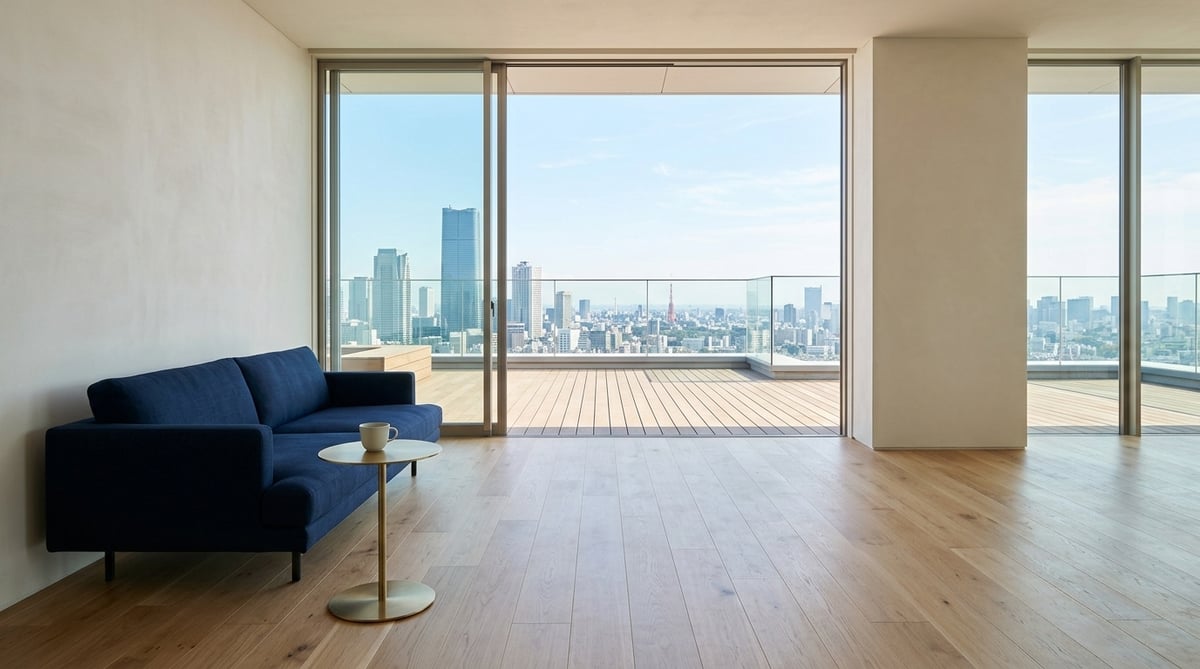
Walking back toward the first-floor ticket gates of Shinanomachi Station after an evening property viewing, stepping onto the wide sidewalks of Gaien-Higashi-dori Avenue reveals a breathtaking sight: an expansive, open sky and the lush, deep canopy of the Meiji Jingu Gaien gardens, feeling astonishingly serene for the very center of Tokyo. On the north side of the avenue, the dignified campus of Keio University Hospital stands quietly, creating an atmosphere completely free from flashing neon signs or rowdy street soliciting. Yet, prospective tenants holding floor plans in front of the gates often pause with a shared, relatable hesitation.
Despite being situated inside the prestigious Yamanote Line loop within Shinjuku Ward, Shinanomachi boasts rental benchmarks of 141,000 yen for a 1K, 244,000 yen for a 1LDK, and 357,000 yen for a 2LDK (estimated at 5,250 yen per square meter)—slightly more approachable than neighboring Yotsuya or Sendagaya. Still, international residents and newcomers frequently wonder: "Will having only Chuo-Sobu Local trains stop here feel inconvenient for my daily commute when Rapid trains pass right through?" and "Surrounded by a university hospital, expansive stadium grounds, and protected parklands, will buying daily groceries on my way home from work prove difficult?"
Following the major autumn 2025 renovation of atre Shinanomachi, the opening of "Wise Mart atre Shinanomachi" on the station's ground floor dramatically upgraded daily grocery access with seamless, direct station connectivity. However, differences in streetscapes north and south of Gaien-Higashi-dori Avenue, along with the notable elevation drop from the 31-meter loam plateau down into the eastern Samegahashidani valley slopes of Minamimotomachi and Wakaba, can lead to unexpected surprises if not evaluated in advance. Below, we break down the practical decision criteria to help you determine if Shinanomachi aligns with your lifestyle and daily routine.
- Average rents: 1K at 141,000 yen, 1LDK at 244,000 yen, and 2LDK at 357,000 yen. Factoring in local-only train service and modest commercial density, rates remain slightly lower than neighboring Yotsuya or Sendagaya within the Yamanote loop.
- Served solely by the JR Chuo-Sobu Line (Local). Depending on your block, Tokyo Metro Marunouchi Line's Yotsuya-sanchome Station (8–10 min walk) and Toei Oedo Line's Kokuritsu-Kyogijo Station (7–9 min walk) serve as convenient secondary stations.
- The station-connected Wise Mart (open 7:00 to 22:30) provides excellent daily grocery shopping, though arrivals after 23:00 require checking late-night routes toward Daikyomachi or Yotsuya-sanchome.
JR Chuo-Sobu Local-Only Schedule and Practical Commuting Routes to Central Tokyo
Shinanomachi Station (station code JB13) is served exclusively by yellow-striped JR Chuo-Sobu Line Local trains. The orange-striped Chuo Line Rapid trains have no platform tracks here and pass through at all hours. Looking across the Chuo-Sobu Line area guide, stations inside the Yamanote loop restricted to local trains enjoy a notably calmer passenger flow, creating an unhurried, peaceful atmosphere that extends directly into the surrounding neighborhood.
Direct Shinjuku Access vs. Rapid Transfers at Yotsuya and Ochanomizu
Daily commuting convenience largely depends on your travel direction. Heading west toward Sendagaya, Yoyogi, and Shinjuku, the absence of Rapid service is barely noticeable. Shinjuku Station is reached in just a few direct minutes. For expats and professionals heading to office districts around Shinjuku or transferring at Yoyogi for Shibuya and sub-centers, the calmer local platform spares you the intense morning crush of major express hubs, offering a peaceful start to every workday.
Conversely, when traveling east toward Tokyo Station, Otemachi, or Kanda, your standard route involves transferring to the Chuo Line Rapid at neighboring Yotsuya Station or Ochanomizu Station. At Yotsuya, switching from local to rapid platforms requires stairs or escalators. However, staying on the local train until Ochanomizu Station brings you to a cross-platform transfer where rapid trains pull up directly across the same island platform—allowing a seamless transfer within just a few steps, even on rainy mornings or when carrying luggage. Furthermore, Suidobashi, Iidabashi, Akihabara, Asakusabashi, and Kinshicho are directly reachable without any transfers, making this an exceptionally practical line for commutes to northeastern Tokyo.
Single Ticket Gate Simplicity and Navigating the Three Official Exits
Shinanomachi Station features a bridge-style concourse spanning across a hillside railway cutting, with only one primary ticket gate located along the street level on the 1st floor. It connects downward via stairs and escalators to a single island platform (tracks 1 and 2) nestled in the cut. Unlike labyrinthine terminal stations requiring endless underground escalators and detours, you can step off your train and reach the open sidewalk of Gaien-Higashi-dori Avenue in just two to three minutes. The concourse provides a direct elevator (near cars 5 and 7), escalators, and a multi-functional restroom equipped with ostomate facilities and baby-care amenities.
Beyond the ticket barrier, passenger traffic disperses across three official exits. Turning left leads to the South Exit (Gaien-Higashi-dori / Jingu Gaien), a pedestrian route enveloped by lush greenery that leads to Meiji Jingu Gaien, Meiji Memorial Picture Gallery, Meiji Kinenkan, Meiji Jingu Stadium, the National Stadium, and Metropolitan Meiji Park. Turning right leads to the North Exit (Gaien-Higashi-dori / Yotsuya), leading directly past Keio University Hospital toward commercial buildings, local shops, and the Yotsuya-sanchome district. Directly beside the gate sits the atre Shinanomachi Direct Concourse Entrance (JR Shinanomachi Building), granting sheltered indoor access to 1st and 2nd floor retail amenities without stepping out into the elements.
Living with Three Subway Stations Within a 7 to 12-Minute Walk
While transit maps show Shinanomachi as a single-line JR stop, walking the surrounding streets reveals three separate subway stations within a 7 to 12-minute radius. Walking north along the level sidewalk of Gaien-Higashi-dori for 8 to 10 minutes brings you to Yotsuya-sanchome Station on the Tokyo Metro Marunouchi Line. When you want a direct, one-seat commute to Ginza, Kasumigaseki, or Otemachi, an unhurried morning stroll to the Marunouchi Line becomes a practical daily option.
Selecting an apartment on the western side in Daikyomachi or near the parkland places Kokuritsu-Kyogijo Station on the Toei Oedo Line within a 7 to 9-minute walk, providing direct connections to Roppongi and Shiodome. Walking south along Gaien-Higashi-dori for 10 to 12 minutes brings Aoyama-itchome Station—a hub for the Tokyo Metro Ginza, Hanzomon, and Toei Oedo Lines—into your immediate living sphere. Depending on your home's exact address, you can enjoy the flexibility of returning via grocery-connected Shinanomachi while utilizing multiple subway routes based on your destination and the weather.
Simply enter the rent and deposit from portal listings to calculate a full, itemized breakdown including brokerage and guarantor fees without hidden add-ons.
Shinanomachi Rental Benchmarks and Budget Comparisons with Surrounding Stations
When searching for housing inside the Yamanote loop, Shinanomachi's modest rent difference compared to nearby neighborhoods reflects specific structural reasons. Below is an overview of local rental averages alongside adjacent rail and subway stops.
| Station Name (Ward / Lines) | Est. Rent / m² | Studio | 1K | 1DK | 1LDK | 2LDK |
|---|---|---|---|---|---|---|
| Shinanomachi (Shinjuku / Chuo-Sobu Local) | 5,250 JPY | 105,000 JPY | 141,000 JPY | 174,000 JPY | 244,000 JPY | 357,000 JPY |
| Yotsuya (Shinjuku / JR Rapid & Local, Marunouchi, Namboku) | 5,300 JPY | 106,000 JPY | 143,000 JPY | 176,000 JPY | 246,000 JPY | 361,000 JPY |
| Sendagaya (Shibuya / JR Chuo-Sobu Local) | 5,300 JPY | 108,000 JPY | 145,000 JPY | 179,000 JPY | 251,000 JPY | 367,000 JPY |
| Yotsuya-sanchome (Shinjuku / Marunouchi Line) | 5,100 JPY | 101,000 JPY | 136,000 JPY | 167,000 JPY | 233,000 JPY | 338,000 JPY |
| Kokuritsu-Kyogijo (Shinjuku / Toei Oedo Line) | 5,350 JPY | 108,000 JPY | 145,000 JPY | 179,000 JPY | 251,000 JPY | 367,000 JPY |
| Aoyama-itchome (Minato / Ginza, Hanzomon, Oedo) | 5,600 JPY | 114,000 JPY | 154,000 JPY | 189,000 JPY | 270,000 JPY | 394,000 JPY |
Why Shinanomachi Rents Stay Slightly Lower Than Yotsuya and Sendagaya
Looking along the JR Chuo-Sobu Line, Shinanomachi maintains rents that are slightly lower than adjacent Yotsuya and Sendagaya. This gentle price discount does not stem from inferior construction quality; rather, it cleanly reflects market adjustments for having no Rapid train stops and lacking a sprawling commercial shopping and nightlife quarter right in front of the station.
While the monthly rent difference compared to eastern neighbor Yotsuya is only a few thousand yen, apartment viewings quickly reveal that the surrounding atmosphere outside your window is the decisive factor. Yotsuya Station boasts four transit lines, bustling office buildings, student crowds, and dining establishments lively late into the evening. However, strictly residential, quiet surroundings are rare right around Yotsuya Station. For a similar budget, moving into the elevated residential pockets of Minamimotomachi near Shinanomachi Station yields far more choices among quiet mid-rise residential buildings.
Meanwhile, western neighbor Sendagaya (and the adjacent Kokuritsu-Kyogijo Station area) shares identical JR local train transit access to Shinjuku and Akihabara. However, crossing into Shibuya Ward and overlapping with the fashionable cafe and boutique culture of Kitasando and Harajuku pushes rental values higher. For spacious 1LDK and 2LDK homes, this premium ranges from 7,000 to 10,000 yen more per month. For international residents who don't specifically require a Shibuya Ward address and want to enjoy Meiji Jingu Gaien's green paths as their everyday walking trail while controlling fixed monthly costs, Shinjuku Ward's Shinanomachi represents a smart, financially solid home base.
Deciding Between Yotsuya-sanchome, Kokuritsu-Kyogijo, and Aoyama-itchome
During apartment tours, clients frequently ask: "If Yotsuya-sanchome and Aoyama-itchome are only a 10-minute walk from Shinanomachi, shouldn't I just search directly around those subway stations?" This question is best resolved by matching your monthly budget cap with how you prefer to spend your weekday evenings.
To the south, Aoyama-itchome carries the prestigious brand power of a Minato Ward address and a 3-line subway interchange. In exchange, monthly rents jump significantly compared to Shinanomachi—by roughly 13,000 yen for a 1K, 26,000 yen for a 1LDK, and 37,000 yen for a 2LDK. If direct access to Omotesando, Akasaka, and Otemachi justifies that premium, Aoyama-itchome is a natural fit. But if you want generous square footage and modern building specs without sacrificing proximity to Gaien's parklands, walking an extra 10 minutes from the Shinanomachi side provides outstanding value.
To the north, Yotsuya-sanchome features a dense concentration of rental condominiums of various vintages along Shinjuku-dori Avenue, keeping overall rents even lower than Shinanomachi. If your priority is a direct Marunouchi Line commute and easy access to neighborhood dining around Araki-cho along with multiple supermarkets, living directly by Yotsuya-sanchome Station has distinct advantages. Yet those who intentionally choose Shinanomachi (such as southern Daikyomachi or the Minamimotomachi plateau) often do so to step away from Shinjuku-dori's perpetual foot traffic, valuing the open skies by Gaien's tree-lined avenues and an equidistant balance between JR and subway transit.
Lifestyles Suited for Shinanomachi (Minamimotomachi Plateau & South Daikyomachi)
- ✓ Jogging or strolling along the leafy avenues of Meiji Jingu Gaien and Metropolitan Meiji Park on weekend mornings or before work.
- ✓ Avoiding nightlife noise and sleeping deeply in a calm residential setting atop an elevated loam plateau.
- ✓ Using direct JR trains to Shinjuku as your primary commute while walking to Yotsuya-sanchome or Kokuritsu-Kyogijo as needed.
Lifestyles Suited for Yotsuya & Yotsuya-sanchome
- ✓ Wanting a speedy, zero-transfer morning commute to Tokyo, Otemachi, and Ginza.
- ✓ Returning late from work with a wealth of open supermarkets, casual diners, and independent eateries to choose from.
- ✓ Comparing a large inventory of pragmatic, budget-conscious 1LDK and 2LDK apartments (Yotsuya-sanchome).
Daily Shopping at atre Shinanomachi and Streetscape Realities Along Gaien-Higashi-dori
To picture daily life in Shinanomachi, it is essential to understand the station's commercial retail setup, operating hours, and how the presence of a university hospital and sprawling green expanses shapes the area's daytime and nighttime character.
How Wise Mart Elevated Home Cooking and the 22:30 Closing Boundary
Previously, the most common concern raised during viewings around Shinanomachi was: "There doesn't seem to be a practical fresh-food supermarket right by the station." That daily equation changed dramatically with the autumn 2025 atre Shinanomachi renewal, which introduced "Wise Mart atre Shinanomachi" (open 7:00 to 22:30) on the ground floor of the station building.
Accessible directly from the concourse without opening an umbrella, this compact yet well-stocked supermarket carries quality meats, fresh seafood, produce, dairy, and in-store prepared bentos and deli dishes. Operating from 7:00 AM, it makes picking up fresh breakfast fruit before hopping on the train or grabbing dinner ingredients on the way home effortlessly smooth.
However, the critical lifestyle threshold is whether your weekday commute often brings you home past 22:30. Once Wise Mart closes, there are no large supermarkets operating right in front of the station late at night. For those who frequently work late, selecting a property in Daikyomachi or north Shinanomachi allows you to pass by My Basket Shinjuku Daikyomachi (approx. 6 minutes on foot from the North Exit). For larger weekend grocery runs or specialty foreign foods, a level 10 to 11-minute walk north along Gaien-Higashi-dori into Yotsuya-sanchome brings you to neighborhood institution Marusho Main Store and organic/imported food specialist Bio c' Bon Yotsuya-sanchome.
The Unique Day and Night Dynamics of Living Beside a University Hospital and Jingu Gaien
Shinanomachi's environment splits cleanly between its north and south sides along Gaien-Higashi-dori and the train tracks. Stepping out of the South Exit brings you into the sweeping parklands of Meiji Jingu Gaien's iconic ginkgo avenues, the Meiji Memorial Picture Gallery, Meiji Kinenkan, and the newly renovated Metropolitan Meiji Park. Having an expansive green horizon with unrestricted skies provides a rare mental refresh for remote workers, offering an emotional spaciousness far beyond your apartment's physical square footage. Inside the station concourse, Starbucks Coffee and Mister Donut serve as tranquil spots for morning reading or weekend pauses.
Directly across from the North Exit stands Keio University Hospital (35 Shinanomachi), a leading advanced medical center. During the day, sidewalks are animated with medical personnel, students, and clinic visitors, and pedestrian paths are wide and impeccably maintained. Because the area has zero host clubs, cabaret venues, or late-night bar alleys, nighttime streets remain exceptionally calm, safe, and undisturbed by intoxicated crowds. On the flip side, living beside a major university hospital means that emergency vehicles travel along Gaien-Higashi-dori day and night more often than in ordinary residential quarters. When viewing roadside buildings, factoring in this specialized medical hub environment is key to setting the right expectations.
Plateau Heights vs. Samegahashidani Slopes: Topography & On-Site Inspection Points
As licensed real estate advisors, our most critical on-site guidance in Shinanomachi centers on understanding the sharp topographical shift between the elevated plateau and the valley slopes. Even when properties appear equally close to the station on a 2D map, walking directions reveal dramatic differences in elevation, light, and neighborhood ambiance.
Ground Stability Along Gaien-Higashi-dori (Shinanomachi) and the Minamimotomachi Plateau
Shinanomachi Station, the Gaien-Higashi-dori corridor, and Keio University Hospital rest upon the ridgeline of the Yodobashi Plateau (part of the greater Musashino Plateau, roughly 31 meters above sea level), composed of stable volcanic ash loam soil. This elevated zone is designated outside public municipal flood hazard zones, offering reassuring ground stability.
Blocks directly facing Gaien-Higashi-dori (such as Shinanomachi 8) are zoned as Commercial Districts, featuring mid- to high-rise mixed-use condominiums. Sidewalks are well-illuminated and flat all the way from the ticket gates, ensuring a secure, well-lit walk home even late at night. Stepping just one block east onto the elevated ridge of Minamimotomachi (such as Minamimotomachi 4), the zoning shifts to Category II Mid-and-High-Rise Exclusive Residential Districts, opening up quiet residential enclaves dominated by low- and mid-rise residences (served by public school districts Shinjuku Ward Yotsuya No. 6 Elementary and Yotsuya Junior High School). Road traffic noise fades away quickly, and rents soften slightly compared to roadside towers, making this an exceptional pocket for balancing quiet comfort with budget efficiency.
East Valley Slopes Down Dewazaka and Sennichizaka (Minamimotomachi Lowlands to Wakaba)
What requires careful discernment is that within the same postal designations of Minamimotomachi, Wakaba, or Daikyomachi, specific lot numbers feature steep elevation changes. East of the station, heading from the Minamimotomachi heights toward Wakaba, the land plunges sharply down historic slopes such as Dewazaka, Sennichizaka, and Shinsukezaka into a bowl-shaped valley historically known as Samegahashidani. Pockets of low-lying flat terrain also exist within parts of Daikyomachi to the west.
Neighborhoods at the base of these slopes, around Minamimotomachi Park and the valley basin, enjoy a secluded, hideaway silence completely insulated from main thoroughfares. However, during torrential downpours, stormwater naturally funnels downward from surrounding heights, requiring careful attention to internal pluvial drainage risks. Furthermore, apartments constructed along these valley slopes often feature concrete retaining walls, and first-floor units near the basin floor can experience differences in sunlight exposure, breeze circulation, and humidity dissipation during the rainy season.
On-Site Checklist: Soundproof Glazing, Retaining Walls, and Nighttime Street Lighting
Given these geographic characteristics, your viewing checklist should be targeted specifically to the property's location. For condominiums along Gaien-Higashi-dori or near Keio University Hospital, always open the windows to listen to traffic and emergency sirens, and then close them to gauge the window insulation. Properties equipped with double glazing or sound-rated sashes (T-grade acoustic ratings) deliver a dramatically quieter living experience at night and on weekend mornings.
When inspecting properties in Minamimotomachi, Wakaba, or Daikyomachi, never take a taxi from the station—walk the entire route on foot to physically test the slope's incline and sidewalk conditions. If the building is located on a slope or in a valley basin, check whether communal electrical transformers (switchgear rooms) are elevated above ground level to safeguard against pluvial flooding, verify whether flood barrier boards are stored at the entrance, and visually inspect surrounding retaining walls and drainage channels for cracking. Because strictly residential zones have fewer commercial shopfronts lit up at night, evaluating the distance between streetlamps and sightlines along your evening walk will give you complete peace of mind before applying.
When to Consider Looking Elsewhere: Situations Where Shinanomachi May Not Be Ideal
No matter how green and peaceful a neighborhood is, it won't feel like a comfortable home if it clashes with your daily routine. If any of the following factors top your priority list, expanding your search to neighboring stations or different micro-districts will likely lead to greater overall satisfaction.
Requiring Rapid Commutes to Tokyo/Otemachi or Abundant Dining After 23:00
For those who insist on a zero-transfer commute to Tokyo Station or Otemachi in the absolute shortest time, having all Chuo Line Rapid trains pass through Shinanomachi can become a daily friction point. If transferring across platforms at Ochanomizu or changing stairs at Yotsuya feels tiresome, focusing your apartment search around Yotsuya Station (for both JR Rapid and subways) or Yotsuya-sanchome (direct Marunouchi Line to Otemachi and Ginza) will provide a more effortless morning routine.
Additionally, for busy singles who frequently return after 23:00 and want open supermarkets, late-night teishoku diners, independent bistros, and drugstores right outside the station, Shinanomachi's quiet plaza after Wise Mart closes at 22:30 may feel overly sleepy. If late-night food and retail variety are essential to your lifestyle, Yotsuya-sanchome with its Araki-cho dining alleys and Shinjuku-dori shops, or commercial hubs like Yoyogi or Nakano along the Chuo-Sobu Line, will feel much more natural and accommodating.
Prioritizing Flat Stroller/Bicycle Routes or Absolute Weekend Silence
For international families using strollers or bicycles for everyday errands, choosing a property in the low-lying valley streets of eastern Minamimotomachi or Wakaba (the Samegahashidani basin) can make rainy days or grocery trips challenging due to steep slopes. If flat mobility is a must, keep your Shinanomachi search restricted to the plateau corridors along Gaien-Higashi-dori, elevated Daikyomachi, or the high ridge of Minamimotomachi before the descent.
Another local dynamic to keep in mind is game and event days at Meiji Jingu Stadium (professional and collegiate baseball) and major concerts at the National Stadium. While Shinanomachi is normally remarkably calm, before and after games the South Exit, ticket concourse, and sidewalks along Gaien-Higashi-dori fill with spirited crowds, and stadium cheers can carry on the breeze. If you enjoy sports and festival excitement, this adds wonderful seasonal energy to your neighborhood; but if you seek total, uninterrupted quiet on weekends, we recommend walking the station area on an evening game day or comparing options further away from stadium thoroughfares, such as Ichigaya or the northern residential blocks of Yotsuya-sanchome.
A Clear Decision Framework for Choosing Your Home in Shinanomachi
Renting a home in Shinanomachi represents a clear, conscious trade-off: accepting the subtraction of express train stops and large station-front commercial complexes in exchange for slightly more approachable rents inside the Yamanote loop, abundant parkland at Meiji Jingu Gaien, and the tranquil stability of an elevated loam plateau. With Wise Mart now providing fresh groceries connected directly to the ticket gates, Shinanomachi has evolved into an even more practical and desirable haven for those who cherish calm daytime environments and walking access to multiple train lines.
The key is aligning your choices with your personal commute and evening hours—deciding whether to prioritize the well-lit convenience along Gaien-Higashi-dori, the secluded residential peace on the Minamimotomachi plateau, or easy walking access to both Yotsuya-sanchome and Kokuritsu-Kyogijo from Daikyomachi.
If you discover an intriguing listing online or feel uncertain about which micro-neighborhood or station suits your rhythm best, feel free to consult Sorai Tokyo at any time. Simply send any property URL from SUUMO, HOME'S, or other portals to our official LINE account (@soraitokyo / https://line.me/R/ti/p/@soraitokyo). Our licensed real estate advisors will cross-reference real-time industry databases (REINS), verify current availability, and provide an objective second opinion on initial move-in estimates—completely free, anonymously, and with zero phone calls or pushy store visits required. With our dedicated AI concierge available 24/7 on LINE and support tailored for foreign residents—including no-guarantor options and seamless visa screening assistance—you can explore Tokyo's finest residences at your own relaxed pace.
Frequently Asked Questions: Living & Renting in Shinanomachi
QSince Chuo Line Rapid trains do not stop at Shinanomachi, is the morning commute inconvenient?
AHeading toward Shinjuku and Yoyogi, yellow Chuo-Sobu Local trains arrive in just a few direct minutes, so you will rarely feel any inconvenience. For commutes toward Tokyo Station and Otemachi, transferring to the Rapid line at Yotsuya or Ochanomizu is necessary; however, at Ochanomizu, the Rapid pulls up directly across the same platform, making transfers quick and painless. Furthermore, properties on the north side are within an 8 to 10-minute walk of Yotsuya-sanchome Station on the Tokyo Metro Marunouchi Line, offering a direct one-seat ride to Otemachi and Ginza.
QCan I complete all my daily grocery and household shopping around the station?
AYes. On the 1st floor of the station building, Wise Mart atre Shinanomachi (open 7:00 to 22:30) is directly connected to the concourse, offering fresh produce, meats, fish, ready-to-eat meals, and daily necessities. If you return after 22:30, My Basket Shinjuku Daikyomachi (approx. 6 minutes from the North Exit) and stores in Yotsuya-sanchome like Marusho Main Store or Bio c' Bon (10 to 11 minutes on foot) can easily be integrated into your commuting path.
QHow should I evaluate slope gradients and flood risks when searching in Minamimotomachi or Daikyomachi?
AThe Gaien-Higashi-dori corridor and the upper Minamimotomachi plateau sit atop a stable volcanic ash loam plateau at an elevation of roughly 31 meters, completely outside municipal flood hazard zones. Conversely, descending east toward Wakaba down slopes like Dewazaka and Sennichizaka leads into the historic Samegahashidani valley basin, which carries internal pluvial drainage risks during torrential rains alongside steep hills. When viewing, walk the route from the station to experience the slope yourself, and inspect low-lying buildings to verify whether electrical switchboards are elevated, whether flood barrier gates are present, and the condition of retaining walls.
QHow do events at Meiji Jingu Stadium and the National Stadium affect everyday residential life?
AOn professional or university baseball game days and during major stadium concerts, the South Exit concourse and sidewalks along Gaien-Higashi-dori become lively and crowded before and after events. Stepping north into residential areas or onto the Minamimotomachi plateau quickly leaves the crowds behind. If you are sensitive to platform congestion or distant stadium audio carried by the wind, we recommend walking the neighborhood on an evening game day to experience the atmosphere firsthand before finalizing your decision.




Author: Sorai Tokyo Editorial Team (Supervised by Licensed Real Estate Agents)
A real estate consulting team specializing in assisting foreign nationals find rooms and explaining initial costs in Tokyo. We break down language barriers and differences in customs, offering dedicated support in Japanese, English, and Vietnamese for a safe and secure start to your new life.