
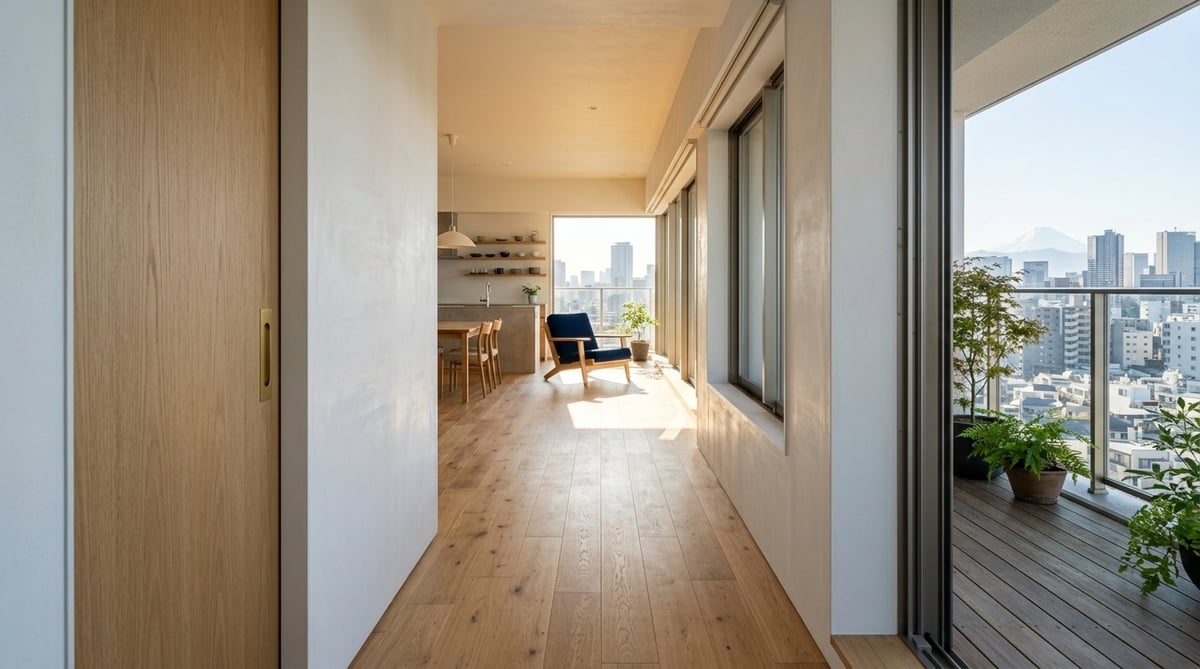
At dusk along Waseda-dori, from the front of BIGBOX Takadanobaba to the entrance of Sakae-dori Shopping Street, the vibrant energy of students finishing their lectures mingles with office workers hurrying to make train connections. Yet, taking a single step southwest into Takadanobaba 4-chome or south toward Toyama Park makes the surrounding clamor recede effortlessly. In its place lies the tranquil ambiance of an established residential quarter lined with well-kept landscaping and mid-rise condominiums. When guiding prospective residents through property viewings, this stark, immediate duality is precisely where many stop to reconsider their assumptions about the neighborhood.
Rental rates around Takadanobaba Station in Shinjuku Ward stand at median levels of ¥122,000 for single-occupant 1K layouts, ¥207,000 for 1LDK units, and ¥298,000 for 2LDK apartments (equivalent to approximately ¥4,700 per square meter). This pricing structure reflects its role as a pivotal downtown junction where the Tokyo Metro Tozai Line, JR Yamanote Line, and Seibu Shinjuku Line intersect. Direct, transfer-free access to major business hubs such as Otemachi, Shinjuku, and Ikebukuro—combined with an array of distinct grocery supermarkets like OK Store, Ozeki, and Seijo Ishii near the station—offers exceptional daily efficiency. Conversely, long-term residential satisfaction depends heavily on how one evaluates nighttime foot traffic common to university and dining quarters, peak morning crowding on the Tozai Line, and the topographical slopes leading north toward the Kanda River with its accompanying flood risks.
Focusing solely on transit convenience and shopping ease by selecting an apartment directly facing major thoroughfares often leads to acoustic fatigue at night. On the other hand, seeking complete quiet by moving more than 12 minutes away on foot may mean neighboring stations like Ochiai, Waseda, or even Mejiro within walking distance offer more coherent pricing and residential settings. Drawing the right boundary line between station vitality and residential serenity across specific streets and sub-districts requires balancing your daily commuting rhythm with everyday living priorities.
- Median rents stand at ¥122,000 for 1K, ¥207,000 for 1LDK, and ¥298,000 for 2LDK. While studio and 1K pricing matches adjacent Tozai Line stations (Ochiai and Waseda), 2LDK homes carry a premium driven by dual-income couples capitalizing on triple-line transit access.
- Two distinct Tozai Line ticket gates and official exits (Exits 1 to 7 plus a dedicated street-level elevator exit) allow residents to tailor their walking routes by compass direction while passing five major supermarkets on their way home.
- The Musashino Upland to the south and west (Takadanobaba 4-chome and the interior of 1-chome) sits on stable ground outside designated flood zones, whereas northern lowland sections along the Kanda River (toward Takada 3-chome in Toshima Ward) necessitate assessing slope gradients and municipal hazard maps.
Triple-Line Commuting Power and Strategic Station Exit Navigation
Takadanobaba Station serves as a central transportation hub in northwestern Shinjuku Ward, where the subterranean Tokyo Metro Tozai Line (Station Number T03) intersects three-dimensionally with the aboveground and elevated tracks of the JR Yamanote Line and Seibu Shinjuku Line. Along the Tozai Line segment between Nakano and Toyocho, all train services—including Rapid and Commuter Rapid trains—stop at every station, allowing passengers at Takadanobaba to board any arriving service without worrying about express bypasses. For those wishing to examine broader scheduling patterns and compare neighborhoods across the entire corridor, please refer to our comprehensive Tozai Line Area Guide.
| Gate & Official Exit | Position & Connection Structure | Primary Destinations & Pedestrian Characteristics |
|---|---|---|
| JR Line & Seibu Shinjuku Line Gate | Nakano end (Basement Level 1) | Direct transfers to JR Yamanote and Seibu Shinjuku Lines; Exits 2 & 3; station rotary plaza |
| Waseda Area Gate | Nishi-Funabashi end (Basement Level 1) | Direct passage to Exits 1 through 7 along Waseda-dori; eastern and southeastern residential access |
| Exit 1 | North side of Waseda-dori | Access to Tokyo Fuji University, commercial buildings, and financial institutions |
| Exit 2 | Station plaza rotary | JR/Seibu Waseda Exit, Sakae-dori Shopping Street, and western residential quarters (Takadanobaba 4-chome) |
| Exit 3 | Direct retail & railway connection | Directly connected to BIGBOX Takadanobaba and Seibu Line BIGBOX Gate |
| Exit 4 | South side of Waseda-dori | Direct connection to Vessel Inn Takadanobaba Ekimae and southern commercial storefronts |
| Exit 5 | South side of Waseda-dori | Gateway toward Toyama Park, Shinjuku Sports Center, Japan Braille Library, and southern upland homes |
| Exit 6 | North side of Waseda-dori | Access toward Totsuka Police Station, Shin-Mejiro-dori, and the Kanda River corridor |
| Exit 7 | South side of Waseda-dori (Easternmost) | Connects toward Fukutoshin Line Nishi-waseda Station, Gakushuin Women's College, and Meiji-dori |
| Dedicated Street Elevator Exit | Near the station rotary plaza | Barrier-free access located between Exits 3 and 5 (in front of Vessel Inn and BIGBOX) |
Optimizing Morning Transfers and Homeward Routes via Distinct Ticket Gates
When ascending from the subterranean Tozai Line platforms to street level, selecting between the Nakano-end "JR Line & Seibu Shinjuku Line Gate" and the Nishi-Funabashi-end "Waseda Area Gate" substantially alters everyday pedestrian comfort. Around Exits 2 and 3, where passengers transferring between the JR Yamanote and Seibu lines converge, passenger flows remain relentless on weekday mornings, evenings, and weekends alike. Navigating from the ticket barrier through the surface rotary plaza can demand far more time than anticipated.
In contrast, for residents living east along Takadanobaba 1-chome and 2-chome, toward Nishi-waseda, or north toward Shin-Mejiro-dori, utilizing the underground passage from the Waseda Area Gate toward Exits 5, 6, and 7 proves exceptionally advantageous. Even on rainy days, commuters can bypass the surface pedestrian crossings and rotary crowds entirely below ground before emerging onto calmer sidewalks, making the evening journey feel noticeably shorter than the nominal walking time suggests. For travelers with suitcases or families with strollers, locating the dedicated street elevator exit positioned between Exits 3 and 5 ensures seamless, barrier-free access without stairs.
Direct Transit to Otemachi, Shinjuku, and Ikebukuro vs. Morning Tozai Line Crowding
The definitive value of this three-line intersection lies not merely in short travel times, but in the peace of mind that comes from immediate alternative routes during unexpected service disruptions. Commuters can ride the Tozai Line directly to primary corporate districts like Otemachi, Nihombashi, and Kayabacho, while simultaneously reaching Shinjuku, Shibuya, Ikebukuro, and Shinagawa via the JR Yamanote Line without changing trains. For couples with one partner working near Tokyo Station/Marunouchi and the other based in Shibuya or Shinjuku, neither person carries an unfair transfer burden.
However, an essential reality to consider before signing a lease is the severe morning rush hour crowding on the Tozai Line bound for Otemachi and Nishi-Funabashi (particularly between 7:45 AM and 8:45 AM). Trains already arrive carrying high passenger loads from Nakano and suburban western lines, and substantial transfer crowds board at Takadanobaba from the JR and Seibu networks, creating shoulder-to-shoulder conditions during peak minutes. Professionals with flexible working arrangements who can commute after 9:30 AM or work remotely several days a week can enjoy this mobility effortlessly. Conversely, those requiring daily seated commutes or personal space during peak rush hours may find this ongoing congestion physically demanding over time.
Simply enter the rent and deposit from portal listings to calculate a full, itemized breakdown including brokerage and guarantor fees without hidden add-ons.
Takadanobaba Rent Overview and Surrounding Five-Station Market Comparison
Despite functioning as a premier interchange directly linking major central nodes, rental rates in Takadanobaba remain noticeably more restrained than central hubs such as Shinjuku (1K: ¥145,000; 1LDK: ¥251,000), Kagurazaka (1K: ¥137,000; 1LDK: ¥233,000), or Iidabashi (1K: ¥140,000; 1LDK: ¥242,000). The benchmark median rents and price-per-square-meter figures illustrate this balance clearly.
| Station (Ward / Comparison Angle) | Rent / m² | 1R | 1K | 1DK | 1LDK | 2LDK |
|---|---|---|---|---|---|---|
| Takadanobaba (Shinjuku / 3-Line Junction) | ¥4,700 | ¥90,000 | ¥122,000 | ¥150,000 | ¥207,000 | ¥298,000 |
| Ochiai (Shinjuku / Adjacent Tozai Line) | ¥4,700 | ¥90,000 | ¥122,000 | ¥150,000 | ¥205,000 | ¥293,000 |
| Waseda (Shinjuku / Adjacent Tozai Line) | ¥4,700 | ¥90,000 | ¥122,000 | ¥150,000 | ¥205,000 | ¥293,000 |
| Nakano (Nakano / Tozai & JR Chuo Origin Connection) | ¥4,600 | ¥88,000 | ¥118,000 | ¥144,000 | ¥197,000 | ¥278,000 |
| Mejiro (Toshima / Adjacent Yamanote / 12–15 min walk) | ¥4,400 | ¥84,000 | ¥114,000 | ¥140,000 | ¥192,000 | ¥274,000 |
| Nishi-waseda (Shinjuku / Fukutoshin / 8–10 min walk from Exit 7) | ¥4,700 | ¥90,000 | ¥122,000 | ¥150,000 | ¥205,000 | ¥293,000 |
Market Dynamics for Solo & Couple Households vs. Ochiai, Waseda, and Nakano
A notable pattern revealed by the comparison table is that for single-occupant layouts ranging from 1R to 1DK, median rents at Takadanobaba align almost identically with its adjacent Tozai Line neighbors, Ochiai and Waseda. Because Takadanobaba holds an extensive rental stock spanning compact student studios to contemporary urban condominiums for working professionals, single-resident rental rates have not inflated disproportionately despite its triple-line connectivity. Both Ochiai and Waseda similarly accommodate all Tozai Line trains, providing direct commutes to Otemachi and Nihombashi. Consequently, for those whose workplace commutes are confined strictly to the Tozai Line and who prioritize immediate residential tranquility right outside the station, Ochiai or Waseda may prove ideal. For individuals who value weekend Yamanote Line mobility and a diverse selection of grocery stores and eateries at the same price point, Takadanobaba emerges as a highly rational choice.
Conversely, as floor plans expand from 1LDK to 2LDK, Takadanobaba's rental market climbs to a distinct premium. The immediate station area is heavily dominated by commercial structures and compact apartments, leaving a limited supply of family- and couple-oriented homes exceeding 50 square meters. This constraint coincides with intense demand from dual-career couples seeking to eliminate commuting compromises. If couples or growing families wish to optimize their housing budget while enjoying starting trains on the Tozai Line and JR Chuo Rapid connections, expanding the search two stations west to Nakano allows for newer construction or elevated interior specifications within an identical budget.
Walking Distance Overlap: Shifting the Focus to Mejiro or Nishi-waseda
When reviewing apartment listings situated roughly 10 minutes on foot from Takadanobaba Station, one frequently discovers that JR Mejiro Station to the north or Tokyo Metro Fukutoshin Line Nishi-waseda Station to the southeast are remarkably close. Asking whether it makes sense to focus one's search directly around those neighboring stations is a practical question frequently raised during property viewings.
Surrounding Mejiro Station (Toshima Ward), situated an easy 12 to 15-minute walk uphill to the north, lies a dignified academic and residential district centered around Gakushuin University's lush green campus. Free of pachinko parlors and late-night nightlife venues, Mejiro maintains a restrained streetscape. With square-meter rates and median rents proving somewhat more accessible than Takadanobaba, homeseekers who do not require direct Tozai Line access—and instead prioritize Yamanote Line convenience, nocturnal calm, and historic residential surroundings—often find higher satisfaction by anchoring their search directly at Mejiro.
In contrast, the district around Nishi-waseda Station (the eastern portion of Takadanobaba 1-chome and 2-chome), reached via an 8 to 10-minute walk along Waseda-dori or Meiji-dori from Exit 7, effectively functions as a four-line living sphere. Residents can easily tap into Takadanobaba's supermarkets, the Tozai Line, and the Yamanote Line, while also leveraging the Fukutoshin Line for direct connections to Shinjuku-sanchome, Shibuya, and onward toward Yokohama via the Tokyu Toyoko Line. Because rental rates mirror Takadanobaba almost exactly, targeting this intermediate zone works wonderfully for professionals commuting to Otemachi on weekdays who frequently spend weekends visiting Shibuya, Daikanyama, or Yokohama.
Daily Shopping and Nighttime Environments: Five Supermarkets and Local Arcades
At major transit hubs, it is not uncommon for retail complexes and restaurants to overshadow everyday grocery infrastructure, pushing routine supermarkets far from ticket gates. In contrast, Takadanobaba distributes food supermarkets catering to home cooks, busy singles, and working couples evenly in all directions, establishing high practical utility for daily life.
Strategic Use of Ozeki, OK Store, Seijo Ishii, Peacock Store, and Wise Mart
Everyday cooking is supported by five specialized supermarkets varying in price structure and selection, allowing residents to tailor their shopping according to their homeward route. On weekday evenings when seeking fresh seasonal produce and high-grade fish in single portions, Ozeki Takadanobaba—located south of the station near the rail tracks—is an exceptional asset. For substantial weekend hauls of pantry staples, beverages, seasonings, and frozen goods at competitive wholesale prices, OK Store Takadanobaba on the western side provides dependable support. Returning late from overtime, professionals can comfortably pick up prepared delicatessen items, imported cheeses, or fine wines at Seijo Ishii Takadanobaba directly at the station.
Additionally, walking east along Waseda-dori toward Exits 6 and 7 and Mejiro-dori reveals Peacock Store Takadanobaba and Wise Mart Takadanobaba, while the station rotary plaza accommodates BIGBOX Takadanobaba and Don Quijote Takadanobaba Ekimae for clothing, household sundries, and late-night essentials. When viewing prospective properties, do not merely measure the walk time from the station; walk the route yourself to confirm whether a well-suited supermarket sits naturally along the path between your preferred exit and your front door, dramatically reducing daily domestic chore burdens after move-in.
The Energy of Sakae-dori & Takadanobaba Ginza vs. Nighttime Noise Within 5 Minutes of the Station
Stretching northwest from Exit 2 (JR/Seibu Waseda Exit), Sakae-dori Shopping Street, together with Takadanobaba Ginza Shopping Street along Waseda-dori, hosts cherished independent diners, bakeries, specialty shops, and authentic international eateries. On evenings when cooking is not on the agenda, takeout and dining options are virtually limitless. The casual, unpretentious atmosphere where one can comfortably dine alone in relaxed everyday attire imparts a warmth rarely found in sterile central business districts.
However, this vibrant street life is fundamentally linked to elevated evening noise within five minutes of the station. Along Waseda-dori, around the station rotary, and throughout Sakae-dori, student groups and evening commuters circulate until late hours, accompanied by commercial delivery vehicles and through-traffic. For homeseekers who wish to unwind along quiet, unhurried sidewalks after exhausting workdays or enjoy tranquil weekend mornings with open windows, residing directly in the commercial core can prove jarring. Achieving a harmonious balance between transit convenience and domestic silence requires choosing a home situated at least one or two streets back from the main commercial arteries.
Upland vs. Lowland: Neighborhood Living Environments, Ground Stability, and Viewing Checks
When evaluating prospective apartments in Takadanobaba for enduring residential peace of mind, two factors invisible on standard floor plans and railway maps are decisive: the topographical elevation difference between the plateau and valley floor, and zoning district transitions. Walking south or west from the station versus descending north toward the Kanda River leads to vastly different geological foundations and municipal building codes.
| Area & Direction | Predominant Zoning | Topography & Geological Foundation | Flood Hazard Designation | Neighborhood & Environmental Characteristics |
|---|---|---|---|---|
| West & Southwest (Takadanobaba 4-chome, Shinjuku) |
Primarily Category I Medium-to-High-Rise Residential (excluding main road edges) | Musashino Upland (Stable volcanic ash and loam plateau) | Outside designated flood risk zones | Orderly mid-rise apartments and houses where amusement facilities like pachinko parlors are prohibited. Nocturnal peace is easily preserved. |
| South & Southeast Inland (Takadanobaba 1–2 chome inland, toward Toyama Park) |
Category I Medium-to-High-Rise Residential (Commercial along Waseda-dori) | Musashino Upland (Stable loam plateau) | Outside designated flood risk zones | Stepping south from Waseda-dori reveals an elevated residential sanctuary close to Toyama Park and modern sports facilities. |
| North & Kanda River Corridor (Takada 3-chome, Toshima Ward / Shin-Mejiro-dori) |
Commercial & Quasi-Industrial Districts | Valley bottom lowland and plateau slopes toward Kanda River | Inside flood inundation zone (under 0.5m to under 3.0m depending on site) | Flat, easy walking along the river and Shin-Mejiro-dori, but involves an uphill walk to the station and requires flood mitigation checks. |
Tranquil Residential Quarters on the Loam Plateau: Takadanobaba 4-chome and 1-chome South
Spreading west of the station, Takadanobaba 4-chome, as well as the interior residential pockets of Takadanobaba 1-chome accessed south of Waseda-dori via Exits 5 and 7, sit on the stable, elevated Musashino Loam Plateau. These areas lie entirely outside designated municipal flood hazard zones. Furthermore, stepping away from the main streets leads into designated "Category I Medium-to-High-Rise Residential Zones," where large retail centers, pachinko halls, and entertainment venues are strictly prohibited under Japanese urban planning law.
During physical property viewings, walking from the energetic sidewalks of Waseda-dori into the lanes of 4-chome or south into the school catchment zones for Totsuka Dai-ni Elementary and Nishi-waseda Junior High toward Toyama Park reveals a swift transformation. Within minutes, the streetscape becomes calm and orderly, punctuated by sunlit, mid-rise residences. Compared to commercial sites fronting major avenues, these residential pockets strike an exceptional balance between rent and living serenity, making them our top recommendation for tenants who refuse to forfeit interchange accessibility yet cherish personal silence at home.
Northern Lowlands Along the Kanda River: Evaluating Slopes and Flood Hazards
Conversely, heading north from Waseda-dori through Exits 1 or 6 leads downhill toward Totsuka Bridge and Takatsuka Bridge across the Kanda River. Beyond the river in Toshima Ward's Takada 3-chome and along Shin-Mejiro-dori, commercial and quasi-industrial zoning prevails, offering a substantial inventory of relatively new condominium residences for solo professionals and couples. Traveling east and west along the riverbank or Shin-Mejiro-dori is flat and accessible, with convenient bus lines and everyday shops.
However, this lowland basin is designated under official flood hazard maps for maximum anticipated rainfall along the Kanda River, with potential inundation depths ranging from under 0.5 meters to between 0.5 and 3.0 meters depending on the specific lot. In addition, commuting toward the station each morning involves walking uphill, which can feel strenuous during humid summer months or when cycling with groceries. When considering apartments in the northern lowlands, focusing on units located on the second floor or higher is a sound rule of thumb. It is equally prudent to inspect whether ground-floor electrical sub-stations are elevated and whether flood barrier boards are installed at building entrances.
On-Site Inspection Points: Soundproof Window Ratings, Natural Light, and Lease Clauses
If you are considering apartments along Waseda-dori, Meiji-dori, Shin-Mejiro-dori, or near the aboveground JR and Seibu tracks, relying solely on a daytime viewing can lead to misjudgments. It is vital to inspect acoustic insulation and future daylight conditions carefully. Specifically, check the window frames for Japanese Industrial Standards (JIS) acoustic ratings—seeking T-2 acoustic grades or double-glazed sash construction—and take time to walk the neighborhood on weekend evenings when road traffic peaks. Furthermore, because commercial zones feature less restrictive height and setback regulations, an adjacent surface parking lot or aging two-story building may eventually be redeveloped into a high-rise structure that obstructs natural light. Keeping this possibility in mind protects against future disappointments.
Who Thrives in Takadanobaba—and Profiles Better Suited to Neighboring Stations
No matter how well-connected a station may be, personal lifestyle rhythms, sensitivity to urban sounds, and tolerance for hilly walking routes dictate whether a neighborhood truly feels like home. Reviewing these profiles will clarify whether Takadanobaba aligns with your personal values or if adjusting your scope toward an adjacent station offers a more natural living environment.
Harnessing Triple-Line Mobility and Diverse Shopping on Daily Homeward Routes
- ✓ Seeking to combine the Tozai, Yamanote, and Seibu lines to shorten commute times and secure immediate bypasses during delays
- ✓ Enjoying the freedom to choose among distinct grocery stores like Ozeki, OK Store, and Seijo Ishii or local eateries based on mood
- ✓ Willing to walk 7 to 12 minutes to secure domestic silence in upland residential zones like Takadanobaba 4-chome or south of 1-chome
Prioritizing Morning Seated Commutes and Immediate Station-Front Quiet
- ✓ Wishing to avoid peak Tozai Line crowding around 8:00 AM in favor of origin trains with seated commutes
- ✓ Demanding an address within a 5-minute walk of ticket gates that remains strictly quiet and free of nightlife venues after dark
- ✓ Seeking flat walking routes without slopes or flood zones while securing greater floor area on a more moderate budget
How Triple-Line Transit and Diverse Groceries Create Personal Breathing Room
For individuals who fluidly blend office days with remote work, shopping at Seijo Ishii or Ozeki on the way home, and hopping effortlessly onto the Yamanote Line or walking to the Fukutoshin Line for weekend excursions to Shinjuku, Shibuya, or Marunouchi, Takadanobaba removes everyday friction. By eliminating tedious transfers and lengthy detours for household errands, the neighborhood grants tangible breathing room back into your personal schedule. In couple households where partners must balance equitable commuting times across eastern and western Tokyo, this tri-rail connection translates directly into sustained domestic comfort.
When to Pass: Morning Rush Sensitivities, Flat Walking, and Station-Front Calm
On the other hand, if you must commute during peak morning rush hours toward Otemachi or Nihombashi and find crowded trains intensely stressful, comparing Takadanobaba with Nakano (which features originating Tozai Line trains) or moving closer to downtown hubs like Kagurazaka or Iidabashi (budget permitting) is highly recommended. Furthermore, if your non-negotiable preference is living within a five-minute walk of the station without tolerating evening dining noise or late-night pedestrians outside your window, seeking an apartment near Ochiai, Waseda, or Mejiro will fulfill your expectations far more reliably than attempting to force a compromise in Takadanobaba's core commercial blocks.
Strategic Conclusions for Selecting Your Home in Takadanobaba
The exceptional commuting mobility afforded by the intersection of the Tokyo Metro Tozai Line, JR Yamanote Line, and Seibu Shinjuku Line; the dependable practicality provided by five diverse supermarkets and welcoming shopping arcades; and the transition from lively station storefronts into the calm residential plateau of the Musashino Upland or the energetic streets along the Kanda River—house hunting in Takadanobaba carries a richness that extends far beyond the surface numbers of square meters and walking minutes shown on a floor plan. How you experience this neighborhood depends fundamentally on which ticket gate and exit you use and which sub-district you call home.
Whether you choose a double-glazed modern condominium close to the station to streamline your morning routine, an apartment on the serene heights of Takadanobaba 4-chome or near Toyama Park to switch smoothly from work mode into quiet private life, or decide to broaden your scope to Mejiro, Ochiai, or Nishi-waseda, there is no single predetermined answer. The choice that naturally supports your personal daily rhythm and core sensibilities is always the best path forward.
If you find yourself wondering about the evening atmosphere along a specific street, assessing slope gradients, or wanting an objective evaluation of move-in quotes and special lease riders, please feel welcome to consult Sorai Tokyo (SorAi) as easily as sitting down for tea. Simply send a listing link to our official LINE account (@soraitokyo / https://line.me/R/ti/p/@soraitokyo) without needing a Japanese phone number or facing aggressive sales tactics. A licensed real estate professional will verify live listing availability across industry databases and provide an objective second opinion on initial costs and contract riders, with no-guarantor options and smooth screening support for international residents. You can also explore our smart diagnostic tools anonymously through the floating menu on mobile or the footer on desktop. We are here to ensure your transition into life in Tokyo is tranquil, clear, and reassuring.
Frequently Asked Questions: Living in Takadanobaba
QWhich areas and compass directions around Takadanobaba offer the quietest residential environment at night?
ATakadanobaba 4-chome, located west of the station, and the interior residential pockets of Takadanobaba 1-chome entered south from Waseda-dori (toward Toyama Park) are highly recommended. Both sit on the stable loam plateau outside designated flood hazard zones and are designated as Category I Medium-to-High-Rise Residential Zones where amusement facilities like pachinko parlors are prohibited, ensuring a calm, restful nighttime environment away from station noise.
QDo Rapid and Commuter Rapid trains on the Tokyo Metro Tozai Line stop at Takadanobaba Station?
AYes. Along the Tozai Line segment between Nakano and Toyocho, all train categories—including Rapid and Commuter Rapid services—stop at every station. Passengers can board any arriving train at Takadanobaba. On Basement Level 1, two ticket gates ("JR Line & Seibu Shinjuku Line Gate" on the Nakano side and "Waseda Area Gate" on the Nishi-Funabashi side) allow convenient access to Exits 1 through 7 and the dedicated street-level elevator exit.
QHow should I choose between Takadanobaba, neighboring Ochiai and Waseda, or walkable Mejiro?
AFor solo 1K layouts, median rents at Takadanobaba, Ochiai, and Waseda are identical at ¥122,000. If you value direct JR Yamanote and Seibu transfers along with diverse supermarkets, Takadanobaba is ideal. If your commute is purely on the Tozai Line and you prioritize immediate quiet outside the ticket barrier, Ochiai or Waseda make great sense. To lower your budget slightly (1K: ¥114,000; 1LDK: ¥192,000) while enjoying a dignified, academic residential environment free of nightlife, Mejiro Station within walking distance to the north is an excellent candidate.
QGiven its reputation as a university district, can working professionals and couples live comfortably here?
AYes. While the station rotary and Sakae-dori Shopping Street host many students and remain lively, the elevated residential quarters of Takadanobaba 4-chome and the streets leading from Exit 7 toward Fukutoshin Line Nishi-waseda Station feature numerous modern, auto-locking condominium properties favored by working singles, expats, and dual-income couples. Verifying nighttime walking routes and window acoustic insulation during viewings will ensure you enjoy central transit convenience while maintaining a serene home environment.




Author: Sorai Tokyo Editorial Team (Supervised by Licensed Real Estate Agents)
A real estate consulting team specializing in assisting foreign nationals find rooms and explaining initial costs in Tokyo. We break down language barriers and differences in customs, offering dedicated support in Japanese, English, and Vietnamese for a safe and secure start to your new life.