
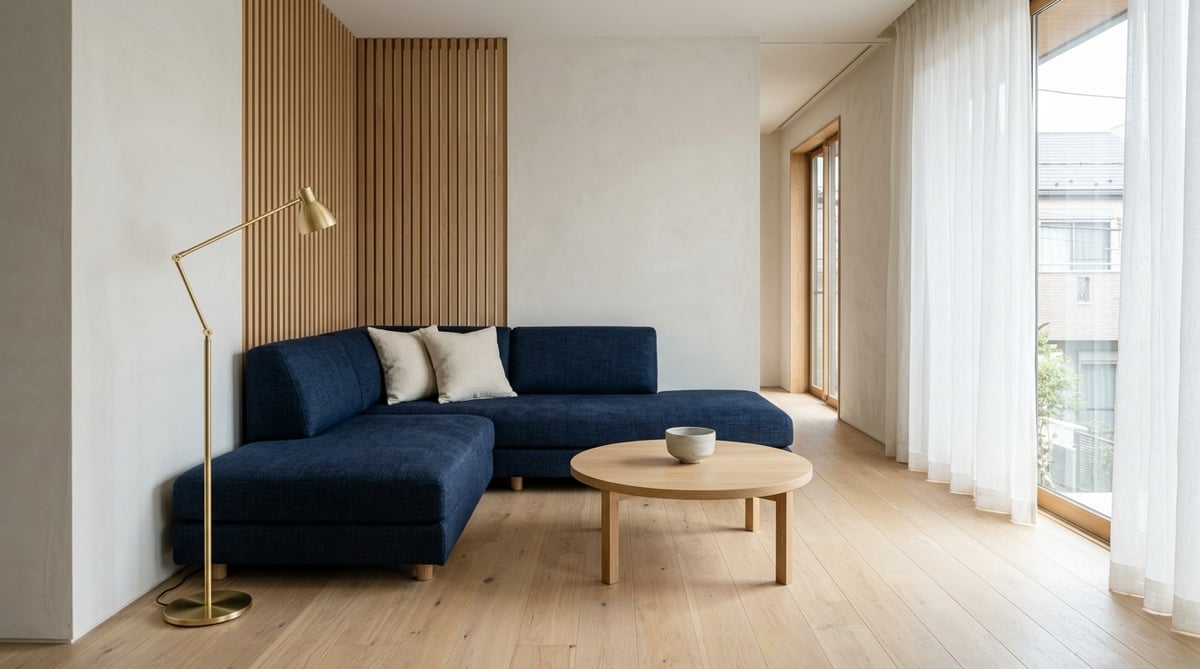
One weekend afternoon, while walking with two clients along the gentle slope from Rikkyo-dori in Nishi-Ikebukuro toward Mejiro-dori, we noticed how quickly the atmosphere shifts. Just ten minutes after leaving the department stores and the lively crowds along Meiji-dori behind, the streetscape gives way to red-brick campus buildings and neatly trimmed hedges. Continue for a few more minutes past a row of zelkova trees, and the entrance to Zoshigaya Station on the Tokyo Metro Fukutoshin Line comes into view.
Many people who experience this distance in person pause at the same question. Looking at median 1LDK rents, Ikebukuro sits at 194,000 JPY and neighboring Zoshigaya at 190,000 JPY—a monthly difference of just 4,000 JPY. Even for 2LDK layouts, Ikebukuro is 272,000 JPY compared to Zoshigaya's 269,000 JPY, a 3,000 JPY gap. The decision comes down to whether you want to live in the residential pockets of Minami-Ikebukuro or Nishi-Ikebukuro (near Mejiro) with immediate access to a major multi-line terminal and department stores, or ride one stop—just three minutes on the Fukutoshin Line—to step away from the commercial bustle entirely and enjoy quiet evenings on Zoshigaya's elevated plateau.
Because the price difference is so narrow, choosing the neighboring station simply to trim rent rarely feels satisfying on its own. When you factor in the actual walking time from the B4F platform to street level, direct Marunouchi Line commutes to Otemachi and Tokyo Station, and how elevation and flood-risk zones split by city block, the neighborhood that fits your daily rhythm becomes much clearer.
- Over a 2-year lease, the total housing cost gap is 108,000 JPY for a 1LDK (4,500 JPY/month effective) and 81,000 JPY for a 2LDK (3,375 JPY/month effective), placing both stations in virtually the same budget tier.
- Ikebukuro offers starting-station Marunouchi Line seats and multiple JR lines, while Nishi-Ikebukuro 2–3-chome and Minami-Ikebukuro 3-chome provide quiet residential living on elevated ground.
- Zoshigaya skips express trains, yet lets you reach street level without navigating long terminal corridors and return directly to the calm, tree-lined streets of Zoshigaya 2–3-chome.
The 4,000 JPY Rent Gap and 2-Year Total Housing Cost Break-Even
Rent Comparison Across Ikebukuro, Zoshigaya, Mejiro, and Higashi-Ikebukuro
When searching between the western Yamanote Line and the Fukutoshin Line, JR Mejiro Station and Yurakucho Line's Higashi-Ikebukuro Station often overlap within walking distance. Below is a comparison of median rents by layout and approximate price per square meter across these four neighboring Toshima Ward stations.
| Station (Ward) | 1R | 1K | 1DK | 1LDK | 2LDK | 3LDK | Est. Rent / sqm |
|---|---|---|---|---|---|---|---|
| Ikebukuro (Toshima Ward) | 86,000 JPY | 117,000 JPY | 143,000 JPY | 194,000 JPY | 272,000 JPY | 337,000 JPY | 4,500 JPY/sqm |
| Zoshigaya (Toshima Ward) | 83,000 JPY | 112,000 JPY | 137,000 JPY | 190,000 JPY | 269,000 JPY | 333,000 JPY | 4,400 JPY/sqm |
| Mejiro (Toshima Ward) | 84,000 JPY | 114,000 JPY | 140,000 JPY | 192,000 JPY | 274,000 JPY | 339,000 JPY | 4,400 JPY/sqm |
| Higashi-Ikebukuro (Toshima Ward) | 88,000 JPY | 119,000 JPY | 147,000 JPY | 200,000 JPY | 286,000 JPY | 354,000 JPY | 4,600 JPY/sqm |
What surprises many renters is how narrow the gap is between Ikebukuro—a major hub served by eight train lines—and Zoshigaya, where only local trains on the Fukutoshin Line stop. Around Ikebukuro, the sheer volume of available rental units across a 10-minute walking radius covers a wide range of building ages and floor plans, keeping the median rent from spiking despite its terminal status. Meanwhile, Zoshigaya features many low- and mid-rise residences along Mejiro-dori and near Kishimojin, where demand for a calm residential setting supports steady rent levels.
Looking nearby at Higashi-Ikebukuro, redeveloped high-rise towers directly connected to the station push median rents higher—200,000 JPY for a 1LDK and 286,000 JPY for a 2LDK. If you want high-rise amenities and skyline views, Higashi-Ikebukuro stands in a higher tier. However, if you are looking for a grounded, mid- or low-rise apartment around 200,000 JPY for a 1LDK or 270,000 JPY for a 2LDK, the residential pockets on Ikebukuro's west and south sides and Zoshigaya compete directly.
What a 3,000–4,500 JPY Monthly Gap Means Over a 27-Month Total Cost
When budgeting for a Tokyo rental, looking at the 2-year total housing cost (27-month equivalent)—which includes initial move-in fees such as security deposit, key money, and brokerage fee (estimated at roughly three months' rent)—clarifies the real financial difference.
Over two years, the difference amounts to 81,000 to 108,000 JPY—or 3,375 to 4,500 JPY per month. Moving several stops out toward the suburbs to save 20,000 to 30,000 JPY a month (500,000 to 700,000 JPY over two years) provides a clear financial trade-off for extra transfers. Between Ikebukuro and Zoshigaya, however, choosing Zoshigaya purely for cost savings can leave you feeling that your fixed expenses barely changed while express trains pass you by.
This narrow gap means the choice is not about budget compromise. On essentially the same budget, you are deciding between multi-line mobility and department-store convenience versus stepping out of the ticket gate directly onto quiet, tree-lined streets. For a broader look at how rents and neighborhood characters shift along the line toward Shinjuku-sanchome and Shibuya, see our Fukutoshin Line Area Guide.
How JR Mejiro Station Overlaps Within a 10–12 Minute Walk
Another common question during viewings is: "If JR Mejiro Station is only a 10- to 12-minute walk from Nishi-Ikebukuro 2-chome or Zoshigaya 2–3-chome, why not just search right around Mejiro?"
Heading west of Mejiro Station into areas like Shimoochiai 2-chome in Shinjuku Ward, you enter a Category 1 Low-Rise Exclusive Residential Zone with height limits around three stories—one of Tokyo's quietest residential enclaves. Because detached houses and small low-rise buildings dominate, modern 1LDK and 2LDK rental apartments with auto-lock security and delivery boxes are relatively scarce. As shown in the table, Mejiro's median 2LDK rent of 274,000 JPY edges slightly above both Ikebukuro and Zoshigaya due to this limited family-sized inventory.
Mejiro is also a single-line JR Yamanote Station with fewer everyday supermarkets and dining options nearby. Living on the plateau in Nishi-Ikebukuro (near Mejiro) or Zoshigaya gives you direct subway access to Shinjuku-sanchome, Meiji-jingumae, and Shibuya via the Fukutoshin Line, while keeping a flat walk along Mejiro-dori to JR Mejiro Station whenever you prefer the Yamanote Line.
Simply enter the rent and deposit from portal listings to calculate a full, itemized breakdown including brokerage and guarantor fees without hidden add-ons.
Real Commute Flows: From B4F Platforms to Central Tokyo
The Hidden Underground Walk From B4F to Street Level
The walking minutes listed on Japanese rental flyers measure road distance from the nearest station exit at 80 meters per minute; they do not include the time it takes to walk from the train doors to street level. When comparing Ikebukuro and Zoshigaya, this unseen underground transit time shapes your morning and evening routine.
Both Ikebukuro and Zoshigaya have their Fukutoshin Line platforms on B4F (Zoshigaya's platform sits roughly 33.8 meters underground). Yet once you step off the train, the experience of reaching the street differs noticeably.
At Ikebukuro Station, the Fukutoshin Line platform sits deep on the western edge of the complex. Heading toward Nishi-Ikebukuro or Rikkyo-dori means taking the stairs or elevator near Car 8 up to the B2F West Passage ticket gate, then walking through the long Echika Ikebukuro underground concourse to Exits C1–C10 (Exit C9 has a street-level elevator). Navigating rush-hour crowds typically takes 5 to 8 minutes from platform to street. Crossing toward Minami-Ikebukuro requires a similar concourse walk.
Zoshigaya Station still involves a long vertical ride by escalator or elevator from B4F up to the B1F (Mejiro-dori) or B2F (Ikebukuro / Tsurumaki-dori) gates, but it has none of a major terminal's sprawling horizontal corridors. Exit 1 toward Kishimojin and the Toden Arakawa Line (Tokyo Sakura Tram) includes a direct street-level elevator, allowing you to surface smoothly without weaving through crowds. As a result, an apartment listed as "9 minutes from Ikebukuro" and one listed as "4 minutes from Zoshigaya (3 minutes by train from Ikebukuro)" often put you at your front door at nearly the exact same time.
Direct Access to Shinjuku-sanchome & Shibuya vs. Otemachi & Tokyo Station
Your daily workplace also draws a clear line between the two stations. Here is how their service patterns and major commute routes compare:
| Comparison Item | Ikebukuro (Minami / Nishi-Ikebukuro) | Zoshigaya Station |
|---|---|---|
| Fukutoshin Line Service | Express, Commuter Express, Local (all trains stop) | Local trains only (Express & Commuter Express pass) |
| Other Available Lines | Marunouchi, Yurakucho, JR Yamanote, Saikyo, Shonan-Shinjuku, Tobu Tojo, Seibu Ikebukuro | Toden Arakawa Line (Kishibojinmae stop nearby); JR Mejiro Station 10–15 min on foot |
| Shinjuku-sanchome & Shibuya | Direct via Fukutoshin Express or JR Saikyo / Shonan-Shinjuku / Yamanote | Direct via Fukutoshin Local (~8 min to Shinjuku-sanchome, ~14 min to Shibuya) |
| Otemachi & Tokyo Station | Direct on Marunouchi Line (starting station seats available) | No direct train (transfer to Marunouchi at Ikebukuro, or walk to Mejiro for JR Yamanote) |
| B4F Platform to Street | B4F platform → B2F West Passage gate → C1–C10 exits (~5–8 min) | B4F (~33.8m deep) → B1F/B2F gates → Exit 1 etc., compact vertical route |
For commutes to Shinjuku-sanchome, Meiji-jingumae, or Shibuya, both stations offer a direct ride on the Fukutoshin Line. Although Zoshigaya is served only by local trains, the ride itself is short—about 8 minutes to Shinjuku-sanchome and 14 minutes to Shibuya—so passing delays are minimal. Still, Ikebukuro holds an advantage in daytime train frequency and immediate JR backup options if the subway experiences a service disruption.
The sharper divide appears if you commute to Otemachi, Tokyo Station, or Kasumigaseki. Ikebukuro is the starting terminal for the Tokyo Metro Marunouchi Line, meaning you can wait one or two trains during morning rush hour and sit comfortably all the way to Otemachi or Tokyo. From Zoshigaya, reaching the same business district requires riding one stop to Ikebukuro and walking through the station to transfer, or walking 10 to 15 minutes to Mejiro Station even in the rain. For daily Marunouchi/Otemachi commuters, that single factor often settles the choice in Ikebukuro's favor.
A 3-Step Viewing Checklist to Time Your Real Door-to-Platform Route
To verify what flyer walking times do not show, we recommend timing your actual route in this order during your property viewing:
Plateau vs. Lowland Boundaries: Living Environment and Flood Hazard Reality
Quiet Elevated Living in Nishi-Ikebukuro 2–3-chome and Minami-Ikebukuro 3-chome
Mention "living in Ikebukuro" and many people picture the neon signs and round-the-clock crowds of Minami-Ikebukuro 1-chome or Higashi-Ikebukuro 1-chome. Those commercial blocks near the station offer easy dining and shopping, but require careful checks on street noise, window soundproofing (such as T-rated or double-pane sashes), and whether nearby coin parking lots or older structures could be redeveloped into taller buildings.
Step into Nishi-Ikebukuro 2–3-chome toward Rikkyo University, or tuck behind Meiji-dori into Minami-Ikebukuro 3-chome toward Zoshigaya Cemetery, and the neighborhood transforms. Both pockets sit on the stable Musashino loam plateau, placing them outside designated flood inundation zones on official hazard maps.
Zoning also shifts from commercial districts to primarily Category 1 Medium-to-High-Rise Exclusive Residential Zones, which restrict pachinko parlors, karaoke venues, and large commercial facilities. Having a calm, softly lit walk home within 10 minutes of a major terminal is a distinct advantage of these Mejiro-adjacent pockets. For a closer look at each block, see our Ikebukuro Station Living & Rent Guide.
Zoshigaya 2–3-chome Plateau vs. Lowland Flood Risk Around Tsurumaki-dori and Takada 1-chome
While Zoshigaya feels uniformly quiet at street level, its topography splits sharply by block between elevated plateau and valley lowland. Matching the exact address block against elevation maps is essential before signing a lease.
Zoshigaya 2–3-chome on the southeastern edge of the Mejiro plateau—as well as the elevated blocks along Mejiro-dori (such as the upper side of Takada 1-chome)—rest on the same loam plateau and lie outside flood inundation zones. Deeper inside Zoshigaya 2–3-chome, Category 1 Medium-to-High-Rise Exclusive Residential zoning preserves the quiet greenery around Kishimojin-do and zelkova-lined lanes.
By contrast, areas descending the southern slope—specifically the lowlands along Tsurumaki-dori and the valley floor of Takada 1-chome sloping toward the Kanda River—offer flat, stroller- and bicycle-friendly streets, but appear on Toshima Ward's maximum-rainfall flood hazard map with projected inundation of 0.5 to 3.0 meters (from first-floor level up to below second-floor level).
Even when two listings both read "7 minutes from Zoshigaya Station," their flood-risk profiles can be completely different. If you consider a lowland building for its flat access or rent value, choose a unit on the second floor or higher and confirm during viewing—and in the Important Matters Explanation—whether electrical rooms (substation equipment) are elevated above ground/basement flood levels and whether flood barriers are installed at the entrance. For more block-by-block details, see our Zoshigaya Station Living & Rent Guide.
Daily Grocery Routes and Practical Lease Checks for 190,000–270,000 JPY Apartments
Department Stores in Ikebukuro vs. Neighborhood Supermarkets in Zoshigaya
Your evening grocery routine also differs cleanly between the two stations.
Living on the Ikebukuro side lets you pick up quality ingredients on your walk home without detours. Just outside the Fukutoshin Line West Passage gate is Seijo Ishii Echika Ikebukuro, while Tobu Store Nishi-Ikebukuro and Hanamasa Ikebukuro sit along the residential routes. On weekends, the food halls of Tobu Department Store and Seibu Ikebukuro Main Store are right at hand.
Zoshigaya has no department stores or large malls. Instead, compact neighborhood supermarkets such as Maruetsu Petit Zoshigaya 2-chome and Ricos Zoshigaya 2-chome cluster near Mejiro-dori and Kishimojin, with Yoshiya Mejiro-Takada a short walk south for broader selection. Many residents enjoy picking up essentials locally on weekdays and heading one stop to Ikebukuro on weekends.
Fixed-Term Leases and Corporate Housing Rules in the 190,000–270,000 JPY Tier
In desirable residential blocks like Nishi-Ikebukuro 2–3-chome and Zoshigaya 2–3-chome, newer buildings and individually owned condominium rentals in the 190,000–270,000 JPY range frequently use Fixed-Term Lease Contracts under Article 38 of the Act on Land and Building Leases—for example, a 3-year term with no renewal (or renewal by mutual agreement) because the owner plans to return.
Here, one legal distinction is critical: early termination rights differ between individual leases and corporate-name leases.
If you are looking at 2LDK apartments and own a car, also check mechanical parking pallet dimensions. Urban mid-rise buildings often restrict width to 1,850 mm, height to 1,550 mm, and weight to 2,000 kg—tight for modern SUVs and heavier EVs. Similarly, for pet-friendly condo rentals, building management bylaws (height/weight limits and carrying pets in common areas) take precedence over an individual owner's permission.
Preventing Move-Out Restoration Disputes Under Tokyo Rules and Supreme Court Precedent
With monthly rents of 190,000 to 270,000 JPY, a 1- to 2-month security deposit represents 200,000 to 550,000 JPY. Knowing the official standards before signing helps ensure a fair move-out settlement.
Under the Ministry of Land, Infrastructure, Transport and Tourism's Restoration Guidelines, normal wear and tear—such as sun fading on flooring or tatami and furniture indentations—is the landlord's responsibility. Wallpaper has a 6-year useful life, depreciating linearly to a 1 JPY residual value at year six, and tenant liability for damage is calculated per affected wall rather than the entire room.
In Tokyo, the Tokyo Metropolitan Ordinance for Preventing Rental Housing Disputes ("Tokyo Rule") requires a licensed real estate agent to explain and deliver a separate written summary of these restoration principles and any special clauses before contract signing. (Under Article 46 of the Real Estate Brokerage Act, brokerage fees are also capped at 0.5 months' rent + tax unless the client consents in advance, with a statutory maximum of 1 month's rent + tax.)
For a special clause—such as a fixed move-out cleaning fee—to be legally valid, it must meet the criteria established by the Supreme Court Second Petty Bench ruling of December 16, 2005: (1) the scope and specific amount must be clearly stated in writing, (2) the tenant must clearly understand and agree to it, and (3) the amount must not be excessive relative to rent or local market rates under Article 10 of the Consumer Contract Act. Avoid signing vague "actual cost at move-out" clauses without confirming caps and scope during the Important Matters Explanation.
When to Skip Ikebukuro or Zoshigaya—and Which Fits Your Lifestyle
When to Pass on Ikebukuro (Minami / Nishi-Ikebukuro)
- You want zero commercial bustle on your walk home: Even if your block is quiet, the first few minutes from the station pass department stores and busy avenues like Meiji-dori or Gekijo-dori.
- Long underground concourses feel tiring: The 5- to 8-minute walk from the B4F Fukutoshin platform through the West Passage to street level adds noticeable friction when carrying groceries or pushing a stroller.
- You want quiet tree-lined lanes right outside the station: If you prefer stepping straight onto calm, residential streets, Zoshigaya 2–3-chome fits more naturally.
When to Pass on Zoshigaya
- You commute daily to Otemachi or Tokyo Station: Transferring at Ikebukuro or walking 10–15 minutes to Mejiro every morning adds daily fatigue compared with boarding a starting Marunouchi Line train at Ikebukuro.
- You dislike waiting for local trains or relying on a single line: Express trains pass Zoshigaya, and there is no immediate JR alternative inside the station during delays.
- You want late-night dining, bookstores, and department stores steps from your exit: Zoshigaya offers compact supermarkets and small local shops rather than major commercial hubs.
Ikebukuro (Nishi-Ikebukuro 2–3 / Minami-Ikebukuro 3)
- ✓ Direct seated commute to Otemachi/Tokyo via Marunouchi Line
- ✓ Both Fukutoshin Express and JR lines for Shinjuku & Shibuya
- ✓ Seijo Ishii and department store food halls on the walk home
- ✓ Willing to walk ~10 minutes for stable, elevated residential blocks
Zoshigaya (Zoshigaya 2–3-chome Plateau)
- ✓ Primary commute is direct to Shinjuku-sanchome or Shibuya
- ✓ Prefer skipping terminal crowds and long underground passages
- ✓ Value zelkova-lined streets and low-rise residential calm
- ✓ Happy visiting Ikebukuro one stop away on weekends
Choosing Your Morning and Evening Rhythm Across One Stop
Though Ikebukuro's residential pockets and Zoshigaya sit just 4,000 JPY apart for a 1LDK (and 3,000 JPY for a 2LDK), they offer distinct daily rhythms—from how quickly you reach your train in the morning to the atmosphere greeting you at night. Neither is universally better; the right choice depends on whether you prioritize weekday transit and shopping efficiency or a quiet, unhurried walk home.
If you have shortlisted properties and want to verify block-level flood risk, fixed-term lease clauses, corporate screening requirements, or whether your move-in quote is fair, feel free to message Sorai Tokyo on our 24/7 AI & licensed-agent LINE concierge (@soraitokyo). Simply send a listing URL—no phone number, no pushy sales calls, and no office visit required—and we will check live availability in the inter-agency database and provide a transparent second opinion (SUUMO & Portal URL Check).
Frequently Asked Questions (FAQ)
QWhy is the rent gap between Ikebukuro and Zoshigaya only 3,000–4,000 JPY?
AIkebukuro has a large supply of rental units across a 10-minute radius, spanning many building ages and grades, which keeps its median rent moderate. Meanwhile, Zoshigaya's quiet, elevated residential environment attracts steady demand for quality low- and mid-rise apartments, keeping its medians (190,000 JPY for 1LDK; 269,000 JPY for 2LDK) nearly level with Ikebukuro.
QIs commuting from Zoshigaya to Otemachi or Tokyo Station inconvenient?
AThe Fukutoshin Line runs directly to Shinjuku-sanchome and Shibuya, not Otemachi or Tokyo. You must ride one stop to Ikebukuro to transfer to the Marunouchi Line, or walk 10–15 minutes to JR Mejiro Station. If you commute to Otemachi daily, living in Minami-Ikebukuro or Nishi-Ikebukuro for direct starting-station Marunouchi access is generally smoother.
QWhat should I check on flood hazard maps around Zoshigaya and Takada?
AZoshigaya 2–3-chome and the upper side of Mejiro-dori sit on a loam plateau outside flood inundation zones. However, lowland blocks along Tsurumaki-dori and the valley floor of Takada 1-chome near the Kanda River show projected inundation of 0.5–3.0m under maximum rainfall. For lowland buildings, choose a 2F+ unit and confirm elevated electrical rooms and entrance flood barriers.
QWhat should corporate-lease tenants watch out for with fixed-term contracts?
AWhile individual tenants under 200 sqm have a statutory right to terminate a fixed-term lease early with 1 month's notice for unavoidable reasons such as job transfers, corporate-name leases do not receive this protection. Always confirm that an explicit early-termination clause is written into the contract before applying.



Sorai Tokyo Co., Ltd. Editorial (Licensed Real Estate Agency #113297)
Licensed online real estate agency handling residential leasing across 15 major Tokyo lines (Member of All Japan Real Estate Association). Powered by our proprietary 24/7 AI "SorAi" on iOS/LINE and dedicated licensed realtors, we support renters end-to-end from vacancy checks on major portals to viewings and digital contracts.