
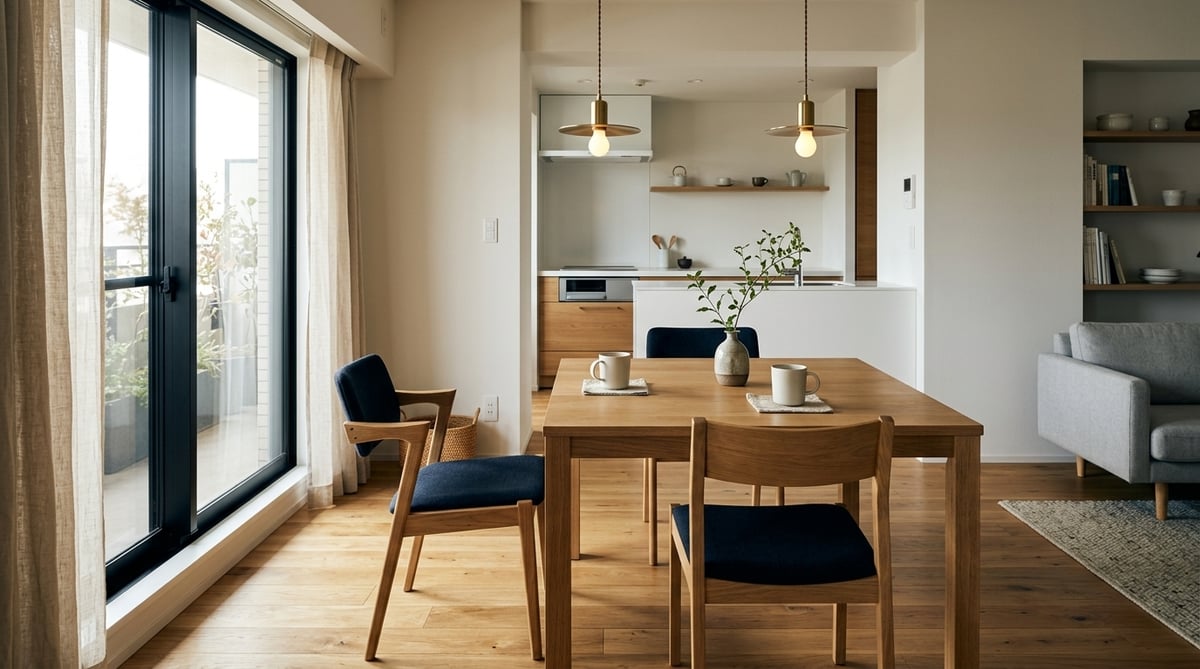
In the morning, gentle eastward sunlight fills the living room, and the aroma of freshly brewed coffee drifts softly through the air. Choosing where to begin your journey together—and selecting the space where your daily routines unfold—is a meaningful decision. For dual-income couples navigating busy schedules, finding a home is far more than browsing property listings; it is about cultivating daily comfort, ease, and shared peace of mind.
In recent years, Kita-Ayase Station—the originating terminus of the Tokyo Metro Chiyoda Line—has rapidly drawn attention from couples starting a new chapter in Tokyo. In 2019, direct 10-car through-service toward Yoyogi-Uehara began, establishing a seamless commute where you can sit comfortably all the way to key downtown business hubs like Otemachi and Kasumigaseki without transferring. Coupled with the opening of Mitsui Shopping Park LaLa Terrace Kita-Ayase directly connected to the station, daily convenience has reached new heights.
In central Tokyo, newly built or modern 1LDK apartments often command rents well over 200,000 yen per month. In Kita-Ayase, however, comparable properties can be found in the accessible range of 110,000 to 140,000 yen. By smartly managing fixed monthly expenses, couples can settle into a clean, modern home equipped with the latest conveniences while honoring each other's lifestyle and personal time. From the perspective of a licensed real estate transaction specialist versed in the Kita-Ayase area, this article provides a comprehensive look at the transit advantages of this terminus station, realistic market rents and initial moving costs, optimal floor plan layouts, shopping conveniences, and disaster preparedness.
- Guaranteed Seated Commute as a Chiyoda Line Terminus: Direct 24 minutes to Otemachi Station (26–28 minutes during morning peak) and 30 minutes to Kasumigaseki Station. Boarding originating trains ensures a seat even during peak rush hour, turning travel time into valuable moments for reading or focused preparation.
- Everyday Convenience with Station-Connected LaLa Terrace Kita-Ayase: Directly connected to the North Ticket Gate, this shopping complex houses a Summit Store supermarket open until 10:30 PM alongside diverse specialty shops, letting you complete daily grocery shopping right at the station on your way home.
- Rent Savings of 30,000 to 50,000 Yen per Month Compared to Central Hubs: Market rent for new or modern 1LDK units ranges from 115,000 to 142,000 yen (overall 1LDK range: 92,000 to 148,000 yen). You can optimize monthly costs while enjoying high-grade amenities such as auto-locks, delivery lockers, and reheating baths.
- Abundant Greenery and Substantial Municipal Support: In front of the station lies Shobunuma Park with seasonal blossoms, supported by Adachi Ward's comprehensive welfare policies, including child medical expense subsidies and financial allowances for future peace of mind.
- Starting life together at Kita-Ayase, the originating terminus of the Chiyoda Line.
- Direct access to Otemachi Station in approximately 24 minutes (26–28 minutes during morning peak), securing an effortless commute into central Tokyo.
- Nearly 100% seated commute rate on originating morning trains, transforming travel time into relaxing moments for reading and rest.
This comprehensive guide is crafted for newlyweds and couples seeking a clean, newly built or modern 1LDK to start their life together amidst the refined streetscapes and station-front amenities of LaLa Terrace Kita-Ayase. Here, we present the latest urban development around Kita-Ayase Station, realistic market rents and upfront moving costs for modern 1LDK apartments, and practical tips for designing a comfortable shared living space.
Commuter Convenience and Station Layout at Kita-Ayase Terminus
When starting life together as a couple, minimizing daily commuting stress is essential for maintaining peace of mind and quality time with your partner. The greatest advantage of Kita-Ayase Station is its status as the originating terminus of the Tokyo Metro Chiyoda Line, offering direct, transfer-free access into the heart of Tokyo's primary business districts.
Weekday Morning Timetables: Direct Runs to Otemachi and Kasumigaseki
In the past, Kita-Ayase Station was primarily known as a branch station served by 3-car shuttle trains running back and forth to Ayase Station. However, following the March 2019 timetable revision, the platform was extended to accommodate 10-car trains, inaugurating through-service toward Yoyogi-Uehara. Today, numerous trains originate from Kita-Ayase Station, particularly during weekday morning rush hours.
Direct service reaches Otemachi Station in approximately 24 minutes during regular hours (26–28 minutes during morning peak) and Kasumigaseki Station in about 30 minutes. Beyond eliminating transfers, lining up briefly for an originating train frees you from the stress of packed rail cars and guarantees a comfortable seat. Relaxing into a cushioned seat, flipping through a favorite book, or reviewing your morning schedule provides a calm and composed start to the day.
Connections to major terminal hubs are equally seamless. At Nishi-Nippori Station, you can connect to the JR Yamanote and Keihin-Tohoku Lines, while destinations like Meiji-jingumae (Harajuku) and Omotesando are served directly. Shinjuku Station is reached in approximately 41 minutes via Nishi-Nippori, and Shibuya Station is about 46 minutes away via an effortless escalator transfer to the Tokyo Metro Hanzomon Line at Omotesando Station. Even when partners work in different parts of the city, Kita-Ayase serves as a practical transit hub for both.
| Destination | Morning Peak Time | Standard Time | Transfers | Main Line & Route |
|---|---|---|---|---|
| Otemachi | Approx. 26–28 min | Approx. 24 min | 0 (Direct) | Tokyo Metro Chiyoda Line direct service |
| Kasumigaseki | Approx. 30 min | Approx. 30 min | 0 (Direct) | Tokyo Metro Chiyoda Line direct service |
| Omotesando | Approx. 38 min | Approx. 38 min | 0 (Direct) | Tokyo Metro Chiyoda Line direct service |
| Nishi-Nippori | Approx. 14 min | Approx. 14 min | 0 (Direct) | Transfer station for JR Yamanote & Keihin-Tohoku Lines |
| Shinjuku | Approx. 41 min | Approx. 47 min | 1 | Transfer to JR Yamanote Line at Nishi-Nippori Station |
| Shibuya | Approx. 46 min | Approx. 46 min | 1 | Transfer to Tokyo Metro Hanzomon Line at Omotesando Station |
Elevated Station Layout: Ticket Gates and Official Exits
When viewing rental properties, relying solely on the walking time stated on floor plans can sometimes lead to unexpected detours in your daily routine. Kita-Ayase is an elevated station with tracks located above ground level. Understanding the exact layout of its ticket gates and street exits is fundamental to planning smooth pedestrian access.
According to the official Tokyo Metro station map, Kita-Ayase Station has three actual ticket gates: the Central Gate, South Gate, and North Gate. Ground-level street access is provided through five official numbered exits: Exit 1, Exit 2, Exit 3, Exit 4, and Exit 5.
- North Gate / Exit 1: Connected directly via pedestrian deck to the large commercial complex Mitsui Shopping Park LaLa Terrace Kita-Ayase. You can access shops without opening an umbrella even on rainy days, making it ideal for grocery stops on your way home.
- South Gate: Situated on the south side of the station, leading toward scenic Shobunuma Park, Ayase Cardiovascular Hospital, Kahei Community Center, Kambara Junior High School, and Higashi-Fuchie Elementary School. It serves as the primary gateway to peaceful residential quarters.
- Central Gate: A central concourse offering convenient access toward Ayase Police Station, Oyata-Yanaka Community Center, Higashi-Kahei Elementary School, and Yanaka Junior High School.
- Exits 2, 3, & 4: Facing Kannana-dori (Metropolitan Route 318), leading toward Yanaka Park, Oyata Park, and the Adachi Fire Department Oyata Branch.
- Exit 5: Equipped with a spacious elevator linking the concourse to street level, allowing effortless access when rolling travel luggage or carrying heavy groceries.
Some general rental portals and online articles casually refer to an "East Exit" or "West Exit" for Kita-Ayase Station; however, no exits or ticket gates named "East Exit" or "West Exit" exist at Kita-Ayase Station. When evaluating properties, always verify the specific exit number (Exits 1–5) and designated ticket gate (North, Central, or South) to confirm your real walking route.
Under-Viaduct Commercial Facility M'av Kita-Ayase Lieta and Pedestrian Ease
Beneath the elevated tracks of Kita-Ayase Station lies M'av Kita-Ayase Lieta, a commercial facility developed by Tokyo Metro. The bright, well-maintained pedestrian walkway utilizes the viaduct space effectively, keeping exposure to rain minimal during inclement weather.
The surrounding terrain is remarkably flat with no steep hills or burdensome stairways, making walking and cycling exceptionally pleasant. Wide sidewalks along Kannana-dori crossing in front of the station are illuminated by streetlights and commercial storefronts, maintaining clear visibility well into the night. It provides a reassuring, comfortable walking environment even during late-night returns.
Simply input the rent, security deposit, and key money from online listings to calculate realistic total upfront costs including brokerage and guarantor fees. Perfect for identifying unnecessary optional charges.
[Neighboring Station Comparison] For Those Seeking Closer Proximity to Central Tokyo, Dining Variety, or Spacious 2DK Layouts
While Kita-Ayase offers tranquil newly developed blocks, neighboring Ayase Station serves as a major hub with numerous originating and direct Chiyoda Line trains reaching Otemachi in just 19 minutes, complemented by bustling dining strips and supermarkets. If you prefer a more spacious 2DK layout within a similar budget or seek broader dining options, explore our Ayase couple guide below.
👉 [Spacious & Central] Ayase Station Couple Guide: 19 Min to Otemachi and 2DK Cost Performance
Consult with experienced bilingual real estate advisors via video call. From selecting safe neighborhoods to verifying contract terms, we help you find the right home.
Market Rent and Initial Move-In Costs for New & Modern 1LDKs in Kita-Ayase
For couples starting life together, rent is the largest recurring fixed cost. The primary reason Kita-Ayase enjoys strong popularity among cohabiting couples is its exceptional value compared to central Tokyo and other stations along the Chiyoda Line.
Market Rent Comparison: Singles, Couples, and Families
Examining recent market rents across Kita-Ayase by layout type reveals the following typical benchmarks. Studio/1K units for singles start in the 60,000 yen range, couple-oriented 1LDKs range from 92,000 to 148,000 yen, and family-friendly 2LDK to 3LDK apartments range from 107,000 to 186,000 yen.
| Layout Type | Kita-Ayase Market Rent | New & Modern (Within 5 Yrs) | Target Residents & Approximate Size |
|---|---|---|---|
| Singles (Studio / 1K) | 63,000 – 96,000 JPY | 82,000 – 96,000 JPY | Single professionals, students (20–28 sq m) |
| Couples (1LDK) | 92,000 – 148,000 JPY | 115,000 – 142,000 JPY | Cohabiting couples, newlyweds (35–48 sq m) |
| Families (2LDK–3LDK) | 107,000 – 186,000 JPY | 150,000 – 186,000 JPY | Families with children, spacious DINKS (50–70 sq m) |
Comparing Kita-Ayase to other stations along the Chiyoda Line makes its competitive edge even clearer. For example, around Nishi-Nippori Station with its Yamanote Line connection, modern 1LDK apartments command 160,000 to 200,000 yen per month. Further down the line in Bunkyo Ward, around Sendagi or Nezu Stations, rents typically climb to 180,000 to 230,000 yen.
In Kita-Ayase, spacious modern 1LDK units exceeding 40 square meters are readily available in the 120,000 to 130,000 yen range. While remaining on the same direct subway line, this delivers monthly rent savings of 30,000 to 70,000 yen—translating to 360,000 to 840,000 yen annually in reduced fixed costs. Reallocating those savings toward future savings, wedding funds, travel, or shared hobbies is a distinctive lifestyle advantage of living here.
Prioritizing Convenience and Time Efficiency
- ✓ 1–3 min walk from station; stress-free covered deck access even on rainy days
- ✓ Summit Store open late until 10:30 PM right in front of you
- ✓ Fully equipped with modern building features (interior corridors, delivery lockers, auto-locks)
Prioritizing Tranquility, Living Environment & Space
- ✓ Everyday life enriched by seasonal greenery in neighboring Shobunuma Park
- ✓ Peaceful low-rise residential streets set back from main roads, quiet at night
- ✓ More floor area for the same budget, providing generous storage and living space
Budgeting for Dual-Income Couples: Sound Financial Balance
The real estate industry has long quoted the traditional rule of thumb that "rent should not exceed one-third of take-home income." However, for modern dual-income couples, viewing this guideline with flexibility opens up a much broader and more tailored range of housing possibilities.
For example, if a couple's combined monthly take-home income is 450,000 yen, the one-third benchmark suggests an upper limit of around 150,000 yen. By choosing a quality 1LDK in Kita-Ayase at approximately 120,000 yen, rent burden drops to about 26.6% of take-home income, creating a monthly surplus of roughly 30,000 yen. This financial breathing room brings genuine peace of mind, whether you choose to enrich your everyday dining or systematically save toward a wedding or home purchase down payment.
Conversely, if both partners work primarily from home and prioritize indoor comfort and acoustic insulation above all, investing near the upper bound of 140,000 to 150,000 yen for a brand-new residence with premier specifications is an equally rewarding choice. The goal is not to adhere rigidly to generic standards, but to align on your shared priorities and establish a lifestyle balance that feels right for you both.
Daily Shopping and Dining Around the Station Supporting Couple Life
For working couples, how effortlessly daily groceries and household essentials can be purchased directly dictates the burden of domestic chores. With the opening of major commercial facilities, shopping convenience in front of Kita-Ayase Station has evolved remarkably.
LaLa Terrace Kita-Ayase & Summit Store: Opening Hours and Floor Guide
Directly connected to the North Ticket Gate via a pedestrian deck is Mitsui Shopping Park LaLa Terrace Kita-Ayase. Across its four above-ground floors, a rich variety of everyday lifestyle tenants are gathered under one roof.
The anchor tenant, Summit Store supermarket, operates from 9:30 AM to 10:30 PM. Even after late overtime, you can step straight into the supermarket from the station concourse to pick up fresh produce, prepared deli meals, and drinks. With ample self-checkout registers installed, paying is quick and seamless even during evening peak hours.
Within the mall, you will also find Waku Waku Hiroba—offering farm-fresh local vegetables, regional specialties, artisanal deli dishes, and freshly baked breads—alongside Okashi no Machioka for affordable snacks and pantry treats. Retail and service shops operate from 10:00 AM to 9:00 PM, the food court and restaurants from 11:00 AM to 10:00 PM, and cafes from 8:00 AM to 10:00 PM (hours may vary by shop), providing convenient options when you need a quick dinner or leisurely weekend brunch.
| Facility / Store Name | Type / Main Offerings | Operating Hours | Practical Tips for Couples |
|---|---|---|---|
| Summit Store (Inside LaLa Terrace) | Large Supermarket | 9:30 AM – 10:30 PM | Buying fresh groceries and prepared meals after late work arrivals |
| Waku Waku Hiroba (Inside LaLa Terrace) | Farm-fresh vegetables, groceries, deli items | 10:00 AM – 9:00 PM | Seasonal produce from nearby farms and local bakery breads |
| Okashi no Machioka (Inside LaLa Terrace) | Confectionery specialty store | 10:00 AM – 9:00 PM | Snacking treats for weekend movie nights and everyday pantries |
| M'av Kita-Ayase Lieta | Elevated viaduct commercial facility | Varies by tenant | Quick, rain-free access along the covered path from ticket gates |
| Cafes & Food Court (LaLa Terrace) | Dining & Cafes | 8:00 AM – 10:00 PM (Cafes) 11:00 AM – 10:00 PM (Dining) |
Weekend morning coffee spots and casual weekday dinners |
Drugstores and Daily Convenience Along Kannana-dori and Residential Streets
Beyond LaLa Terrace at the station, everyday retail stores are dotted along Kannana-dori and throughout adjacent residential blocks. Well-placed drugstores and convenience stores ensure you are never far from household necessities or sudden late-night medical supplies.
Substantial roadside stores are also located nearby, allowing residents without personal vehicles to easily cover all routine errands on foot or by bicycle. Eliminating lengthy shopping trips frees up relaxed personal time and quality moments together after dinner.
Cozy Cafes and Casual Dining Enhancing Weekend Leisure
Weekend mornings invite waking up a little later, savoring brunch at a neighborhood cafe, or picking up takeout to enjoy while conversing on a park bench under gentle skies—simple pleasures that restore energy for the week ahead.
Around Kita-Ayase Station, you will find welcoming cafe chains inside LaLa Terrace alongside nostalgic neighborhood bakeries, independent coffee shops, and home-style diners cherished by long-time residents. Enjoying meals and tea in an unpretentious, relaxed atmosphere provides a grounding sanctuary for couples seeking an authentic, down-to-earth daily lifestyle.
Selecting 1LDK Floor Plans and Furniture Layouts for Couples
Unlike a studio apartment for a single resident, a 1LDK shared by a couple must gracefully balance time spent together in harmony with moments of solitary focus and quiet rest.
Floor Areas from 35 sq m to Over 45 sq m: Balancing Living and Sleeping Zones
When touring modern 1LDK units, key factors to examine include total floor space and how individual rooms are partitioned. In Kita-Ayase, 1LDK apartments typically span between 35 and 48 square meters.
In compact 1LDKs around 35 to 38 square meters, layouts frequently allocate roughly 9 to 10 tatami mats (approx. 15–16.5 sq m) to the living/dining/kitchen (LDK) area and 4 to 4.5 tatami mats (approx. 6.5–7.5 sq m) to the bedroom. While rents are pleasantly economical, bulky furniture can constrain foot traffic. Positioning a semi-double bed (approx. 120 cm wide) flush against a wall and choosing a compact two-person dining table keeps living lines clear.
In contrast, generous 1LDKs spanning 40 to over 45 square meters provide an LDK of 11 to 13 tatami mats and a bedroom of 5 to 6 tatami mats. This scale comfortably accommodates a double bed (approx. 140 cm wide) or even a queen bed, along with a 2- to 2.5-seater low sofa, TV console, and expandable dining table seating four.
Room dividers generally fall into two categories: sliding pocket partitions and fully enclosed walls with hinged doors. Sliding partitions let you open doors wide during daytime to enjoy an expansive, airy studio feel. Enclosed layouts with solid doors offer superior acoustic and light insulation, ensuring that partners with differing work schedules or sleep cycles do not disturb each other's rest.
Designing Spatial Flow for Remote Work and Personal Leisure
With telework widely embraced, couples often work remotely at the same time or spend different schedules where one works while the other rests. To prevent video call audio or keyboard typing from creating friction, it is wise to visualize furniture placement and sightlines during property viewings.
Setting up a slim work desk (approx. 80–100 cm wide by 50 cm deep) in the bedroom allows you to close the bedroom door during video calls, turning it into a dedicated private office. The partner in the living room can freely watch television or handle chores without concern, while personal living areas remain hidden from the webcam background.
Checking Sound Insulation, Ventilation, and Storage Capacity During Viewings
When viewing an apartment in person, relying on your senses reveals nuances that floor plans cannot convey. Standing in the center of the room and clapping your hands lightly allows you to gauge acoustic resonance and room soundproofing intuitively. Verify whether window frames have airtight sound ratings (T-1 to T-2 grades) and whether double-pane or secondary glazed windows are installed.
To comfortably store wardrobes for two, a spacious walk-in closet (WIC) or full-height built-in system closet is indispensable. Insufficient storage forces you to add free-standing clothes racks or plastic drawers, encroaching upon valuable living space. Furthermore, inspect key culinary and bath amenities—such as two or three stovetop burners, generous countertop prep width, a bathroom dryer, and an automatic bath reheating function—to ensure smooth, shared household chores.
Neighborhood Safety, Nighttime Walking Routes, and Flood Hazard Evaluation
Selecting a neighborhood where you can live with enduring peace of mind requires accurate insight into daily public safety, nighttime routes, and potential natural disaster risks. Let us examine verified local data and official municipal records.
Public Safety Under Ayase Police Station and Safe Walking Routes
Around Kita-Ayase Station, the Metropolitan Police Department's Ayase Police Station stands prominently right outside the Central Ticket Gate. Having a major police station immediately adjacent to the station fosters high community security awareness and frequent police patrols, offering residents reassuring safety.
According to neighborhood crime statistics published by the Tokyo Metropolitan Police Department (covering Yanaka and Kahei districts in Adachi Ward), violent offenses are exceptionally rare. The vast majority of recorded incidents consist of non-intrusive opportunistic thefts, primarily unattended bicycles left unlocked. Maintaining routine locking habits is sufficient to enjoy a secure daily life.
Regarding evening routes home, the station pedestrian deck and Kannana-dori remain well-lit with active vehicular traffic and pedestrians, offering a secure environment even when walking alone at night. That said, streets can narrow and lighting dims once turning off the main avenue into residential lanes. We always recommend that couples walk the route from the station to the building together during evening hours prior to signing a lease.
Green Respite at Shobunuma Park and Oyata Park
Directly outside the South Ticket Gate lies Shobunuma Park, an oasis that enriches daily life in Kita-Ayase with seasonal colors and serene waters.
Preserving the legacy of wild Japanese irises that once thrived in local marshlands, the park features expansive iris gardens where approximately 8,100 iris plants across 140 varieties burst into bloom from late May through June. Clear waterways, cascading waterfalls, and shaded tree-lined paths offer picturesque strolls throughout the seasons.
On weekend mornings, relaxing on a park bench beneath clear skies to read or share quiet conversation provides refreshing respite for busy city professionals. A short walk further brings you to Oyata Park and Yanaka Park with baseball diamonds and expansive lawns, as well as Higashi-Ayase Park featuring tennis courts and a heated indoor pool—placing verdant recreation at your doorstep.
Adachi Ward Flood Hazard Maps: Arakawa and Nakagawa Inundation Projections
As mandated during official explanation of important matters in Japanese real estate transactions, reviewing flood risk is an indispensable step in selecting a rental home. Situated on low-lying alluvial plains bordered by the Arakawa, Nakagawa, and Ayase Rivers, Adachi Ward publishes comprehensive flood hazard maps for severe weather scenarios.
According to the Adachi Ward Flood Hazard Map, in the event of an unprecedented maximum-scale deluge causing river overtopping or pluvial flooding exceeding storm sewer capacity (modeled at up to 153 mm/hour or 690 mm/24 hours), certain low-lying plains around Kita-Ayase Station fall within projected inundation zones. Ground shaking vulnerability and soil liquefaction maps are also detailed by the ward.
The most effective strategy for mitigating these water risks in rental housing is selecting an apartment on the second floor or higher. Most newly built and modern apartment buildings are constructed with reinforced concrete (RC) or heavy-gauge steel. Choosing a second-floor unit or above largely shields personal furnishings from above-floor inundation. It is also vital to confirm vertical evacuation paths within the building and identify designated municipal emergency shelters (such as nearby elementary and junior high schools) prior to contract signing.
| Hazard & Living Environment Aspect | Official Projection / Municipal Data | Recommended Countermeasures |
|---|---|---|
| River Flooding (Fluvial Risk) | Projected flood depths vary by block in the event of Arakawa or Nakagawa river overtopping | Choose units on the 2nd floor or above; pre-identify emergency evacuation sites |
| Pluvial Inundation (Torrential Rain) | Modeled for maximum rainfall of 153 mm/h or 690 mm/24h | Select buildings where entrances and bicycle parking are raised above road grade |
| Nighttime Walking & Public Safety | Ayase Police Station located at station front; violent crime is exceedingly rare | Prioritize routes along well-lit main streets such as Kannana-dori |
| Earthquake, Ground & Liquefaction | Evaluated under Adachi Ward Liquefaction Risk Maps | Choose RC or heavy steel structures complying with the New Anti-Seismic Standards (post-June 1981) |
Municipal Support in Adachi Ward and Key Rental Lease Considerations
As you begin life together, your journey may naturally lead toward marriage, childbirth, and parenting. Understanding municipal subsidies and rental lease fundamentals in advance avoids unnecessary expenses and establishes a secure foundation for long-term residency.
Public Subsidies and Childcare Allowances in Adachi Ward
Adachi Ward is known among Tokyo municipalities for its proactive support of young couples and families. Here are key programs featured on the official ward portal.
During pregnancy and childbirth, families receive a total of 100,000 yen through national support grants (50,000 yen upon pregnancy notification + 50,000 yen upon postnatal interview), supplemented by the Tokyo Metropolitan "Baby First" program offering 100,000 yen worth of baby goods and catalog gifts. Furthermore, Adachi's "First Birthday Support" provides gift certificates upon completing a 1-year survey (60,000 yen for the first child, 70,000 yen for the second, and 80,000 yen for third and subsequent children).
In addition, child medical expense subsidies (Maru-Nyu, Maru-Ko, and Maru-Ao) cover 100% of out-of-pocket insured medical expenses from age 0 through high school graduation (end of the fiscal year turning 18). With income caps eliminated, high-earning dual-income households receive the exact same healthcare support. Furthermore, an "Enrollment Preparation Allowance" of 100,000 yen per child is provided when entering elementary or junior high school.
| Program Name | Benefit Amount / Grant Limit | Key Eligibility Criteria |
|---|---|---|
| Adachi Childbirth & Childcare Support Grant | National grant of 100,000 JPY + Baby First catalog (100,000 JPY value) | Pregnant women and families giving birth residing in Adachi Ward (interviews required) |
| Child Medical Expense Subsidy (Infant, Child, Youth) | 100% subsidy of insured medical copayments | Ages 0 to end of fiscal year turning 18 (No income limit) |
| First Birthday Support | Child gift certificates (1st child: 60k JPY, 2nd: 70k JPY, 3rd+: 80k JPY) | Complete and submit ward survey in the child's 1st birthday month |
| School Enrollment Preparation Allowance | 100,000 JPY grant per child | Children entering elementary or junior high school residing in the ward |
| Housing Security Benefit (Public Safety Net) | Subsidy equivalent to rent (Up to 64,000 JPY/month for two-person households) | Households facing financial hardship due to job loss or income reduction (Asset/job-seeking criteria apply) |
Conclusion: Building a Serene Life Together in Kita-Ayase
Kita-Ayase harmonizes the commuter ease of an originating Chiyoda Line terminus with direct access to downtown Tokyo, the daily lifestyle convenience of station-connected LaLa Terrace Kita-Ayase, and the tranquil greenery of Shobunuma Park. With rent for newly built and modern 1LDK apartments remaining remarkably accessible, this neighborhood stands as an accomplished choice for newlyweds and couples seeking everyday ease and financial composure.
Boarding an originating train in the crisp morning air, relaxing with a book on the seated ride to Otemachi. Picking up fresh ingredients at the station-connected Summit Store after work, returning to a pristine home with a modern kitchen to exchange warm smiles and say "welcome home." Spending weekend afternoons bathed in dappled park sunlight, conversing peacefully about your shared future. Kita-Ayase provides an authentic setting where everyday moments can be treasured together.
At Sorai Tokyo, we provide comprehensive guidance for couples searching for homes in Kita-Ayase and across Tokyo. Simply send the URL of any rental listing you discover on major portals (SUUMO, HOME'S, etc.) to our official LINE account (@soraitokyo). A licensed real estate transaction specialist will consult the inter-brokerage real-time database to confirm availability and provide an objective second-opinion audit of initial moving costs—100% free and completely online, with zero persistent sales calls and no physical store visits required. Furthermore, through our mobile fixed menu and desktop footer, you can freely access our suite of smart SorAi tools, including the Initial Cost Simulator, Property Inspection Reports, and online consultation bookings. We invite you to make use of our services as you embark on this warm, exciting new chapter together.
Frequently Asked Questions (FAQ)
QCan you really get a seat on originating Chiyoda Line trains during morning rush hour at Kita-Ayase Station?
AYes. By choosing trains originating from Kita-Ayase Station, you have a very high probability of securing a seat even during peak morning hours. Arriving on the platform 5 to 10 minutes prior to departure guarantees a seat, allowing you to commute comfortably without transfers—taking about 24 minutes to Otemachi (26–28 minutes during morning peak) and 30 minutes to Kasumigaseki—while reading or working in calm comfort.
QWill a 1LDK feel too cramped in the future for newlyweds or cohabiting couples?
AIn a 1LDK with 40 to 45 square meters or more of living space, couples can live comfortably not only in their initial years together, but also through the infant and toddler stages should they have a child. Utilizing sliding partitions to flexibly open or separate the living and bedroom areas maintains a clutter-free, spacious flow that prevents feeling cramped.
QI am concerned about flood risk around Kita-Ayase. What specific points should we look for when choosing a rental property?
ABecause certain low-lying sections around Kita-Ayase fall within projected inundation zones on the Adachi Ward Flood Hazard Map during major river flooding of the Arakawa or Nakagawa, we strongly recommend selecting an apartment on the second floor or higher. Living on upper floors protects household furnishings from above-floor flooding and simplifies vertical evacuation. Choosing a reinforced concrete (RC) building with an entrance elevated above street grade offers even greater peace of mind.

Author: Sorai Tokyo Editorial Team (Supervised by Licensed Real Estate Agents)
A real estate consulting team specializing in assisting foreign nationals find rooms and explaining initial costs in Tokyo. We break down language barriers and differences in customs, offering dedicated support in Japanese, English, and Vietnamese for a safe and secure start to your new life.