

Many residents renting apartments in central Tokyo silently endure an unspoken sense of confinement. Paying a substantial monthly rent of ¥100,000 or even ¥120,000, what they receive in return is often a cramped studio measuring just 15 to 18 square meters. A single bed dominates more than half the room, remote work means balancing a laptop on a tiny low table, overflowing wardrobes crowd slim garment racks, and morning routines are rushed through an all-in-one three-piece modular bathroom. It is easy to resign oneself to the thought: "If I want to work in central Tokyo and prioritize convenience, sacrificing living space and tolerating daily clutter is simply the price I have to pay."
Yet, as a licensed real estate broker who has analyzed Tokyo's rental market and housing break-even points for over a decade, there is a fundamental truth worth emphasizing: living space is never a mere luxury. It is the very foundation of daily life—shaping the quality of your sleep, your focus while working, and above all, the psychological peace of mind that comes from knowing how much cash remains in your pocket each month to invest in your future.
Today, an exceptionally smart alternative that lets you expand your living space by 1.5 to nearly 2 times without compromising direct commuting access—while saving hundreds of thousands of yen annually—is Kita-Ayase Station, the northern terminus of the Tokyo Metro Chiyoda Line.
Imagine starting your morning at a 140-centimeter solid wood desk—a piece of furniture impossible to fit in a compact downtown studio—bathed in soft morning light from an east-facing window, taking in the rich aroma of hand-poured coffee. In a 35-square-meter one-bedroom (1LDK) apartment where sliding doors seamlessly separate the bedroom from your workspace, there is no need to worry about an unmade bed appearing in the background of video meetings. A five-minute stroll brings you to the station. Passing through the ticket gates and settling comfortably into a seat on an originating train, the 30-minute ride to Otemachi transforms into undisturbed reading time or focused study for professional qualifications. Consider the stark contrast between being crushed in a packed rush-hour train and spending 30 serene minutes seated. That difference in daily quality of life, paired with tens of thousands of yen in monthly savings, creates profound emotional and financial breathing room over the years. Below, we examine the real figures and practical market insights behind this choice.
Central Tokyo: 18 sqm Micro-Studio
- Rent Range: ¥105,000–¥120,000 / month (excluding maintenance fee)
- Floor Space: 15–19 sqm (Western-style room approx. 5.5 tatami mats, minimal closet)
- Fixtures & Amenities: 3-piece modular bathroom, single IH burner, outdoor washing machine spaces common
- Commuting: 15 mins to central Tokyo, but morning/evening rush hours exceed 150% train congestion
- Living Experience: Eating and working on the bed, immediate clutter and claustrophobia as belongings accumulate
Kita-Ayase: 35 sqm Spacious 1LDK & Origin Station Commuter
- Rent Range: ¥75,000–¥82,000 / month (including maintenance fee)
- Floor Space: 32–38 sqm (LDK 8 mats + Bedroom 5 mats, large walk-in closet)
- Fixtures & Amenities: Separate bath & toilet, independent vanity, 2-burner gas kitchen, reheating bath system
- Commuting: 30 mins direct to Otemachi, 100% seated on origin trains—stress-free time for personal growth
- Living Experience: Complete separation of work and rest; save ~¥40,000 monthly to invest in future wealth
- [Chiyoda Line Origin Station Value] A licensed real estate broker analyzes Kita-Ayase's rental market, living environment, and lease considerations—showing how to gain spacious living within a 30-minute direct commute to central Tokyo.
- A studio budget in Minato or Chuo Ward easily covers a 1LDK to 2DK in Kita-Ayase
- A monthly savings of ¥45,000 plus lower renewal fees generates substantial disposable income
This space-focused guide is written for those feeling constrained by cramped central Tokyo studios and seeking a dedicated home office or generous living room without raising their rent. Below, we analyze Kita-Ayase Station's rental rates, square-meter cost performance, and total cost differentials against central Tokyo hubs with empirical data.
Exceptional Value: Kita-Ayase Within 30 Direct Minutes of Central Tokyo
Direct, Transfer-Free Transit to Otemachi, Kasumigaseki, and Omotesando
When discussing Kita-Ayase Station, the single most critical turning point was the Tokyo Metro Chiyoda Line timetable revision in March 2019. Previously, Kita-Ayase operated as a spur-line terminal where 3-car shuttle trains merely shuttled back and forth across the 2.1 kilometers between Ayase and Kita-Ayase. Commuting downtown required transferring to the mainline at Ayase Station's crowded platforms, forcing riders through congested stairways and platform bottlenecks during morning rush hour.
However, the completion of platform extension works to accommodate 10-car trains, along with track improvements connecting to the Ayase Depot, inaugurated full direct through-service from Kita-Ayase onto the Chiyoda mainline. Today, numerous direct originating trains run during weekday morning peak commuting hours.
This direct service has transformed the daily routine for downtown professionals: approximately 30 minutes transfer-free to Otemachi, 35 minutes to Kasumigaseki, 39 minutes to Akasaka, and 42 minutes to Omotesando. The ability to access the Chiyoda Line—a major artery linking Japan's political, economic, and cultural hubs—with door-to-door directness offers connectivity on par with locations inside the JR Yamanote loop or popular south and west Tokyo neighborhoods.
Analyzing the Rent Disconnect: Distance, Travel Time, and Market Pricing
Tokyo's real estate market features compelling market inefficiencies—discount zones created where transit lines cross municipal borders or major rivers. A prime example is the corridor spanning Kitasenju, Ayase, and Kita-Ayase across the Arakawa River.
Consider average rent levels for a 25-square-meter single-occupancy apartment along the Chiyoda Line. In Omotesando or Akasaka, benchmarks sit between ¥140,000 and ¥170,000, while Yushima or Nishi-Nippori typically command ¥100,000 to ¥115,000. Yet crossing the Arakawa River to Kita-Ayase drops equivalent 25-square-meter properties down to around ¥68,000 to ¥75,000. For a modest 10-to-15-minute difference in train ride, rent drops by ¥40,000 to ¥80,000 each month.
This gap stems partly from lingering perceptions of Adachi Ward and memories of Kita-Ayase's past branch-line status. In reality, recent redevelopment and direct mainline service have elevated the area's infrastructure into an entirely new tier. The delay in market perception catching up to actual convenience is precisely the pricing inefficiency that translates into outstanding value for savvy residents.
The Value of 100% Seated Commuting on Originating Trains
When evaluating a commute, many people focus solely on the absolute number of minutes. From a housing advisory perspective, however, what truly drains physical vitality and mental energy is not the duration of the ride, but the physical restraint and sensory stress caused by severe crowding.
Picture riding a jam-packed train for just 15 minutes from an inner-city station. Packed tightly against strangers on all sides, unable to reach a handstrap or even lift an arm to check a phone, those 15 minutes trigger cortisol spikes that deplete half your mental energy before you even step through the office doors.
By contrast, Kita-Ayase is a Chiyoda Line originating station. Arriving a few minutes early to line up on the platform virtually guarantees you a seat. Sitting comfortably, spreading your coat over your lap, and opening a planner—or wearing noise-canceling headphones to listen to an audiobook and review study materials—the 30 minutes to Otemachi become an undisturbed sanctuary, your private rolling study.
At one hour round-trip per day over 20 commuting days a month, you spend 240 hours a year in transit. Whether those 240 hours are an exhausting ordeal or a quiet luxury devoted to self-enrichment and reflection creates an immeasurable difference in long-term focus, personal growth, and well-being.
Our licensed real estate specialists in Tokyo's Joto district provide personalized video consultations—clarifying preferences, checking unlisted units, and optimizing initial moving costs.
[Tailored Housing Guide] For Those Prioritizing a Seated Morning Commute
Alongside expansive living space, the signature advantage of life in Kita-Ayase is a guaranteed seat on originating Chiyoda Line trains. If you wish to travel comfortably toward Otemachi and Kasumigaseki or use your morning commute for restful reading and study, explore our dedicated transit analysis below.
👉 [Commute Focus] Detailed Guide to Kita-Ayase Chiyoda Line Origin Trains and Seating Schedules
Simply enter the rent and deposit from portal listings to calculate a full, itemized breakdown including brokerage and guarantor fees without hidden add-ons.
Floor Space Comparison by Budget: What the Same Rent Secures
| Monthly Budget | Area / Ward | Typical Floor Space | Typical Layout | Standard Amenities & Living Environment |
|---|---|---|---|---|
| Around ¥80,000 | Minato / Chiyoda Ward | 14–17 sqm | Studio (1R) | Building age 35+ yrs, 3-piece modular bath, 1 electric burner, minimal storage, outdoor laundry space possible |
| Bunkyo / Taito Ward | 19–22 sqm | 1K | Building age ~25 yrs, separate bath & toilet, no separate vanity, room under 6 mats, kitchenette | |
| Arakawa Ward (Machiya) | 23–26 sqm | 1K | Building age ~15 yrs, separate bath & toilet, separate vanity, room ~7 mats, standard closet | |
| Adachi Ward (Kita-Ayase) | 32–38 sqm | 1DK / Spacious 1LDK | 10–15 yr RC construction, separate bath & toilet, separate vanity, 2-burner gas kitchen, walk-in closet | |
| Around ¥110,000 | Minato / Chuo Ward | 22–25 sqm | 1K | Building age 20+ yrs, separate bath & toilet, compact vanity, room ~6.5 mats, delivery locker |
| Bunkyo Ward | 26–29 sqm | 1K / 1DK | Building age ~15 yrs, separate bath & toilet, separate vanity, bathroom dryer, room ~7.5 mats | |
| Arakawa Ward (Machiya) | 32–36 sqm | 1LDK | Building age ~10 yrs, LDK 9 mats + Bedroom 4.5 mats, reheating bath, auto-lock | |
| Adachi Ward (Kita-Ayase) | 45–52 sqm | Generous 1LDK / 2DK | Modern RC build, counter kitchen, auto-reheating bath, storage in each room, dedicated home office space | |
| Around ¥140,000 | Minato / Shibuya Ward | 28–32 sqm | 1K / Compact 1LDK | Building age ~15 yrs, condominium-grade specs, separate vanity, room 8 mats, quality common facilities |
| Bunkyo Ward | 35–40 sqm | 1LDK | Building age ~10 yrs, LDK 10 mats + Bedroom 5 mats, well-equipped, slightly tight for couples | |
| Arakawa Ward (Machiya) | 45–50 sqm | 2LDK | Building age ~15 yrs, LDK 11 mats + Bedroom 6 mats + Bedroom 5 mats, family-ready | |
| Adachi Ward (Kita-Ayase) | 58–68 sqm | Refined 2LDK / 3LDK | Modern high-grade specs, large walk-through closet, 3-burner kitchen with grill |
¥80,000 Budget: A 15 sqm Minato Studio vs. A 35 sqm Kita-Ayase 1LDK
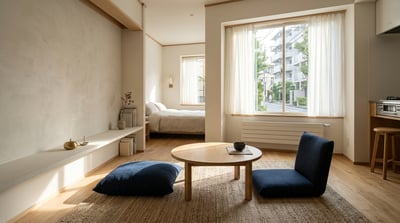
An ¥80,000 monthly rent budget demands severe compromises in central Tokyo. Seeking an apartment at ¥80,000 including maintenance fees in Minato or Chiyoda Ward realistically limits options to wooden apartments near 40 years old or micro-studios around 15 square meters. Opening the front door places you right against a tiny kitchen without space for an indoor washing machine. The living area is under five tatami mats; once a bed is placed, merely one or two tatami mats of open floor remain. Inviting a friend over is out of the question, and even laying a large suitcase open is a struggle.
Looking around Kita-Ayase Station with that same ¥80,000 budget, the scenery transforms entirely. Floor plans spanning 32 to 38 square meters in 1DK or 1LDK configurations come comfortably within reach. These properties are solid reinforced concrete (RC) buildings with fully separate bathrooms and toilets. Standard appointments include an independent vanity with three-sided mirrors for unhurried morning routines, a built-in kitchen with a two-burner gas stove, and walk-in closets that effortlessly accommodate long winter coats and outdoor gear.
For the exact same ¥80,000 expenditure, daily quality of life more than doubles. What was once a cramped shelter used solely for sleeping transforms into a welcoming home where you can invite friends, cook homemade meals, and genuinely unwind. In Kita-Ayase, this essential quality of home is attained without spending a single yen more on rent.
¥120,000–¥140,000 Budget: Downtown 1K vs. 55+ sqm Kita-Ayase 2LDK
Next, consider the ¥120,000 to ¥140,000 bracket favored by dual-income couples, newlyweds, or single professionals seeking extra comfort. Across Tokyo's central five wards (Minato, Chiyoda, Chuo, Shinjuku, Shibuya) and Bunkyo Ward, this price range rarely extends beyond slightly larger single-occupant 1K units (25 to 30 square meters). For two people, it feels cramped; daily household sounds carry everywhere, and concurrent remote work calls inevitably clash, causing ongoing friction.
In Kita-Ayase, however, a budget of ¥120,000 to ¥140,000 unlocks family-grade dimensions. You can select a spacious 2LDK or 3LDK measuring 55 to over 65 square meters, with a combined living-dining-kitchen area exceeding 12 tatami mats and two independent rooms serving as a private bedroom and dedicated workspace.
The living room easily accommodates a generous dining table and a three-seater sofa. An open counter kitchen allows you to prepare dinner while conversing freely, and an automatic reheating bath lets you stretch out and soak away fatigue at the end of the day. Furthermore, both partners can set up dedicated desks in separate rooms, creating a harmonious shared life that honors each person's quiet privacy.
Living Quality Enabled by Dedicated Workspaces, Separate Vanities, and Ample Storage
In modern apartment hunting, the most frequently overlooked factor is the functional separation of daily living zones. In a studio or small 1K, sleeping, dining, working, and relaxing must all take place within a single room. From psychological and ergonomic standpoints, this continuous overlap disrupts nervous system rhythms, frequently contributing to chronic fatigue and sleep disturbances.
In Kita-Ayase properties spanning 30 square meters or more, sliding partitions and doors physically separate areas for rest from areas of activity. You can permanently set up a sturdy work desk equipped with monitor arms and an ergonomic chair well out of sight from your bed. Once work finishes, closing the door cleanly transitions your environment into a private retreat. This clear boundary maximizes remote-work productivity while preserving daily peace of mind.
An independent vanity and expansive closet space also define everyday quality of life. Skincare essentials, hair dryers, and towels can be neatly stowed away out of sight. When seasonal bedding, suitcases, and wardrobes are fully tucked into designated closets, floor surfaces remain clear and uncluttered—embodying an aesthetic of calm, effortless refinement.
MID_CTA_PLACEHOLDERTwo-Year Total Cost Simulation: Major Savings on Rent, Renewals, and Initial Fees
| Cost Item | Central Tokyo (Bunkyo, etc.) 25 sqm 1K | Kita-Ayase 35 sqm 1LDK | 2-Year Difference (Savings) | Licensed Broker Insight |
|---|---|---|---|---|
| Monthly Rent | ¥120,000 | ¥75,000 | Difference: ¥45,000 / month | Substantially lowers fixed expenses while maintaining equal or superior fixture quality. |
| Monthly Maintenance Fee | ¥10,000 | ¥6,000 | Difference: ¥4,000 / month | Central tower residences and downtown apartments trend toward higher management fees. |
| 2-Year Total Rent + Maintenance Fees | ¥3,120,000 | ¥1,944,000 | ¥1,176,000 Saved | Frees up over ¥1.17M over two years on the household's single largest fixed cost. |
| Contract Renewal Fee (1 mo. new rent) | ¥120,000 | ¥75,000 | ¥45,000 Saved | Because base rent is lower, the biennial renewal fee burden is remarkably light. |
| Initial Move-In Costs (Advance rent, deposits, etc.) | Approx. ¥580,000 | Approx. ¥360,000 | Approx. ¥220,000 Saved | Key money, deposit, and broker fees scale directly with rent, creating immediate savings upfront. |
| 2-Year Total Housing Cost | ¥3,820,000 | ¥2,379,000 | Total Savings: Approx. ¥1,441,000 | Generates substantial capital directly applicable to NISA investments or future home purchase down payments. |
How a ¥40,000–¥50,000 Rent Difference Yields ¥500,000–¥600,000 Annually
When planning a move, many renters fall into lateral thinking: "Can I find a newer apartment at my current rent level?" But shifting perspective to "reducing absolute monthly rent by ¥40,000 to ¥50,000 while expanding living space by 1.5 times" in Kita-Ayase produces a financial impact far greater than most imagine.
A ¥45,000 reduction in monthly fixed expenses amounts to ¥540,000 a year. Over a standard two-year lease term, this translates into ¥1.08 million in net disposable income. Factoring in lower renewal fees (typically one month's new rent), reduced fire insurance premiums, and lower guarantor renewal charges, total two-year free cash flow reaches approximately ¥1.15 million to ¥1.4 million.
Consider how difficult it is to increase net take-home pay by ¥45,000 per month through career promotions alone. That equates to a pre-tax salary raise of roughly ¥700,000 or more per year. Yet by making the single strategic choice of where to live, you secure that exact post-tax cash amount immediately.
Accelerating NISA Investments, Passions, and Personal Growth
Leaving the ¥1.15+ million saved over two years in a standard savings account already bolsters your financial resilience. But redirecting those funds into investments accelerates long-term wealth building dramatically.
For example, suppose you automatically invest the ¥45,000 monthly savings into tax-advantaged NISA index funds (such as an all-country global equity index or the S&P 500, assuming an annualized 5% return). Over five years, your principal reaches ¥2.7 million, growing to approximately ¥3.07 million with returns. Sustained over ten years, a principal of ¥5.4 million expands into nearly ¥7 million in accumulated assets.
Compare "living in a cramped 18-square-meter downtown studio, cutting back on daily pleasures just to pay high rent" with "living comfortably in a spacious 35-square-meter home in Kita-Ayase while steadily investing ¥45,000 each month." Over a ten-year span, the divide between the two encompasses not just daily satisfaction, but an unbridgeable net-worth divergence exceeding ¥7 million. Where you live is not simply a lifestyle expense; it is a primary financial strategy.
Zero-Deposit, Zero-Key-Money Listings and Restoration Risk Management
Another defining characteristic of Kita-Ayase's rental market is the notably higher proportion of properties offering "zero key money" or even "zero deposit, zero key money" compared to central Tokyo.
In high-demand downtown areas, landlord-favorable terms remain standard, with two months of key money and non-refundable deposit clauses routinely applied. In Kita-Ayase, however, property owners frequently waive key money or offer one to two months of free rent to secure prompt occupancy, trimming initial move-in costs by an additional ¥150,000 to ¥200,000.
That said, practical risk management is essential. When leasing a zero-deposit apartment, always verify the fixed cleaning fee due upon vacating and any short-term cancellation penalties in the special provisions. Standard clauses often stipulate that "in lieu of a security deposit, the tenant pays a fixed cleaning fee of ¥70,000 plus air-conditioner servicing upon move-out" or "terminating the lease within one year incurs a penalty equal to one month's rent." To enjoy lower upfront costs without unpleasant surprises at departure, having a professional review these clauses in advance is crucial.
Evolving Living Environment: LaLa Terrace Kita-Ayase and Shobunuma Park
| Walking Distance to Station | Building Age Range | Layout & Floor Space | Average Rent (incl. maintenance) | Key Amenities & Structural Characteristics |
|---|---|---|---|---|
| 1–4 min walk (Station Front) | Under 5 yrs (Modern) | 1K (25–28 sqm) | ¥75,000–¥83,000 | RC structure, auto-lock, delivery locker, direct route to LaLa Terrace |
| 10–15 yrs | 1LDK (35–40 sqm) | ¥85,000–¥94,000 | RC build, separate vanity, bathroom dryer, counter kitchen, high sound insulation | |
| 20+ yrs | 2DK / 2LDK (45–52 sqm) | ¥90,000–¥102,000 | Many renovated interiors, separate bath & toilet, elevator, exceptional station convenience | |
| 5–9 min walk (Golden Zone) | Under 5 yrs (Modern) | 1LDK (32–36 sqm) | ¥80,000–¥88,000 | Hotel-style indoor hallways, free internet, walk-in closet |
| 10–20 yrs | 1DK / 1LDK (30–35 sqm) | ¥68,000–¥76,000 | [Top Recommendation] High-quality mid-rise RC, tranquil residential setting, excellent sunlight | |
| 15–25 yrs | 2LDK (50–58 sqm) | ¥105,000–¥118,000 | Reheating bath, built-in kitchen, ideal comfort for couples and young families | |
| 10–14 min walk (Space Priority) | 10–15 yrs | 1K / 1DK (28–32 sqm) | ¥60,000–¥68,000 | Mixed steel/RC builds, bicycle parking, ideal for singles minimizing fixed costs |
| 15–25 yrs | 2LDK (55–62 sqm) | ¥95,000–¥108,000 | Low-rise residence, on-site parking, close to supermarkets and drugstores | |
| 20+ yrs | 3LDK / Detached Rental (65+ sqm) | ¥115,000–¥130,000 | Private gardens, terrace houses, broad selection of pet-friendly units |
Station-Direct Daily Shopping and Healthcare at the New Commercial Complex
Previously, the primary critique of Kita-Ayase was that commercial facilities directly fronting the station were modest, offering fewer choices for grocery shopping and casual dining. While supermarkets and drugstores were present, visiting stylish cafes or extensive retail centers required traveling to Kitasenju or Ayase.
That shortcoming is fundamentally resolved with the opening of LaLa Terrace Kita-Ayase (developed by Mitsui Fudosan Group) in summer 2025. Connected directly to the station via an elevated pedestrian deck, this major commercial complex gathers a premium large-format supermarket and pharmacy alongside relaxed cafes, varied dining spots, bookstores, and daily lifestyle shops.
The facility also incorporates a comprehensive medical mall—featuring internal medicine, dentistry, dermatology, and pediatrics—alongside a dispensing pharmacy and a child-rearing support center. On rainy evenings, you can step directly off the train, pick up fresh dinner ingredients, visit a clinic without opening an umbrella, and walk home. This evolution elevates Kita-Ayase from a suburban bedroom community into a self-contained, highly functional urban hub.
Tranquil Living Surrounded by Seasonal Greenery and Expansive Waterscapes
Even as station-front convenience gains modern polish, Kita-Ayase retains its timeless appeal: a rich landscape of water and greenery centered on Shobunuma Park, situated just outside the station gates.
Shobunuma Park is an expansive waterscape park established alongside land readjustment projects, celebrated across Tokyo as a premier iris sanctuary where approximately 8,100 Japanese irises of 140 varieties bloom in early summer. Meandering waterways, gentle waterfalls, and wooden footpaths invite residents to sit on shaded benches and read under the dappled sunlight on clear weekends.
Living in central Tokyo surrounded by concrete high-rises and narrow skies often disconnects residents from the changing seasons. In Kita-Ayase, a lush green sanctuary sits steps from your door. A morning weekend stroll accompanied by gentle breezes and birdsong offers a calm, restorative luxury that replenishes energy drained by bustling city life.
Exceptional Road Mobility via Kannana-dori and the Shuto Kahei Interchange
Beyond rail transit, robust road connectivity represents another compelling advantage of residing in Kita-Ayase.
Along Kannana-dori (Tokyo Metropolitan Route 318), which runs east-west just south of the station, home improvement centers, consumer electronics retailers, roadside eateries, and 24-hour discount stores make weekend shopping excursions and DIY supply runs remarkably effortless by car or bicycle.
Moreover, the Kahei Interchange on the Shuto Expressway Route 6 Misato Line sits just minutes from the station. Entering the expressway network here allows seamless travel toward Haneda Airport and Odaiba via the Central Circular Route, as well as direct connections to the Joban, Tohoku, and Kan-Etsu Expressways. For weekend camping trips, skiing, hot spring getaways, or golf, you can join major highways without navigating downtown traffic chokepoints—making it an ideal base for active lifestyles.
Smart Apartment Selection and Sorai Tokyo Brokerage Support
The Golden Ratio of Walking Distance and Age: Uncovering Hidden Gems
The proven field rule for securing peak cost performance in Kita-Ayase is targeting reinforced concrete (RC) apartments built 10 to 20 years ago and located 5 to 9 minutes on foot from the station.
Within 1 to 3 minutes of the station, anticipation surrounding LaLa Terrace Kita-Ayase has nudged rents for new builds upward. While excellent if budget permits, those seeking the greatest reward—substantial floor space and superior fixtures at the same rent—will find properties in the quiet residential blocks 5 to 9 minutes out to be the most rewarding choice.
Under Japanese building codes, RC buildings constructed after 2000 exhibit high seismic resistance and sound dampening. Even at around 15 years of age, well-maintained buildings with clean common areas and proper reserve funds often feature interiors renovated with modern kitchens and vanities comparable to new construction. These well-managed 10-to-20-year-old RC properties are prime targets, often leasing for ¥10,000 to ¥20,000 below peak market rates while securing 35+ square meters of comfortable living space.
When viewing apartments, always evaluate three details in person: daytime natural lighting, the cleanliness and order of the entrance notice board, and the brightness of streetlights along the route from the station after dark. Genuine living comfort is reflected not in architectural blueprints, but in these daily real-world touches.
AUTHOR_BOX_PLACEHOLDER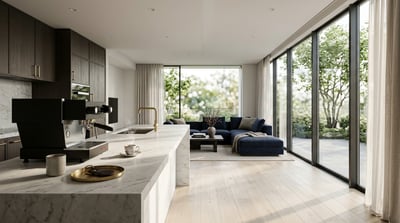
Frequently Asked Questions
QCan I truly get a seat on originating Chiyoda Line trains at Kita-Ayase during morning rush hour?
AYes. By arriving on the platform a few minutes prior to departure, you can almost certainly secure a seat even during peak morning hours. Kita-Ayase is the northernmost originating terminus of the Chiyoda Line, meaning all outbound direct trains toward Yoyogi-Uehara start their runs here. Numerous originating services depart between 7:00 and 8:30 AM, scheduled so that waiting for just one or two trains guarantees a seat. This offers a commute entirely free from the stress of forcing your way into already packed cars at stations like Ayase or Nishi-Nippori.
QI have concerns regarding safety in Adachi Ward. What is the actual atmosphere for solo female residents and walking at night?
AThe area surrounding Kita-Ayase Station is a calm, low-rise residential district inhabited predominantly by families, and public safety is very stable. Because there are no entertainment districts or nightlife strips, the neighborhood remains quiet at night. The station front borders Shobunuma Park and the well-lit arterial Kannana-dori, supported by ongoing streetlight installations. However, residential pockets and canal walkways located more than 10 minutes from the station can have darker stretches. When visiting apartments, we recommend walking the route from the station in the evening as well as during the day.
QI have heard Kita-Ayase has limited dining and shopping options. Will I face difficulties with daily groceries and eating out?
ADaily shopping and dining options will improve dramatically with the opening of LaLa Terrace Kita-Ayase in summer 2025. Even currently, the station area is well-serviced by supermarkets including Seiyu Kita-Ayase and Belx Adachi Kahei, along with Gyomu Super Ayase, numerous pharmacies, family restaurants, and roadside dining along Kannana-dori, making everyday cooking and supply runs straightforward. With LaLa Terrace opening directly connected to the station, additions such as medical clinics, cafes, bakeries, and prepared food shops will bring daily convenience in line with central Tokyo transit hubs.

Author: Sorai Tokyo Editorial Team (Supervised by Licensed Real Estate Agents)
A real estate consulting team specializing in assisting foreign nationals find rooms and explaining initial costs in Tokyo. We break down language barriers and differences in customs, offering dedicated support in Japanese, English, and Vietnamese for a safe and secure start to your new life.