
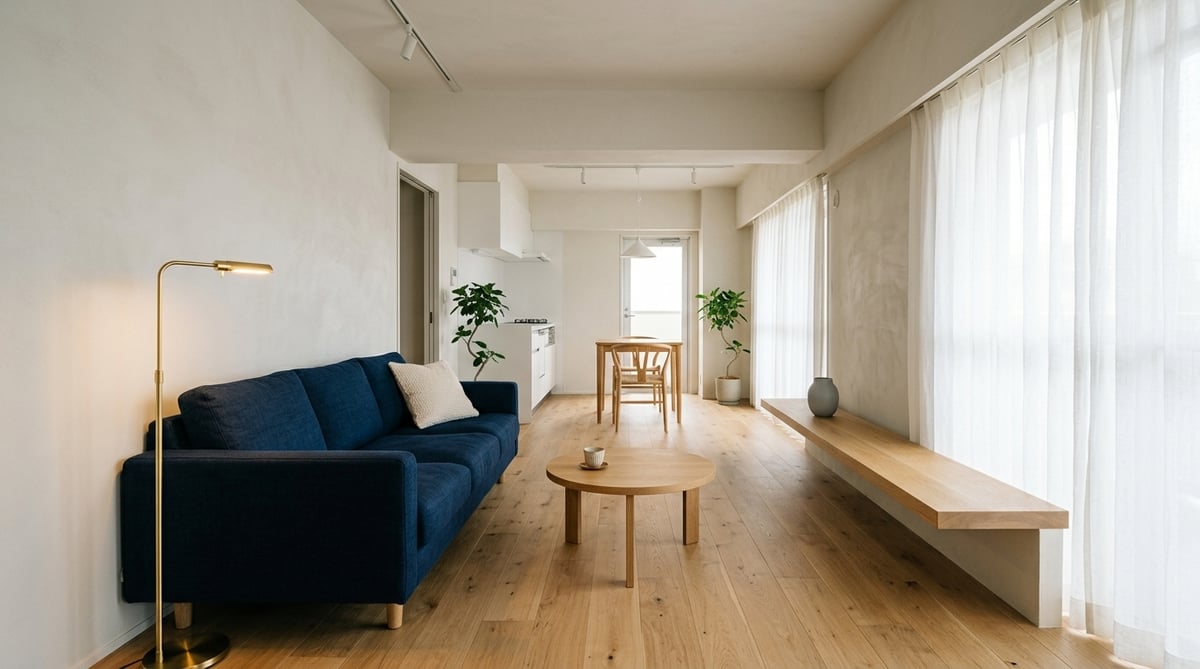
Served by the Tokyo Metro Chiyoda Line, Nogizaka sits at the prestigious crossroads of Akasaka, Roppongi, and Minami-Aoyama. Yet, despite being adjacent to these vibrant hubs, it enjoys an unmatched residential tranquility framed by the sacred groves of Nogi Shrine, the serene tree-lined promenades of Aoyama Cemetery, and the verdant canopies around The National Art Center, Tokyo. Offering direct 10-minute access to Otemachi and just 2 minutes to Omotesando, stepping up from Nogizaka Station reveals a quiet, leafy neighborhood shielded from major thoroughfare noise, complete with refreshing morning breezes.
A quick glance at conventional property portals shows that average asking rents around Nogizaka Station hover around 193,000 JPY for 1K studio units and easily exceed 320,000 JPY for 1LDK apartments. This often leads international expats, students, and professionals to assume that living in this coveted district is financially out of reach. However, by expanding your focus to historically crafted, low-rise vintage condominium rentals (condo-grade units) and properly renovated older residences, a realistic budget of 130,000 to 160,000 JPY per month opens up clear pathways to securing a peaceful home along the Minami-Aoyama border.
While spending around one-third of take-home income on rent is a standard benchmark, there is no single right answer to housing. Some choose to lower fixed costs by residing in outer suburbs to allocate funds toward travel and personal hobbies; others prefer to cut commuter stress entirely by living in central Tokyo, reinvesting their saved commute time into sleep, personal wellness, and career growth. Both lifestyles are deeply valid. In this comprehensive guide, a licensed Japanese real estate broker (Takken) with a decade of central Tokyo brokerage experience details actionable methods, verified market data, and expert inspection techniques to help you secure a premier vintage apartment in Nogizaka within the 130,000 to 160,000 JPY range.
Key Takeaways 3 Essential Pillars for Securing a Quality Vintage Apartment in Nogizaka (130,000–160,000 JPY)
- Save 40,000 to 60,000 JPY Compared to Newer Builds: By targeting 35-to-45-year-old reinforced concrete (RC/SRC) low-rise condominium rentals near the borders of Akasaka 8-Chome, Minami-Aoyama 1-Chome, and Roppongi 7-Chome, you can find renovated units for 130,000 to 160,000 JPY that offer thick wall soundproofing and well-maintained building structures.
- East-West Mobility with 5 Walkable Subway Lines: Beyond the Chiyoda Line’s direct routes—10 minutes to Otemachi, 6 minutes to Kasumigaseki, and 2 minutes to Omotesando—you can easily walk to Roppongi Station (Hibiya and Oedo Lines) and Aoyama-Itchome Station (Ginza and Hanzomon Lines), providing seamless 5-line urban mobility.
- Prioritize Shared Pipes, Electrical Capacity, and Slope Topography During Viewings: Look beyond new wallpaper and cosmetic flooring. Essential professional checks include confirming building drainage pipe renewal history, checking the electrical breaker panel limit (often capped at 30A or 40A), and testing the pedestrian walk and elevation incline from Nogizaka and Gaien-Higashi Street.
- A licensed real estate broker reveals strategies for renting quality low-rise vintage apartments in Nogizaka for 130,000 to 160,000 JPY/month.
- Direct Tokyo Metro Chiyoda Line access connects straight to Marunouchi and Otemachi business districts in 10 minutes.
- Average market rents include newer tower developments, making vintage condominiums a smart, high-value alternative.
Nogizaka District Overview and Realistic Rental Market Rates
The name Nogizaka originates from the renaming of the historic Yureizaka slope in honor of General Maresuke Nogi, alongside the founding of Nogi Shrine. Nogizaka Station itself is situated beneath the intersection of Gaien-Higashi Street and Akasaka Street, directly bordering Minami-Aoyama 1-Chome and Akasaka 9-Chome in Minato Ward. Exiting the station places you directly before the forested grounds of Nogi Shrine, while the western side opens to the sprawling greenery of Aoyama Cemetery and the southern flank connects within walking distance to Tokyo Midtown and Roppongi Hills.
During the morning rush hour, emerging from the Chiyoda Line underground into the fresh open air reveals gentle green foliage and the comforting scent of freshly ground beans from neighborhood boutique cafes preparing for opening. This calm residential atmosphere, distinctly insulated from corporate skyscraper noise, is why Nogizaka has long been treasured as an exceptional living haven.
Area Rent Trends and Our Targeted Price Bracket
According to verified market statistics published by major portal networks such as LIFULL HOME'S and SUUMO, average asking rents within a 10-minute walk of Nogizaka Station break down as follows:
- Solo layouts (Studio / 1K): approximately 193,300 JPY
- Couples / DINKS (1LDK / 2K): approximately 324,300 JPY
- Family layouts (2LDK / 3LDK): approximately 569,300 JPY
At first glance, Nogizaka may seem reserved solely for high-earning corporate executives seeking high-rise luxury towers. However, this statistical average is heavily driven upward by newer high-rise developments with 24-hour concierge desks and premium amenities constructed during recent urban redevelopments.
When you pivot your search to established low-rise condominium complexes built from the late 1970s through the early 1990s, or boutique mid-rise residences carefully maintained by individual owners, comfortable units between 18 sqm and 28 sqm (and occasionally compact 1DK/1LDK spaces) regularly appear on the market for 130,000 to 160,000 JPY per month, management fee included. Securing a prestigious Nogizaka address while maintaining sensible monthly overhead is one of the smartest, most rewarding strategies for urban international residents.
Direct Chiyoda Line Commutes and Travel Times to Key Tokyo Hubs
The Tokyo Metro Chiyoda Line operates through-service northbound onto the JR Joban Line and southwest onto the Odakyu Odawara Line, allowing direct or single-transfer access to Tokyo's primary business districts and lifestyle epicenters.
Based on official timetables and transit navigation data, average travel times from Nogizaka are as follows:
- Otemachi Station: approx. 10 min during morning rush / 10 min off-peak (direct, no transfer)
- Tokyo Station: approx. 17 min rush / 15 min off-peak (via Nijubashimae Station or short connection at Otemachi)
- Kasumigaseki Station: approx. 6 min rush / 6 min off-peak (direct, no transfer)
- Omotesando Station: approx. 2 min rush / 2 min off-peak (direct, no transfer)
- Shibuya Station: approx. 12 min rush / 8 min off-peak (direct cross-platform transfer at Omotesando to the Ginza or Hanzomon Line)
- Shinjuku / Shinjuku-sanchome: approx. 22 min rush / 15 min off-peak (transfer at Meiji-jingumae to the Fukutoshin Line Express, or connect to the JR Yamanote Line at Harajuku)
For professionals working in Otemachi, Marunouchi, or the government district of Kasumigaseki, a door-to-door commute of around 20 minutes transforms your daily schedule, offering extra morning sleep and relaxing evening hours. If you work late, a taxi home from Otemachi costs roughly 2,500 to 3,000 JPY, and you can comfortably walk back from Roppongi or Akasaka, offering peace of mind that numbers alone cannot reflect.
Subway Station Layout, Ticket Gates, and Official Exits
Nogizaka Station is an underground facility featuring two main ticket gate concourses on the B1 level: the Nogi Shrine / Gaien-Higashi Street gate and the Aoyama Cemetery gate. The station officially operates exactly 5 exit systems: Exit 1, Exit 2, Exit 3, Exit 5, and Exit 6.
Crucial navigation tip: Nogizaka Station does NOT have directional exits such as East Exit, West Exit, North Exit, or South Exit. Furthermore, Exit 4 was permanently closed on December 29, 2010, and no longer exists. Beware of outdated online guides or unofficial aggregator sites that list non-existent exits.
Here is how the active exits connect to surrounding landmarks and residential neighborhoods:
- Exit 1: Connects to Nogi Shrine, Nogi Kaikan, the Daughters of St. Paul Convent, Former Nogi Residence, Nogi Park, and Akasaka Elementary School. This is your primary route toward the elevated residential enclaves of Akasaka 7-Chome and 8-Chome.
- Exit 2: Situated on the western side of Gaien-Higashi Street, equipped with an elevator to the surface—ideal when returning with heavy luggage or groceries.
- Exit 3: Direct underground passageway connecting to Tokyo Midtown (Galleria and Plaza), Suntory Museum of Art, Sanno Hospital, 21_21 DESIGN SIGHT, and The Ritz-Carlton, Tokyo. It also seamlessly links to Roppongi Station on the Toei Oedo and Hibiya Lines, keeping you dry on rainy days.
- Exit 5: Leads to Aoyama Funeral Lawn, Aoyama Cemetery, Akasaka Fire Station, Akasaka Junior High School, National Graduate Institute for Policy Studies (GRIPS), Science Council of Japan, EX Theater Roppongi, and Roppongi Hills. Ideal for reaching the low-rise streets of Minami-Aoyama 1-Chome.
- Exit 6: Direct underground entrance to The National Art Center, Tokyo. During museum hours, you can step straight into its iconic wavy glass curtain-walled atrium.
Simply enter the monthly rent and deposit details from any Japanese rental portal to calculate a transparent breakdown of brokerage fees, guarantor guarantees, and move-in costs, free of unnecessary markups.
Low-Rise Vintage Condominium Strategy: Living in Nogizaka for 130k-160k Yen
Unlocking monthly rents between 130,000 and 160,000 JPY in Nogizaka requires a strategic property search focusing on building age and construction types. If you only look at recently constructed units, budget constraints may force you out to distant neighborhoods. However, understanding the strengths of Tokyo vintage condominiums allows you to enjoy Nogizaka's elite environment without compromising on comfort.
Prioritizing Modern Amenities and High-Rise Status
- ✓ Auto-lock security, delivery parcel lockers, and in-sink garbage disposers
- ✓ Hotel-style interior corridors and 24-hour manned security desks
- ✓ Smaller living areas (often around 20 sqm) paired with high premium rents
Quiet Surroundings, Generous Layouts, and Cost Efficiency
- ✓ Solid SRC/RC concrete wall structures providing high soundproofing and ceiling heights
- ✓ Spacious floor plans from 25 to 32 sqm with distinct living and dining zones
- ✓ Numerous renovated units featuring brand-new kitchens, bathrooms, and flooring
The Rental Value of 35+ Year Low-Rise RC/SRC Buildings
Low-rise vintage condominiums constructed between 1975 and the early 1990s were often designed under more generous building-to-land ratio regulations than modern studio developments. Built with Steel-Framed Reinforced Concrete (SRC) or Reinforced Concrete (RC) wall-frame structures, their concrete pours were meticulously executed, resulting in thick, solid dividing walls that offer vastly superior acoustic isolation compared to modern lightweight steel-frame apartments.
Because the building's physical capital depreciation has already settled, property owners price these units roughly 40,000 to 60,000 JPY below surrounding newer apartments. Additionally, many owners perform comprehensive interior renovations before releasing units for rent—installing modern modular kitchens, separating the bath and toilet, adding washlet bidet seats, and updating flooring. While the building exterior showcases retro architectural charm, your personal living space provides all the conveniences of contemporary Tokyo living.
Pinpointing Quiet Residential Pockets: Akasaka 8-Chome, Minami-Aoyama 1-Chome, and Roppongi 7-Chome
When searching for low-rise vintage residences near Nogizaka Station, three distinct sub-neighborhoods offer the highest quality of life:
First is the area around Akasaka 8-Chome, just north of Nogi Park from Exit 1. Historically home to samurai estates during the Edo period, this elevated neighborhood features quiet, tree-shaded streets lined with stately private homes and refined low-rise residences. Tucked away from major roads, nighttime noise is virtually absent, creating an oasis of calm where you can completely unwind.
Second is the eastern enclave of Minami-Aoyama 1-Chome, accessed via Exit 5 near Aoyama Cemetery. With expansive greenery and open skies, this pocket lets you feel the change of seasons right outside your window. Residents can easily stroll under the golden autumn ginkgo canopies toward Gaienmae and Omotesando, making weekend walks a natural pleasure.
Third is the network of peaceful backstreets in Roppongi 7-Chome behind Tokyo Midtown, accessible from Exit 3. Situated a comfortable distance from the main Roppongi Crossing, this district blends tucked-away French bistros and quiet wine bars with low-density residential zoning. Even late at night, the well-lit paths around Midtown provide safe, well-monitored walking routes that give solo residents great peace of mind.
Well-Managed Vintage Condominiums Like Shuwa Residence
No discussion of Tokyo vintage condominiums is complete without mentioning the iconic Shuwa Residence series—instantly recognizable by their blue Spanish tile roofs, white stucco walls, and wrought-iron balcony railings—alongside other classic buildings crafted by premier developers. Several of these architectural classics are scattered throughout Nogizaka, Aoyama, and Akasaka, with individual units periodically offered for rent.
The distinctive advantage of renting a unit within an owner-occupied condominium building (bunsō chintai) is the strength of its homeowners' management association. Guided by long-term maintenance programs, these buildings benefit from scheduled exterior painting, plumbing updates, lobby auto-lock installations, and comprehensive security camera networks. With on-site building caretakers ensuring clean corridors and well-organized garbage disposal areas, everyday living standards remain pristine regardless of building age.
| Comparison Criteria | Nogizaka Newer Towers & Designer Condos | Nogizaka Low-Rise Vintage Condominiums |
|---|---|---|
| Monthly Rent (Solo Layout) | 190,000–240,000 JPY (plus management fees) | 130,000–160,000 JPY (including fees) |
| Floor Area & Layout | 20.0–23.0 sqm (compact studio / 1K) | 24.0–32.0 sqm (generous 1K / 1DK) |
| Building Structure & Height | RC high-rise tower (15 to 30+ stories) | SRC / RC wall-frame low-rise (3 to 7 stories) |
| Soundproofing & Wall Density | Mainly dry-wall construction (varies by contractor) | Thick wet-pour solid concrete walls (excellent acoustics) |
| Interior Bathroom & Kitchen | Cutting-edge bath dryers, mist saunas, disposers | Renovated units feature brand-new fixtures |
| Neighborhood Atmosphere | Ultra-modern, hotel-like, high-density | Leafy, timeless, serene residential streetscapes |
Chiyoda Line Station-by-Station Rent and Commute Comparison
Spanning 20 stations from Yoyogi-Uehara through Omotesando, Nogizaka, Akasaka, Kasumigaseki, Otemachi, Shin-Ochanomizu, Nishi-Nippori, and Kita-Senju to Kita-Ayase, the Tokyo Metro Chiyoda Line connects an astonishingly diverse range of urban atmospheres and rental markets.
As detailed in our Chiyoda Line Area Guide, this line directly links Japan's most vital financial cores with trendsetting cultural districts and welcoming traditional neighborhoods. To understand Nogizaka's distinctive positioning, let us compare it against major key stations along the line.
Comparing Western Hubs (Omotesando, Yoyogi-Uehara) and Central Office Cores (Akasaka, Otemachi)
Just 2 minutes west of Nogizaka lies Omotesando Station, connecting directly to the Ginza and Hanzomon Lines as Japan's premier fashion and lifestyle showcase. Solo 1K rents in Omotesando average between 180,000 and 220,000 JPY. Traveling further west to Yoyogi-Uehara (9 minutes away), rents moderate to roughly 120,000 to 150,000 JPY. Yoyogi-Uehara offers the distinct advantage of boarding origin trains to sit during morning commutes toward Otemachi, plus rapid service on the Odakyu Line, though the local terrain is noticeably hilly.
Conversely, heading east, Akasaka Station (2 minutes away) centers around commercial towers, media headquarters like TBS, and buzzing dining streets. While solo 1K apartments in Akasaka average around 150,000 to 180,000 JPY, the lively nightlife crowds can sometimes detract from residential serenity. For those prioritizing tranquility, Nogizaka's elevated residential roads feel significantly more peaceful. Further east, Kasumigaseki (6 minutes) and Otemachi (10 minutes) are dedicated business districts with practically zero standard rental housing. Nogizaka thus stands out as an exceptionally rare, leafy residential harbor located directly adjacent to Tokyo's prime corporate centers.
Positioning Along the Northern Section: From Shin-Ochanomizu and Yanesen to Kita-Senju and Kita-Ayase
Traveling northeast past Otemachi brings you to academic and medical hubs around Shin-Ochanomizu and Yushima, followed by the historic Yanesen district of Nezu and Sendagi. Nezu and Sendagi feature solo rents around 100,000 to 120,000 JPY, offering a traditional downtown atmosphere shaped by historic temples, wooden townhouses, and local shops.
Continuing outward, Nishi-Nippori connects to the Yamanote Line (1K: 95,000–110,000 JPY), Machiya intersects with the Arakawa Tram (1K: 80,000–95,000 JPY), and Kita-Senju serves as a major 5-line transit hub (1K: 85,000–100,000 JPY), terminating at Ayase and Kita-Ayase (1K: 68,000–85,000 JPY). While the northern stations in Adachi and Arakawa Wards are ideal if your goal is capping rent below 100,000 JPY, Nogizaka's vintage condominiums provide unparalleled value if you wish to eliminate long train rides, bike or walk to Roppongi and Aoyama, and live free from late-night taxi anxiety.
| Station | Travel Time to Otemachi | Average 1K Rent | Connecting Lines & Accessibility | Atmosphere & Living Environment |
|---|---|---|---|---|
| Nogizaka | Direct 10 min | 193,300 JPY (Vintage: 130k-160k) | Chiyoda Line (Walk to Roppongi / Aoyama-Itchome) | Lush elevated residential zone beside museums and green shrines |
| Omotesando | Direct 13 min | 208,000 JPY | Ginza & Hanzomon Lines (Cross-platform) | High-end boutiques, luxury fashion houses, and designer cafes |
| Yoyogi-Uehara | Direct 19 min | 134,000 JPY | Odakyu Line (Origin terminal & Rapid Express) | Upscale hillside neighborhood with artisan bakeries and bistros |
| Akasaka | Direct 8 min | 165,000 JPY | Chiyoda Line (Walk to Akasaka-mitsuke) | Dynamic commercial district with major broadcast networks and dining |
| Nezu / Sendagi | Direct 7–9 min | 108,000 JPY | Chiyoda Line | Historic downtown charm, serene temples, and quiet residential lanes |
| Nishi-Nippori | Direct 11 min | 102,000 JPY | JR Yamanote, Keihin-Tohoku, Nippori-Toneri | Exceptional transit versatility with traditional local eateries |
| Machiya | Direct 13 min | 89,000 JPY | Keisei Main Line & Tokyo Sakura Tram | Friendly shopping arcades with low living costs and welcoming vibe |
| Kita-Senju | Direct 16 min | 92,000 JPY | Hibiya, JR Joban, Tobu Skytree, Tsukuba Express | Bustling terminal hub with department stores and historic shopping streets |
| Ayase / Kita-Ayase | Direct 21–24 min | 75,000 JPY | Chiyoda Line (Numerous origin trains) | Guaranteed seated morning commutes in family-oriented suburban settings |
Everyday Grocery Shopping, Neighborhood Amenities, and Public Safety
Prospective residents sometimes worry that Nogizaka's status as an exclusive district makes daily grocery shopping difficult or expensive. In reality, walking through the neighborhood reveals a convenient mix of high-end food halls, budget-friendly mini-supermarkets, and everyday discount retailers all within a 5-to-15-minute walking radius.
Supermarket Profiles and How to Plan Your Weekly Shopping
Key grocery and retail options easily accessible from Nogizaka Station include:
- Precce Premium Tokyo Midtown (Supermarket, B1 Level): Premium fresh meats, curated wines, and gourmet delicatessens. Direct underground connection via Exit 3 allows comfortable shopping without an umbrella on rainy days. Please consult official store announcements for operational hours.
- MyBasket Aoyama-Itchome (Supermarket, North of Gaien-Higashi St.): AEON Group's compact urban supermarket offering portioned produce and private-label essentials at highly economical prices, making it a reliable ally for solo meal prep.
- Zen-Nichi Food Marche Nishi-Azabu (Supermarket, Nishi-Azabu 2-Chome): A community-oriented supermarket south of Aoyama Cemetery. Celebrated by local residents for fresh produce and value-oriented staples.
- Seijo Ishii Roppongi Hills (Supermarket, North Tower B1): Exceptional variety of cheeses, charcuterie, artisanal breads, and imported ingredients, offering extensive bento and deli meals late into the evening.
- Olympic Roppongi (Supermarket / Discount Store, Roppongi 3-Chome): A comprehensive store covering kitchenwares, stationery, hardware, and groceries under one roof—convenient for stocking household supplies.
Furthermore, major convenience store chains including 7-Eleven, FamilyMart, and Lawson are situated along Gaien-Higashi and Akasaka Streets, ensuring 24/7 access to late-night necessities, automated package drop-offs, and banking ATMs.
Turning World-Class Museums, Tokyo Midtown, and Roppongi Hills into Your Daily Backyard
Living in Nogizaka fundamentally reframes how you interact with world-class art and culture: they cease being destinations you travel to on weekends and become natural stops during your morning walks.
Designed by master architect Kisho Kurokawa, The National Art Center, Tokyo (connected to Exit 6) welcomes visitors into its magnificent atrium and cafes free of charge, even without museum exhibition tickets. Spending Sunday mornings with a paperback on sunlit atrium benches or exploring curated design stationery at the museum shop enriches daily life with quiet refinement.
Similarly, Midtown Garden's sweeping lawn plazas and manicured walking trails (via Exit 3) showcase cherry blossoms in spring, vibrant summer greens, and golden foliage in autumn. The central avenue of Aoyama Cemetery also serves as one of Tokyo's most celebrated spring sakura promenades, widely favored by local residents for quiet morning jogs and strolls.
Safety Statistics and Nighttime Walking Corridors in Minato Ward
Walking conditions and safety after dark are essential factors when evaluating an apartment. According to official crime statistics published by the Tokyo Metropolitan Police Department, the sub-neighborhoods surrounding Nogizaka Station—specifically Minami-Aoyama 1-Chome, Akasaka 8-Chome, and Akasaka 9-Chome—consistently record remarkably low violent and property crime rates, standing in clear contrast to busy nightlife entertainment zones like Roppongi 3-Chome or Akasaka 2-Chome.
Due to the presence of multiple embassies, government facilities, and local police stations, uniformed officers regularly patrol the district day and night. Major arteries like Gaien-Higashi Street and Akasaka Street feature wide, barrier-free sidewalks and bright municipal streetlights, ensuring clear visibility and secure walking routes even when returning home well past midnight.
5 Critical Professional Inspection Checks for Vintage Apartments
While low-rise vintage condominiums offer impressive structural density and attractive rental value, older properties require specific inspection diligence. Becoming dazzled by retro charm or newly staged cosmetic finishes without verifying underlying systems can lead to preventable hassles after moving in. Always inspect these 5 key checkpoints during on-site viewings:
Plumbing & Drainage Slopes
Verify vertical pipe replacement history, water traps, and odors
Breaker Ampere Capacity
Confirm whether power is capped at 30A/40A for multi-appliance use
Window Sash Acoustics
Test single-pane insulation, condensation marks, and hall care
HOA Rules & Trash Disposal
Check 24/7 garbage access, bike registration, and deliveries
Elevation Gradient & Lighting
Test walking slopes and street lighting between station and door
Check 1: Shared Vertical Piping Renewal History and Indoor Drain Gradients
Plumbing systems represent the single most important technical component in buildings older than 30 to 45 years. Even if internal unit supply pipes have been replaced with modern cross-linked polyethylene, if the building's shared vertical risers remain outdated carbon steel or cast iron, they carry latent risks of rust water, leaks, and drainage blockages.
During the viewing, ask your agent to verify whether the condominium's management association has executed relining or complete replacement of vertical risers. Inside the unit, turn on faucets across the kitchen, bathroom, and vanity to observe water pressure and drain flow. Check that water traps hold water properly without sewer odor backflow, and ensure no gurgling sounds occur when sinks drain.
Check 2: Electrical Breaker Panel Capacity (Confirming 30A vs. 40A+ Caps)
In apartments planned during the Showa era, total building power transformer allocations sometimes restrict individual units to a maximum electrical service of 30A or 40A. Modern lifestyles, however, frequently run air conditioning, large refrigerators, microwave ovens, washer-dryers, computers, and hair dryers simultaneously.
In a home capped at 30A, running an air conditioner, microwave, and electric kettle at the same time in winter can trigger frequent circuit trips. During the viewing, always open the breaker box in the hallway or entryway to check the current contract amperage and confirm with the agent whether the main distribution panel allows upgrading to 50A or 60A.
Check 3: Window Sash Acoustic Insulation and Common Area Maintenance
No matter how stylishly an apartment interior has been renovated, window sashes are classified as shared building elements under Japanese condominium law. Individual unit owners cannot unilaterally replace them with modern double-glazed sashes. Older single-pane aluminum sashes offer limited thermal sealing and may permit condensation or exterior road sound transmission.
Close windows completely during your viewing to test how well external traffic and wind sounds are muffled. If the landlord has added an interior secondary window sash (inner window), thermal and acoustic insulation will be significantly elevated—a major positive asset. Simultaneously, examine whether common corridors are free of personal clutter, garbage disposal stations are neatly swept, and bulletin boards display current notices. These observations offer direct insight into resident courtesy and building management standards.
Check 4: Reviewing Condominium HOA Rules (Pets, Instruments, Home Office)
Renting a unit within a condominium building requires adhering not only to your individual lease agreement, but also to the building's Master Bylaws (kanri kiyaku) and detailed usage rules. Vintage condominiums frequently enforce strict limitations regarding pet ownership (such as weight limits or pet prohibitions), musical instrument practice hours, or commercial foot traffic for home offices.
Additionally, confirm whether the building features an on-site, 24-hour enclosed garbage disposal station, or if trash must be brought out strictly on the morning of scheduled collection days. If you plan to keep a bicycle, verify parking availability and registration decal procedures in advance.
Check 5: Testing Elevation Inclines and Nighttime Sidewalk Visibility
Nogizaka sits on the eastern edge of the Musashino Plateau, where hills and valley gradients naturally connect. Slopes like Nogizaka (along Akasaka Street), Akasaka-dai, and the roads bordering Aoyama Cemetery mean that walking exertion cannot be judged solely by horizontal map minutes.
Rather than taking a broker's car directly to the apartment entrance, we strongly advise walking the entire route between Nogizaka Station ticket gates and the building lobby on foot. Simulating your daily morning and evening walk allows you to evaluate hill gradients, check for slippery paving on rainy days, and ensure that streetlights provide comfortable, secure visibility.
Ground Stability, Hazard Maps, and Vintage Earthquake Resilience
Living with enduring peace of mind in central Tokyo requires an accurate understanding of local geology and disaster preparedness. Here is how Nogizaka's topography stands up from a safety perspective.
Musashino Plateau (Yodobashi Diluvial Tableland) and Minato Hazard Maps
Nogizaka Station and its surrounding ridges in Akasaka 8-Chome and Minami-Aoyama 1-Chome stand upon the eastern edge of the sturdy Musashino Plateau, specifically on the Yodobashi diluvial tableland. Supported by dense Kanto loam and compact gravel layers, this elevated ground offers relatively stable seismic resistance compared to reclaimed coastal zones.
Reviewing the official Minato Ward Inundation Hazard Map (modeled on maximum anticipated precipitation), low-lying areas along the Furukawa River (toward Azabu-Juban) and coastal reclaimed land show designated flood hazard zones. In contrast, the elevated plateaus of Nogizaka are predominantly white zones (zero anticipated flood depth). Similarly, on the Minato Liquefaction Map, this tableland is classified as having low liquefaction susceptibility during major seismic events.
Pre-1981 (Old Code) vs. Post-1981 (New Code) and Structural Wall Resilience
When assessing vintage properties, earthquake building standards frequently arise. Buildings granted building confirmation permits on or after June 1, 1981, comply with the New Anti-Seismic Design Standard (Shin-Taishin), whereas earlier permits fall under the Previous Standard (Kyu-Taishin).
Importantly, buildings completed in 1981 may have received their permits months or over a year earlier, meaning confirmation permit dates must be verified rather than completion years. Furthermore, many well-managed pre-1981 condominium associations have completed official seismic diagnostics or executed structural reinforcement retrofits. Notably, low-rise reinforced concrete wall-frame buildings distribute seismic forces across solid concrete shear walls rather than concentrated pillars and beams, historically demonstrating robust structural resilience during major earthquakes even under earlier building codes.
Evacuation Corridors, Akasaka Fire Station, and Designated Green Havens
Understanding regional disaster resources enhances daily security. Located directly beside Exit 5 of Nogizaka Station is the Tokyo Fire Department's Akasaka Fire Station, ensuring immediate emergency response capabilities throughout the immediate neighborhood.
Furthermore, under the Minato Ward Disaster Management Plan, the expansive grounds of Aoyama Cemetery and the Meiji Jingu Gaien District are designated as primary Regional Evacuation Sites. Having vast, open green spaces with near-zero risk of spreading fires within a few minutes' walk provides an invaluable layer of reassurance during unforeseen events.
Smart Steps to Finding Your Ideal Nogizaka Vintage Residence
Walking through Nogizaka's peaceful residential lanes, the enduring elegance of low-rise vintage residences set back from main boulevards and the dappled sunlight across classic entrance lobbies communicate a quality of life that numbers on a search screen cannot capture. Commuting swiftly toward Otemachi or Omotesando along the Chiyoda Line, enjoying the lush greenery of Nogi Shrine on your morning walk, and relaxing with evening breezes on a Midtown terrace before strolling home—this serene daily rhythm is the authentic hallmark of living in Nogizaka.
Securing a vintage apartment in Nogizaka for 130,000 to 160,000 JPY is an entirely attainable goal. By looking past building age numbers and critically assessing structural integrity, HOA management health, and interior renovations, you can save tens of thousands of yen every month compared to neighboring newer towers while enjoying one of Tokyo's most refined central residential addresses.
At Sorai Tokyo, we assist international residents, professionals, and multicultural families in finding premier apartments across Nogizaka, Minami-Aoyama, Akasaka, and prime central Tokyo districts. Simply send any property URL you discover on Japanese portals (such as SUUMO or HOME'S) to our official LINE account (@soraitokyo). Our licensed bilingual real estate brokers will cross-reference nationwide B2B real estate networks, verify live availability, and provide an objective second opinion on move-in costs—completely free, 100% online, with zero store visits and zero pushy phone calls. You can also explore our free smart tools (SorAi), including our Move-In Cost Calculator, Property Hazard Diagnostic Reports, and custom apartment search requests via our mobile bottom navigation or footer menu. We look forward to guiding you toward your ideal Tokyo home.

Frequently Asked Questions (FAQ)
QCan you genuinely find rental apartments in Nogizaka for 130,000 to 160,000 JPY?
AWhile newly built towers average over 190,000 JPY for studio units, targeting low-rise RC/SRC condominiums built 35+ years ago or owner-managed boutique residences regularly turns up renovated units for 130,000 to 160,000 JPY around Minami-Aoyama 1-Chome, Akasaka 8-Chome, and Roppongi 7-Chome.
QWhat navigation details should I know regarding Nogizaka Station exits?
ANogizaka is an underground station with only numbered exits: 1, 2, 3, 5, and 6. There are no compass exits (North, South, East, West), and Exit 4 was permanently closed in late 2010. Use Exit 3 for Tokyo Midtown, Exit 6 for The National Art Center, Tokyo, Exit 5 for Aoyama Cemetery, and Exit 1 for Nogi Shrine and Akasaka 8-Chome.
QAre older vintage condominiums safe against earthquakes?
AEven for buildings permitted before June 1981, low-rise reinforced concrete wall-frame structures disperse earthquake energy across solid concrete walls, providing notable physical resilience. In addition, reputable condominium associations often conduct seismic diagnostics and structural reinforcements, which can be verified in building maintenance logs.

Author: Sorai Tokyo Editorial Team (Supervised by Licensed Real Estate Agents)
A real estate consulting team specializing in assisting foreign nationals find rooms and explaining initial costs in Tokyo. We break down language barriers and differences in customs, offering dedicated support in Japanese, English, and Vietnamese for a safe and secure start to your new life.