
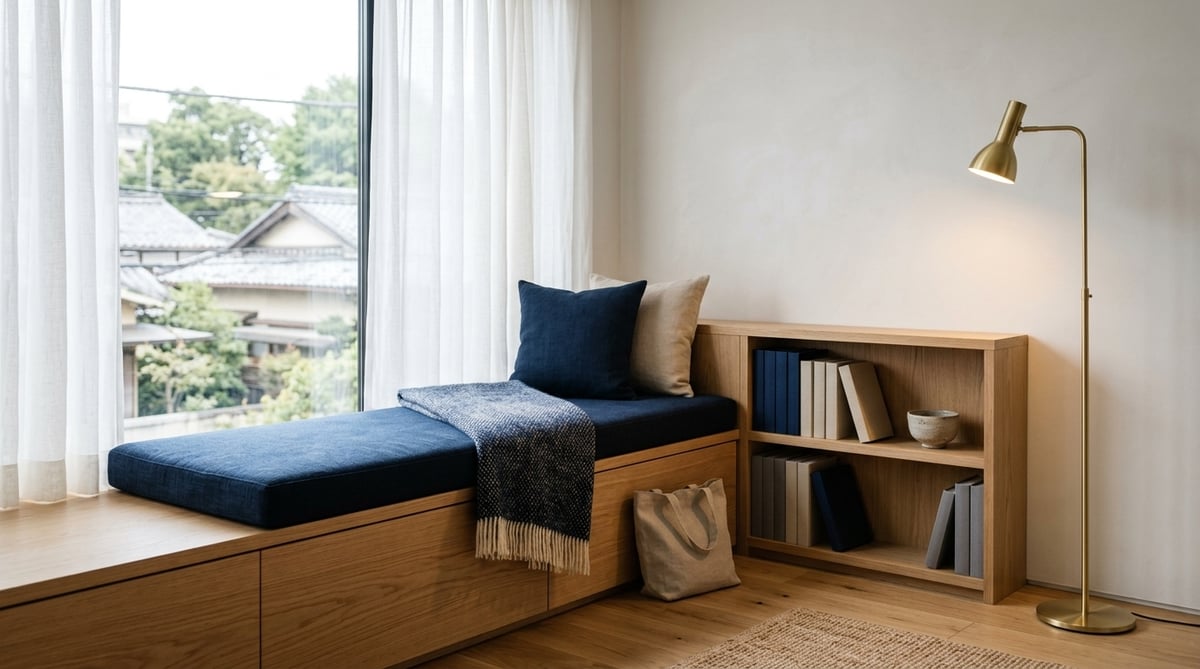
As office lights line Sotobori-dori Avenue at dusk and evening footsteps gather along the sidewalks from Roppongi-dori toward Reinanzaka, a familiar topic often comes up with clients after finishing apartment viewings around Akasaka and Hirakawacho. It is a practical choice: whether to accept central Tokyo rent levels—a median of 284,000 JPY for a 1LDK and 418,000 JPY for a 2LDK—to live within walking distance of the office, or to cross Benkei-bori and the Outer Moat on the Tokyo Metro Namboku Line to Yotsuya, just one stop and about 2 minutes away from Nagatacho (or two stops and about 4 minutes from Tameike-Sanno).
Moving one stop to Yotsuya brings median rents down to 246,000 JPY for a 1LDK and 361,000 JPY for a 2LDK, creating a monthly fixed-cost difference of 38,000 to 57,000 JPY. In addition, the Comore Yotsuya complex in front of the station houses a large food supermarket open until midnight, and a short walk further leads into elevated, quiet residential-only zones. On the other hand, the time value of Tameike-Sanno and Nagatacho—being able to walk home to your front door even late at night from offices in Akasaka, Toranomon, or Kasumigaseki—holds an appeal that is difficult to replace.
Along this boundary where administrative wards, terrain, and everyday shopping landscapes shift noticeably within just a few minutes by train, the decision is not about which area is inherently better, but rather how you wish to allocate your daily time and two-year housing budget. By comparing the streetscapes and building realities of both areas, we can clarify the criteria for choosing a home with confidence.
- Choosing Yotsuya reduces monthly rent by 38,000 JPY for a 1LDK (approx. 1,026,000 JPY over 27 months) and 57,000 JPY for a 2LDK (approx. 1,539,000 JPY over 27 months).
- Tameike-Sanno and Nagatacho offer walking-distance proximity to Akasaka, Toranomon, and Kasumigaseki, supported by the Ginza, Hanzomon, Yurakucho, and Namboku lines.
- Yotsuya pairs JR Chuo Rapid and Marunouchi Line access with daily convenience, including Life Comore Yotsuya open until 24:00 and elevated residential-only neighborhoods.
Rent Market Comparison: Tameike-Sanno & Nagatacho vs. Yotsuya — Where 38,000–57,000 JPY/Month and 2-Year Costs Diverge
The reason rent levels settle a notch lower just one stop from Nagatacho to Yotsuya on the Namboku Line lies in a structural shift in unit rent per square meter, which drops by 500 JPY from 5,800 JPY/sqm to 5,300 JPY/sqm. For compact single-person layouts such as 1R or 1K, the monthly difference remains around 14,000 to 19,000 JPY. However, as floor area expands to 1LDK units over 40 sqm and 2LDK units in the 55–65 sqm class, that unit-price gap multiplies into a substantial difference in fixed household expenses.
| Station (Location) | Est. Unit Rent | 1R | 1K | 1DK | 1LDK | 2LDK |
|---|---|---|---|---|---|---|
| Tameike-Sanno (Chiyoda / Minato Ward Border) | 5,800 JPY/sqm | 120,000 JPY | 162,000 JPY | 200,000 JPY | 284,000 JPY | 418,000 JPY |
| Nagatacho (Chiyoda Ward) | 5,800 JPY/sqm | 120,000 JPY | 162,000 JPY | 200,000 JPY | 284,000 JPY | 418,000 JPY |
| Yotsuya (Shinjuku / Chiyoda Ward Border) | 5,300 JPY/sqm | 106,000 JPY | 143,000 JPY | 176,000 JPY | 246,000 JPY | 361,000 JPY |
| Akasaka (Minato Ward, Nearby Comparison) | 5,700 JPY/sqm | 118,000 JPY | 159,000 JPY | 196,000 JPY | 284,000 JPY | 421,000 JPY |
| Akasaka-mitsuke (Minato Ward, Nearby Comparison) | 5,700 JPY/sqm | 118,000 JPY | 159,000 JPY | 196,000 JPY | 279,000 JPY | 411,000 JPY |
| Kojimachi (Chiyoda Ward, Nearby Comparison) | 5,600 JPY/sqm | 114,000 JPY | 154,000 JPY | 189,000 JPY | 267,000 JPY | 394,000 JPY |
How Floor Area, Building Age, and Interior Grade Shift Within the Same Budget
On actual apartment tours, the clearest way to feel this difference is to fix your maximum monthly budget and compare floor plans from both stations side by side. For example, when searching for a 1LDK around 280,000 JPY per month, listings around Tameike-Sanno and Nagatacho tend to be compact layouts around 40 sqm or apartments in commercial zones near Sotobori-dori and Roppongi-dori. Placing a queen-sized bed in the bedroom often leaves limited space for a desk, requiring careful furniture arrangement if you work remotely.
Directing that same 280,000 JPY monthly budget toward Yotsuya leaves more than 30,000 JPY of headroom above the median (246,000 JPY). As a result, options open up to spacious 45–50 sqm 1LDK layouts, newer condominium rentals equipped with reheating bath functions, floor heating, and disposers, or corner units situated on quiet elevated ground. The same pattern holds for 2LDK and 3LDK layouts favored by dual-income households and professionals: against a 3LDK median of 517,000 JPY in Tameike-Sanno and Nagatacho, Yotsuya sits at 446,000 JPY (a 71,000 JPY monthly difference), making it easier to secure a dedicated study or walk-in closet without stretching the budget.
The 1M to 1.9M+ JPY Gap Over 27 Months: Initial and Move-Out Cost Realities
Rental costs become much clearer when viewed not only through monthly rent, but as a total two-year figure that includes key money, brokerage fees, and the two-year renewal fee. Calculating total housing costs on the standard market convention of "27 months" (24 months of rent + 1 month key money + 1 month brokerage fee + 1 month renewal fee) shows that a one-stop difference translates into substantial capital for savings or daily quality of life.
| Layout | Tameike-Sanno & Nagatacho (27 Mos.) | Yotsuya (27 Mos.) | Monthly Diff. | 2-Year Total Housing Cost Diff. |
|---|---|---|---|---|
| 1K | Approx. 4,374,000 JPY (162,000 JPY/mo) | Approx. 3,861,000 JPY (143,000 JPY/mo) | -19,000 JPY | Approx. 513,000 JPY |
| 1LDK | Approx. 7,668,000 JPY (284,000 JPY/mo) | Approx. 6,642,000 JPY (246,000 JPY/mo) | -38,000 JPY | Approx. 1,026,000 JPY |
| 2LDK | Approx. 11,286,000 JPY (418,000 JPY/mo) | Approx. 9,747,000 JPY (361,000 JPY/mo) | -57,000 JPY | Approx. 1,539,000 JPY |
| 3LDK | Approx. 13,959,000 JPY (517,000 JPY/mo) | Approx. 12,042,000 JPY (446,000 JPY/mo) | -71,000 JPY | Approx. 1,917,000 JPY |
A difference of roughly 1,026,000 JPY for a 1LDK or 1,539,000 JPY for a 2LDK is enough to comfortably cover regular taxi rides, housekeeping services, or quality furniture and appliances. Furthermore, in central Tokyo rentals exceeding 250,000 to 400,000 JPY per month, contracts frequently include special clauses such as a "fixed move-out house cleaning fee" or "1-month security deposit amortization."
Under the Ministry of Land, Infrastructure, Transport and Tourism's "Guidelines on Restoration to Original Condition," repair costs for normal wear and tear and aging are, in principle, borne by the landlord. For example, wallpaper has a guideline useful life of 6 years (reaching a residual value of 1 JPY), and even damage caused by tenant negligence is generally assessed on a single-wall basis. Moreover, under Supreme Court precedent (Second Petty Bench ruling of December 16, 2005) and the Tokyo Metropolitan Government's Ordinance for Prevention of Rental Housing Disputes (Tokyo Rule), a special clause placing restoration costs on the tenant requires three conditions to be valid: clear written specification of the scope, explicit recognition and agreement by the tenant, and amounts that are not excessively burdensome relative to the rent. Because the absolute yen amount of a one-month deposit amortization or renewal fee grows larger in higher-rent districts, reviewing special clauses carefully before applying provides peace of mind.
Overlapping 7–12 Minute Walk Zones: Akasaka, Akasaka-mitsuke, and Kojimachi
Once you begin searching in this area, you will inevitably compare not only adjacent stations on the Namboku Line, but also nearby stations on other lines whose residential catchments overlap within a 7- to 12-minute walk. Questions naturally arise, such as whether it makes more sense to live near Akasaka Station on the Chiyoda Line if you are walking 8 minutes from Tameike-Sanno toward Akasaka, or near Kojimachi Station on the Yurakucho Line if you are walking 8 minutes east from Yotsuya.
On the southern side around Akasaka 2-chome and 6-chome, the catchment overlaps with Akasaka Station (Chiyoda Line) and Akasaka-mitsuke Station (Ginza and Marunouchi lines). Median rents sit at 279,000–284,000 JPY for a 1LDK and 411,000–421,000 JPY for a 2LDK, nearly identical to Tameike-Sanno. Rather than choosing by rent, it is natural to pick Akasaka 4- or 6-chome if you commute directly to Otemachi, Hibiya, or Omotesando via the Chiyoda Line, and Akasaka 1- or 2-chome closer to Tameike-Sanno if your routes center on Toranomon, Shimbashi, the Ginza Line, or the Namboku Line.
Between Nagatacho (Hirakawacho and Kioicho) and Yotsuya lies Kojimachi Station on the Yurakucho Line along Shinjuku-dori. Looking at 1LDK medians, rents form a gentle gradient in roughly 20,000 JPY steps moving west: Nagatacho (284,000 JPY), Kojimachi (267,000 JPY), and Yotsuya (246,000 JPY). Kojimachi suits those who want to keep a Chiyoda Ward address in a calm office and academic district while saving 17,000–24,000 JPY per month compared to Nagatacho, whereas Yotsuya answers the needs of those seeking JR Chuo Rapid Line mobility, large supermarket convenience, and a clear 38,000–57,000 JPY monthly reduction in fixed costs. For a broader view of rent balances along the corridor, our Tokyo Metro Namboku Line Livability & Rent Guide offers helpful context.
Simply enter the rent and deposit from portal listings to calculate a full, itemized breakdown including brokerage and guarantor fees without hidden add-ons.
Commute Flows & Station Structure: Walking Home to Central Tokyo vs. JR & Marunouchi Line Agility
Even when a transit map shows multiple lines intersecting at a station, daily comfort depends on how many stairs and underground corridors you must navigate between your building's entrance and the train platform. Tameike-Sanno/Nagatacho and Yotsuya contrast sharply not only in the direction of their lines, but also in station depth and transfer feel.
Tameike-Sanno & Nagatacho's Underground Network and Walking-Distance Access to Akasaka & Kasumigaseki
Tameike-Sanno Station (Ginza and Namboku lines) and Nagatacho Station (Yurakucho, Hanzomon, and Namboku lines) are connected by in-gate underground passages, and the eastern end of Nagatacho Station also connects directly inside the gates to Akasaka-mitsuke Station (Ginza and Marunouchi lines). While both areas share Namboku Line access toward Roppongi-itchome, Azabu-juban, Meguro, and Iidabashi—as well as Marunouchi Line access toward Tokyo and Shinjuku—Tameike-Sanno and Nagatacho stand out for direct connections across central business districts: Toranomon, Shimbashi, Ginza, and Nihombashi via the Ginza Line; Otemachi, Mitsukoshimae, and Shibuya via the Hanzomon Line; and Yurakucho and Toyosu via the Yurakucho Line.
Even more valued by residents is the ability to complete a commute entirely on foot without boarding a train. If your workplace is in Akasaka Ark Hills, Akasaka Intercity AIR, Sanno Park Tower, Toranomon, Kasumigaseki, or Hirakawacho, you can avoid crowded morning trains altogether. Even after late-night dinners or busy periods past 23:00, walking roughly 10 minutes along well-lit streets instead of waiting in taxi queues brings tangible benefits for rest and sleep.
One practical caveat is that the Tameike-Sanno–Nagatacho–Akasaka-mitsuke underground network is expansive. Entering from a Tameike-Sanno exit in Akasaka 2-chome and walking through the underground passages to the Hanzomon or Yurakucho Line platforms at Nagatacho can take 8 to 10 minutes inside the station alone. Because the Namboku and Hanzomon platforms sit deep underground, it is important to check which exit is closest to the specific platform you will use daily. Detailed exit-by-exit routes are covered in our Tameike-Sanno Station Livability & Rent Guide and Nagatacho Station Livability & Rent Guide.
Yotsuya's JR Chuo Rapid & Marunouchi Lines and Shallow, Ground-Level Gate Flow
Yotsuya Station's distinct transit advantage is the presence of the JR Chuo Line (Rapid) and Chuo-Sobu Line (Local) alongside the Tokyo Metro Namboku and Marunouchi lines. On the Chuo Rapid, Shinjuku Station is just one stop away (approx. 4–5 minutes), while Ochanomizu, Kanda, and Tokyo Station in the opposite direction are reached in roughly 9–10 minutes. For dual-income couples where one partner commutes to Otemachi, Akasaka, or Roppongi and the other heads to Shinjuku, Shibuya, Kichijoji, or Tachikawa, Yotsuya is a rare junction that keeps both commutes around 15 minutes.
Equally appreciated in daily use is the shallow platform layout. While the Namboku Line platform sits deep underground, Yotsuya's Marunouchi Line platform is positioned at ground-viaduct level (equivalent to the 1st floor) along the Outer Moat, and the JR platforms sit in a shallow open cut. Passing through the Akasaka Gate or Kojimachi Gate and reaching the train in just a couple of minutes without riding multiple long escalators brings a welcome sense of ease to busy mornings. For neighborhood connections around each exit, see our Yotsuya Station Livability & Rent Guide.
Terrain, Zoning & Nighttime Quiet: Sotobori-dori Lowlands, Akasaka Heights, and Yotsuya's Residential-Only Zones
When choosing a central Tokyo apartment for the long term, land elevation (terrain) and land-use zoning (rules governing what can be built) shape daily quality of life just as much as rent or walking distance. Between Tameike-Sanno, Nagatacho, and Yotsuya, the Outer Moat and surrounding plateaus create intricate shifts in elevation, affecting both nighttime quiet and disaster preparedness.
| Representative District | Nearest Stations | Terrain Profile | Primary Zoning | Neighborhood Atmosphere & Public School District |
|---|---|---|---|---|
| Akasaka 2-chome, Minato Ward | Tameike-Sanno, Akasaka | Valley Lowland (Elev. approx. 8–10m, flat) | Commercial Zone | Flat access near Sotobori-dori and dining streets. Minato Ward Akasaka Elementary & Junior High School district. |
| Akasaka 1-chome (Hilltop), Minato Ward | Tameike-Sanno, Roppongi-itchome | Loam Plateau (Elev. approx. 25–30m) | Category 2 Residential Zone, etc. | Elevated, calm surroundings with embassies and greenery. Minato Ward Akasaka Elementary & Junior High School district. |
| Kioicho & Nagatacho 2-chome, Chiyoda Ward | Nagatacho, Akasaka-mitsuke, Kojimachi | Loam Plateau (Elev. approx. 25–30m) | Category 2 Residential / Commercial Zone | Orderly plateau adjacent to hotels and government offices. Chiyoda Ward Bancho / Kojimachi Elementary School district (Kudan Secondary School options available). |
| Yotsuya 1-chome, Shinjuku Ward | Yotsuya | Loam Plateau | Commercial Zone | Station-front block with Atre, Comore Yotsuya, and dining. Shinjuku Ward Yotsuya Elementary & Junior High School district. |
| Wakaba 1-chome & Yotsuya Sanei-cho, Shinjuku Ward | Yotsuya | Loam Plateau (Elev. approx. 30–33m) | Category 1 Medium/High-Rise Exclusive Residential Zone | Quiet low- and mid-rise residential enclave set back from main roads. Shinjuku Ward Yotsuya Elementary & Junior High School district. |
Tameike-Sanno & Nagatacho Terrain: Flat Commercial Lowlands vs. Elevated Plateaus
Just as the name "Tameike" (reservoir) derives from the pond that once held water for Edo Castle's Outer Moat, the stretch along Sotobori-dori from Tameike Intersection to Akasaka 2-chome sits in a valley lowland at an elevation of roughly 8 to 10 meters, flanked by surrounding plateaus. Designated as a high-FAR Commercial Zone, this strip offers flat, slope-free walking from the station and an abundance of late-night dining options. Even in blocks outside official river flood hazard zones, the lowland terrain and proximity to major avenues make it prudent to check building flood-protection measures and window soundproofing.
By contrast, climbing Reinanzaka or Nanbuzaka from Tameike Intersection up to Akasaka 1-chome (around Ark Hills), or heading north of Benkei-bori into Kioicho, Hirakawacho, and Nagatacho 2-chome in Chiyoda Ward, places you on a stable volcanic ash plateau (loam plateau) at an elevation of roughly 25 to 30 meters. These elevated areas sit outside flood inundation zones, and parts of Akasaka 1-chome and Kioicho carry Category 2 Residential zoning, resulting in tree-lined avenues that feel remarkably calm for central Tokyo. The trade-off is the elevation change between subway platforms and the plateau above, so it is worth testing the walking route on rainy days or with a stroller or bicycle.
Yotsuya's Quiet Residential Enclaves: Elevated Exclusive Residential Zones in Wakaba 1-chome & Yotsuya Sanei-cho
Crossing the Outer Moat to the Yotsuya side, even the station-front commercial block of Yotsuya 1-chome sits on a stable loam plateau. A defining feature of Yotsuya is that just one step off Shinjuku-dori or Sotobori-dori—into Wakaba 1-chome (elevated side) and Yotsuya Sanei-cho in Shinjuku Ward—the Musashino Plateau at 30 to 33 meters elevation meets Category 1 Medium/High-Rise Exclusive Residential Zoning.
Within walking distance of Tameike-Sanno or Nagatacho, even elevated areas are primarily Commercial or Category 2 Residential zones, with almost no pure "exclusive residential" zoning. In Wakaba 1-chome and Yotsuya Sanei-cho, however, Category 1 Medium/High-Rise Exclusive Residential zoning restricts pachinko parlors, late-night entertainment venues, and large office buildings, preserving quiet streets lined with tile-clad low- and mid-rise condominiums and residences. For professionals who work in busy central districts during the week and want to leave traffic noise and neon lights behind the moment they unlock their front door, this zoning difference delivers a level of calm that goes beyond numbers.
Daily Shopping & Dining: 24-Hour Urban Grocers vs. Full-Scale Supermarkets
Once you move in, daily satisfaction depends heavily on the selection and pricing of supermarkets along your route home. Tameike-Sanno/Nagatacho and Yotsuya offer distinctly different grocery environments.
Tameike-Sanno & Nagatacho: Leveraging 24-Hour Markets and Seijo Ishii
With its concentration of offices, hotels, and government buildings, the Tameike-Sanno and Nagatacho area suits a lifestyle that blends dining out, delivery, and quality prepared foods with targeted grocery shopping. A reliable staple for everyday ingredients is Niku no Hanamasa Akasaka Store (open 24 hours) along the route from Tameike-Sanno toward Akasaka, stocking fresh fish, meat, vegetables, and seasonings even for late-night arrivals.
On the hilltop and Kioicho sides, Seijo Ishii Akasaka Ark Hills Store (24 hours) and Seijo Ishii Tokyo Garden Terrace Kioicho Store (near Nagatacho Station) function like an extended pantry for wine, cheese, prepared dishes, and breakfast bread. However, full-scale supermarkets with wide floor plates typical of residential neighborhoods are limited within walking distance. As a result, many residents combine local shopping with online supermarkets or delivery services for bulk items like rice, beverages, and household goods.
Yotsuya: Life Comore Yotsuya (Open Until 24:00) and Station-Connected Atre
Yotsuya, by contrast, offers a rare combination for a prime central location: everyday home cooking is easily supported at prices and selections comparable to residential neighborhoods. At the center of this is Life Comore Yotsuya Store in the B1 level of the station-front Comore Mall redevelopment (open 8:00–24:00 weekdays, 9:30–24:00 weekends and holidays).
Across a spacious single floor, you will find fresh produce, a wide variety of meat and fish, an in-store bakery, prepared foods, and daily necessities—accessible from 8:00 a.m. before work until midnight. Directly connected to the station, Atre Yotsuya also houses Seijo Ishii, bakeries, cafes, and a drugstore, making it easy to shop without an umbrella on rainy days. For dual-income couples and families in 2LDK+ apartments, or singles who cook regularly to stay healthy, Yotsuya not only lowers rent by 38,000–57,000 JPY per month but also streamlines daily food and household costs.
When to Pass on Each Area & How to Verify in Half a Day
Because both areas have clear strengths, working backward from your non-negotiable priorities makes it easier to rule out the option that fits less well. Below are practical criteria for deciding when to pass, followed by a three-step on-site comparison.
When to Pass on Tameike-Sanno & Nagatacho and Consider Yotsuya or Kojimachi
First, if you cook at home four or more days a week and want a large, reasonably priced fresh-food supermarket within a few minutes' walk for bulk shopping, Yotsuya's Life Comore Yotsuya catchment will feel noticeably more convenient than relying on Seijo Ishii or Niku no Hanamasa.
Second, if you want to step completely away from business-district activity and traffic on evenings and weekends into a Category 1 Low- or Medium/High-Rise Exclusive Residential Zone. Third—an often overlooked practical factor—is owning a large SUV or imported car wider than 1,950 mm. Mechanical pallet parking in Akasaka and Nagatacho buildings commonly caps width at 1,850–1,900 mm; flat spaces or large pallets accommodating high-roof, wide vehicles are scarce and frequently exceed 50,000–70,000 JPY per month. If vehicle dimensions matter, it is wiser to work backward from parking specifications in Yotsuya, Bancho, or Kojimachi condominiums.
When to Pass on Yotsuya and Focus on Tameike-Sanno, Nagatacho, or Akasaka
Conversely, if you work in Akasaka, Toranomon, Kasumigaseki, or Marunouchi and regularly handle late-night hours past midnight or overseas online meetings, being able to walk home in a few minutes to 10 minutes without waiting for a train provides dependable support. Saving 30 minutes round-trip each day—or nearly an hour when factoring in late-night taxi waits—translates directly into rest and recovery.
Focusing on Tameike-Sanno and Nagatacho (or the Chiyoda Ward side of Yotsuya Station in Kojimachi 6-chome and Kioicho) is also rational when corporate lease rules or personal preference prioritize a Minato Ward (Akasaka) or Chiyoda Ward (Hirakawacho, Kioicho, Nagatacho) address, or when targeting specific public school districts such as Minato Ward Akasaka Gakuen or Chiyoda Ward Bancho and Kojimachi Elementary Schools.
A 3-Step Half-Day Walking Comparison
When floor plans and numbers alone leave you undecided, riding the Namboku Line between both stations from late afternoon into evening on a weekend will make the right choice clear.
Choosing Between Tameike-Sanno/Nagatacho and Yotsuya: Matching Your Rhythm
Separated by just one stop on the Namboku Line, both neighborhoods offer refined central Tokyo transit and historic streetscapes. To summarize, here is how each area aligns with different daily rhythms.
Best Suited for Tameike-Sanno & Nagatacho
- ✓ You want to walk to Akasaka, Toranomon, or Kasumigaseki and minimize commute time
- ✓ You value direct access across multiple lines including Ginza, Hanzomon, and Yurakucho
- ✓ You rely on dining out, Seijo Ishii, and Niku no Hanamasa for a streamlined schedule
- ✓ You prefer an Akasaka (Minato Ward) or Hirakawacho/Kioicho (Chiyoda Ward) address
Best Suited for Yotsuya
- ✓ You want to save 38,000–57,000 JPY/month for a larger 1LDK/2LDK or savings
- ✓ You want a full-scale supermarket (Life) open until 24:00 for regular home cooking
- ✓ You prefer quiet sleep in elevated exclusive residential zones (Wakaba, Sanei-cho)
- ✓ You want JR Chuo Rapid access to Shinjuku and Tokyo alongside Namboku and Marunouchi lines
Neither option is universally right for everyone. Whether you value the 15-minute morning buffer and walkability of Akasaka and Hirakawacho, or the 1M–1.5M+ JPY two-year savings and calm grocery-supported routine of Yotsuya, reflecting on what matters most to you right now will point naturally to the right fit.
If you are comparing candidate apartments and would like a clear second opinion, feel free to reach out to Sorai Tokyo anytime. Simply send any property URL to our 24/7 AI concierge on official LINE (@soraitokyo)—no phone number required, zero pushy sales calls, and no store visits needed. Our licensed real estate specialists will check live availability in the industry database, provide a free transparent initial-cost second opinion, and help you navigate visa-friendly screening or no-guarantor options. You can also explore our Sorai Concierge Consultation or access our SorAi tools anytime from the bottom menu on mobile or the footer on desktop. We wish you a comfortable and fulfilling new chapter in Tokyo.
Frequently Asked Questions (FAQ)
QIs the underground connection between Tameike-Sanno, Nagatacho, and Akasaka-mitsuke easy to walk for a daily commute?
ABecause the stations are linked inside the ticket gates, you can transfer without getting wet in the rain. However, walking end to end—such as from the Ginza Line platform at Tameike-Sanno to the Hanzomon Line platform at Nagatacho or the Marunouchi Line platform at Akasaka-mitsuke—takes 7 to 10+ minutes underground alone. If you rely on a specific line daily, choosing an apartment based on the exit closest to your actual platform rather than the general station walking time will make your mornings much smoother.
QWhich neighborhoods around Yotsuya best balance nighttime quiet with shopping convenience?
AIf a quiet residential environment is your priority, Wakaba 1-chome (elevated side) and Yotsuya Sanei-cho in Shinjuku Ward—just west of the Outer Moat—are strong candidates. Sitting on a stable loam plateau at 30–33 meters elevation with Category 1 Medium/High-Rise Exclusive Residential zoning, they let you pick up groceries at Life Comore Yotsuya or Seijo Ishii Atre Yotsuya on your way home to a calm neighborhood. If you prefer a Chiyoda Ward address, Kioicho and Kojimachi 6-chome on the east side of the station are also worth comparing.
QWhat should I check when signing a 1LDK or 2LDK lease to avoid unexpected increases in total housing costs?
ABeyond monthly rent and key money, confirm the two-year renewal fee terms, fire insurance and guarantor company fee rates, and any special clauses in the contract regarding fixed move-out cleaning fees or security deposit amortization. Because one-month ancillary fees carry a larger yen impact in higher-rent central Tokyo properties, having a licensed agent review the full itemized quote before applying helps ensure a transparent contract.



Sorai Tokyo Co., Ltd. Editorial (Licensed Real Estate Agency #113297)
Licensed online real estate agency handling residential leasing across 15 major Tokyo lines (Member of All Japan Real Estate Association). Powered by our proprietary 24/7 AI "SorAi" on iOS/LINE and dedicated licensed realtors, we support renters end-to-end from vacancy checks on major portals to viewings and digital contracts.