
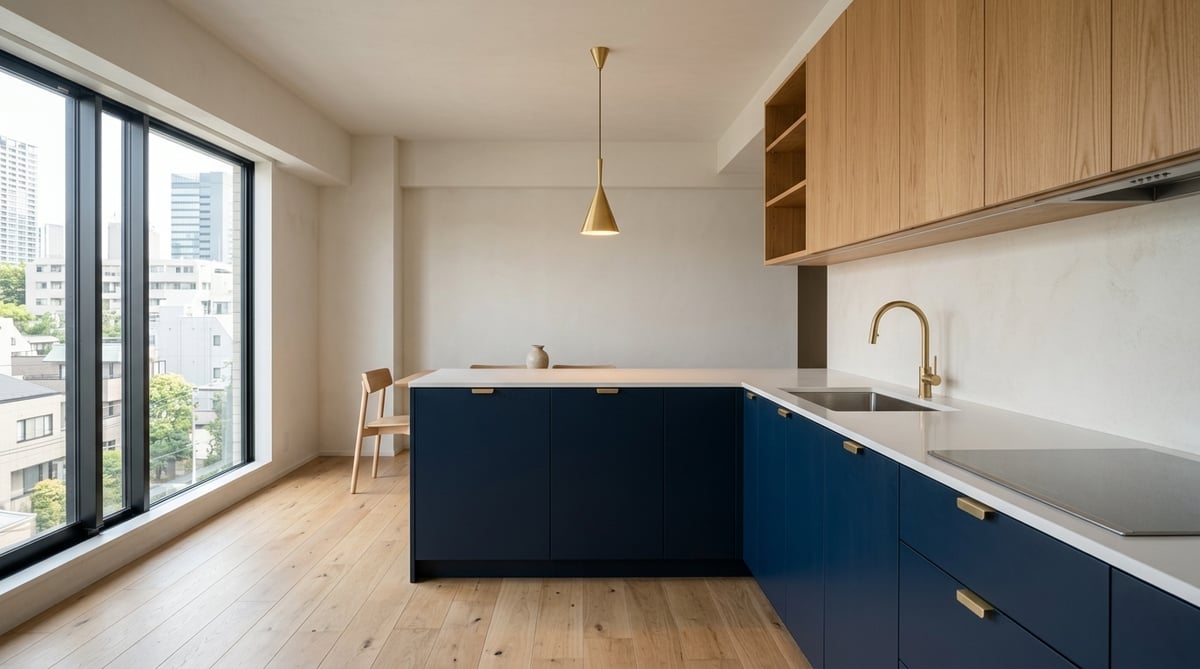
At dusk, as you step out of the station ticket barriers, you are warmly greeted by the tranquil atmosphere of everyday neighborhood life and an inviting warmth. Well-tended low-rise residences line the gentle slopes, the rich aroma of freshly roasted coffee drifts from around a corner, and the calm footsteps of locals make their way home. When searching for a home, true value lies not merely in comparing statistics such as minutes from the station or square meters of floor space, but in how enriching, peaceful, and unhurried your daily life will be within that setting.
In daily city life, one of the greatest drains on mental and physical bandwidth is the morning rush hour. Spending 30 to 40 minutes packed into a crowded train, unable to move freely or even view a phone screen, steadily chips away at your focus and vitality before the workday even begins. Yet, what if that morning commute transformed into a restorative interlude—comfortably seated with a warm cup of tea, reading a book or quietly organizing your thoughts? Choosing Yoyogi-Uehara Station, the western terminus of the Tokyo Metro Chiyoda Line, offers precisely this gift of morning serenity and unhurried comfort.
As a licensed real estate transaction specialist (Takken) with a decade of field experience in Tokyo, I have advised countless singles and working couples on finding their ideal homes. Through this experience, one conviction stands firm: harmony between commuting flow and living environment forms the bedrock of long-term residential satisfaction. From the mechanics of Chiyoda Line originating trains and proven line-up rules to daily neighborhood lifestyle circuits, building acoustic criteria, and legal leasing safeguards, this practical guide offers grounded expertise to help you select your Tokyo residence with complete confidence.
- Chiyoda Line inbound trains depart from Platform 3 at Yoyogi-Uehara Station; because through-service trains from the Odakyu Line and local originating trains mix, checking the overhead display for "Originating Here" is essential.
- Commute seated without transfers directly to premier central business districts: approximately 16 minutes to Kasumigaseki and 23 minutes to Otemachi.
- Select properties based on quiet environments and sound-insulating reinforced concrete (RC) construction across Nishihara, Oyamacho (Category I Exclusively Low-Rise Residential Zones), and the elevated plateaus of Uehara and Motoyoyogicho.
Operation Structure and Platform Mechanics of Originating Chiyoda Line Trains at Yoyogi-Uehara
Yoyogi-Uehara Station serves as a strategic junction connecting the Odakyu Odawara Line and the Tokyo Metro Chiyoda Line. While both rail networks operate reciprocal through-service, failing to understand the station layout and operating schedule can lead to the mistaken assumption that "living near Yoyogi-Uehara guarantees a seat on any train." To achieve a relaxed, seated commute every morning, one must grasp the station's physical layout and arrival-departure dynamics.
The elevated station structure features two island platforms serving four tracks in an efficient cross-platform configuration: outer tracks serve the Odakyu Line, while inner tracks serve the Chiyoda Line. Track 1 accommodates westbound Odakyu Line services (toward Noborito, Machida, and Odawara), Track 2 handles through-service trains continuing from the Chiyoda Line onto the westbound Odakyu Line, Track 3 serves inbound Chiyoda Line trains (toward Omotesando, Kasumigaseki, Otemachi, Ayase, and Kita-Ayase), and Track 4 serves inbound Odakyu Line trains (toward Shinjuku). All inbound Chiyoda Line trains bound for central Tokyo depart from Track 3.
A crucial operational nuance is that trains arriving at Track 3 consist of two distinct categories: "through-service trains originating from the Odakyu Line" and "trains originating locally at Yoyogi-Uehara Station." Express and local services arriving from Hon-Atsugi, Machida, or Isehara on the Odakyu Line already have all seats occupied upon reaching Yoyogi-Uehara, with many passengers standing. Consequently, securing a seat requires boarding a train that originates locally at Yoyogi-Uehara.
Locally originating trains roll into Track 3 from the storage and turn-back sidings situated just west of the station. Because these trains enter the platform completely empty, passengers waiting in orderly queues at the designated door boarding markers can easily secure seating in sequence.
During the morning commuting window, direct transit times to key central hubs are remarkably swift: approximately 2 minutes to Yoyogi-Koen, 4 minutes to Meiji-Jingumae (Harajuku), 8 minutes to Omotesando, 10 minutes to Nogizaka, 12 minutes to Akasaka, 14 minutes to Kokkai-Gijidomae, 16 minutes to Kasumigaseki, 19 minutes to Hibiya, 21 minutes to Nijubashimae (Marunouchi), and 23 minutes to Otemachi. Even across an average transit of roughly twenty minutes, the contrast between standing swayed in a crowded car and reclining comfortably in a seat to read or review briefing materials makes a profound difference in mental focus and energy upon arriving at your desk.
| Key Destination | Transit Duration | Sample Seated Activity | Connecting Lines & Surrounding District |
|---|---|---|---|
| Omotesando | Approx. 8 mins | Final schedule confirmation and scanning daily news briefings | Ginza Line, Hanzomon Line; Aoyama and Harajuku districts |
| Akasaka | Approx. 12 mins | Responding to operational messages, prioritizing daily tasks | Akasaka Sacas, Akasaka-mitsuke area, major corporate complexes |
| Kasumigaseki | Approx. 16 mins | Reading books or specialized industry reports, deep reflective thinking | Hibiya Line, Marunouchi Line; Central government ministries and agencies |
| Hibiya | Approx. 19 mins | Language studies, listening to podcasts, taking structured notes | Hibiya Line, Toei Mita Line, Yurakucho Line (Yurakucho); Southern Marunouchi |
| Otemachi | Approx. 23 mins | Reviewing presentation decks, setting up a calm, focused workday | Marunouchi Line, Tozai Line, Hanzomon Line, Toei Mita Line; Otemachi financial district |
Licensed real estate specialists deeply versed in Tokyo's transit corridors support you via video consultation—from clarifying search criteria and checking off-market listings to optimizing initial contract expenses.
Comprehensive Livability of Yoyogi-Uehara: Balanced Transit & Neighborhood Calm
Beyond the transit benefits of an originating station, discover the refined cafe culture and serene residential environments of Nishihara and Oyamacho in our comprehensive area guide below.
👉 Read the Complete Guide to Livability, Safety, and Rent Market Trends in Yoyogi-Uehara here
Simply enter the rent and deposit from portal listings to calculate a full, itemized breakdown including brokerage and guarantor fees without hidden add-ons.
Queue Etiquette and Time-Specific Platform Strategies for a Guaranteed Seat
On Platform 3 at Yoyogi-Uehara Station, passenger flow follows an established system grounded in years of commuter etiquette and Tokyo Metro queueing guidelines. Painted floor markings at each door position clearly delineate lanes for the "Immediate Departure" (the next departing train) and the "Following Departure" (the train after next). Understanding this system and aligning your morning schedule accordingly ensures a relaxed start to every day.
Passengers boarding through-service trains from the Odakyu Line typically step directly toward the front edge of the platform near the doors, whereas commuters aiming for seats on locally originating trains line up orderly in the designated originating queue lanes. On standard 10-car 16000-series trainsets used on the Chiyoda Line, longitudinal bench seating provides roughly 45 to 54 seats per car, totaling approximately 500 seats across the train. For each passenger door (with 4 doors per car side), approximately 10 to 12 passengers entering through that door can be comfortably seated.
Depending on the time of morning, the ideal platform arrival window varies noticeably. Understanding the queue dynamics across different morning time bands—from early quiet hours to peak congestion—allows you to plan with precision.
7:00 AM to 7:30 AM (Early Calm Commute Window)
During this period, as early morning sunlight begins to wash over the elevated platforms, crowds remain moderate. Arriving at the platform 5 to 7 minutes before departure places you among the first 3 to 5 passengers in line for the next originating train, allowing you to secure a seat immediately without passing on a train. For those who wish to spend the 23-minute ride to Otemachi in quiet reflection or reading inside a peaceful car, this window is optimal.
7:30 AM to 8:20 AM (Peak Rush Hour Window)
As corporate workers head into central Tokyo in concentrated numbers, Platform 3 becomes lively. During this peak rush, stepping onto the platform just before departure and expecting to sit on the next originating train is unrealistic, as lines for the immediate departure already exceed 10 people per door. The proven strategy here is the "One-Train Pass" technique (targeting the following departure).
Upon reaching the platform, instead of joining the rear of the queue for the train about to depart, line up within the first 4 spots of the "Following Departure" queue (scheduled to leave roughly 4 to 6 minutes later). By arriving at the platform 10 to 12 minutes before your desired departure and allowing one train to go by, you guarantee yourself a prime seat the moment the subsequent train opens its doors. Treating that 5-minute wait as a mindful buffer removes virtually all morning transit stress.
8:20 AM to 9:00 AM (Late Peak & Off-Peak Transition)
This window accommodates professionals with flexible schedules or office start times around 9:30 AM or 10:00 AM. While peak congestion has begun to taper, steady queues persist. Arriving 7 to 8 minutes prior to departure and gauging queue length allows you to either board the immediate train or slide smoothly into the front of the following train line if the current queue looks crowded.
Furthermore, factor in egress routes at your destination. For instance, if transferring to the Marunouchi or Hibiya Line at Kasumigaseki Station, central cars (Cars 5 and 6) offer convenient stair access; however, if exiting smoothly toward the Tozai or Marunouchi Lines at Otemachi Station, forward cars (Cars 2 through 4) minimize walking distances. Balancing ease of seating at origin with walking efficiency at destination will help you establish your personal daily boarding door.
Neighborhood Atmosphere and Topographical Nuances Across Yoyogi-Uehara
No matter how convenient originating trains may be, a rich daily life cannot flourish without peace, charm, and comfort in the neighborhood itself. The distinctive appeal of Yoyogi-Uehara lies in its harmonious balance: while situated minutes from downtown Tokyo, taking a few steps away from the station reveals a quiet, dignified residential enclave.
The immediate station environment integrates the directly connected Acorde Yoyogi-Uehara shopping complex with welcoming local shopping streets. Here, grocery markets and pharmacies sit comfortably alongside artisanal bakeries, specialty coffee roasters, delicatessens, and renowned neighborhood bistros. A culture that quietly cherishes everyday craftsmanship is woven into the very fabric of the district.
From a real estate standpoint, understanding the topography and elevation changes of Yoyogi-Uehara is crucial. Yoyogi-Uehara Station rests in a shallow valley basin, with tranquil elevated plateaus rising to both the north and south. While these elevation changes provide residential tranquility, open vistas, and abundant sunlight, they also directly shape daily pedestrian routes to and from the station.
Station gate orientations should also be considered. Yoyogi-Uehara Station features ground-level East and West Exits, complemented by North Exits 1 through 3 and South Exits 1 and 2 connecting through the elevated commercial concourse. When evaluating a prospective rental property, verify which exit aligns with your walking route, whether your path includes steep stairways or dimly lit alleys, and whether comfortable rain-sheltered walkways exist before signing a lease.
Essential Structural Specifications and Acoustic Standards for Rental Properties
Even if an originating train alleviates commuting stress, daily peace will be compromised if your home is subject to external street noise or everyday sounds from neighboring units. Particularly in high-demand residential hubs like Yoyogi-Uehara, where building ages and construction types vary widely, assessing structural composition and acoustic performance with professional rigor is essential.
In multi-family apartment buildings, acoustic friction typically stems from deficiencies in boundary partition walls (separating adjacent units), concrete floor slabs (separating upper and lower units), and low acoustic ratings on window sashes. To protect your everyday peace and privacy, verify the following architectural specifications.
Even within RC buildings, verify critical details on floor plans or during on-site inspections: confirm whether party walls provide a solid concrete thickness of at least 180mm, or if dry gypsum board partitions are used, ensure double-layered plasterboard with densely packed fiberglass or mineral wool acoustic insulation is present.
Equally critical is the sound-insulation performance of window assemblies. Around Yoyogi-Uehara, arterial roadways such as Inokashira-dori and Yamate-dori, as well as the Odakyu rail tracks, contribute ambient background sound. To maintain serene indoor environments at night, review the Japanese Industrial Standards (JIS) acoustic insulation ratings for window sashes.
| Sash Acoustic Grade | Acoustic Transmission Loss | Target Environment & Perceived Serenity | Glazing & Sash Specifications |
|---|---|---|---|
| Grade T-1 (Class 25) | Approx. 25 dB reduction | Quiet interior residential zones, side streets with light traffic | Single pane float glass (5mm–6mm), standard residential aluminum sashes |
| Grade T-2 (Class 30) | Approx. 30 dB reduction | Neighborhood collector roads, standard urban residential settings | Double-pane insulated glass, high-airtightness residential sashes |
| Grade T-3 (Class 35) | Approx. 35 dB reduction | Arterial avenues, properties adjacent to train tracks or bus routes | Asymmetric insulated glass, acoustic laminated glass, dual inner sashes |
| Grade T-4 (Class 40) | Approx. 40 dB reduction | Directly facing elevated highways or rail junctions; high acoustic demand | Acoustic dual-window system (fully integrated inner and outer airtight sashes) |
During your property walkthrough, close all windows completely to evaluate interior sound levels. Additionally, check the firm compression of the crescent sash lock and the condition of the rubber weatherstripping. Even for units situated close to transit corridors or main thoroughfares, sashes rated T-3 or higher, or retrofitted secondary interior glazing, effectively preserve a peaceful, protected living space.
Layout Dimensional Planning and Furniture Flow for Singles and Couples
Relying solely on advertised figures such as "25 m²," "40 m²," or "6.0-tatami bedroom" on a floor plan can lead to frustrating oversights—such as discovering on move-in day that a bed obstructs doorways or cuts off walking corridors. Living comfort is determined not by wall-centerline dimensions, but by clear interior usable dimensions after accounting for structural pillars, dropped ceiling beams, and baseboards.
Here are field-tested dimensional planning standards for single 1K layouts and dual-income couple 1LDK and 2LDK residences.
Single 1K / 1R Residences (22 m² to 28 m², Living Area 6.0 to 8.0 Tatami)
For a single resident in Yoyogi-Uehara, standard effective room widths range between 2,400mm and 2,600mm, with depths of roughly 3,600mm to 4,000mm. The bed represents the largest single piece of furniture in this space.
Standard dimensions are 970mm wide by 1,950mm long for a single bed, and 1,200mm wide by 1,950mm long for a semi-double bed. If placing a semi-double bed along the shorter 2,400mm wall, the remaining width is 1,200mm. A primary daily circulation path requires a minimum width of 600mm, with 750mm being ideal for effortless passage.
When incorporating a work-from-home desk, a standard desk requires 1,000mm to 1,200mm in width and 600mm in depth. Chair clearance is equally vital: pulling out a chair and sitting comfortably demands a minimum rear clearance of 750mm (ideally 800mm). During inspections, use a tape measure to confirm that outward-swinging closet doors (needing 500mm to 600mm of swing clearance) do not collide with furniture, and that electrical and LAN outlets are not blocked behind heavy pieces.
Dual-Income Couple 1LDK / 2LDK Residences (38 m² to 55 m², LDK 10 to 14 Tatami)
In a shared living, dining, and kitchen (LDK) space, the coordinated placement of the dining table, sofa, and media console is paramount. Placing a two-person dining table (800mm × 800mm) or a four-person table (1,200mm–1,400mm × 800mm) requires at least 750mm of pull-out space from the table edge, alongside an 800mm circulation aisle behind it for meal serving.
In the bedroom, couples typically place a double bed (1,400mm × 1,950mm) or queen bed (1,600mm × 1,950mm). A crucial practical consideration is maintaining clear passage on both sides of the mattress. Pushing one side flush against a wall forces the person sleeping on the inner side to climb over their partner, compromising sleep quality. Choosing a floor plan that allows at least 500mm of clearance along both sides and at the foot of the bed is key to harmonious shared living.
1. Refrigerator alcove width and depth (Verify at least 15mm of ventilation clearance on each side and 50mm behind; check if larger family refrigerators of 650mm+ fit).
2. Washing machine tray interior dimensions and faucet height (For front-loading washer-dryers, look for tray dimensions of 640mm × 640mm+ and a faucet height of at least 1,150mm).
3. Entrance doorway clearance and hallway turn radiuses (Ensure a minimum passing width of 750mm along the entire delivery path for bulky furniture and appliances).
4. Curtain rail width and drop to the floor (Determine whether standard prefabricated curtains fit or if custom-ordered lengths are necessary).
Take-Home Income Rent Benchmarks and Household Budget Modeling
A balanced residential choice requires clear-eyed financial discipline. Straining your monthly budget in the excitement of living in a prestigious district can quickly restrict discretionary spending, travel, and personal savings.
A prudent rent ratio should be calculated not against gross annual compensation, but strictly against your actual monthly net take-home pay. We advise using the following benchmarks as reliable guidelines.
This healthy threshold preserves generous margins for unforeseen expenses, index investing, dining, and hobbies. Exceeding 30% of net income elevates fixed overhead, steadily reducing monthly budgeting flexibility.
Dual-income households should structure housing costs to comfortably absorb life transitions (such as maternity leave, childcare adjustments, or career shifts). This ratio ensures stability even during temporary earnings fluctuations.
Below is a balanced household allocation model across fixed expenses, everyday living costs, and monthly savings based on typical net monthly income levels.
| Budget Category | Single Model A (Net ¥280k) | Single Model B (Net ¥380k) | Couple Model C (Net ¥550k) | Couple Model D (Net ¥750k) |
|---|---|---|---|---|
| Target Rent (w/ Fees) | ¥75,000 (~26.8%) | ¥105,000 (~27.6%) | ¥135,000 (~24.5%) | ¥185,000 (~24.7%) |
| Food & Daily Sundries | ¥45,000 | ¥60,000 | ¥95,000 | ¥120,000 |
| Utilities (Power, Gas, Water) | ¥13,000 | ¥16,000 | ¥25,000 | ¥30,000 |
| Communications (Wi-Fi & Mobile) | ¥8,000 | ¥10,000 | ¥16,000 | ¥20,000 |
| Social, Hobbies & Dining Out | ¥35,000 | ¥50,000 | ¥70,000 | ¥95,000 |
| Medical, Personal Care & Apparel | ¥24,000 | ¥39,000 | ¥49,000 | ¥70,000 |
| Savings & Investments (Surplus) | ¥80,000 (~28.6%) | ¥100,000 (~26.3%) | ¥160,000 (~29.1%) | ¥230,000 (~30.7%) |
Within a 10-minute walk of Yoyogi-Uehara Station, market rents for RC apartments typically range from ¥105,000 to ¥125,000 for single 1K layouts (22 m² to 26 m²), and ¥170,000 to ¥220,000 for couple 1LDK apartments (35 m² to 45 m²). If your target rent falls below local market rates, expanding your walking search to 12 to 15 minutes, or considering adjacent stations like Higashi-Kitazawa, Yoyogi-Hachiman, or downstream stations along the Odakyu Line (such as Gotokuji or Kyodo), allows you to preserve your financial comfort while keeping transit access within practical reach.
Leasing Regulations and Practical Techniques to Eliminate Unnecessary Upfront Fees
Once you identify a promising property and submit an application, the next step is reviewing the itemized initial fee estimate presented by the brokerage. Beyond customary security deposits (shikikin) and key money (reikin), you may encounter unexpected optional line items that artificially inflate move-in costs.
Japanese residential leasing is governed by clear statutory boundaries under the Real Estate Brokerage Act, Ministry of Land, Infrastructure, Transport and Tourism (MLIT) guidelines, and established judicial precedents. Equipping yourself with legal clarity enables you to review arbitrary fees calmly and contract at appropriate price levels.
"The total compensation received from both lessor and lessee combined cannot exceed one month's rent plus consumption tax (1.1 months of rent)."
Furthermore, the regulations establish a fundamental standard: "In intermediating residential leases, unless prior consent is obtained from the requesting client, the fee collected from the tenant cannot exceed 0.5 months of rent plus tax (0.55 months of rent)."
Billing a full 1.1 months of rent to the tenant as an unquestioned default without prior explicit agreement warrants scrutiny in light of the statutory framework.
Typical Optional Add-On Items to Review
Among the items appearing on cost estimates, the following line items are often optional commercial products introduced by agencies. Unless explicitly mandated as an indispensable condition by the property management firm or property owner, these items can be declined at the tenant's discretion.
| Estimate Line Item | Typical Billed Range | Actual Nature & Legal Character | Objective Review Script |
|---|---|---|---|
| Disinfection & Deodorizing Fee (Antibacterial treatment) | ¥15,000–¥25,000 | Often simple aerosol spraying; an optional add-on rather than a mandatory hygiene requirement | "I would like to decline the room disinfection treatment; if optional, please remove it from the quote." |
| 24-Hour Emergency Support (Peace-of-mind membership) | ¥16,500–¥22,000 (2 yrs) | Emergency dispatch for lost keys or plumbing; often overlaps with renter's insurance or guarantee rider coverage | "I plan to cover emergencies through my insurance policy; if this membership is not mandatory, please omit it." |
| Document Preparation / System Admin Fee | ¥5,500–¥11,000 | Standard clerical work already covered by the statutory brokerage fee under Article 46 | "Could you clarify the legal basis for charging document preparation fees separate from the statutory brokerage commission?" |
| Designated Agency Fire Insurance | ¥18,000–¥25,000 (2 yrs) | Packaged affiliate broker plans; tenants retain the statutory right to select an equivalent qualifying policy | "May I arrange an independent renter's insurance policy that fulfills the required tenant liability coverage and submit the certificate?" |
Regarding fire and renter's liability insurance, arranging an independent direct-line policy (such as Nisshin Fire's standard tenant coverage) often secures identical tenant liability, personal liability, and contents coverage for roughly ¥8,000 to ¥10,000 across a two-year period, representing considerable savings over agency-bundled packages.
Smart Tools and Transparent Home-Finding Support from Sorai Tokyo
To eliminate ambiguity and outdated customs in real estate leasing, Sorai Tokyo provides resident-first, transparent consulting grounded in verified industry data.
At Sorai Tokyo, our brokerage fee is consistently set at 0.55 months of rent (tax included) in full alignment with the baseline principle of the Real Estate Brokerage Act. While certain discount brokers advertise lower rates only to offset them with inflated disinfection fees or non-negotiable support packages, Sorai Tokyo eliminates arbitrary markups, providing honest, statutory pricing from day one.
Furthermore, vacancy statuses in Japan are maintained directly by managing agents and landlords on inter-brokerage networks, such as the national Real Estate Information Network System (REINS). Because automated scrapers frequently display outdated or unavailable listings, verifying current availability requires direct professional coordination.
Through Sorai Tokyo's official LINE consultation desk, simply send the URL of any listing found on public portals (such as SUUMO or HOME'S), and our licensed specialists will check the official inter-brokerage database to confirm genuine vacancy status. In addition, you can share initial fee estimates provided by other agencies for a thorough second opinion, verifying whether unnecessary line items can be adjusted.
You can access Sorai Tokyo's analytical tools directly via the persistent navigation bar or footer below. From calculating ideal rent based on net monthly income to simulating initial move-in expenses, these interactive resources provide an objective foundation for planning your Tokyo residence.
Harmonizing Quiet Daily Living with Unhurried Commutes
Step outside a little earlier in the morning and walk through the clear air of Yoyogi-Uehara. Wait calmly on the platform for the next originating train, step smoothly aboard as the doors slide open, and settle deeply into your seat. During the 20-minute ride toward Kasumigaseki or Otemachi, savor a passage from a favorite book, sip a warm tea, and mentally prepare for the day ahead. This tranquil morning breathing space provides sustainable vitality for navigating a demanding professional life in Tokyo.
And at evening, as you exit the Yoyogi-Uehara gates on your return, the comforting aroma of dinner preparations from the neighborhood shopping street and the soft glow of streetlights along the tree-lined avenues gently ease the tension of the day. Exceptional transit access combined with authentic residential calm—Yoyogi-Uehara allows you to enjoy both without compromise.
Choosing a home is a defining choice about the daily life you create for yourself. Look beyond promotional slogans by prioritizing solid structural integrity, balanced rent ratios, and effortless commuting routes to discover a home that truly fits your lifestyle. As experienced real estate practitioners, we look forward to supporting every step of your journey.
Frequently Asked Questions Regarding Home Search and Originating Commutes
QHow many minutes before departure should I line up at Yoyogi-Uehara to guarantee a seat on the Chiyoda Line?
AIt depends on the time of morning, but during the peak commute rush between 7:30 AM and 8:20 AM, arriving at the platform 10 to 12 minutes before departure and joining within the first 4 spots of the "Following Departure" queue (letting one train pass) guarantees a seat. Before the peak (between 7:00 AM and 7:30 AM) or after 8:30 AM, arriving 5 to 7 minutes prior typically allows you to board the immediate originating train without passing on a service.
QHow do I distinguish on the platform between Odakyu through-service trains and originating Chiyoda Line trains?
ACheck the overhead LED departure displays located along the platform and at the ticket concourse. For trains originating at Yoyogi-Uehara, the indicator clearly displays "Originating Here" (当駅始発) alongside the train destination (such as Ayase, Kita-Ayase, or Abiko). Through-service trains from the Odakyu Line do not display this mark. Additionally, follow the dedicated platform floor markings designated for originating train queues.
QIf I want to keep rent below average market rates around Yoyogi-Uehara, what realistic parameters should I consider?
AExtending your walking parameter to roughly 12 to 15 minutes is very effective. At this distance, properties enter quiet Category I Exclusively Low-Rise Residential Zones, where well-constructed reinforced concrete (RC) apartments around 20 years old offer attractive pricing. Alternatively, expanding your search northward into Shibuya Honmachi / Hatagaya, or toward neighboring stations like Higashi-Kitazawa and Yoyogi-Hachiman, allows you to enjoy the commuting benefits of Yoyogi-Uehara while keeping housing expenses well within budget.

Author: Sorai Tokyo Editorial Team (Supervised by Licensed Real Estate Agents)
A real estate consulting team specializing in assisting foreign nationals find rooms and explaining initial costs in Tokyo. We break down language barriers and differences in customs, offering dedicated support in Japanese, English, and Vietnamese for a safe and secure start to your new life.