
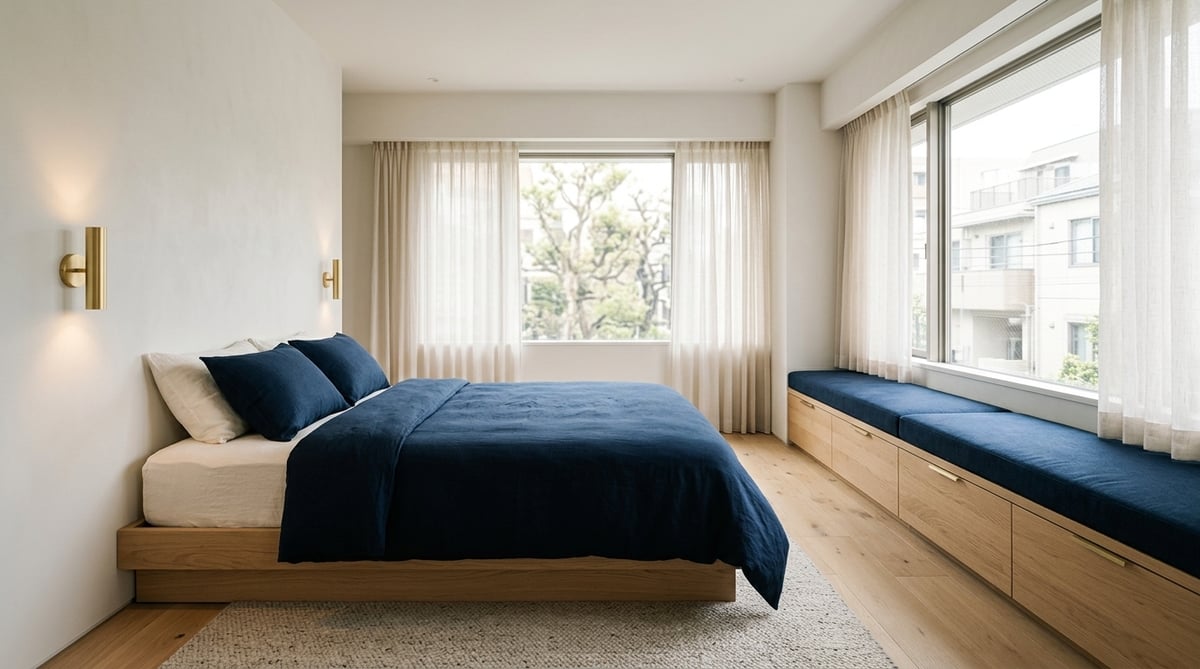
Stepping out of the ticket gates and heading up the gentle slope along Inokashira-dori Avenue, you immediately feel the inorganic hustle and bustle of central Tokyo fade away, replaced by an unmistakable sense of calm that envelops the entire neighborhood. Roadside trees sway gently in the breeze, and as you take a single step into the residential side streets, well-manicured green hedges and immaculate low-rise homes stretch peacefully as far as the eye can see.
Yoyogi-Uehara boasts some of the most enviable transit connections in Tokyo. Serving as the starting terminal station for the Tokyo Metro Chiyoda Line, it offers a direct, transfer-free ride to major business hubs like Otemachi, Kasumigaseki, and Omotesando. Furthermore, boarding the Odakyu Odawara Line's Rapid Express whisks you straight to Shinjuku in just a single stop—taking a mere 5 minutes. Despite providing seamless access to virtually anywhere in central Tokyo, the neighborhood preserves an elegant, historic residential tranquility once you step away from the station. Artisanal bakeries wafting the aroma of freshly baked wheat from early morning and cozy bistros catering to discerning adults blend effortlessly into everyday life.
Having assisted numerous clients in finding their ideal Tokyo homes over more than a decade in real estate brokerage, I have found that those who choose Yoyogi-Uehara share a common perspective: they are not merely seeking a short commute, but actively desire to curate a refined, mindful daily lifestyle. They want to minimize morning transit fatigue, pick up fresh ingredients at dependable supermarkets and charming boutique grocers on their way home, and recharge their minds and bodies in a serene home setting on weekends. Yoyogi-Uehara is a neighborhood that fulfills this ideal urban balance without compromise.
In this comprehensive guide, a licensed Japanese real estate broker walks you through the authentic commuting advantages of living at the origin station of the Chiyoda Line, block-by-block neighborhood atmosphere and ground stability in Oyama-cho and Uehara, the latest rental market benchmarks, local shopping strategies, and essential topographical slope details to inspect during property viewings.
- Otemachi in 21 Mins • Seated Morning Rush stands at 'Chiyoda Origin', providing a practical benchmark for informed living.
- Stop via Odakyu Rapid Express stands at 'Shinjuku in 5m', providing a practical benchmark for informed living.
- Median 1K Rent (Premium Studio) stands at '¥137,000', providing a practical benchmark for informed living.
Seated Commutes to Otemachi on the Chiyoda Line and 1-Stop 5-Minute Access to Shinjuku
One of the greatest appeals of Yoyogi-Uehara Station is its unmatched railway convenience, linking directly to both central Tokyo's premier financial districts and the commercial vibrancy of Shinjuku without requiring a single train transfer. The station features an elevated layout with two island platforms and four tracks. On the inbound platform heading toward downtown Tokyo and Shinjuku (Platforms 3 and 4), the inner Track 3 is utilized by the Tokyo Metro Chiyoda Line (bound for Omotesando and Otemachi), while the outer Track 4 serves the Odakyu Odawara Line (bound for Shinjuku). Because passengers can transfer across the same platform simply by walking a few steps to the opposite side, daily commuting transitions are remarkably seamless.
During the weekday morning rush hour, the advantage of living at the origin station of the Chiyoda Line is extraordinary. While many trains run directly through from the Odakyu Line, dedicated trains originating specifically at Yoyogi-Uehara depart from Platform 3 every few minutes. By arriving at the platform with just a small buffer of time and lining up at the designated starting-train boarding markings, you can consistently secure a seat even during peak rush hour.
Spending 20 minutes packed in an overcrowded train versus spending those same 20 minutes seated comfortably—reading a book, listening to a podcast, or reviewing your day's schedule—completely transforms your mental well-being and productivity when arriving at the office. Reaching Otemachi in approximately 21 minutes, Kasumigaseki in 16 minutes, and Omotesando in 8 minutes while seated in relaxed comfort is precisely why Yoyogi-Uehara is favored by so many business professionals working across central Tokyo.
Meanwhile, reaching Shinjuku via the Odakyu Line is exceptionally fast. Excluding the Romancecar limited express, every train class stops at Yoyogi-Uehara—including Local, Semi-Express, Commuter Semi-Express, Express, Commuter Express, and Rapid Express services. Boarding a Rapid Express or Express train gets you to Shinjuku Station in just one stop, taking approximately 5 minutes. From Shinjuku, you have instant access to the JR Yamanote, Chuo, Saikyo, and Shonan-Shinjuku lines, as well as the Toei Shinjuku and Oedo subway lines, making travel across Tokyo, airport transfers, and weekend excursions effortless.
Looking westward, the creative hub of Shimokitazawa—renowned for its bohemian vintage boutiques, independent cafes, and live theater venues—is just 3 minutes away on the Odakyu Line. Transferring to the Keio Inokashira Line at Shimokitazawa opens up easy access to Shibuya and Kichijoji. While our Chiyoda Line Area Guide provides in-depth comparisons of rent and lifestyle across the entire subway corridor, choosing Yoyogi-Uehara as your home base seamlessly enriches both your weekday work routine and your weekend leisure.
| Destination Station | Train Line Used | Travel Time | Transfers | Practical Commuting Notes |
|---|---|---|---|---|
| Omotesando | Tokyo Metro Chiyoda Line | Approx. 8 mins | Direct | Originating trains available. Quick across-platform transfers to Ginza and Hanzomon lines |
| Kasumigaseki | Tokyo Metro Chiyoda Line | Approx. 16 mins | Direct | Direct transit to government and legal districts; connects to Hibiya and Marunouchi lines |
| Otemachi | Tokyo Metro Chiyoda Line | Approx. 21 mins | Direct | Easy seated commute directly to Marunouchi and Otemachi banking and corporate offices |
| Akasaka | Tokyo Metro Chiyoda Line | Approx. 12 mins | Direct | Direct connection to Akasaka Sacas, international broadcast studios, and corporate headquarters |
| Shinjuku | Odakyu Line (Rapid Express / Express) | Approx. 5 mins | Direct | Just 1 stop. Instant connectivity to all JR mainlines and municipal subways |
| Shibuya | Chiyoda Line (transfer at Meiji-jingumae) Fukutoshin Line | Approx. 12 mins | 1 transfer | Transfer at Meiji-jingumae Station, or take the frequent local Keio bus directly to Shibuya |
| Shimokitazawa | Odakyu Line (Rapid Express / Express) | Approx. 3 mins | Direct | Transfer to the Inokashira Line for quick access to Kichijoji and Shibuya |
| Nogizaka (Roppongi area) | Tokyo Metro Chiyoda Line | Approx. 10 mins | Direct | Short walk from Nogizaka Station directly to Tokyo Midtown, Roppongi, and the National Art Center |
During the morning rush hour on inbound Platform 3, trains arriving from the Odakyu through-service and dedicated origin trains pulling in from the turnaround track alternate sequentially. The secret to securing a seat is checking the electronic departure board for the 'Originating Train' label and queuing at the designated origin passenger lines on Platform 3. Even during peak rush periods, you always have the option to let one train depart and wait for the very next originating train, ensuring a peaceful seated commute. Factoring an extra 5 to 7 minutes into your morning routine guarantees a relaxed journey.
Simply enter the rent and deposit from portal listings to calculate a full, itemized breakdown including brokerage and guarantor fees without hidden add-ons.
Neighborhood Guides: Oyama-cho, Motoyoyogi-cho, and Uehara 1-Chome to 3-Chome
When searching for a rental apartment in Yoyogi-Uehara, one essential real estate characteristic to recognize is how dramatically the architectural height, greenery, and ambiance change simply by crossing a single street or choosing a different station exit. To the northwest of the station lie the grand estates of Shibuya Ward's Oyama-cho; to the northeast sits the tranquil residential enclave of Motoyoyogi-cho; to the south are the fashionable boutique and dining streets of Uehara 1-chome through 3-chome; and to the north lies the vibrant shopping arcade of Nishihara.
Even for two rental properties advertised as a '5-minute walk from Yoyogi-Uehara Station,' an apartment along Inokashira-dori Avenue and one located up the hill in a dedicated residential zone offer completely different soundscapes and natural sunlight when you open your windows. Below is an objective comparison of the five primary micro-neighborhoods surrounding the station, based on official urban zoning regulations, topographic surveys, and municipal hazard data published by the Ministry of Land, Infrastructure, Transport and Tourism (MLIT) and the Tokyo Metropolitan Government.
| Area & Direction from Station | Streetscape & Zoning Designation | Topography, Ground & Flood Hazard | Lifestyle Tone & Target Resident (School District) |
|---|---|---|---|
| Oyama-cho, Shibuya Ward (West Exit • Northwest Plateau) |
Serene 3-story low-rise residential zone (Category 1 Exclusively Low-Rise Residential) |
High-elevation stable plateau (Musashino Loam) Completely outside flood inundation zones |
Virtually zero through-traffic; ideal for residents seeking quiet, high-end low-rise apartments (Nishihara Elem. / Yoyogi Junior High) |
| Motoyoyogi-cho, Shibuya Ward (East Exit • Northeast Plateau) |
Quiet low-rise homes and boutique residences (Category 1 Exclusively Low-Rise Residential) |
Stable elevated plateau (Musashino Loam) Completely outside flood inundation zones |
Shares the tranquil high-ground elegance of Oyama-cho but with slightly more approachable rent levels (Tomigaya Elem. / Uehara Junior High) |
| Uehara 2-Chome (Southwest Plateau) (Toward Komaba Park) |
Quiet low-rise residential zone (Category 1 Exclusively Low-Rise Residential) |
Stable elevated plateau (Musashino Loam) Completely outside flood inundation zones |
Lush green environment bordering Komaba Park; excellent for couples and families desiring peace (Uehara Elem. / Uehara Junior High) |
| Uehara 1-Chome (South Exit • Shopping Street) |
Boutique shops and mid-rise apartments (Neighborhood Commercial / Category 2 Mid-High Rise) |
Gentle slope transitioning into valley (Pockets of pluvial storm runoff hazard) |
Immediate access to the South Exit shopping street, bakeries, and markets; ideal for urban convenience (Uehara Elem. / Uehara Junior High) |
| Uehara 2-Chome (Avenue Corridor) (Along Inokashira-dori Avenue) |
Shops and mid-rise residential buildings (Neighborhood Commercial Zone) |
Gentle slope corridor from the station (Localized pluvial runoff considerations) |
Well-lit sidewalks at night with minimal slope walking; perfect for busy singles and dual-income couples (Uehara Elem. / Uehara Junior High) |
Comparing these micro-areas reveals a key real estate insight: rather than the bustling Inokashira-dori corridor, stepping just one block back into Oyama-cho or Motoyoyogi-cho offers a noticeably quieter living environment where land and rental valuations remain remarkably stable and well-balanced. While roadside properties carry premium commercial valuations due to street-level retail potential, choosing a low-rise apartment perched gently up the plateau allows you to secure a significantly more spacious and tranquil home for the very same monthly budget.
In terms of disaster resilience against major earthquakes and torrential rain, the elevated plateau zones of Oyama-cho, Motoyoyogi-cho, and Uehara 2-chome sit firmly upon the dense Musashino Diluvial Plateau (diluvial loam ground). They are categorized completely outside river flood and tsunami hazard zones on the official Shibuya Ward Hazard Map. Conversely, the low-lying basin directly surrounding the station, parts of Inokashira-dori Avenue, and the valley bottom of Uehara 1-chome have designated internal pluvial storm drainage hazard points. When viewing ground-floor or lower-level apartments in these specific pockets, verifying building entry elevation and considering units on the second floor or higher is highly recommended. Demographic projections by Japan's National Institute of Population and Social Security Research indicate that households in Oyama-cho, Motoyoyogi-cho, and Uehara 2-chome will continue expanding through 2050, underscoring their enduring prestige and stable community value.
The storied residential enclave of 'Tokugawayama' across the heights of Oyama-cho and Nishihara—once the private estate grounds of the Kishu Tokugawa clan—along with the leafy plateaus of Uehara, showcase an exquisite tapestry of low-rise luxury residences. Strict legal restrictions under Category 1 Exclusively Low-Rise Residential zoning prohibit pachinko parlors, nightlife establishments, and towering commercial towers. Manicured evergreen hedges and garden branches spill softly over quiet sidewalks. With virtually no transit shortcuts for through-traffic and no noisy entertainment districts, single professionals, couples, and expat families can enjoy a peaceful, high-privacy sanctuary.
Rental Market Benchmarks by Layout and Realistic Living Expectations
When considering a move to Yoyogi-Uehara, understanding the prevailing rental market rates is an essential foundation. Given its prime Shibuya Ward address, paired with the dual luxury of the Chiyoda Line's originating trains and Odakyu Express service, rent levels here naturally sit in the upper tier of Tokyo's residential market. However, by comparing figures with neighboring stations and examining day-to-day livability, you can easily discover balanced options tailored to your personal budget.
According to current market listing and contract transaction data aggregated by Sorai Tokyo, median monthly rents in the Yoyogi-Uehara station area stand at ¥137,000 for single-occupant 1K studio layouts, ¥237,000 for spacious 1LDK one-bedroom apartments favored by couples and remote professionals, and ¥347,000 for 2LDK residences suitable for growing families.
| Station Area | 1K (Solo Layout) | 1LDK (Couples / Work-from-Home) | 2LDK (Couples & Families) | Neighborhood Characteristics & Trade-offs |
|---|---|---|---|---|
| Yoyogi-Uehara Station | ¥121,000–¥155,000 (Median: ¥137,000) |
¥210,000–¥274,000 (Median: ¥237,000) |
¥297,000–¥413,000 (Median: ¥347,000) |
Chiyoda Line origin terminal and Odakyu Express stop; perfectly balances quiet elegance with superb transit |
| Yoyogi-Koen Station | ¥124,000–¥158,000 (Median: ¥140,000) |
¥218,000–¥285,000 (Median: ¥245,000) |
¥310,000–¥430,000 (Median: ¥360,000) |
Steps from Yoyogi Park and walkable to Shibuya (Oku-Shibu); rents command a slight premium |
| Shimokitazawa Station | ¥105,000–¥132,000 (Median: ¥118,000) |
¥185,000–¥240,000 (Median: ¥208,000) |
¥260,000–¥360,000 (Median: ¥305,000) |
Setagaya Ward address; offers Inokashira Line access and lower rent, but lacks Chiyoda Line origin perks |
When evaluated against the adjacent station on the Chiyoda Line, Yoyogi-Koen (serving Tomigaya and Oku-Shibu), the median 1K rent in Yoyogi-Uehara is approximately ¥3,000 lower per month. While Yoyogi-Koen offers the allure of walking directly to Shibuya, Yoyogi-Uehara provides the unmatched practical luxury of guaranteed seats on originating subway trains and a 5-minute Odakyu sprint to Shinjuku. Choosing between them comes down to whether your lifestyle leans toward Shibuya's social buzz or seamless daily commuting across the metropolis.
Looking in the opposite direction toward Shimokitazawa in Setagaya Ward (just one stop on the Odakyu Line), median 1K rents drop by roughly ¥19,000 per month—a yearly difference of about ¥228,000. Deciding whether to save on monthly overhead or invest in Yoyogi-Uehara's refined streetscape and stress-free seated commutes clarifies which location matches your priorities.
Looking at apartment layouts, a typical 1K studio (around 25 m²) offers a living room of approximately 7 to 8 tatami mats (approx. 11.5–13 m²). This comfortably accommodates a semi-double bed and a 120 cm work desk. In this segment, high-spec modern buildings or tastefully renovated units featuring 2-burner gas stoves, separate washbasins, and bathroom clothes dryers are widely available.
For couples or remote workers seeking a 1LDK apartment (approx. 40–45 m²), the standard floor plan comprises a 10 to 12 tatami living-dining-kitchen area coupled with a separate 5 to 6 tatami bedroom. This layout easily accommodates a two-person dining set, comfortable sofa, full bed, and generous wardrobe storage. Even when partners work on different schedules, sliding privacy doors isolate sound and light, ensuring harmonious shared living.
While Japanese real estate traditionally suggested the rule of thumb that rent should not exceed 'one-third of net monthly income,' contemporary urban residents increasingly tailor their budgets to their lifestyles. For instance, an individual earning ¥350,000 net per month might choose a premium 1K at ¥135,000 (roughly 38% of take-home pay) to eliminate commuting exhaustion and enjoy a serene sanctuary. Conversely, someone prioritizing international travel or aggressive savings might choose a solid, fully renovated vintage apartment for around ¥110,000. Clarifying your non-negotiable living criteria ensures you find a home you truly love without financial strain.
Everyday Dining & Groceries: Acorde, Odakyu OX, and World-Class Bakeries
The true livability of a neighborhood is rooted not in flashy monuments, but in the effortless convenience of its daily grocery stores and neighborhood amenities. The district surrounding Yoyogi-Uehara Station offers an exceptional variety of shopping options, spanning station-integrated commercial centers to community supermarkets and world-renowned bakeries that attract culinary connoisseurs from across Tokyo.
The cornerstone of daily life here is 'Acorde Yoyogi-Uehara,' a commercial complex directly connected to the elevated train station. Because it seamlessly links to the ticket gates, you can shop without opening an umbrella on rainy days. Inside, you will find Tomod's Pharmacy (with prescription dispensary), Kaldi Coffee Farm for imported delicacies, dental clinics, a bakery cafe, Starbucks, and even a boutique florist. Alongside dry cleaners located in the adjacent shopping arcade, everyday errands are accomplished effortlessly on your evening commute.
Located on the first floor of Acorde, 'Odakyu OX Yoyogi-Uehara' operates until 23:00, welcoming late-returning professionals. It is celebrated for premium farm-direct produce, prime butchery cuts, sashimi-grade seafood, artisanal seasonings, imported cheeses, an extensive wine cellar, and high-quality in-house prepared meals. Even after an exhausting workday, picking up fresh, delicious ingredients for dinner on your walk home is remarkably easy.
When you want to stock up on everyday kitchen staples and household goods at friendly prices, 'Maruetsu Yoyogi-Uehara'—situated just a 2 to 3-minute stroll from the station's East (or South 1) Exit—is an indispensable local ally. Offering reliable fresh produce, daily groceries, beverages, and pantry items at economical prices, and open daily from 9:00 to 23:00, it is beloved for weekend bulk purchases and quick late-night shopping. Visiting Odakyu OX for specialty items and Maruetsu for budget-friendly everyday essentials provides an ideal, flexible balance for your household budget.
| Facility & Retailer | Location & Proximity | Business Hours | Features & Practical Recommendation |
|---|---|---|---|
| Acorde Yoyogi-Uehara | Directly connected to station (B1F–2F) | Varies by tenant (Typically 7:00–23:00) |
Gourmet supermarket, pharmacy, international foods, cafes, and healthcare all under one roof |
| Odakyu OX Yoyogi-Uehara | Inside Acorde Yoyogi-Uehara (1F) | 10:00–23:00 | High-end supermarket with superb seafood, premium meats, farm produce, and chef-curated side dishes |
| Maruetsu Yoyogi-Uehara | 1-18-12 Uehara (2-min walk from East Exit) | 9:00–23:00 | Neighborhood-focused grocer offering everyday foods and household essentials at wallet-friendly prices |
| Katane Bakery | 1-7-5 Nishihara (Nishihara shopping street area) | 7:00–18:30 (Closed Mon, 1st/3rd/5th Sun) |
Yoyogi-Uehara's iconic artisanal bakery. Famous baguettes, croissants, and cozy basement breakfast cafe |
| Tomod's Pharmacy Acorde | Inside Acorde Yoyogi-Uehara (2F) | 9:00–22:00 | Comprehensive drugstore offering pharmaceuticals, cosmetics, daily goods, and prescription filling |
What truly elevates daily life in Yoyogi-Uehara is its celebrated bakery culture. Tucked along a quiet residential street in Nishihara, 'Katane Bakery' welcomes neighborhood regulars as its doors open at 7:00 AM. Its crisp, aromatic baguettes, buttery croissants, and seasonal fruit pastries bring genuine delight to morning breakfast tables. The basement cafe space serves morning platters and lunch sets, making a weekend morning spent with fresh pastry and pour-over coffee one of the most cherished rituals of living here.
Beyond Katane Bakery, the neighborhood boasts wild-yeast sourdough bakeries, specialty roasteries, and an array of intimate French, Italian, and Nordic-inspired bistros. Having exceptional, unpretentious establishments waiting right along your neighborhood stroll is what makes Yoyogi-Uehara such an enduringly delightful place to call home.
Viewing Checklist: Essential Pitfalls for Singles, Couples & Expats
While Yoyogi-Uehara offers an enviable blend of transit convenience and refined peace, its distinctive terrain and residential zoning present several nuances you must examine during an in-person or remote viewing. To ensure you never regret signing your lease, here are the critical check items our licensed advisors share with clients on-site.
First and foremost is Yoyogi-Uehara's characteristic 'basin and ridge topography.' Because the train station itself is nestled in a natural low-lying depression, walking toward the high ground of Oyama-cho to the north or Uehara plateau to the south involves an uphill climb. Historic inclines such as 'Yarikuri-zaka' (Uehara 3-chome) and 'Asahi-zaka' (Uehara 1-chome) feature noticeable gradients and occasional staircases.
Even if an apartment listing states '5-minute walk from station,' a 5-minute walk on a flat sidewalk and a 5-minute uphill trek feel radically different in daily practice—especially on humid summer evenings, in driving rain, or when carrying heavy grocery bags. During viewings, always walk the actual route between the station and the building to assess the slope and pedestrian sidewalk safety. If steep hills are a concern, check for flatter alternate routes, consider an electric-assist bicycle, or confirm bicycle parking availability at both the building and the station.
The second essential check is the walking distance to daily convenience stores and grocers from exclusive low-rise residential zones. While Category 1 Exclusively Low-Rise Residential zoning guarantees unbroken quiet and no commercial clutter, municipal regulations strictly bar commercial shops from opening. Consequently, some apartments may be a 6 to 7-minute walk from the nearest convenience store. If you frequently pick up late-night essentials, verify whether convenience stores sit along your natural route home from the station.
Third, carefully inspect building construction, acoustic soundproofing, and on-site trash disposal. On sloped parcels, some buildings are engineered with lower units classified as 'semi-basement (B1F)' under Japanese Building Standards Law. Even when equipped with an open dry area (lightwell), natural illumination and humidity levels vary significantly between units. Always open the windows during viewings to check natural airflow and moisture conditions.
Finally, for busy working professionals and international residents with demanding travel schedules, having a dedicated on-site trash room with 24/7 disposal privileges is an immense lifestyle perk. Confirm the route to the trash enclosure and ensure the common areas are meticulously maintained.
Finding Your Ideal Tokyo Residence in Yoyogi-Uehara
Yoyogi-Uehara harmoniously balances the luxurious morning comfort of guaranteed seated commutes to Otemachi, rapid 5-minute rail access to Shinjuku, and the serene, timeless grace of an established residential enclave the moment you turn into its side streets.
While monthly rents are in the upper tier of Tokyo, the ability to eliminate daily commuting stress, unwind in a peaceful neighborhood at night, and stroll to artisanal bakeries on weekends represents extraordinary value for residents who cherish a thoughtful, mindful lifestyle.
Finding a home is not just about comparing square meters and walking minutes on a floor plan; it is about envisioning how you want your mornings to feel and how you want to unwind at night. We encourage you to walk the neighborhood streets in person, take in the gentle elevation and quiet air, and discover the residence that feels effortlessly right for you.
Desirable rental properties in Yoyogi-Uehara move exceptionally quickly, and units spotted on public portals are often already under application. At Sorai Tokyo, foreign residents, expat workers, and international families can simply send property listing URLs directly to our official LINE concierge (@soraitokyo). A licensed Japanese real estate broker will immediately cross-reference the official real estate inter-brokerage database (REINS) to verify real-time availability in English. We also provide 100% free second opinions on quotes from other agencies to ensure you are never overcharged for unnecessary hidden fees.
Sorai Tokyo maintains a transparent, uniform brokerage fee model set at 50% off standard rates (only 0.55 months' rent, tax included), with zero mandatory add-on fees. From preliminary inquiries to arranging viewings, the entire process can be completed online without visiting an office, and our advisors will meet you directly at the property. Smartphone users can utilize our smart tools via the sticky navigation below, or explore our move-in cost simulator in the website footer at any time.
Frequently Asked Questions: Renting in Yoyogi-Uehara
QCan I really get a seat on the Chiyoda Line during morning rush hour from Yoyogi-Uehara?
AYes, by choosing a train that originates at Yoyogi-Uehara Station, you can reliably commute seated. Even during peak morning hours (7:45 to 8:45 AM), dedicated origin trains pull into Platform 3 every few minutes, operating separately from trains running through from the Odakyu Line. If a particular train is full, letting one train go and waiting for the next originating service virtually guarantees you a seat, making your morning commute to Kasumigaseki or Otemachi completely stress-free.
QYoyogi-Uehara is known for hills. Are walking and bicycling difficult for daily life?
AThe station sits in a natural basin, meaning routes up toward Oyama-cho or the Uehara plateau involve inclines like Yarikuri-zaka or Asahi-zaka. While steeper than flat ground, you can minimize strain by selecting apartments along flatter corridors like Inokashira-dori or Nishihara, or by utilizing an electric-assist bicycle. We strongly advise clients to walk the physical route from the station to the apartment during viewings to gauge the incline firsthand.
QAre there strategies to find more affordable rentals in Yoyogi-Uehara?
ATo secure lower rent, focus on properties located an 8 to 12-minute walk from the station or older, fully renovated vintage apartments. Moving slightly further from the immediate station perimeter can reduce monthly rent by ¥10,000 to ¥20,000. Many vintage buildings feature completely updated plumbing, modern bathrooms, and stylish interiors, offering an attractive living experience at a substantial discount compared to brand-new developments.
QIs Yoyogi-Uehara safe for solo residents walking home late at night?
AYes, Yoyogi-Uehara is exceptionally safe. Because the surrounding areas of Uehara, Oyama-cho, and Nishihara are upscale residential zones without late-night bars or red-light venues, public safety is outstanding. While main streets like Inokashira-dori are brightly lit, side residential streets can be very quiet after hours. We recommend confirming streetlight coverage along your specific walking path and prioritizing buildings with auto-lock entry systems and security cameras.
QWhat are typical move-in costs for a 1LDK apartment in Yoyogi-Uehara?
AFor a median 1LDK in Yoyogi-Uehara (¥237,000/month), standard agency initial move-in costs—including 1 month deposit, 1–2 months key money, 1.1 months brokerage fee, guarantor fee, fire insurance, and advance rent—typically range from 4.5 to 5.5 months' rent (approx. ¥1.1M to ¥1.3M). With Sorai Tokyo, our uniform half-month brokerage fee (0.55 months, tax included) saves you approximately ¥130,000 on upfront costs, which you can freely allocate toward furnishings or moving services.

Author: Sorai Tokyo Editorial Team (Supervised by Licensed Real Estate Agents)
A real estate consulting team specializing in assisting foreign nationals find rooms and explaining initial costs in Tokyo. We break down language barriers and differences in customs, offering dedicated support in Japanese, English, and Vietnamese for a safe and secure start to your new life.