
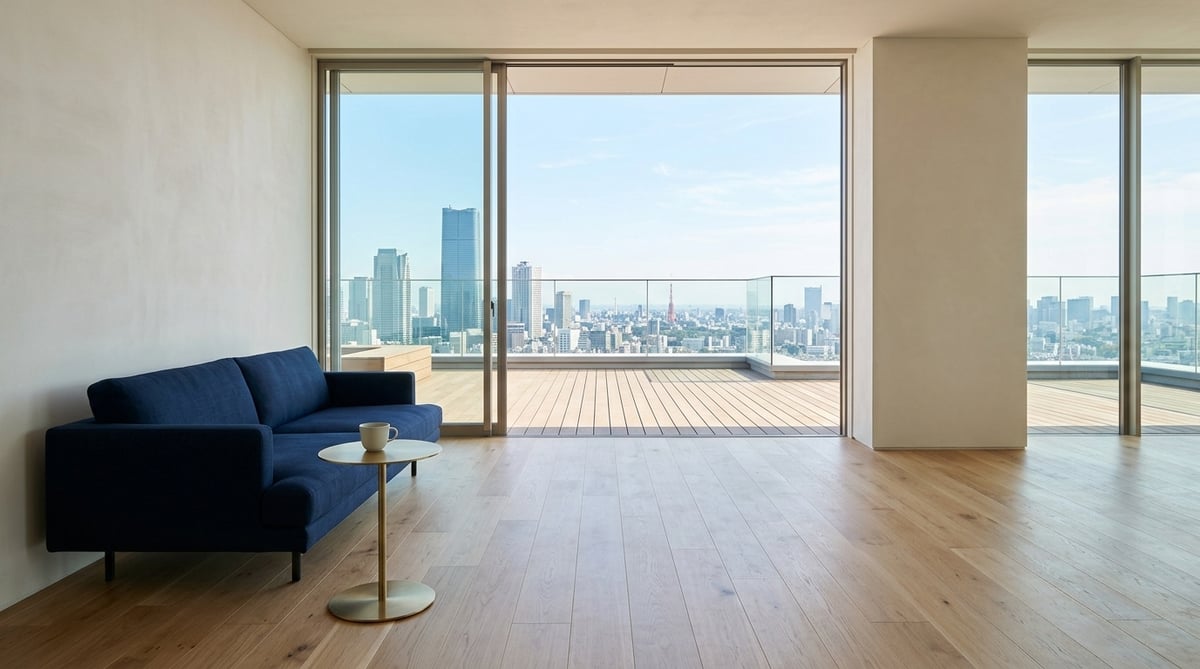
Stepping off the deep underground platform of the Fukutoshin Line and riding the long escalators up to Exit 1 of Zoshigaya Station, you are greeted by the sound of wind rustling through the zelkova trees along the Kishimojin Omotesando approach and the gentle chime of the Toden tramway crossing right beside it. Just one stop south, emerging above ground at Nishi-Waseda Station reveals a different scene: the steady flow of traffic along Meiji-dori, university students walking toward campus, and the dense greenery of Toyama Park tucked just behind the main road. Although these two stations sit little more than one kilometer apart in a straight line, many clients we guide through viewings pause on the way back and say, "Both feel like they could suit my lifestyle, and I am torn on the final choice."
Both stations share a compelling advantage: they sit inside the Yamanote Line loop with direct, transfer-free access to Ikebukuro, Shinjuku-sanchome, and Shibuya, yet still fall within a realistic budget of ¥190,000 to ¥205,000 per month for a 1LDK and ¥269,000 to ¥293,000 for a 2LDK. When you picture daily life in each neighborhood, however, your weekday commute and weekend pace diverge noticeably between Zoshigaya, set in quiet upland residential streets stretching toward Mejirodai, and Nishi-Waseda, where large supermarkets and walking access to Takadanobaba Station are part of everyday convenience.
Equally important are the steep slopes carved by the Kanda River flowing eastward between the two stations and the hazard boundary between upland plateaus and lowland valleys. Even with the same nearest station listed on a floor plan, choosing a different exit or block can change the daily effort of pushing a stroller or riding a bicycle, as well as the quietness you hear when opening a window. Below, we organize the practical criteria—comparing two-year total housing costs alongside local topography and station access—to help you identify the station that fits your daily rhythm.
- Median 1LDK rent is ¥190,000 in Zoshigaya versus ¥205,000 in Nishi-Waseda, creating a ¥405,000 difference in 2-year total housing costs (27-month equivalent).
- Zoshigaya suits those prioritizing quiet upland residential streets and JR Mejiro Station access, while Nishi-Waseda fits those seeking supermarket convenience and walking access to Takadanobaba and the Tozai Line.
- Only local trains stop at both stations; checking the boundary between slopes descending toward the Kanda River and designated flood inundation zones is essential when selecting a building.
Zoshigaya vs. Nishi-Waseda Rent Benchmarks and the 2-Year Total Cost Threshold
When searching for an apartment at major hubs inside the Yamanote Line—such as Shinjuku (median 1LDK ¥251,000; 2LDK ¥367,000) or Shibuya (median 1LDK ¥274,000; 2LDK ¥404,000)—even a 1LDK typically requires a monthly budget exceeding ¥250,000. Compared with those central terminal rates, the Zoshigaya and Nishi-Waseda area along the Fukutoshin Line, positioned between Ikebukuro and Shinjuku-sanchome, offers a rare option: academic residential neighborhoods inside the Yamanote loop where 1LDK apartments sit around ¥200,000 and 2LDK units remain in the high-¥200,000s. You can also review broader station-by-station averages in our Yamanote Line Area Guide, though here the fact that express trains bypass both stations and neither has a large nightlife district helps keep rents relatively composed.
That said, a clear price gap exists between neighboring Zoshigaya and Nishi-Waseda across every layout tier. Because rents also move in tandem with nearby stations within an 8- to 12-minute walk—JR Yamanote Line Mejiro and Takadanobaba, as well as Tokyo Metro Tozai Line Waseda—comparing median rents and 2-year total housing costs (calculated at 27 months of rent to reflect initial fees and renewal costs) across all five stations provides a reliable baseline for your budget.
| Station (Ward) | 1K | 1LDK (27-Mo. Total) | 2LDK (27-Mo. Total) | Approx. Price / sqm |
|---|---|---|---|---|
| Zoshigaya (Toshima Ward) | ¥112,000 | ¥190,000 (¥5.13M) | ¥269,000 (¥7.263M) | ¥4,400/sqm |
| Nishi-Waseda (Shinjuku Ward) | ¥122,000 | ¥205,000 (¥5.535M) | ¥293,000 (¥7.911M) | ¥4,700/sqm |
| Difference (Nishi-Waseda − Zoshigaya) | +¥10,000 (+¥270k) | +¥15,000 (+¥405k) | +¥24,000 (+¥648k) | +¥300/sqm |
| Mejiro (Toshima Ward) | ¥114,000 | ¥192,000 (¥5.184M) | ¥274,000 (¥7.398M) | ¥4,400/sqm |
| Takadanobaba (Shinjuku Ward) | ¥122,000 | ¥207,000 (¥5.589M) | ¥298,000 (¥8.046M) | ¥4,700/sqm |
| Waseda (Shinjuku Ward) | ¥122,000 | ¥205,000 (¥5.535M) | ¥293,000 (¥7.911M) | ¥4,700/sqm |
What the ¥405,000 (1LDK) and ¥648,000 (2LDK) 2-Year Cost Gaps Mean in Practice
Between Zoshigaya on the Toshima Ward side and Nishi-Waseda on the Shinjuku Ward side, there is a ¥300 per square meter difference in unit rent. Monthly, that translates to ¥15,000 for a 1LDK and ¥24,000 for a 2LDK; over a standard two-year lease including security deposit, key money, brokerage fee, and renewal costs (27-month equivalent), the gap widens to ¥405,000 for a 1LDK and ¥648,000 for a 2LDK.
How you value that difference is the first major decision point. With a fixed ceiling of around ¥200,000 per month for a 1LDK, Zoshigaya makes it easier to find newer residences with separate washbasins and reheating bathtubs, or spacious layouts in the 42–45 sqm range. In Nishi-Waseda, matching the same floor area and building age often pushes rent into the ¥210,000–¥220,000 range, meaning you may need to compromise slightly on square footage or building age to stay under ¥200,000. For households with a strict ¥250,000 cap on a 2LDK, Nishi-Waseda (median ¥293,000) offers very few qualifying listings, making Zoshigaya or stations slightly further north along the Fukutoshin Line (see our Tokyo Metro Fukutoshin Line Area Guide) a more practical way to preserve interior quality.
Conversely, the extra ¥405,000 to ¥648,000 over two years in Nishi-Waseda can be viewed as a time-saving investment for having well-stocked supermarkets along your walk home and walking access to JR Yamanote and Tozai Line trains at Takadanobaba. Whether you prefer more spaciousness and newer finishes indoors or faster weekday errands and multi-line flexibility determines how heavily that cost difference weighs.
Practical Distinctions from Nearby Mejiro, Takadanobaba, and Waseda
Clients often ask a practical question during tours: "If you can walk from Zoshigaya to Mejiro Station, why not just live next to Mejiro Station?" or "If Nishi-Waseda is close to Takadanobaba and Waseda, how does it differ from choosing those stations directly?" While rent levels are similar, the types of buildings available and the evening atmosphere around the stations differ clearly.
Comparing Zoshigaya and Mejiro, median rents are nearly identical. However, the area west of Mejiro Station (toward Shimoochiai in Shinjuku Ward) is largely zoned as a Category 1 Low-Rise Exclusive Residential District with strict height limits, meaning detached houses and low-rise residences dominate and relatively few 1LDK or 2LDK rental apartments come onto the market. By contrast, the corridor along Mejiro-dori into Zoshigaya 2- and 3-chome includes mid-rise condominiums, offering a steadier supply of rental units. Taking the Fukutoshin Line on rainy mornings or for direct trips to Shinjuku-sanchome and Shibuya, while walking 10 to 12 minutes along flat Mejiro-dori to JR Mejiro Station when heading toward Tokyo Station or Shinagawa, is a balanced two-station routine available on the Zoshigaya side.
Between Nishi-Waseda and Takadanobaba or Waseda, the main distinction is evening calm. Takadanobaba is a major hub serving the JR Yamanote, Tozai, and Seibu Shinjuku lines, but its station front is packed with restaurants and commercial buildings that stay busy late into the night. Meanwhile, Tozai Line Waseda Station offers direct commutes to Otemachi and Nihombashi, but requires transfers to reach Ikebukuro, Shinjuku-sanchome, or Shibuya. Living near Nishi-Waseda Exit 1 or in Nishi-Waseda 2-chome keeps Takadanobaba's shops and Tozai Line access within an 8- to 10-minute walk when needed, while allowing you to sleep in a quieter residential pocket beside park greenery.
Simply enter the rent and deposit from portal listings to calculate a full, itemized breakdown including brokerage and guarantor fees without hidden add-ons.
Deep Underground Platforms (30m+), Commute Flows, and When to Pass
Both Zoshigaya and Nishi-Waseda are livable academic neighborhoods, yet no single station suits every resident. To avoid discovering a mismatch after signing a lease, it helps to review not only each station's strengths, but also the specific conditions under which you should pass on a station—along with the deep underground layout characteristic of the Fukutoshin Line.
Who Zoshigaya Suits & When to Pass
- ✓ You want more floor space or newer finishes around ¥190,000 (1LDK) or ¥269,000 (2LDK).
- ✓ You prefer a quiet upland residential setting away from nightlife noise at night.
- ✓ You like alternating between the Fukutoshin Line and a 10–12 min walk to JR Mejiro.
- ✓ Pass if: You require direct Otemachi access, large station-front malls, or zero slopes.
Who Nishi-Waseda Suits & When to Pass
- ✓ You want well-stocked supermarkets and Toyama Park greenery within daily reach.
- ✓ You want to use the Tozai Line (to Otemachi) and JR Yamanote Line via an 8–10 min walk to Takadanobaba.
- ✓ You are comfortable paying ¥15,000–¥24,000 more per month to streamline errands and transit.
- ✓ Pass if: You dislike campus foot traffic, Meiji-dori road noise, or need a 2LDK under ¥250,000.
Specific Conditions Where You Should Pass on Either Station
There are three main situations where passing on Zoshigaya makes sense. First, if direct commuting to eastern business districts such as Otemachi, Marunouchi, or Shimbashi is your top priority: the Fukutoshin Line runs north-south between Ikebukuro, Shinjuku-sanchome, and Shibuya, so heading toward Tokyo Station or Otemachi requires a transfer at Ikebukuro to the Marunouchi Line or a walk to JR Mejiro Station. Second, if you enjoy stopping by station-building delis, department stores, or varied dining streets on your way home: Zoshigaya is centered on the Kishimojin grove and residential streets, and grows quiet early in the evening. Third, if you want to avoid steep hills descending toward the Kanda River and Omokagebashi—such as Nozoki-zaka or Hinashi-zaka—as lowland properties require noticeable uphill climbs back to the station.
Similarly, three conditions suggest passing on Nishi-Waseda. First, if you want a purely residential street with minimal daytime foot traffic and no arterial road noise: Exit 3 connects directly to Waseda University's Nishi-Waseda Campus, bringing lively student activity on weekdays, while Meiji-dori above the station carries steady traffic throughout the day. Second, if express train stops are essential: only local trains stop at both Zoshigaya and Nishi-Waseda, while express and commuter express trains pass through (though Ikebukuro and Shinjuku-sanchome are only one to three stops away, so the actual time difference is just a few minutes). Third, if your 2LDK budget is strictly ¥250,000 or less, where Nishi-Waseda's ¥293,000 median often forces significant compromises on building age or main-road exposure.
| Comparison Item | Zoshigaya Station | Nishi-Waseda Station |
|---|---|---|
| Train Types & Direct Access | Fukutoshin Line Local only (direct to Ikebukuro, Shinjuku-sanchome, Shibuya; transfer for Otemachi/Tokyo) | Fukutoshin Line Local only (direct to Ikebukuro, Shinjuku-sanchome, Shibuya; transfer for Otemachi/Tokyo) |
| Platform Level & Depth | B4F (approx. 33.8m deep / 4–5 min walk from platform to street) | B3F (approx. 30m deep / notable vertical transit to street) |
| Ticket Gates | Ikebukuro-side Gate (B2F), Mejiro-dori Gate (B1F) | North Gate, South Gate |
| Main Exits & Directions | Exit 1 (Kishimojin-mae / Toden), Exit 2 (Elevator / Zoshigaya Gym), Exit 3 (Mejiro-dori) | Exit 1 (Meiji-dori West / Takadanobaba), Exit 2 (Meiji-dori East), Exit 3 (Waseda Univ. Campus), Elevator Exit (Toyama Park) |
| Walkable Connecting Lines | Toden Arakawa Line Kishimojin-mae (immediate), JR Yamanote Line Mejiro (approx. 10–12 min) | JR Yamanote / Tozai / Seibu Shinjuku Lines Takadanobaba (approx. 8–10 min from Exit 1), Tozai Line Waseda (walkable) |
Zoshigaya Station (33.8m Underground): Two Gates, Toden Tram, and Mejiro-dori
When reading "walking minutes to the station" on a listing, always factor in the depth of underground platforms. Zoshigaya Station's platform sits on B4F, roughly 33.8 meters below ground, meaning it takes about 4 to 5 minutes via escalators or elevators just to reach street level. Because real estate advertising measures walking time from the nearest street-level exit to the building entrance, adding 4 to 5 minutes to the listed figure gives you a much more realistic morning commute estimate.
Inside the station, there are two ticket gates—the Ikebukuro-side Gate on B2F and the Mejiro-dori Gate on B1F—and each exit opens onto a distinct streetscape. Exit 1 connects directly to Kishimojin-mae on the Toden Arakawa Line (Tokyo Sakura Tram), useful for local trips toward Otsuka, Oji, or Waseda. When carrying heavy luggage or pushing a stroller, Exit 2 near Zoshigaya Gymnasium provides elevator access. Exit 3 on the south side opens onto Mejiro-dori, serving apartments around Chitosebashi Bridge and toward Mejiro Station. For block-by-block details, see our Zoshigaya Station Area Guide.
Nishi-Waseda Station (30m Underground): Choosing Exits and Walking to Takadanobaba
Nishi-Waseda Station's platform is also deep—on B3F at roughly 30 meters underground—requiring similar vertical transit time. The station has a North Gate and a South Gate, and because wide Meiji-dori runs north-south above it, picking the exit on the same side of the avenue as your apartment helps avoid long traffic-light waits.
From the North Gate, Exit 1 leads to the west side of Meiji-dori (toward Takadanobaba), while Exit 2 opens onto the east side (toward Gakushuin Women's College and Waseda-dori). Walking northwest from Exit 1 brings you to Takadanobaba Station (JR Yamanote, Tokyo Metro Tozai, and Seibu Shinjuku lines) in about 8 to 10 minutes—an arrangement that works well for couples where one partner commutes to Otemachi or Nihombashi on the Tozai Line and the other heads to Shibuya or Shinjuku-sanchome on the Fukutoshin Line. On the South Gate side, Exit 3 connects directly to Waseda University's Nishi-Waseda Campus, and an elevator exit serves the Toyama Park side. Further neighborhood details are covered in our Nishi-Waseda Station Area Guide.
Musashino Plateau vs. Kanda River Lowlands: Flood Boundaries and Daily Shopping
More than the station name itself, what shapes daily comfort in Zoshigaya and Nishi-Waseda is whether a building sits on the upland plateau or along the slopes and valley floor descending toward the Kanda River. Both station cores rest on the stable volcanic ash loam of the Musashino Plateau, yet between them—from southeast of Mejiro-dori through Takada, Omokagebashi, and northern Takadanobaba—the Kanda River carves a distinct valley.
Upland Streets in Zoshigaya 3-chome & Mejirodai vs. Steep Slopes into Takada 1-chome
The upland stretch from Zoshigaya 2- and 3-chome into Mejirodai in Bunkyo Ward sits on stable loam ground, zoned mainly as a Category 1 Medium-to-High-Rise Exclusive Residential District where mid-rise condominiums and detached homes sit in calm rows. While Mejiro-dori itself (such as the upland side of Takada 1-chome in Toshima Ward) is zoned as a Neighborhood Commercial District with shops and apartments, this entire plateau lies outside official flood inundation zones, supporting a low-risk, quiet residential environment.
By contrast, the slopes dropping southeast from Chitosebashi Bridge and the Zoshigaya plateau toward the Kanda River and Omokagebashi include some of Tokyo's steepest inclines, such as Nozoki-zaka and the tree-lined stepped path of Hinashi-zaka. At the bottom of these slopes, the valley-floor area of Takada 1-chome near the Kanda River (zoned as Category 1 Residential) offers flat riverside walks, but parts of it fall within designated flood inundation zones (projected maximum flood depth of 0.5 to under 3.0 meters). When considering a building on the lowland side, walk the hill to Zoshigaya Station yourself, and check whether electrical equipment rooms are elevated, flood barriers are stocked at the entrance, and street lighting is sufficient at night.
Nishi-Waseda 2-chome Plateau, Toyama Park Greenery, and Meiji-dori Soundproofing
Similarly, Nishi-Waseda 2-chome—tucked one block in from Meiji-dori—sits on the stable loam plateau under Category 1 Medium-to-High-Rise Exclusive Residential and Category 1 Residential zoning. It lies outside flood inundation zones, and street noise drops noticeably compared with the main avenue, offering a balanced mix of quietness and budget. To the southwest, the expansive grounds of Toyama Park provide tree-lined paths for morning walks or midday breaks, bringing rare green space inside the Yamanote loop.
Two local checks are worth making in Nishi-Waseda. First, if you look at blocks sloping north toward the Kanda River (closer to Takadanobaba or Omokagebashi), verify the elevation drop and flood-zone boundary on the municipal hazard map. Second, if you choose a building directly along Meiji-dori (zoned Neighborhood Commercial) for its proximity to exits and well-lit sidewalks, test the interior quietness with the windows closed during your viewing and check the window sash sound-insulation rating or presence of double-pane glazing.
Everyday Shopping Routes: Maruetsu Petit & Yoshiya vs. Santoku & Olympic
Supermarket placement also reflects the character of each station. Zoshigaya has no commercial complex attached to the station; daily groceries and prepared foods center on neighborhood stores such as Maruetsu Petit Zoshigaya 2-chome and Yoshiya Mejiro-Takada along Mejiro-dori. While modest in scale, they support a compact routine—picking up dinner ingredients on the way home through quiet, lit streets—with weekend bulk shopping or department-store errands handled one stop away in Ikebukuro or on foot around Mejiro.
In Nishi-Waseda, by contrast, Santoku Nishi-Waseda (known for fresh produce) and Olympic Waseda (carrying groceries alongside daily household goods) both sit directly along Meiji-dori near the station. Being able to gather both food and household necessities on a single walk home is a practical advantage for dual-income households and families who cook on weeknights. Combined with the shops and specialty stores around Takadanobaba 8 to 10 minutes away, Nishi-Waseda offers broader day-to-day retail convenience.
Practical & Legal Checks for ¥200k–¥300k Academic-District Leases
When searching in the ¥190,000–¥205,000 (1LDK) to ¥269,000–¥293,000 (2LDK) range in Zoshigaya and Nishi-Waseda, you will frequently encounter privately owned condominium units leased out individually, as well as low-rise residences managed directly by local landowners. While construction quality and building upkeep are often strong, several contractual and building-rule details deserve careful review before submitting an application.
Fixed-Term Leases (Article 38) and Renewal or Termination Terms
In quiet residential pockets of Mejirodai, Zoshigaya, and Nishi-Waseda, owners who plan to return after an overseas or domestic assignment often offer their condominiums under fixed-term leases (Article 38 of the Act on Land and Building Leases). While these listings sometimes offer slightly more favorable rents for higher-grade condominiums, the lease ends definitively on the expiration date, and any continuation requires a new agreement from both landlord and tenant.
Even for individual contracts, statutory early termination under Article 38, Paragraph 7 is limited to unavoidable circumstances such as job transfers, medical care, or caregiving—it does not cover personal preferences like needing more space or changing a remote-work setup. For corporate leases, where that statutory right does not apply at all, confirming that a standard 1- to 2-month notice early-termination clause is written into the contract before signing helps avoid liability for the remaining lease term.
Mechanical Parking Pallet Limits and Condominium Pet Bylaws
If you own a car in this area with good access to Mejiro-dori and Meiji-dori, pay close attention to mechanical parking size and weight limits. Many mid- and low-rise condominiums in academic neighborhoods have mechanical pallets capped at 1,850–1,900 mm in width and 2,000–2,300 kg in weight. Larger SUVs and electric vehicles with underfloor battery packs frequently exceed 1,900 mm in width or 2.3 metric tons, meaning they cannot be parked even if a space is vacant. Always check your vehicle registration dimensions against the building's parking rules before applying.
Similarly, if you are drawn to Toyama Park or Mejirodai for pet-friendly living, remember that in individually leased condominiums, the building's overall management bylaws and pet regulations take precedence over an individual owner's permission. Rules commonly specify maximum shoulder height (such as 40 cm), weight, number of pets, and whether pets must be carried or placed in a carrier in elevators and hallways.
Brokerage Fee Caps, the Tokyo Rule, and Supreme Court Precedent on Move-Out Clauses
With monthly rents in the ¥200,000–¥300,000 range, initial move-in costs and move-out deductions are substantial, making an objective review of the estimate worthwhile. Under Article 46 of the Building Lots and Buildings Transaction Business Act, the brokerage fee a real estate agency may charge one party in a residential lease is capped in principle at 0.5 months' rent plus consumption tax (or up to 1.0 month's rent plus tax total only with the client's prior consent). It is also good practice to check that no unrequested optional service fees are bundled into the quote.
For move-out restoration, the Tokyo Metropolitan Ordinance on Prevention of Disputes over Rental Housing (commonly called the "Tokyo Rule") requires agents to explain in writing before contract signing that normal wear and tear and age-related deterioration are the landlord's responsibility, while tenant-caused damage from intent or negligence is the tenant's responsibility—and that routine repairs to aging fixtures such as water heaters or air conditioners fall to the landlord. Under the Ministry of Land, Infrastructure, Transport and Tourism guidelines, wallpaper has a six-year useful life, and even if a tenant accidentally damages a section, cost sharing is generally calculated per wall surface rather than for the entire room.
However, many leases include special clauses for fixed move-out cleaning fees or non-refundable deposit deductions. Under Japanese Supreme Court precedent (Second Petty Bench decision of December 16, 2005 on normal wear-and-tear clauses, and First Petty Bench decision of March 24, 2011 on deposit deduction clauses), such clauses are upheld when: (1) the terms are stated objectively and clearly in the contract, (2) the tenant explicitly understands and agrees to bear those normal wear-and-tear costs, and (3) the amount is not excessively high relative to the rent so as to violate Article 10 of the Consumer Contract Act. Reviewing the exact amount and scope of any special clause before signing helps prevent unexpected deductions at move-out.
Choosing Between Zoshigaya and Nishi-Waseda for Your Daily Rhythm
Calm Residential Space in Zoshigaya vs. Errands and Greenery in Nishi-Waseda
There is no single right answer between Zoshigaya and Nishi-Waseda. If you want to anchor your budget around ¥190,000 for a 1LDK or ¥269,000 for a 2LDK, enjoy quiet upland residential streets and zelkova-lined avenues, and value extra interior space with the option to walk to Mejiro Station on clear days, Zoshigaya offers a calm daily pace. If you are comfortable investing an additional ¥405,000 to ¥648,000 over two years for everyday grocery convenience at Santoku and Olympic, daily access to Toyama Park, and an 8- to 10-minute walk to Takadanobaba for the Tozai and JR Yamanote lines, Nishi-Waseda provides a practical, well-connected base.
Whichever station you lean toward, the deciding factors on the ground are whether a building sits on the upland loam plateau or down the slope toward the Kanda River, and how the 30-meter-plus underground platform connects to your preferred exit. Walking the streets in person is the surest way to gauge slope angles and evening lighting.
Property Checks and Transparent Quote Second Opinions
If you are comparing two apartments and want to know which sits on the quieter upland side, or if you would like an objective second opinion on an initial move-in quote or fixed-term lease clause, feel free to reach out to Sorai Tokyo. By sharing a listing URL through our SUUMO Property Consultation or our 24/7 dedicated AI concierge on LINE (@soraitokyo), a licensed specialist can check real-time availability in the agent database and review initial costs and contract terms—with no phone number required, zero pushy sales calls, no store visits needed, and support for smooth visa and rental screening or no-guarantor options.
You can also try our pre-viewing diagnostic tools (SorAi) anonymously from the bottom menu on mobile or the footer on desktop at your own pace. We are here to support you calmly and transparently as you settle into your new home in Zoshigaya or Nishi-Waseda.
Frequently Asked Questions About Renting in Zoshigaya & Nishi-Waseda
QWhich is quieter at night: Zoshigaya or Nishi-Waseda?
AOverall, Zoshigaya—especially Zoshigaya 2- and 3-chome and the upland streets toward Mejirodai—tends to settle into quietness earlier in the evening because it has no large commercial complexes or direct campus exits. However, in Nishi-Waseda as well, choosing the upland residential blocks of Nishi-Waseda 2-chome set back from Meiji-dori or near Toyama Park provides a calm living environment away from main-road traffic. If you consider a building directly on Meiji-dori or Mejiro-dori, check window soundproofing and double-pane glazing during your viewing.
QWhich station is more convenient for commuting to Otemachi or Marunouchi?
ABecause the Fukutoshin Line does not run directly to Otemachi or Tokyo Station, both stations require a transfer or a walk to a nearby line. For Otemachi commuters, Nishi-Waseda is generally more convenient: walking 8 to 10 minutes from Exit 1 to Takadanobaba Station (or living within walking distance of Tozai Line Waseda Station) gives you a direct Tozai Line ride to Otemachi. From Zoshigaya, the typical routes are transferring to the Marunouchi Line at Ikebukuro or walking 10 to 12 minutes to JR Mejiro Station.
QWhere should I be careful about flood hazard zones and steep hills near the Kanda River?
AUpland areas such as Zoshigaya 3-chome, Mejirodai, and Nishi-Waseda 2-chome sit on the volcanic ash loam plateau and lie outside official flood inundation zones. Extra care is needed in the valley-floor blocks sloping down toward the Kanda River—around Omokagebashi, the lowland side of Takada 1-chome in Toshima Ward, and the riverside north of Takadanobaba. Parts of lowland Takada 1-chome fall within projected flood zones (0.5 to under 3.0 meters) and involve steep climbs like Nozoki-zaka to reach the station, so check building elevation, raised electrical rooms, and flood-barrier equipment.
QWhat should corporate tenants watch out for when leasing a fixed-term apartment?
AUnder Article 38, Paragraph 7 of the Act on Land and Building Leases, the statutory right to terminate a fixed-term lease early with one month's notice (for unavoidable reasons like job transfers or medical care) applies only to individual residential contracts under 200 sqm—not to corporate housing leases. Signing a corporate fixed-term lease without an explicit early-termination clause can leave the company liable for rent through the end of the term if an employee is reassigned, so always confirm notice-period and penalty terms with the landlord before applying.




Sorai Tokyo Co., Ltd. Editorial (Licensed Real Estate Agency #113297)
Licensed online real estate agency handling residential leasing across 15 major Tokyo lines (Member of All Japan Real Estate Association). Powered by our proprietary 24/7 AI "SorAi" on iOS/LINE and dedicated licensed realtors, we support renters end-to-end from vacancy checks on major portals to viewings and digital contracts.