
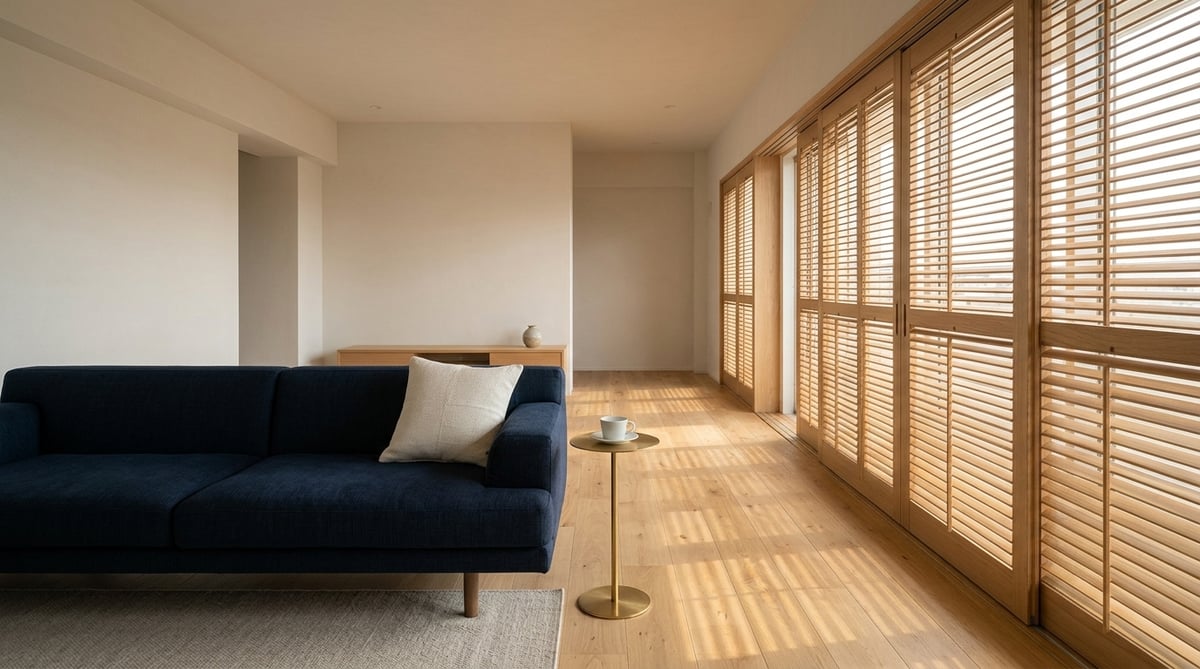
Emerging from Exit 3 of Naka-Okachimachi Station onto street level, the immediate sensory impression is shaped by the elevated Metropolitan Expressway Route 1 Ueno Line overhead and the steady flow of multi-lane traffic along Showa-dori Avenue. Yet, turning east just fifty meters behind the distinctive purple landmark building of Takeya into the lanes of Taito 3-chome and 4-chome, the structural walls of mid-rise residential buildings promptly dampen the traffic hum. The urban atmosphere transitions into an orderly, calm neighborhood lined with boutique jewelry workshops, leather craft studios, and modern residential condominiums. When prospective residents experience this noticeable contrast just one block off the thoroughfare during on-site viewings, many pause to reassess their initial impression of the district.
Naka-Okachimachi Station (H17) on the Tokyo Metro Hibiya Line offers direct connections to Akihabara in 1 minute, Kayabacho in 6 minutes, Ginza in 11 minutes, and Roppongi in 21 minutes. Despite this rapid transit access, median market rents stand at 117,000 yen for a 1K layout and 196,000 yen for a 1LDK layout—approximately 15,000 to 28,000 yen per month lower than neighboring Akihabara or Kodenmacho two stops south (both averaging around 132,000 yen for a 1K). Furthermore, underground concourses and short surface strolls link the station directly to JR Okachimachi Station, Ueno-hirokoji Station on the Ginza Line, and Ueno-okachimachi Station on the Toei Oedo Line, providing an extensive web of central Tokyo transit options. Conversely, prospective renters frequently ask whether proximity to Ameyoko market streets and wholesale districts leads to nighttime disruption, and how to evaluate traffic noise along major roadways alongside flood mitigation in low-lying topography.
When selecting a residence around Naka-Okachimachi, satisfaction depends less on nominal walking minutes to the turnstiles and far more on which side of Showa-dori Avenue you anchor your daily life, combined with how well the building is setback from major thoroughfares and equipped with acoustic insulation and flood protection. Reviewing these factors against your daily commuting schedule and shopping routines will help clarify whether this central district aligns with your practical lifestyle requirements.
- Direct Hibiya Line access to Ginza in 11 minutes and Kayabacho in 6 minutes, with pedestrian or underground links to JR Yamanote, Ginza, and Oedo Lines.
- Rental benchmarks average 117,000 yen for 1K and 196,000 yen for 1LDK, roughly 15,000 to 28,000 yen lower per month than adjacent Chiyoda and Chuo Ward stations.
- Choose east of Showa-dori (Taito 3/4-chome) for residential calm and grocery access, or west for multi-line transit hubs, retail department stores, and dining.
Underground Interconnectivity Across Four Stations and Gate Routing
Situated directly beneath Showa-dori Avenue, Naka-Okachimachi Station features a compact underground design with ticket gates on Basement 1 and an island platform serving two tracks on Basement 2. Boarding the Hibiya Line delivers riders to Akihabara in 1 minute, Kayabacho adjacent to the Kabutocho and Nihombashi financial district in 6 minutes, Ginza in 11 minutes, and through Toranomon Hills and Kasumigaseki to Roppongi in 21 minutes. Within the broader network of central subway routes, stations offering such close physical and subterranean integration with competing operators are uncommon, providing exceptional transit versatility for dual-income households with differing commuter destinations.
Navigating the Three Ticket Gates and Official Exits (Exits 1–5 & A1–A8)
Naka-Okachimachi Station features three distinct ticket gates: the northern JR Okachimachi Station Gate, the elevator-equipped Central Gate, and the southern Kuramaebashi-dori Gate pointing toward Akihabara. Because the optimal exit differs markedly depending on your residential sub-district, verifying which exit was used as the benchmark on listing floor plans is essential when calculating genuine walking distances.
| Exit Number (Location) | Connecting Gate | Destination, Landmarks & Pedestrian Access Characteristics |
|---|---|---|
| Exit 5 (East of Showa-dori) | Central Gate | Surface elevator installed for barrier-free access. Direct route to Takeya flagship store (TAKEYA1) and Taito 3-chome and 4-chome residential streets. |
| Exit 3 (East of Showa-dori) | JR Okachimachi Gate / Central Gate | Adjacent to Kasuga-dori intersection. Main arterial route toward Takeya, Okachimachi Taito Junior High School, and Shin-Okachimachi. |
| Exit 1 (East of Showa-dori) | Kuramaebashi-dori Gate | Toward Taito 3-chome south, Akihabara edge, and Heisei Elementary School. Subject to operating hours (closed during late-night and early-morning periods). |
| Exit 4 (West of Showa-dori) | JR Okachimachi Gate | Toward Ueno 5-chome, Yoshiike grocery market, Resona Bank, MUFG Bank, and JR Okachimachi Station. |
| Exit 2 (West of Showa-dori) | Kuramaebashi-dori Gate | Toward southern Ueno 5-chome and JR Okachimachi Station South Exit. Subject to operating hours (verify late-night return routing). |
| Exits A1–A8 (Underground Concourse) | Via JR Okachimachi Gate | Access to Ueno-okachimachi Station (Oedo Line), Ueno-hirokoji Station (Ginza Line), JR Okachimachi North Exit (A6), PARCO_ya Ueno / Matsuzakaya (A1/A2), and Ameyoko (A7). |
An easily overlooked logistical detail is that Exit 5 on the east side of Showa-dori is the only direct Hibiya Line exit equipped with a street-level elevator. When rolling luggage on business trips, managing strollers, or transporting heavy groceries, the barrier-free path connecting the train platform through the Central Gate to Exit 5 is indispensable. Additionally, Exits 1 and 2 at the southern end operate on restricted schedules; renters evaluating apartments in southern Taito 2/3-chome or southern Ueno 5-chome should calculate nighttime walking routes assuming arrivals via Exits 3, 4, or 5.
Weatherproof Subterranean Transfers and Peak Morning Commute Patterns
Exiting through the northern JR Okachimachi Gate leads directly into an underground walkway extending westward beneath Showa-dori and Kasuga-dori. This corridor enables fully sheltered transfers to Ueno-okachimachi Station on the Toei Oedo Line and Ueno-hirokoji Station on the Tokyo Metro Ginza Line. It also surfaces directly at JR Okachimachi Station's North Exit via Exit A6, while Exits A1 and A2 at the western end connect into the basement food halls of Matsuzakaya Ueno Department Store and PARCO_ya Ueno. Moving between multiple rail networks and major department stores without carrying an umbrella during heavy rain or midsummer heat is a notable convenience of living in this specific quadrant.
During weekday morning peak hours on the Hibiya Line heading inbound from Kita-Senju toward Naka-Meguro, cars experience heavy ridership as they pass Iriya and Ueno. However, upon arriving at Naka-Okachimachi, a substantial portion of passengers prepare to disembark at the very next stop, Akihabara, to transfer to JR lines or the Tsukuba Express. This creates turnover and physical breathing room near train doors. Given that travel time is merely 6 minutes to Kayabacho and 11 minutes to Ginza, the physical strain of prolonged crush-load commuting remains minimal, providing a relaxed fifteen-minute cushion to start your workday morning.
Simply enter the rent and deposit from portal listings to calculate a full, itemized breakdown including brokerage and guarantor fees without hidden add-ons.
Rental Benchmarks: Naka-Okachimachi vs. Four Adjacent Rail Hubs
The primary structural reason Naka-Okachimachi maintains accessible rental pricing despite its multi-line connectivity lies in administrative ward boundaries. One stop south at Akihabara, you cross into Chiyoda Ward; two stops south at Kodenmacho, into Chuo Ward. Naka-Okachimachi, by contrast, sits on the southern fringe of Taito Ward. Crossing this municipal border causes price per square meter to soften noticeably, allowing renters to secure newer construction or larger floor areas for the same monthly housing allocation.
| Station (Ward / Primary Lines) | Studio (1R) | 1K | 1DK | 1LDK | 2LDK | Est. Price / ㎡ |
|---|---|---|---|---|---|---|
| Naka-Okachimachi (Taito / Hibiya Line) | ¥86,000 | ¥117,000 | ¥143,000 | ¥196,000 | ¥280,000 | ¥4,500/㎡ |
| Okachimachi (Taito / JR Yamanote & Keihin-Tohoku) | ¥88,000 | ¥119,000 | ¥147,000 | ¥200,000 | ¥286,000 | ¥4,600/㎡ |
| Shin-Okachimachi (Taito / Oedo Line & TX) | ¥88,000 | ¥119,000 | ¥147,000 | ¥199,000 | ¥284,000 | ¥4,600/㎡ |
| Iriya (Taito / Hibiya Line) | ¥74,000 | ¥99,000 | ¥122,000 | ¥166,000 | ¥235,000 | ¥4,000/㎡ |
| Akihabara (Chiyoda / Hibiya, JR & TX) | ¥98,000 | ¥132,000 | ¥163,000 | ¥224,000 | ¥323,000 | ¥5,000/㎡ |
| Yushima (Bunkyo / Chiyoda Line) | ¥88,000 | ¥119,000 | ¥147,000 | ¥200,000 | ¥286,000 | ¥4,600/㎡ |
Rent Variance Against Akihabara & Kodenmacho Across Typical Budgets
Compared to inner-core Hibiya Line stops such as Akihabara and Kodenmacho (Chuo Ward, where 1K averages 132,000 yen and 1LDK reaches 224,000 yen), Naka-Okachimachi offers rent savings of approximately 15,000 yen per month on a 1K and roughly 28,000 yen per month on a 1LDK. Over a standard two-year lease term, this translates into cumulative fixed savings of approximately 360,000 yen for a solo renter in a 1K, and about 670,000 yen for a couple or remote-work professional in a 1LDK. Because Akihabara is an easy 10-minute flat walk or quick bicycle ride away, renters who do not require a Chiyoda or Chuo Ward address can redirect these savings toward higher-specification buildings offering auto-locks, independent bathroom vanities, or sound-insulating double sash windows.
Choosing Between Naka-Okachimachi, Shin-Okachimachi, and JR Okachimachi
When searching east of Naka-Okachimachi, listings frequently overlap with the catchment area of Shin-Okachimachi Station (Toei Oedo Line and Tsukuba Express), located about a seven-minute walk down Kasuga-dori. Renters often question whether it makes more sense to search closer to Shin-Okachimachi directly. While baseline rental rates are nearly identical—119,000 yen for a 1K and 199,000 yen for a 1LDK—the residential ambiance and transit orientations diverge significantly.
The streets around Shin-Okachimachi (Kojima and Moto-Asakusa) feature lower commercial density and a classic Tokyo downtown residential feel, anchored by the historic Satake Covered Shopping Arcade and a Life Supermarket open until midnight. This pocket is well-suited for professionals commuting via the Oedo Line toward Shinjuku-Nishiguchi, Iidabashi, or Shiodome, or those prioritizing quiet nighttime surroundings. Conversely, if your weekday routine centers on direct Hibiya Line access to Ginza, Hibiya, Toranomon, or Roppongi, alongside frequent weekend use of JR lines, settling in Taito 3-chome or 4-chome within immediate reach of Naka-Okachimachi's Exits 3 and 5 preserves optimal transit flexibility.
Meanwhile, living within two to three minutes of JR Okachimachi Station (averaging 119,000 yen for 1K and 200,000 yen for 1LDK) primarily serves commuters relying heavily on the Yamanote or Keihin-Tohoku Lines toward Tokyo, Shinagawa, or Ikebukuro. However, because railway viaducts and commercial activity around Ameyoko are nearby, renters desiring residential calm should either focus on quieter backstreets in southern Ueno 5-chome or cross east of Showa-dori toward Naka-Okachimachi.
Balancing Cost Reduction in Iriya Against Elevated Ground in Yushima
For tenants wishing to reduce monthly expenditures further while remaining on the Hibiya Line, Iriya Station (two stops north toward Kita-Senju, directly north of Ueno) is a natural benchmark. Iriya preserves one-seat transit to Akihabara, Kayabacho, Ginza, and Roppongi with only a few additional minutes of travel time, yet market rents drop to 99,000 yen for 1K (an 18,000 yen reduction) and 166,000 yen for 1LDK (a 30,000 yen reduction). It represents a pragmatic trade-off if you are willing to forgo underground transfers to JR or Ginza lines and immediate department store access in exchange for lower overhead and greater living space.
Conversely, for renters with an identical budget to Naka-Okachimachi (119,000 yen for 1K and 200,000 yen for 1LDK) who prioritize higher elevation and an academic neighborhood atmosphere, Yushima Station on the Tokyo Metro Chiyoda Line to the west warrants consideration. Yushima provides direct connections to Otemachi, Akasaka, and Omotesando, while offering residential options on the elevated Musashino Plateau around Hongo and Yushimadai. This presents a compelling alternative for households seeking to minimize lowland flood exposure while remaining in central Tokyo.
East vs. West of Showa-dori: Streetscape and Daily Grocery Logistics
Walking through the Naka-Okachimachi district, one quickly observes that Showa-dori Avenue, running directly above the station, bisects the area into two distinctly different urban environments. Showa-dori is a wide arterial highway carrying heavy traffic; negotiating pedestrian surface crossings or pedestrian bridges daily can become cumbersome. Ensuring that your apartment and your primary grocery stores reside on the same side of the avenue is a critical factor in maintaining a seamless after-work routine.
East of Showa-dori (Taito 2, 3 & 4-chome)
- ✓ Flat, straightforward commute via Exits 3 & 5 (elevator accessible)
- ✓ Takeya TAKEYA1 and My Basket make home cooking simple
- ✓ Pedestrian volume thins out quickly one block off the avenue at night
West of Showa-dori (Ueno 5 & 6-chome)
- ✓ Immediate connections to JR, Ginza, and Oedo Lines via Exit 4 and concourse
- ✓ Yoshiike fresh seafood, Matsuzakaya, and PARCO_ya within walking distance
- ✓ Abundant dining options ensure brightly illuminated routes when returning late
Living East of the Avenue: Taito 2, 3, & 4-chome and Takeya Groceries
Spreading eastward from Exit 3 and elevator-serviced Exit 5, Taito 2, 3, and 4-chome represent the primary target for renters seeking calm residential surroundings around Naka-Okachimachi. Standing right at the station exit is Takeya Okachimachi Flagship (TAKEYA1) (open 9:00 to 22:00), which stocks fresh produce, meats, imported goods, and household staples. Its 10:00 PM closing time makes grocery shopping effortless even after evening work commitments.
Additionally, Taito 4-chome hosts My Basket Naka-Okachimachi, open from 7:00 AM until midnight, providing quick replenishment before morning departure or late at night. For larger weekend pantry restocking, an eight- to nine-minute flat walk eastward leads to Life Shin-Okachimachi (Kojima 2-chome, open 9:30 to 24:00), a full-scale multi-level supermarket that fits seamlessly into your neighborhood routine.
The urban layout retains a regular grid derived from historical samurai warrior estates, blending boutique jewelry ateliers, small corporate offices, and modern residential condominiums. Around Taito Municipal Heisei Elementary School and Okachimachi Taito Junior High School, pedestrian traffic thins noticeably once office workers depart after 7:00 PM on weekdays, creating surprisingly tranquil evening pockets right next to central Tokyo rail junctions.
Living West of the Avenue: Ueno 5 & 6-chome, Yoshiike, and Department Stores
The area surrounding Exit 4 and the underground concourse (Exits A1–A8) west of Showa-dori offers direct access to the rich food culture and retail density of Okachimachi. Just outside Exit 4 stands the Yoshiike Grocery Store (Yoshiike Building Basement 2 to 1st Floor, open 9:30 to 20:30), widely celebrated among home cooks for its fresh seafood counters directly supplied by specialized fishmongers, premium meats, and regional Japanese seasonings. Sourcing fresh seasonal fish on weekends to cook at home is a distinct culinary privilege of residing in this area.
Continuing westward through the subterranean corridor brings you to the basement food halls of the historic Matsuzakaya Ueno Department Store (direct via Exit A2), as well as PARCO_ya Ueno and TOHO Cinemas Ueno (direct via Exit A1). Being able to walk home in minutes after an evening cinema screening or quick delicatessen run is highly convenient. However, around the Ameyoko market district near Exit A7 in Ueno 6-chome, tourists and bar crowds linger late into the night. Renters seeking an apartment on the west side are well advised to focus on the wholesale jewelry streets of southern Ueno 5-chome near JR Okachimachi Station's South Exit, positioned one or two blocks away from the primary nightlife corridors.
Zoning Soundproofing and Lowland Flood Risk: On-Site Inspection Checklist
While Naka-Okachimachi delivers superb transit and retail infrastructure, urban planning designates the entire area on both sides of the station as a Commercial Zone. Because these parcels lack the strict building height and density constraints of Category 1 Low-Rise Exclusive Residential Zones, inspecting building specifications and surrounding parcel dynamics during property viewings is critical to securing long-term living quality.
Acoustic Assessment Along Showa-dori and Kasuga-dori: Window Specifications
Showa-dori carries substantial commercial vehicular traffic, with the elevated Metropolitan Expressway Route 1 running directly above it. Kasuga-dori and Kuramaebashi-dori to the south also handle consistent daytime flows, meaning apartments directly fronting these corridors may experience low-frequency tire rumble or emergency sirens even with windows shut. To safeguard restful sleep, prioritizing apartments set back at least one building depth (one side street) from major traffic arteries is the primary rule.
If you evaluate an avenue-facing apartment to gain abundant natural light and open view corridors, always examine the window frame label during your viewing to confirm whether T-2 or higher acoustic sash ratings or interior double sash windows are installed. Additionally, listen carefully to whether outdoor street noise enters through the 24-hour mechanical ventilation intake vents, and open and close the windows to gauge the exact sound attenuation in person. Since commercial zones carry no shadow protection or height restriction covenants, take note of any ground-level parking lots or aging low-rise structures directly opposite the main balcony, as they could eventually be redeveloped into mid-rise condominiums that alter your sunlight exposure.
Evaluating Lowland Topography (2–4m Elevation) and Flood Hazard Maps
The ground surrounding Naka-Okachimachi Station (spanning Taito, Higashi-Ueno, and Ueno 5/6-chome) sits at an elevation of approximately two to four meters, forming part of Tokyo's flat coastal and delta lowlands. While this flat terrain eliminates steep slopes and makes walking or cycling effortless, developing a clear understanding of urban flood mitigation is prudent. (To the west beyond Ueno-hirokoji toward Yushima and Ueno Park, the terrain climbs toward the 20-meter plateau of the Musashino Uplands, with slight sandbar elevations noted in Ueno 4-chome northwest of JR Okachimachi Station.)
According to Taito Ward's flood hazard maps, these lowlands include pockets subject to inundation depths of under 0.5 meters in the event of localized cloudbursts (inland pluvial drainage overload) or a Kanda River overflow. In the rare scenario of a maximum-scale Arakawa River flood event (modeled for severe multi-day regional deluges), broader standing water is projected, which may take time to recede due to lowland elevation. Rather than prompting unnecessary concern, standard leasing best practice here calls for selecting units on the second floor or above, confirming whether building electrical intake rooms (switchgear) are elevated above street level, and checking if removable flood barriers (waterstop panels) are installed at main entrances and parking ramps to mitigate emergency power outages or common-area flooding.
Three-Step On-Site Verification Protocol During Viewings
When you tour a prospective apartment in the Naka-Okachimachi neighborhood, evaluating the walking path and building infrastructure in chronological sequence helps you clearly project your future daily life.
- Real Commuter Walking Route from Specific Gates: Walk the actual path from your planned exit (Exit 5 for barrier-free elevators, Exits 3 or 4 for evening routes) to check streetlighting, traffic signal wait times, and whether crossing Showa-dori Avenue can be avoided.
- Window Acoustic Performance and Solar Aspect Buffer: Inspect window frame labels for T-2 soundproofing marks or double sashes, test acoustic reduction with windows closed, and observe whether adjacent surface parking lots pose redevelopment risks to your sunlight exposure.
- Common Area Flood Protection and Maintenance Standards: Check if building electrical rooms are elevated, verify the presence of waterstop barrier slots at the main entrance or parking ramp, and review the cleanliness of 24-hour indoor trash storage and bicycle parking areas.
Lifestyle Suitability: Who Thrives in Naka-Okachimachi and When to Look Elsewhere
Regardless of how impressive a neighborhood's transit indices may be, suitability depends on individual residential priorities. Based on the objective physical traits of Naka-Okachimachi, here is an honest assessment of who thrives in this urban hub and who should consider neighboring alternatives.
Lifestyles That Seamlessly Align with Naka-Okachimachi
This neighborhood is an exceptional match for solo professionals and dual-income couples whose weekday routines center on the Hibiya Line toward Ginza, Hibiya, Kayabacho, Toranomon, or Roppongi, while also requiring immediate access to the JR Yamanote and Toei Oedo Lines. For residents frequently taking the Shinkansen from Tokyo or Ueno Stations, or couples working in separate commercial districts who each desire a commute under twenty minutes, this multi-line nexus saves substantial time every week.
Moreover, for home cooks who want to enjoy quality food markets like Yoshiike, Takeya, and Life while saving 15,000 to 28,000 yen each month compared to Akihabara or Nihombashi rental pricing (where 1K units average over 130,000 yen and 1LDKs exceed 220,000 yen), the residential blocks of Taito 3 and 4-chome east of Showa-dori offer a practical and balanced urban home base.
Three Scenarios Where Alternative Neighborhoods or Elevated Ground Make Better Sense
Conversely, if your lifestyle centers on the following three criteria, looking beyond Naka-Okachimachi to adjacent stations or plateau neighborhoods will yield greater everyday satisfaction.
First, if your highest priority is open-window residential quietude and abundant greenery in a low-rise neighborhood. The district is zoned entirely commercial, characterized by mid- to high-rise structures and background traffic noise from primary thoroughfares and the elevated expressway. Renters who value quiet weekend strolls through purely residential streets should explore neighborhoods further east past Shin-Okachimachi or along quieter suburban private railway and subway lines.
Second, if you wish to eliminate lowland flood risks entirely through geographic positioning. Because the station area sits on flat lowland at an elevation of 2 to 4 meters, upper-floor units and building flood barriers manage risks effectively, yet the underlying hazard map modeling remains. For households where ground elevation is the primary safety criterion, focusing on the elevated Musashino Plateau to the west across Yushima, Hongo, and Kasuga is far more logical.
Third, if you find crossing wide thoroughfares or navigating separate station entrances inconvenient. Naka-Okachimachi divides its amenities: Takeya lies to the east, while Yoshiike and department stores lie to the west, with the street-level elevator restricted to Exit 5. For renters who prefer stepping off the train straight into an integrated station shopping mall and walking directly home without crossing an avenue, stations featuring unified retail concourses will provide a smoother daily experience.
Conclusion: Selecting a Naka-Okachimachi Home via Acoustic and Flood Criteria
Naka-Okachimachi is a multifaceted downtown residential base that should not be evaluated solely on its lively street-level first impression around Ameyoko and the elevated expressway. Commuting directly to Ginza, Kayabacho, or Roppongi via the Hibiya Line, while retaining rain-free underground access to the JR Yamanote, Ginza, and Oedo Lines, introduces meaningful time savings into a busy professional routine.
The key to finding a satisfying apartment here lies in deciding whether your daily rhythm belongs east (Taito 3/4-chome) or west (Ueno 5/6-chome) of Showa-dori Avenue, while systematically confirming setback locations off major roads, T-2 or double-glazed acoustic window sashes, and second-floor-or-above positioning with elevated electrical infrastructure. By verifying these objective criteria, you can secure a functional, comfortable downtown Tokyo residence at a noticeably more accessible rental rate than adjacent Chiyoda or Chuo Wards.
If you are wondering whether a specific condominium street stays quiet at night, or if a proposed rental quote includes redundant fees, feel free to consult Sorai Tokyo. By sharing any property URL through our official LINE account (@soraitokyo / https://line.me/R/ti/p/@soraitokyo), our licensed real estate advisors will cross-reference the latest B2B listing databases (REINS), verify current application status, and deliver an objective, transparent second-opinion review on initial move-in costs. We require no phone numbers, never conduct unsolicited sales calls, and welcome international residents, expats, and multilingual families seeking guarantor-free and smooth visa screening options. Explore our interactive smart tools (SorAi) via the bottom menu on mobile or the footer on desktop, and reach out at your own pace whenever you are ready to plan your move.
Frequently Asked Questions About Living Near Naka-Okachimachi Station
QWhich side is quieter for everyday living: east of the station (Taito 3/4-chome) or west (Ueno 5/6-chome)?
AIf you prioritize quiet residential surroundings, Taito 3 and 4-chome on the east side of Showa-dori (accessible via Exits 3 and 5) is recommended. Once you turn one block off the avenue, offices close after business hours and pedestrian traffic drops significantly. Because Takeya TAKEYA1 and My Basket Naka-Okachimachi are both located on the east side, you can complete all daily grocery shopping without crossing the wide thoroughfare.
QCan I transfer from Naka-Okachimachi to JR Okachimachi, the Ginza Line, or the Oedo Line without getting wet in the rain?
AYes. By passing through the northern JR Okachimachi Gate and into the underground concourse (connecting toward Exits A1–A8), you can reach Ueno-okachimachi Station (Toei Oedo Line), Ueno-hirokoji Station (Tokyo Metro Ginza Line), Matsuzakaya Department Store, and PARCO_ya Ueno completely sheltered from rain. JR Okachimachi Station's North Exit is also directly accessible via Exit A6, making inclement weather transfers smooth and effortless.
QWhich station exit should I use if I have a stroller or heavy rolling luggage?
AExit 5 on the east side of Showa-dori is the only direct Hibiya Line exit equipped with a dedicated street-level elevator. A fully barrier-free route connects the train platform via elevator to the Central Gate and surfaces directly through Exit 5. Note that southern Exits 1 and 2 operate on limited hours and close during late-night and early-morning periods.
QGiven that the area is situated on lowland, what should I verify regarding flood risks and traffic noise during apartment viewings?
ABecause Naka-Okachimachi lies on flat terrain at an elevation of 2 to 4 meters within designated inland pluvial and major river flood zones, standard practice is to select units on the second floor or higher. Confirm that building electrical substations are elevated above ground level and check for flood barrier tracks at entrances. Regarding traffic noise, choose apartments set back at least one street off Showa-dori or Kasuga-dori, or ensure the unit features T-2 rated soundproof sashes or double glazing.



Sorai Tokyo Co., Ltd. Editorial (Licensed Real Estate Agency #113297)
Licensed online real estate agency handling residential leasing across 15 major Tokyo lines (Member of All Japan Real Estate Association). Powered by our proprietary 24/7 AI "SorAi" on iOS/LINE and dedicated licensed realtors, we support renters end-to-end from vacancy checks on major portals to viewings and digital contracts.