
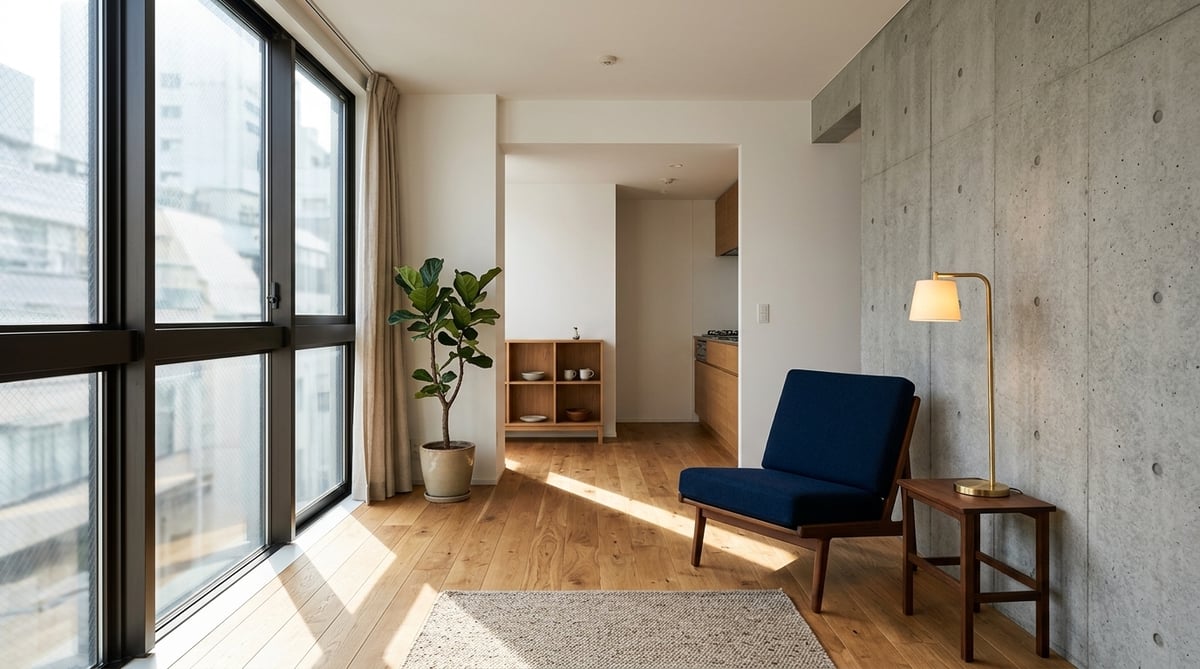
Just past 8:00 AM, stepping through the West Ticket Gate at Higashi-Ikebukuro Station into the underground passage toward Sunshine City, you see office workers in suits and parents returning from daycare moving briskly along a bright concourse shielded from rain, wind, and seasonal temperatures. Stepping up to street level, morning light falls across the wide lawn of Ike-Sunpark, carrying the scent of freshly baked bread and coffee on the breeze. Ride the Tokyo Metro Yurakucho Line just one stop—about two minutes—and climb the stairs at neighboring Gokokuji Station to find the deep tree canopy of Gokokuji Temple's Niomon Gate and the calm, tree-lined stretch of Otowa-dori. Walk slowly up Kiyotozaka Slope to the west onto the Mejirodai plateau, and the traffic noise of the main avenue recedes behind you, replaced by well-tended hedges and the quiet air of a residential neighborhood.
During property viewings, clients often tour an open, high-view unit in a tower residence directly connected to Higashi-Ikebukuro Station in the morning, then walk from Gokokuji's Otowa-dori up to the Mejirodai plateau in the afternoon. Many pause to ask: "Between the mobility of completing errands without getting wet in the rain and the quietness of a Bunkyo plateau where your shoulders relax the moment you get home, which fits our weekday rhythm better?" Looking at median asking rents, a 1LDK is 200,000 JPY in Higashi-Ikebukuro and 194,000 JPY in Gokokuji—a difference of 6,000 JPY per month. Precisely because these neighboring stations share the same budget range, floor plans alone rarely settle the decision.
Across this single stop spanning the border between Toshima Ward and Bunkyo Ward, clear differences shape daily life: the reach of underground pedestrian networks, an elevation difference of up to roughly 20 meters between a flat plateau and a valley-floor/plateau landscape, and the lineup of supermarkets on the walk home. Rather than framing one neighborhood as superior, this guide breaks down each factor from a field perspective so you can choose the streetscape that naturally fits your morning routine, commute, and sleep quality.
- Median rents sit at closely aligned levels: 200,000 JPY in Higashi-Ikebukuro vs. 194,000 JPY in Gokokuji for a 1LDK (6,000 JPY/month difference), and 286,000 JPY vs. 275,000 JPY for a 2LDK (11,000 JPY/month difference).
- Both stations share identical direct Yurakucho Line access to central Tokyo, while Higashi-Ikebukuro adds walking access to Ikebukuro and Zoshigaya (toward Shibuya), and Gokokuji adds Myogadani (toward Otemachi).
- Higashi-Ikebukuro sits on a flat plateau at roughly 29–32 meters elevation, whereas Gokokuji splits between the Otowa valley floor (8–12 meters) and the Mejirodai/Otsuka plateaus (23–29 meters), each requiring different site checks.
Yurakucho Line Commute Reality and Walkable Connecting Lines
The Tokyo Metro Yurakucho Line runs from Wakoshi through Ikebukuro, Iidabashi, Nagatacho, and Yurakucho to Toyosu and Shin-Kiba, with all trains operating as local stops across the 16 stations between Ikebukuro and Shin-Kiba. Platform screen doors are installed at every station, keeping platforms safe during the morning rush, and a steady timetable without express-passing delays lets you board the first train that arrives. While our Yurakucho Line Area Guide outlines the character of each stop along the line, comparing Higashi-Ikebukuro and Gokokuji comes down to one key point: direct Yurakucho Line service is virtually identical, so the real difference lies in station exit layouts and the other rail lines within a 12-to-15-minute walk.
Direct Access to Iidabashi, Nagatacho, and Yurakucho Plus Transfer Distances
Because Higashi-Ikebukuro and Gokokuji are just one stop—roughly two minutes—apart, both offer the same no-transfer convenience to major business districts including Ichigaya, Kojimachi, Nagatacho, Yurakucho, Ginza-itchome, and Toyosu. However, because the Yurakucho Line alone does not run directly to Shibuya, Shinjuku, Yokohama, or Otemachi Station (where the Marunouchi, Tozai, and Chiyoda lines converge), where you transfer shapes your daily commute fatigue.
When walking clients through commute simulations, indoor transfer distances at major hubs often matter. At Iidabashi Station, the connecting passages to the Tozai and Namboku lines are relatively compact, making transfers toward Otemachi, Roppongi-itchome, or Azabu-juban straightforward. At Nagatacho Station, in addition to same-station transfers to the Hanzomon and Namboku lines, an in-gate underground passage leads directly to the Ginza and Marunouchi line platforms at Akasaka-mitsuke Station. By contrast, the underground passage between Yurakucho Station and Hibiya Station (Chiyoda, Hibiya, and Toei Mita lines) involves a longer walk, so commuters heading along the Chiyoda Line can reduce morning walking distance by comparing routes via Iidabashi or Nagatacho.
Higashi-Ikebukuro's West Gate Underground Network and Two-Axis Walking Access
A defining feature of Higashi-Ikebukuro Station is its multi-level pedestrian network, which connects the underground concourse to redeveloped blocks and public facilities without exposing you to the weather. Exiting the West Ticket Gate, the passage toward Exits 6 and 7 leads through Rise City Ikebukuro directly to Sunshine City, allowing you to shop or dine on the way home while avoiding summer heat or rainy-season downpours. On the same West Gate side, Exit 1 features a direct elevator into Toshima Ecomusee Town (which houses the Toshima Ward Office and Brillia Tower Ikebukuro), making it easy to handle residency registration or official certificates on your commute. Meanwhile, stepping out of Exits 3 and 4 on the Zoshigaya-side gate puts you right in front of Higashi-Ikebukuro-yonchome Stop on the Toden Arakawa Line (Tokyo Sakura Tram), offering convenient streetcar access toward Otsuka and Waseda. You can explore the station's exit layout further in our Higashi-Ikebukuro Livability and Rent Guide.
Moreover, living on the Minami-Ikebukuro or western side of Higashi-Ikebukuro places you within a 12-to-14-minute walk of the major Ikebukuro terminal, and a 13-to-15-minute walk south toward Mejiro-dori brings you to Zoshigaya Station on the Tokyo Metro Fukutoshin Line. On weekends when you want to head toward Shibuya, Harajuku, Yokohama, or Shinjuku-sanchome—destinations outside the Yurakucho Line—being able to walk directly to the Fukutoshin Line or JR lines without transferring is a distinct advantage of Higashi-Ikebukuro. For more on the Ikebukuro side, see our Ikebukuro Station (Fukutoshin Line) Guide, or compare terminal proximity with quiet residential streets in our Ikebukuro vs. Zoshigaya Comparison.
Gokokuji's Dual-Gate Elevators and Marunouchi Line Access via Myogadani
Gokokuji Station's platform stretches beneath Otowa-dori from the Gokokuji-mae intersection (where Shinobazu-dori meets Otowa-dori), split into the northern Gokokuji-side Gate and the southern Otowa-side Gate. If you use a stroller or carry heavy luggage, Exit 1 on the Gokokuji-side Gate and Exit 6 on the Otowa-side Gate both provide street-level elevators, making it easy to choose your train car based on which gate is closer to your building. In the morning, emerging from Exit 1 beside the stone steps and greenery of Gokokuji Temple offers a sense of calm that feels remarkably removed from central Tokyo, despite being just over ten minutes away. Our Gokokuji Station Livability and Rent Guide covers each exit's surroundings in detail.
Many residents in the Gokokuji area—particularly on the Otsuka plateau, in Kohinata, or on the eastern side of Otowa—also make regular use of Myogadani Station on the Tokyo Metro Marunouchi Line, reachable via a 12-to-15-minute walk up the slope to the east. From Myogadani, you have direct, no-transfer service to Otemachi, Tokyo Station, Kasumigaseki (Marunouchi Line side), and Ochanomizu, which would otherwise require a transfer at Iidabashi or Yurakucho on the Yurakucho Line. For dual-income households where one partner commutes to Nagatacho or Yurakucho and the other to Otemachi or Tokyo Station, having both lines within walking distance adds meaningful daily flexibility. See our Myogadani Station Guide and our Marunouchi Line vs. Yurakucho Line Comparison for further context.
| Comparison Item | Higashi-Ikebukuro Station (Toshima Ward) | Gokokuji Station (Bunkyo Ward) |
|---|---|---|
| Yurakucho Line Service | All trains local between Ikebukuro and Shin-Kiba; platform screen doors installed (direct to Iidabashi, Ichigaya, Nagatacho, Yurakucho, Toyosu) | 1 stop (~2 min) closer to Yurakucho; all trains local with platform screen doors (same direct destinations as Higashi-Ikebukuro) |
| Gates, Elevators & Underground Passages | West Gate (Exits 6–7 Sunshine underground passage; Exit 1 direct elevator to Toshima Ward Office) / Zoshigaya-side Gate (Exits 3–4 Toden Higashi-Ikebukuro-yonchome Stop) | Gokokuji-side Gate (Exit 1 elevator, Niomon Gate side) / Otowa-side Gate (Exit 6 elevator, Otowa-dori side) |
| Walkable Nearby Stations & Lines | Ikebukuro Station (~12–14 min walk; JR lines, Marunouchi, Fukutoshin, etc.), Zoshigaya Station (~13–15 min walk; Fukutoshin Line), Toden Higashi-Ikebukuro-yonchome | Myogadani Station (~12–15 min walk; Marunouchi Line) |
| Additional Destinations via Walkable Lines | Shibuya, Harajuku, Yokohama (Fukutoshin / Shonan-Shinjuku Line), Shinjuku, Omiya | Otemachi, Tokyo, Ochanomizu, Hongo-sanchome (Marunouchi Line) |
Simply enter the rent and deposit from portal listings to calculate a full, itemized breakdown including brokerage and guarantor fees without hidden add-ons.
How Micro-Districts and Elevation Shape Daily Living: Flat Toshima Plateau vs. Otowa Valley and Mejirodai Heights
Even when two listings both read "5 minutes on foot from the station," the view outside your entrance and the slope beneath your feet differ completely between Higashi-Ikebukuro and Gokokuji. Along this border where the flat plateau of eastern Toshima meets the rolling hills and valleys of western Bunkyo, understanding elevation and zoning by chome (sub-district) is the foundation of a sound apartment search.
Higashi-Ikebukuro's Flat Plateau (Minami-Ikebukuro 2-chome, Higashi-Ikebukuro 4–5-chome)
Minami-Ikebukuro 2-chome and Higashi-Ikebukuro 4–5-chome sit atop the flat Musashino loam plateau at roughly 29 to 32 meters above sea level, outside official river flood inundation zones. Because there are virtually no steep hills between the station and residential blocks, walking home late with heavy groceries or pushing a stroller or bicycle in the morning remains effortless.
The street atmosphere shifts noticeably just one block off the main thoroughfares. While Green Odori and the area around Sunshine City form a lively commercial zone, stepping into the Category 1 Residential Zone of Minami-Ikebukuro 2-chome or the residential pockets of Higashi-Ikebukuro 4–5-chome reveals wide, redeveloped sidewalks and landscaped open spaces, with families spreading picnic blankets and readers relaxing on the lawn at Ike-Sunpark on weekend afternoons. Mid-to-high floors in high-rise residences easily secure open city views and sunlight; if you consider a low- or mid-rise unit bordering a commercial avenue, checking nighttime traffic volume and window sash soundproofing (double-glazed sashes or T-grade ratings) in person helps ensure quiet rest.
Note that along the ward boundary stretching from Higashi-Ikebukuro 4–5-chome toward Otsuka and Otowa in Bunkyo Ward, municipal jurisdictions (Toshima vs. Bunkyo) and public elementary/junior high school districts divide street by street. Families with school-age children should verify the exact school district against each ward's official address table rather than relying on the nearest station name alone.
Gokokuji's Elevation Split: Otowa Valley Floor (Otowa 1–2-chome) vs. Mejirodai and Otsuka Plateaus
When searching around Gokokuji, the single most important distinction is between the flat valley floor along Otowa-dori and the elevated residential plateaus up the surrounding slopes. Otowa-dori (Otowa 1–2-chome), stretching straight from the Otowa-side Gate toward Edogawabashi, lies along the former culverted Tsurumakigawa River at an elevation of roughly 8 to 12 meters. It is a flat commercial corridor lined with publishing houses, offices, and condominiums, allowing a completely level walk from the station exit to your lobby. While this flat access appeals to solo professionals and dual-income couples, valley-floor terrain naturally collects rainwater runoff from higher ground. Even outside river flood zones, checking Bunkyo Ward's inland flood hazard map—and visually inspecting whether the building's electrical room is elevated, whether floodboards are stocked at the entrance, and how well Otowa-dori-facing windows block traffic noise—is essential during viewings.
By contrast, climbing Kiyotozaka Slope to the west into Mejirodai 2–3-chome, or heading east onto the Kohinata and Bunkyo Otsuka plateaus, brings you onto a loam plateau at roughly 23 to 29 meters elevation. Zoning shifts to Category 1 Low-Rise or Mid-to-High-Rise Exclusive Residential Districts, where large commercial buildings and amusement venues are strictly restricted, and both river and inland flood risks are minimal. Walking five minutes up from Otowa-dori at dusk into Mejirodai, the sky opens wider and the air settles into quiet, broken mainly by soft lighting from low- and mid-rise residences and rustling leaves. Choosing the plateau means accepting a daily uphill-and-downhill walk in exchange for quiet nights where you can sleep with the window cracked open just minutes from central Tokyo.
Supermarkets in 2026 and Real-World Grocery Routes
Grocery options also reflect each station's character. In Higashi-Ikebukuro, the early opening of Santoku Toshima Ward Office-mae on the ground floor of Grand City Tower Ikebukuro in July 2026 (with full building completion scheduled for May 2027, alongside Proud Tower Ikebukuro in the adjacent south block scheduled for February 2027) has further strengthened daily convenience. Alongside Seiyu Sunshine for fresh produce and everyday staples and Seijo Ishii Ikebukuro Sunshine for imported goods and prepared foods, compact Maruetsu Petit branches (Higashi-Ikebukuro Ekimae, Higashi-Ikebukuro 3-chome, and Higashi-Ikebukuro 5-chome) are spaced along residential walking routes, making it easy to pick up ingredients on the way home regardless of your block.
Gokokuji lacks a large shopping mall at the station, but Maruetsu Petit Gokokuji Ekimae and Supermarket Ricos Otowa 1-chome sit directly along Otowa-dori, while My Basket Mejirodai 3-chome serves the uphill residential streets. Many Gokokuji residents pick up fresh vegetables and milk at these neighborhood stores on weekday evenings and use online grocery delivery or neighboring stations for weekend bulk shopping. Walking the actual route from your preferred station gate to the property during a viewing helps you picture your weekday evening routine clearly.
| Area Zone | Key Districts & Elevation / Terrain | Zoning & Streetscape | Daily Supermarkets & Viewing Checkpoints |
|---|---|---|---|
| Higashi-Ikebukuro (Flat Plateau) | Minami-Ikebukuro 2-chome, Higashi-Ikebukuro 4–5-chome Approx. 29–32m elevation (flat loam plateau; outside flood inundation zones) |
Transitions from commercial zones along main avenues to Category 1 Residential Zones; tower residences coexist with disaster-prevention parks | Santoku Toshima Ward Office-mae, Seiyu Sunshine, Seijo Ishii Ikebukuro Sunshine, Maruetsu Petit (Ekimae, 3-chome, 5-chome). Check window soundproofing along main roads |
| Gokokuji / Otowa Valley (Flat) | Otowa 1–2-chome (Bunkyo Ward) Approx. 8–12m elevation (valley floor along former Tsurumakigawa culvert) |
Commercial zone along Otowa-dori; mid- and high-rise condominiums lined neatly with flat access from station gates | Maruetsu Petit Gokokuji Ekimae, Supermarket Ricos Otowa 1-chome. Check inland flood maps, elevated electrical rooms, floodboards, and street-side window insulation |
| Gokokuji / Mejirodai & Otsuka Plateau | Mejirodai 2–3-chome, Kohinata, Otsuka plateau Approx. 23–29m elevation (loam plateau; outside flood zones) |
Primarily Category 1 Low-Rise and Mid/High-Rise Exclusive Residential Zones; calm low-to-mid-rise neighborhoods up slopes like Kiyotozaka | My Basket Mejirodai 3-chome (plus station-front Maruetsu Petit). Walk the slope gradient, streetlights, and sidewalk width at night |
1LDK & 2LDK Rent Benchmarks and Budget Positioning Across 5 Nearby Stations
While offering direct 20-minute access to Nagatacho and Yurakucho, Higashi-Ikebukuro and Gokokuji remain more attainable than central Chiyoda or Chuo wards. Below, we examine how the modest monthly rent gap between these two stations compounds over a two-year lease, and how they compare with walkable neighbors Myogadani, Ikebukuro, and Zoshigaya.
| Station (Ward) | 1R | 1K | 1DK | 1LDK | 2LDK | 3LDK | Unit Rent Guide |
|---|---|---|---|---|---|---|---|
| Higashi-Ikebukuro (Toshima) | 88,000 JPY | 119,000 JPY | 147,000 JPY | 200,000 JPY | 286,000 JPY | 354,000 JPY | 4,600 JPY/sqm |
| Gokokuji (Bunkyo) | 85,000 JPY | 114,000 JPY | 141,000 JPY | 194,000 JPY | 275,000 JPY | 340,000 JPY | 4,500 JPY/sqm |
| Myogadani (Bunkyo) | 85,000 JPY | 114,000 JPY | 141,000 JPY | 194,000 JPY | 275,000 JPY | 340,000 JPY | 4,500 JPY/sqm |
| Ikebukuro (Toshima) | 86,000 JPY | 117,000 JPY | 143,000 JPY | 194,000 JPY | 272,000 JPY | 337,000 JPY | 4,500 JPY/sqm |
| Zoshigaya (Toshima) | 83,000 JPY | 112,000 JPY | 137,000 JPY | 190,000 JPY | 269,000 JPY | 333,000 JPY | 4,400 JPY/sqm |
What the 27-Month Total Cost Difference (~162,000 JPY for 1LDK / ~297,000 JPY for 2LDK) Means
On a monthly bank statement, the gap between Higashi-Ikebukuro and Gokokuji looks small: 5,000 JPY for a 1K, 6,000 JPY for a 1LDK, and 11,000 JPY for a 2LDK. Yet when calculated on a 27-month basis—24 months of rent plus roughly 3 months' worth of rent-linked upfront and renewal costs (security deposit, key money, brokerage fee, and renewal)—the total difference reaches roughly 162,000 JPY for a 1LDK and 297,000 JPY for a 2LDK.
Higashi-Ikebukuro's ~100 JPY/sqm premium reflects its concentration of newer base-isolated and vibration-damped tower condominiums directly connected or adjacent to the station. For renters who value 24-hour staffed management, garbage rooms on every floor, and the ability to reach supermarkets or the ward office without an umbrella, that 160,000–300,000 JPY difference over two years is easy to justify. Conversely, if you prefer a calmer low- or mid-rise setting over tower amenities—and want to put the savings toward quality furniture or extra floor area within the same budget—Gokokuji's rent balance fits naturally.
Deciding Between Myogadani, Ikebukuro, and Zoshigaya
Walking the area often raises a natural question: if Myogadani is walkable from Gokokuji, or Zoshigaya and Ikebukuro are walkable from Higashi-Ikebukuro, why not base your search at those stations instead?
Between Gokokuji and Myogadani, median asking rents are virtually identical across every layout. The difference lies in station-front energy and rail direction. Myogadani has supermarkets, bookstores, cafes, and schools clustered along Kasuga-dori, plus direct Marunouchi Line access to Otemachi and Tokyo Station, but its platforms and sidewalks see heavier student and commuter foot traffic. Gokokuji has lower passenger volume, appealing to those who prefer a quieter commute toward Nagatacho, Yurakucho, and Toyosu, or the calm streets of Mejirodai and Otowa.
Between Higashi-Ikebukuro, Ikebukuro, and Zoshigaya, Ikebukuro's overall median appears slightly lower only because it includes older stock on the west and north sides; newer condominiums in Minami-Ikebukuro and Higashi-Ikebukuro match or exceed Higashi-Ikebukuro's averages. If you value leafy low-rise residential streets and direct Fukutoshin Line access to Shibuya and Shinjuku-sanchome over direct commercial-complex connectivity—and want to trim 10,000–17,000 JPY per month on a 1LDK or 2LDK—making Zoshigaya Station your primary target is also a sound option. See our Yurakucho Line vs. Fukutoshin Line Comparison for a full breakdown.
Direct-Access Mobility and Flat-Plateau Convenience
- ✓ Reach Sunshine City and the Ward Office via underground passages in any weather
- ✓ Use strollers and bicycles easily on a flat plateau (29–32m elevation)
- ✓ Choose between Santoku, Seiyu, Seijo Ishii, and Maruetsu Petit depending on the errand
- ✓ Walk to Ikebukuro or Zoshigaya (Fukutoshin Line) on weekends
Bunkyo Plateau Calm and Tree-Lined Residential Streets
- ✓ Rest deeply at night in quiet exclusive residential zones away from commercial bustle
- ✓ Save ~160,000–300,000 JPY over two years on 1LDK/2LDK housing costs vs. Higashi-Ikebukuro
- ✓ Choose between Otowa-dori's flat access or Mejirodai plateau's elevation and quiet
- ✓ Combine the Yurakucho Line with walkable Myogadani Station (Marunouchi Line)
Condominium Lease Practice and Legal Rules Protecting Move-Out Costs
In both Higashi-Ikebukuro's redeveloped tower residences and Gokokuji's low- and mid-rise condominiums, many listings are individually owned units leased out by owners (condominium rentals) or offered under fixed-term leases. Understanding how building bylaws and Japanese tenancy law work before applying helps prevent misunderstandings during your stay and unexpected charges at move-out.
Checking Condominium Bylaws: Disaster Stockpiles, Mechanical Parking, and Pet Rules
In a condominium rental, tenants must follow not only the lease agreement with the individual owner, but also the building's management bylaws and usage rules. Even if an owner personally agrees to something, anything prohibited by the homeowners' association bylaws is not permitted, making it important to review the relevant rules before applying.
For Higashi-Ikebukuro's high-rise towers, confirm whether emergency supply storage is located on each floor and which elevators and power systems run on backup generators during a blackout. If you own a car, check not only the pallet dimensions (length, width, height) of mechanical parking, but also weight limits—which many modern SUVs and EVs exceed—and whether unit owners receive priority over tenants on waitlists. Moving-in procedures at tower residences also frequently require using a designated moving company and booking padded elevator time slots, so allow buffer time during peak moving seasons. For pet-friendly listings in either area, request the exact pet bylaw pages to verify adult height/weight limits, maximum number of pets, and rules on carrying pets or using carts in common hallways and lobbies.
Fixed-Term Leases (Act on Land and Building Leases, Art. 38, Para. 7): Individual vs. Corporate Contracts
Fixed-term residential leases—common in condominium rentals—end definitively upon expiration without automatic renewal. While re-contracting is often possible if both parties agree, always check the listing sheet and Explanation of Important Matters to confirm whether the owner plans to return and what re-contracting or administrative fees apply.
One critical legal distinction involves early termination. Under Article 38, Paragraph 7 of the Act on Land and Building Leases, for residential fixed-term leases under 200 sqm, an individual tenant who can no longer use the property as a primary residence due to job transfer, medical treatment, family care, or other unavoidable circumstances holds a statutory right to terminate early with one month's notice. However, this protection applies only to individual residential contracts—not to corporate leases. If your employer is signing a corporate housing contract, verify before applying that the lease explicitly includes a voluntary early-termination clause (such as 1–2 months' notice) so you avoid being billed for the remaining lease term in the event of a sudden transfer.
Restoration Clauses (Supreme Court Ruling of Dec. 16, 2005; Consumer Contract Act Art. 10) and Tokyo Rules
Understanding official standards helps ensure a smooth move-out settlement. Under the Ministry of Land, Infrastructure, Transport and Tourism's Restoration Guidelines, normal wear and tear—such as wallpaper fading from sunlight or floor indentations from furniture—is the landlord's responsibility. Wallpaper depreciates to a residual value of 1 JPY over a 6-year statutory useful life, and even if a tenant causes damage, compensation is generally prorated by the affected wall face rather than the entire room. Additionally, under the Tokyo Metropolitan Ordinance for the Prevention of Rental Housing Disputes (Tokyo Rules), a licensed real estate transaction specialist must explain and deliver a separate document outlining restoration principles and move-out clauses before contract signing, and repairs for aging equipment such as water heaters or air conditioners generally fall to the landlord.
While standard leases often include a special clause assigning move-out house cleaning costs to the tenant, for a clause shifting normal wear-and-tear costs to be legally valid, the Supreme Court (Second Petty Bench, Dec. 16, 2005) requires that the scope and amount be clearly and specifically stated in the contract, and that the tenant clearly recognizes and agrees to bear costs they would not ordinarily owe. Vague catch-all wording such as "the tenant shall bear all repair costs" is not enforceable for normal wear. Furthermore, for individual consumer contracts, fixed repair fees or non-refundable deposit clauses that are excessively high relative to rent and local norms may be voided under Article 10 of the Consumer Contract Act. Before signing, calmly confirm that any cleaning clause specifies a clear cap or per-square-meter rate.
Choosing Between Higashi-Ikebukuro and Gokokuji for Your Daily Rhythm
Just one stop apart on the Yurakucho Line and 6,000 JPY apart on a 1LDK, Higashi-Ikebukuro and Gokokuji offer two distinct rhythms of daily life. Higashi-Ikebukuro brings weather-protected underground walks to the station, bright supermarkets like Santoku and Seiyu on the way home, and flat access to Ike-Sunpark's lawn and Ikebukuro's amenities. Gokokuji offers seasonal greenery beside Niomon Gate, level convenience along Otowa-dori, or quiet nights on the Mejirodai plateau where central Tokyo feels miles away. Neither is inherently better—both are rewarding neighborhoods depending on how you spend your weekdays.
If floor plans alone leave you undecided, try walking both routes back-to-back on a weekday evening: from Higashi-Ikebukuro's West Gate into Minami-Ikebukuro 2-chome, and from Gokokuji along Otowa-dori up into Mejirodai. Experiencing the street lighting, pedestrian pace, and slope gradient firsthand will quickly show you where you feel most at ease coming home.
Whenever you would like a second pair of eyes on hazard maps, building bylaws, or upfront cost quotes, feel free to reach out to Sorai Tokyo on LINE (@soraitokyo) with no phone number required and zero pushy sales calls, or use our 24/7 SorAi tools from the mobile bottom bar or desktop footer. We are here to support a calm, well-informed move.
Frequently Asked Questions: Renting in Higashi-Ikebukuro & Gokokuji
QHow much difference is there in 2-year total housing costs (including upfront fees) for 1LDK and 2LDK units between Higashi-Ikebukuro and Gokokuji?
ABased on median asking rents, a 1LDK is 200,000 JPY in Higashi-Ikebukuro vs. 194,000 JPY in Gokokuji (6,000 JPY/month difference), and a 2LDK is 286,000 JPY vs. 275,000 JPY (11,000 JPY/month difference). On a 27-month basis (24 months of rent plus ~3 months of rent-linked upfront and renewal costs), that equals roughly 162,000 JPY for a 1LDK and 297,000 JPY for a 2LDK. Always compare total costs including management fees and renewal fees for specific listings.
QWhere should I look around Gokokuji Station if I want to balance flood safety and walking slopes?
AFor flat station access and easy grocery runs, Otowa 1–2-chome along Otowa-dori is convenient, though at 8–12m elevation in a valley floor, you should check Bunkyo Ward's inland flood hazard map as well as elevated electrical rooms and floodboards on site. If low flood risk and quietness are your top priorities, Mejirodai 2–3-chome and the Otsuka/Kohinata plateaus (23–29m elevation, outside flood zones) are well suited—just walk slopes like Kiyotozaka in person first to gauge the daily climb.
QWhat should I watch out for when signing a corporate lease for a Higashi-Ikebukuro tower residence or a Gokokuji condominium rental?
AIn fixed-term leases common to condominium rentals, the statutory early-termination right under Article 38, Paragraph 7 of the Act on Land and Building Leases applies only to individual contracts—not corporate leases. Ensure the contract explicitly includes a voluntary early-termination clause (notice period and any penalty). Also verify mechanical parking size/weight limits and designated moving-company rules in the building bylaws.
QCan I check if a portal listing is still available and whether the upfront quote is fair before applying?
AYes. Send the listing URL to our official LINE (@soraitokyo), and a licensed real estate agent will check live availability in the inter-agency database and provide a transparent second opinion on upfront costs and special clauses. You can also use our SUUMO & Portal Property Check or SorAi tools anytime from the mobile bottom bar or desktop footer, anonymously and with no phone number required.

Sorai Tokyo Co., Ltd. Editorial (Licensed Real Estate Agency #113297)
Licensed online real estate agency handling residential leasing across 15 major Tokyo lines (Member of All Japan Real Estate Association). Powered by our proprietary 24/7 AI "SorAi" on iOS/LINE and dedicated licensed realtors, we support renters end-to-end from vacancy checks on major portals to viewings and digital contracts.