
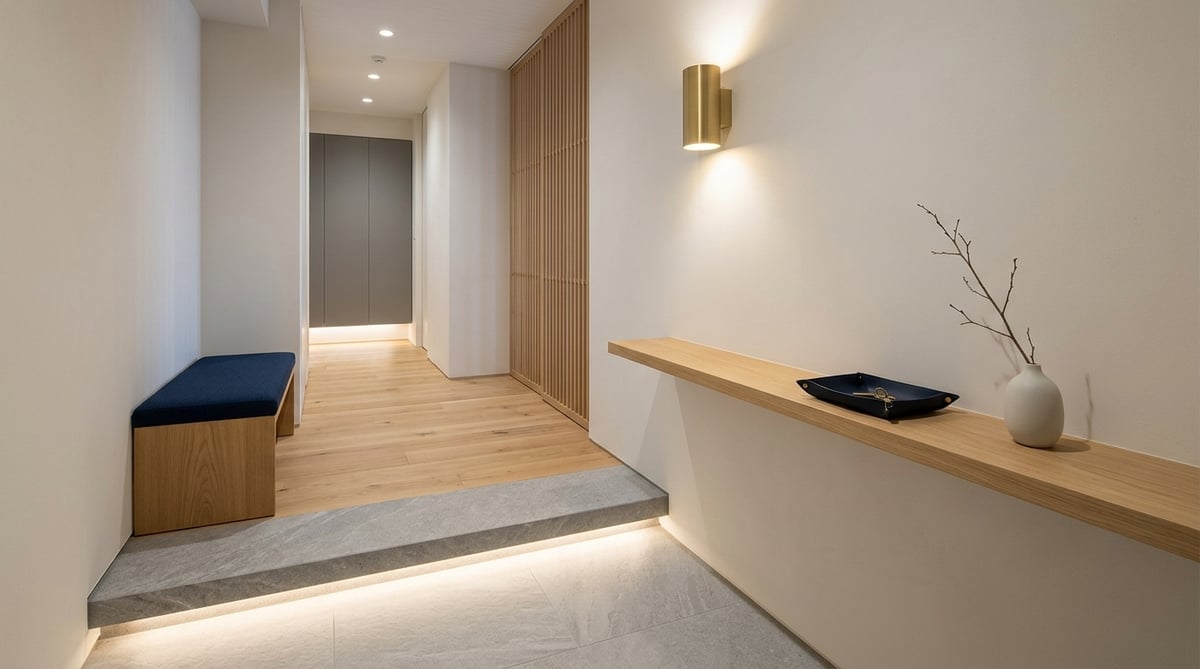
- Transfer-free, seated comfortable commute
- Direct access to government & commercial districts
- Exceptional affordability along Tokyo's Chiyoda Line
Living Environment and Transit Access in Kita-Ayase Post-Direct-Service Evolution
Before beginning your housing search in Kita-Ayase, understanding the neighborhood's current transit dynamics, recent historical evolution, and local conveniences is highly recommended. Grasping the physical layout of the area enables you to objectively evaluate whether property listings presented by real estate agencies truly align with your daily commute and lifestyle routines.Direct to Otemachi and Kasumigaseki: Morning Commute Ease from an Originating Station
Kita-Ayase Station serves as both the terminus of the Tokyo Metro Chiyoda Line and the originating station for trains heading into central Tokyo. Previously, Kita-Ayase operated merely as a branch station served by 3-car shuttle trains shuttling between Ayase and Kita-Ayase. However, the timetable revision of March 2019 extended the platform to accommodate 10-car trains, inaugurating direct through-service toward Yoyogi-Uehara. This direct connection allows transfer-free travel to major business and commercial hubs: approximately 25 minutes to Otemachi Station, 30 minutes to Kasumigaseki Station, and 39 minutes to Omotesando Station. Even more appealing is the ability to board originating trains during peak morning hours. Arriving slightly early on the platform allows you to settle comfortably into a cushioned seat, read a favorite paperback, or calmly review the day's agenda, enjoying a tranquil morning routine free from the pressure of packed commuter cars.Harmonious Living: Shobunuma Park and Modern Station Redevelopment
Stepping out of the station's South Gate (Exit 5), the verdant expanse of Shobunuma Park unfolds across approximately 2.8 hectares. In early summer, roughly 8,100 irises across 140 varieties burst into bloom, while murmuring waterways, gentle cascades, and leafy trees invite deep, restorative breaths into everyday life. Experiencing such water and greenery immediately upon exiting the station within the Tokyo metropolis is one of Kita-Ayase's most distinctive assets. Meanwhile, beneath the elevated tracks and around the station plaza, commercial facilities such as "M'av Kita-Ayase Lieta," the Summit supermarket, drugstores, bakeries, and cafes have opened, dramatically streamlining everyday shopping. With a supermarket operating late into the evening directly accessible from the ticket gates, picking up dinner ingredients or prepared dishes on late work nights is effortlessly convenient.Neighborhood Characteristics and Residential Streets in Yanaka, Kahei, and Oyata
The surroundings of Kita-Ayase Station encompass the residential districts of Yanaka, Kahei, and Oyata, alongside Towa to the south and Tatsunuma to the northeast. To the north of the station, Kannana-dori (Tokyo Ring Road No. 7) runs east-west, lined with family restaurants, electronics retailers, the Seiyu Kita-Ayase supermarket, and the discount grocer Belx Adachi-Ayase, offering exceptional convenience for driving and cycling. While checking soundproofing ratings and window sash performance is advisable for apartments fronting Kannana-dori due to traffic volume, turning a single corner into the residential streets reveals flat, orderly roads and calm streetscapes of low-rise houses and family apartments. With virtually no steep inclines, cycling easily connects residents to the bustling shopping districts around Ayase Station and Kameari Station.A licensed real estate broker specializing in eastern Tokyo provides thoughtful video consultation—from clarifying search criteria and checking off-market listings to optimizing initial move-in costs.
Simply enter the rent and deposit from portal listings to calculate a full, itemized breakdown including brokerage and guarantor fees without hidden add-ons.
Comparing Local Independent Agencies and Major Real Estate Chains
When beginning an apartment search in Kita-Ayase, one of the most common dilemmas is deciding which type of agency to approach. Real estate companies broadly fall into two categories: "local independent agencies" that have operated in the neighborhood for decades, and "major franchise chains" with extensive networks across Tokyo and Japan. Each comes with distinct strengths and considerations; the right choice depends on your property preferences and working style.Built on decades of trust with local landowners and private landlords across Yanaka, Kahei, and Oyata. They often hold direct-management properties not listed on major portal sites and early information on upcoming vacancies. They offer deep peace of mind through firsthand knowledge of landlords' personalities, actual property management quality, and past renovation histories.
Leveraging inter-broker databases like REINS, they can seamlessly cross-reference listings across Kita-Ayase, neighboring Chiyoda Line stations (Ayase, Kitasenju, Machiya), and other rail lines. They offer robust digital infrastructure, including virtual viewings, online explanations of important matters (IT-Jusetsu), and electronic contracts.
Local Independent Agencies: Direct Landlord Relationships and Exclusive Listings
Local independent agencies located near Kita-Ayase Station, along Kannana-dori, or along established residential streets enjoy long-standing ties with Adachi Ward landowners and individual property owners spanning generations. Their paramount advantage lies in possessing a wealth of "directly managed exclusive properties" (motoduke listings). High-quality rental homes often get leased through walk-ins or existing clientele before ever being published with expensive listing fees on major property portals like SUUMO or LIFULL HOME'S. Furthermore, they excel in qualitative context that floor plans and numbers cannot reveal—such as "the landlord lives on the same lot, providing exceptional everyday security," "the owner meticulously tends the garden, keeping common areas pristine," or "the owner is open to flexible negotiation regarding free-rent periods or deposit terms." On the other hand, it is worth keeping in mind that their operating hours may be limited (such as being closed on Wednesdays and the second/third Tuesdays), viewing arrangements often center around in-person visits, and customer service approaches can vary noticeably between individual staff members.Major Chains and Wide-Area Brokerages: Extensive Inventory and Seamless Digital Tools
Major franchise chains (such as Apaman Shop, Able, Town Housing, and Pittat House) operating branches around Ayase, Kitasenju, or Kita-Ayase excel in organized market surveillance and standardized service systems. In today's rental market, approximately 80% to 90% of available rental properties are shared across agencies via REINS (designated by the Ministry of Land, Infrastructure, Transport and Tourism) and commercial B2B databases (such as ATBB and ITANDI BB). Major chains leverage these systems comprehensively, presenting tailored options from an expansive inventory regardless of which company manages the building. For broader searches—such as "I am focusing on Kita-Ayase, but would love to see if Ayase or Kameari offer great rooms within the same budget"—they offer reliable reassurance. Additionally, their digital workflows—including smartphone-based virtual tours, video explanation of important matters (IT-Jusetsu), and electronic contract signing—conveniently minimize physical visits. However, because store-level and individual sales quotas are common at major chains, brokerage fees are frequently fixed at the full statutory ceiling (1.1 months' rent), and optional incidental services are often bundled by default into initial price quotes.| Comparison Category | Local Independent Agency | Major Franchise / Chain Store |
|---|---|---|
| Property Strengths | Directly managed private apartments, individual owner residences, hidden gems unlisted on portals | Major homebuilder rentals (Sekisui House, Daiwa House, etc.), widely circulated condos, newly built/recent properties |
| Geographic Coverage | Specialized in areas within walking or cycling distance of Kita-Ayase: Yanaka, Kahei, Oyata, Towa, Shinmei | Comprehensive coverage across the Chiyoda Line (Kita-Ayase to Nishi-Nippori), Joban Line, and Tsukuba Express |
| Depth of Local Knowledge | Granular street-level insights: block-by-block sunlight, neighbor demographics, historic drainage, streetlight brightness | Centered on general amenities and transit access (quality varies depending on individual agent's tenure) |
| Online / IT Capabilities | Many rely on paper contracts and in-person visits; online viewings and electronic signatures depend on the shop | Full suite of digital services: virtual viewings, IT-Jusetsu, credit card move-in payments, electronic contracts |
| Initial Cost Tendencies | Few unnecessary add-ons, but standard brokerage fee is typically billed at 1.1 months' rent (1 month + tax) | Full 1.1 months' fee standard, with optional items (room sanitization, 24-hr support) often automatically included |
Which Should You Choose? Matching Agencies to Your Lifestyle and Needs
Neither local independent agencies nor major chains are universally superior. The wisest strategy is selecting the right approach based on your personal priorities. For instance, if your goal is to settle long-term in Kita-Ayase, or if you prefer a peaceful residential street with an affordable rate and a considerate landlord, visiting a local independent agency for an in-depth conversation is well worth your time. Conversely, if demanding work leaves little time for multiple agency visits, or if you want to identify the most cost-effective station along the entire Chiyoda Line, or efficiently tour modern, well-equipped apartments, utilizing major chains or wide-area real estate services provides smooth efficiency. Moreover, as detailed below, a modern consultation style is becoming increasingly popular: sharing the URLs of properties discovered on portal sites to receive objective advice while significantly reducing brokerage fees. When entering into a rental agreement, brokerage fees account for a substantial portion of initial move-in costs. While it is widely assumed that paying "one month's rent plus consumption tax (1.1 months)" is the standard legal requirement, examining the Real Estate Brokerage Act governing Japanese real estate reveals a stark discrepancy between legal principles and prevailing industry customs. The baseline rule stipulated by law is an equal split: up to 0.55 months' rent (tax incl.) from the tenant and 0.55 months' rent (tax incl.) from the landlord, totaling a statutory maximum of 1.1 months (tax incl.). As a general rule, the statutory cap payable by an individual tenant is fixed at 0.55 months' rent (tax incl.). A brokerage agency can only charge a tenant the full "1.1 months' rent (tax incl.)" under an exceptional clause: specifically, when the agency has obtained the client's (tenant's) prior consent at the time of accepting the brokerage engagement. In other words, a 1.1-month fee is not a statutory fixed rate, but merely an exceptional ceiling permitted strictly when the tenant has explicitly agreed in advance. In everyday rental practice, however, application forms and Explanations of Important Matters frequently pre-print "Brokerage Fee: 1 Month's Rent (plus consumption tax)" without any prior explanation or clear, voluntary agreement. Nonetheless, Ministry of Land, Infrastructure, Transport and Tourism (MLIT) interpretive standards and judicial precedents emphasize that unilaterally demanding 1.1 months without prior, specific explanation and consent may contravene the intent of Article 46 of the Real Estate Brokerage Act and its associated ministry notifications. Knowing that "under the law, the default cap without prior agreement is 0.55 months" significantly empowers tenants during cost negotiations and builds confidence when choosing an agency. Sorai Tokyo returns to the true statutory principle, offering brokerage fees at half price—0.55 months' rent (tax incl.)—across all rental transactions. Our ability to cap brokerage fees at 0.55 months does not stem from compromised service quality. Rather, by rigorously eliminating indirect overhead—such as maintaining excessive prime storefronts, distributing paper flyers, and paying hefty portal advertising fees—and having dedicated licensed brokers utilize online channels and smart tools, we return these operational savings directly to our clients as reduced initial costs. Rather than confusing readers with vague "zero fee" claims, we transparently uphold the statutory baseline of 0.55 months (tax incl.) while delivering uncompromising service from viewings to contract execution.Identifying and Reducing Opaque Move-In Fees on Rental Quotes
When receiving an initial cost quote from a real estate agency, many apartment hunters are startled by a list of unfamiliar fees alongside rent, security deposit (shikikin), and key money (reikin). In the rental industry, agencies frequently pad initial invoices by bundling various optional services and add-on products on top of the standard brokerage fee. Most of these charges are not legally mandated obligations, but purely voluntary options that tenants are entitled to decline. By properly evaluating each line item and removing unnecessary additions before signing a contract, you can save anywhere from tens of thousands of yen to nearly ¥100,000.| Quote Line Item | Typical Market Rate (Tax Incl.) | Legal Nature & Voluntariness | Practical Review & Negotiation Guidance |
|---|---|---|---|
| Room Sanitization / Antibacterial Treatment | ¥16,500–¥27,500 | Completely voluntary (generally unneeded) | Often involves little more than spraying off-the-shelf deodorizer; can be removed simply by stating "I do not require this," unless mandated as a condition by the landlord. |
| 24-Hour Emergency Support Service | ¥16,500–¥22,000 (2 years) | Generally voluntary (check for overlap) | Frequently overlaps with free emergency assistance (locksmith, plumbing) bundled with fire insurance policies. |
| Designated Fire Insurance Premium | ¥18,000–¥26,000 (2 years) | Coverage mandatory; insurer choice is free | You can independently purchase small-amount short-term insurance meeting tenant liability requirements (¥10M–¥20M) online for ¥4,000–¥8,000/year. |
| Key / Cylinder Replacement Fee | ¥16,500–¥33,000 | Recommended for security; verify pricing | Recommended for security reasons, but verify that standard cylinders are not being billed at inflated dimple-key rates. |
| Document Preparation / Admin Fee | ¥5,500–¥11,000 | Suspected violation of Brokerage Act (generally invalid) | Under MLIT brokerage fee notifications, receiving remuneration under administrative labels separate from brokerage commission is strictly prohibited. |
Room Sanitization Fees (¥15,000–¥25,000): Voluntariness and Negotiation Tips
When a quote lists items like "Room Sanitization Fee," "Photocatalytic Antibacterial Coating," or "Deodorization & Disinfection Work" priced around ¥15,000 to ¥25,000, it is almost certainly an optional add-on product sold directly by the brokerage. In practical industry reality, cases have been reported where instead of professional cleaning contractors, agency staff merely spray commercial disinfectant into the room. Except in rare instances where the property management company or landlord explicitly mandates sanitization as an unalterable leasing condition, tenants are entirely free to decline. Simply informing the agent, "I do not require indoor sanitization, so please remove it from the quote," will instantly save ¥15,000 to ¥25,000.24-Hour Emergency Support (¥16,500–¥22,000): Coverage Overlap and Opt-Out Advice
Another staple item is "Peace of Mind Move-In Support" or "24-Hour Dispatch Service," typically billed at ¥16,500 to ¥22,000 for a two-year period. While these provide emergency call-outs for lost keys or plumbing leaks, many properties already feature identical emergency assistance services bundled free of charge within the mandatory tenant fire insurance policy. It is wise to verify the coverage details of your fire insurance policy beforehand to avoid paying twice for identical emergency safeguards. Unless mandatory under the property management company's explicit leasing terms, you can request its removal as an unnecessary expense.Mandatory Fire Insurance vs. Tenant Freedom of Choice (¥4,000–¥8,000/year)
Enrolling in fire insurance (household goods coverage plus tenant liability insurance) is an indispensable requirement when leasing a home, protecting against fire or water damage accidents. However, choosing which insurance provider to underwrite that policy is, by law, the tenant's prerogative. Brokerages typically specify packaged policies from major non-life insurers on quotes (costing roughly ¥20,000 to ¥26,000 for two years), for which they earn agency commissions. Under Article 300 of the Insurance Business Act (prohibition of unfair insurance solicitation), coercing enrollment in a specific designated insurer is prohibited. As long as a policy fulfills the coverage benchmarks required by the management company (such as ¥10M–¥20M in tenant liability), you can independently enroll in an online small-amount short-term insurance policy (¥4,000–¥8,000 annually, or ¥8,000–¥16,000 for two years) and submit a copy of the certificate, effectively cutting insurance costs by up to half. Beyond upfront move-in expenses, special lease clauses regarding move-out conditions (tokuyaku) are critical items to examine meticulously before signing. To prevent restoration dispute issues upon vacating, the Ministry of Land, Infrastructure, Transport and Tourism (MLIT), the Tokyo Metropolitan Government, and the Supreme Court of Japan have established explicit standards. Under the MLIT "Guidelines on Troubles and Rules Regarding Restoration to Original State," repair costs resulting from normal wear and tear or natural aging—such as indentations from furniture placement or slight fading from sunlight—are deemed covered by monthly rent and must be borne by the landlord. For wallpaper (cross), an established depreciation rule designates a 6-year service life with a residual value of 1 yen (10%), meaning that replacement costs after 6 or more years of tenancy are fundamentally the landlord's responsibility. In Tokyo, the "Tokyo Metropolitan Ordinance for the Prevention of Rental Housing Disputes (Tokyo Rule)" applies, mandating that licensed brokers explain and issue written documentation detailing these cost-bearing principles prior to signing. Furthermore, the Supreme Court of Japan decision of December 16, 2005 (ruling on the validity of automatic deposit deduction and fixed cleaning fee clauses) established the "Three Validity Criteria" for special clauses requiring tenants to pay for normal wear and tear: 1. Clause Clarity: The contract must objectively and concretely specify that the tenant bears the repair costs of normal wear and tear or aging degradation. 2. Tenant Awareness and Consent: The tenant must clearly understand and acknowledge that they are voluntarily assuming expenses for ordinary wear and tear that they would not otherwise be legally obligated to bear. 3. Absence of Unreasonable Advantage (Principle of Good Faith): The required amount must not be excessive relative to market rates and monthly rent, and must not unilaterally harm consumer (tenant) interests in violation of Article 10 of the Consumer Contract Act. Similarly, the Supreme Court decision of July 15, 2011 (on the validity of lease renewal fee clauses) affirmed that renewal fee provisions are enforceable only when the amount and contract duration remain within a reasonable, balanced range in light of the rent, without breaching good faith. If an estimate or lease contains vague wording such as "Lump-sum room cleaning fee upon vacating (100% tenant's expense)," verifying the fairness of the sum and its calculation basis with your agent will protect you from future disputes.Kita-Ayase Rent Market and Layout-Specific Lifestyle Planning
The greatest advantage of Kita-Ayase is the ability to secure spacious, well-appointed homes at accessible rents while retaining direct Chiyoda Line transit to central Tokyo. Compared to fellow Chiyoda Line hubs like Kitasenju, Machiya, or Nishi-Nippori, Kita-Ayase's rental market is roughly ¥10,000 to ¥15,000 lower for studios/1K units, and ¥20,000 to over ¥40,000 more affordable for 1LDK and 2LDK homes. Below, we break down market pricing by layout alongside sustainable rent benchmarks.Solo Living (1K / Studio): Rent Benchmark ¥60,000–¥75,000 (Take-Home ¥200k–¥250k)
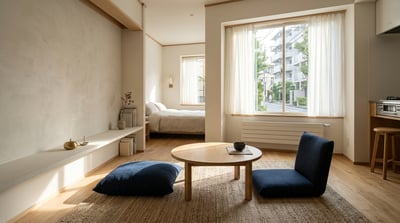
Single-occupant apartments in Kita-Ayase (20 m² to 26 m²) average around ¥65,000 to ¥75,000 even for modern or station-adjacent units. By expanding the building age criteria slightly, quality homes with separated bath and toilet are available from around ¥60,000. For professionals with a net monthly income of ¥200,000 to ¥250,000, keeping rent near ¥65,000 brings significant financial breathing room. Even budgeting ¥40,000 for groceries, ¥15,000 for utilities, and ¥15,000 for mobile, internet, and daily necessities, one can comfortably set aside ¥50,000 to ¥80,000 monthly toward savings, hobbies, or personal development. Main room sizes typically range from 6 to 7.5 tatami mats (approx. 10 to 12.5 m²). Placing a single bed (100 cm wide × 200 cm long) along the wall and setting up a 100 cm wide desk and chair leaves an ample circulation walkway of 60 to 70 cm. Paired with the comfort of a seated morning commute from an originating station, Kita-Ayase supports a peaceful, restorative solo lifestyle.Couples (1LDK): Rent Benchmark ¥95,000–¥120,000 (Dual-Income Partners)
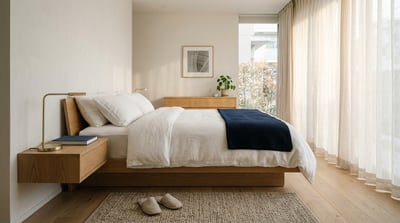
Ideal for dual-income couples or newlyweds, 1LDK apartments (35 m² to 45 m²) command market rents of approximately ¥95,000 to ¥120,000 in Kita-Ayase. High-grade condominium-spec residences or newly built homes by major housebuilders—which easily exceed ¥150,000 to ¥200,000 in central Tokyo—come comfortably within reach at this budget. With a combined net monthly income of ¥350,000 to ¥450,000, an ¥110,000 rent stays well below one-fourth of total take-home pay, allowing couples to steadily build savings for life milestones or wedding preparations without feeling financially stretched. Layouts typically feature a 10- to 12-mat living/dining/kitchen (LDK) area and a 4.5- to 6-mat bedroom. The living room easily accommodates a two-person dining set, sofa, and media console. The bedroom accommodates a double bed (140 cm wide) while leaving generous side clearance, making it effortless to zone dedicated spaces for telework and relaxation.Families (2LDK / 3LDK): Rent Benchmark ¥125,000–¥160,000 (Households with Children)
For families with young children or those seeking expansive living quarters, 2LDK and 3LDK homes (55 m² to 70 m²) fall into a typical price range of ¥125,000 to ¥160,000 in the Kita-Ayase area. Starting with Shobunuma Park right at the South Gate and extending to Towa Shinsui Park and Oyata Park nearby, an abundance of open green spaces where children can play freely offers priceless value for parenting households. Maintaining smooth access to central Tokyo while keeping recurring housing costs modest represents a prudent choice, freeing financial resources for education and enriching family memories.Kita-Ayase Move-In Cost Simulation by Layout (Standard Brokerage vs. Half-Price Fee)
| Cost Simulation Item | Solo 1K (Rent ¥70,000, Maint. Fee ¥5,000) | Couples 1LDK (Rent ¥110,000, Maint. Fee ¥8,000) |
|---|---|---|
| Deposit & Key Money (1 month each) | ¥140,000 | ¥220,000 |
| Advance Rent + Maint. Fee (1 month) | ¥75,000 | ¥118,000 |
| Rent Guarantor Fee (50% of total rent) | ¥37,500 | ¥59,000 |
| Fire Insurance (Small-Amount Short-Term, 2 yrs) | Approx. ¥12,000 | Approx. ¥15,000 |
| Cylinder Lock Replacement Fee | ¥16,500 | ¥22,000 |
| Brokerage Fee (0.55 months tax incl.) | ¥38,500 | ¥60,500 |
| Estimated Total Move-In Cost | Approx. ¥319,500 | Approx. ¥494,500 |
| Key Highlights & Notes | Saves approx. ¥60,000–¥80,000 compared to typical agencies charging 1.1 months plus bundled add-on products. | Saves ¥60,500 on brokerage commission alone compared to competitor quotes billing 1.1 months (¥121,000). |
Step-by-Step Blueprint for a Confident Apartment Search
Finding a home you truly love requires a calm, structured approach—from gathering property listings and conducting on-site inspections to thoroughly auditing invoices. Here, an experienced licensed broker outlines a practical apartment-hunting workflow.Clarifying Criteria and Searching Property Portals
Utilize portals like SUUMO and LIFULL HOME'S to filter candidates using essential criteria, such as walking distance from Kita-Ayase Station, layout, separated bath and toilet, and auto-lock security.
- Save URLs or take screenshots of promising listings
- Evaluate not only station walking time, but also positional relationship to Kannana-dori (assessing potential traffic noise)
Professional Vacancy Check and Second-Opinion Quote Audit
Property portals occasionally retain leased properties as deceptive "bait listings." By simply forwarding candidate URLs to Sorai Tokyo's official LINE, a dedicated licensed broker checks real-time availability via B2B inter-broker databases and provides a complimentary objective audit of your move-in estimate.
- Confirm whether candidate properties are truly vacant and open for tours and applications without falling for bait listings
- Receive an objective audit on whether competitor quotes include inflated sanitization or support fees
On-Site Tour and Sensory Walkthrough
Look beyond room dimensions and equipment by carefully verifying common area upkeep, ambient sound levels, natural daylight, and mobile carrier signal strength on site.
- Gauge resident etiquette through the cleanliness of mailboxes and trash collection areas
- Test sound insulation against Kannana-dori and neighborhood streets with windows closed
Reviewing Important Matters & Executing a Smart Lease at Half-Price Brokerage
Receive the Explanation of Important Matters from a licensed broker (with online IT-Jusetsu available) and examine move-out clauses before signing. With Sorai Tokyo's half-price brokerage fee (0.55 months' rent incl. tax), you begin your new chapter with substantially reduced upfront costs.
- Verify that deposit deduction and cleaning clauses satisfy the Supreme Court's three legal validity criteria
- Settle initial move-in costs with a transparent invoice free of inflated optional markups
Five Vital Perspectives to Check During Your On-Site Tour
To verify the authentic lived experience beyond floor plans and photos, pay close attention to these five checkpoints during your on-site viewing: 1. Sound Insulation and Structural Classification: Steel frame (S) and reinforced concrete (RC) structures transmit everyday sound between neighboring units very differently. Clap your hands lightly in the center of the room to listen to acoustic reverberation, and note whether adjacent noise carries through shared walls. Check also whether windows feature double-glazed or secondary acoustic sashes. 2. Common Area Maintenance and Resident Etiquette: Check whether uncollected flyers overflow from entrance mailboxes, abandoned bicycles clutter the bike racks, and garbage sorting rules are observed. The state of common areas serves as a direct mirror reflecting building management standards and resident consideration. 3. Surrounding Sunlight and Evening Walking Routes: Beyond daytime sunlight, it is vital to envision your actual walk home from the station at night. For solo residents in particular, confirming whether returning routes follow well-lit, populated streets with adequate streetlights provides peace of mind. 4. Wet Area Cleanliness and Ventilation Power: Open the cabinet doors beneath the kitchen sink and vanity to check for lingering humidity or odors, and inspect plumbing pipe joints for signs of water leakage. Switch on the ventilation fans and hold a tissue nearby to ensure robust suction power. 5. Mobile Carrier Signal Strength: In reinforced concrete buildings or interior units, certain mobile carriers may experience weakened signal reception. Check your smartphone's signal bars and test data speeds in each room to prevent frustration during remote work or everyday streaming after moving in. With direct Chiyoda Line transit and the tranquil greenery of Shobunuma Park, Kita-Ayase warmly embraces those who seek to harmonize professional dynamism in central Tokyo with restful daily peace and financial well-being. The greatest reassurance when searching for a home is moving forward unhurried, making thoughtful choices aligned with your personal rhythm. The deep neighborhood dedication of local independent agencies and the expansive reach of major franchise networks are both valuable allies in supporting your new journey. Sorai Tokyo never engages in high-pressure sales calls or persistent solicitation. Through our bottom navigation on mobile or the footer on desktop, you are always welcome to freely explore our smart tools, including the SorAi Move-In Cost Simulator. Furthermore, simply sending candidate property URLs or photos of competitor quotes to our official LINE connects you with a licensed broker who will cross-reference B2B databases to verify real-time vacancies and conduct an objective second-opinion audit completely free of charge. Feel free to reach out at your own pace, as casually as enjoying a cup of tea. We look forward to walking alongside you as you discover a calm, fulfilling life in Kita-Ayase.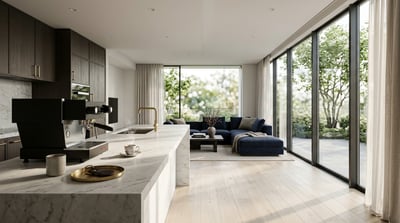
Frequently Asked Questions: Choosing an Agency in Kita-Ayase

Author: Sorai Tokyo Editorial Team (Supervised by Licensed Real Estate Agents)
A real estate consulting team specializing in assisting foreign nationals find rooms and explaining initial costs in Tokyo. We break down language barriers and differences in customs, offering dedicated support in Japanese, English, and Vietnamese for a safe and secure start to your new life.