
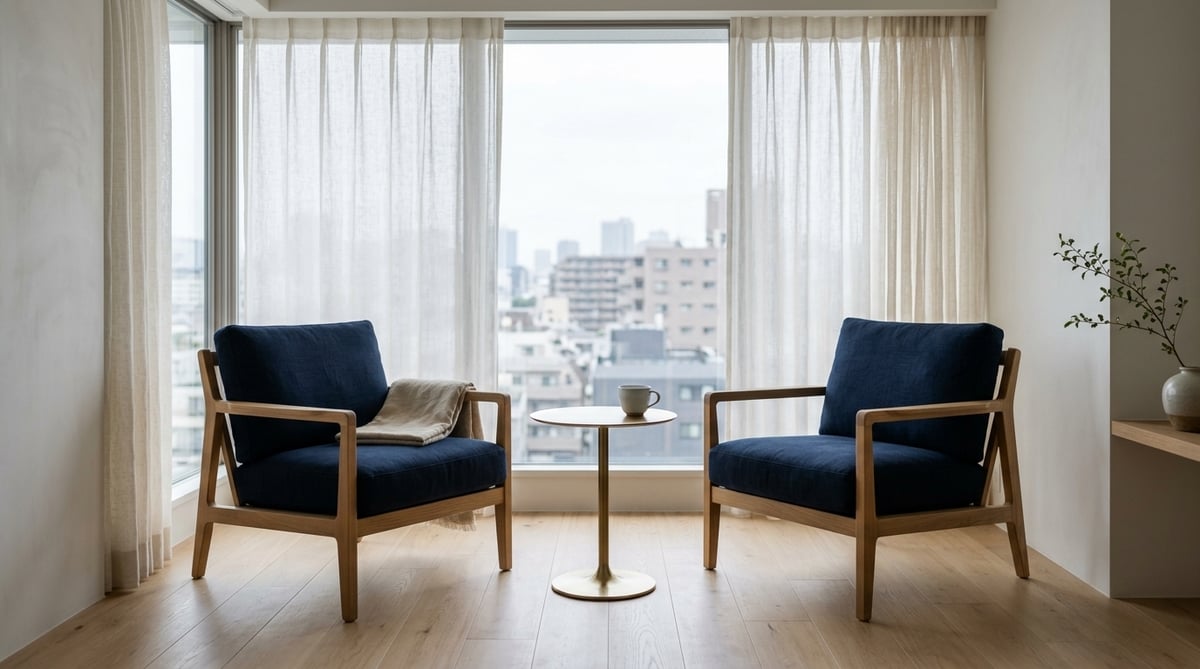
On a crisp winter morning, as pale sunlight touches the surface of the Meguro River, commuters walk past the aroma of freshly roasted beans drifting from riverside coffee stands toward the Main Ticket Gate. By evening on the South Ticket Gate side, daily life unfolds at a gentler pace: residents pick up dinner ingredients and seasonal fruit at Precce Nakameguro in the basement of Nakameguro GT Tower before strolling home beneath the warm streetlamps of the Meguro Ginza Shopping Street.
While Nakameguro is widely known for its cherry blossom season and lively weekends, many prospective renters—including international professionals, students, and families—pause with practical questions on their way back from property viewings. They wonder whether paying ¥145,000 a month for a 1K or ¥253,000 for a 1LDK will genuinely feel worthwhile in everyday life, and how much rent and living comfort differ between a convenient station-front apartment and a quiet residential street up the hill.
By looking beyond monthly rent to examine total two-year housing costs including contract and renewal fees, the distinct living environments of the riverside lowlands versus the elevated hills, and how budgets shift across neighboring stations, you can find an option that fits your daily rhythm without strain.
- Median monthly rents in Nakameguro stand at ¥108,000 for a 1R, ¥145,000 for a 1K, ¥253,000 for a 1LDK, and ¥367,000 for a 2LDK.
- Total two-year housing costs—including key money, brokerage fees, and renewal fees—average roughly ¥3.93 million for a 1K and ¥6.856 million for a 1LDK.
- Station-front commercial blocks offer flat, step-free access, whereas the elevated hills of Kamimeguro 3-chome and Nakameguro 3-chome provide calmer surroundings and more tempered rent-to-space ratios.
Nakameguro Rent Averages by Layout & 2-Year Total Housing Cost Simulation
Nakameguro’s rent levels are underpinned by its dual-line connectivity: it is a stop for Limited Express, Commuter Limited Express, and Express trains on the Tokyu Toyoko Line, and every Tokyo Metro Hibiya Line train originates here. Even during the morning rush, waiting for one or two trains on the platform lets you take a seat and read comfortably all the way to Kasumigaseki, Hibiya, or Ginza—a tangible daily benefit that preserves your energy over time.
When planning your housing budget, accounting for initial key money, brokerage fees, and the two-year renewal fee alongside monthly rent gives you a much clearer financial picture. The table below estimates the actual two-year total housing cost based on median rents around Nakameguro Station.
| Layout | Median Monthly Rent | 24-Month Base Rent | Est. Contract & Renewal Fees | Est. 2-Year Total Housing Cost |
|---|---|---|---|---|
| 1R | ¥108,000 | ¥2,592,000 | ~¥335,000 | ~¥2,927,000 |
| 1K | ¥145,000 | ¥3,480,000 | ~¥450,000 | ~¥3,930,000 |
| 1DK | ¥179,000 | ¥4,296,000 | ~¥555,000 | ~¥4,851,000 |
| 1LDK | ¥253,000 | ¥6,072,000 | ~¥784,000 | ~¥6,856,000 |
| 2LDK | ¥367,000 | ¥8,808,000 | ~¥1,138,000 | ~¥9,946,000 |
The average rent per square meter around Nakameguro Station is approximately ¥5,300/m². Estimated contract and renewal fees assume 1 month key money, 1.1 months brokerage fee (tax included), and 1 month renewal fee at the 2-year mark (totaling 3.1 months). Depending on the property, a refundable security deposit (typically 1–2 months), initial guarantor company fee, and fire insurance are added at signing. No renewal fee applies if you move out before the 2-year term ends.
Solo Living (1R, 1K, 1DK): Budget Expectations & Convenience by Station Gate
For solo residents considering Nakameguro, the first decision often comes down to choosing between a 1R starting in the low ¥100,000s and a 1K centered around ¥145,000. Over two years, that difference amounts to roughly ¥1 million—but it buys more than a single door between the hallway and the main room. It provides a separate kitchen that keeps cooking aromas away from your bedding, as well as a more comfortable washroom and changing area. If you dine out frequently and spend weekends exploring the city, a compact 1R lets you allocate those savings toward food and hobbies.
On the other hand, if you work from home several days a week and enjoy cooking at home, the separation of a 1K or 1DK brings welcome peace of mind. Despite its reputation for restaurants and cafes, Nakameguro is well equipped for everyday errands. About a one-minute walk from the Main Ticket Gate along Yamate-dori sits Life Nakameguro, offering groceries on the first floor and clothing and household goods on the second, while Tokyu Store Nakameguro Main Store is located near the Meguro River. Step out of the South Ticket Gate and you will find Precce Nakameguro (open 9:00 AM to 10:00 PM) in the basement of Nakameguro GT Tower, along with Kaldi Coffee Farm on the first-floor plaza. For a closer look at each gate’s streetscape and shopping routes, see our Nakameguro Station Livability & Rent Guide.
Couples & Families (1LDK, 2LDK): 2-Year Totals & Meguro Ward Subsidies
For couples or families with young children looking at 1LDK and 2LDK apartments, total two-year housing costs range from roughly ¥7 million to nearly ¥10 million. Many dual-income households find the cost worthwhile when it trims 30 minutes off their daily round-trip commute, giving them time to cook and eat together. Meanwhile, remote-working households who need two separate bedrooms often weigh floor area against rent levels very carefully.
For long-term peace of mind, access to healthcare and municipal services is another strength. About a seven-minute walk from the station in Nakameguro 2-chome is Tokyo Kyosai Hospital (370 beds), a designated regional medical support hospital, while Mishuku Hospital (244 beds), a designated secondary emergency hospital, sits on the Kamimeguro 5-chome side. Beyond the Meguro Ginza Shopping Street from the South Gate lies the Meguro Ward Office, making resident registration and administrative errands easy to handle on foot. Meguro Ward also offers a "Family Household Rent Subsidy" for households raising children under 18, as well as housing continuation subsidies and guarantor fee assistance for eligible residents. Because income caps, unit quotas, and application windows apply, it is wise to check the latest Meguro Ward guidelines early in your move.
Using the November–December Off-Peak Season to Lower Initial & 2-Year Costs
Even within the same rent bracket, timing your move and negotiating initial terms can make a noticeable difference in your two-year outlay. Once the spring moving rush settles—especially during the quieter months of November and December—landlords are often eager to fill vacancies before the year ends, making it easier to find listings with reduced key money or 0.5 to 1 month of free rent.
On a 1LDK apartment, waiving one month of key money or securing one month of free rent reduces your two-year total by more than ¥250,000. Moving companies are also easier to schedule and compare, and winter viewings let you check sunlight angles and indoor warmth firsthand. For more on seasonal negotiation strategies, refer to our Guide to Off-Peak November–December Apartment Hunting & Initial Cost Savings.
Simply enter the rent and deposit from portal listings to calculate a full, itemized breakdown including brokerage and guarantor fees without hidden add-ons.
Riverside Lowlands vs. Kamimeguro & Nakameguro Hills: How Terrain Shapes Rent and Comfort
Choosing the right home in Nakameguro depends just as much on terrain and zoning as it does on layout. The neighborhood sits in a gentle basin: flat valley lowlands run along the Meguro River and Yamate-dori, flanked by stable loam plateaus rising toward Aobadai and Daikanyama to the northeast, and Kamimeguro 3-chome and Nakameguro 3-chome to the southwest. Whether you walk a flat route from the station or climb a five-minute slope changes both the atmosphere of the street and how much floor space your budget can secure.
Station-Front & Meguro River Commercial Lowlands
- ✓ Step-free, flat routes from ticket gates to supermarkets and dining
- ✓ Well-lit streets and steady foot traffic for late-evening returns
- ✓ Important to check window soundproofing and flood hazard maps
Kamimeguro 3-chome & Nakameguro 3-chome Hills
- ✓ Low-rise residential zones with height limits, wide skies, and calm streets
- ✓ Stable plateau ground largely outside designated flood inundation zones
- ✓ Tempered land values make it easier to secure larger floor plans
Aobadai 1-chome & Station-Front Commercial Blocks: Flat Routes, Soundproofing & Flood Checks
Within a five-minute walk of the Main and South Gates—around Kamimeguro’s station front and along the Meguro River in Aobadai 1-chome—commercial zoning creates a lively urban setting. Bio c’ Bon Nakameguro is located inside Nakameguro Atlas Tower, cafes and boutiques line the river, and independent eateries fill the space beneath the elevated tracks. For parents pushing strollers or professionals traveling with heavy suitcases, a completely flat walk from the ticket gate to your lobby noticeably eases daily routines.
Because commercial-zoned land carries higher floor-area ratios and land valuations, apartments here tend to be slightly more compact for the same budget. During viewings, pay attention to traffic noise along Yamate-dori and nearby roads, and check whether the windows feature high-grade acoustic glazing or double sashes. In addition, Meguro Ward’s flood hazard map designates parts of the Meguro River valley floor as potential inundation areas. While certain blocks in Aobadai 1-chome sit outside those zones, if you are considering a first-floor or semi-basement unit—or any building near the river—check the exact projected flood depth and confirm whether the building’s electrical room is elevated and flood barriers are installed at the entrance.
Kamimeguro 3-chome & Nakameguro 3-chome Hills: Ground Stability & Generous Layouts
Turn off the busy main avenue and walk up the gentle slopes toward Kamimeguro 3-chome or Nakameguro 3-chome, and the hum of Yamate-dori fades behind you, replaced by three-story low-rise residences and manicured hedges. Much of this area is zoned as Category 1 Low-Rise Exclusive Residential District, which restricts large commercial buildings. Because land valuations here are calmer than in the station-front commercial zone, the same monthly budget often yields a slightly larger room or a low-rise residence with more breathing room between neighboring buildings.
Geologically, these hills rest on the Musashino loam plateau, offering relatively stable ground that largely sits outside official flood inundation zones. Families seeking quiet surroundings also appreciate the local school districts, such as Karasumori Elementary and Higashiyama Junior High around Kamimeguro 3-chome, or Sugekari Elementary and Daiichi Junior High on the Aobadai hillside. When viewing properties here, walk the slope from the station in your everyday shoes to gauge the incline, and check street lighting, sidewalk width, and drainage around retaining walls.
August 2026 Urban Planning Decision: Nakameguro Station North Redevelopment
If you plan to stay in Nakameguro for two to four years or longer, it is worth noting the redevelopment plan taking shape north of the station. On August 21, 2026, Meguro Ward finalized and announced the urban planning decision for the "Nakameguro Station North District Category 1 Urban Redevelopment Project," covering roughly 0.6 hectares at Kamimeguro 1-chome 20 and 21, between Yamate-dori and the Meguro River.
The plan calls for a 37-story above-ground, 5-story below-ground mixed-use tower (maximum height ~160 meters, total floor area ~44,000 square meters), featuring retail from B1 to 3F, approximately 260 residential units on floors 6 through 37, and public plazas and pedestrian walkways covering about 60% of the site. Following association approval in fiscal 2028 and rights conversion in fiscal 2029, construction is scheduled to begin in fiscal 2030 and complete in fiscal 2033. While large-scale construction will not start immediately, residents planning to remain in Kamimeguro 1-chome past 2030 may want to consider window orientation and future construction vehicle routes alongside the long-term benefit of wider pedestrian spaces.
Comparing 7 Nearby Stations: Finding the Right Balance for Your Lifestyle
If you are drawn to Nakameguro’s atmosphere and Hibiya Line origin seats but want to lower your monthly fixed costs—or gain an extra 6 to 7 square meters of living space for the same rent—exploring neighboring stations within walking or cycling distance is a practical approach.
| Station | Main Lines & Key Features | Avg. /m² | 1R | 1K | 1DK | 1LDK | 2LDK |
|---|---|---|---|---|---|---|---|
| Nakameguro | Tokyu Toyoko Line, Hibiya Line (All-train origin) | ¥5,300/m² | ¥108,000 | ¥145,000 | ¥179,000 | ¥253,000 | ¥367,000 |
| Yutenji | Tokyu Toyoko Line (Local stop, 1 stop to Nakameguro) | ¥4,850/m² | ¥95,000 | ¥128,000 | ¥158,000 | ¥217,000 | ¥313,000 |
| Ikejiri-ohashi | Tokyu Den-en-toshi Line (1 stop to Shibuya, Hanzomon thru) | ¥4,900/m² | ¥98,000 | ¥132,000 | ¥162,000 | ¥226,000 | ¥325,000 |
| Gakugei-daigaku | Tokyu Toyoko Line (Express stop, lively shopping streets) | ¥4,950/m² | ¥97,000 | ¥131,000 | ¥161,000 | ¥224,000 | ¥323,000 |
| Meguro | JR Yamanote, Meguro, Namboku, Mita Lines | ¥5,000/m² | ¥100,000 | ¥135,000 | ¥166,000 | ¥228,000 | ¥332,000 |
| Yoyogi-uehara | Odakyu Line, Chiyoda Line (Origin trains available) | ¥5,100/m² | ¥102,000 | ¥137,000 | ¥169,000 | ¥237,000 | ¥347,000 |
| Ebisu | Hibiya Line, JR Yamanote, Saikyo Lines | ¥5,400/m² | ¥110,000 | ¥148,000 | ¥182,000 | ¥258,000 | ¥374,000 |
| Daikanyama | Tokyu Toyoko Line (Local stop, low-rise residential) | ¥5,600/m² | ¥114,000 | ¥154,000 | ¥189,000 | ¥267,000 | ¥394,000 |
Yutenji & Gakugei-daigaku: More Space and Budget Flexibility on the Toyoko Line
If you want to keep Nakameguro within your everyday orbit while easing your monthly rent, start by walking around Yutenji, just one stop away on the Toyoko Line. It shares the same direct access toward Shibuya, Yokohama, and the Fukutoshin Line, yet because express trains pass through, the station area feels noticeably calmer, with independent bakeries and delicatessens lining its streets. Compared with Nakameguro, median rents are roughly ¥17,000 lower per month for a 1K and ¥36,000 lower for a 1LDK—freeing up ¥400,000 to over ¥860,000 across two years. You can reach the Hibiya Line platform across from your train at Nakameguro in two minutes, or stroll into Nakameguro on weekends via Komazawa-dori.
If you prefer a livelier station front with broader grocery options, Gakugei-daigaku—one stop further—is another strong candidate. It is an express stop with long shopping arcades extending east and west, making it convenient for dual-income households to pick up ingredients on the way home. For larger 2LDK and 3LDK comparisons along the Toyoko and Den-en-toshi lines, see our Sangenjaya vs. Gakugei-daigaku 2LDK & 3LDK Rental Comparison.
Overlapping Walkable Zones: Ikejiri-ohashi, Daikanyama & Ebisu
When searching 10 to 13 minutes on foot from Nakameguro in Higashiyama, Aobadai, or Kamimeguro 5-chome, you will often find yourself closer to Ikejiri-ohashi or Daikanyama. Walking up toward Higashiyama and Mishuku brings Ikejiri-ohashi Station (Tokyu Den-en-toshi Line) within a 7-to-10-minute walk. One stop from Shibuya with direct through-service onto the Hanzomon Line, Ikejiri-ohashi offers direct commutes to Omotesando, Nagatacho, and Otemachi, while median 1LDK rents run about ¥27,000 lower than Nakameguro—with Setagaya Park and the Meguro River Green Path nearby. Explore the commute trade-offs in our Hibiya Line vs. Hanzomon Line Commute & Rent Comparison, and larger layouts in our Ikejiri-ohashi 2LDK & 3LDK Mishuku & Higashiyama Guide.
Conversely, climbing the northeast slope from the Meguro River into Aobadai and Hachiyamacho blends seamlessly into Daikanyama and Ebisu. Daikanyama features low-rise residences under strict height regulations and leafy streets at a slightly higher rent tier. Meanwhile, Ebisu—one stop away on the Hibiya Line—carries similar rents to Nakameguro while adding JR Yamanote, Saikyo, and Shonan-Shinjuku access for couples commuting to Shinagawa, Tokyo, or Shinjuku. Compare both neighborhoods in our Daikanyama Low-Rise & High-End Rental Guide and Ebisu Station Livability & Rent Guide.
Yoyogi-uehara (Chiyoda Line Origin) & Meguro (JR Yamanote Hub)
Renters who prioritize a seated morning commute often compare Nakameguro with Yoyogi-uehara on the Odakyu and Tokyo Metro Chiyoda lines. Yoyogi-uehara offers Chiyoda Line origin trains to Omotesando, Kasumigaseki, and Otemachi, paired with quiet low-rise hillsides and independent dining, at 1LDK and 2LDK rents roughly ¥16,000 to ¥20,000 lower per month than Nakameguro. For a side-by-side look, see our Yoyogi-uehara vs. Nakameguro Rent & Commute Comparison.
To the southeast, Meguro Station connects four lines—JR Yamanote, Tokyu Meguro, Tokyo Metro Namboku, and Toei Mita—making it practical for couples working in different parts of central Tokyo, with slightly more tempered rents toward Shimomeguro.
Tokyo Lease & Move-Out Rules: Essential Legal Points for Nakameguro Rentals
Because Nakameguro features higher-end residences, architect-designed apartments, and condominium rentals, understanding contract clauses and lease types before signing helps prevent unexpected costs at move-out or during a job transfer.
Restoration Guidelines, the Tokyo Rule & Cleaning Fee Clauses
The baseline for fair deposit settlement is set by the Ministry of Land, Infrastructure, Transport and Tourism (MLIT) "Restoration Guidelines" and the Tokyo Metropolitan Ordinance on Prevention of Residential Lease Disputes (the "Tokyo Rule"). Under the Tokyo Rule, a licensed real estate transaction specialist must explain and provide a separate written document detailing restoration responsibilities before you sign: normal wear and tear (such as sunlight fading or furniture marks) is the landlord’s responsibility, while tenant-caused damage or negligence is the tenant’s. Repairs for aging water heaters, built-in air conditioners, or plumbing also fall to the landlord. Under MLIT guidelines, wallpaper has a statutory useful life of 6 years (reaching a residual value of ¥1 after 6 years), and tenant-caused damage is generally prorated by the affected wall surface rather than the entire room.
However, many leases include a special clause assigning move-out housecleaning costs to the tenant. Keep two legal standards in mind: first, per the Supreme Court ruling of December 16, 2005, a clause shifting normal wear-and-tear costs to the tenant is only valid if the scope and exact amount are clearly specified in the contract and the tenant explicitly agrees to it. Second, per Article 10 of the Consumer Contract Act (and Supreme Court rulings of March 24 and July 12, 2011), an excessively high fixed repair or deduction clause in an individual residential lease may be ruled invalid. Always verify that specific cleaning fees or per-square-meter rates are written clearly before signing.
Fixed-Term Leases (Article 38, Paragraph 7) in Low-Rise Properties: Individual vs. Corporate
High-grade low-rise apartments in Aobadai and Kamimeguro 3-chome—and owner-owned condominiums—are frequently offered under Fixed-Term Lease Agreements (Act on Land and Building Leases, Article 38) rather than standard renewable leases. A fixed-term lease ends on its expiration date without automatic renewal, though many landlords allow a new "re-contract" if both parties agree. Ask during your viewing whether re-contracting is possible and what re-contract or brokerage fees apply.
4 Steps from Viewing to Initial Cost Verification
Follow these four steps to evaluate a property calmly and thoroughly before committing:
Finding Your Balance Between Budget and Comfort in Nakameguro
Nakameguro’s appeal lies in how seamlessly contrasting qualities coexist within one neighborhood: seated Hibiya Line commutes into central Tokyo, reliable station-front supermarkets like Precce and Life, and the quiet low-rise residential streets just up the hill in Kamimeguro and Nakameguro. Whether you choose a flat, time-saving location near the station or gain extra space on the hills or at a nearby stop like Yutenji, Ikejiri-ohashi, or Yoyogi-uehara, there is no single right answer—only the right fit for your daily rhythm.
If you have a property listing URL on hand or are weighing Nakameguro against neighboring stations, Sorai Tokyo is here to help. Simply message our 24/7 dedicated AI concierge and licensed specialist team on LINE (@soraitokyo / https://line.me/R/ti/p/@soraitokyo). With no phone number required, no pushy sales calls, and no store visits needed, we can check real-time availability, advise on no-guarantor options and smooth visa-friendly screening, and provide a free, transparent second opinion on any initial cost quote.
Frequently Asked Questions About Renting in Nakameguro
QHow much should I budget for monthly rent and initial costs when living alone in Nakameguro?
AMedian monthly rents for solo layouts are ¥108,000 for a 1R, ¥145,000 for a 1K with a separate kitchen, and ¥179,000 for a 1DK. Initial move-in costs—covering deposit, key money, advance rent, brokerage, guarantor, and fire insurance—typically total 4.5 to 5 months’ rent (around ¥650,000–¥730,000 for a 1K), though zero-key-money listings and November–December off-peak free-rent negotiations can reduce this.
QHow do apartments along the Meguro River compare with those in the hillside residential areas?
ALowland areas along the Meguro River and Yamate-dori offer flat, step-free access to the station and supermarkets, but require checking window soundproofing and Meguro Ward flood hazard maps. Hillside neighborhoods like Kamimeguro 3-chome and Nakameguro 3-chome sit on stable loam ground outside flood zones and offer quieter low-rise surroundings at slightly calmer rents, though you will want to test the daily slope walk and evening lighting in person.
QWhich nearby stations offer lower rents while keeping Nakameguro within easy reach?
AYutenji, one stop away on the Toyoko Line, has median rents of ¥128,000 for a 1K and ¥217,000 for a 1LDK—¥17,000 to ¥36,000 less per month—and is easily reachable on foot or by bicycle. Other strong alternatives include Ikejiri-ohashi (1LDK ¥226,000), Gakugei-daigaku (1LDK ¥224,000), and Yoyogi-uehara (1LDK ¥237,000).
QHow will the Nakameguro Station North redevelopment affect apartment hunting?
AFinalized in August 2026, the Nakameguro Station North District redevelopment (Kamimeguro 1-chome 20–21) is scheduled to begin construction in fiscal 2030 and complete in fiscal 2033. Major construction will not impact an immediate two-year lease, though long-term residents planning to stay in Kamimeguro 1-chome past 2030 should weigh future construction routes against the eventual addition of wider pedestrian plazas.

Sorai Tokyo Co., Ltd. Editorial (Licensed Real Estate Agency #113297)
Licensed online real estate agency handling residential leasing across 15 major Tokyo lines (Member of All Japan Real Estate Association). Powered by our proprietary 24/7 AI "SorAi" on iOS/LINE and dedicated licensed realtors, we support renters end-to-end from vacancy checks on major portals to viewings and digital contracts.